Blueberries for Sal, Robert McCloskey

What happens when a little girl and her mother go blueberry picking?  

Materials

  • A tin/metal bucket or bowl.   
  • Bubble solution and blowers
  • Blue food coloring
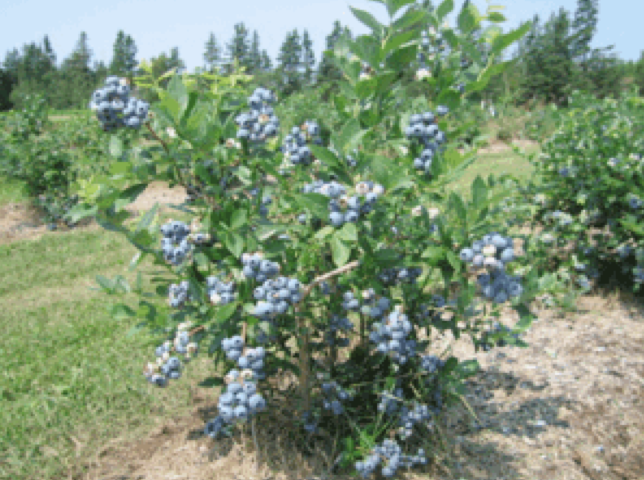
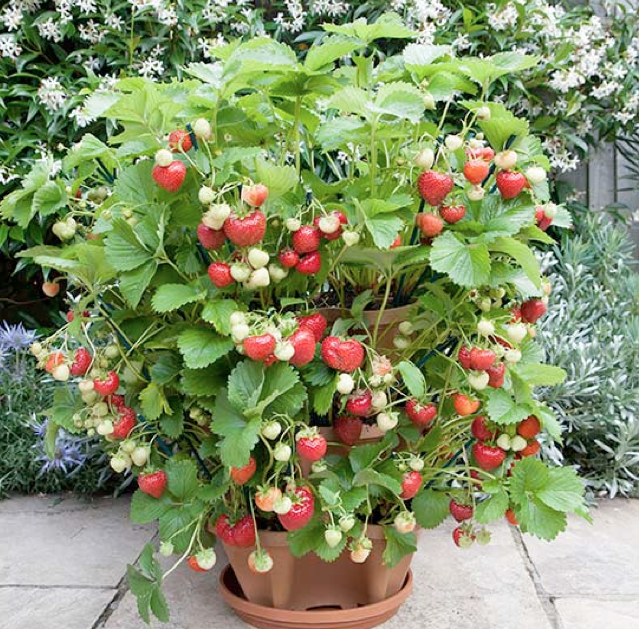
  • Variety of pictures of fruit plants to look at and discuss
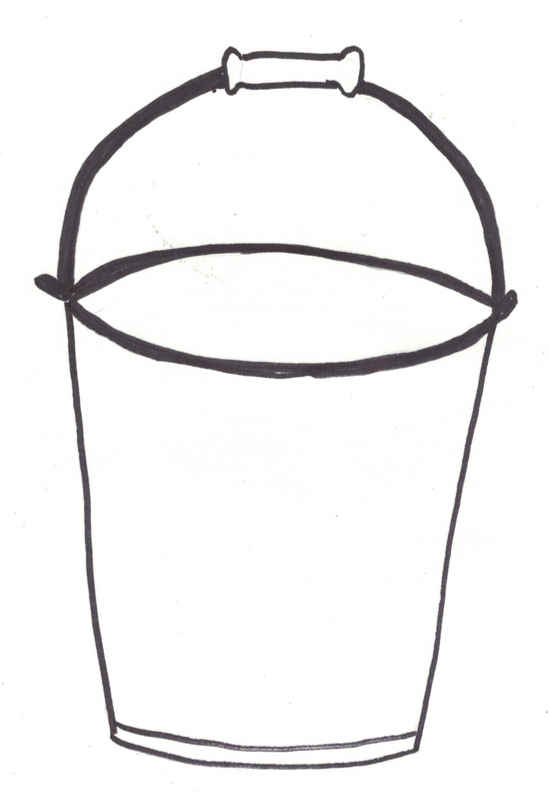
  • Picture of bucket for art
  • Dice

Vocabulary

  • Pail (another name for bucket)
  • Tin (a kind of metal)
  • Hustle (to hurry in a half walk and half run way)
  • Storing up food (eating extra because in the winter there will be none to eat)
  • Tremendous (very large)

Before Reading the Story

           Ask the children if they know where blueberries come from, do you think it is a fruit or a vegetable?   Ask them if they have ever picked their own blueberries or other fruit that perhaps grows in your area?  Look at the pictures of fruits on their plants and talk about how you would pick them, where they grow, and who likes to eat them.  Let the children share any experiences.  Explain that today’s story is about a crazy mix-up when a little girl goes with her mother to pick blueberries. 

Science/Scientific Knowledge; expands knowledge of and abilities to observe, describe, and discuss the natural world, materials, living things, and natural processes.

Reading the Story

            When you get to page 26 where Sal thinks it is her mother behind the rock, stop and ask the children if they can guess what they think is going to happen. 

Approaches to Learning/Reasoning & Problem Solving; grows in recognizing and solving problems through active exploration, including trial and error, and interactions and discussions with peers and adults.  AND Literacy/Book Knowledge & Appreciation; demonstrates progress to retell and dictate stories from books and experiences; to act out stories in dramatic play; and to predict what will happen next in a story.

After Reading the Story

            Ask the children questions about the story.  Why do you think Sal’s mother was afraid of little bear?  How do you think Sal felt when she was not sure where her mother was?  What do you think Sal and her mother made with the blueberries when they got home?  Who did Sal meet on Blueberry Hill? 

Literacy/Book Knowledge & Appreciation; demonstrates progress in abilities to retell and dictate stories from books and experiences; to act out stories in dramatic play; and to predict what will happen next in a story.  AND Approaches to Learning/Reasoning & Problem Solving; develops increasing abilities to classify, compare, and contrast objects, events, and experiences.

Discovery

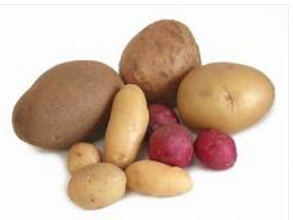
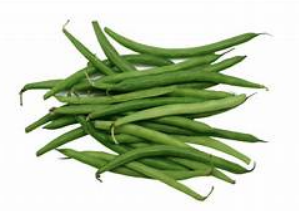
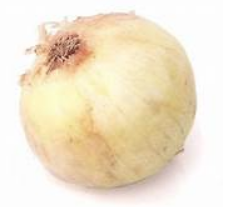
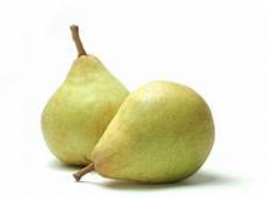
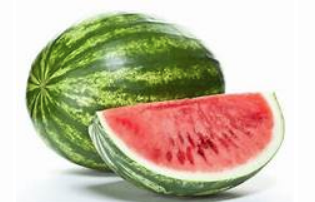
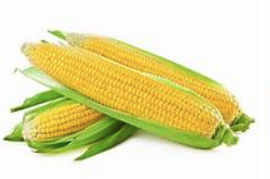
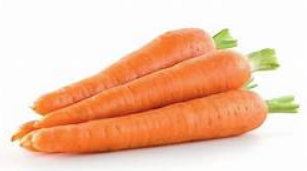
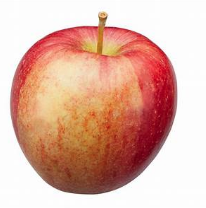
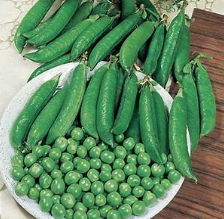
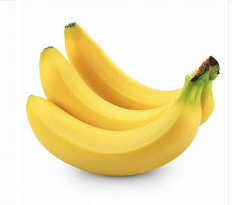
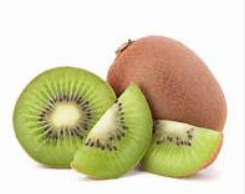
            Give the children pictures of a variety of fruits and vegetables to name and sort. 

Mathematics/Patterns & Measurement; shows growth in matching, sorting, putting in a series, and regrouping objects according to one or two attributes such as color, shape or size.

Art

            Give each child a small cup of bubble solution, which you have added 4-5 drops of blue food coloring.  The children can then blow bubbles at the bucket picture or a plain piece of white paper. As the bubbles pop on the paper they will leave a blue design.   Remind the children not to suck the bubble solution into their mouth. 

Creative Arts/Art; gains ability in using different art media and materials in a variety of ways for creative expression and representation.

Music and Movement

           Clap out simple clapping patterns and encourage the children to echo them back to you (clap, clap, hold clap). 

Mathematical Knowledge and skills; recognizes, duplicates, and extends simple patterns.

Sing The Bear Went Over The Mountain. https://www.youtube.com/watch?v=6-CGQXXNh0U.

The bear went over the mountain, The bear went over the mountain.

The bear went over the mountain   to see what he could see.

To see what he could see. To see what he could see.

The Bear went over the mountain to see what he could see.

And all that he could see, but all that he could see

Was the other side of the mountain, the other side of the mountain,

The other side of the mountain, was all that he could see.

Once the children have learned the melody, add musical instruments to accompany.

Creative Arts/Music; experiments with a variety of musical instruments.

Teach the children the poem, Time for Sleeping.

Now it’s time for sleeping,

 The bears go in their caves.

 Keeping warm and cozy,

 Time for lazy days.

 When the snow is gone,

 And the sun comes out to play

The bears will wake up from their sleep,

And then go on their way.

The children can act out the poem as you read it aloud.  You could use this poem to prepare to go outside or to transition to another part of your school.

Language Development/Listening & Understanding; demonstrates increasing ability to attend to and understand conversations, stories, songs, and poems. AND Approaches to Learning/Initiative & Curiosity; approaches tasks and activities with increased flexibility, imagination, and inventiveness. 

Sand and water

           Add blue food coloring to the water today and let the children scoop and pour water into buckets and small containers.  As the children are pouring, ask how many scoops from this container does it take to fill this other container/bucket.  Which container do you think will hold more water?

Mathematics/Number & Operations; begins to use language to compare numbers of objects with terms such as more, less, greater than, fewer, equal to.

Library and Writing

           Show the children how to roll play dough into tiny berry balls.  Have the children make many berry balls and then line them up on a piece of paper that has their name written on it.  (The children use the play dough to cover their names with berry balls) 

Literacy/Alphabet Knowledge; shows progress in associating the names of letters with their shapes and sounds.  AND Physical Health & Development/FIne Motor Skills; develops growing strength, dexterity, and control needed to use tools such as scissors, paper punch, stapler, and hammer.

Blocks

           Put several different size buckets or boxes into the block center.  Challenge the children to estimate how many blocks will fit into each container. Will more fit if the blocks are just tossed in or stacked neatly?  Do all the containers hold the same amount of blocks? 

Mathematics/Number & Operation; develops increasing abilities to combine, separate, and “name” how many concrete objects.

Dramatic Play

           Pretend to be cooking with blueberries today.  Give the children pieces of blue paper that they can rip or cut with scissors and put on the plates or in the pans to use as food.

Physical Health & Development/Fine Motor Skills; develops growing strength, dexterity, and control needed to use tools such as scissors, paper punch, stapler, and hammer.

Math and Manipulatives

           Give each child a bucket shape and show the children how to use blue or purple stamp pads to make “berries” with their finger. Have the children roll a dice and then add that many berries to their bucket.

Mathematics/Number & Operations; begins to make use of one-to-one correspondence in counting objects and matching groups of objects.  AND Mathematics/Number & Operations; begins to associate number concepts, vocabulary, quantities, and written numerals in a meaningful way.

Outdoor Play

            Give the children buckets and let them gather natural objects off your playground. (Our playground has many pine cones but you could gather leaves, pebbles, acorns, seed pods,etc).  Bring out magnifying glasses so the children can look closely at the objects they have collected.

Science/Scientific Skills & Methods; begins to use senses and a variety of tools and simple measuring devices to gather information, investigate materials, and observe natural processes and relationships.

Transitions

           Drop teddy bear counters or other hard objects into the metal bucket/bowl.  The children take turns listening to the number of items that were dropped (go kerplunk) in the bucket.  After trying their hand at listening and counting they may go to the next activity.

Mathematics/Number & Operations; begins to make use of one-to-one correspondence in counting objects and matching groups of objects.  AND Approaches to Learning/Engagement & Persistence; shows growing capacity to maintain concentration over time on a task, question, set of directions or interactions, despite distractions and interruptions.

Dear Parent, today we read a story about a little girl who went blueberry picking with her mother. As you prepare your supper tonight, take a moment and talk to your child about the fruits and vegetables that you are preparing.  Ask your child if he/she can name them and talk about how they grow (in a tree, on a vine, on a bush, under the ground.

Resources
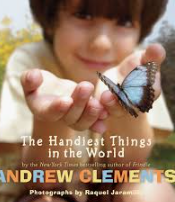
The Handiest Things in the World, by Andrew Clements

Tools help make our jobs and lives easier.  This book shows how using our hands helped influence the invention of tools.

Materials

  • Several clothespins
  • A bowl full of puffballs or cotton ball

Vocabulary

  • Tools (tools are things we use to make our work easier or our lives nicer)
  • Calculator (a tool that helps to add or subtract numbers)

Introducing the Story

Hold up your hands and ask the children what these are (hands). Ask the children if they can name the parts of their hands (fingers, thumbs, palms, and knuckles). Tell the children that our hands are also tools. Ask them if they know what you mean when you say hands are tools (our hands can do many things to make our work easier or life nicer). Ask the children what kinds of things they can do with their hands. Read the back cover of the book out loud to the children and then introduce the book.

Science/Scientific Knowledge; expands knowledge of and respect for their bodies and the environment

Reading the Story

As you read each page, say; “You can use your hands to do ______, or you can use this tool to make life easier/life nicer” Ask the children if they can name the tool on each page.

Science/Scientific Knowledge; shows increased awareness and beginning understanding of changes in materials and cause-effect relationships.

After Reading the Story

Ask the children if they can think of any other ways we use our hands as a tool. Are there tools to help your hands? (Rip paper-scissors, hold clothes together-buttons, write name-computer keyboard, and lock car doors by turning key-using key fob to lock).

Literacy/Book Knowledge & Appreciation; shows growing interest and involvement in listening to and discussing a variety of fiction and non-fiction books and poetry.

Music and Movement

Sing Rhyming Words Sound the Same (sung to Here We Go Loopty Loo)

Rhyming words sound the same (clap, clap)
Rhyming words sound the same.

Teacher singsongs a word (frog), children try to name words that rhyme with frog. Do simple rhymes such as cat, up, dot, top (children’s words do not have to be real, it is the effect of rhyming that you are looking for)

Literacy/Phonological Awareness; shows growing awareness of beginning and ending sounds of words.

Hand Movement poem, children do movements as poem suggests

Clap them, clap them, clap them so
Clap them high
Clap them low.
Clap them very fast and
Clap them very slow,
Clap them, clap them, out of sight.

Continue poem by rolling them, flapping them, wiggling them, and snapping them.

Language Development/Listening & Understanding; shows progress in understanding and following simple and multiple-step directions.

Discovery

Stamp pads or small cups of paint to make fingerprints. Add a magnifying glass to look at each child’s individual fingerprints (see your curls and swirls)

Science/Scientific Knowledge; expands knowledge of and abilities to observe, describe, and discuss the natural world, materials, living things, and natural processes.

Blocks

Put out any play tools that you have so the children can pretend to build or repair block structures. As they play, ask them if they can name the tool that they are using, show me how to use it.

Social & Emotional Development/Knowledge of Families & Communities; develops a growing awareness of jobs and what is required to perform them.

Art

Put out several rulers, paper, and crayons. Encourage the children to experiment making lines and geometric shapes. Have them write their names on their paper. Crayons are tools to help us write and rulers are tools to help use make straight lines and to measure.

Literacy/Early Writing; experiments with growing number of writing tools and materials, such as pencils, crayons, and computers.

Sand and Water

Add watering cans to your water play today along pitchers and cups to pour and catch the water. Put lines on the cups so the children have to practice filling them just up to the line. You can also make water rainmakers by punching holes into the bottom of a plastic container, such as a clean cottage cheese container. If you have several containers punch a different number of holes in them so the children can experiment with how much water flows through.

Physical Health & Development/Fine Motor Skills; develops growing strength, dexterity, and control needed to use tools such as scissors, paper punch, stapler, and hammer.

Library and Writing

Help children to trace around their hand. Ask them to give you several ways they use their hands and write their responses under their handprint. (I eat, I feed the fish, I give my baby sister her toy when she drops it).

Literacy/Early Writing; begins to represent stories and experiences through pictures, dictation, and in play.

Dramatic Play

Put out gloves for the children to practice putting on. If you have clothing with snaps, buttons, and zippers, put these out also and encourage the children o use their hands to get dressed all by themselves.

Approaches to Learning/Engagement & Persistence; grows in abilities to persist in and complete a variety of tasks, activities, projects, and experiences.

Math and Manipulatives

Put two bowls on the table, one full of puffballs or cotton balls and the other empty. Challenge the children to use the clothespins to transfer the puffballs from one bowl to the other.

Physical Health & Development/Fine Motor Skills; develops growing strength, dexterity, and control needed to use tools such as scissors, paper punch, stapler, and hammer.

Outdoor Play

Encourage the children to use shovels today to dig in the dirt or sand.

Physical Health & Development/Fine Motor Skills; develops growing strength, dexterity, and control needed to use tools such as scissors, paper punch, stapler, and hammer.

Transitions

Play, 1-2-3, How Many Do You See? Make two fists and knock them together saying, “1-2-3, how many do you see”? As you say “do you see?” hold up 1-10 fingers depending upon your children’s counting abilities. Have the children take turns counting your fingers and them moving on to the next activity.

Mathematics/Number & Operation; begins to associate number concepts, vocabulary, quantities, and written numerals in meaningful ways.

Dear Parent- today we read a book about how our hands and tools do work for us. As you go about your evening routine, make notes to your child about a tool that you are using to make your life easier or nicer. (I’m using the TV clicker to change the channels; I’m using the water knobs to fill your bath with hot water; I’m using my toothbrush to clean my teeth).

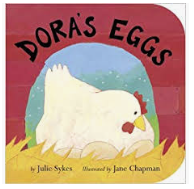
Dora’s Eggs, by Julie Sykes

Dora is a brand new mother hen.  She has laid her eggs and wants to show them off.  All the other farm animals are busy raising their own babies.  The eggs are nice but…  they’re not as nice as the other babies.  Then suddenly the eggs begin to hatch.

Materials

  •             Box of paperclips
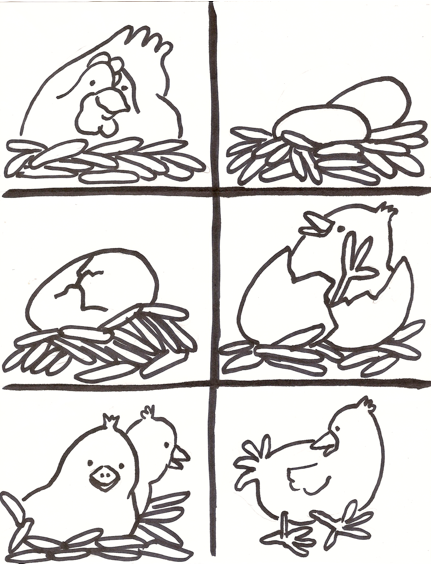
  •             Sequence cards Chicken to chick.
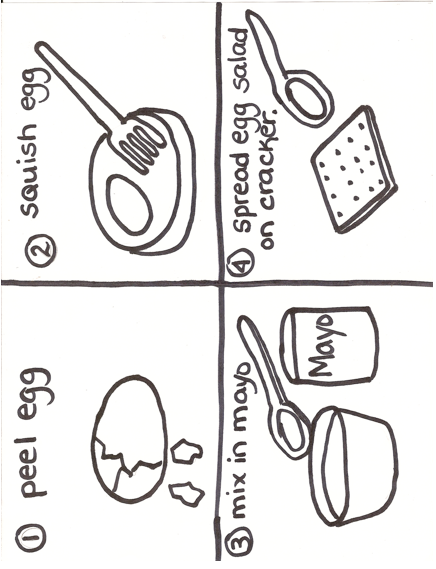
  •             One hard boiled egg per child and the ingredients for egg salad.
  •             Baby chick for egg with brad
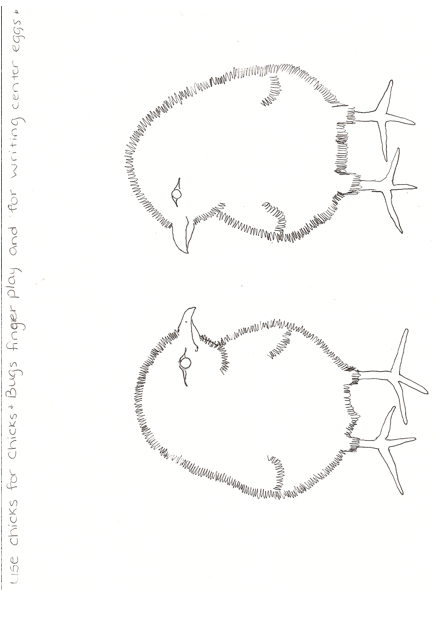
  •             Finger puppets to go with Bugs and chicks
  •             Flat shirt boxes, 2 or 3, both tops and bottoms.

Vocabulary

  •             Admire (to come and ooh and ahh )
  •             Frolicking (running and jumping while playing)
  •             Miserable (feeling very unhappy)

Before Reading the Story

Show the children the front of the book.  Ask them if they can tell you what is going on. (What is the chicken doing?  What are those things she is sitting on?  Why is she sitting on the eggs?  Why did she put that straw under her eggs?  Look at her face, how do you think she is feeling?)  Introduce the book, Dora’s Eggs.  Who do you think Dora is?  Turn to the title page, who’s house is this?  How can you tell (see the eggs inside?).  Let’s find out what Dora is up to.

Literacy/Book Knowledge & Appreciation; demonstrates progress in abilities to retell and dictate stories from books and experiences; top act out stories in dramatic play; and to predict what will happen next in a story.  AND Approaches to Learning/Initiative & Curiosity; grows in eagerness to learn about and discuss a growing range of topics, ideas, and tasks.

Reading the Story

When reading the animal mother’s responses, make sure to sound happy and prideful.  And when you read the part about “My eggs are nice but…”  read it so it has some regret in your voice.  When you get to the part where the eggs crack, stop and ask the children what they think will happen.  Count how many babies hatched from the eggs.

Literacy/Book Knowledge & Appreciation; demonstrates progress in abilities to retell and dictate stories from books and experiences; top act out stories in dramatic play; and to predict what will happen next in a story.   AND Mathematics/Number & Operations; begins to associate number concepts, vocabulary, quantities, and written numerals in meaningful ways.

After Reading the Story

Hand out the cards for the egg hatching sequence. ( One card per child and not in sequential order)  Have the children with the cards stand in the front of the group. The other children must then figure out the sequence of events leading from chicken to chicks.

Science/Scientific Knowledge; shows increased awareness and beginning understanding of changes in materials and cause-effect relationships.

Discovery

Make egg salad with the children using the rebus recipe cards.  Before you start making the egg salad ask the children to describe the eggs outside (“shiny brown and smooth to touch”)

Science/Scientific Skills & Methods; begins to use senses and a variety of tools and simple measuring devices to gather information, investigate materials, and observe processes and relationships.  AND Science/Scientific Knowledge; shows increased awareness and beginning understanding of changes in materials and cause-effect relationships.

Music and Movement

Bring in a box big enough for a child to climb inside of. When the child is inside, repeat the poem Baby Chick, by Aileen Fisher.  As you recite the poem the child can pop out of the box.

Baby Chick

 Peck, peck, peck on the warm brown egg.

Out comes a neck. Out comes a leg.

How does a chick who’s not been about,

Discover the trick on how to get out?

Language Development/Listening & Understanding; demonstrates increasing ability to attend to and understand conversations, stories, songs, and poems.

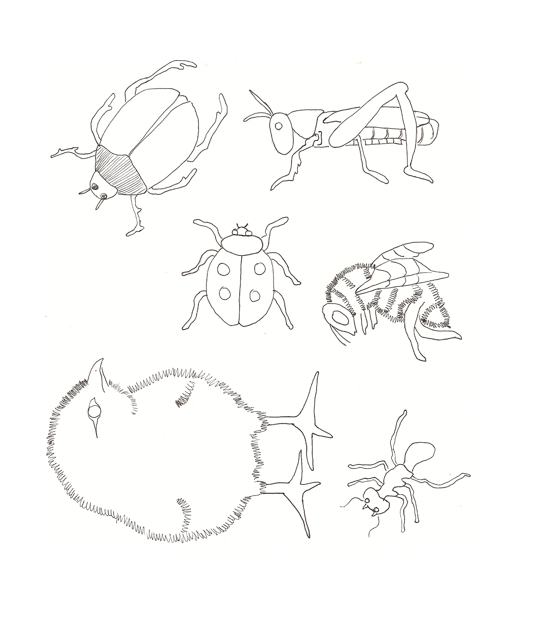
Teach your children the finger play Chicks and Bugs.  On one hand hold up fingers to be the chicks, on the other tape the insects to your fingers and hold up on cue.

Chicks and Bugs (Thank you Wake County library)

 Five little chickens by the old barn door;                     Hold up beetle finger

 One chased a beetle and then there were four.            Put down a chicken finger, put down                                                                                                                  beetle  finger  

  Four little chickens under a tree;                                  Hold up ant finger

  One chased an ant and then there were three.             Put down a chicken finger and ant finger

  Three little chickens looked for something new,          Hold up grasshopper

  One saw a grasshopper and then there were two.       Put down a chicken finger and                                                                                                                            grasshopper

  Two little chickens said “Oh what fun!”                        Put up ladybug

  One saw a ladybug and then there was one.                Put down a chicken finger and ladybug

 One little chicken began to run;                                      Put up bee

 Because he saw a bee, then there were none!             Put down all fingers.

Mathematics/Number & Operations; begins to associate number concepts, vocabulary, quantities, and written numerals in meaningful ways.

 Play follow the leader.  One person being the mother hen and everyone else following behind like little baby chicks one by one.

Physical Health & Development/Health Status & Practices; participates actively in games, outdoor play, and other forms of exercise that enhance physical fitness.

Blocks

Show the children the picture of the hen house. Show them  how it is off the ground on a platform.  Challenge the children to build a hen house.

Approaches to Learning/Engagement & Persistence; demonstrates increasing ability to set goals and develop follow through on plans.

Art

Cut out large egg shapes that will fit inside the shirt box.  Put out bowls of paint in several colors.  Have the children dip a round object (small ball, marble, large bead, or pebble) into the paint.  Put it into the shirt box and roll the object back and forth to make a design on the egg. This is best done as a partner project.

Social & Emotional Development/Cooperation; shows increasing abilities to use compromise and discussion in working, playing, and resolving conflict with peers.

Sand and Water

 Add plastic eggs to the sand or water table.

Library and Writing

 Give each child an egg shape to cut out.  After they have cut it out, have them cut it in half. Let the children hole punch a hole into the edge of each half and attach a brad.  Glue a chick to the backside of the bottom half of the egg. Color or paint as desired. Write the baby chick poem onto the egg.  The children can then open and close the egg as you recite the poem.

Language Development/Listening & Understanding; shows progress in understanding and following simple and multi-step directions.  AND Physical Health & Development;Fine Motor Skills; develops growing strength, dexterity, and control needed to use tools such as scissors, paper punch, stapler, and hammer.

Dramatic Play

Put plastic eggs and a basket into the center for the children to pretend to gather eggs.

Creative Arts/Dramatic Play; participates in a variety of dramatic play activities that become more extended and complex.

Math and Manipulatives

Make 10 egg shapes out of construction paper.  Label the eggs 1-10.  On the edges of the egg you might want to put the correlating number of dots also.  Show the children how to slide a paperclip onto the egg.  Challenge them to put the correct number of paperclips onto each egg.

Mathematics/Number & Operations; begins to make use of one-to-one correspondence in counting objects and matching groups of objects.  AND Physical Health & Development/Fine Motor Skills; grows in hand-eye coordination in building with blocks, putting together puzzles, reproducing shapes and patterns, stringing beads, and using scissors.

Outdoor Play

 In the story the baby chicks follow Dora.  Play a game of follow the leader with lots of jumping, hopping, skipping, and walking backwards.

Physical Health & Development/Gross Motor Skills; shows increasing levels of proficiency, control, and balance in walking, climbing, running, jumping, hopping, skipping, marching, and galloping.

 Transitions

Have the children name the different animals in the story.  The children might remember the names of the adult animals but might need help with the babies (who’s mother was the lamb?)

Literacy/Book Knowledge & Appreciation; demonstrates progress in abilities to retell and dictate stories from books and experiences; to act out stories in dramatic play; and to predict what will happen next in a story.

Resources