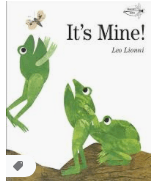
It’s Mine! by Leo Lionni

Fighting frogs quarrel and quibble all day long. When a heavy rain storm forces them to work together as a team. This book is a good lesson on friendship and cooperation.

Materials

Circles cut in 3-5 sizes

Vocabulary

  • Quarrel and quibble ( to fight and argue)
  • Bickering (another word for fighting and arguing)
  • Definitely (to show that I don’t have to do what you say with your voice)
  • Subsided (backed off and went down)

Before Reading the Story

Begin a discussion about friendship. That having friends is a nice thing. There are many things that you can do better with a friend than all by yourself. Ask the children if they can think of anything that they enjoy doing with their friends? (I like when my friend pushes me on the swing. I like when Jamie helps me put on the dressups and zippers me. I like Frank cause he helps me draw my name).

Social & Emotional Development/Social Relationships; shows progress in developing friendships with peers.

Explain to the children that friends cooperate with each other. Ask them to help define what cooperation means. (When me and Jose play together in blocks. When I asked Raya for the red crayon and she gave it to me).

Social & Emotional Development/Cooperation; shows increasing abilities to use compromise and discussion in working, playing, and resolving conflicts with peers.

Introduce the book and explain that this is a story about some frogs who did not want to cooperate.

Reading the Story

On the page where there is only one rock left and there the frogs huddled together, ask the children what they think will happen next?

Literacy/Book Knowledge & Appreciation; demonstrates abilities to retell and dictate stories from books and experiences; to act out stories in dramatic play; and to predict what will happen next in a story.

After Reading the Story

Play Thumbs up-thumbs down with the children. Make up scenarios or things that you have seen the children in your class do. If it is a positive cooperative act, the children give a thumbs up. If it is a negative act, the children give a thumbs down. (Barney asked Alfred for a car and Alfred gave him one. Kerry grabbed the crayon from Lee and said “I want this now” Kim asked if she could paint at the easel and Ann said she could be next.

Social & Emotional Development/Cooperation; increases in sustained interactions with peers by helping, sharing, and discussion.

Discovery

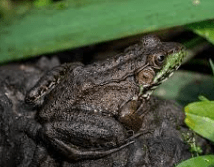
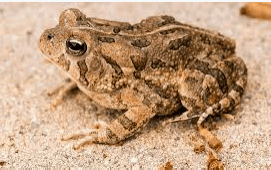
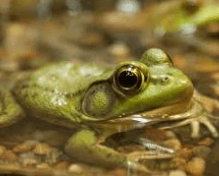
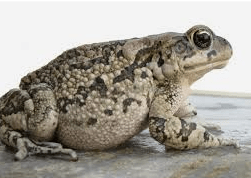
Show the children the page in the story where the toad appears before them. Explain to the children that frogs and toads are similar but different. https://kidzone.ws/lw/frogs/facts8.htm. Show the children pictures of frogs and toads to look at and compare. If you are fortunate enough to live in an area where a frog or toad can be caught, bring one in for the day for the children to examine.

Science/Scientific Skills & Methods; develops increased ability to observe and discuss common properties, differences, and comparisons among objects and materials.

Music and Movement

Sing 5 Little Speckled Frogs https://www.youtube.com/watch?v=ziGG_L9C12o Let the children take turns acting out the frogs.

Mathematics/Number & Operations; begins to associate number concepts, vocabulary, quantities, and written numerals in meaningful ways.

Sing Mmm ah Went the Little Green Frog https://www.youtube.com/watch?v=NwU3beZ9kcw.

Language Development/Speaking & Communicating; progresses in clarity of pronunciation and towards speaking in sentences of increasing length and grammatical complexity.

Sing You Sing a Song https://www.youtube.com/watch?v=KTmoAobX5mY. Children can help make up actions to do with the song.

Approaches to Learning/Reasoning & problem Solving; develops increasing ability to find more than one solution to a question, task, or problem.

Blocks

Have the children build a pond using the blocks. Can they make the pond in a pattern? Encourage them to add blocks to be a speckled frog and they can pretend to be frogs jumping.

Social & Emotional Development/Cooperation; develops increasing abilities to give and take in interactions; to take turns in games or using materials; and to interact without being overly submissive or directive.

Art

Put paper on the easel and tell the children that they are to do cooperative paintings where they work with a friend to make something beautiful.

Creative Art/Art; begins to understand and share opinions about artistic products and experiences. AND Social & Emotional Development/Cooperation; increases abilities to sustain interactions with peers by helping, sharing, and discussing.

Library and Writing

Write each child’s name on an index card. Put the cards on the table along with markers. Encourage the children to find their name and to practice writing the names of their friends onto a piece of paper.

Literacy/Early Writing; progresses from using scribbles, shapes, or pictures to represent ideas, to using letter-like symbols, to copying or writing familiar words such as their own name. AND Physical Health & Development/Fine Motor Skills; progresses in abilities to use writing, drawing, and art tools, including pencils, markers, chalk, paint brushes, and various types of technology.

Sand and Water

Water in the table and rubber frogs. Add a stick that floats or a plastic lid that floats along with a rock for the frogs to sit upon. How many frogs can float on the log or sit on the rock? If you do not have frogs, use green one-inch cubes as frogs.

Literacy/Book Knowledge & Appreciation; demonstrates abilities to retell and dictate stories from books and experiences; to act out stories in dramatic play; and to predict what will happen next in a story. AND Mathematics/Number & Operations; develops increased abilities to combine, separate, and name “how many” concrete objects.

Dramatic Play

Math & Manipulatives

Cut out circles in 3-5 sizes. Remind the children that in the story the pond got bigger and fuller of water when the thunderstorm began. Put one of the largest circles on the table and ask the child if he/she can put the next smaller circle on top and then the next smaller and then the next smaller and then the smallest. Do with squares and triangles also.

Mathematics/ Geometry & Spatial Sense; shows progress in matching, sorting, putting in series, and regrouping objects according to one or two attributes such as shape or size.

Outdoor Play

Play Leap Frog. https://www.youtube.com/watch?v=Hj0JBiknaPg Have 2 or 3 children spread out and hunch down very low. The other children then jump over them using their back as support. Take turns being the frogs and the rocks.

Physical Health & Development/Gross Motor Skills; shows increasing levels of proficiency, control, and balance in walking, climbing, running, jumping, hopping, skipping, marching, and galloping.

Transitions

Ask the children of things they enjoy doing with a friend. Write their responses and hang it on the wall.

Social & Emotional Development/Social Relationships; shows progress in developing friendships with peers.

Resources
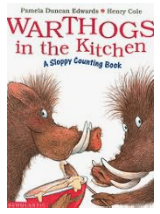
Warthogs in the Kitchen; a sloppy counting book, Pamela Duncan Edwards

            What happens when warthogs cook?  A fun counting book with some messy results.

Materials

  • Bowl, measuring cups
  • Ingredients to make play Dough
  • Cupcake pan
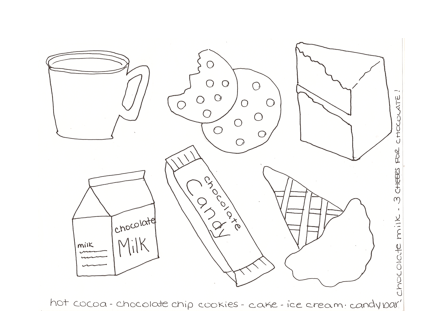
  • Chocolate graph pictures
  • A leftover plate from your last meal, scraped well but not cleaned.
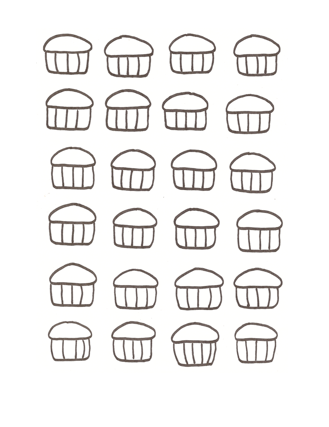
  • Cupcakes for a number chart – 5-10 per page
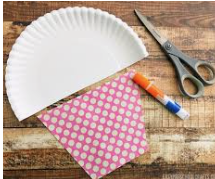
  • 1/2 paper plate per child

Vocabulary

  •  Hooves (where people have hands and feet, some animals have hooves.  Hooves are hard.  Animals like horses, pigs, deer and warthogs)
  • Invisible Germs (teeny tiny little living thing that is so small you can not even see it, but it can make you sick!)

Before Reading the Book 

            Bring the scraped plate to the group.  Ask the children why they think it is important to use clean plates, cups, and utensils when they eat.  Explain that using dirty plates could make them sick.  Invisible germs hide on plates and can grow into mold and bacteria which are not healthy for people.  Tell the children that you are going to do an experiment to see if any invisible germs are on the plate.  Tape the plate up high on the wall where the children can see it but not touch it.  Leave it there for several days.  Explain that it is really important to always wash your hands and dinnerware before you eat so you do not get sick.  Explain too that it is just as important to make sure you get all the soap off because eating soap can give you diarrhea.

Physical Health & Development/Health Status & Practices; builds awareness and ability to follow basic health and safety rules such as fire safety, traffic and pedestrian safety, and responding appropriately to potentially harmful objects, substances, and activities.

Reading the Book

            Tell the children that today’s story is about some warthogs in the kitchen. Look at the cover; can the children guess what they are doing in the kitchen?  Introduce the book.  When you get to the page where the warthog is washing his hands, nod and tell the children that that is one smart warthog. As you turn each page, stop and point to the number on the page and say the number. As you continue to read, ask the children questions that go along with each page.

Literacy/Book Knowledge & Appreciation; shows growing interest and involvement in listening to and discussing a variety of fiction, non-fiction, and poetry. AND Mathematics/Number & Operations; begins to associate number concepts, vocabulary, quantities, and written numerals in meaningful ways.

After Reading the book

            Ask the children if they ever get to help their parent cook in the kitchen.  Pretend to make cupcakes with the children by acting out different parts of the story.  Remind them that the warthogs put pickles into their cupcakes, what else should we add?  As the children think of things respond with an enthusiastic EW! Or yummy!

Approaches to Learning/Reasoning & Problem-Solving; develops increasing ability to find more that one solution to a question, task, or problem.

Discovery

            Find a play dough recipe that you like and will be able to do at school with the children.  Make play dough and then use with rolling pins and cookie cutters to make cookies.

Science/Scientific Knowledge; shows increased awareness and beginning understanding of changes in materials and cause-effect relationships.

Music and Movement

            Sing This is the Way We Bake a Cake, to This is the Way. https://www.youtube.com/watch?v=o0e1_rV_oms

This is the way we bake a cake, bake a cake, bake a cake

This is the way we bake a cake so yummy for our tummy.

First we have to wash our hands, wash or hands, wash our hands

First we have to wash our hands so yummy for our tummy.

This is the way we bake a cake, bake a cake, bake a cake

This is the way we bake a cake so yummy for our tummy.

Next we have to measure the flour…

Then we have to scoop the butter…

Next we have to break the eggs…

Don’t forget to add the pickle…

Last it goes in the oven…

Creative Arts/Music; participates with increasing interest and enjoyment in a variety of music activities, including listening, singing, finger plays, games, and performances.

            Teach the children the Mexican chant, Chocolate.  Often children drink chocolate milk and stir it with a molinillo.  During the chorus of the chant have the children rub their hands together and pretend to stir the chocolate.  Do the chorus several times, each time faster while the children rub their hands together faster.

            Uno, dos, tres Cho!                                One, two three Cho!

            Uno, dos, tres Co!                                   One, two, three Co!

            Uno, dos, tres La!                                   One, two, three, La!

            Uno, dos, tres Te!                                   One, two, three, Te!

            Chocolate, chocolate!                           Chocolate, chocolate!

            Bate, bate, chocolate!                           Stir, stir, the chocolate!

            Bate, bate, bate, bate                            Stir, stir, stir, stir

            Bate, bate, chocolate!                           Stir, stir, chocolate!     

Mathematics/Number & Operations; develops increasing ability to count in sequence to 10 and beyond.                

Blocks

            Ask the children to try to build a table and put all the plastic people around it for snack.  (Pretend that this person is me, this is Kerry, this is Roger, and which one will be you)?

Creative Arts/Dramatic PLay; participates in a variety of dramatic play activities that become more extended and complex. AND Physical Health & development/Fine Motor Skills;grows in hand-eye coordination in building with blocks, putting together puzzles, reproducing shapes and patterns , and using scissors.

Art;

        Tell the children that you are going to be making cupcakes. Show them a finished pattern without any design (see resources). Give each child a half a paper plate and have them decorate as you choose (I like puff paintand sequins).    When the paper plate is dry, help the children assemble it onto the cupcake bottom.

Creative Arts/Art; gains ability in using different art media and materials in a variety of ways for creative expression and representation.

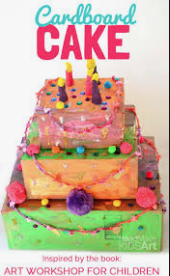
Make a large class cake out of varying sized boxes. See resources. (I have not tried this but it looks like it could be a fun art activity, especially if you could do the painting on the playground and assembly in the classroom once the paint was dry).

Library and Writing

            Write a letter of thanks to your school cook.  Have the children draw pictures of their favorite meal, themselves eating, or the cook. 

Literacy/Early Writing; develops an understanding that writing is a way of communicating for a variety of purposes.

Sand and Water

            Add some of your dramatic dishes to soapy water for dishwashing play. Do not forget the towels for drying.

Creative Arts/Dramatic PLay; participates in a variety of dramatic play activities that become more extended and complex.

Dramatic Play

            Add aprons, or use scarves as apron and pretend to do some baking.  Add measuring cups and cupcake pan.

Creative Arts/Dramatic PLay; participates in a variety of dramatic play activities that become more extended and complex.

Math and Manipulatives

            Tell the children that they are going to be making number graphs. On a large piece of paper write the numbers 1-10 down the side.  Give the children each enough pages of cupcakes to color and add the appropriate amount beside the number. Young children can work together to make, older children might enjoy making their own number graph.

Mathematics/Number & Operations; begins to associate number concepts, vocabulary, quantities, and written numeral in meaningful ways.

Outdoor Play

            Dampen the sand or some dirt and let the children make sand/mud cakes. As they play, ask them what ingredients they put into their cake, it smells good, may I try a piece when it is finished baking?

Creative Arts/Dramatic PLay; shows growing creativity and imagination in using materials and in assuming different roles in dramatic play situations.

Transitions

            Ask each child to come up and mark on the graph which kind of chocolate they like best.  Later you can look at the graph together and talk about what has the most responses and the least.

Literacy/Early Writing; progresses from using scribbles, shapes, or pictures to represent ideas, to using letter-like symbols, to copying or writing familiar words such as their own name. AND Mathematics/Number & Operations; begins to use language to compare numbers of objects with terms such as more, less, greater than, fewer, and equal.

Resources


cakes for math & Manipulatives
This look like a fun group project

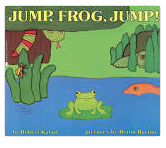
Jump, Frog, Jump! by Robert Kalan

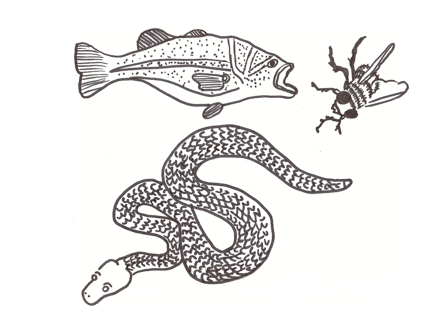
            This is a build upon story.  Older children will be able to follow along with the verse.  In this story the frog is pursued by many predators who would like to eat him for lunch.  How will he ever stay safe?

Materials

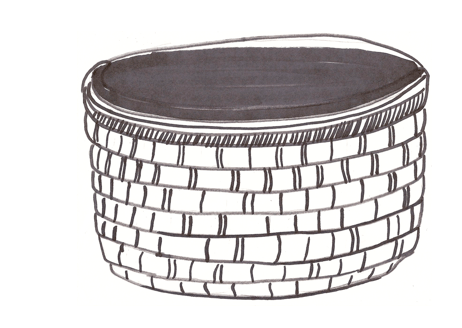
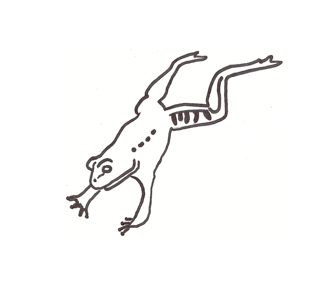
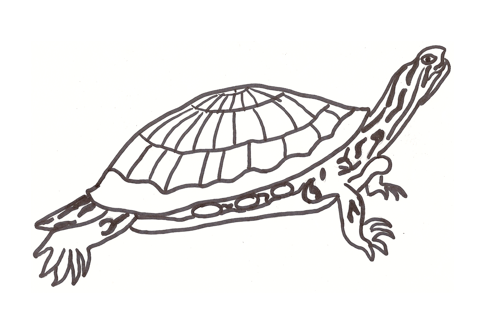
  • Flannel pieces/fly, fish, jumping frog, snake, turtle, basket, boy
  • Frogs numbered 1-10
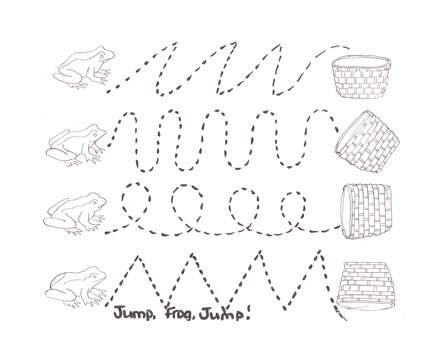
  • Jump frog jump path/maze page
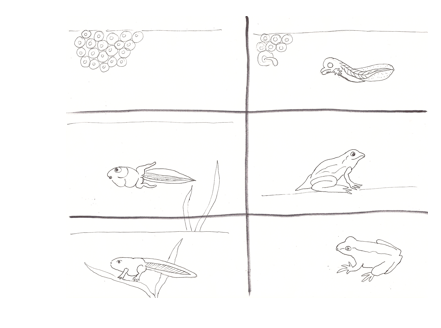
  • Frog cycle cards
  • Cornstarch packing noodles (ask your director to save all packing noodles that come with children’s materials and check to see if they are cornstarch based.
  • Small aquarium net or other small net like tool.
  • Tiddlywinks or poker chips

Vocabulary

  • Carnivore (one who eats meat or animals)

Before Reading the Story

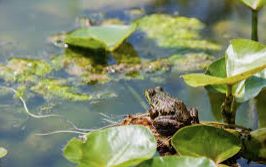
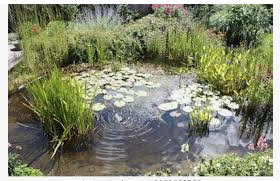
Hold up a picture of a pond and ask the children if anyone knows what this is? Ask the children if any of them have ever been to visit a pond? Allow the children to share their pond experiences. What did you see at the pond? Did you hear any animal sounds? Tell them that your story today takes place at a pond. Introduce the story.

Science/Scientific Knowledge; expands knowledge of and abilities to observe, describe, and discuss the natural world, materials, living things, and natural processes.

Reading the Story

            As you read, put up the flannel board pieces so the children can recall the chorus lines of this story.

Literacy/Early Writing; develops understanding that writing is a way of communicating for a variety of purposes. AND Language Development/Listening & Understanding; demonstrates increasing ability to attend to and understand conversations, stories, songs, and poems.

After Reading the Story

            Talk about the sequence of events.  Why were the fish, the snake, and turtle chasing the frog? (They wanted to eat him).  Tell the children that the fish, the snake, and the turtle were all carnivores because carnivores eat meat or animals.  Ask them who else in the story was a carnivore? (the frog, he wanted to eat the fly.  And the boys are carnivores too although I doubt they wanted to eat the frog).

Science/Scientific Knowledge; expands knowledge of and abilities to observe, describe, and discuss the natural world, materials, living things, and natural processes.

Discovery

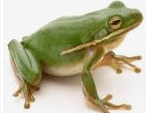
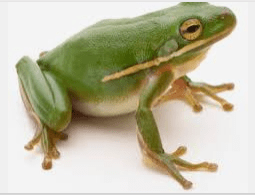
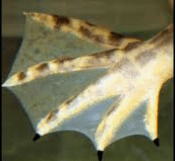
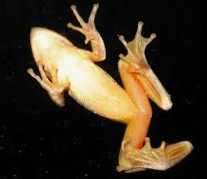
            Bring in pictures of real frogs.  Talk about the frog’s appearance. ( frogs have smooth skin, frogs have strong back legs so they can jump, A frog has big eyes that sit on top of his head, frogs have webbed feet to help them be better swimmers, frogs must live near water, a frog has a long sticky tongue to catch insects for lunch).

Science/Scientific Knowledge; expands knowledge of and abilities to observe, describe, and discuss the natural world, materials, living things, and natural processes.

            Make the frog cycle cards and encourage the children to put them into proper order.

Science/Scientific Skills & Methods; develops growing abilities to collect, describe, and record information through a variety of means, including discussion, drawings, maps, and charts.

Music and Movement

            Sing Mmm-ahh Went the Little Green Frog https://www.youtube.com/watch?v=NwU3beZ9kcw

Mmm-ahhh went the little green frog one day

Mmm-ahh went the little green frog.

Mmm-ahh went the little green frog  one day

And they all went went Mmm-ahh.

Language development/Speaking & Understanding; progresses in clarity of pronunciation and towards speaking in sentences of increasing length and grammatical complexity.

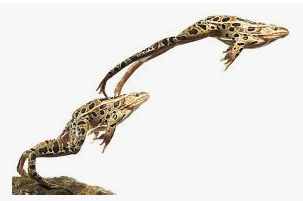
            Make about 10 of the large frogs.  Number them 1-10 and tape them to the floor touching front to back.  Make a lily pad by cutting out a circle and tape it to the floor in front of the number one frog.  Show the children how to do a standing long jump.  Let them see how far they can jump on the frog measuring tape.  Record their scores.

Mathematics/Patterns & measurement; shows progress in using standard and non-standard measures for length and area of objects.

Blocks

Ask the children to make a simple pond using the blocks. Then show them how to play tiddlywinks and flip the tiddlywink/chip into the pond. This takes practice to get the correct amount of pressure to fli[ the tiddlywink. (Put one tiddlywink/poker chip flat on the ground. Use the other to put pressure on the edge of the flattened one and pull back gently causing the flattened tiddlywink/poker chip to flip, hopefully into the pond.

Physical Health & Development/Fine Motor Skills; develops growing strength, dexterity, and control needed to use tools such as scissors, paper punch, stapler, and hammer. AND Approaches to Learning/Engagement & Persistence; grows in abilities to persist in and complete a variety of tasks, activities, projects, and experiences.

Art

            Show the children the cover of the book and how the turtle is hiding within the pond grass.  Bring in cornstarch based packing noodles for the children to make 3 dimensional pond grass.  Put out a bowl with a little water in it.  Show the children how to dip the end of the noodle into the water (because it is a cornstarch base it will dissolve and the noodles will stick together).  Show the children how to dip and stick their noodles together to make a 3 dimensional shape.  When they are finished, let them dribble green paint over and it can be pond grass.

Creative Arts/Art; gains ability using different art media and materials in a variety if ways for creative expression and representation.

            Give the children long thin pieces of paper that are cut out to resemble snakes.  Let them use markers to decorate the snake.  Encourage them to add a pattern like the snake in the book. (I have used unifix cubes to make patterns for the children to follow).

Mathematics/Patterns & Measurement; enhances abilities to recognize, duplicate, and extend patterns using a variety of materials.

Library and Writing

            Make a copy of the Jump Frog Jump page.  Cover it with contact paper and let the children use a washable marker to follow the frog’s path.  When they are done they can wipe it off with a damp cloth for another child to use.

Literacy/Early Writing; experiments with a growing variety of writing tools and ,materials, such as pencils, crayons, and computer.

Sand and Water

            Add any small pond animals that you might have to the water table.  Put out Tupperware lids that the children can pretend are lily pads.  Let them use a small aquarium net to try to catch the animals/fish. How many fish did you catch? How many frogs fit on the lilly pad?

Mathematics/Number & Operations; begins to make use of one-to-one correspondence in counting objects and matching groups of objects.

Dramatic Play

Math and Manipulatives

Mark a frog pond onto the floor or use a hoolahoop. Mark a line about 5 feet from the pond. Give a child 5 beanbags to try to throw into the pond. (Tell the children that the beanbag is a pretend frog that must try to jump into the pond). How many ‘frogs’ made it into the pond? How many did not? For older children you can give them a piece of paper that they can graph their results (2 in and 3 out of the pond). Have the children take turns throwing the bean bags into the pond.

Mathematics/Number & Operations; begins to use language to compare numbers of objects with terms such as more, less, greater than, fewer, equal to. AND Science/Scientific Skills & Methods; develops growing abilities to collect, describe, and record information through a variety of means, including discussion, drawings, maps, and charts.

Outdoor Play

            Play leap frog with the children.

Physical Health & Development/Gross Motor Skills; shows increasing levels of proficiency , control, and balance in walking, climbing, running, jumping, hopping, skipping, marching, and galloping.

Transitions

            As children go to the next activity sing or say;   Tell the children to crouch down on their haunches and listen for when their name is called.

Jeepers creepers look at all those leapers.

Jeepers creepers look at ____jump.

(The child named jumps off  and begin again with a different child)

Language Development/Listening & Understanding; shows progress in understanding simple and multiple-step directions.

Resources

for writing center
frog life cycle