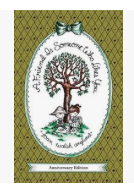
A Friend is Someone Who Likes You, Joan Walsh Anglund

This is a sweet book that tells what a friend is, and it is not always a person. It is a nice supplement to a friendship theme.

Materials

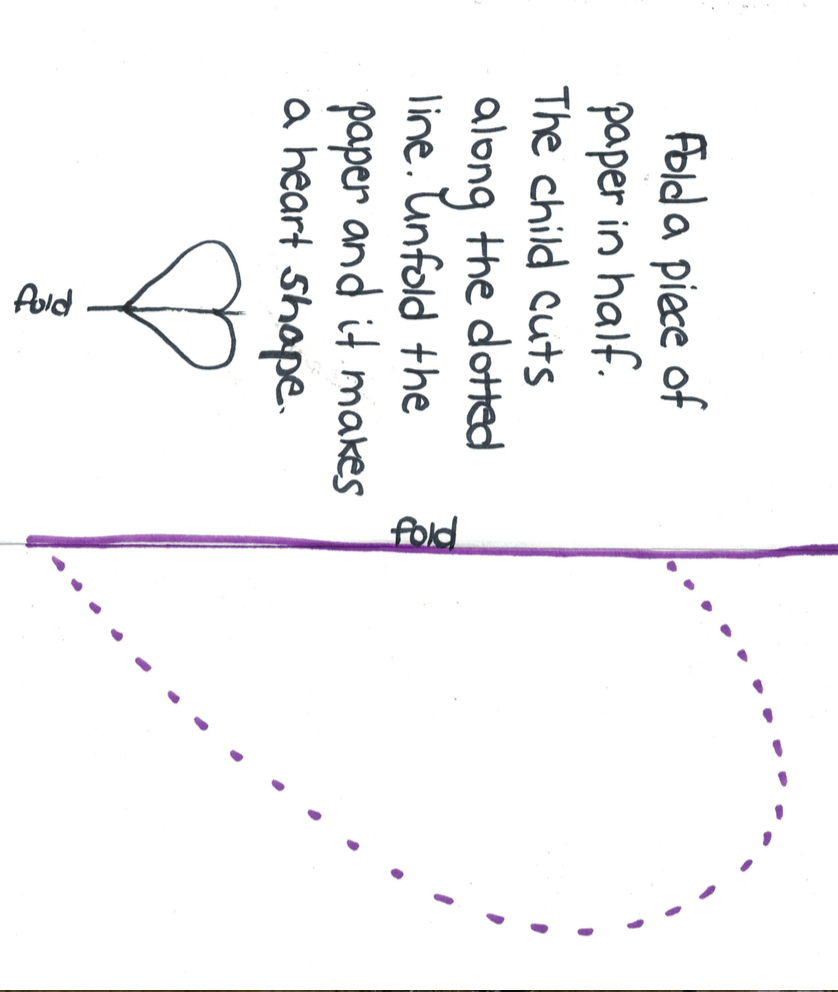
  • Directions for drawing a heart
  • 2-3 rulers
  • Place mats. Cover with contact paper or laminate for longer use.
  • 1-2 box tops

Vocabulary

  • Friend-a buddy, a playmate, a comrade
  • Compliment-to say something nice or friendly about someone.

Before Reading the Story

Ask the children if they know what it means to be a friend. Let them take time to talk about what makes someone a friend. Introduce the story. 

Social & Emotional development/Self-Control; develops a growing understanding of how their actions affect others and begins to accept the consequences of their actions.

Reading the Story

This book has small illustrations so is best read to a small group.  Allow the children to talk about the pages as you read.

Literacy/Book Knowledge & Appreciation; shows growing interest and involvement in listening to and discussing a variety of fiction and non-fiction, and poetry.  AND Language Development/Speaking & Communicating; develops increasing abilities to understand and use language  to communicate information, experiences, ideas, feelings, opinions, needs, questions, and other varied purposes.

After Reading the Story

Ask the children if they have a friendly place they like to go, like the tree or the brook. (I go to my room, I like the park). Ask the children how it makes them feel when they are there (happy, fun, not mad). Talk about how your centers can be a friendly place to go also. Remind them that we have rules at school to help keep our room and centers friendly. Ask the children to talk about what they like to do in each center.

Language Development/Speaking & Communicating; develops increasing abilities to understand and use language to communicate information, experiences, ideas, feelings, opinions, needs, questions, and other varied purposes.  AND Social & Emotional Development/Self-Control; demonstrates  increasing capacity to follow rules and routines and use materials purposefully, safely, and respectfully.

Discovery

If you have a tape recorder, bring it into the classroom today. Give every child a chance to talk into the tape. Record your group singing or playing in your friendship band. During choice time, put the recorder out so the children can listen to the tape and try to guess whose voice they are hearing.

Science/Scientific Methods & Skills; begins to use senses and a variety of tools and simple measuring devices to gather information, investigate materials, and observe processes and relationships.

Music and Movement

Sing I Love You, https://www.youtube.com/watch?v=XwLLH9EZiqc

I love you. You love me
We’re the best friends like friends should be
With a great big hug
And a kiss from me to you
Won’t you say you love me to?

Creative Arts/Music; participates with increasing interest and enjoyment in a variety of music activities, including listening , singing, finger plays , games, and performances.

Get out the instruments today and make music. Tell the children that you are going to be a friendship band because you all have to work together to make your music.

Creative Arts/Music; experiments with a variety of musical instruments.                 

Blocks

Are your block shelves labeled? If not, trace around the various block shapes and tape them to the shelves. At cleanup time, encourage the children to work together to put the blocks away on the shelf where the shape sign shows they belong.

Mathematics/Geometry & Spatial Sense; begins to be able to determine whether or not two shapes are the same size and shape. 

Art

Put out interesting collage materials and one or two box tops. Give the children bottles of glue and explain that they are going to work together to make a 3D collage. This project can be done over several days. Spend one or two days gluing all the ‘stuff inside the box lid and another dripping paint over the whole thing. (We’ve used small food boxes and plastic lids, pipe cleaners, popsicle sticks, pine cones, shells, plastic silverware, buttons and bottle caps.)

Creative Arts/ Art; begins to understand and share opinions about artistic products and experiences. AND Social & Emotional Development/Cooperation; develops increasing abilities to give and take in interactions; to take turns in games and in using materials; and to interact without being overly submissive or directive.

Sand and Water

Add plastic tubing and funnels to the water today. To use these materials together effectively, the children will have to do some cooperating. You can also add any kind of piping you may have such as a marble works type toy.

Social & Emotional Development/Cooperation; develops increasing abilities to give and take in interactions; to take turns in games and in using materials; and to interact without being overly submissive or directive.

Library and Writing

Teach the children how to cut out hearts. Write the children’s names on index cards. Have the children cut out hearts and then encourage them to write the names of their friends on one side and their name on the other side if the hearts. They can either make a collage of hearts or give them to their friends.

Physical Health & Development/Fine Motor Skills; develops growing strength, dexterity, and control  needed to use tools such as scissors, paper punch, stapler, and hammer.

Dramatic Play

Put out your laminated placemats and let the children practice setting the table.  Physical Health & Development/Health Status & Practices; shows growing independence in hygiene, nutrition, and personal care when eating, dressing, washing hands, brushing teeth, and toileting.

Math and Manipulatives

Put out any kind of board game that requires children to take turns.

Social & Emotional Development/Cooperation; develops increasing abilities to give and take in interactions; to take turns in games and in using materials; and to interact without being overly submissive or directive.

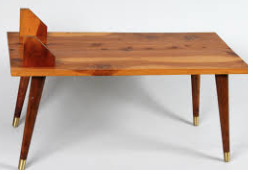
Show the children how to use the ruler to measure how long something is (the table). Keep it simple and do not measure by inches but by rulers (the table is 4 and ½ of the rulers long). Challenge the children to measure each other by one child laying on the floor and the other using the ruler to measure length.

Mathematics/Patterns & Measurement; shows progress in using standard and non-standard measure for length and area of objects.

Outdoor Play

Pin a large sheet of paper to the fence. Ideally it should be 3-5 feet in length and of a light color or white. Bring out your easel paints and brushes. Encourage the children to paint their hand with paint and press it onto the paper. Have the children continue until the paper is full of overlapping handprints making different colors and a classroom art piece. Have a bucket of water available for the children to wash their hands upon completion.

Social & Emotional development/Cooperation; increases abilities to sustain interactions with peers by helping, sharing, and discussion.  AND Approaches to Learning/Engagement & Persistence; grows in abilities to persist in and complete a variety of tasks, activities, projects,and experiences.

Transitions

Ask the children if they know what a compliment is. Compliments are something nice or friendly that we say to another person so that they know we are trying to be friendly.   Dismiss the children by having child A say a compliment to child B. Child B then says a compliment to child C. If a child says they cannot think of something nice to say about one of their peers, Make sure you say one or two things before continuing. Every child should walk to the next activity hearing a compliment about themselves, no child should be left forgotten.

Language Development/Speaking & Communicating; develops increasing abilities to understand and use language to communicate information, experiences, ideas, feelings, opinions, needs, questions, and for varied purposes.

Dear Parent-  Today we  were talking about what is a friend.  Talk with your child about one or two things that you think are important qualities for a friend to have.  If you see your child doing something friendly for another, praise him/her and let them know that they are being a good friend. 

Resources

Screen Shot 2018-08-21 at 5.16.15 PM
Screen Shot 2018-08-21 at 5.22.28 PM

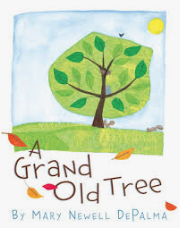
A Grand Old Tree, Mary Newell DePalma

This is the story of a tree’s life cycle, how it lived and was a home to many animals. This is a good book to use to introduce a tree unit or to be used to talk about animal homes.

Materials

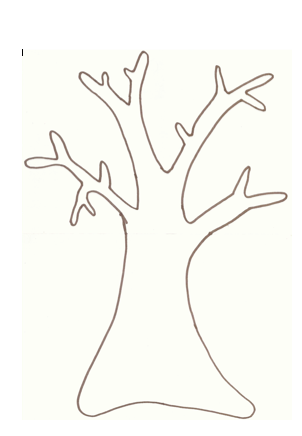
  • Tree trunk shape
  • Collect a variety of leaves from different kinds of trees.
  • 1 large pinecone per child, peanut butter, plastic knives, and a bag of birdseed.
  • Collect a bag of leaves (green or colored) to use in dramatics, make sure that they are NOT poisonous.

Vocabulary

  • Grand (outstanding and wonderful)
  • Scurried (to run back and forth)
  • Sowed (spread or plant seeds around)
  • Bask (to lift up your head to the sun and feel its warmth.

Before Reading the Story

Bring in a variety of items that are made from wood or trees. Say, “Guess what all these items have in common?  They are made from trees!  Trees give of wood to make many things and also foods to eat”.  Talk to the children about what each thing is. Say thank you tree as you introduce each item. (paper, pencil, bowl, chair, book, cardboard, chocolate, many fruits, etc).   

Science/Scientific Knowledge; expands knowledge of and abilities to observe, describe, and discuss the natural world, materials, living things, and natural processes.

Reading the Story

Show the children the cover of the book and ask them if they know what the word grand means. Tell them that it means something or someone who is really wonderful. Ask them if they can think of what would make a tree really wonderful (It makes apples, I can swing on the swing that my Dad made on the branch, I climb the tree in my yard).  Introduce the story.

Language development/Listening & Understanding; understands an increasingly complex and varied vocabulary.

After Reading the Story

Ask the children if they can recall any of the animals that lived in the tree. Can they think of any other animals that might live in a tree?

Science/Scientific Knowledge; expands knowledge of and abilities to observe, describe, and discuss the natural world, materials, living things, and natural processes.

Discovery

Bring in pictures or objects of things that come from a tree. (Things made of wood and also paper). Also pictures of animals that make their home in trees. Add parts of trees to the center for the children to explore (bark, seed pods, leaves, branch, birds nest).  Give the children magnifying glasses to look more closely at the tree parts.  Help them to name the various parts of the tree.  Talk to the children about the importance of trees.

Science/Scientific Skills & Method; begins to use senses and a variety of tools and simple measuring devices to gather information, investigate materials, and observe processes and relationships.  

Music and Movement

Have the children act out parts of the story. Ask them to show you what it looks like to sink your roots deep into the soil; reach your branches high into the sky, sway in the breeze and dance in the wind. Show what cracking looks like and falling down.

Literacy/Book Knowledge & Appreciation; demonstrates progress in abilities to retell and dictate stories from books and experiences; to act out stories in dramatic play; and to predict what will happen next in a story. 

Put on the song If I Were A Tree video by Jason Mesches. https://www.youtube.com/watch?v=7mt79JW9u18

Physical Health & Development/Health Status & Practices; participates in games, outdoor play, and other forms of exercise that enhance physical fitness.

Do the 5 Little Monkeys in the Tree finger play.

5 little monkeys swing from the tree,                        Hold up 5 fingers
Teasing Mr. Alligator, You can’t catch me!                Hold hands by ears making nah nahs
You can’t catch me!  You can’t catch me!                   Say in teasing voice with nah nahs
Slowly Mr Alligator comes,                                           Put hands together to make an                                                                                                                                         alligator head
Slow as slow can be                                                         Move alligator around
And snapped that monkey right out of the tree!       Snap hands

4, 3, 2, 1, 0 monkeys but Mr. Alligator is full.

Language Development/Listening & Understanding; demonstrates increasing ability to attend to and understand conversations, stories, songs, and poems.  AND Mathematics/Numbers & Operation; begins to associate number concepts, vocabulary, quantities, and written numerals in meaningful ways.

Blocks

Remind the children that the blocks are made from wood and that wood comes from trees!

Art

Give each child a tree trunk shape and a variety of collage materials.  Let them decorate the trunks to represent a tree in various seasons or stages of its life. Or cut out 4 large trees about three feet tall and have the children work together to make classroom trees depicting the seasons.

Approaches to Learning/Initiative & Curiosity; approaches tasks and activities with increased flexibility, imagination, and inventiveness.  AND Creative Arts/Art; progresses in abilities to create drawings, paintings, models, and other at creations that are more detailed, creative, or realistic.

Writing and Library

Encourage the children to write with pencils today. As they write remind them pencils come from wood and wood comes from trees!

Literacy/Early Writing; experiments with a growing variety of writing tools and materials such as pencils, crayons, and computers.

Ask the children to write a thank you letters to a tree and illustrate. (Thank you for pears that I like to eat, Thank you for letting me climb on you, Birds thank you)

Literacy/ Early Writing; develops an understanding that writing is a way of communicating for varied purposes.

Sand and Water

Add pieces of bark to the water and pretend that they are boats.  How many small bear manipulatives can the child put onto the boat without sinking it.  Try adding leaves, can the bears float on these?

Science/Scientific Skills & Methods; begins to participate in simple investigations to test observations, discuss and draw conclusions, and form generalizations.  AND Physical Health & Development/Fine Motor Skills; grows in hand-eye coordination such as  building with blocks, putting together puzzles, reproducing shapes and patterns, stringing beads, and using scissors.

Dramatic Play

Add a large bowl of leaves to the center and encourage the children to pretend that they are food.

Approaches to Learning/Initiative & Curiosity; approaches tasks and activities with increased flexibility, imagination, and inventiveness.

Math and Manipulatives

Put out your other bag of leaves and let the children sort them in various ways.

Mathematics/Patterns & Measurement; Shows growth in matching, sorting putting in a series, and regrouping objects according to one or two attributes such as color, shape, or size.

Outdoors

If you have a tree on your playground, go out and examine it. Look for signs of animal life. Look and ask the children to help the parts of the tree. Give the tree a thank you hug.

Science/Scientific Knowledge; expands knowledge if and abilities to observe, describe, and discuss the natural world, materials, living things, and natural processes.

Let the children use the plastic knives to spread peanut butter onto the pinecones. Then have them roll the pinecone in the birdseed and attach a string. Hang these in a nearby tree as snacks for the birds.

Approaches to Learning/Engagement & Persistence; shows growing capacity to maintain concentration over time on a task, question, set of directions or interactions, despite distractions or interruptions.

Transitions

As each child gets up to go to the next activity, ask them to say, “Thank you tree for ___________”.  Encourage the children to try to think of a variety of objects and foods that come from a tree.

Science/Scientific Skills Knowledge; shows increased awareness and beginning understanding of changes in materials and cause-effect relationships.

Have the children look around the room and name objects in your classroom that come from trees.  Remind them that things made from wood or paper are the products of trees.

Science/Scientific Skills Knowledge; shows increased awareness and beginning understanding of changes in materials and cause-effect relationships.

Dear Parent- Today we read a story about a tree and all the animals that lived in the tree.  Ask your child to help you name animals that might live in a tree.  Then ask your child what else does a tree give us? (Think of wood and paper products and foods).

Resources

Screen Shot 2018-08-22 at 2.26.25 PM

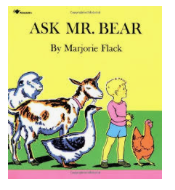
Ask Mr. Bear by Marjorie Flack

Farm animals try to help a little boy find the perfect gift for his Mother’s birthday. Find out what the perfect gift is while reading this simple book with your children.

Materials

  • Picture of cow and bear with word printed underneath.
  • Feely box (shoe box with a hole cut out of each end so child can put their hands inside) A pillowcase will work also.
  • Bear Face
  • 1 brown lunch bag per child
  • Many foil squares and wrapping bows
  • Roll of crepe paper
  • Homemade or store bought “birthday” hats and any other birthday supply

Vocabulary

  • Fine (something that is made very well)
  • Wool (a kind of fur)

 Introducing the Story

Turn to the first page and ask the children how they think the little boy is feeling. Why do you think he is feeling this way? Explain to the children that Danny is sad because he does not know what to get his Mother for her birthday. Ask the children what they would do if it were them?  Tell them the story is called Ask Mr. Bear, why do you think it is named that?

Social & Emotional Development/Social relationships; progresses in responding sympathetically to peers who are in need, upset, hurt, or angry; and in expressing empathy or caring for others.

 Reading the Story

As you read the story give the children the opportunity to name the animal and make the animal sound in the appropriate places  When you get to the page where Danny’s Mother is guessing what Danny has gotten her for her birthday, stop and ask the children if they can guess too.

Approaches to Learning/Initiative & Curiosity; chooses to participate in an increasing variety of tasks and activities. AND Approaches to Learning/Reasoning & Problem Solving; develops increasing ability to find o more than one solution to a question, task, or problem.

 After reading the Story

Show the children the front cover of the book. Ask the children to remember what animals were in the story that are not on the cover (bear and cow).

Literacy/Book Knowledge & Appreciation; demonstrates progress in abilities to retell or dictate stories from books and experiences; to act out stories in dramatic play; and to predict what will happen next in as story.

Cover the cow and bear picture with a piece of paper. Slowly slide the paper off the picture and stretch the word so the children can hear the individual sounds.

Literacy/Phonological Awareness; shows growing awareness f beginning and ending sounds in words.

 Discovery

Introduce the feely box. Put a familiar object inside the box/ pillowcase and show the children how to put their hands in the holes to feel it. Use familiar items from your classroom. Can they guess what you have put in the box? Teach them to play this game with their friends.

Science/Scientific Knowledge & Skills; begins to participate in simple investigations to test observations, discuss and draw conclusions, and form generalizations.

 Music and Movement

With the book in hand, ask the children to show you what walking looks like, skipping looks like, hopping, galloping, trotting, and running

Language Development/Listening & Understanding; understands an increasingly complex and varied vocabulary. AND Physical Health & Development/Gross Motor Skills; shows increasing levels of proficiency , control, and balance in walking, climbing, running, hopping, jumping, hopping, skipping, marching, and galloping.

 Blocks

Put out the many foil squares and encourage the children to wrap blocks like birthday gifts. Let them attach wrapping bows for decoration.

Physical Health & Development/Fine Motors; develops growing strength, dexterity, and control needed to use tools such as scissors, paper punch, stapler, and hammer.

 Art

Have the children cut a bear head out and glue it to a brown paper lunch sack to make puppets Let the children water color their puppet.

Physical Health & Development/Fine Motors; develops growing strength, dexterity, and control needed to use tools such as scissors, paper punch, stapler, and hammer. AND   Creative Arts/Art; develops growing ability to plan, work independently, and demonstrate care and persistence in a variety of art projects.

 Sand and Water

Fill the bottom of the sand table with an inch or two of dirt. Take the children outside to help gather sticks, small branches, and rocks. Put these into the table along with several plastic animals or people. Encourage the children to make a forest scene.

Science/Scientific Knowledge; expands knowledge of and abilities to observe, describe, and discuss the natural world, materials, living things, and natural processes.

Library and Writing

Put out the cow and bear pictures, encourage the children to practice writing the words and then drawing their own animals.

Literacy/Early Writing; experiments with a growing variety of writing tools and materials, such as pencils, crayons, and computers.

 Dramatic Play

Set up a birthday theme by adding hats, crepe paper, and small boxes that the children can put objects in. Add self sticking wrapping bows.

Creative Arts/Dramatic Play; shows growing creativity and imagination in using materials and in assuming different roles in dramatic play situations.

 Math and Manipulatives

Use counting bears to make simple patterns. Ask the children to make one just like yours. Ask the child to show you how many bears old they are, how many people are in their family

Mathematics/Patterns & Measurement; enhances ability to recognize, duplicate, and extend patterns using a variety of materials. AND Mathematics/Number & Operations; begins to use one-to-one correspondence in counting objects and matching groups of objects.

 Outdoor Play

Encourage the children to act out the story with you. Depending on how many children are interested you will have to include other animals and movements. Example; Then Kerry asked Kangaroo, do you have a gift I can give my mother? But Kangaroo said no and so they all jumped along and jumped along until they met Snake.

Literacy/Book Knowledge & Appreciation; demonstrates progress in abilities to retell or dictate stories from books and experiences; to act out stories in dramatic play; and to predict what will happen next in as story.

Transitions

           As children are laying down for nap or getting ready to leave, give each a hug and say; Here’s a big bear hug just from me.

Dear Parent- Today we read the book Ask Mr. Bear in which a child tries to find the perfect gift for his Mother’s birthday. Talk to your child about when his/her birthday is. Give the child the date and then state something that will happen close to the date so the child can begin to become aware of things that happen near their birthday. (Kerry your birthday is in the spring when it starts to get warmer outside. Roger, your birthday is just after your father’s birthday).

Resources

Screen Shot 2018-08-19 at 3.59.08 PM
Screen Shot 2018-08-19 at 3.59.24 PM