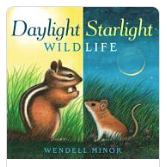
Daylight Starlight Wildlife, by Wendell Minor

This book explores animals that are diurnal/awake during the day and those that are nocturnal/awake at night.  Mr. Minor has painted beautiful lifelike pictures to bring this story alive.

Materials

  • Star cutouts
  • Tissue paper in 1-inch squares
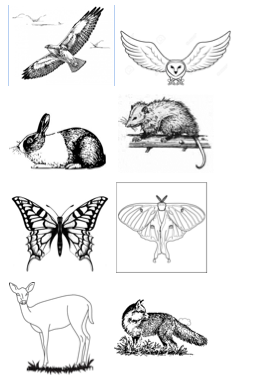
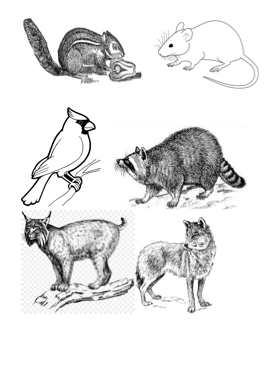
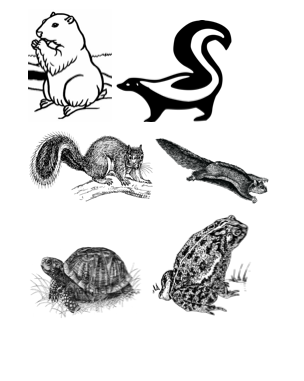
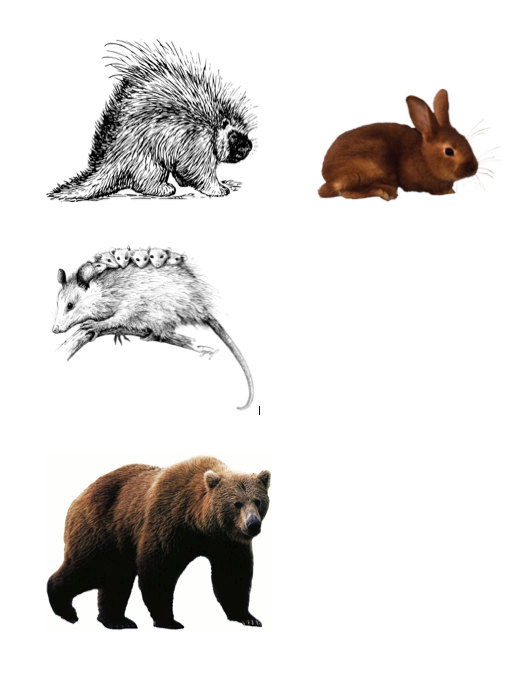
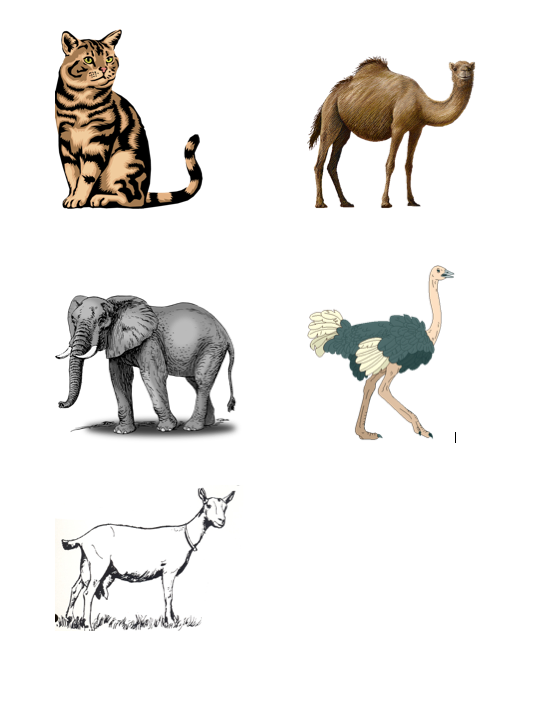
  • Animal cards to sort
  • 1-2 small flashlights
  • 1-4 small blankets or towels from dramatic center
  • Packet of star stickers

Vocabulary

  • Soars- flies high in the sky
  • Kits-baby rabbits are called kits
  • Forage-to look for food
  • Luminous-glowing or shimmering
  • Fearless- to be unafraid
  • Sprightly-active, always moving
  • Scope-checking out
  • Diurnal-awake during the day
  • Nocturnal-awake during the night

Before Reading the Story

Tell the children that you are going to read a book about nocturnal animals (animals who come out at night) and diurnal animals (animals who come out during the day). Have the children repeat the words. Ask them if they can think of an animal that might be nocturnal, remind them that nocturnal means to come out at night. Then ask them if they can think of an animal that is diurnal. Allow them a chance to brainstorm and write their responses on a piece of paper.   Look at the cover; Ask the children if they can tell which side represents daylight and which represent the night or starlight? How can they tell? (It’s yellow like the sun, it’s got stars and the moon on it). Ask them if they can name the animal that is diurnal, nocturnal. Introduce the book.

Science/Scientific Knowledge; expands knowledge of and abilities to observe, describe, and discuss the natural world, living things, and natural processes.

Reading the Story

Stop on the first page and see how many of the animals the children can name. Stop on the page with the red fox and ask the children if they can see what he is pouncing on (a mouse, dinner). Take your time turning the pages, allowing the children the opportunity to share any experiences they might have about the animal/s on the page.

Science/Scientific Knowledge; expands knowledge of and abilities to observe, describe, and discuss the natural world, living things, and natural processes.  AND Language Development/Speaking & Communicating; develops increasing abilities to understand and use language to communicate information, experiences, ideas, feelings, opinions, needs, questions; and for other varied purposes.

After Reading the Story

Post your list from before reading the story onto the wall and re-read it aloud to the children. Ask them if they can recall any other animals that might have been mentioned in the story. When they name an animal, ask if it should be written on the nocturnal side or the diurnal side?

Mathematics/Patterns & Measurement; shows growth in matching, sorting, putting in series, and regroup objects according to one or two attributes such as color, shape, or size.

Discovery

Cut around the many animal cards and put into a bowl. Put out one piece of dark paper with the word ‘nocturnal’ written across the top and one piece of light paper with the word ‘diurnal” written across the top. The children can take the animal cards and sort them onto the correct sheet of paper. Once they are finished, ask them if they can name the animals.

Mathematics/Patterns & Measurement; shows growth in matching, sorting, putting in series, and regroup objects according to one or two attributes such as color, shape, or size.

Music and Movement

Remind the children that nocturnal/night and diurnal/day are opposites. Sing Everything I Always Say to Pop Goes the Weasel verse. https://www.youtube.com/watch?v=FtfpkI-2CKg

Everything I always say, you always say the opposite.
When I say up, you say down.
Everything I always say, you always say the opposite.
When I say diurnal, you say nocturnal.

(As you sing and name the first half of the opposite, stop and see if the children can name the 2nd half. Continue naming opposites until the children loose interest).

Do the following as a chant.

Left foot, right foot I am cool                                Tap left foot and right foot accordingly.
Left foot, right foot I learned at school.                                    
Do left hand, right hand, left ear, eye, nostril, etc                                                                                                                                                                                                                                                                                   

Social & Emotional Development/Self-Concept; begins to develop and express awareness of self in terms of specific abilities, characteristics, and preferences.

Blocks

Encourage the children to use the blocks to make patterns.   Show them how to stand a rectangle block, square block, rectangle block, square block, etc.

Mathematics/Patterns & Measurement;enhances abilities to recognize, duplicate, and extend simple patterns using a variety of materials.

Art

Make stained glass windows by laying a sheet of waxed paper on the table. Put out many 1-inch square of tissue paper and a cup/bowl of glue and a paintbrush for each child. Show them how to paint the glue onto the tissue paper and then lay a piece of tissue paper on top of the waxed paper. Continue painting on the glue and adding tissue paper. As the pieces of tissue paper overlap, new colors will appear. Encourage the children to paint the tissue paper on flat instead of balled. Allow it to dry flat. When it is dry, cut a star shape out of black construction paper. Staple the child’s tissue art behind the star cutout. These look lovely in a sunny window.

Creative Arts/Art; develops growing abilities to plan, work independently, and demonstrate care and persistence in a variety of art project.

Sand and Water

Add baby dolls, a washcloth and several dish towels for bathing the babies.  While the children are bathing the babies, ask them if they take a bath or shower at home?  Do they take it in the morning/day or at night?   

Social & Emotional Development/Knowledge of Families & Communities; develops growing awareness of jobs and what is required to perform them.

Library and Writing

Put the book into the center and add a flashlight for fun reading.

Literacy/Book Knowledge & Appreciation; shows growing interest in reading related activities, such as asking to have a favorite book read; choosing to look at books; drawing pictures based on stories; asking to take a book home; going to the library; and engaging in pretend reading with other children.

Dramatic Play

Darken your dramatic corner as much as possible and tell the children that you have added some blankets to the center so they can pretend that it is nighttime. Ask them what else they might need and help them to supply what you can and to problem solve those items you cannot supply. (My group said they needed more books and toothbrushes. We got more books but problem-solved using their fingers as pretend toothbrushes). Encourage them to act out their nighttime rituals.

Social & Emotional Development/Knowledge of Families & Communities; progresses in understanding similarities and respecting differences among people such as genders, race, special needs, culture, language, and family structure.

Math and Manipulatives

Bring a dice and the star stickers to the table. Give each child a half a piece of dark construction paper. Let the children take turns rolling the dice and adding that many stars on to their paper. When children have had 4 turns, help them to count the number of stars on their paper. With a white pencil or crayon write their name and the number of stars they counted. (Kerry has 17 stars).  If your children are wild dice rollers, bring a box top or a cubby to roll the dice into.

Mathematics/Numbers & Operations; develops increasing ability to count to 10 and beyond.  AND Mathematics/Numbers & Operations;  begins to use one-to-one correspondence in counting objects and matching groups of objects.

Outdoor Play

Take the book out onto the playground and re-read the story. Open the book and go through the pages having the children act out the different animal walks or flights.

Physical Health & Development/Gross Motor Skills; shows increasing levels of proficiency, control, and balance in walking, climbing, running, jumping, hopping, skipping, marching, and galloping.

Transitions

Play category with the children. Say the word nocturnal/during the night or diurnal/during the day and the child must name something they do during that period.

Approaches to learning/Reasoning & Problem-Solving; develops increasing ability to find more than one solution to a question, task, or problem.  AND Language Development/Speaking & Communicating; uses an increasingly complex and varied spoken vocabulary.

Resources

Screen Shot 2018-08-14 at 5.55.43 PM
Screen Shot 2018-08-14 at 5.54.34 PM
Screen Shot 2018-08-14 at 5.55.06 PM
Screen Shot 2018-08-14 at 5.54.50 PM

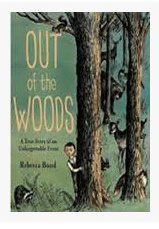
Out of the Woods, By Rebecca Bond

A forest fire brings animals and people together in an unlikely place. This is a real story of an unforgettable event.

Materials

  • A bag of thin sticks, 3-8 inches long (use a fallen branch and break into many smaller sticks)
  • Small disposable drinking cups
  • A gallon of school glue
  • An index card for each child with their name written upon it. If you have access to a camera, you can add a picture of the child also.
  • 2 sets of Forest Animal Cards
  • 1 set of other animal cards
  • I set of jumping bean cards

Vocabulary

  • Unforgettable Event- something you do not forget, even when you are old.
  • Hotel-a place where people can stay for a vacation or for a longer time.
  • Stoking a stove-to put the wood into the stove and make the fires in the stoves before there was electricity.
  • Boisterous-noisy and over the top, crazy
  • Dense-thick with lots and lots of trees

Before Reading the Story

Before reading the story, spend a few minutes talking to the children about fire safety. Explain that there are several rules one should always follow if there is a fire. 1. Don’t be scared, be smart. 2. Never hide, get outside and get outside quickly. 3. Sit and wait outside until your parent/an adult tells you it’s all safe. 4. If it’s smoky crawl on your knees. Have the children repeat the rules back to you as you say them. Tell the children that your story today is about a little boy who’s home got caught in a forest fire. Encourage the children to think about the fire safety rules you have just talked about as you read the story.

Physical Health & Development/Health Status & Practices; builds awareness and ability to follow basic health and safety rules such as fire safety, traffic and pedestrian safety, and responding appropriately to potentially harmful objects, substances, and activities.

Reading the Story

When you get to the page where Antonio is looking into a travelers room, ask the children if they think that Antonio should go into the room to explore or not? Why? (“It’s not his room”, “I’m not allowed to be near a gun”, “The man might get mad”, “My big brother would go in the room and see the fishing stuff cause he likes to fish”.) On the page where everyone is standing in the lake, ask the children if they can find the baby, find Antonio and his mother. Ask them if they remember what fire safety rules Antonio and all the people were remembering. (Never hide, get outside and get outside quickly). When you get to the page where the animals come out into the water with the people, ask the children why they think this is happening? (Water puts out forest fires so all are safest in the water). Explain that all the people and animals were remembering rule #1, don’t be scared, be smart.

Literacy/Book Knowledge & Appreciation; shows growing interest  and involvement in listening to and discussing a variety of fiction and non-fiction, and poetry.  

After Reading the Story

Go over the four fire safety rules with the children. Did the people in the story follow any or all of them? Talk to the children about your fire safety plan. Make sure they understand what they are to do when they hear the school fire alarm sound. Talk about the importance of staying as a group and walking out of the building. Use a bell or another sound to make a mock fire drill and practice it with the children.

Physical Health & Safety/Health Status & Practices; builds an awareness and ability to follow basic health and safety rules such as fire safety, traffic and pedestrian safety, and responding appropriately to potentially harmful objects, substances, and activities.

Discovery

Make a copy of the forest animal cards and the other animal’s card. Put out a piece of paper with a line down the middle. On one half write ‘forest animals’, on the other write ‘not forest animals’. Have the children sort the cards accordingly.

Mathematics/Patterns & Measurement; shows growth in matching, sorting, putting together in a series, and regrouping objects according to one or two attributes such as color, shape, or size.

Music and Movement

Make one copy of the forest animal cards. Cut out and put into a container that the children cannot see inside. As you put them in, have the children name the animal. Add one jumping bean card per three children. Put these into the container also. The children take turns picking out a card and naming the animal. If they pick out a jumping beans card, they shout “Jumping Bean!” and everyone gets up and jumps. Continue until everyone has had or turn or the children grow tired of playing.

Language Development/Listening & Understanding; shows progress in understanding and following simple, and multiple-step directions.  AND  Social & Emotional Development/Cooperation; develops increasing abilities to give and take in interactions; to take turns in games or using materials; and to interact without being overly submissive or directive.

Blocks

If you have fire trucks add them to the center today. Encourage the children to build a firehouse that the trucks can go inside of.

Mathematics/Geometry & Spatial Sense; begins to be able to determine whether or not two shapes are the same size and shape.

Art

Pour school glue, an inch or two into the disposable cups. Let the children add sticks into the cup and leave it until it dries. This will take several days. After it is dry, show the children how to take a paintbrush, dip it into a color of paint, and allow it to drip over the sticks.   When they are dry, group the cups together for a 3d modern art forest sculpture.  Ask the children if they think it looks like a forest, why or why not? 

Creative Arts/Art; begins to understand and share opinions about artistic products and experiences.

Library and Writing

Put out cards with the words EXIT and 911 on them for the children to practice copying. Talk to the children as they write about the importance of these two ‘words’. EXIT, find the exit and explain that in an emergency to look for the EXIT sign to get out of a building quickly. 911 are the numbers you call in case of an emergency. Talk about what is an emergency and whom one would ask for when they call 911.

Literacy/Early Writing; progresses from using scribbles, shapes, and pictures to represent ideas, to using letter-like symbols, to copying or writing familiar words such as their name.

Sand and Water

Fill the table with a very small amount of water. Add rubber style animals and people that you might have. Encourage the children to stand an animal next to a person. Can they name all the animals in the water? Can they tell you anything about what happened in the story that put the animals and people in the water or what happened after the fire went out?

Literacy/Book Knowledge & Appreciation; demonstrates progress in abilities to retell and dictate stories from books and experiences; to act out stories in dramatic play; and to predict what will happen next in a story.

Dramatic Play

Add any play tools that you might have so the children can help maintain the center and fix the broken chair or door to the stove. As they play, ask them to name the different tools, do they know what they are used for?

Social & Emotional Development/Knowledge of Families & Communities; develops a growing awareness of jobs and what is required to perform them.

Math and Manipulatives

Lay several of the name index cards on the table saying and pointing out whose name is on each card. Ask a child to pick a card from the pile. Can they name the name on the card? Ask them to put it onto the table with the others ones but in a specific location. (Can you put Ryan’s card under the card that says Paula, can you put Alison’s card next to the card that says Sean?). Continue, naming the cards and putting them in positional places on the table with the other cards (under, over, next to, beside, on top, underneath).

Mathematics/Geometry & Spatial Sense; builds increasing understanding of directionality, order, and positions of objects, and words such as up, down, over, under, top, bottom, inside, outside, in front, behind.  AND Literacy/Alphabet Knowledge; Knows the letters of the alphabet are a special category of visual graphics that can be individually named.

Outdoor Play

As you prepare to go outside, remind the children that in the story Antonio loved to look for signs of animals when he went outside. Challenge the children to look for sign so of animals on your playground. Encourage them to look carefully at the ground for signs of insects or, squirrels, birds, or any other creature that you are lucky enough to find.

Science/Scientific Knowledge; expands knowledge of and abilities to observe, describe, and discuss the natural world, materials, living things, and natural processes.

Transitions

Ask the children if they can remember the 4 rules of fire safety?  Help them if they cannot.  Number four is, “If it’s smokey, crawl on your knees”.  Have the children crawl to the next activity.

Physical Health & Safety/Health Status & Practices; builds an awareness and ability to follow basic health and safety rules such as fire safety, traffic and pedestrian safety, and responding appropriately to potentially harmful objects, substances, and activities.

Dear parent, today we read a story about a forest fire and how all the animals and people stayed safe. There is a good link for talking to your child about forest fire safety. Check out the web site; www.smokeybear.com.

Resources

Screen Shot 2018-08-18 at 5.28.36 PM
Screen Shot 2018-08-18 at 5.28.12 PM
Screen Shot 2018-08-18 at 5.27.51 PM
Screen Shot 2018-08-18 at 5.32.05 PM

Harold and the Purple Crayon, by Crockett Johnson

Join Harold as he draws his way through a wonderful adventure using his purple crayon as his guide.

 Materials

  • Paint chip samples (these can be gotten free most anywhere paint is sold)  Get 2 of each sample that you collect.
  • Waxed paper cut into 8 inch strips
  • Yarn, many colors or just one. Cut into lengths of 6-12 inches

Vocabulary

  • Adventure-a journey or an exploration to some place new or special.

Before Reading the Story

            Ask the children if they can think of things that are red. Younger children may only be able to name concrete items in your room. Older children should be able to use their minds eye to recall things that they have seen that are red. Do this also with one or two other colors ending with asking, “what is purple”? After the children have named any purple things that they can think of, tell them that the story today is about a purple adventure. Explain to the children that an adventure is to go on a journey or exploration to someplace new or special. Give the children time to respond (My Mom and Dad and me went to the beach and spended the night, I like to go to the park). Tell the children that your story today is about a boy named Harold who goes on an adventure with his purple crayon.

Language Development/Listening & Understanding; understands an increasingly complex and varied vocabulary.

Reading the Story

As you read the story, slow down at parts where Harold is drawing. Can the children guess what he is going to draw by looking at the picture and listening to your clue? (He needed something to walk on, he didn’t want to get lost in the forest so he made just one, suddenly he realized what was happening, picnics made him hungry, etc).

Literacy/Book Knowledge & Appreciation; demonstrates progress in abilities to retell and dictate stories from book sand experiences; to act out stories in dramatic play; and to predict what will happen next in a story.

 After Reading the Story

            Ask the children to recall all the things that Harold drew with his purple crayon. Ask the children if they might be able to guess what color crayon Harold liked best. Take 4 different color crayons and put them in 4 areas of your classroom. Ask the children to walk to the color that they like best. Count the number of children at each color station. Leave the one with the most children and add 3 more colors. Ask the children to again walk to the color that they like best.   Again, count the number of children at each color station. Which one had the most this time? If the same had the most both times, announce that today the color ______had the most votes. If a different color had the most votes, take the top two colors and put them out. Have the children walk to the color that they like best. Count how many children are at the two color stations. Then say, after this final color vote today, the color ________had the most votes.

Literacy/Book Knowledge & Appreciation; demonstrates progress in abilities to retell and dictate stories from book sand experiences; to act out stories in dramatic play; and to predict what will happen next in a story.  AND Mathematics/Number & Operations; demonstrates increasing interest and awareness of numbers and counting as a means for solving problems and determining quantity.  

Discovery

Put out red, blue, and white paint at the easel today, encourage the children to make shades of purple.

Science/Scientific Knowledge; shows increased awareness and beginning understanding of changes in materials  and cause-effect relationships.

Music and Movement

Go on a Bear Hunt with the children.

Teacher says a line and the children repeat it back.

We’re goin’ on a bear hunt
(We’re goin’ on a bear hunt)
We’re going to catch a big one,
(We’re going to catch a big one,)
I’m not scared
(I’m not scared)
What a beautiful day!
(What a beautiful day!)
Uh-uh!
Grass!
Long wavy grass.
We can’t go over it.
We can’t go under it.
Oh no!
We’ve got to go through it!
Swishy swashy! Swishy swashy! Swishy swashy!
(make a motion swishy swashy and do with the children)
Chorus: We’re going on a bear hunt…
Uh-uh!
A river!
A deep cold river.
We can’t go over it.
We can’t go under it.
Oh no!
We’ve got to go through it!
Splash splosh! Splash splosh! Splash splosh!
(make a motion for splash splosh and do it with the children)
Chorus: We’re going on a bear hunt…
Uh-uh!
Mud!
Thick oozy mud.
We can’t go over it,
We can’t go under it.
Oh no!
We’ve got to go through it!
Squelch squerch! Squelch squerch! Squelch squerch!
(make a motion for squelch squerch and do it with the children)
Chorus: We’re going on a bear hunt…
Uh-uh!
A forest!
A big dark forest.
We can’t go over it.
We can’t go under it.
Oh no!
We’ve got to go through it!
Stumble trip! Stumble trip! Stumble trip!
(make a motion for stumble trip and do it with the children)
Chorus: We’re going on a bear hunt…
Uh-uh!
A snowstorm!
A swirling whirling snowstorm.
We can’t go over it.
We can’t go under it.
Oh no!
We’ve got to go through it!
Hooo wooo! Hooo wooo! Hooo wooo!
Chorus: We’re going on a bear hunt…
Uh-uh!
A cave!
A narrow gloomy cave.
We can’t go over it.
We can’t go under it.
We’ve got to go through it!
Tiptoe! Tiptoe! Tiptoe!
WHAT’S THAT!
One shiny wet nose!
Two big furry ears!
Two big goggly eyes!
IT’S A BEAR!
Quick!
Back through the cave!
Tiptoe! Tiptoe! Tiptoe!
Back through the snowstorm!
Hoooo woooo! Hoooo woooo! Hoooo woooo!
Back through the forest!
Stumble trip! Stumble trip! Stumble trip!
Back through the mud!
Squelch squerch! Squelch squerch! Squelch squerch!
Back through the river!
Splash splosh! Splash splosh! Splash splosh!
Back through the grass!
Swishy swashy! Swishy swashy! Swishy swashy!
Get to our front door.
Open the door.
Up the stairs
Oh no!

Language Development/Listening & Understanding; understands an increasingly complex and varied vocabulary.  

Blocks

Ask the children if they can remember something that Harold made on his adventure. Encourage the children to try to build whatever it was that Harold drew that they recalled. (a boat, buildings, a sidewalk)

Literacy/Book Knowledge & Appreciation; demonstrates progress in abilities to retell and dictate stories from book sand experiences; to act out stories in dramatic play; and to predict what will happen next in a story. AND Approaches to Learning/Engagement & Persistence; demonstrates increasing ability to set goals and develop and follow through on plans.

Art

Put out the many pieces of yarn that you have cut from 6-12 inches in length. Put out bowls of school glue with forks. Show the children how to dip a piece of yarn into the glue and then lay it on the waxed paper. Allow the children to add as many pieces of yarn as they like but tell them that they all must cross over another piece of yarn. Once the children have finished their yarn art, lay it flat to dry. When completely dry, carefully peel from the waxed paper, attach a string/yarn, and hang it from the ceiling or door frame.

Creative Arts/Art; develops growing abilities to plan, work independently, and demonstrate care and persistence in a variety of art projects.    

Sand and Water

            In the story Harold made an ocean. Fill the table up with water today  and  float and sink items to explore.  Science/scientific Skills & Methods; begins to participate in simple investigations to test observations, discuss differences, and comparisons among objects and materials.

Library and Writing

            Put out purple crayons, markers, and pencils today. Encourage the children to draw their own adventure. Write their dictations of their artwork or adventure on the bottom of the page or on a piece of paper attached.

Literacy/Early Writing; begins to represent stories and experiences through pictures, dictation, and in play.

 Dramatic Play

            In the story Harold drew a picnic. Encourage the children to use a small blanket and a basket to pretend to cook and go on a picnic adventure. Move your dramatic table out of the way and have the children set up their blanket on the floor and spread out all the foods they cooked.

Creative Arts/Dramatic Play; participates in a variety of dramatic play activities that become more extended and complex.  AND Social & Emotional Development/Cooperation; shows increasing abilities to use compromise and discussion in working, playing, and resolving conflicts with peers.

Math and Manipulatives

            Put out your pairs of paint samples for the children to match. For younger children I usually put out maybe two shades of green, two of red, etc.. For older children I put out many shades of similar colors so the children must really examine and sort. Try using many shades of purple today with the children.

Mathematics/Geometry & Spatial Sense; shows growth in matching, sorting, putting in a series, and regrouping objects according to one or two attributes such as color, shape, or size.

Outdoor Play

            If you have a parachute, take it outside today and play Color Change. Have each child hold a loop or a color on the parachute. Practice making waving motions up and down while holding onto the parachute. This works best if you have two teachers evenly spaced. Once the children have the hang of making the parachute wave up and down, call out a color as you begin an upward wave. “All children holding red run under the parachute”! The children holding red let go and run under the parachute and come back out to hold on somewhere else before the parachute makes a down wave. Continue until the children lose interest.

Language Development/Listening & Understanding; shows progress in understanding and following simple and multi-step directions.

Transitions

            Dismiss the children to the next activity by colors today. If you are wearing the color ______, you may go line up. Have the children show you the color on their clothing.

Mathematics/Geometry & Spatial Sense; shows growth in matching, sorting, putting in a series, and regrouping objects according to one or two attributes such as color, shape, or size.

Dear Parent, today we read a story about a boy who drew many objects using his purple crayon. Give your child paper and crayons/pencil and encourage them to draw you something special. Or help your child review their colors by going on a color walk through the house. How many things can your child find that are purple in 3 minutes? Play this game using several colors that you may be helping your child to learn.