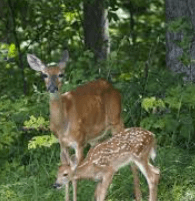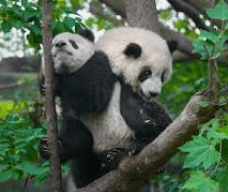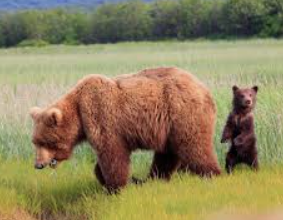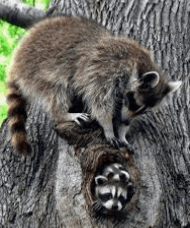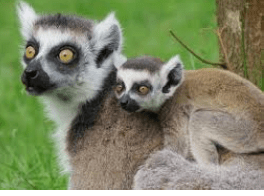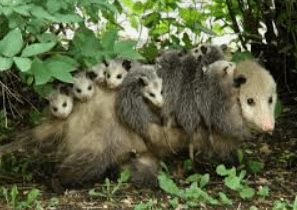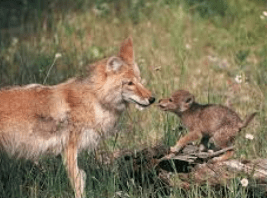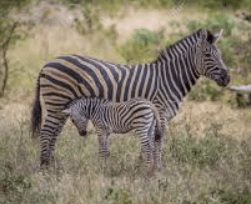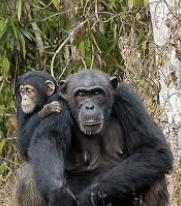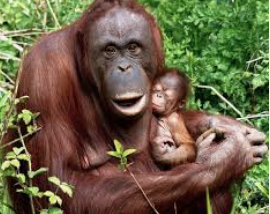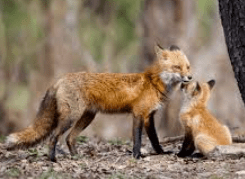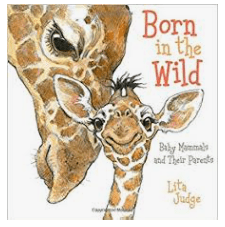
Born in the Wild; Baby Animals and Their Parents, by Lita Judge

The illustrations help emphasis how baby animals are cared for by their parent. The pictures give children a clear look at what these animals look like and endnotes provide additional details. This book shows that all creatures need food, shelter, love, and family no matter how big or small they might be.

Materials

  • Loofa, nail brush, soap to make bubbles
  • many gingerbread shapes in several colors
  • Baby and parent animal cards

Vocabulary

  • Protection (to be kept safe)
  • Shelter (a place to go to get out of the weather)
  • Caressed (another word for hugged)
  • Groomed (cleaned and dressed)
  • Family (a group of people who live together)

Before Reading the Story

Talk to the children about families.  Explain that every child lives in a family but not all families are the same. Encourage the children to share about their families. (My Mommy and Grandma live at my house with me, I have a Mommy, a big brother who bosses, and my Daddy).

Social & Emotional Development/Knowledge of Families & Communities; progresses in understanding similarities and respecting differences among people such as genders, race, special needs, culture, language, and family structures.

Reading the Story

As you read, stop on the pages and allow the children to share any insights of how their parent helps them when they are hungry, protects them from danger, etc..

Language Development/Speaking & Communicating; develops increasing abilities to understand and use language to communicate information, experiences, ideas, feelings, opinions, needs, questions, and for other varied purposes.

After Reading the Story

Pass out the parent and animal pictures.  Go back through the book but this time as you turn the page; ask the children if they know the name of the animal.   The child with the picture can then come up and tape it on the wall.

Language Development/Listening & Understanding; demonstrates increasing ability to attend to and understand conversations, stories, songs, and poems.

Discovery

The web site 1+1+1=1 has some wonderful baby and mommy animal cards that can be turned into puzzles. http://www.1plus1plus1equals1.com/Preschool_Pack_Baby_Animals_PART_ONE.pdf

Mathematics/Number & Operations; demonstrates increasing interest and awareness of numbers and counting as a means for solving problems and determining quantities.

Music and Movement

Remind the children that in the story it said that all parents and babies need to move.  Explain that another word for move could be exercise. Take turns making up exercise moves and doing them to ten. (10 jumping jacks, 10 toe touches, 10 leg kicks, etc.).

Physical Health & Development/Health Status & Practices; participates actively in games, outdoor play, and other forms of exercise that enhance physical fitness. AND Mathematics/Number & Operations; develops increasing ability to count in sequence to 10 and beyond.

Or give the children scarves and move to the music (can you make a circle over your head with the scarf?  In front of you?  By your feet?  Can you throw the scarf up into the air and catch it?

Physical Health & Development/Health Status & Practices; participates actively in games, outdoor play, and other forms of exercise that enhance physical fitness.

Blocks

Remind the children that in the story, animals provide shelter for their babies.  Put out any animals that you have and encourage the children to build shelters for them. Do all the animal houses look the same, why/why not?

Approaches to Learning/Reasoning & Problem-Solving; develops increasing abilities to classify, compare, and contrast objects, events, and experiences.

Art

Encourage the children to draw pictures of their family using colored pencils or markers.  Ask them if they would like you to write each family members name under their picture.  As they work, talk about how all families are different and talk about the names of family members (mother, father, brother, sister, younger, older, uncle, aunt, grandparent, cousin).

Social & Emotional Development/Knowledge of Families & Communities; develops ability to identify personal characteristics, including gender and family composition.

Sand and Water

Remind the children that in the story it stated that babies need to be groomed, cleaned and dressed.  Put water in the table today along with hard plastic baby dolls that the children can wash.  Add a washcloth and several dish towels for drying. 

Social & Emotional Development/Knowledge of Families & Communities; develops growing awareness of jobs and what is required to perform them. AND Creative Arts/Drama; participates in a variety of dramatic play activities that become more extended and complex.

Add bubbles to the water today.  Include a nail brush, loofa, or any other  bathing equipment. 

Physical Health & Development/Health Status & Practices; shows growing independence in hygiene, nutrition, and personal care when eating, dressing, washing hands, brushing teeth, and toileting.

Library and Writing

Put the animal cards into the center today and encourage the children to copy their names onto paper using pencils or markers.  If they want, they may draw a picture to represent the animal.

Literacy/Early Writing; progresses from using scribbles, shapes, or pictures to represent ideas, to using letter-like symbols, to copying or writing familiar words such as their own name.

Put out magnet letters and the In My Name-Not In My Name cards.  The child picks up a letter and then puts it on the correct side of the page by following the rule at the top.

Literacy/Alphabet Knowledge; knows that letters of the alphabet are a special category of visual graphics that can be individually named.

Dramatic Play

Remind the children that in the story it stated that animals are part of a family.  Encourage the children to play as a ‘family’ today.  Help them decide on their roles if they cannot do on own.  (Jason, why don’t you be the uncle and Lamar you can be the big brother).

Social & Emotional Development/Cooperation; develops increasing abilities to give and take in interactions; to take turns in games and using materials; and to interact without being overly submissive or directive.

If possible, ask the parents to send in pictures of their families.  Put these in page savers and tape to the wall of your dramatic center.

Social & Emotional Development/Knowledge of Families & Community; develops ability to identify personal characteristics, including gender and family composition.

Math and Manipulatives

Make a bulliten board or designated spot on wall with a sign that says “How many people are in your family”?  On an index card write each child’s name and tape it to the wall/board under the title.  Cut out many gingerbread type people and help the children put the appropriate number beside their name.  Use this board to talk about who has more, or less people. How many people are in your family?  Do you see another child with the same amount?

Mathematics/Number & operations; begins to use language to compare numbers of objects with terms such as more, less, greater than, fewer, equal to.

Outdoor Play

Remind the children that babies grow strong through active play.  Bring out balls today for kicking, throwing, bouncing, and rolling. 

Physical Health & Development/Gross Motor Skills; demonstrates increasing abilities to coordinate movements in throwing, catching, kicking, bouncing balls, and using the slide and swing.

Sing the following lyrics to the tune of to Johnny Pounds. As you sing the verse, the appropriate children run from point A to point B on the playground. 

Who can be a Mommy, a mommy, a mommy.  Who can be a Mommy in a family?

Who can be a daddy, a daddy, a daddy, who can be a daddy in a family?

Who can be an uncle, sister, sibling, auntie, baby, grandparent, cousin, nephew, etc..

Social & Emotional Development/Knowledge of Families & Community; develops ability to identify personal characteristics, including gender and family composition.

Transitions

Make riddles using the animals in the story today. “I’m thinking of an animal that has a long neck and spots all over its body”. The child who answers the riddle goes off to the next activity.

Approaches to Learning/Reasoning & Problem Solving; develops increasing abilities to classify, compare, and contrast objects, events, and experiences.

Resources
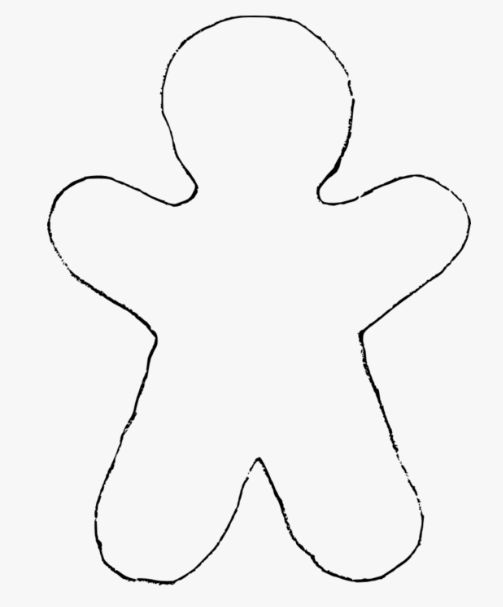
for family graph
deer
giraffe
panda
bear
raccoon
lemur
opossum
wolf
zebra
gorilla
prairie dog
otter
lion
orangutan
fox
elephant

Arthur’s Eyes, by Marc Brown

Arthur was having some problems seeing until his parents took him to the optometrist. After that, Arthur was having a problem with his friends teasing him about his new glasses. How does Arthur solve his problem about having to wear glasses? If you have a child, or children in your classroom that must wear glasses, this book may help them feel better about themselves.

Materials

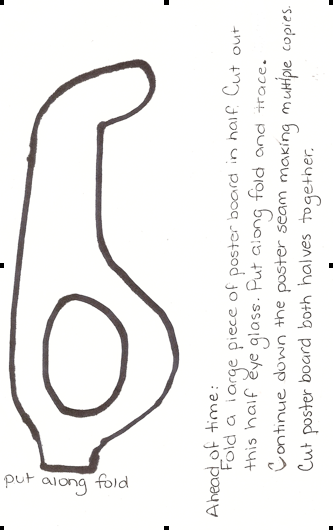
  • Eyeglass shape to use for making glasses

Vocabulary

  • Blind (to not be able to see with your eyes)
  • Optometrist (a doctor who takes care of your eyes)
  • Concentrate (to think about something really hard)

Before Reading the Story

Play a 5 senses game with the children. I’m thinking of something I use to smell the good foods we will eat at lunch. I’m thinking of something I use to hear my favorite song on the radio. I’m thinking of something I use to see who is coming in the door. When you do the riddle about eyes, stop and tell the children that sometimes people’s eyes do not see at all. This is called being blind. Ask the children to cover their eyes with their hands. How many fingers am I holding up? You can’t tell because you cannot see my fingers, this is like being blind. Sometimes people’s eyes are just not strong enough and so they cannot see very well. When this happens they wear glasses. Does anyone know anyone who wears glasses? Tell the children that today’s story is about an aardvark that had to get glasses to help him see better.

Social and Emotional Development/Knowledge of Families & Communities; progresses in understanding similarities and respecting differences among people such as genders, race, special needs, culture, language, and family structures.  AND Language Development/Listening & Understanding; demonstrates increasing ability to attend to and understand conversations, stories, songs, and poems.

Reading the Story

Stop on the page where Arthur is at the optometrists’ office. Spend a moment talking about what an eye examine is like (the optometrist might shine a light in your eyes, or a puff of air). Stop again on the page where Arthur and his friends are waiting for the school bus. How do you think Arthur feels when his friends make fun of his new glasses? What would you do if your friend had to wear new glasses?

Social & Emotional Development/Social Relationships; progresses in responding sympathetically to peers who are in need, upset, hurt, or angry; and in expressing empathy or caring for others.

After Reading the Story

Lead any discussion the children might have about glasses. Then tell the children that sometimes people wear glasses for other reasons also (sunglasses, eye protection/mowing lawn, working with tools, goggles are like glasses to see underwater)

Language Development/Listening & Understanding; understands an increasingly complex and varied vocabulary.  AND Approaches to Learning/Initiative & Curiosity; grows in eagerness to learn about and discuss a growing range of topics, ideas, and tasks.

Discovery

Put out magnifying glasses and interesting objects. Explain that some glasses make things look bigger so they are easier to see. You can also put out color paddles.

Science/ Scientific Skills & Methods; begins to use senses and a variety of tools and simple measuring devices to gather information, investigate materials, and observe processes and relationships.

Music and Movement

Chant, My Eyes Are Little Windows

 My eyes are little windows and through them I can see.
The birds and trees and flowers that are beautiful to me.

(The children can help name things that they feel are beautiful that you can then sing about. Make sure to write their ideas on a piece of paper and hang it up on the wall).

Literacy/Print Awareness & Concepts; develops growing understanding of the different functions of forms of print such as signs, letters, newspapers, lists, messages, and menus.

Blocks

Practice making letters with the blocks E,A,H,L,M,T etc.

Literacy/Early Writing; experiments with a growing variety of writing tools and materials, such as pencils, crayons, and computers.

Art

Put out a vase of flowers or a bowl of fruit. Give the children drawing materials and ask them to see if they can draw what they see.

Creative Arts/ Art; progresses in abilities to create drawings, paintings. models, and other art creations that are more detailed, creative, or realistic.  AND Science/Scientific Skills & Methods; develops growing abilities to collect, describe, and record information through a variety of means, including discussion, drawings, maps, and charts.

Decorate a pair of eyeglasses with stickers and markers.

Sand and Water

Hide alphabet magnet letters in the sand. As the children find them they can match them to a letter chart.

Literacy/Alphabet Knowledge; shows progress in associating the names of letters with their shapes and sounds.

Library and Writing

Have the children make their own eye charts. Start by making an E, and then turn it to face different directions. After they have finished their eye charts they can practice pointing the direction of the E with their fingers while they cover one eye.

Social & Emotional Development/Knowledge of Families & Communities; develops growing awareness of jobs and what is required to perform them.

Dramatic Play

Make an optometrists office. Bring in some old eyeglass or sunglass frames, make an eye chart, and add a small pen flashlight.

Social & Emotional Development/Knowledge of Families & Communities; develops growing awareness of jobs and what is required to perform them. 

Math and Manipulatives

Make a graph of several different colored glasses. Ask the children to decide what color they would want and to mark the graph. Count which color is the most popular, which color has the fewest votes, which has the most girls, boys, etc.

Mathematics/Patterns & Measurement; begins to make comparisons between several objects based on a single attribute.  AND Mathematics/Number & Operations; begins to use language to compare numbers of objects with terms such as more, less, greater than, fewer, equal to.

Outdoor Play

Teach the children to play Four Square. Mark out a large box shape with chalk on the sidewalk, the bigger the better but at least 10×10. Divide this box into quarters. Each person stands in his or her own space/quarter of box. Take a ball and bounce it to a child. It must bounce in their space. The child tries to catch the ball and then bounce it into another’s space. This is a game of bounce and catch. You can also divide your large square in half if there is not a space big enough for four players.

Physical Health & Development/Large Motor Skills; demonstrates increasing abilities to coordinate movements in throwing, catching, kicking, bouncing balls, and using the slide and swing.

Transition

I spy with my little eye, something in the room that is shaped like a circle, square, is the color blue, begins with the letter sound R, etc.  Language Development/Listening & Understanding; demonstrates increasing ability to attend to and understand conversations, stories, songs, and poems.

Dear Parent,

            Today we read a story about an aardvark that needed to get glasses in order to see properly. Play a seeing game with your child. Say, “I spy with my eyes something that is. …(Describe something within your vision and see if your child can guess what it is you’re describing). I spy with my eyes something that is tall and has four legs. We have a cushion on it to sit on. It is made of wood and is beside the table. Can you guess?

Resources

Screen Shot 2018-09-09 at 2.45.38 PM

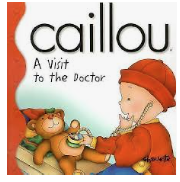
Caillou, A Visit to the Doctor, by Jaceline Sanschagrin

            Caillou is sick so his mother takes him to the doctor. This book gently describes a visit to the doctor’s office and helps remove some  of the  fears that children associate with a doctor and his office.

Materials

  • Hand Washing Chart
  •  Doctor equipment for flannel
  •  Small box of Q-tips
  •  Scale and Measuring tape
  •  Tongue depressors-many 

Vocabulary

  • Fever (When your body is feeling really hot and you feel sick)
  • Stethoscope (the tool the doctor uses to listen to your heart)
  •  Tongue depressor (the flat stick the doctor uses to look at the inside of your mouth and down your throat).                

Before Reading the Story

 Cut out each piece of the Doctor equipment pieces to the group.  Tape one piece at a time to a white board or flannel board.  Ask the children if they know the name of the tool and what it is used for?  After you have gone through all the pieces with the children, play What’s Missing?   Cover the board with a sheet and remove one flannel piece.  Ask the children if they can name what tool is missing?  Continue guessing what is missing and naming Doctor tools.  After you have finished playing this game, introduce the book. Show the front cover, what is the thing that  Caillou has in his hand?  Ask if anyone has ever been sick and had to go to the doctor.  Give the children several minutes to talk about their own experiences at the Doctor’s office.

Approaches to Learning/Initiative & Curiosity; grows in eagerness to learn about and discuss a growing range of topics, ideas, and tasks.

Reading the Story

 Point out Caillou’s face as you read the story.  Can the children tell how Caillou is feeling?  Can they make their facial expression match his?           

Social & Emotional Development/Social Relationships; progresses in responding sympathetically to peers who are in need, upset, hurt, or angry; and in expressing empathy or caring for others.

After Reading the Story

Tell the children that people can get sick from germs. Germs are all around and we get them by touching things and then putting our hands near our mouths.  Remind them that handwashing is the best way to be a germ buster.  With the children go through the steps of washing your hands the proper way and have the children act out the actions (turn on the water, wet your hands, apply the soap, scrub and scrub, do your fingers, do tops and bottoms, rinse your hands under the water, get a paper towel and dry your hands, turn off the water with the paper towel, throw the towel in the garbage).

Physical Health & Development/Health Status & Practices; sho0ws growing  independence in hygiene, nutrition, and personal care when eating, dressing, washing hands, brushing teeth, and toileting.

Discovery

 Measure and weigh the children.  Put a growth chart on the wall so they can visually see how tall they are.  To show weight, use 10 frames.  (If Kelly is 42 pounds you would use 4 10 frames and 2 squares cut from another 10 frame.

Mathematics/Number & Operations; begins to associate number concepts, vocabulary, quantities, and written numerals in meaningful ways.

Music and Movement

Teach the children the poem, Miss Molly.  Make actions to do along with the words.  

Miss Molly had a dolly who was sick, sick, sick

So she called for the Doctor to come quick, quick, quick

The Doctor came with his bag and his hat

And he knocked on the door with a rat-a-tat-tat

He looked at that dolly and he shook his head,

Miss Molly put that dolly straight to bed.

He wrote on a paper for a pill, pill, pill,

I’ll be back in the morning with my bill, bill, bill.

Creative Arts/ Music; participates with increasing interest and enjoyment in a variety of music activities, including listening, singing, finger plays, games, and performances.

I think this is called the Rhyme Time Band, find a good beat for yourself.

Shake your body part that rhymes with sand,

Rhymes with grand, rhymes with land.

Everybody shake your hand!

Now jiggle a part that rhymes with peg,

Rhymes with egg, and rhymes with beg.

Everybody, jiggle your leg!

Now circle a part that rhymes with smolder,

Rhymes with colder and with boulder.

Everybody circle your shoulder!

Now wink a part that rhymes with buy,

Rhymes with cry and rhymes with tie.

Everybody wink your eye!

Swing a body part that rhymes with farm,

Rhymes with charm, rhymes with harm.

Everybody swing your arm!

Now bend a part that rhymes with tree,

Rhymes with bee, and rhymes with me.

Everybody bend your knee!

Now twiddle a part that rhymes with drum,

Rhymes with crumb, and rhymes with gum.

Everybody twiddle your thumb!

And twist a part that rhymes with lips,

Rhymes with sips and rhymes with zips.

Everybody twist your hips!

Literacy/Phonological Awareness; progresses in recognizing matching sounds and rhymes in familiar words, games, songs, stories, and poems.  AND Language Development/Listening & Understanding; shows progress in understanding and following simple and multiple-step directions.

Blocks

 Add a bowl of tongue depressors to the center for creative building.

Approaches to Learning/Initiative & Curiosity; approaches tasks and activities with increased flexibility, imagination, and inventiveness.

Art

 Use Q-tips to paint with watercolors.

Physical Health & Development/Fine Motor SKills; progresses in abilities to use writing, drawing, and art tools, including pencils, markers, chalk, paint brushes, and various types of technology. AND Creative Expression/Art; begins to understand and share opinions about artistic products and experiences.

Sand and water

 Put a very small amount of sand into the table today and give the children tongue depressors to use as writing sticks.  Can they write the letters of their name in the sand? Can they make a D for doctor?

Literacy/Early Writing; progresses from using scribbles, shapes, and pictures to represent ideas, to using letter-like symbols, to copying or writing familiar words such as their own name.

Library and Writing

Put out the pictures of the doctor tools.  Can the children name the different tools?  Do they know what they are used for?  This is an individualized review of what you did at your story time today.

Approaches to Learning/Initiative & Curiosity; grows in eagerness to learn about and discuss a growing range of topics, ideas, and tasks.  AND Language Development/Speaking & Communicating; uses an increasing complex and varied spoken vocabulary.

Dramatic Play

 If you have a Doctor play set, put this out today.  Encourage the children to take turns being the Doctor and the Patient.  Can the patient articulate what they are pretending to be ill with?  Does the Doctor seem to have an understanding of what Doctor’s do?  You can also have the children use stuffed animals for their patients.  I like to purchase a box of cheap bandages that the children can apply to each other.   Remind the children not to put the thermometer into their mouth but perhaps under their arm or behind their knee. 

Social & Emotional Development/Knowledge of Families & Communities; develops growing awareness of jobs and what is required to perform them.  AND Language Development/Speaking & Communicating; develops increasing abilities to understand and use language to communicate information, experiences, ideas, feelings, opinions, needs, questions,; and for varied other purposes.

Math and manipulatives

Make a tongue depressor domino game.  Draw a colored line to divide the tongue depressor and put dots on each half.  The children can then use these to play dominos.

Mathematics/Number & operations; begins to make use of one-to-one correspondence in counting objects and matching groups of objects.

Outdoor Play

 If you have a wagon on the playground you can teach the children about paramedics.  The wagon can be the ambulance and you can use scarves as bandages for wounds.  

Social & Emotional Development/Knowledge of Families & Communities; develops growing awareness of jobs and what is required to perform them. 

Transitions

As you dismiss the children to the next activity have them take turns telling the steps for handwashing.  The first child tells step 1 and goes off, ask what comes 2nd, that child tells and goes off, etc.  If you finish all the steps, begin again.

Language Development/Listening & Understanding; demonstrates increasing ability to attend to and understand conversations, stories, songs, and poems.