Yoko, by Rosemary Wells

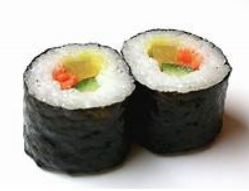
Yoko is taking her favorite lunch to school today, homemade sushi. But at lunch the children make fun of her unusual meal. Find out how her teacher helps her to feel better about eating differently than the other children. This is a good book to talk about acceptance and the hurtfulness of teasing.

 Materials

  • Several sets of chopsticks (you can use unsharpened pencils also). Put a small rubber band around them so the children can more easily open and close the sticks.
  •  2 small bowls and a handful of puffballs
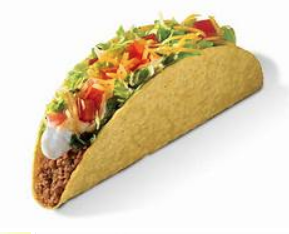
  • Pictures of foods

 Vocabulary

  • sushi-a food from Japan that is made with rice, fish, and vegetables that look like balls or rolls.

 Before Reading the Story

Start a conversation about favorite lunch time foods.  If you have a cook at your school  write a thank you not that tells some of the children’s favorite foods.  Remind the children that sometimes the lunch has a new item on the menu and that you encourage everyone to try a “no thank you helping at the least”.

Literacy/Early Writing; develops understanding that writing is a way of communicating for a variety of purposes.

Reading the Story

When you get to the page where Valerie blew the whistle and says, “Everybody out!” Ask the children why they think that Valerie did this (the children were teasing her, they were not being nice to the cat, they made fun of her).

Literacy/Book Knowledge & Appreciation; shows growing interest and involvement in listening to and discussing a variety of fiction, non-fiction and poetry.

 After Reading the Story

After you have read the story, ask again what happened at lunch that made Yoko so upset? Lead this into a discussion about kindness and not teasing others. Explain that teasing makes people feel sad and mad. Let the children know of any acts of kindness that you have seen in the last two days (Ann showed Michael how to open the paint jar so he could get more paint. Ryan told Paula he would give her a ride on the back of his tricycle when there were no more left. Alison told Sean “I like your new shoes”). Remind the children that if someone is teasing you, you can stand up for yourself and say, ”I don’t like it when you______”.

Social & Emotional Development/Self Control; develops growing understanding of how their actions affect others and begins to accept the consequences of their action. AND Social & Emotional Development/Social Relationships; progresses in responding sympathetically to peers who are in need, upset, hurt, angry; and in expressing empathy or caring to others.

Discovery

At lunch today, encourage all the children to try at least one bite of a new food. If you have a picky eater, ask someone who likes the food already to try to explain the taste before the picky eater tries his/her bite. Remind them that in the story the children decided that they would try everything!  Encourage all the children to try a No thank you helping of all foods served at lunch.

Social & Emotional Development/Cooperation; increases abilities to sustain interactions with peers b helping, sharing, and discussion.

Music and Movement

If you use any of the song titles from the story with your classroom, sing it with the children at your music time today. (The Good Morning Song, The Snack Time Song, The Friendly Song, The Clean Hands Song, and The School Bus Song).

Language Development/Listening & Understanding; demonstrates increasing ability to attend to and understand conversations, stories, songs, and poems.

Sing You Have To Eat Good Food to The Hokey Pokey https://www.youtube.com/watch?v=QfPg_GzC-HA

You have to eat good food to grow, grow, grow
You have to exercise to grow, grow, grow
You have to sleep at night to grow, grow, grow
Take good care of yourself.

Physical Health & development/Health Status & Practices; builds awareness and ability to follow basic health and safety rules such as fire safety, traffic and pedestrian safety, and responding appropriately  to potentially harmful objects, substances, and activities.

 Blocks

Challenge the children to make a table big enough for them to eat at. How many blocks did it take? What else did they use besides blocks?

Approaches to learning/Reasoning & Problem Solving; develops increasing ability to find more than one solution to a question, task, or problem.

 Art

Pretend to make sushi and practice rolling play dough. Give each child a lump of play dough and a roller. If you do not have rollers, cylinder blocks work well. Let the children practice rolling the dough out thin. After they have rolled it out, show them how to roll the dough into a long cylinder like shape. Let them use plastic knives to cut it into small sushi like pieces.

Physical Health & Development/Fine Motor Skills; develops growing strength, dexterity, and control needed to use tools such as scissors, paper punch, stapler, and hammer.

Sand and Water

Use dampened sand in the table today. Add some plates, pots and pans, and cooking utensils. The children can pretend to be making food.

Creative Arts/Dramatic Play; shows growing creativity and imagination in using materials and in assuming different roles in dramatic play situations.

 Library and Writing

Ask the children to draw a picture of their favorite lunch and then the teacher can write what they say it is underneath. Hang these on the wall, as ‘These are a few of our favorite meals’.

Literacy/Early Writing; begins to represent stories and experiences through pictures, dictation, and in play.  AND Literacy/Early Writing; develops understanding that writing is a way of communicating for a variety of purposes.

 Dramatic Play

Remind the children that in the story Yoko and Timothy pushed their desks together to play restaurant. Put out a takeout menu or restaurant props for the children today

Creative Arts/Dramatic Play; shows growing creativity and imagination in using materials and in assuming different roles in dramatic play situations.

Math and Manipulatives

Bring in several pairs of chopstick or make them using unsharpened pencils. Put out a bowl of puffballs and challenge the children to pick up the puffballs one at a time and drop them into another bowl.

Physical Health & Development/Fine Motor Skills; develops growing strength, dexterity, and control needed to use tools such as scissors, paper punch, stapler, and hammer.

Outdoor Play

Let the children make Garden Soup today.  Put out buckets, water, and scissors.  Show the children how to cut grass with the scissors to add to the soup as well as pine needles, rocks, bark, etc..

Creative Arts/Dramatic Play; shows growing creativity and imagination in using materials and in assuming different roles in dramatic play situations.  AND Approaches to learning/Initiative & Curiosity; approaches tasks and activities  with increased flexibility, imagination, and inventiveness.

 Transitions

Hold up a picture of a food and ask a child to name it. The child can then move on to the next activity.

Resources
Screen Shot 2018-11-04 at 2.14.06 PM
Screen Shot 2018-11-04 at 2.12.30 PM
Screen Shot 2018-11-04 at 2.10.02 PM
Screen Shot 2018-11-04 at 2.11.45 PM
Screen Shot 2018-11-04 at 1.58.01 PM
Screen Shot 2018-11-04 at 2.13.28 PM
Screen Shot 2018-11-04 at 1.53.02 PM
Screen Shot 2018-11-04 at 2.03.47 PM
Screen Shot 2018-11-04 at 1.58.45 PM
Screen Shot 2018-11-04 at 1.55.18 PM
Screen Shot 2018-11-04 at 1.53.43 PM
Screen Shot 2018-11-04 at 2.04.27 PM
Screen Shot 2018-11-04 at 1.56.57 PM
Screen Shot 2018-11-04 at 2.04.45 PM
Screen Shot 2018-11-04 at 2.00.15 PM
Screen Shot 2018-11-04 at 2.00.51 PM
Screen Shot 2018-11-04 at 2.01.30 PM
Screen Shot 2018-11-04 at 2.05.56 PM
Screen Shot 2018-11-04 at 2.06.48 PM
Screen Shot 2018-11-04 at 2.03.08 PM

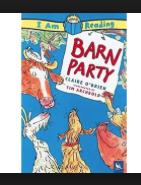
Barn Party, by Claire O’Brien

The chicken sisters are planning a party but rooster takes over.  He thinks he is in charge and invites or disinvites those that he thinks are too untidy to come.  Guess what happens when the other farm animals hear about his unfriendly behavior.

Materials

  • 1-2 rolls of crepe paper
  • Party hats, one for each child allowed in dramatics at one time,
  • Emotion cards
  • A bowling game or 10 soda bottles filled halfway with water and a ball

Vocabulary

  • Mean ( not nice)
  • Furious (to be really, really mad)
  • Sportsmanship (being fair and kind in games or sports)

Before Reading the Story

Read the title of the book and ask the children who they think might be the characters in the story? How many farm animals can they name?

Approaches to Learning/Reasoning & Problem Solving; develops increasing abilities to classify, compare, and contrast objects, events, and experiences.

Reading the Story

Stop on page 25 and Ask the children how they think all the animals are feeling knowing that they are not invited to the party?  How would it make you feel?  Now ask, what do you think the animals could do to make themselves feel better?  On page 30, ask the children if they think the chicken sisters are being mean too, why or why not?  On page 34, the Chicken Sisters say it is time to teach Rooster a lesson.  Ask the children if they have any ideas what the chickens and all the animals are going to do to Rooster to teach him a lesson?

Social & Emotional Development/Social Relationships; progresses in responding sympathetically to peers who need help, upset, angry, or hurt; and in expressing empathy or caring for others. AND Language Development/Speaking & Communicating; develops increasing abilities to understand and use language to communicate information, experiences, ideas, feelings, opinions, needs, questions; and for other varied purposes.

After Reading the Story

Tell the children that you are going to play Thumbs Up/Thumbs Down with them. Explain that you are going to give a scenario and if it is a kind or friendly act, the children put their thumbs up. If it is an unkind or unfriendly act, the children point their thumbs down. (Lisa asked JJ if she could play in the center with him and he said yes. Brenda told Jasmine that she was not her friend because she would not let her have the baby doll that she wanted. When the cook brought lunch, Michael told her thank you, that smells good).

Social & Emotional Development/Self-Control; develops growing understanding of how their actions affect others and begins to accept the consequences of their actions.

Discovery

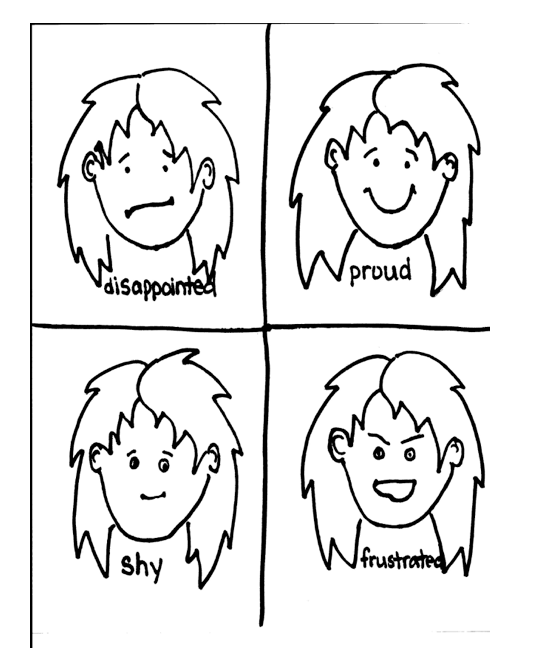
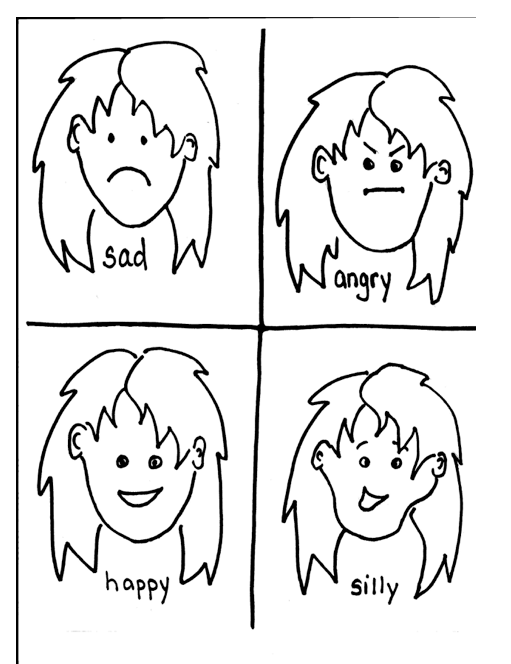
Make two sets of the emotion cards and attach them to paper that the children cannot see through. Turn all the cards face down on the table. The children take turns picking up two cards trying to pick up matches. If the two cards do not match, the child turns them back face down and it is the next child’s turn. If the two cards match, the child keeps them. When all the cards have been matched, the children can count their cards to see who found the most. Talk about emotions as the children pick up cards.

Approaches to Learning/Engagement & Persistence; shows growing capacity to maintain concentration over time on a task, question, set of directions or interactions, despite distractions and interruptions.

Music and Movement

Teach the children the Brush Your Teeth chant.

Brush your teeth everyday,

Up and Down it is the right way.

Back and forth and circles too,

That’s just what you’ve got to do. 

Brush your teeth everyday,

Up and down it is the right way.

Physical Health & Development/Health Status & Practices; shows growing independence in hygiene, nutrition, and personal care when eating, dressing, washing hands, brushing teeth, and toileting.

Sing, It’s Love That Makes The World Go Round. Take the verse tune to this song and teach the children using the following words. https://www.youtube.com/watch?v=TB6hivRQxmE 

It’s love, it’s love, it’s love that make the world go round

It’s love, it’s love, it’s love that makes the world go round

It’s love, it’s love, it’s love that makes the world go round

It’s love that makes the world go round.

It’s you, it’s me, it’s friends that make the world go round

It’s you, it’s me, it’s friends that make the world go round

It’s you, it’s me, it’s friends that make the world go round

It’s love that makes the world go round.

Creative Arts/Music; participates with increasing interest and enjoyment in a variety of music activities, including listening, singing, finger plays, games, and performances.

Put on lively dance music today and pretend to be having a barn dance.  https://www.youtube.com/watch?v=1xXePOakJGs

Creative Arts/Movement; expresses through movement and dancing what if felt and heard in various musical tempos and styles.

Blocks

The animals had their party in the barn.  Put out the farm animals today and challenge the children to make a big barn out of blocks.  Encourage them to work together. Social & Emotional Development/Cooperation; shows increasing abilities to use compromise and discussion in working, playing, and resolving conflicts with peers.

Art

Remind the children that in the story today, cow had gotten new teeth.    Ask the children how they take care of their teeth (I brush my teeth.  My Mom says no soda because it will make my teeth fall out. ).  Ask how often children should brush their teeth?  Give each child a yellow piece of paper cut out into a tooth shape.  Show them how to dip a toothbrush into white paint and paint the yellow tooth shape .  Encourage them to brush the entire yellow tooth shape until it is clean and shiny (full of white paint). Do the Brush Your Teeth chant as the children paint.

Physical Health & Development/Health Status & Practices; shows growing independence in hygiene, nutrition, and personal care when eating, dressing, washing hands, brushing teeth, and toileting.

Sand and Water

Put dirt in the table today.  Give the children watering cans or medium sized containers to add water to the dirt.  What happens?  Give the children some scooping toys and let them enjoy the mud.  Ask, who in the story was told they are too muddy (pig)? 

Science/Scientific Methods & Skills; begins to use senses and a variety of tools and simple measuring devices to gather information, investigate materials, and observe processes and relationships.

Library and Writing

Ask each child to draw a picture of themself with a friend.  Ask the child, what makes _______such a good friend?  Write their response on the bottom of the paper.  (Roger is my friend because he always lets me play.  Lee is my friend because her hair is like mine in a ponytail, Kim is my friend because she shares her snack and her toys with me).

Social & Emotional Development/Social Relationships; shows progress in developing friendships with peers.

Dramatic Play

Add a roll of crepe paper and some party hats to the center today.  The children can decorate for a pretend party.

Literacy/Book Knowledge & Appreciation; demonstrates progress in abilities to retell and dictate stories from books and experiences; to act out stories in dramatic play; amd to predict what will happen next in a story.

Math and Manipulatives

Set out a classroom game such as CandyLand where the children must take turns. Before they begin, remind them about good sportsmanship.

Social & Emotional Development/Cooperation; develops increasing abilities to give and take in interactions; taking turns in games and in using materials; and to interact without being overly submissive or directive.

Outdoor Play

Set up bowling with the children today.  The children have to take turns rolling the pins and setting up the pins.

Social & Emotional Development/Cooperation; develops increasing abilities to give and take in interactions; taking turns in games and in using materials; and to interact without being overly submissive or directive.

Encourage ball play today.  Have the children find a friend and bounce the ball to each other or roll, kick, or throw the ball to one another.

Physical Health & Development/Gross Motor Skills; demonstrates increasing ability to coordinate movements in throwing, catching, kicking, bouncing balls, and using the slide and swing. AND Social & Emotional Development/Cooperation; increases abilities to sustain interactions with peers by helping, sharing, and discussion.

Transitions

Play I’m thinking of a friend.  Give clues as to who you are thinking about in the classroom or center.  The children guess.   If they guess right they may head to the next activity.  (I’m thinking of a friend who has curly hair and a baby brother.  This friend comes to school in a white SUV with the dog in the back seat.  I’m thinking of a very important friend because she makes us out lunch everyday.).

Approaches to Learning/reasoning & Problem Solving; develops increasing abilities to classify, compare, and contrast objects, events, and experiences.

Resources
It’s love
The world go round
It’s you
It’s me
It’s friends

Duck and Goose, Tad Hills

Duck and Goose are not really friends but must learn to get along as they wait for an egg to hatch.

 Materials

  • Many 1-2 inch circles cut in a variety of colors
  • Large circle of paper, 1 per child
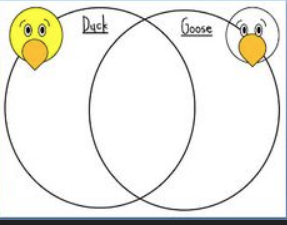
  • Circle graph, label one side “duck” and the other side “goose”
  • Several ping pong balls or other small balls that will float
  • 5 paper ducks (color each a different color) and an egg shape that fits underneath without showing.

 Vocabulary

 Before Reading the Story

Cut a one inch hole in a manila file folder. Cut out interesting pictures from magazines. Place the picture behind the file folder with a section showing through the 1-inch hole. Have the children see if they can guess what the picture is behind the file folder. Move it around some to help them see just a little bit of the picture at a time. After you have done this several times, tell the children that today’s story is about two friends who find something that they think is an egg but it is not an egg. Ask them if they guess what that thing might be. Show them the cover after they have made their guesses and introduce the story.

Approaches to Learning/Initiative & Curiosity; chooses to participate in a n increasing variety of tasks and activities.  AND Science/Scientific Knowledge; expands knowledge of and abilities to observe, describe, and discuss the natural world, materials, living things, and natural processes.

 Reading the Story

As you read the story, use an assertive voice when the two friends are arguing about what to do with the egg.

 After Reading the Story

Ask the children what they would do if they and another child both wanted the same toy? Use your social cues to help talk about taking turns, sharing, or asking the teacher for help. (If me and Juanna wanted the baby I would give her the other one. If someone tried to take a toy from me I would tell them “No, it is my turn, you can be next”. When Kim took the truck from me I cried and then told the teacher she was mean”.

Social & Emotional Development/Cooperation; shows increasing abilities to use compromise and discussion in working, playing, and resolving conflicts with peers.

 Discovery

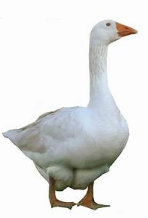
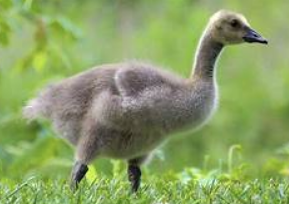
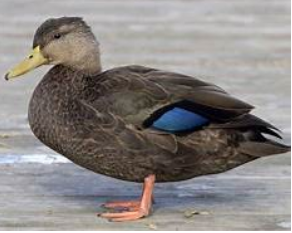
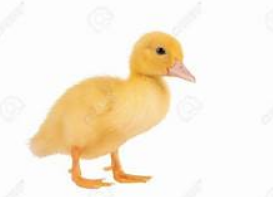
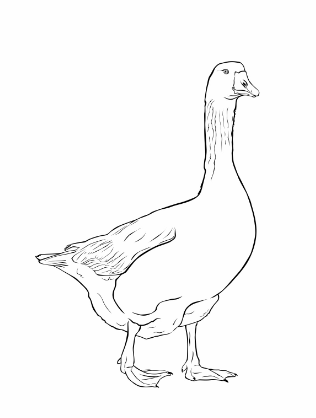
Put out pictures of a real duck and a real goose. As the children look at the pictures, ask them to compare them using a circle graph. Write their responses in the appropriate sections.

Science/Scientific Knowledge; expands knowledge of and abilities to observe, describe, and discuss the natural world, materials, living things, and natural processes.

 Music and Movement

Play a passing game using a small ball. Sing or chant the following.

We will pass this ball from me to you to you
We will pass this ball and that’s just what we’ll do.

Have the children sit in a circle and pass the ball around the circle. Have the children turn to their right so they are facing the child beside them’s back and pass the ball overhead. Have the children pass the ball under their legs, using only one hand , etc..

Physical Health & Development/Gross Motor Skills; demonstrates increasing abilities to coordinate movements in throwing, catching, kicking, bouncing balls, and using the slide and swing.

 Sing 5 Little Ducks https://www.youtube.com/watch?v=pZw9veQ76fo

5 little ducks went out to play,
Over the hills and far away.
Mother duck called quack, quack, quack
4 little ducks came running back.
Sing 4,3,2,1
0 little duck went out to play,
Over the hills and far away.
Mother Duck called QUACK, QUACK, QUACK!
5 little ducks came running back.

Children hold up the correct number of fingers to go with each verse and wave their hand back and forth to the rhythm.

Mathematics;/Number & Operation; begins to make use of one-to-one correspondence in counting objects and matching groups of objects.

 Blocks

Remind the children that on the one page, duck and goose made fences around the ball so the other could not get it. Encourage the children to make a fence with the blocks. Can they make a patterned fence using two or three sized blocks?

Mathematics/Patterns & Measurement; enhances abilities to recognize, duplicate, and extend simple patterns using a variety of materials.

 Art

Give each child a large circle shape of paper and many smaller circles in a variety of colors that they can glue onto the large circle. After is has dried, trim any pieces that go over the edge so that the finished product is a large circle with a many circle design.

Mathematics/Geometry & Spatial Sense; begins to be able to recognize, describe, compare, and name common shapes, their parts and attributes.

 Sand and Water

Put floating balls and/or ping pong balls in the water table today. Give the children spoons or similar to try to scoop the balls from the water.

Physical Health & Development/Fine Motor Skills; develops growing strength, dexterity, and control needed to use tools such as scissors, paper punch, stapler, and hammer.

 Library and Writing;

Bring in books that show real ducks and geese for the children to examine.

Science/Scientific Skills & Methods; develops increased ability to observe and discuss common properties, differences,and comparisons among objects and materials.

 Dramatic Play

If you have a large yoga ball, bring it in and the children can act out the story.

Literacy/Book Knowledge & Appreciation; demonstrates progress in abilities to retell and dictate stories from books and experiences; to act out stories in dramatic play; and to predict what will happen next in a story.

 Math and Manipulatives

Use your colored ducks and 5 pieces of paper with 1-5 dots on it. Ask the child to show you 3 ducks, 1 duck, 5 ducks, etc.. For older children ask them to show you 3 ducks and then add 1 more…now how many ducks do you have?

Mathematics/Number & Operations; demonstrates increasing interest and awareness of numbers and counting  as a means for solving problems and determining quantity.

Outdoor Play

Bring out the balls today and practice kicking from a stand still and while the ball is rolling. Practice catching the ball, bouncing and catching, and dribbling.

Physical Health & Development/Gross Motor Skills; demonstrates increasing abilities to coordinate movements in throwing, catching, kicking, bouncing balls, and using the slide and swing.

Play Duck, Duck, Goose with the children. Have the children hold hands and make a big circle. One person is ‘It’. ‘It’ walks around the circle lightly tapping the children’s heads saying either duck or goose with each tap. If ‘It’ says Duck then nothing happens and ‘It’ goes onto the next person. But if ‘It’ says Goose, the person tapped must chase ‘It’ around the circle and try to tag him/her. ‘It’ is safe when he/she runs around the circle and back to the place where the other child was goosed. The new child now becomes ‘It’.

Physical Health & Development/Health Status & Practices; participates actively in games, outdoor play, and other forms of exercise that enhance physical fitness.  AND Language Development/Listening  & Understanding; shows progress in understanding and following simple and multiple-step directions.

 Transitions

Lay the 5 colored ducks out in the middle of the circle. Have a child cover their eyes and hide the egg under one of the ducks. The child must then guess which duck the egg is under by naming the color duck. I usually give the children three guesses. That child then hides the egg for another child to guess.

Resources
Screen Shot 2018-11-05 at 1.05.37 PM
Screen Shot 2018-11-05 at 12.31.31 PM
Screen Shot 2018-11-05 at 12.33.28 PM
Screen Shot 2018-11-05 at 12.30.18 PM
Screen Shot 2018-11-05 at 12.34.07 PM
Screen Shot 2018-11-05 at 1.06.37 PM
use for colored ducks
Screen Shot 2018-11-05 at 12.48.56 PM
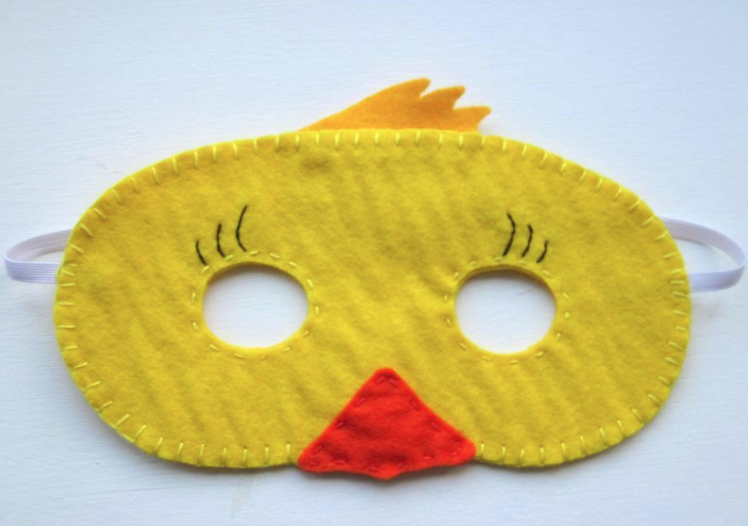
Saw this on the internet, could be fun to make for dramatic play.