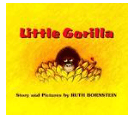
Little Gorilla by Ruth Bornstein

            Everybody loves little gorilla, a baby in the jungle.  When he has his first birthday he discovers that he is no longer a little gorilla, but he is still loved.

Materials

  • Picture of a real gorilla from a book or magazine.
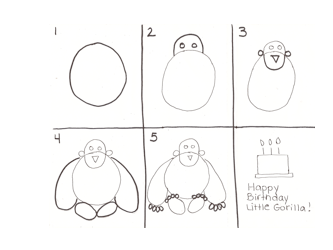
  • How to draw a gorilla directions
  • 2 Washcloths and towels
  • crepe paper
  • wrapping paper, foil, or newsprint (to use for wrapping)
  • several shoe boxes or blocks (to use for wrapping)
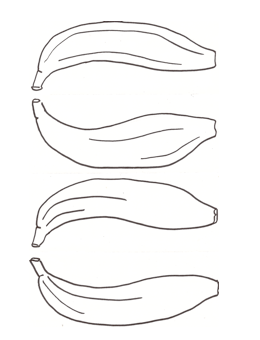
  • Large banana cards for measuring
  • 1/2 Banana per child, cereal (i.e. Cheerios), and small baggie per child.

Vocabulary

  • Gorilla (a cousin to the monkey. Gorillas grow really, really big)

Introducing the Story

            Begin a discussion about babies.  What kinds of things can babies do? What kinds of things can babies not do? Show the children the picture of a gorilla and the cover of the book, Little Gorilla. Ask if they know what kind of animal this is?  Tell the children that all animals, just like people start off as babies and that they grow up to be big and strong.

Science/Scientific Knowledge; expands knowledge of and respect for their bodies and the environment.

Reading the story

            Emphasize the word grow as you read.  When you get to the page where the animals sing Happy Birthday to Little Gorilla, stop and let the children sing along.

After Reading the story

            Ask the children what their family and friends do to make them feel loved?

Social & Emotional Development/Social Relationships; progresses in responding sympathetically to peers who are in need, upset, hurt, or angry; and in expressing empathy aor caring for others.

Music and Movement

Teach the poem, When I Was One Years Old. Have the children scrunch down low and as you say the poem they grow taller and taller until they are reaching towards the ceiling.

                                    When I was one years old,                       

                                    I was very,very small

                                    But now I’m 3 years old

                                    And I’ve grown up big and tall!    


Language Development/Listening & Understanding; demonstrates increasing ability to attend to and understands conversations, stories, songs, and poems.

Discovery

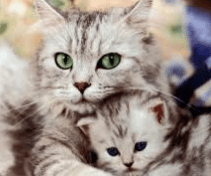
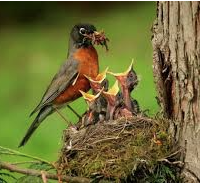
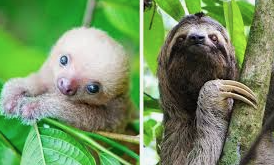
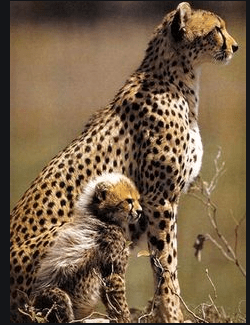
            Put out books/pictures of animal babies and mothers.  Encourage the children to tell how they look alike and different.

Science/Scientific Skills & Methods; develops increased ability to observe and discuss common properties, differences ,and comparisons among objects and materials.

Make banana pops with the children. (Give each child a half of a banana and a small baggie of cereal).  Have the children crush the cereal and then cut the banana into three pieces and put the banana pieces into the baggie.  Shake it up and then take it out to eat.

Language Development/Listening & Understanding; shows progress in understanding and following simple and multiple-step directions.

Blocks

            Add animals to blocks.  Ask the children if they can arrange the animals from smallest to largest.

Mathematics/Pattern & Measurement; shows increasing abilities to match, sort, put in series, and regroup objects according to one or two attributes such as shape or size.

Art

            Put out the How to Draw a Monkey directions and encourage the children to try to read teh directions and draw.

Physical Health & Development/Fine Motor Skills; progresses in abilities to use writing, drawing, and art tools, including pencils, markers, chalk, paint brushes, and various types of technology.

Sand and Water

            Put any hard plastic baby dolls that you have in water today. Add several washcloths and towels for the children to give the dolls baths. Remind them that babies and children need to stay clean and healthy.

Physical Health & Development/Health Status & Practices; shows growing independence in hygiene, nutrition, and personal care when eating, dressing, washing hands, brushing teeth, and toileting. AND Creative Arts/Dramatic Play; participates in a variety of dramatic play activities that become more extended and complex.

Library and Writing

            Cut out the picture cards. Have the children sort them by pictures that start with the G sound and those that do not.

Literacy/Phonological Awareness; shows growing awareness of beginning and ending sounds of words.

Dramatic Play

           Let the children play Birthday Party. Give them the crepe paper to decorate by hanging on the walls. Give them the boxes or blocks to wrap with paper and masking tape as gifts. Add any other party supplies that you might have.

Creative Arts/Dramatic Play; shows growing creativity and imagination in using materials and in assuming different roles in dramatic play situations.

Math and Manipulatives

            Make several copies of the large banana card and have the children use it to measure how many bananas tall their partner is.  Record (Kerry is 4 bananas tall).  Encourage them to also measure the table, the book shelf. etc..

Mathematics/Patterns & Measurement; shows progress in using standard and non-standard measures for length and area of objects.

Outdoors

            Use a ball to play Monkey in the Middle.  Two people throw a ball back and forth.  Some one, the monkey, is in the middle and must try to get the ball before the throwers.  If they do, then a thrower goes in the middle and the monkey comes out to be a thrower.

Physical Health Development/Gross Motor Skills; demonstrates increasing abilities to coordinate movements in throwing, catching, kicking, bouncing balls, and using the slide and swing.

Transitions;

Play I’m Bigger Than-Smaller Than. Make up riddles for the children to solve. (I am an animal that is bigger than a cow. I have wrinkly skin and a long nose called a trunk. I am smaller than a mouse. I am an insect that has spots on my back and wings to fly).

Approaches to Learning/Reasoning & Problem Solving; develops increasing abilities to classify, compare, and contrast objects, events, and experiences. AND Science/Scientific Knowledge; expands knowledge of and abilities to observe, describe, and discuss the natural world, materials, living things, and natural processes.

Resources
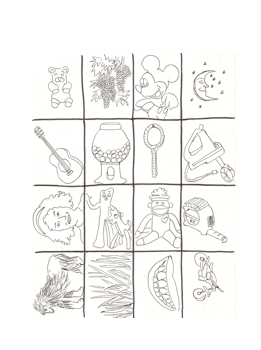
Things that start with /G/ and things that do not
Bananas for measuring

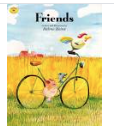
Friends, by Helme Heine

            Three good friends share their adventures and their philosophy on what it means to be a friend.

Materials

  • Picture of each child in the class, full body
  • Pictures of children at play
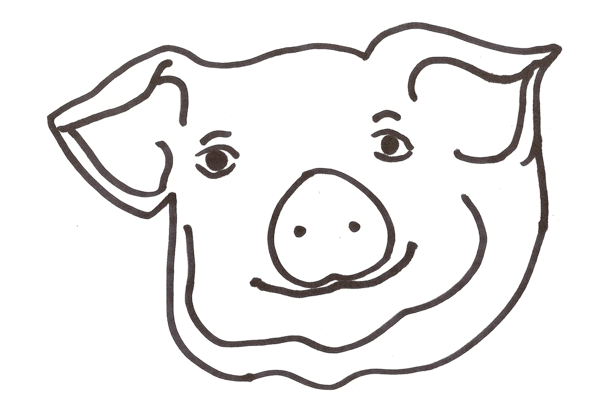
  • Pig, rooster, mouse mask
  • Hi-ho cherry-o game boards

Vocabulary

  •  Conquered (to take control of something)
  •  Fair (always thinking about another person and to share equally)

Before Reading the Story

            Explain to the children that you are going to play a game called thumbs up.  You are going to say a short story and if it sounds like the good way to treat a friend, give a thumb up sign.  If not, give a thumb down sign.  Make your scenario/stories ones that you have seen happen within your classroom (one day Kerry and Roger were playing in the blocks and Kerry kicked Roger’s tower by accident.  Kerry said she was sorry and Roger said it was ok..  One day Kerry and Roger were playing in the blocks and Kerry wanted the block Roger had but Roger said “no” so  Kerry knocked down his block tower because she was mad).  Give examples using puppets and let the children decide if it was a thumb up or a thumb down.   Do friend and not friend actions, how does it make you feel? What could you have done instead?

Social & Emotional Development/Self-Control; develops an understanding of how their actions affect others adm begins to accept the consequences of their actions. AND Social & Emotional Development/Social Relationships; progresses in responding sympathetically to peers who are in need, upset, hurt, or angry; and in expressing empathy and caring for others.

Reading the Story

Looking at the cover, can the children predict what it might be about? Introduce the story.

Literacy/Book Knowledge & Appreciation; shows growing interest and involvement in listening to and discussing a variety of fiction, non-fiction, and poetry.

After Reading the Story

            Talk about what the three friends liked to do together, recall the order of events.  What things did they share along the way?  Ask the children what kinds of things they like to do with their friends.

Literacy/Book Knowledge & Appreciation; demonstrates growing abilities to retell and dictate stories from books and experiences; to act out stories in dramatic play; and to predict what will happen next in a story. AND Social & Emotional Development/Social Relationships; shows progress in developing friendships with peers.

Discovery

            Bring in pictures of children interacting together. Ask the children to describe what they see happening.  Do you think these children are friends, why?  Do they look like they are having fun, being safe, etc?  Talk about the actions in the pictures.  Have the children use their observation skills to notice faces and body language.

Social & Emotional Development/Self-Control; develops an understanding of how their actions affect others adm begins to accept the consequences of their actions.

Music and Movement

            Have the children lay on their backs and put their feet up in the air.  Pretend to pedal a bicycle.  Can you peddle fast, slow, around a sharp corner? 

Physical Health & Development/Health Status & Practices; participates actively in games, outdoor play, and other forms of exercise that enhance physical fitness.

            Sing Row, Row, Row the Boat with the children.  The children can partner up with another and try to row together, side-side, holding hands back and forth, back to back, etc.

Social & Emotional Development/Cooperation; develops increasing ability to give and take in interactions; to take turns in games and using materials; and to interact without being overly directive or submissive.

Blocks

            Contact pictures of the children in the class to the small rectangle blocks.  The children can then build a structure for their friends and act out play scenarios.

Approaches to Learning/Initiative & Curiosity; approaches tasks and activities with increasing flexibility, imagination, and inventiveness.

Art

            Print out large letters of the alphabet from the computer.  Give the children a variety of art materials to decorate the letters (collage, paint, drawing supplies).  When the letters are dry you can cut them out and mount them onto your wall.  As the children decorate the letters, ask if they know the letter name, the letter sound, and words that might begin with that letter.

Literacy/Alphabet Knowledge;Identifies at least 10 letters of the alphabet, especially those in their name.

Sand and Water

            Put boats into the water table and small animals.  If you have no boats, plastic containers and lids will work.  Can you put three friends in and float?  How many friends can you get into your boat? 

Mathematics/Number & Operations; demonstrates increasing interest and awareness of numbers and counting as a means to solving problems and determining quantity. AND Science/Scientific Skills & Methods; begins to participate in simple investigations to test observations, discuss and draw conclusions, and form generalizations.

Library and Writing

            Take a big piece of paper and write F is for Friends across the top.  Have the children think of words that begin with F.  Write these words on the paper down the left side.  After the children have thought of F words, they can all practice making their own F’s on the paper, or they may like to illustrate some of the F words. (Foot, flower, funny, freckle, finger, fingernail, flap, four, fish)

Literacy/Phonological Awareness; shows growing progress of beginning and ending sounds in words.

Dramatic play

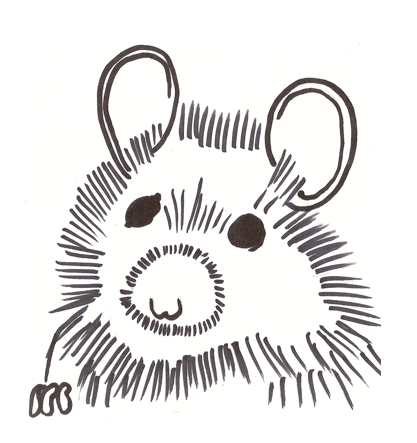
            Use the animal heads to make masks.  Color and decorate.  Staple to a sentence strip and adjust to the child’s head size.  They can become the characters while they share and play in dramatics.

Creative Arts/ Dramatic Play; shows growing creativity and imagination in using materials and in assuming different roles in dramatic play situations.

Math and Manipulatives

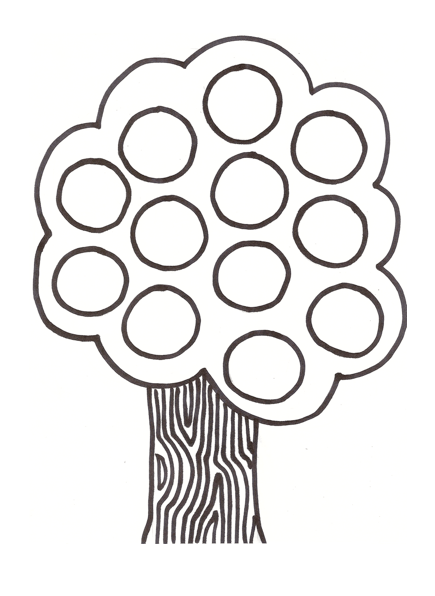
            Home made Hi-ho Cherri-o game.  Make several copies of the cherry tree and cut out many small red circles.  Put the circles onto the trees.  The children use a dice to roll.  The number they roll is the number of cherries they can remove from their tree.  The object is to remove all the cherries from the tree.  Play until everyone’s tree is empty.

Mathematics/Number & Operations; begins to use one-to-one correspondence in counting objects and matching groups of objects.

Outdoor play

            Give each other rides on the back of the tricycles. 

Physical Health & Development/Health Status & Practices; progresses in physical growth, strength, stamina, and flexibility.

Put a sheet on the ground and pretend that it is a boat.  Gather as many children as want to play and go for a sail.  Pretend to catch fish and swim from the side of the boat.

Creative Arts/ Dramatic Play; shows growing creativity and imagination in using materials and in assuming different roles in dramatic play situations. AND Social & Emotional Development/Cooperation; develops increasing ability to give and take in interactions; to take turns in games and using materials; and to interact without being overly directive or submissive.

Transitions

            Ask the children to describe one thing they like to do with a friend. Write their responses on a piece of paper and hang on the wall.

Social & Emotional Development/Social Relationships; shows progress in developing friendships with peers.


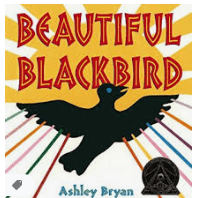
Beautiful Blackbird, by Ashley Bryan    

All the birds want to be beautiful like black bird who generously shares his color with them.

Materials

  • Roll of crepe paper
  • A whisk, hand eggbeater, slotted spoon, different tools to make bubbles in water.
  • Several large stiff feathers to use as paint brushes

Vocabulary

  • Arcs (curves and semicircles)
  • Festival (party or celebration)
  • Mirrored (reflected)
  • Beautiful (how lovely someone or something is)

Introducing the Story

Play a color game such as; If you are wearing _____clap your hands, if you are wearing ________green stomp your feet.

Language Development/Listening & Understanding; shows progress in understanding and following simple and multiple-step directions.

Or have snips of paper in several colors (one for each child). Give each child a snip of paper and the child must go and find an object in the room that color. Make sure whatever game you play that black is included.

Mathematics/Geometry & Spatial Sense; shows growth in matching, sorting, putting in a series, and regrouping objects according to one or two attributes such as color, shape, or size.

Reading the Story

Read this book ahead of time so that you have the rhythm of the story as you read. When you get to the page where Blackbird shares his color, tell the children that he is being a beautiful friend by sharing all his color.

Language development/Listening & Understanding; demonstrates increasing ability to attend to and understand conversations, stories, songs, and poems.

After Reading the Story

Ask the children what it is that all the birds wanted from black bird? (His color black).   Why do you think they wanted some black of their own? (They thought it was beautiful). Do you think it was fair that Black Bird shared some of his with all the other birds? (Yes, he was being a good friend). Ask the children if they know what beautiful means? Let them give their thoughts (Beautiful is really pretty like a shiny necklace. Beautiful is my stuffed doggie. My Mommy says my smile is beautiful.). Then tell the children that every person in the whole wide world has something that is beautiful about them. Sometimes it is on the outside like lovely curls and sometimes it is on the inside like when someone always shares and is kind. Let the children comment upon this idea. If they do not, you can tell one thing beautiful about all the children in the group. (Roger has a beautiful smile and Alison is beautiful because she is so gentle with her baby sister and other little children.). Make sure to include both inward and outward beauty for everyone throughout the day. (Sean, that is beautiful how you mixed those colors on your painting, you are an artist. Paula, that was so thoughtful and beautiful for you to share your book with Ryan).

Literacy/Book Knowledge & Appreciation; shows growing interest and involvement in listening to and discussing a variety of fiction and non-fiction books and poetry.

Music and Movement

Take the words to the dance in the book and turn it into a barnyard type call and dance.

Beak to beak, peck, peck, peck
Spread your wings, stretch your neck.
Tip tap toe to the left, spin around
Toe tap tip to the right, stroke the ground.
Wings flip-flapping as you glide,
Forward and backward in a snow claws slide.

Language Development/Listening & Understanding; shows progress in understanding and following simple and multiple-step directions. AND Creative Arts/Movement; shows growth in moving in time to different patterns of beat and rhythm in music.

Sing Two Little Blackbirds

Two little blackbirds sitting on a hill,                                     
(Children hold up 1 finger on each hand)
One named Jack and one named Jill.                                         
(Wiggle left finger, wiggle right finger)
Fly away Jack, fly away Jill                                                         
( Put 1 finger behind back, then the other)
Come back Jack, come back Jill.                                                 
(Bring 1 finger forward, then the other)

Next add 2 fingers to each hand and count. Sing about 4 blackbird, then 6 blackbirds, 8, and then 10

Mathematics/Numbers & Operations; develops increased abilities to combine and name “how many” concrete objects.

Discovery

Fill 5 plastic cups with a small amount of paint; red, blue, yellow, white, and brown. Put out white paper and brushes. Challenge the children to mix colors to make new colors. Can they make black? Pink? Green? Purple? What happens when you add more white to your color?

Science/Scientific Skills; begins to participate in simple investigations to test observations, discuss and draw conclusions, and form generalizations.

Blocks

Challenge the children to build a nest and then pretend to be birds.

Approaches to Learning/ Reasoning & Problem-Solving; develops increasing ability to find more that one solution to a question, task, or problem.

Art

Put out black paint and feathers for brushes at the easel today. You can cut out simple bird shapes from colored construction paper.

Creative Arts/Art; gains ability to use different art media and materials in a variety of ways for creative expressions and representation.

Sand and Water

In the story, blackbird stirred his brew in the medicine gourd. Put water into the table today with things to stir; a whisk, a hand mixer, a slotted spoon. Let the children add soap to stir around and make bubbles.

Social & Emotional Development/Self-Control; demonstrates increasing capacity to follow rules and routines and use materials purposefully, safely, and respectfully.

Library and Writing

Tell the children that in the story today, blackbird said color on the outside is not what’s on the inside. You don’t act like me. You don’t eat like me. You don’t move and groove your feet like me. And in our class, you don’t have the same name as me. Give the children paper and pencils/markers to practice writing their names. Put out name tags so the children can see their name as they copy the letters. For older children, encourage them to also copy the name of their friends.

Literacy/Alphabet Knowledge; identifies at least 10 letters of the alphabet, especially those in their own name. Literacy/Early Writing; progresses from using scribbles, shapes, or pictures to represent ideas, to using letter-like symbols, to copying or writing familiar words such as their name.

Dramatic Play

In the story, the birds gathered for a festival. Put out crepe paper and masking tape so the children can begin to decorate for a festival in the dramatic center.

Creative Arts/Dramatic Play; participates in a variety of dramatic play activities to become more extended and complex.

Math and Manipulatives

Make a ‘Which is our favorite color’ chart and then survey the children to see which is their favorite color. After all the children have been surveyed, you can use your chart to see which color was most favored in your classroom, which color was nobody’s favorite, count how many marks each color has. Write the number on the chart.

Mathematics/Patterns & Operations; begins to make comparisons between several objects based on a single attribute.  AND Mathematics/Numbers & Operations; begins to make use of one-to-one correspondence in counting objects and matching groups of objects.

Outdoor Play

Pretend to be birds and fly about the play yard. Can the children fly fast? Slow? Fly very low to the ground? On their tiptoes? Use the edge of the sandbox to perch as though on a branch, pretend to fly down and eat insects and gather together in a nest for the night.

Science/Scientific Knowledge; expands knowledge of and abilities to observe, describe, and discuss the natural world, materials, living things, and natural processes.

Transitions

Send the children off to the next activity by colors. If you are wearing black, line up. If you are wearing green, line up, etc..

Language Development/Listening & Understanding; understands an increasingly complex and varied vocabulary.

Resources
Dear Parents, today we read a story about how birds got black markings on their bodies. Take your child for a black walk about your house or property. How many black items can they find?