A Chair for My Mother, by Vera B. Williams

Imagine how you would feel if your home caught on fire! This is the story of a girl named Rosa and her family that this happened to. Her friends and neighbors all pitch in to help her family but still there was something missing. Through hard savings they finally had the money for that one last item they dreamed about; a chair for her Mother.

Materials

  • 5-10 pennies for each child
  • Box of salt
  • Jar of vinegar
  • A variety of real or play coins

Vocabulary

  • Tips (a gift of money for a job well done)
  • Spoiled (to be ruined)
  • Sofa (another name for couch or davenport)

Before Reading the Story

Bring a chair to the rug to read from today. Ask the children if they have ever lost something that was really special to them. Let them talk about how they felt (sad, angry). Tell the children that our story today is about a family that lost everything, all their clothes and toys and furniture because a big fire burned it all up. Give the children time to talk about any fire experience that they may have had. Hold up the back of the book with the picture of the chair and introduce the story.

Social & Emotional Development/Social Relationships; progresses in responding sympathetically to peers who are in need, upset, hurt, or angry; and in expressing empathy or caring for others. AND Language Development/Speaking & Communicating; develops increasing abilities to understand and use language to communicate information, experiences, ideas, feelings, opinions, needs, questions; and for other varied purposes.

Reading the Story

Read the story using emotion.

After Reading the Story

Turn to the page where the neighbors were bringing Rosa’s family things for their new house. Ask the children if they thought their friends and neighbors were being kind? Ask the children what they would have given to Rosa’s family? Take a few minutes and talk about fire and fire safety. What should you do if your house catches on fire (get out, call 911, find your parent, call “help,help,help” if you are inside, get down low to the floor)

Social & Emotional Development/Social Relationships; progresses in responding sympathetically to peers who are in need, upset, hurt, or angry; and in expressing empathy or caring for others.  AND Physical Health & Development/Health Status & Practices; builds awareness and ability to follow basic health and safety rules such as fire safety, traffic, and pedestrian safety; and responding appropriately to potentially harmful objects, substances, and activities.

Discovery

Give each child 5-10 pennies. Ask them to sort them by shiny pennies and not shiny pennies. Ask them to count how many shiny pennies they have, how many not shiny, how many total, Let the children mix a teaspoon of salt, a teaspoon of vinegar, and 5 teaspoons of water into a small bowl. Put a couple pennies into the bowl and stir. Take the pennies out and wipe dry with a paper towel. The mixture helps remove the tarnish and make the pennies shiny. When they are finished have them put their pennies into a jar like Rosa and her family did in the story.

Mathematics/Number & Operations; develops increased abilities to combine, separate, and name “how many” concrete objects.  AND Science/Scientific Knowledge & Skills; begins to use senses and a variety of tools and measuring devices to gather information, investigate materials, and observe processes and relationships.

Music and Movement

Teach the children the song/chant I’ve Got a Penny sung to the chorus of Playground in my Mind. https://www.youtube.com/watch?v=Slp69VwEj4w

I’ve got a penny, I’ve got a penny
I’ve got a penny shiny and new.
I’m gonna buy all kinds of candy
That’s what I’m gonna do.

Put a variety of coins in a bag. Take turns picking out and naming the coin. Replace the word penny with the appropriate coin name. Let the child then decide what they are going to buy (Kerry’s gonna buy all kinds of headbands, that’s what she’s gonna do).

Language Development/Listening and Understanding; demonstrates increasing ability to attend to and understand conversations, stories, songs, and poems.

Blocks

Put fire trucks into the center. Encourage the children to build houses and act out being fire persons.   For older children ask them if they can build a fire house.  Can they include a roof?

Approaches to Learning/Initiative & Curiosity; approaches tasks and activities with increased flexibility, imagination, and inventiveness.  AND Physical Health & Development/Fine Motor Skills; grows in hand-eye coordination in building with blocks, putting together puzzles, reproducing shapes and patterns, stringing beads,and using scissors.

Art

Make a group chair collage. Have the children go through magazines and furniture ads and cut out pictures of chairs. When you finish the collage, the children can tell which chair is their favorite and write their name beside.

Physical Health & Development/Fine Motor Skills; grows in hand-eye coordination in building with blocks, putting together puzzles, reproducing shapes and patterns, stringing beads,and using scissors.

Sand and Water

Water play today.  Add turkey baster, hosing, and funnels.

Social & Emotional Development/Self Control; demonstrates increasing capacity to follow rules and routines and use materials purposefully, safely, and respectfully.

Library and Writing

Remind the children that Rosa was saving to buy a chair for her mother.  Ask the children to draw a picture of what they would buy their Mom if they had $100.00. Write their response under their picture. ‘I would buy a ______for my Mother.’

Literacy/Early Writing; begins to represent stories and experiences through pictures, dictation, and in play.

Dramatic Play

Add play money and cash register.   Remind the children that Rosa’s Mom was a waitress at a restaurant.  Encourage the children to pretend to play restaurant taking turns being the waitress, the cook, and the customers.  Add a cash register and pretend money along with a real or home-made menu.

Social & Emotional Development/Knowledge of Families and Communities; develops a growing awareness of jobs and what is required to perform them.

Math and Manipulatives

In a clean egg carton, glue 2 pennies head/tail, 2 nickels head/tail, 2 dimes head/tail, and 2 quarters head/tail side by side. Use the four extra egg cups to hold a variety of coins. Explain that the glued ones show the front and back of each coin. Have the children sort the loose coins into the appropriate coin cup (it does not matter if it’s heads/tails). Make sure they wash their hands afterwards as money is known to be dirty.

Mathematics/Geometry & Spatial Sense; shows growth in matching, sorting, putting in a series, and regrouping objects according to one or two attributes such as color, shape, or size.

Outdoor Play

Teach the children how to play Categories. Teacher picks a category (things in your kitchen, kinds of clothes, fruits).   You can either toss a bean bag to a child who then must answer or if you have a slide, the child must answer before he/she can go down the slide.

Approaches to Learning/Reasoning & Problem-Solving; develops increasing ability to find  more than one solution to a question, task, or problem.

Transitions

Have the children sit in a circle.  In the center of the circle put a chair.  Give each child a block and take turns asking them to put them on, under, beside, in front, behind, near, and far from the chair.  Each child can be given one or two directions before they head off to the next activity.

Mathematics/Geometry & Spatial Sense; builds an increasing understanding of directionality, order, and positions of objects, and words such as up, down, over, under, top, bottom, inside, outside, in front behind.

Dear Parents- Today we read a story about a family whose household belongings burnt in a fire.  Although this might be a subject that is a little scary to talk about with your child, it is important.  Show your child how to dial 911 (do not really call).  Talk about what to do and where to go if there is ever a family emergency and you get separated (go to the neighbors house, the mailbox, the lamp post at the end of the block).  It is important that children learn what you want them to do when there is not an emergency going on.  Talk to them calmly and answer all their questions.  Who knows, this may one day save yours or their life.

Lively Elizabeth, What Happens When You Push, by Mara Bergman

Elizabeth is considered ‘lively’.  What happens when one becomes too lively at school?  Find out what happens when one forgets about their personal space and lands upon another’s.

Materials

  • One toilet paper tube per child, cut in half
  • One rubber band per child, big enough to fit around two toilet paper tube halves.

Vocabulary

  • Scowl (frown and make an annoyed or angry face at someone)
  • Blame (to say something is someone’s fault)
  • Glare (to stare at someone)
  • Lively (very active and bouncy)
  • Goggles (a kind of glasses that protects your eyes from wind)

 Introducing the Story

Explain that today our story is about a girl named Lively Elizabeth. Open the book up so the children can see both the front and back cover. Ask them if they can guess what Lively means. Let the children give you their ideas and then explain that lively means being very active and bouncy. Imitate a lively child at the rug time. Ask the children if they like sitting next to a lively child, why/why not? Tell them it’s hard to pay attention when someone is being bouncy and active next to you. Ask them what they think will happen if Elizabeth is very active and bouncy inside? (She could get hurt. She could hurt someone. The teacher may get mad. She could knock something over). Tell the children, let’s find out and introduce the book.

Literacy/Book Knowledge & Appreciation; shows a growing interest and involvement in listening to and discussing a variety of fiction and non-fiction, and poetry.

Reading the Story

Shake your head and look upset as you read the first pages about how Elizabeth behaved. Watch the children’s faces to see if they react to this kind of behavior. (I see Roger shaking his head no; I do not think he likes how Elizabeth is behaving. Alison, you look mad, you don’t like when your friends act this way?) When you get to the part where Elizabeth pushes Joe Fitzhugh; ask the children what they think might happen. After the children have been allowed to share their ideas, continue reading. When you get to the part where Joe yells, “What have you done? You pushed me and hurt everyone!” stop again but this time ask the children how they think Joe is feeling.

Social & Emotional Development/Self Control; develops growing understanding of how actions affect others and begins to accept the consequences for their actions.

After Reading the Story

Tell the children that you want to spend a minute talking about your classroom rules. If you do not have any, make 3-5 rules with the help of the children.   After the children have finished discussing the rules, remind them that you have rules to help keep everybody safe and happy.

Social & Emotional Development/Self Control; demonstrates increasing capacity to follow rules and routines and use materials purposefully, safely, and respectfully.

Music and Movement

Put on music with different music styles and tempos and have a dance party.

Creative Arts/Movement; expresses movement through and dancing what is felt and heard in various musical tempos and styles

Discovery

Put out the toilet paper tube halves and some rubber bands. Show the children how to put two halves inside the rubber band to make goggles (these will look more like binoculars but the children will not mind). Put out markers if they would like to decorate them. Encourage the children to look through their goggles around the room or out the window and tell you something that they see. For older children you can put out a variety of rubber band sizes for the children to experiment with which works best. For younger children, or children who put things in their mouths, use masking tape to tape the two halves together.

Science/Scientific Skills & Methods; begins to use senses and a variety of tools and simple measuring devices to gather information, investigate materials, and observe processes and relationships.

Blocks

Encourage the children to build tall towers to knock down. If you have hard blocks, set a height rule for building (IE-no higher that your belly button).

Physical Health & Development/Fine Motor Skills; grows in eye-hand coordination in building with blocks, putting together puzzles, reproducing shapes and patterns, stringing beads and using scissors.

Art

Finger paint today; use either large sheets of paper or let the children finger paint right onto the table. Table painting is messy but fun. Put on music and let the children walk around the table pushing the finger paint along. Encourage them to reach to the center of the table and make a big circle. Can they write their name in finger paint? Make sure to put smocks on and give yourself 10 minutes to clean up at the end of the play. The children can help with the cleanup after you get the majority of the paint off the table.

Literacy/Early Writing; progresses from using scribbles, shapes, or pictures to represent ideas to using letter-like symbols, to copying or writing familiar words such as their name.

Sand and Water

Water with soap to make bubbles. Use whiskers or hand beaters to whip up a soapy froth.

Science/Scientific Methods; begins to use senses and a variety of simple tools and simple measuring devices to gather information, investigate materials, and observe processes and relationships.

Library and Writing

Give the children pieces of paper and ask them if they can think of any new rule that they would like to write. Have them illustrate the rule. Or, have the children illustrate one of your classroom rules.

Literacy/Early Writing; begins to represent stories and experiences through pictures, dictation, and in play.

Dramatic Play

Encourage children who do not normally play in this center to spend some time here today. Watch to see how they interact and who is the leader of the group.

Social & Emotional Development/Cooperation; shows increasing abilities to use compromise and discussion in working, playing, and resolving conflicts with peers.

 Math and Manipulatives

Bring out the dominos today. Not to match the number of dots but to stand end to end to make a row. When the row is standing, have the child gently knock the first domino into the second and watch the chain reaction as the dominos fall. Just like the children in the story! ).

Physical Health & Development/Fine Motor Skills; grows in eye-hand coordination in building with blocks, putting together puzzles, reproducing shapes and patterns, stringing beads and using scissors.

Outdoor Play

Bring out the balls today. Encourage lots of kicking, running, and catching bouncing balls.

Physical Health & Development/Gross Motor Skills; demonstrates increasing abilities to coordinate movements in throwing, catching, kicking, bouncing balls, and using the slide and swing.

Transitions

Teach the children to play; Thumbs Up, Thumbs Down. Make up a scenario about two children in the classroom. If it is an act of kindness, the children put their thumbs up. If it is an act of aggression or not following a rule, the children put their thumbs down. (Roger asked Jose for a turn and Jose let him have one. Kerry told Liz you are not my friend. Tammie was running in the classroom and hurt herself. Alison said thank you when Jose gave her the truck).

Social & Emotional Development/Social relationships; progresses in responding sympathetically to peers who are in need, upset, hurt, or angry; and in expressing empathy or caring to others.

Dear Parents- Today we read a book about the importance of following rules.  If you see your child following your rules (brush your teeth before bedtime, put your clothes in the hamper), thank them and tell them you are proud that they remembered the rule.  Catch your child being good and praise them for it.  Preschool children are still learning to act in socially acceptable ways and to follow rules.  Be consistent with your home rituals as this may help cut down on children not following your home rules.  Children like to know what is expected of them.

May I Bring A Friend? By Beatrice Schenk De Regniers

A little boy is invited to tea with the king and queen.  He does not want to come alone and asks if he may bring his friends. This fun story is told in rhyme.

Materials

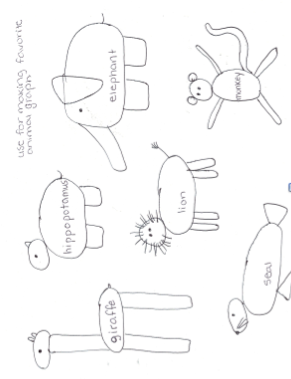
  • Animal Graph (the graph pictures were copied from a 5 year olds art)
  • Large pitcher and several herbal tea bags such as peppermint or lemon
  • One sheet of yellow construction paper per child to make a giraffe

Vocabulary

  • Evaporate (vanish/disappear, as into the dry sand)
  • Zoo (a home where many wild animals live)

Introducing the Story

Ask the children if they have ever invited a friend over to their house for a meal or to play. Allow them a few minutes to talk about any experiences they might have had. If you do not get any responses, tell the children about a time you invited someone over for a meal. Steer the conversation towards friendship and how sharing time together is fun whether at school or at home.

Language Development/Speaking & Communicating; develops increasing abilities to understand and use language to communicate information, experiences, ideas, feelings, opinions, needs, questions, and for other varied purposes.

Reading the Story

On the pages where the boy says, “So I brought a friend”, pause and encourage the children to say it along with you. Then turn the page and see if the children can name the animal that the boy brought along.

Language Development/Listening & Understanding; demonstrates increasing ability to attend to and understand conversations, stories, songs, and poems.

After Reading the Story

Challenge the children to name all the animals that were in the story today. Ask them where all the animals might live? Ask if anyone has ever been to the zoo? Give the children a moment to talk about any zoo experiences that they have had. Make a graph of all the animals that were in the story today and ask each child which one is their favorite. Write their name under the animal picture and hang on the wall. Count the votes for each animal and write the number beside.

Literacy/Book Knowledge & Appreciation; shows growing interest and involvement in listening to and discussing a variety of fiction and non-fiction books and poetry AND Mathematics/Number & Operations; Begins to associate number concepts, vocabulary, quantities, and written numerals in meaningful ways.

Music and Movement

Sing your days of the week song with the children. If you do not have a song you sing, make up a chant and teach it to them.

Mon-day, Tues-day,
Wednes-day, Thurs-day, Fri-day.
Sat-ur-day, Sun-day
The days of the week

(clap out the syllables as you sing or chant)

Literacy/Phonological Awareness; shows growing ability to hear and discriminate separate syllables in words.

Put on some music and do animal walks. Jump like a kangaroo, lumber like an elephant, use your hands to pull you like a seal, jump around like a monkey, stand on one leg like a flamingo, gallop like a horse.

Physical Health & Development/Gross Motor Skills; shows increasing levels of proficiency, control, and balance in walking, climbing, running, jumping, hopping, skipping, marching, and galloping.

Discovery

Remind the children that on Sunday the King and Queen invited the boy to come for tea. Fill a large pitcher with water and add 4-6 herbal tea bags. Explain to the children that you are going to make sun-tea. Put the pitcher out, covered, somewhere where there is some sun and let the children watch as the tea infuses into the water changing the color. Give it an hour or two and then let the children sample.

Science/Scientific Knowledge; shows increased awareness and beginning understanding of changes in materials and cause-effect relationships.

Blocks

Add animals to the center today. Encourage the children to make cages/fences and sort the animals by like kinds.

Mathematics/Geometry & Operations; shows growth in matching, sorting, putting in series, and regrouping objects according to one or two attributes such as color, shape, or size.

Art

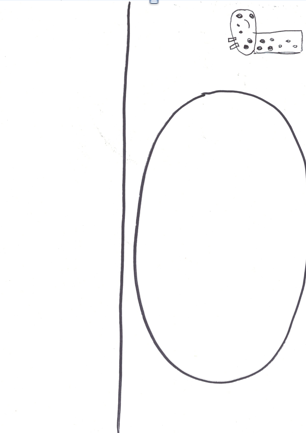
Tell the children that today you are going to make giraffes with long necks like the one that came for tea. Holding piece of construction paper the tall way, draw a line from top to bottom about 4 inches from the side. On the other part of the paper draw an oval. Let the children cut along the lines making a long strip and an oval. Show them how to attach the oval to the top of the strip, this is the giraffe’s head. Put out small plates of paint and show the children how to dip their finger and stamp up and down, up and down. These will become the spots of the giraffe. Have the children add a face with markers or paint.

Physical Health & Development/Fine Motor Skills; develops growing strength, dexterity, and control needed to use tools such as scissors, paper punch, stapler, and hammer.  AND  Language Development/Listening & Understanding; shows progress in understanding and following simple and multi-step directions.

Sand and Water

Ask the children if they can remember which animal in the story likes to swim in water most of the day (Seal). Tell the children they can be like the seals today and play in the water.  Put out your favorite water table toys today and let the children enjoy playing in it.

Literacy/Book Knowledge & Appreciation; demonstrates progress in abilities to retell and dictate stories from books and experiences; to act out stories in dramatic play; and to predict what will happen next in a story.

Library and Writing

On index cards, write the names of the children in your classroom, one per card. Encourage the children to find their name and their friends name and to practice writing them on their paper.

Literacy/Early Writing; progresses from using scribbles, shapes, or pictures to represent ideas, to using, letter-like symbols, to copying or writing familiar words such as their own name.

Dramatic Play

Encourage the children to pretend to cook today. As they are playing, ask them, “May I bring a friend?” and allow another child who might be interested to join the play. Challenge them to think about what they need to do to make room for another child in the center. Do they need more chairs, plates, etc.? Let the center fill up with more children than are normally allowed to play. What do they need to do to accommodate any extra friends? Watch carefully if the center starts to get too crowded and encourage them to problem solve instead of fight. We only have 5 plates but there are 6 of you, what should we do? (When I have done this, I have had children volunteer to share a plate and chair and to also leave the center.  I had one child suggest that she could eat out of a pan).

Mathematics/Number & Operations; begins to make use of one-to-one correspondence in counting objects and matching groups of objects.  AND  Social & Emotional Development/Cooperation; shows increasing abilities to use compromise and discussion in working, playing, and resolving conflicts with peers.

Math and Manipulatives

Use whatever classroom counters you might have. I use one-inch cubes to play. Ask the child to put 1-3 counters on the table. After they have done this, ask them to add one more. Then let the child count how many they have. Ask them to add one more and again count how many they have. Children who are able to count one more, you can ask them to add 2 more and when they get close to 10, ask them to take one away, now how many do you have?

Mathematics/Number & Operations; develops increased abilities to combine, separate and name “how many” concrete objects.

Outdoor Play

Add some water to the sandbox today and let the children experiment using damp sand to make sand cakes. Watch their faces as the water evaporates into the dry sand.   Explain to them that because the sand is dry, the water evaporates into it.  Add more water and see what happens.

Science/Scientific Knowledge; develops increased ability to observe and discuss common properties, differences, and comparisons among objects and materials.

Transitions

If you line up to go anywhere, ask the children if they would like to call a friend to join them. When there is only one child left say, “Oh good, a friend for me” and let that child be in line with you.

Social & Emotional Development/Cooperation; develops increasing abilities to give and take in interactions; to take turns in games or using materials; and to interact without being overly submissive or directive.

Dear Parents- Today we read a story about a boy and his friends. Ask your child who some of the boys friends were. Then ask them to tell you about who some of their friends are at school and what they enjoy doing together.

Resources

Screen Shot 2018-08-12 at 9.45.56 AM
Screen Shot 2018-08-12 at 9.45.13 AM