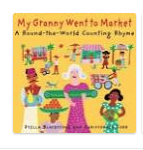
My Granny Went to Market, A Round-the World Counting Rhyme, by Stella Blackstone

Materials

  • Globe
  • Pieces of cardboard 4×8 inches, one per child
  • Hole puncher
  • Many pieces of yarn about 4-5 inches long
  • Dice, one with dots for numbers and one with numbers 1-6 written upon it
  • (If you have one inch cubes, these can easily be turned into dice)

Vocabulary

  • Flying Carpet (a magic carpet, small rug that flies in the air)
  • Tassels (the edging of the flying carpet)
  • Fierce (ferocious and wild looking)
  • Spiraled (swirled)
  • Market (a shop or store)

Introducing the Story

Bring out the globe and ask the children if they know what it is. Explain that a globe is a map of the world. Ask them why they think it is round instead of flat like most maps. Explain to the children that the world is really round like a ball and so the globe is round like a ball to show where things are. Now open the front cover of the book and show the children the map inside. Explain that mapmakers make maps flat so they can be folded up and taken with. Show the children the flat map and about the proximity where your school is located. Then find the approximate spot on the globe. These are both ‘here, where we are’ just looking at it from two different points of view. Use your finger and follow the map on the front cover while saying this is where Granny went on trip around the world.

Social & Emotional Development/Knowledge of Families & Communities; begins to express and understand concepts and language of geography in the contexts of classroom, home, and community.

Reading the Story

As you begin to read the story, start in North America and move your finger across the globe to each of Granny’s destinations. On the page where Granny goes to Istanbul, show the children the tassels on the end of her flying carpet. Ask the children if they think a flying carpet is real. Ask them how they think people really travel long distances. (plane, boat, train, car). Turn to the next page and explain to the children in this story we have to use our imagination as Granny flies on her carpet from one place to another. On each page hold up the number of fingers that states the number of objects that Granny bought. After the page with 4 lanterns, ask the children if they can guess how many items Granny will buy at the next destination. (The story goes up 1-10 items).

Mathematics/Number & Operations; begins to associate number concepts, vocabulary, quantities, and written numerals in meaningful ways. AND Literacy/Book Knowledge & Appreciation; shows growing interest and involvement in listening to and discussing a variety of fiction, non-fiction, and poetry.

After Reading the Story

After reading the story, ask the children if they can remember some of the items that Granny bought along her way. If they children cannot recall, go through the pages and let them see the pictures to help them remember what Granny bought in each country. As you finish up with the story, ask the children if they can remember which state they live in. Go back to the globe and find your state, then tell the children that it is in North America. Have the children repeat back to you, the name of your state and North America.

Social & Emotional/Knowledge of Families and Community; begins to express and understand concepts and language of geography in contexts of the classroom, home, and community. AND Literacy/Book KNowledge & Appreciation; demonstrates progress in abilities to retell and dictate stories from books and experiences; to act out stories in dramatic play; and to predict what will happen next in a story.

Music and Movement

Count to ten and back again. Have the children crouch down and together slowly count to ten. As you count hold up the correct number of fingers and begin to stand up slowly. You should reach 10 in a fully stood up position with hands over head. Now have them count back down slowly lowering their bodies into a crouching position and holding up the correct number of fingers. (My children liked to get to zero and yell, “Blast off!” and jump up).

Mathematics/Numbers & Operations; develops increasing ability to count in sequence to 10 and beyond.

Put on a variety of music from different countries and let the children explore moving and dancing to each. For example; put on the Mexican Hat Dance music from Mexico and teach the children the dance (All stand in a large circle. Tap your heels in beat with the music-left foot right foot, left. Right foot, left foot, right. Left foot, right foot, left. Right foot, left foot, right. Skip round and round the circle, skip round and round some more. Skip round and round the circle, then begin the tap once more).

Creative Arts/Movement; expresses through movement and dancing what is felt and heard in various musical tempos and styles

Today would be a fun day to let the children experiment with instruments during free play time. If you have any bell type instruments, you can put them out and remind the children that Granny bought 5 bells in Switzerland.

Creative Arts/Music; experiments with a variety of musical instruments.

Discovery

Show the children how to fold a simple paper airplane and let them practice flying them. https://www.diynetwork.com/made-and-remade/learn-it/5-basic-paper-airplanes

Language Development/Listening & Understanding; shows progress in understanding and following simple and multi-step directions. AND Physical Health & Development/Gross Motor Skills; demonstrates increasing abilities to coordinate movements in throwing, catching, kicking, bouncing balls, and using a slide and swing.

Blocks

Add any type of play material that the children can sort into like kinds (animals, small cars, colored cubes, etc.) Encourage them to build fences around the like kinds, or structures to house the like kinds.

Mathematics/Geometry & Spatial Sense; shows growth in matching, sorting, putting in a series, and regrouping objects according to one or two attributes such as color, shape, or size.

Art

Make flying carpets today. Ahead of time, punch holes along the 4-inch edge of the pieces of cardboard. Let the children use markers to decorate their carpet. Show them how to thread a piece of yarn through one of the holes and tie it off with a knot. These will become the tassels. You may want to trim the tassels down when the children are through making their carpet.

Physical Health & Development/Fine Motor Skills; grows in eye-hand coordination in building with blocks, putting together puzzles, reproducing shapes and patterns, stringing beads and using scissors.

Sand and Water

Granny flew over the ocean. Put out water play today and add float and sink items.

Science/Scientific Skills & Methods; begins to participate in simple investigations to test observations, discuss and draw conclusions, and form generalizations. 

Library and Writing

Ask the children if they have ever been to the market with their Granny or their parent. Talk about the kinds of things that they purchased when they went to the market. Encourage them to draw a picture of what they purchased and you write their dictation about their market experience on another piece of paper and then attach to their illustration.

Literacy/Book Knowledge & Appreciation; demonstrates progress in abilities to retell and dictate stories from books and experiences; to act out stories in dramatic play; and to predict what will happen next n a story.

This can easily be turned into a classroom book entitled; We Went to Market, a Classroom counting book. Have children draw a specific number of items that they purchased at the market (Roger bought 1 box of cereal, Alison bought 2 hair bows, Ryan bought 3 match box cars, etc.)

Mathematics/Number & Operations; begins to use one-to-one correspondence in counting objects and matching groups.

Dramatic Play

Travel play. Bring in any small suitcases or bags that the children can use to pack their things. Ask them which mode of transportation they are pretending to travel by. Help them to assemble what they need to make it (bring in extra chairs for seating in a plane or train, add a paper plate for a steering wheel, or let them use a beach towel if they want to travel by flying carpet.

Literacy/Book Knowledge & Appreciation; demonstrates progress in abilities to retell and dictate stories from books and experiences; to act out stories in dramatic play; and to predict what will happen next n a story.

Math and Manipulaties

Put out any kind of memory game that you have. If you do not have a memory game, you can use a deck of cards. Pull out a pair of the number cards 1-10. Turn the cards upside down on the table. The children take turns picking up two cards. If they are the same number, they get to keep the pair and go again. If they are not the same number, they turn the cards back over on the table and it is the next child’s turn. Play until all the pairs are found. Let the children count their cards to see who has the most.

Mathematics/Number Operations; begins to associate number concepts, vocabulary, quantities and written numerals in meaningful ways. Mathematics/Number Operations; begins to use language to compare numbers of objects with terms such as more, less, greater than, fewer, equal to.

Put out any type of seriating toy that you have in your classroom (nesting dolls, small to large counting bears, large to small stacking toys, puzzles)

Mathematics/Patterns & Measurement; shows growth in matching, sorting, putting in a series, and regrouping objects according to one or two attributes such a color, shape, or size.

Outdoor Play

Youtube shows how to make several simple boomerangs from both cardboard and paper. You will have to make these ahead of time as they will be difficult for the children to make. https://www.youtube.com/watch?v=p0A_Lwr7a9s

Show the children how to flip a hula-hoop so that it comes back to you, just like a boomerang!

Physical health & Development/demonstrates increasing abilities to coordinate movements in throwing, catching, kicking, bouncing balls, and using a slide and swing.

Transitions

Have the children take turns rolling the dice (dots for younger children, actual numbers for older children). If using dots, let the child count the dots and then go to the next activity. If using numbers, let the child state the number and then everybody can count to that number out loud. For more of a challenge, teach the children how to count in another language.

Mathematics/Number & Operations; begins to associate number concepts, vocabulary, quantities, and written numerals in meaningful ways.

Dear Parents, today we read a book about a Granny who went to market and bought many different things. Next time you go to the grocery store, take your child and let them count out 10 apples, 2 boxes of cereal, or 1 treat. Help them to practice counting objects in your home and out and about the neighborhood.
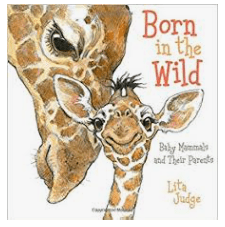
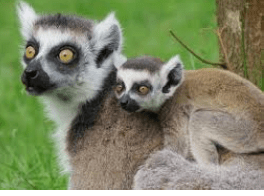
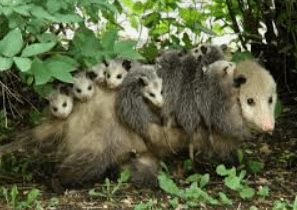
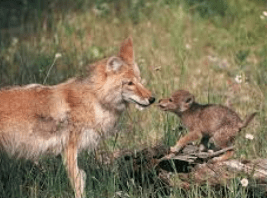
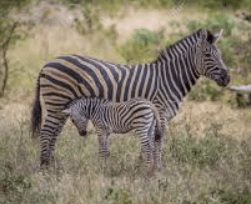
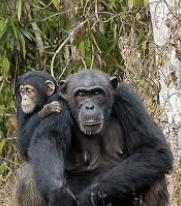
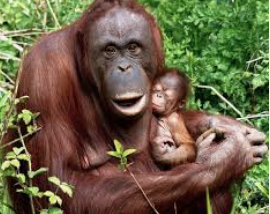
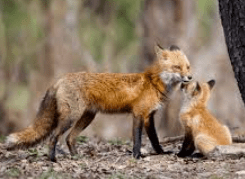
Born in the Wild; Baby Animals and Their Parents, by Lita Judge

The illustrations help emphasis how baby animals are cared for by their parent. The pictures give children a clear look at what these animals look like and endnotes provide additional details. This book shows that all creatures need food, shelter, love, and family no matter how big or small they might be.

Materials

  • Loofa, nail brush, soap to make bubbles
  • many gingerbread shapes in several colors
  • Baby and parent animal cards

Vocabulary

  • Protection (to be kept safe)
  • Shelter (a place to go to get out of the weather)
  • Caressed (another word for hugged)
  • Groomed (cleaned and dressed)
  • Family (a group of people who live together)

Before Reading the Story

Talk to the children about families.  Explain that every child lives in a family but not all families are the same. Encourage the children to share about their families. (My Mommy and Grandma live at my house with me, I have a Mommy, a big brother who bosses, and my Daddy).

Social & Emotional Development/Knowledge of Families & Communities; progresses in understanding similarities and respecting differences among people such as genders, race, special needs, culture, language, and family structures.

Reading the Story

As you read, stop on the pages and allow the children to share any insights of how their parent helps them when they are hungry, protects them from danger, etc..

Language Development/Speaking & Communicating; develops increasing abilities to understand and use language to communicate information, experiences, ideas, feelings, opinions, needs, questions, and for other varied purposes.

After Reading the Story

Pass out the parent and animal pictures.  Go back through the book but this time as you turn the page; ask the children if they know the name of the animal.   The child with the picture can then come up and tape it on the wall.

Language Development/Listening & Understanding; demonstrates increasing ability to attend to and understand conversations, stories, songs, and poems.

Discovery

The web site 1+1+1=1 has some wonderful baby and mommy animal cards that can be turned into puzzles. http://www.1plus1plus1equals1.com/Preschool_Pack_Baby_Animals_PART_ONE.pdf

Mathematics/Number & Operations; demonstrates increasing interest and awareness of numbers and counting as a means for solving problems and determining quantities.

Music and Movement

Remind the children that in the story it said that all parents and babies need to move.  Explain that another word for move could be exercise. Take turns making up exercise moves and doing them to ten. (10 jumping jacks, 10 toe touches, 10 leg kicks, etc.).

Physical Health & Development/Health Status & Practices; participates actively in games, outdoor play, and other forms of exercise that enhance physical fitness. AND Mathematics/Number & Operations; develops increasing ability to count in sequence to 10 and beyond.

Or give the children scarves and move to the music (can you make a circle over your head with the scarf?  In front of you?  By your feet?  Can you throw the scarf up into the air and catch it?

Physical Health & Development/Health Status & Practices; participates actively in games, outdoor play, and other forms of exercise that enhance physical fitness.

Blocks

Remind the children that in the story, animals provide shelter for their babies.  Put out any animals that you have and encourage the children to build shelters for them. Do all the animal houses look the same, why/why not?

Approaches to Learning/Reasoning & Problem-Solving; develops increasing abilities to classify, compare, and contrast objects, events, and experiences.

Art

Encourage the children to draw pictures of their family using colored pencils or markers.  Ask them if they would like you to write each family members name under their picture.  As they work, talk about how all families are different and talk about the names of family members (mother, father, brother, sister, younger, older, uncle, aunt, grandparent, cousin).

Social & Emotional Development/Knowledge of Families & Communities; develops ability to identify personal characteristics, including gender and family composition.

Sand and Water

Remind the children that in the story it stated that babies need to be groomed, cleaned and dressed.  Put water in the table today along with hard plastic baby dolls that the children can wash.  Add a washcloth and several dish towels for drying. 

Social & Emotional Development/Knowledge of Families & Communities; develops growing awareness of jobs and what is required to perform them. AND Creative Arts/Drama; participates in a variety of dramatic play activities that become more extended and complex.

Add bubbles to the water today.  Include a nail brush, loofa, or any other  bathing equipment. 

Physical Health & Development/Health Status & Practices; shows growing independence in hygiene, nutrition, and personal care when eating, dressing, washing hands, brushing teeth, and toileting.

Library and Writing

Put the animal cards into the center today and encourage the children to copy their names onto paper using pencils or markers.  If they want, they may draw a picture to represent the animal.

Literacy/Early Writing; progresses from using scribbles, shapes, or pictures to represent ideas, to using letter-like symbols, to copying or writing familiar words such as their own name.

Put out magnet letters and the In My Name-Not In My Name cards.  The child picks up a letter and then puts it on the correct side of the page by following the rule at the top.

Literacy/Alphabet Knowledge; knows that letters of the alphabet are a special category of visual graphics that can be individually named.

Dramatic Play

Remind the children that in the story it stated that animals are part of a family.  Encourage the children to play as a ‘family’ today.  Help them decide on their roles if they cannot do on own.  (Jason, why don’t you be the uncle and Lamar you can be the big brother).

Social & Emotional Development/Cooperation; develops increasing abilities to give and take in interactions; to take turns in games and using materials; and to interact without being overly submissive or directive.

If possible, ask the parents to send in pictures of their families.  Put these in page savers and tape to the wall of your dramatic center.

Social & Emotional Development/Knowledge of Families & Community; develops ability to identify personal characteristics, including gender and family composition.

Math and Manipulatives

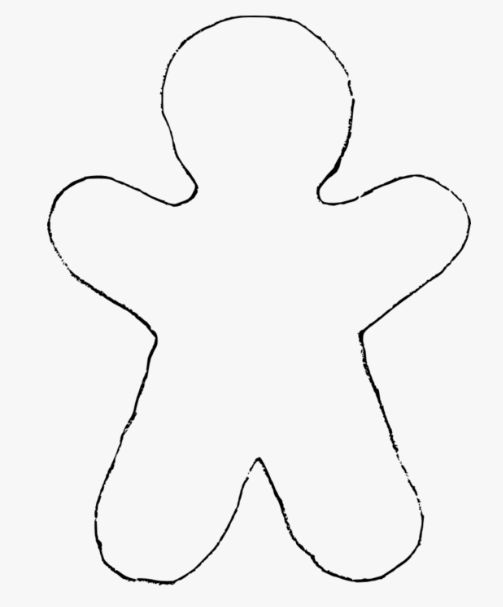
Make a bulliten board or designated spot on wall with a sign that says “How many people are in your family”?  On an index card write each child’s name and tape it to the wall/board under the title.  Cut out many gingerbread type people and help the children put the appropriate number beside their name.  Use this board to talk about who has more, or less people. How many people are in your family?  Do you see another child with the same amount?

Mathematics/Number & operations; begins to use language to compare numbers of objects with terms such as more, less, greater than, fewer, equal to.

Outdoor Play

Remind the children that babies grow strong through active play.  Bring out balls today for kicking, throwing, bouncing, and rolling. 

Physical Health & Development/Gross Motor Skills; demonstrates increasing abilities to coordinate movements in throwing, catching, kicking, bouncing balls, and using the slide and swing.

Sing the following lyrics to the tune of to Johnny Pounds. As you sing the verse, the appropriate children run from point A to point B on the playground. 

Who can be a Mommy, a mommy, a mommy.  Who can be a Mommy in a family?

Who can be a daddy, a daddy, a daddy, who can be a daddy in a family?

Who can be an uncle, sister, sibling, auntie, baby, grandparent, cousin, nephew, etc..

Social & Emotional Development/Knowledge of Families & Community; develops ability to identify personal characteristics, including gender and family composition.

Transitions

Make riddles using the animals in the story today. “I’m thinking of an animal that has a long neck and spots all over its body”. The child who answers the riddle goes off to the next activity.

Approaches to Learning/Reasoning & Problem Solving; develops increasing abilities to classify, compare, and contrast objects, events, and experiences.

Resources

for family graph
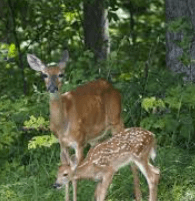
deer
giraffe
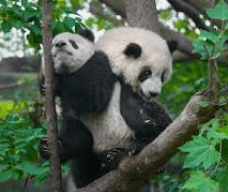
panda
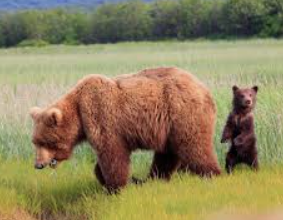
bear
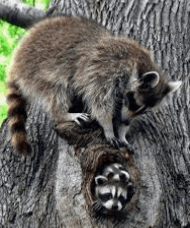
raccoon
lemur
opossum
wolf
zebra
gorilla
prairie dog
otter
lion
orangutan
fox
elephant

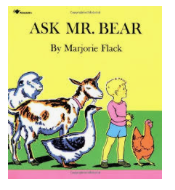
Ask Mr. Bear by Marjorie Flack

Farm animals try to help a little boy find the perfect gift for his Mother’s birthday. Find out what the perfect gift is while reading this simple book with your children.

Materials

  • Picture of cow and bear with word printed underneath.
  • Feely box (shoe box with a hole cut out of each end so child can put their hands inside) A pillowcase will work also.
  • Bear Face
  • 1 brown lunch bag per child
  • Many foil squares and wrapping bows
  • Roll of crepe paper
  • Homemade or store bought “birthday” hats and any other birthday supply

Vocabulary

  • Fine (something that is made very well)
  • Wool (a kind of fur)

 Introducing the Story

Turn to the first page and ask the children how they think the little boy is feeling. Why do you think he is feeling this way? Explain to the children that Danny is sad because he does not know what to get his Mother for her birthday. Ask the children what they would do if it were them?  Tell them the story is called Ask Mr. Bear, why do you think it is named that?

Social & Emotional Development/Social relationships; progresses in responding sympathetically to peers who are in need, upset, hurt, or angry; and in expressing empathy or caring for others.

 Reading the Story

As you read the story give the children the opportunity to name the animal and make the animal sound in the appropriate places  When you get to the page where Danny’s Mother is guessing what Danny has gotten her for her birthday, stop and ask the children if they can guess too.

Approaches to Learning/Initiative & Curiosity; chooses to participate in an increasing variety of tasks and activities. AND Approaches to Learning/Reasoning & Problem Solving; develops increasing ability to find o more than one solution to a question, task, or problem.

 After reading the Story

Show the children the front cover of the book. Ask the children to remember what animals were in the story that are not on the cover (bear and cow).

Literacy/Book Knowledge & Appreciation; demonstrates progress in abilities to retell or dictate stories from books and experiences; to act out stories in dramatic play; and to predict what will happen next in as story.

Cover the cow and bear picture with a piece of paper. Slowly slide the paper off the picture and stretch the word so the children can hear the individual sounds.

Literacy/Phonological Awareness; shows growing awareness f beginning and ending sounds in words.

 Discovery

Introduce the feely box. Put a familiar object inside the box/ pillowcase and show the children how to put their hands in the holes to feel it. Use familiar items from your classroom. Can they guess what you have put in the box? Teach them to play this game with their friends.

Science/Scientific Knowledge & Skills; begins to participate in simple investigations to test observations, discuss and draw conclusions, and form generalizations.

 Music and Movement

With the book in hand, ask the children to show you what walking looks like, skipping looks like, hopping, galloping, trotting, and running

Language Development/Listening & Understanding; understands an increasingly complex and varied vocabulary. AND Physical Health & Development/Gross Motor Skills; shows increasing levels of proficiency , control, and balance in walking, climbing, running, hopping, jumping, hopping, skipping, marching, and galloping.

 Blocks

Put out the many foil squares and encourage the children to wrap blocks like birthday gifts. Let them attach wrapping bows for decoration.

Physical Health & Development/Fine Motors; develops growing strength, dexterity, and control needed to use tools such as scissors, paper punch, stapler, and hammer.

 Art

Have the children cut a bear head out and glue it to a brown paper lunch sack to make puppets Let the children water color their puppet.

Physical Health & Development/Fine Motors; develops growing strength, dexterity, and control needed to use tools such as scissors, paper punch, stapler, and hammer. AND   Creative Arts/Art; develops growing ability to plan, work independently, and demonstrate care and persistence in a variety of art projects.

 Sand and Water

Fill the bottom of the sand table with an inch or two of dirt. Take the children outside to help gather sticks, small branches, and rocks. Put these into the table along with several plastic animals or people. Encourage the children to make a forest scene.

Science/Scientific Knowledge; expands knowledge of and abilities to observe, describe, and discuss the natural world, materials, living things, and natural processes.

Library and Writing

Put out the cow and bear pictures, encourage the children to practice writing the words and then drawing their own animals.

Literacy/Early Writing; experiments with a growing variety of writing tools and materials, such as pencils, crayons, and computers.

 Dramatic Play

Set up a birthday theme by adding hats, crepe paper, and small boxes that the children can put objects in. Add self sticking wrapping bows.

Creative Arts/Dramatic Play; shows growing creativity and imagination in using materials and in assuming different roles in dramatic play situations.

 Math and Manipulatives

Use counting bears to make simple patterns. Ask the children to make one just like yours. Ask the child to show you how many bears old they are, how many people are in their family

Mathematics/Patterns & Measurement; enhances ability to recognize, duplicate, and extend patterns using a variety of materials. AND Mathematics/Number & Operations; begins to use one-to-one correspondence in counting objects and matching groups of objects.

 Outdoor Play

Encourage the children to act out the story with you. Depending on how many children are interested you will have to include other animals and movements. Example; Then Kerry asked Kangaroo, do you have a gift I can give my mother? But Kangaroo said no and so they all jumped along and jumped along until they met Snake.

Literacy/Book Knowledge & Appreciation; demonstrates progress in abilities to retell or dictate stories from books and experiences; to act out stories in dramatic play; and to predict what will happen next in as story.

Transitions

           As children are laying down for nap or getting ready to leave, give each a hug and say; Here’s a big bear hug just from me.

Dear Parent- Today we read the book Ask Mr. Bear in which a child tries to find the perfect gift for his Mother’s birthday. Talk to your child about when his/her birthday is. Give the child the date and then state something that will happen close to the date so the child can begin to become aware of things that happen near their birthday. (Kerry your birthday is in the spring when it starts to get warmer outside. Roger, your birthday is just after your father’s birthday).

Resources

Screen Shot 2018-08-19 at 3.59.08 PM
Screen Shot 2018-08-19 at 3.59.24 PM