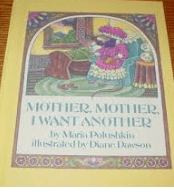
Mother, Mother, I Want Another, by Maria Polushkin

    Mother Mouse is tucking her baby into bed.  Baby mouse begins to cry, I want another, Mother.  Another Mother!  Find out what Mrs. Mouse does and how she and baby mouse resolve this issue.

Materials

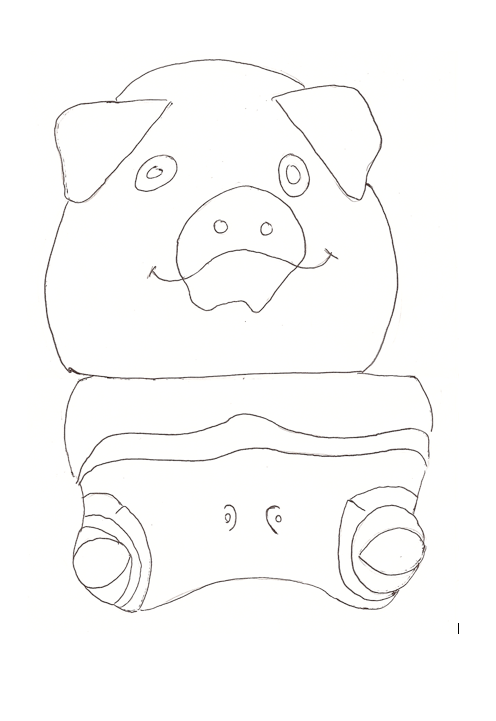
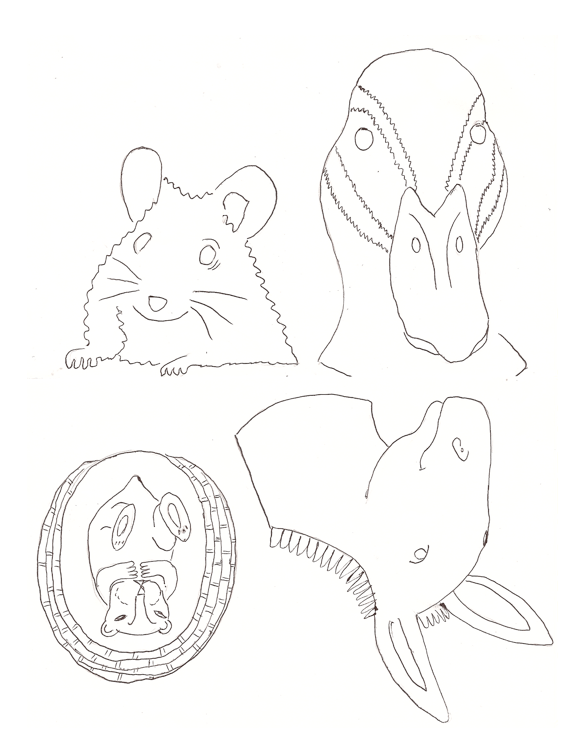
  • Mask of Mrs. Mouse, baby mouse, Mrs Duck, Mrs. Frog, Mrs. Pig, and Mrs Donkey
  • A variety of plastic foods or toys that have a varied number of syllables (corn, apple, carrot, pineapple, celery, pear)
  • Magazines with pictures of mothers and babies
  • Box of cornstarch

Vocabulary

  • Fret ( to be upset and cry)    

Before Reading the Story

Talk to the children about their bedtime rituals. Does anyone read them a story? Does anyone kiss them good-night?

Language Development/Speaking & Communicating; develops increasing abilities to understand and use language to communicate information, experiences, ideas, feelings, opinions, needs, questions; and for other varied purposes

Reading the Story

            Sing the Mother animal’s responses to baby mouse. 

After Reading the Story

            Tell the children that in the story, mother mouse went to find what she thought her baby wanted.  Ask the children what baby mouse really wanted?  Ask the children if they have ever had an experience like baby mouse, what did they do, what did their parent do?  Explain that when we don’t use our words or talk in full sentences, people do not always know what we want. 

Language Development/Speaking & Communicating; progresses in abilities to initiate and respond appropriately in conversation and discussions with peers and adults.

Discovery

            Tell the children that you are going to play a game with them about not using your words correctly.  Put out a variety of plastic foods.  Explain that you are going to ask them to guess which one you want by grunting the food name.  They will have to try to guess which one you want by counting the syllables of the word.  Practice counting syllables in the children’s names before you begin.(apple=grunt, grunt /pineapple=grunt,grunt,grunt).  After they guess correctly have all the children name the food item and then clap out its syllables.

Literacy/Phonological Awareness; shows growing ability to hear and discriminate separate syllables in words.

Music and Movement

            Sing Good Night Baby, to tune Good Night Ladies . https://www.youtube.com/watch?v=fMruF_CLrqM

Good night baby, good night baby,

Good night baby, it’s time to go to sleep

AGAIN!

Creative Arts/Music; participates with increasing interest and enjoyment in a variety of music activities, including listening, singing, finger plays, games, and performances.

Blocks

            Challenge the children to make a bed that they can sleep in. How will you figure out if it is long enough? How will you form the base? What blocks will you need to use?

Approaches to Learning/Initiative & Curiosity; approaches tasks and activities with increased flexibility, imagination, and inventiveness.

Art

            Use magazines and ask the children to cut out pictures of babies and mothers.  These can be both human and animals.  Draw a line down a piece of poster board and have the children glue the babies on one side and the mothers on the other.

Physical Health & Development/Fine Motor Skills; grows in hand-eye coordination in building with blocks, putting together puzzles, reproducing shapes and patterns, stringing beads, and using scissors. AND Mathematics/ Patterns & Measurement; shows increasing abilities to match, sort, put in a series, and regrouping objects according to one or two attributes such as shape or size.

Sand and Water

Try something different in the water table today. Add a box of cornstarch and slowly add water. The mixture will become solid in the bottom of your water table but when you pick it up, it will liquify and slip through your fingers. Show the children how to let it become a solid and use their finger to write their name. Them pick it up and let it ooze through their fingers.

Science/Scientific Skills & Methods; begins to use senses and a variety of tools and simple measuring devices to gather information, investigate materials, and observe processes and relationships. AND Literacy/ Early Writing; experiments with a growing variety of writing tools and materials. such as pencils, crayons, and computer.

Library and Writing

            Encourage the children to think of other animals that might come and sing to baby mouse.  What might these other animals say and bring to baby mouse?  Have the children illustrate and write their responses.  (Meow, I will bring you milk. Don’t cry baby mouse I will bring you a piece of cake).

Literacy/Print Awareness & Concepts; shows increasing awareness of print in the classroom, home, and community settings.

Math and Manipulatives

            Ask the child to give you two or three objects (chain link, counter bears).  When they give them to you say “I want another, now how many do I have”?  Continue this as the child gives you another and counts, note if they understand adding one more and how high they can count.  For older children you can say I want two more, now how many do I have?

Mathematics/Number & Operations; develops increases abilities to combine, separate and name “how many” concrete objects.

Dramatic Play

            This is a fun story to act out   Make the Mother masks and attach to a sentence strip.

Literacy/Book Knowledge & Appreciation; demonstrates progress ub abilities to retell and dictate stories from books and experiences; to act out stories in dramatic play; and to predict what will happen next in a story.

Outdoor Play

Play Mouse Tag. The teacher starts off as ‘the cat’ and chases the mice trying to catch them. Have a tree or a climber be the mouse hole or safe place. If a “mouse” is caught then they become a cat and help catch other mice.

Social & Emotional Development/Cooperation; shows increasing abilities to use compromise and discussion in working, playing, and resolving conflicts with peers.

Transitions

Ask each child to tell you something that their Mother does that makes them feel special and loved. (My Mom makes me chocolate milk, My Mom hugs me and tickles me)

Social & Emotional Development/Knowledge of Families & Communities; develops ability to identify personal characteristics, including gender and family composition.
Icy Watermelon-Sandia Fria, by Mary Sue Galindo

This bilingual story is about a family that delights in sharing watermelon and happy memories. Just a reminder that generational stories are lovely to share.

Materials

  • Watermelon, whole
  • One sharp knife and small plastic ones for each of the children.
  • 2 pillow cases
  • Rebus How to make a watermelon slice****

Vocabulary

  • Abuelo/Abuela (Spanish for grandfather/grandmother)
  •  Harvest ( to pick the fruit/vegetable when it is ripe/ready)
  •  Barrios (neighborhoods)
  • Sandia Fria (icy watermelon)

Before Reading the Story

            Come to the rug today and act excited.  Tell the children that you have a surprise for them today. (Make sure the children can not see the watermelon or the book until after you have introduced the story).  Tell the children that you do not think they can guess it.  Let several children respond then say “It’s big and round, and it’s green on the outside.”  Let the children continue to guess.  Then tell the children that it is something that you eat and it has black seeds on the inside and is very juicy.  Continue to let the children guess.  If they still do not get the correct answer tell them watermelon.  Show the children the cover of the book and introduce.

Approaches to Learning/Initiative & Curiosity; grows in eagerness to learn about and discuss a growing range of topics, ideas, and tasks.

Reading the Story

You will want to practice reading this book ahead of time as there are words in Spanish. In order to keep the children interested you do not want to be tripping over words.

After Reading the Story

            Ask the children if their parents ever share any stories about when they were little?  If not, share one about yourself.

Language Development/Speaking & Communicating; develops increasing abilities to understand and use language to communicate information, experiences, ideas, feelings, opinions, needs, questions; and for other varied purposes. AND Social & Emotional Development/Knowledge of Families & Communities; develops ability to identify personal characteristics, including gender and family composition.
Discovery

            Bring in a watermelon.  Have the children describe the watermelons outside.  What color is it?  Does it smell?  Can you lift a watermelon?  After the children have described the outside of the watermelon (make sure you record their observations on a piece of paper), cut the watermelon open.  Cut the watermelon into slices and then let the children use the plastic knives to cut it into pieces.  Again have the children describe the watermelon using their senses.  Graph those who like watermelon and those who do not.

Science/Scientific Skills & Methods; develops growing abilities to collect, describe, and record information through a variety of means, including discussion, drawings, maps, and charts. AND Physical Health & Development/Fine Motor Skills; develops growing strength, dexterity, and control needed to use tools such as scissors, paper punch, stapler, and hammer.

Music and Movement

            Tell the children that you are going to pretend to grow watermelon seeds.  First you have to dig a little hole and cover it with dirt.  Ask the children if they know how watermelons grow.  Explain that they grow on a vine.  Have the children pretend to be the seed and sprout from the dirt.  Tell them that a vine grows long against the ground.  Now tell them that they are the watermelons out in the field.  You are going to come and pick them and put them in the truck.  The children must try to stay a nice tight watermelon ball while you move them around, lift them, and put them in a group/pile.  Encourage the children to keep their bodies curled up and tight.  Once you have collected all the watermelons, tell the children that now they are the farmers and let’s drive our watermelons to the market to sell.  Pretend to drive.

Physical Health & Development/Health Status & Practices; progresses in physical growth, strength, stamina, and flexibility. AND Creative Arts/Dramatic Play; participates in a variety of dramatic play activities that become more extended and complex.

Teach the children the song, Down by the Bay.https://www.youtube.com/watch?v=-CSxGHve60E           

Down by the bay, where the watermelon grow,

Back to my home, I dare not go.

For if I do, my Mother would say,

Have you ever seen a bear in his underwear?

Down by the bay.

(a snake baking a cake, a dog sitting on a log, a mouse in a purple house)

Literacy/Phonological Awareness; progresses in recognizing matching sounds and rhymes in familiar words, games, songs, stories, and poems.

Blocks

Put out your play people today and watch what the children have them say and/or do.

Creative Arts/Dramatic Play; participates in a variety of dramatic play activities that become more extended and complex.

Art

Ahead of time, cut out one large circle out of a manilla file/cardboard and one slightly smaller circle. Have the children trace the large circle onto green paper and the smaller circle onto red paper.Have the children cut out one large green circle.  Have them cut out one red circle slightly smaller. Glue the red circle onto the green. Use the seeds from the watermelon to glue onto the red circle.  How many seeds does your watermelon slice have?

Physical Health & Development/Fine Motor Skills; progresses in abilities to use writing, drawing, and art tools, including pencils, markers, chalk, paint brushes, and various types of technology. AND Mathematics/Number & Operations; begins to use one-to-one correspondence in counting objects and matching groups of objects.

Library and Writing

            Say the word watermelon to the children.  Ask them if they can hear the two words that make up watermelon (water+melon).  Work with the children to think of more words that are made from two words combined (butterfly, basketball, campground, flashlight, underwear, dishwasher).

Literacy/Phonological Awareness; shows increasing ability to discriminate and identify sounds in spoken language.

Sand and Water

            Add red food coloring to the water just for fun. Then give the children a choice of what the would like to use in the water today.

Social & Emotional Development/Self-Concept; begins to develop and express self in terms of specific abilities, characteristics, and preferences.

Dramatic play

            Encourage the children to pretend to be the grandparents who come to visit.  Have the children sort the play  fruits to make a pretend fruit salad.

Social & Emotional Development/Knowledge of Families and Communities; progresses in understanding familiarities and respecting differences among people, such as genders, race, special needs, culture, language, and family structures.

Math and Manipulatives

Draw a half of a watermelon onto a large sheet of paper. Bring a dice and black marker to the table. The children take turns rolling the dice and then adding that many dots (seeds) to the watermelon. Let each child have several turns before including new children.

Mathematics/Number & Operations; begins to use one-to-one correspondence in counting objects and matching groups of objects. AND Social & Emotional Development/ Cooperation; develops abilities to give and take in interactions; to take turns in games and using materials; and to interact without being overly submissive or directive.

Outdoor play

            A watermelon weighs about 20 pounds when it is fully grown.  Fill a pillowcase with about 15-20 pounds of sand and tie it off.  Let the children try to carry the pillow case around the playground.  Or bring in two and have a relay race.  Do you think it would be hard or easy to pick watermelons all day long?

Physical Health & Development/Health Status & Practices; progresses in physical growth, strength, stamina, and flexibility. AND Social & Emotional Development/Self-Concept; demonstrates growing confidence in a range of abilities and expresses pride in accomplishments.

Transitions

Make a graph= I like Watermelon/I Do Not like Watermelon. As the children go to the next activity, have them sign their name to the graph. Later you can look at it as a group and see which was more, like/do not like.

Mathematics/Number & Operations; begins to associate number concepts, vocabulary, quantities, and written numerals in meaningful ways. AND Literacy/Early Writing; progresses from scribbles, shapes, or pictures to represent ideas to using letter-like symbols, to copying or writing familiar words such as their own name.

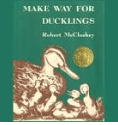
Make Way for Ducklings, by Robert McCloskey

            Mr. and Mrs. Mallard are looking for the perfect place to raise their family.  As they search for the perfect place, they run across dangers.  Will they find their perfect place?  Where will it be?

Materials

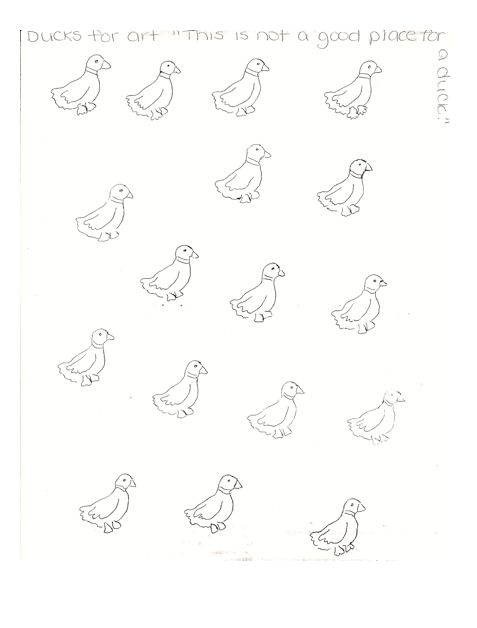
  • Copy of small ducks
  • 1 white paper plate per child.  Fold in half and punch holes along the edge. 
  • Yarn
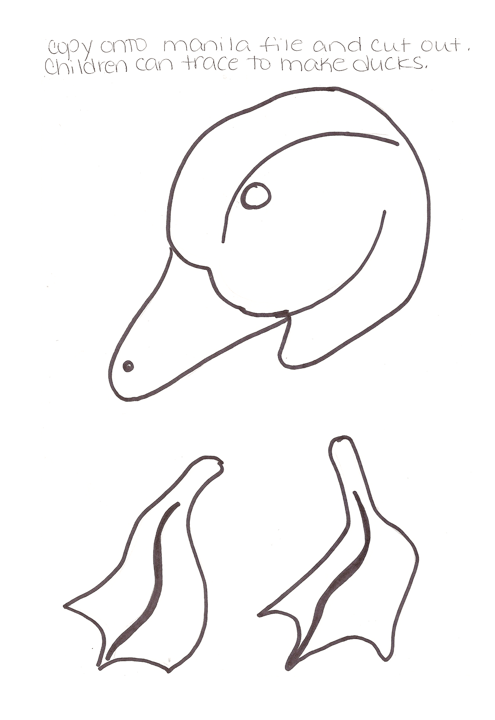
  • Duck head/foot
  • Index card showing a letter from the letters the children’s names begin with.

Vocabulary

  • Dither (nervous and upset)
  • Hatch (when the ducklings come out of their shells)

Before Reading the Story

            Read the title of the book but don’t show the cover yet.  Ask the children if they think they know what Make way for ducklings means?  Now show them the cover of the book and ask them if they know now?  (get out of the way, move over, step aside, back up).  Why do you think the story is called, make way for ducklings?   Tell the children that this is a real story about a family of ducks who lived in Boston Gardens.

Language Development/Speaking & Communicating; uses an increasingly complex and varied spoken vocabulary.

Reading the Story

            As you read the story stop at spots that tell about why the ducks think it is a good place to raise a family? Make note about ducks need food and shelter.  When you get to the spots where it is unsafe, ask the children why they think it is unsafe for a duck?  Is it unsafe for people too?   

Physical Health & Development/Health Status & Practices; builds awareness and ability to follow basic health and safety rules such as fire safety, traffic and pedestrian safety, and responding to potentially harmful objects, substances, and activities.      

After Reading the Story

Ask the children if they can change their name so it ends with “ack” by putting their first letter in front of “ack”. Mary=Mack, Alison=Aack. then repeat their name saying, “quack, quack, quack ______ack” and let the children quack for a few seconds.

Literacy/Phonological Awareness; shows growing awareness of beginning and ending sounds in words.

Discovery

            Put several of the small ducks into the center.  Show the children how to play hide and seek duck in the center.  One child steps outside the center and hides his/her eyes.  The other children in the center can each hide a duck somewhere in among the science toys.  The child comes back into the center and looks for the ducks.  When he/she finds a duck, the child who hid it quacks.  Who ever hid the last duck found gets to be the hider.

Approaches to Learning/Engagement & Persistence; shows capacity to maintain concentration over time on task, question, set of directions or interactions, despite distractions and interruptions. AND Social & Emotional Development/Cooperation; develops increasing abilities to give and take in interactions; to taking turns in games and using materials; and to interact without being overly submissive or directive.

Music and Movement

            When you go to the playground today, waddle like ducks all in a line.

Physical Health & Development/Health Status & Practices; participates actively in games, outdoor play, and other forms of exercise that enhance physical fitness.

            Teach the children the song 5 Little Ducks Went Out To Play. https://www.youtube.com/watch?v=pZw9veQ76fo

5 Little ducks went out one play,

Over the hills and far away.

Mother duck said “Quack, quack, quack”

But only 4 little ducks came running back.

Continue on to 4, 3, 2, 1.  When you get to zero sing or say sadly;

Zero little ducks went out to play,

Over the hills and far away.

Mother duck said “QUACK, QUACK, QUACK”

5 little ducks came running back.

Mathematics/Number & Operations; begins to associate number concepts, vocabulary, quantities, and written numerals in meaningful ways.

Blocks

            Tell the children that the story took place in a city.  Can you build a city?  Don’t forget to add a pond for the ducks!

Literacy/Book Knowledge & Appreciation; demonstrates growing abilities to retell and dictate stories from books and experiences; to act out stories in dramatic play; and to predict what will happen next in a story. AND Approaches to Learning/Engagement & Persistence; demonstrates increasing ability to set goals and develop and follow through.

Art

            Ask the children to draw a picture of some place that would NOT be good for a duck to live (under the bed, in a car, on the house roof).  After they have drawn their picture give them a copy of a duck to glue on their picture.  You can make this into a book called, Ducks in Unexpected Places.

Approaches to Learning/Reasoning & Problem Solving; develops increasing ability to find more than one solution to a question, task, or problem. AND Literacy/Early Writing; begins to represent stories and experiences through pictures, dictation, and in play.

Sand and Water

            Water play today.  Add boats and ducks.  If you have no boats or ducks, use plastic lids or bowls.  You can also add bear counters or similar.  How many bears can float on your boat?

Mathematics/Number & Operations; begins to make use of one-to-one correspondence in counting objects and matching groups of objects. AND Physical Health & Development/Fine Motor Skills; grows in hand-eye coordination in building wit blocks, putting together puzzles, reproducing shapes and patterns, stringing beads, and using scissors.

Library and Writing

            Tell the children that Mrs. Mallard had to know how to get to the island to meet her husband.   Ask the children to tell you how to get to the playground from your classroom and then encourage them to draw a map.  (You go to the door and go out over there by the drinking fountain.  Then you got to go out that door and down the ramp.  You turn and walk, walk, walk past the baby room and then turn there.  You go to the gate and wait for the teacher to open it.  Then you are at the playground).

Science/Scientific Skills & Methods; develops growing abilities to collect, describe, and record information through a variety of means, including discussions, drawings, maps, and charts. AND Language/Speaking & Communicating; develops increasing abilities to understand and use language to communicate information, experiences, ideas, feelings, opinions, needs, questions; and for other varied purposes.

Dramatic Play

            The ducks ate peanuts at the park.  Ask the children, Have you ever taken a picnic to the park?  Pack a picnic lunch.  Use a basket or bag to put your picnic in. Put down a towel or blanket and the children can pretend to have a picnic in the center today.

Creative Arts/Dramatic PLay; participates in a variety of dramatic play activities that become more extended and complex.

Math and Manipulatives

            Show the children how to use the yarn to lace through the holes on the paper plate.  This will be the duck body.  Either pre-cut a head and feet for the children or put on manila file so they can trace and cut out themselves.  Put the head and feet onto the duck body.

Physical Health & Development/Fine Motor Skills; grows in hand-eye coordination in building with blocks, putting together puzzles, reproducing shapes and patterns, stringing beads, and using scissors.

Outdoor Play

            Teach the children the game, In the Pond, On the Bank.  Tell the children that this is a listening game. Use a sidewalk or line as the divider.  Call out “In the pond” and everybody jumps onto the sidewalk.  Call “On the bank” and everybody jumps to the grass.  Mix up your calls and try to trick the children into jumping onto the wrong one. 

Language Development/Listening & Understanding; shows progress in understanding and following simple and multiple-step directions. AND Physical Health & Development/Health Status & Practices; participates actively in games, outdoor play, and other forms of exercise that enhance physical fitness.

Transitions

Hold up an index card with a letter written upon it. Ask the children if they can name the letter, the letter sound, and whose name begins with this letter, and if any other child has this letter somewhere in their name?

Literacy/Alphabet Knowledge; identifies att least 10 letters of the alphabet, especially those in their own name.