Stone Soup, by Jon J Muth

When hungry strangers come to town, everyone shares a small amount of their food to make a delicious soup which the whole town can enjoy.

Materials

  • Oil pastels
  • Rock collection
  • Make ahead BINGO cards
  • Crockpot and ingredients found in Resources.
  • 3-4 pots to use throughout the room today
  • Several plastic bowls and two soup ladles
  • Looking Down & Up cards

Vocabulary

  • Monk (like a minister or religious person)
  • Famine (where there is not enough food and everyone is hungry)
  • Suspicious (not trusting)
  • Scholar (someone who does research and is very smart)

Before Reading the Story

Ask the children how many of them like soup? What kinds of soups do you like to eat? Hold up the cover of the book and read the title. Ask the children if they can guess what they are looking into? What do you think they will do with the pot? Introduce the story.

Literacy/Book Knowledge & Appreciation; demonstrates progress in abilities to retell and dictate stories from books and experiences; to act out stories in dramatic play; and to predict what will happen next in a story. AND Social & Emotional Development/Self-Concept; begins to develop and express awareness of self in terms of specific abilities, characteristics, and preferences.

Reading the Story

On the page where the monks first enter the village, ask the children why they think everyone closed their windows?  (The villagers did not trust anyone)

Approaches to Learning/Reasoning & Problem Solving; develops increasing abilities to classify, compare and contrast objects, events, and experiences. AND Language Development/Speaking & Communicating; progresses in abilities to initiate and respond appropriately in conversation and discussions with peers and adults.

After Reading the Story

Remind the children that the villagers each shared some of their food to make the delicious soup for everyone. Spend a moment talking about sharing.  Point out any acts of sharing that you have recently seen in your classroom (Jamie shared a red marker with Sue when hers stopped working.  Thank you Jamie for sharing). Ask the children to think of a time when they shared with another person. How did it make you feel? How did it make the other person feel? What kinds of things are more fun to do when you share them with another person?

Language Development/Speaking & Communicating; progresses in abilities to initiate and respond appropriately in conversation and discussions with peers and adults. AND Social & Emotional Development/Cooperation; increases abilities to sustain interactions with peers by helping, sharing, and discussion.

At the end of the story, the villagers said that sharing makes everyone feel richer and happy.  As you see children sharing throughout the day, thank them for their generous spirit and thoughtfulness.

Discovery

Put out a rock collection for the children to compare and sort. Add magnifying glasses.

Mathematics/Patterns & Measurement; shows increasing abilities to match, sort, put in a series, and regroup objects according to one or two attributes such as shape or size.

Nutrition bingo. Ahead of time use the BINGO card and the veggie pictures to make BINGO cards. Remember to make each on different. Make a master card of all the veggies that you have glued to the BINGO cards to use for the draw pile.

Approaches to Learning/Engagement & Curiosity; grows in abilities to persist in and complete a variety of tasks, activities, projects, and experiences.

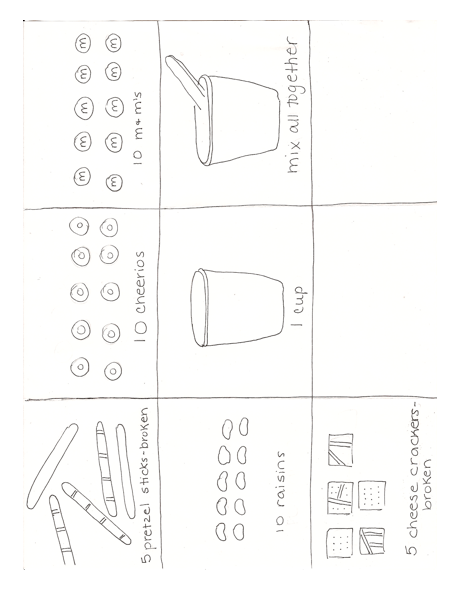
Bring in a crock pot and the ingredients needed to make your own classroom stone soup.

Music and Movement

Bring your plastic veggies to the carpet and sing, The Soup is Boiling Up. https://www.youtube.com/watch?v=Hx6ZdPysVeA

Tell the children that you know how to make chocolate soup and sing. https://www.youtube.com/watch?v=cRFTzna6bGE

Creative Arts/Music; participates with increasing interest and enjoyment in a variety of music activities including; listening, singing, finger plays, games, and performances.

Tell the children that you are going to pretend to buy items to put into your soup. Have the children name items that go into the soup (real or funny) and count! https://www.youtube.com/watch?v=Pt0jjke_Jns

Approaches to Learning/Reasoning & Problem Solving; develops increasing ability to find more than one solution to a question, task, or problem.

Open the page that shows after the banquet with the musicians playing instruments.  Tell the children that you would like to bring out your instruments, play and sing songs at the children’s requests.

Creative Arts/Music; experiments with a variety of musical instruments.

Blocks

Remind the children that the monks came to a village (community, town).  Challenge the children to build a village using the blocks today.  If you have people figures, you can add these to the center to enhance the village.  Add paper and pencil in case someone would like to add any signs to the buildings.

Social & Emotional Development/Knowledge of Families & Communities; begins to express and understand concepts and language of geography in the contexts of the classroom, home, and community.

Art

Give the children a piece of white construction paper with one of the foods from the story printed or drawn on it (use black permanent marker).  Let the children color the food item using the oil pastels.  When they are finished, show them how to use watery watercolors to paint over their food.  The watercolors will not stick where the oil pastel is making the oil pastels pop.  You might want to practice once before you help the children so that you can get the right watery watercolor.

Creative Arts/Art; gains ability in using different art media and materials in a variety of ways for creative expression and representation.

Sand and Water

Fill the pot with water and put into in the sensory table today along with the plastic bowls and ladils. Show the children how to ladil the soup carefully into the bowls without spilling.

Physical Health & Development/Fine Motor Skills; develops growing strength, dexterity, and control needed to use tools such as scissors, paper punch, stapler, and hammer.

Library and Writing

Alphabet soup.  Put a pot in the center with magnet letters.  The children can take turns pulling out a letter and naming.

Literacy/Alphabet Knowledge; identifies at least 10 letters of the alphabet, especially those in their own name.

Dramatic Play

Add stones and a big pot for making stone soup.  Act out story.  Ask different children to add a food from your play food.

Literacy/Book Knowledge & Appreciation; demonstrates progress in abilities to retell and dictate stories from books and experiences; to act out stories in dramatic play; and to predict what will happen next in a story.

Math and Manipulatives

Remind the children that the cover of the book had everyone looking down into the pot. Explain that you have a sorting game where the children must sort if they are looking down or up. Use the cards in Resources.

Mathematics/Geometry & Spatial Sense; builds an increasing understanding of directionality, order, and positions of objects, and words such as up, down, over, under, top, bottom, inside, outside, in front, and behind.

Outdoor Play

If you have a parachute, bring it out with several balls. Have the children stand around the edges of the parachute and toss the balls into the center. The children must try not to let the balls roll out of the parachute ans it moves up and down.

Physical Health & Development/Health Status & Practices; participates actively in games, outdoor play, and other forms of exercise that enhance physical fitness.

Transitions

Remind the children that In the story, the youngest monk asked, “what makes you happy”?  Ask the children this same question and write their responses onto a piece of paper to hang on the wall.  “Things that make us happy”.

Social & Emotional Development/Self-Concept; begins to develop and express awareness of self in terms of specific abilities, characteristics, and preferences.

Resources

Llama Llama Red Pajama, by Anna Dewdney

Baby Llama is waiting for Mama but Mama does not come right away. Baby Llama has a melt down until Mama comes and makes things right.

Materials

  • Several boxes/blankets to be used as beds for wither the children or the dolls in the dramatic center.
  • Many 2-inch squares of paper to be used to make a quilt design. I have used old wrapping paper as well as colored construction paper to make squares.
  • Several flashlights, 1 for each number of children allowed in center

Vocabulary

  • Fret (to worry or become upset)
  • Whimper (to whine or moan)
  • Moan (to groan or sigh)
  • Tizzy (to become panicked or really upset)

Introducing the Story

Hold up the cover of the book and ask the children to look at Llama’s face, how do you think he is feeling? I have gotten answers from sad to scared. Read the title of the book to the children. Ask why they think Llama is feeling this way (he does not like the dark, he does not want to go to bed, he wants to watch TV). Steer the conversation around bedtime rituals. Tell the children. “Let’s find out what is going on with Llama” and introduce the book.

Language Development/Speaking & Communicating; develops increasing abilities to understand and use language to communicate information, experiences, ideas, feelings, opinions, needs, questions; and for other varied purposes. Social & Emotional Development/Self-Control; show progress in expressing feelings, needs, and opinions in difficult situations and conflicts without harming themselves, others, or property.

Reading the Story

On the page where Llama and Mama are reading a story, ask the children if they think Llama likes this time of day (note Llama’s facial expression). Ask the children how many of their families read to them at night? When you get to the page where Llama starts to stomp and pout, ask the children what they think is happening (Llama is having a temper tantrum). Read the next 2 pages and stop after the sentence, “Mama Llama run, run, run”. Ask the children if they think this is a good way to get what they want, why/why not? Turn the page where it shows Mama coming into the room. Ask the children to look at Mama’s face, how do you think she is feeling? If they cannot place the emotion, tell them that Mama is afraid/scared.   Why? (She is scared that her baby is sick, she thinks baby fell off the bed and got hurt, there is a robber in the house).   On the page when Mama is in the room, (Baby Llama what a tizzy) again stop and look at the Llama’s faces. How do you think Mama and Llama are feeling?

Literacy/Book Knowledge & Appreciation; shows growing interest and involvement in listening to and discussing a variety of fiction and non-fiction, and poetry. AND Language Development/Speaking & Communicating; develops increasing abilities to understand and use language to communicate information, experiences, ideas, feelings, opinions, needs, questions; and for other varied purposes.

After Reading the Story

Ask the children if they ever feel sad or angry when it is time to go to bed?Tell them that getting good night’s sleep is important because that’s when our brains grow to help make us smarter. Explain to them that their parents need adult time to do things that they cannot do when they are at work (laundry, pay bills, relax, time to talk to their friends). Remind them that they have time to do this during the day at school but their parents have to wait until they get home.

Social & Emotional Development/Knowledge of Families & Communities; progresses in understanding similarities and respecting differences among people such as genders, race, special needs, culture, language, and family structures.

Music and Movement

Sing, If You’re Happy and You Know It. Sing and make movements for different emotions as you sing; happy, sad, frustrated, angry, excited, and loving.

Social & Emotional Development/Self-Control; show progress in expressing feelings, needs, and opinions

Do the fingerplay, 5 Little Monkeys Jumping on the Bed.

Mathematics/Number & Operation; begins to associate number concepts, vocabulary, quantities, and written numerals in a meaningful way.

If you have a tumble mat or large pillow, put it on the floor and have the children make a large circle around it. The pillow is going to be used for different kinds of large movements so make sure the children are seated far enough away not to be kicked. Let the children take turns trying to do a forward somersault roll. Older children may like to try a backward somersault roll however this is much more difficult. For children new to forward rolling, tell them to put their hands beside their feet, bend their knees, and look at their belly button so your head is tucked in tight. Challenge the children to do a log roll. Lay on the floor with your hands above your head and roll your body to the side making you roll from back to front to back again.

Physical Health & Development/Gross Motor Skills; shows increasing levels of proficiency, control , and balance in walking, climbing, running, jumping, hopping, skipping, marching, and galloping.

Discovery

Find a way to slightly darken your science center today and put out flashlights for the children to experiment with. Put out a variety of materials and ask the children to see which ones the light will shine through. Suggestions of things in your room that might provide the light to shine through; an article of doll clothing, a scarf, construction paper, paper plate, nap time blanket, easel paper, or a crystal. Include items that the light cannot pass through also.

Science/Scientific Skills & Methods; begins to use senses and a variety of tools and simple measuring devices to gather information, investigate materials, and observe processes and relationships.

 Blocks

Challenge the children to make beds, either for themselves or stuffed animals in your room. Is the bed long enough? How many blocks long does the bed need to be for the stuffed rabbit? How many blocks long does the bed need to be for the child?

Mathematics/Patterns & Measurement; shows progress in using standard and non-standard measures of length and area of objects.

Art

Use the many 2-inch squares of colored paper that you have and a sheet of paper to make quilts. Open up the book, Llama, Llama Red Pajama, and show the children the quilt design. Tell the children that they are going to make their own quilts today by gluing the 2-inch squares to the sheet of paper. As the children work, you can talk about the colors they are using and papers that may have design. For older children you can challenge them to make a pattern using the squares ABAB or ABBABBA, etc.

Mathematics/Patterns & Measurement; enhances abilities to recognize, duplicate, and extend simple patterns using a variety of materials.

Sand and Water

In the water table today, put out small pitchers and cups so the children can practice pouring. Remind them that in the story Llama thought he wanted a drink. If you are using disposable cups, mark lines on them at various heights so the children can practice filling a cup full, half full, and just a little bit full/quarter full.

Physical Health & Development/Fine Motor Skills; develops growing strength, dexterity and control needed to use tools such as scissors, paper punch, stapler, or hammer.

Library and Writing

Youtube has a reading of this story by author Anna Dewdney

Literacy/Book Knowledge & Appreciation; shows growing interest in reading related activities, such as having a favorite book read: choosing to look at books; drawing pictures based on stories; asking to take a book home; going to the library; and engaging in pretend reading with other children.

Dramatic Play

Nighttime rituals. Bring in several boxes or blankets the children can use for beds. Encourage the children to be the parent and read to their dolls or stuffed animals. If you have doll clothes, encourage the children to dress the dolls in their pajamas.

Literacy/Book Knowledge & Appreciation; shows growing interest in reading related activities, such as having a favorite book read: choosing to look at books; drawing pictures based on stories; asking to take a book home; going to the library; and engaging in pretend reading with other children. AND Physical Health & Development/Fine Motor Skills; grows in hand-eye coordination in building with blocks, putting together puzzles, reproducing shapes and patterns, stringing beads, and using scissors.

Math and Manipulatives

Put out any activity that you have that has pattern play today. My children enjoy matching the numbers on the dominos.

Mathematics/Patterns & Measurement; enhances abilities to recognize, duplicate, and extend simple patterns using a variety of materials.

Outdoor Play

Have the children gather round and tell them you want to have a classroom tantrum or fret. Ask the children if they can remember some of the things that Llama did? Act out the children’s recall and suggestions. In the story Llama boo-hooed, stomped, pouted, jumped, and shouted. But let the children run and scream or whatever else they might suggest that will not hurt each other (NO HITTING). The idea is to be very noisy and let off steam. When you are ready to end your classroom fret, holler ” Llama’s Stop!” and call all the children back to you. Give them all a kiss or a hug and send them on their way to play.

Literacy/Book Knowledge & Appreciation; demonstrates progress in abilities to retell and dictate stories from books and experiences; to act out stories in dramatic play; and to predict what will happen next in a story.

Transitions

Tell the children that today’s story was full of rhyming words. Give the example; pajama-mama. Ask them if they can tell you what a rhyming word is (rhyming words sound the same). As you dismiss the children to the next activity, say a word and see if they can make a rhyming word to go along with it. Use some of the sounds in the story; /air/ink/oon/un/ as well as those that are not; /at/ow/in/un/.

Literacy/Phonological Awareness; progress in recognizing matching sounds and rhymes in familiar words, games, songs, stories, and poems.

Dear Parents- Today we read a story about a llama who did not want to go to bed.  Talk to your child about the importance of getting a good night’s sleep, it helps our brains to grow and our bodies to rejuvenate.  Try setting up a bedtime ritual to help prepare your child for sleep.  (After you brush your teeth I will read you one story and then we will turn the light off and you need to rest).  Your child might fight you on this but being consistent will help with any routine that you are trying to enforce.

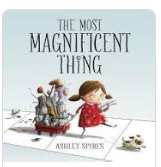
The Most Magnificent Thing, by Ashley Spires

A little girl knows what she wants to build; she just has to put it all together. With lots of trial and error she finally gets it and it is almost exactly as she predicted. This is a fun book for all budding inventors as it shows the persistence needed to have one’s imagination reach fruition. It also shows that a healthy cool down period can lead to positive results.

Materials

  • Blank head sheet
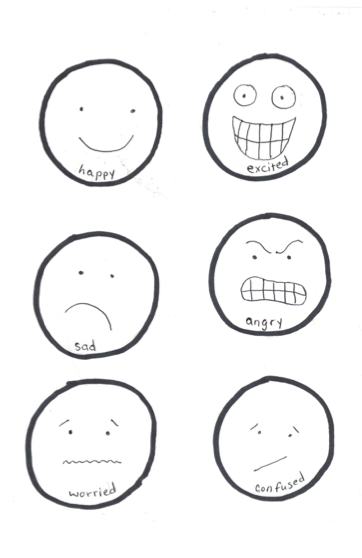
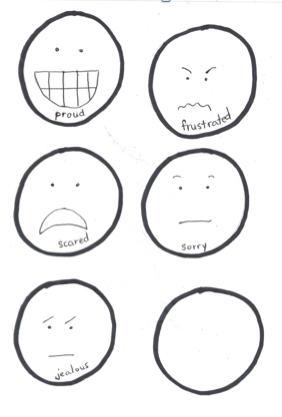
  • Emotion cards
  • Poster board or large sheet of paper (you will need to prep this before class, see blocks)

Vocabulary

  • Magnificent- wonderful and marvelous
  • Tinker-to play around with supplies trying to figure out what to do
  • Pummels-bashes
  • Proud-pleased with self or another
  • Frustrated-irritated and upset

Before Reading the Story

Ask the children if they know what the word proud means. If they cannot give you an answer, tell them that it means to do something that makes you really pleased or happy with yourself or another person. Use an example of learning to ride a bike. First you have to practice, practice, practice and then one day you finally figure out just how to peddle/balance and off you go riding. That is a proud moment. Explain to the children that many things take lots of practice and trial and error before you can figure out how to do them. Ask the children if they can tell you about any other proud moments they may have experienced. If they cannot come up with any, help them to think up moments that should make them proud (Andres poured his milk into his cup without any spills, Alison tied her shoe for the very first time, Paula learned how to spin the top, etc.).   Explain to the children that when we are learning something new, we must keep trying and trying and not give up. Tell the children that the story today is about a little girl who has to try and try again to build something very magnificent and special. Define magnificent to the children and introduce the book.

Language Development; Listening & Understanding; understands an increasingly complex and varied vocabulary. AND Social & Emotional Development/Self-Concept; begins to develop and express awareness of self in terms of specific abilities, characteristics, and preferences.

 Reading the Story

As you read, stop on the pages where the girl notices that the thing is still not right. Have the children look at the girls face and ask them if they can guess how she might be feeling (surprised, frustrated, angry). On the page where it says, “If only the thing would just work!”, stop and ask the children again to look at the girl. Ask them what they think is going to happen next. On the page where she finally finishes her invention, have the children look carefully at what is in her hands and ask the children if they can guess what it is she has made. On the last page again have the children look at the girls face and ask them what they think she might be feeling (happy, proud).

Social & Emotional Development/Social Relationships; progresses in responding sympathetically to peers who are in need, upset, hurt, or angry; and in expressing empathy or caring for others.

After Reading the Story

Remind the children that in the story the little girls invention did not work at first. Ask them if they remember what happened? What did the little girl do to get over her anger? Was that a good way? Talk to the children about what to do in school when you get irritated or upset (ask for help, walk away, take a break). Go over any anger management or cool down strategies that you use in your classroom.

Literacy/Book Knowledge & Appreciation; demonstrates progress in abilities to retell and dictate stories from books and experiences; to act out stories in dramatic play; and to predict what will happen next in a story. AND Social & Emotional Development/Self-Control; shows progress in expressing feelings, needs, and opinions in difficult situations and conflicts without harming themselves, others, or property.

Discovery

Put out tops or other toy that requires practice in order to be able to use correctly. Encourage the children to try and try again.

Physical Health & Development/Fine Motor Skills; develops growing strength, dexterity, and control needed to use tools such as scissors, paper punch, stapler, and hammer.Music and Movement;

Sing If You’re Happy and You Know It adding verses that include other emotions such as angry, frustrated, surprised, sad, and proud.

The teacher acts out an emotion using her/his whole body. The children guess the emotion and then act it out as well. (Excited=clap hands and jump up and down. Angry=make a fist and stomp the floor. Sad=rub eyes and shake like crying with whole body. Proud=extend hands up and take a bow. Bored=yawn and look around the room. Loving=give self a hug and an arm kiss).

Social & Emotional Development/Self-Control; shows progress in expressing feelings, needs, and opinions in difficult situations and conflicts without harming themselves, others, or property.

Blocks

Before class lay the poster board on the floor and use your wooden blocks to trace around. Fill as much of the paper as possible with block shapes. Let there sides touch but do not over lay the shapes. Lay the paper on the floor and challenge the children to fill it in using the appropriate blocks, kind of like a puzzle.

Mathematics/Geometry & Spatial Sense; begins to be able to determine whether or not two shapes are the same size and shape.

 Art

Give the children play dough today with scissors, hammers, and rollers. If you do not have hammers and rollers, wooden blocks work well (the half arch and the cylinder blocks).

Physical Health & Development/Fine Motor Skills; develops growing strength, dexterity, and control needed to use tools such as scissors, paper punch, stapler, and hammer.

Sand and Water

Put clean and empty bottles into the table today such as used shampoo and ketchup bottles. Challenge the children to fill the bottles to the top of the container. Put out a variety of tools to help but do not show your children how to use them. Tools could include measuring spoon, funnel, turkey baster, plastic hosing, and small teapot.

Approaches to Learning/Reasoning & Problem-Solving; grows in recognizing and solving problems through active exploration including trial and error, and interactions and discussions with peers and adults.

Library and Writing

Encourage the children to practice copying or writing their names today. Make sure to tell them that you are pleased to see them trying so hard and that they should be proud of themselves for their accomplishment.

Literacy/Early Writing; progresses from using scribbles, shapes, and pictures to represent ideas, to using letter-like symbols, to copying or writing familiar words such as their name.

Give the children a blank face sheet and ask them to draw an angry face. When they are finished, ask them to tell you one thing that makes them angry, write it on the bottom of their sheet. You can also use this for other emotions such as proud.

Social & Emotional Development/Self-Concept; begins to develop and express awareness of self in terms of specific abilities, characteristics, and preferences. Literacy/Early Writing; begins to represent stories and experiences through pictures, dictation, and in play.

 Dramatic Play

Add puppets to the dramatic play center today and encourage the children to put them on and pretend that they are the puppets. Encourage a puppet show.

Creative Arts/Dramatic Play; participates in a variety of dramatic play activities that become more extended and complex.

Math and Manipulatives

Play Memory with the children. Make two sets of the emotion cards on thick paper or glue a backing so the children cannot see through the paper. Shuffle the cards and lay face down on the table. The children take turns trying to find matches of cards. If they find a match they get to put the cards in a pile. When all the cards have been matched, have the children count the cards to see how many they have.

Mathematics/Patterns & measurement; shows progress in matching, sorting, putting in a series, and regrouping objects according to one or two attributes such as color, shape, or size. AND Social & Emotional Development/Cooperation; develops increasing abilities to give and take in interactions; to take turns in games and in using materials; and to interact without being overly submissive or directive.

Outdoor Play

Add bikes and other riding toys to the playground today. Encourage the children to try and try again as they work to develop their peddling and steering skills.

Physical Health & Development/Gross Motor Skills; demonstrates increasing abilities to coordinate movements in throwing, catching, kicking, bouncing balls, and using the slide and swings.

Draw a simple hopscotch board on the ground and encourage the children to 1) throw a beanbag or stone onto the correct number, 2)jump and hop accordingly to the hopscotch board.

Physical Health & Development/Gross Motor Skills; shows increasing levels of proficiency, control, and balance in waking, climbing, running, jumping, hopping, skipping, marching, and galloping.

Put out hula-hoops or jump ropes for the children to practice their skills.  Physical Health & Development/Health Status & Practices; progresses in physical growth, strength, stamina, and flexibility.

 Transitions

Ask the children to name one thing that makes them happy. Write their answer down on a large sheet of paper and hang it on the wall. At each transition, you can ask the children to tell you about a different emotion.

Language Development/Speaking & Communicating; develops increasing abilities to understand and use language to communicate information, experiences, ideas, feelings, opinions, needs, questions, and for varied purposes.

Dear Parent- today we read a story about a little girl who had to try and try gain to make her idea come to fruition. Tell your child about something you had to practice and practice to learn to do. Then tell your child how proud you felt afterwards by accomplishing your goal. If you see your child really trying at something, tell them you are proud at how hard they are working.

Resources

Screen Shot 2018-08-19 at 1.33.04 PM
Screen Shot 2018-08-19 at 1.32.19 PM
Screen Shot 2018-08-19 at 1.33.33 PM