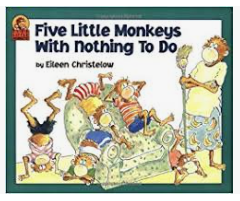
Five little Monkeys With Nothing To Do, by Eileen Christelow

            The five little  monkeys are bored but Mama keeps them busy helping to clean the house for Grandma Bessie.  When Grandma Bessie finally arrives, something is terribly wrong; I wonder who could have messed up the house?

Materials

  • 1-5 shape search cards
  • Collect an assortment of food delivery boxes/liquor store boxes both large and small. 
  • Poster board with lines drawn from side to side six inches apart.

Vocabulary

  •             Swamp (where the ground is always wet and muddy)

Before Reading the Story

           Show the children the front of the book and ask if anyone knows what the mother is holding.  Ask “what you use a broom for”?  Have any of the children ever helped sweep the floor?  Ask what other kinds of chores do the children do at home?  Tell them that the story today is about five little monkeys who help get the house ready for their Grandma Bessie’s arrival.

Social & Emotional Development/Self-Concept; begins to develop and express awareness of self in terms of specific abilities, characteristics, and preferences.

Reading the Story

            Take your time so the children can really look at the pictures.  On page 24-31, ask the children what they see happening to the nice clean house. 

Literacy/Book Knowledge & Appreciation; shows growing interest and involvement in listening to and discussing a variety of fiction, non-fiction, and poetry.

After Reading the Story

            Ask the children who they think messed up the house.  Why is it important to clean up after ourselves?  How do we know where to put our toys at school?  (the shelves are labeled). 

Physical Health & Development/Health Status & Practices; builds awareness and ability to follow basic health and safety rules such as fire safety, traffic and pedestrian safety, and responding appropriately to potentially harmful objects, substances, and activities. AND Social & Emotional Development/Self-Control; demonstrates increasing capacity to follow rules and routines and use materials purposefully, safely, and respectfully.

Discovery

            Today would be a good day to review your hand washing techniques.  Put up a poster and observe that the children know how to follow the steps. 

Physical Health & Development/Health Status & Practices; shows growing independence in hygiene, nutrition, and personal care when eating, dressing, washing hands, brushing teeth, and toileting.

Music and Movement

            Do the classic finger play, 5 Little Monkeys Jumping on the Bed

5 little monkeys jumping on the bed, One fell off and bumped his head. Mamma called the Doctor and the Doctor said, No more monkeys jumping on the bed!

Continue to 4, 3, 2, 1.

Mathematics/Number & Operations; develops increasing ability to count in sequence to 10 and beyond.

Sing This Is The Way pantomiming different cleaning motions such as sweeping, making the bed, emptying the trash, washing the dishes. https://www.youtube.com/watch?v=f3PcUIbqKPg

Social & Emotional Development/Knowledge of Families & Communities; develops growing awareness of jobs and what is required to perform them.

Blocks

            Challenge the children to make shelves from the blocks to put center toys on for display.

Physical Health & Development/Fine Motor Skills; growis in hand-eye coordination in building with blocks, putting together puzzles, reproducing shapes and patterns, stringing beads, and using scissors.

Art    

            Finger paint directly onto the table.  Ask the children if they can draw a circle, square, triangle, house, etc.  Let the children help wash the table when you are all through.  This is a messy project but children seem to like the cleaning as much as the painting.  And cleaning up messes goes along so well with today’s story.

Social & Emotional Development/Knowledge of Families & Communities; develops growing awareness of jobs and what is required to perform them. AND Approaches to Learning/Engagement & Persistence; grows in abilities to persist in and complete a variety of tasks, activities, projects, and experiences.

Sand and Water

            In the story the monkeys went to the swamp where it is always wet and muddy.  Put dirt in the table today and let the children add water turning it to mud.

Science/Scientific Skills & Methods; begins to use senses and a variety of tools and simple measuring devices to gather information, investigate materials, and observe processes and relationships.

Library and Writing

           Make a copy of the 1-5 number cards and cover with contact paper, or print out a set for each child.  Ask the child to name the number of the card. Explain that the card has that many of the number hidden on it. Let the child circle to correct numbers, counting to make sure that on the number 4 card that they have circled four number 4’s, etc.

Mathematics/Number & Operations; begins to associate number concepts, vocabulary, quantities, and writen numerals in meaningful ways.

Dramatic Play

           Give the children damp paper towels and allow them to help clean the center, or better yet, the whole room!

Approaches to Learning/Engagement & Persistence; grows in abilities to persist in and complete a variety of tasks, activities, projects, and experiences.

Math and Manipulatives

            Cut out pictures of toys from educational catalogs.  Ask the children to glue them onto the shelves (poster board with lines).  Keep the shelves neat, glue on the lines.

Physical Health & Development/Fine Motor Skills; growis in hand-eye coordination in building with blocks, putting together puzzles, reproducing shapes and patterns, stringing beads, and using scissors. AND Language Development/Listening & Understanding; shows progress in understanding and following simple and multiple-step directions.

Outdoor Play

           Fold or tape the ends of the boxes you collected so that it will remain closed.  Let the children use these as large blocks for building outside.  The more boxes you have, the better the creative building.

Transitions

            Ask the children what they would like to do and have them tell you using full sentences.  (OK little monkey Kerry, what are you going to do when we get outside?)

Language Development/Speaking & Communicating; progresses in clarity of pronunciation and towards speaking in sentences of increasing length and grammatical complexity.
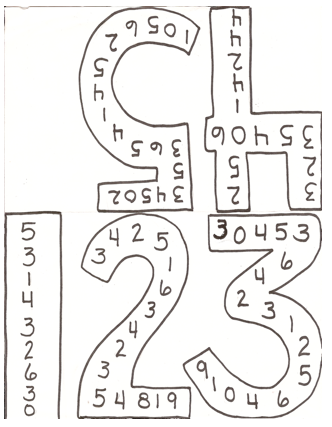
enlarge and cut out each individual number shape

Bringing the Rain to Kapiti Plain, by Verna Aardema

            This story takes place on the great Kapiti Plain that is need of rain.  The story can be a good jumping board for water thoughts, both the cycle of water and conservation.

Materials

  • National Geographic or other magazines with African animals inside.
  • Mylar, cut into strips
  • A globe or map of the world

Vocabulary

  • Herdsman (like a cattle farmer in the United States, he makes sure the cow are safe and healthy).          
  •  The Plain (kind of like living out in the country)
  • Drought (when the rain does not come for a very long time and all the plants and animals begin to get sick and there is hardly any water to drink)          

Before Reading the Story

            Ask the children if they know why water is so important?  Make a list of the children’s responses (to drink, to take a bath or shower, to wash my clothes. To cook spaghetti and other food, to brush teeth, water plants, flush).  Talk to the children about the importance of not wasting water.  If you see the sink left running, we need to turn it off. Explain that we do not want to waste water because then what would happen (It would all be gone and you could not get a drink).  Depending upon where you live, this discussion could easily go into drought concerns and water conservation.  The idea is to make sure the children are aware that water is important and that we need to take care of the water.

Science/Scientific Knowledge; expands knowledge of and respect for their bodies and the environment.

Reading the Story

           As you introduce the story, show the children where Africa is on the globe or map.  Talk about how it is very far away on the other side of the world.  Take a moment and do a picture walk through the book. Have the children name all the animals that they see in the pictures.  Ask them if these animals are like the animals they see around their neighborhoods or woods.  Let the children know that these are called African animals.  Go back to the cover and show/point out the cows.   Do these look like the cows we have here?  Why do you think that Ka-pit is watching the cows?  What do farmers get from cows (milk, meat, leather, ice cream). So cows are pretty important animals both here and in Africa.  Let’s find out how the rain is brought to Kapiti Plain and why.

Science/Scientific Knowledge; expands knowledge of and abilities to observe, describe, and discuss the natural world, materials, living things, and natural processes.  AND Literacy/Book Knowledge & Appreciation/shows growing interest and involvement in listening to and discuss ing a variety of fiction and non-fiction books and poetry.

After Reading the Story

            Open up the book to the page that starts “These are the cows, all hungry and dry”.  Lead a discussion on the importance of drinking water everyday.  Ask the children to look at the cows, what does it mean that they were dry (they wanted a drink, their tongues were stuck).  Ask the children questions about being thirsty (have you ever been so thirsty that your tongue felt like it was sticking? When you are outside running and you get thirsty what should you do?  How many glasses of water should you drink to keep your insides lubed? (8)  What happens when you do not get enough water to drink (I am thirsty, I get a headache).  

Physical Health & Development/Health Status & Practices; builds awareness and ability to follow basic health and safety rules such as fire safety, traffic and pedestrian safety, and responding appropriately to potentially harmful objects, substances, and activities.

Discovery

            Pictures of Africa; the people, the animals, the land. Talk with the children and compare the likenesses and differences to life in the United States.

Mathematics/Patterns & Measurement; begins to make comparisons between objects based on a single attribute,  AND Approaches to Learning/Reasoning & problem Solving; develops increasing abilities to classify, compare, and contrast objects, events, and experiences.

Music and Movement

            Use your instruments and have a thunderstorm.  Start off playing softly and become louder as the thunder storm grows.  Then you can bring the instruments back down to soft again.

Creative Arts/Music; experiments with  a variety of musical instruments.

            Sing the song, Rain is Falling, to Frere Jacque

Rain is falling, rain is falling
All around, all around
It’s raining on the tree tops; it’s raining on the tree tops
And the ground, and the ground

Creative Arts/Music; participates with increasing interest and enjoyment in a variety of music activities, including listening, singing, finger plays, games, and performances.

             If you have rain sticks, this would be a good day to let the children experiment with them.

Creative Arts/Music; experiments with  a variety of musical instruments.

            In the story Ki-pat stands on one leg while he watches the cows.  Let’s pretend we are herdsmen in Africa and see how long we can stand on one leg.  Try other balance activities (Put one hand on the floor and lift one leg in the air, stand on tip toe, stand on your heels, put both hands and one leg on the ground and one leg in the air, etc.).

Physical Health & Development/Health Status & Practices; progresses in physical growth, stamina, strength, and flexibility.

            Put out some wrist bells and do a rain dance. 

            If you are fortunate to get mylar (those silver balloons) cut them into strips, it makes a wonderful rain storm.  It sounds like rain when you crinkle it and it’s fun to toss up in the air.

Approaches to Learning/Initiative and Curiosity; chooses to participate in an increasing variety of tasks and activities.

Blocks

            Put out any African animals that you have as well as any others.  Encourage the children to build a lake for the animals to get a drink at.  The children can sort the animals by like kinds or line them up smallest to largest.

Mathematics/Patterns & measurement; shows increasing abilities to match, sort, put in a series, and regroup objects according to one or two attributes such as shape or size.

Art

            Put out magazines and encourage the children to cut out animals and glue them to paper.  Encourage them to look for pictures of African animals.

Physical Health & Development/Fine Motor Skills; develops growing strength, dexterity, and control needed to use tools such as scissors, paper punch, stapler, and hammer.

Sand and Water

            Scooping and pouring water play.  Do you have pitchers that can sound like rain when poured?  If not, you can make simple rain makers by punching holes in the bottom of a plastic container (cottage cheese container).

Science/Scientific Skills & Methods; begins to use senses and a variety of tools and simple measuring devices to gather information, investigate materials, and observe processes and relationships.

Library and Writing

          Tell the children that they are going to find ‘secret messages’ written in the clouds.  From white paper cut out cloud shapes.  Use a white crayon to write a message for each child (Hello Jamie).  Let the children paint with watercolors over their cloud, to turn it dark like a rain cloud. Watch their surprise when they see a message with their name.  Encourage them to read the message or the letters.

Literacy/Alphabet Knowledge; identifies at least 10 letters of the alphabet, especially those in their own name.  AND Literacy/Early Writing; develops understanding that writing is a way of communicating for a variety of purposes.

Dramatic Play

            Add large scarves or pieces of fabric to the center so the children can try to make robes like Ki-pat in the story. 

Creative Arts/Dramatic Play; shows growing creativity and imagination in using materials  and in assuming  different roles in dramatic play situations.

Math and Manpiluatives

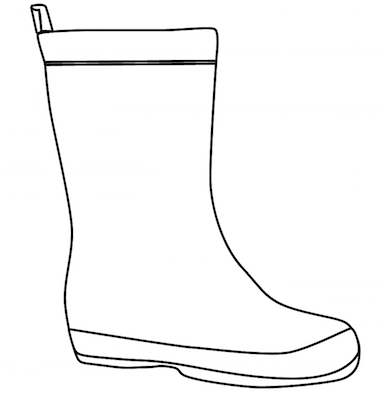
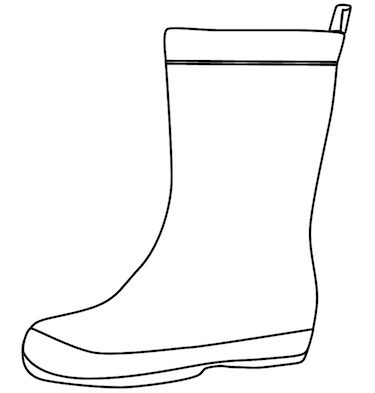
           Make copies of the boots and decorate the left and right to match.  Put all the boots out on the table and ask the children to find the pairs of boots.  As they make their matches talk to them about the colors or patterns that are on the boot.

Mathematics/ Patterns & Measurement; shows growth in matching, sorting, putting in series, and regrouping objects according to one or two attributes such as color, shape, or size.

            Make sets of right footed boot in small, medium, and large.  Decorate each set the same.  Challenge the children to find the three boots that match and put them in order from small to large.

Mathematics/ Patterns & Measurement; shows growth in matching, sorting, putting in series, and regrouping objects according to one or two attributes such as color, shape, or size.

Outdoor Play

            In the story Ki-pat shot an arrow into the sky.  Take bean bags and pretend that they are arrows and throw them into the sky.  See if you can catch them.  Play catch with another child, throw the bean bags at a target (perhaps a large cloud shape).

Physical Health & Development/Large Motor Skills; demonstrates increasing abilities to coordinate movements in throwing, catching, kicking, bouncing balls, and using the slide and swing.

Transitions

           This story is written with many rhymes.  Say a word and the child must say another word that rhymes with it before going off to the next activity.

Literacy/Phonological Awareness; progresses in recognizing matching sounds and rhymes in familiar words, games, songs, stories, and poems.

Resources

Hello Farm Animals, by Eileen Curran


            The rooster crows and the day on a farm begins.  Each page introduces a farm animal.  See where all the animals spend their days on the farm.

Materials

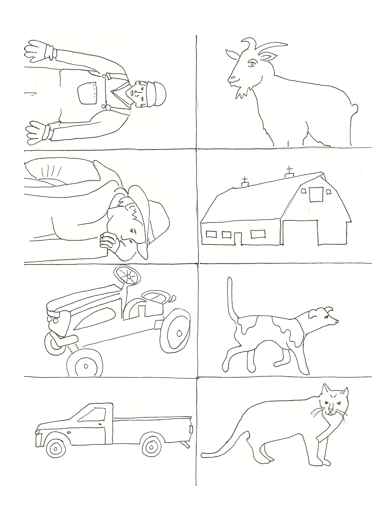
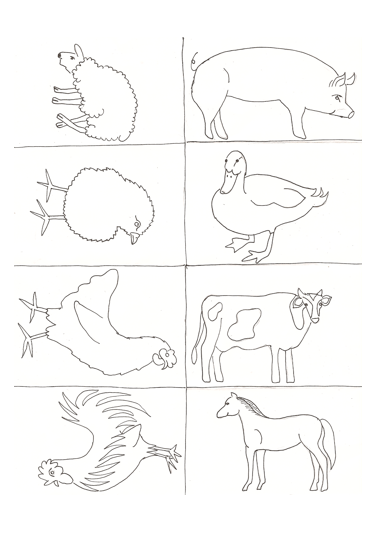
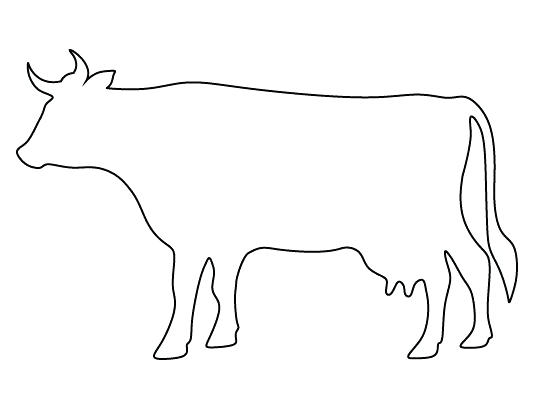
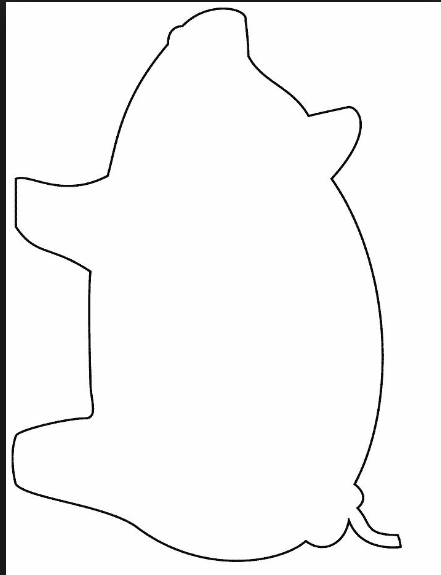
  • Farm animal pictures (horse, rooster, cow, dog, duck, pig, hen, chick, sheep, goat, farmer, helper son)
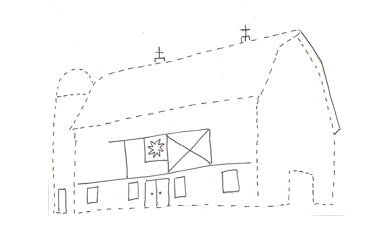
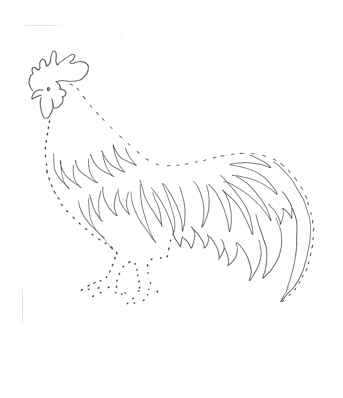
  • Barn and rooster with dotted lines to follow
  • Waxed paper
  • Glue bottles with colored glue

Vocabulary

Before Reading the Story

            Ask the children to share with you any knowledge they might have about farms.  Write their responses onto a large piece of paper.  If they are unsure how to discuss, lead them by asking questions about what would you find on a farm.  Do all farms have animals?  Where do the animals sleep at night?  What do you think the animals eat? 

Science/Scientific Knowledge; expands knowledge of and abilities to observe, describe, and discuss the natural world, materials, living things, and natural processes.

Reading the Story

            Take a moment on each page and let the children describe what is going on. 

Language Development/Speaking & Communicating; develops increasing abilities to understand and use language to communicate information, experiences, ideas, feelings, opinions, needs, questions, and for other varied purposes.

After reading the Story

Ask the children questions about the animals in the book. Turn to a page and ask the children to describe what is happening.

Literacy/Book Knowledge & Appreciation; shows growing interest and involvement in listening to and discussing a variety of fiction and non-fiction books, and poetry.

Discovery

            Hang a variety of farm scenes up in the center for the children to look at and compare kinds of farms and the animals on the farm.

Science/Scientific Methods & Skills; begins increased ability to observe and discuss common properties, differences and comparisons among objects and materials.

Music and Movement

            Color the farm animal pictures so that they go along with the song.  Cover them with contact paper and put a small piece of Velcro on it if you would like to use it as a flannel.  Sing the Farm Animal song and have the children follow the directions. Sung to Do You Know The Muffin Manhttps://www.youtube.com/watch?v=fXFg5QsTcLQ

Do you have the big red rooster, the big red rooster, the big red rooster.

If you have the big red rooster put it on the board/please stand up.

Do you have the gray horse, the gray horse, the gray horse.

If you have the gray horse, put it on the board/please stand up

Do you have the spotted cow, big white duck, the pink pig, the white rooster, the yellow chick, the black sheep, the brown goat, blue farmer, red helper son

Language Development/Listening & Understanding; shows progress in understanding and following simple and multi-step directions.

Blocks;

            Put out your farm animals in the center. Encourage the children to build farm buildings and fences.

Approaches to Learning/Engagement & Persistence; grows in abilities to persist in and complete a variety of tasks, activities, projects, and experiences. AND Physical Health & Development/Fine Motor Skills; grows in hand-eye coordination in building with blocks, putting together puzzles, reproducing shapes and patterns, stringing beads, and using scissors.

Art

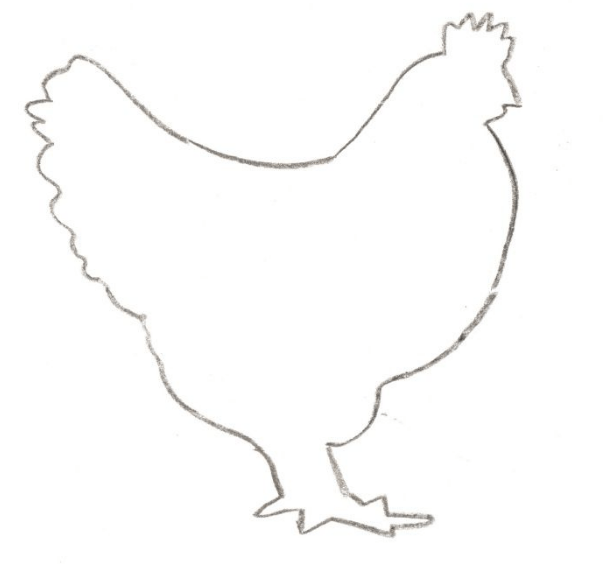
    Make colored glue by adding food coloring or paint to your glue bottles. Lay an animal shape on the table with a piece of waxed paper on top. The child then gently squeezes the glue so that it dribbles out following the lines of the animal shape. Lay flat till completely dry and then carefully peel off the waxed paper.

Creative Arts/Art; gains ability in using different art media and materials in a variety of ways for creative expression and representation.

Library and Writing

            Make a copy of the barn and the rooster.  Cover them with contact paper.  Let the children use washable markers to trace over the dot to dot lines.  They can then wash the lines with a damp towel for the next child to do. Or make individual copies for each child.

Literacy/Early Writing; experiments with a growing variety of writing tools and materials, such as pencils, crayons, and computer.

Sand and Water

            Put dirt in the water table and let the children slowly add water one measuring cup at a time to make piggy mud.

Science/Scientific Methods & Skills; begins to use senses and a variety of tools and simple measuring devices to gather information, investigate materials, and observe processes and relationships.

Dramatic Play

            Bring stuffed farm animals into the center and let the children pretend to feed the animals. 

Social & Emotional Development/Knowledge of Families & Communities; develops growing awareness of jobs and what is required to perform them.

Math and Manipulatives

Make 5 copies of the farm/animal pages and cut them out individually. Make simple patterns using the farm pictures for the children to copy (pig, pig, cow-tractor,fame, barn)

Mathematics/Patterns & Measurement; enhances abilities to recognize, duplicate, and extend simple patterns using a variety of materials.

Outdoor Play

            If you have large plastic farm animals, bring them outside for the children to use in the dirt or in the sand box.

Literacy/Book Knowledge & Appreciation; demonstrates progress in abilities to retell and dictate stories from books or experiences,; to act out stories in dramatic play; and to predict what will happen next in a story. AND Approaches to Learning/initiative & Curiosity; chooses to participate in an increasing variety of tasks and activities.

Transitions

            Go back through the animals and name the letter that they begin with.  Then have the children think of words that begin with the same letter sound (The cows are hungry.  Cows begin with the /c/ sound, what other words can you think of that begins with c?  Here are some chicks.  Chicks begins with the /ch/ sound.  What other words can you think of that begin with the ch sound?

Literacy/Phonological Awareness; shows growing awareness of beginning and ending sounds in words.

Resources