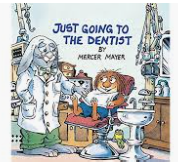
Just Going to the Dentist, by Mercer Mayer

            It’s time for Little Critter’s dental check-up.  Follow him as he goes through a typical dentist visit.  Children enjoy little Critter as he has a way of taking some of the fear out of an unknown experience, like going to the dentist.

Materials

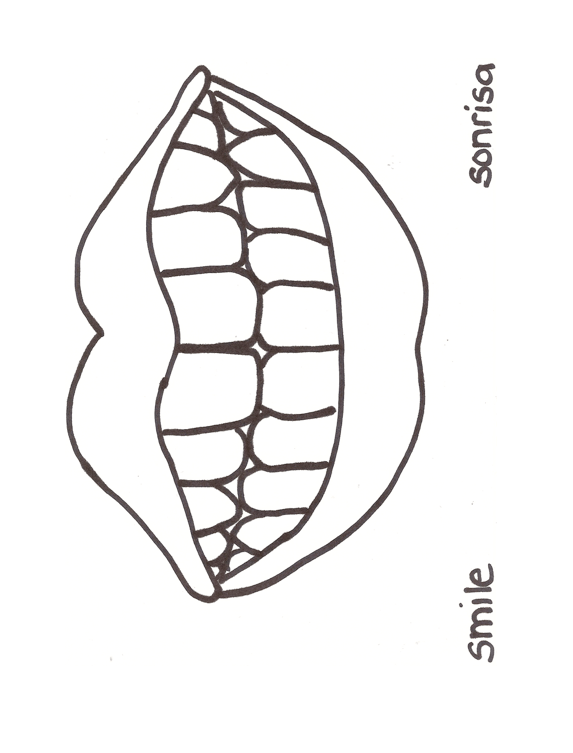
  •  Giant mouth picture
  •  Several sanitized styrofoam egg cartons
  • Several old but sanitized toothbrushes
  • Several pieces of sandpaper in different grits
  • Dentist supplies (see dramatic play)
  • Several bottles of glue and many one inch squares of white paper

Vocabulary

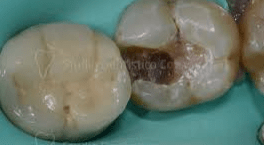
  •  Cavity (A hole in your tooth)
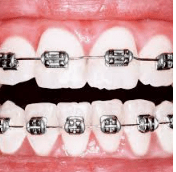
  • Braces (Bands that go around your teeth to make them straighter)
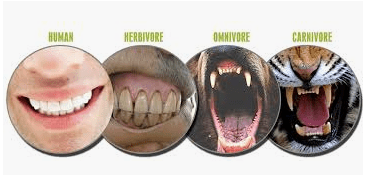
  • Herbivore (animal or person who does not eat any meat)
  • Omnivore (an animal or person who eats both animal meat and plants)
  • Carnivore (an animal or person who only eats animal meat)
  • Rough (not smooth. bumpy)

Before Reading the Story

            Tell the children that your story today is about a special kind of career helper.  This person takes care of our teeth when they get sick with cavities.  Does anyone know who this career helper is?  Once the children have identified the helper as the dentist, let them talk of any dentist experiences they might have had.

Approaches to Learning/Reasoning & Problem Solving; develops increasing abilities to classify, compare, and contrast objects, events, and experiences. AND Language Development/Speaking & Communicating; develops increasing abilities to understand and use language to communicate information, experiences, ideas, feelings, opinions, nedds, questions; and for other varied purposes.

Reading the Story

            As you read, point out different tools in the dentist office.  Have the children repeat back the names and then continue readind.

Language Development/Listening & Understanding; understands an increasingly complex and varied vocabulary.

After Reading the Story

            When you get to the page where the dentist gives Little Critter a lollipop, ask the children if that is really a healthy food for their teeth?  Ask them what they think would be a healthier treat for their teeth. Talk to them about how sticky foods and sugars attach to your teeth and cause cavities. Ask the children if they know the most important thing they can do to keep their teeth healthy? (Brush after meals)

Physical Health & Development/Health Status & Practices; builds awareness and ability to follow basic health and safety rules such as fire safety, traffic and pedestrian safety, and responding appropriately to potentially harmful objects, substances, and activities. AND Science/Scientific Knowledge; expands knowledge of and respect for their bodies and the environment.

Discovery

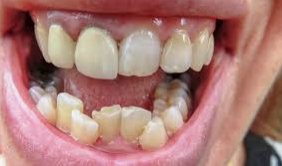
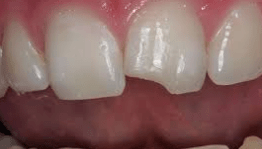
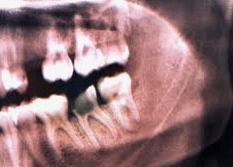
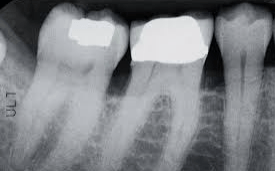
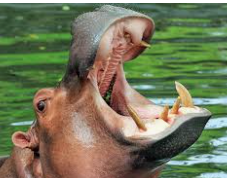
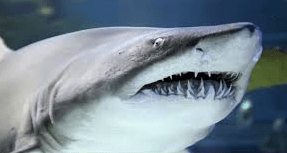
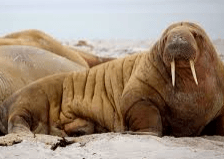
            Ask your dentist for some old x-rays of your teeth.  These can be taped to the window or held up to the light.  Also bring in any teeth that you might have to share.  (Your own, shark, animal, tooth castings). An old cassette holder works well for holding small items (teeth) that you do not want the children to hold loose.  Put the teeth inside and tape it shut.  Show the picture of the different kinds of teeth (herbivore, omnivore, and carnivore). The children can then use a magnifying glass to compare the different kinds of teeth.

Science/Scientific Skills & Methods/begins to participate in simple investigations to test observations, discuss and draw conclusions, and form generalizations.

Music and Movement

            Teach the Tooth Brushing cadence.

Brush your teeth every day,

Up and down it is the right way.

Back and forth and circles too,

This is what we have to do.

Brush your teeth every day,

Up and down it is the right way.

(Children can act out the motions of brushing)

Physical Health & Development/Health Status & Practices; shows growing independence in hygiene, nutrition, and personal care when eating, dressing, washing hands, brushing teeth, and toileting.

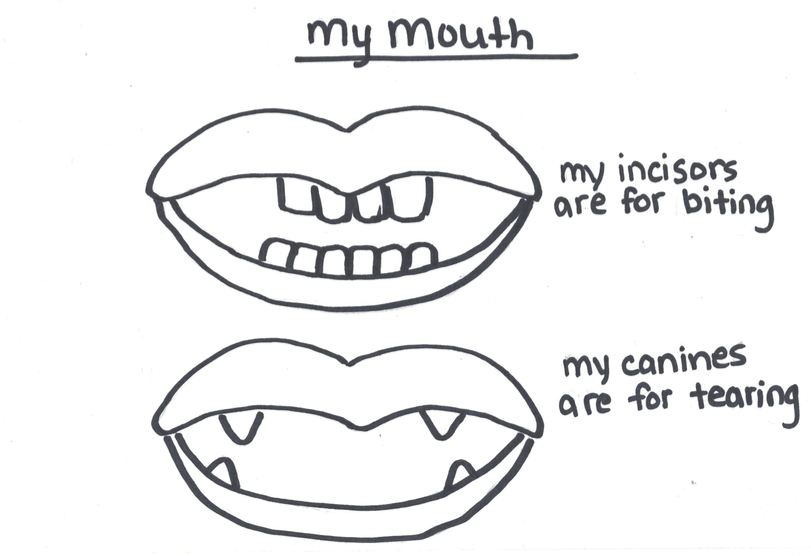
Make a large copy of the poem, My Mouth and hang it on the wall. Teach the children the poem while pointing out the various types of teeth.

My Mouth

My incisors are for biting

My canines are for tearing

My molars are for munching,

And my smile is for sharing.

Language Development/Speaking & Communicating; uses and increasingly complex and varied vocabulary.

Blocks

            Tell the children that today they can pretend to be the denist and remove the plaque and sugars from the teeth. On some of the blocks, make a mark using a marker. These are the cavities that the dentist will have to remove. Give the children several different grits of sandpaper and allow them to sand of the marks.   Can they feel the different grits of sandpaper?  Introduce the words rough and smooth to the children.

Science/Scientific Skills & Methods; begins to use senses and a variety of tools and simple measuring devices to gather information, investigate materials, and observe processes and relationships. AND Creative Arts/Dramatic Play; shows growing creativity and imagination in using materials and in assuming different roles in dramatic play situations.

Art

            Make several copies of the giant mouth pattern and cover with contact paper.  Put into the play dough center and let the children use the play dough to make teeth.  Count the teeth after they have finished. 

Mathematics/Number & Operations; begins to use one-to-one correspondence in counting objects and matching groups of objects.

Sand and water

            Put Styrofoam egg cartons that have been sanitized into the water table with some toothbrushes.  The children can pretend to brush the egg carton teeth.  Add a small bit of paint to act as food on the tooth and let the children scrub it off. 

Creative Arts/Dramatic Play; shows growing creativity and imagination in using materials and in assuming different roles in dramatic play situations. AND Physical Health & Development/Fine Motor Skills; grows in hand-eye coordination in building with blocks, putting together puzzles, reproducing shapes and patterns, stringing beads, and using scissors.

Library and Writing

            Give each child a giant mouth picture.  Ask them to write the letters of their names across the teeth and cut out the mouths. 

Physical Health & Development/Fine Motor Skills; grows in hand-eye coordination in building with blocks, putting together puzzles, reproducing shapes and patterns, stringing beads, and using scissors. AND Literacy/Early Writing; progresses from using scribbles, shapes, or pictures to represent ideas, to using letter-like symbols, to copying or writing familiar words such as their own name.

Dramatic Play

            Add several hand mirrors to the center and Popsicle sticks along with “office” kinds of materials. If available, add some rubber gloves, safety glasses and a smock. The children can play Dentist using a new Popsicle stick for each mouth that they look into. 

Creative Arts/Dramatic Play; participates in a variety of dramatic play activities that become more extended and complex. AND Social & Emotional Development/Knowledge of Families & Communities; develops a growing awareness of jobs and what is require to perform them.

Math and Manipulatives

            Before beginning; have the children chant “Not a lot, just a drop.  Not a lot, just a drop”.  This chant works well for teaching children about glue and toothpaste amounts.  Give each child a bottle of glue and ten 1” squares of paper.  Draw a line onto another piece of paper.  Challenge the children to glue 5 squares above the line and 5 squares below the line.  As they glue have them chant’ “Not a lot, just a drop”.  Have them count the teeth/squares above the line, under the line, and all together.

Mathematics/Number & Operations; develops increased abilities to combine, separate, and name “how many” concrete objects. AND Physical Health & Development/Fine Motor Skills; grows in hand-eye coordination in building with blocks, putting together puzzles, reproducing shapes and patterns, stringing beads, and using scissors.

Outdoor Play

            Have the children use old tooth brushes and a bucket of water to practice tooth brushing motions on the sidewalk. The water dries quickly, which encourages the them to continue with the motions. For a dirty tooth effect, use chalk to draw the teeth, add cavities. This will take longer to clean off the sidewalk, hence more practice. If available, let the children use 2 minute timers while they play. 

Physical Health & Development/Fine Motor Skills; grows in hand-eye coordination in building with blocks, putting together puzzles, reproducing shapes and patterns, stringing beads, and using scissors.

Transitions

            Ask the children to name foods that they crunch with their teeth.  Name a food that sticks to your teeth when you eat it.  Name a food that is healthy for your teeth.  Name a food that is unhealthy for your teeth. 

Approaches to Learning/Reasoning & Problem Solving; develops increasing ability to find more than one solution to a question, task, or problem.

Resources

Dear Parents,

            Today we read a story about going to the dentist.  Ask your child to talk about and share any memory they have of a dentist visit.  Remind them at bedtime how important it is to clean their teeth by brushing them well.  Brush your teeth together and model good brushing technique.

Check out the web site http://www.colgatebsbf.com They have information and a free booklet that you can send home to parents for adult education.
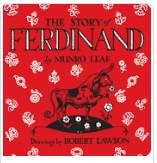
The Story of Ferdinand, by Munro Leaf

            This is the story about a bull who was contented and happy being himself even if he was not like all the other bulls. This is a story about accepting others for who they are. Ferdinand is a bull who just does not like to fight and play rough like all the other bulls.  He is happy to sit and smell the flowers.

Materials

  • Dip cotton balls into different scents.  Put the cotton ball into small containers that the scent can come through. (IE; a zip lock bag with small pin holes along the seal). Seal the container so the children can not open them. (vanilla, perfume, vinegar, mouthwash, shampoo, liquid soap)
  • Tape measurer or yard stick

Vocabulary

  • Bull ( a boy cow)
  • Lonesome (sad from being alone)
  • Snort (the sound of air being forced through nose)
  •  Fierce (the fightingest)

Before Reading the Story

            Ask the children if they ever like to be alone and do quiet things all by themselves?  What kinds of things do you like to do by yourself?  Do you have a special place that you go when you want to be alone?  Show the children the front of the book and ask if they know what kind of an animal Ferdinand is (bull). Point out his neck muscles and say that bulls are very strong.  Show the children where Spain is on a globe or a map.  Explain to them that in Spain people fight with bulls kind of like how in the U.S. wrestlers fight with each other on television, it is a sport.

Social & Emotional Development/Self-Concept; begins to develop and express awareness of self in terms of specific abilities, characteristics, and preferences.

Reading the Story

When you get to the part where the author is telling how all the other bulls played and knocked their heads together; hold up your two fists and bump them together saying these are their heads.

Language Development/Listening & Understanding; understands an increasingly complex and varied vocabulary.

When you get to the part where Ferdinand sits on the bumble bee, stop and ask the children what they think is going to happen.

Literacy/Book Knowledge & Appreciation; demonstrates progress in abilities to retell and dictate stories from books and experiences; to act out stories in dramatic play; and to predict what will happen next in a story.

After Reading the Story

            Ask the children how they felt about Ferdinand not wanting to fight.? What if someone wanted to fight with you, what would you do?  Is it ok to not do what everybody else is doing?  Does everyone have to like to play in the mud just because I do?  Am I being a good friend if I try to make you play in the mud when you do not want to?  Is it ok to tell somebody “no” that you do not want to do something?

Social & Emotional Development/Cooperation; shows increasing abilities to use compromise and discussion in working, playing, and resolving conflicts with others. AND Approaches to Learning/Initiative & Curiosity; grows in eagerness to learn about and discuss a growing range of topics, ideas, and tasks.

Discovery

            In the story Ferdinand liked to smell the flowers.  Bring in several small containers that you have soaked a cotton ball in a scent.  Let the children sniff and guess what the scents are.  Ask them to tell you which scents they like and do not like.  Ask them to tell you what other scents they like (peanut butter, my shampoo, my baby when he’s not stinky)

Social & Emotional Development/Self-Concept; begins to develop and express awareness of self in terms of specific abilities, characteristics, and preferences.

            Begin a discussion on smells.  What do we use to smell with?  How do smells help us? (They tell us about smoke, they tell us where to find food). 

Science/Scientific Skills & Methods; begins to describe and discuss predictions, explanations, nad generalizations based on past experiences.

            Did you know that if you have a very plugged nose you can not taste food?  At lunch if someone says they do not like something, see if they will try an experiment.  Have them plug their nose and take a bite of the food.  Tell them to hold their nose until after they have swallowed. THere, you see that was not so bad.

Science/Scientific Skills & Methods; begins to participate in simple investigations to test observations, discuss and draw conclusions, and form generalizations.

Music and Movement

            Do the fingerplay 5 Little Bulls

 5 little bulls                                           (hold up 5 fingers)

Bumping heads                                       (bump knuckles of hands together)

Bumped too hard so went to bed.          (rub forehead)    

4 Little bulls                                          (hold up 4 fingers)

Bumping Heads                                      (bump knuckles of hands together)

Bumped too hard so went to bed. (rub forehead)

3 bulls

2 bulls

1 little bull                                             (hold up 1 finger)

Couldn’t bump heads                               (shrug shoulder

He got bored so off he fled                         (put hands behind back)

Mathematics/Number & Operations; begins to associate number concepts, vocabulary, quantities, and written numerals in meaningful ways.

            Teach the children the fingerplay, Here Is The Beehive

                        Here is the beehive                                   (Make a fist with hand)

                        But where are the bees?                            (Shrug shoulders)

                        Hiding away where nobody sees.            (Use other hand to point to fisted hand)

                        Oh, do you hear them?                             (Hold fisted hand to ea

                        They’re coming out of the hive

                        Here come the bees, 1,2,3,4,5!                   (Open up hand as count out the bees)

Mathematics/Number & Operations; develops increasing ability to count in sequence to 10 and beyond.

Blocks

            Encourage the children to use the blocks to make a fence.  Can they make a pattern fence with the blocks?

Mathematics/Patterns a & Measurement; enhances abilities to recognize, duplicate, and extend simple patterns using a variety of materials.

Art

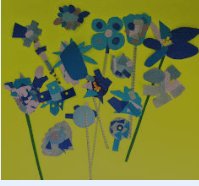
            Cut out circles, petal shapes, leaf shapes, and long strips for stems. Let the children collage the parts together to make flowers.

Creative Arts/Art; progresses in abilities to create drawings, paintings, models, and other art creations that are more detailed, creative, or realistic.

Library and Writing

Ask each child what it is that they especially like to do. Write their responses onto a piece of paper. Encourage the child to then illustrate their words. (I like to pet my cat cause he is soft and tickles me. I like to play video games on my Mommies phone. I like to play with my sister).

Social & Emotional Development/Self-Concept; begins to develop and express awareness of self in terms of specific abilities, characteristics, and preferences. AND Physical Health & Development/Fine Motor Skills; progresses in abilities using writing, drawing, and art tools, including pencils, markers, chalk, paint brushes, and various types of technology.

Sand and Water

            Add silk or real flower petals to the water today.

Approaches to Learning/Initiative & Curiosity; approaches tasks and activities with increased flexibility, imagination, and inventiveness.

Dramatic Play

            Put fresh or silk flowers onto the table for the children to enjoy.

Approaches to Learning/Initiative & Curiosity; approaches tasks and activities with increased flexibility, imagination, and inventiveness.

Math and Manipulatives

Using unifix cubes or counters, put out two sets and ask the children to count each set and tell you which has more or which has less.

Mathematics/Number & Operations; begins to use language to compare numbers of objects with terms such as more, less, greater than, fewer, and equal to.

Outdoor Play

            Encourage the children to run and jump on the playground.  Set up a long jump area.  Mark a line across the ground and bring out a tape measurer.  Have the children run and at the line jump as far as they can.  Measure the children’s jumps using a tape measurer or yard stick.  Also have the children stand at the line and jump from this standing position.  Measure the length of their jumps.

Mathematics/Patterns & Measurement; shows progress in using standard and non-standard measures for length and area of objects.

Transitions

            Ask the children questions about their five senses as they go off to the next activity.  What do you use your nose for?  How does your nose help you to know about the world?  What is one thing you have to do to take care of your nose?  Continue using all the senses.

Science/Scientific Knowledge; expands knowledge of and respect for their bodies and the environment.

Resources

flower collaging

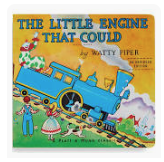
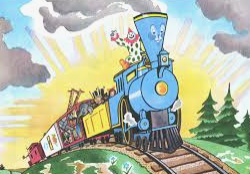
The Little Engine That Could, by Watty Piper

            What a positive message this story carries about how hard work and how practice pays off.  What will happen to the little blue engine if nobody helps her get up and over the mountain?

Materials

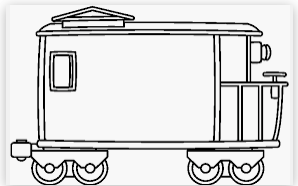
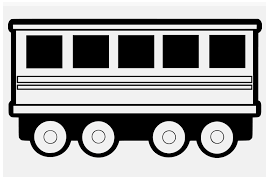
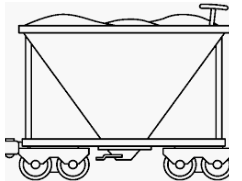
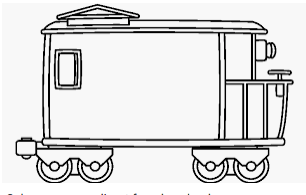
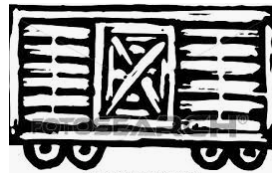
  •             Simple train cars + engine for name game
  •             Stuffed animals, especially a toy clown if you have one.

Vocabulary

  •             Shiny (something that sparkles in the sun)
  •             Engine (The first car of the train that has the motor to pull)

Before reading the Story

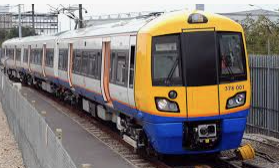
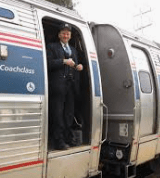
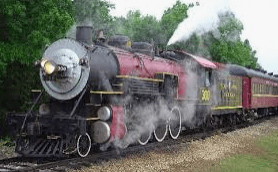
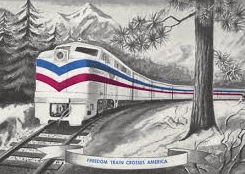
            Tell the children that today you are going to read a story about trains.  Ask them if they know what a train is?  Show them a picture of a train.  Do you know what trains do?  Do you know what trains carry?  Have you ever been on a train?  Lead a general discussion about trains to find out what the children know.  Now tell them that you  are going to ask them some train riddles. (1. A train uses its wheels to get from here to there, what do we use? 2. A train sleeps in a train yard at night, where do people sleep?  3. A train drives on the train tracks, people drive on what?  4. A train drinks fuel and eats coal to nourish it, what do people eat and drink?  5.  At night time a man will scrub the dirt off the train with a hose, what do people do when they are dirty?

Approaches to Learning/Initiative & Curiosity; grows in eagerness to learn about and discuss a growing range of topics, ideas, nad tasks. AND Approaches to Learning/Reasoning & Problem Solving; develops increasing abilities to classify, compare and contrast objects, events, and experiences.

Reading the Story

            When you read the voices of the engines make faces and voice tones to match the speech. 

Language Development/Listening & Understanding; demonstrates increasing ability to attend to and understand conversations, stories, songs, and poems.

After Reading the Story

            Review the story with the children.  Where was the little engine going, why?  What kinds of things do train carry?  Who helped the train?  What color was she?  What did she say as she pulled the train up and over the mountain?  Remind them that when they were babies they did not know how to walk but they practiced and practiced and now they can. Ask the children if they can think of a time when they had to try and try to do something (ride a bike, tie a shoe, button a button).  Help them to name things. 

Literacy/Book Knowledge & Appreciation; demonstrates abilities to retell and dictate stories from books and experiences; to act out stories in dramatic play; and to predict what will happen next in a story. AND Social & Emotional Development/Self-Concept; demonstrates growing confidence in a range of abilities and expresses pride in accomplishments.

Discovery

            Add pictures, books, or models of real trains.

Science/Scientific Skills & Methods; develops increased ability to observe and discuss common properties, differences and comparisons among objects and materials.

Music and Movement

            Sing She’ll Be Coming Round the Mountain but change the words to sing about trains. https://www.youtube.com/watch?v=b1QUK9svSmw

She’ll be coming round the mountain when she comes.

She’ll be coming round the mountain when she comes.

She’ll be coming round the mountain; she’ll be coming round the mountain

She’ll be coming round the mountain when she comes.

She’ll be puffing lots of smoke when she comes, puff puff

She’ll be ringing her bell when she comes, ding ding

We’ll all go out to greet her when she comes.

She’ll be bringing good food to eat when she comes.

She’ll be bringing toys for children when she comes.

Creative Arts/Music; participates with increasing interest and enjoyment in a variety of music activities, including listening, singing, finger plays, games, and performances.

            Teach the children the chant CAN (point out the different who cans as you go along).

I can

You can

He can

She can

Who can?

We can!

Language Development/Listening & Understanding; understands an increasingly complex and varied vocabulary.

            Do The Train poem

This is the little train                   (bend arms at elbow)

Puffing down the track                  (rotate arms in rhythmic pattern)

Now she’s going forward              (push arms forward)

Now she’s going back                  (pull arms back)

Now the bell is ringing                 (pretend to pull cord)

 Now the whistle blows                 (put hand fingers to thumb up by mouth)

  What a lot of noise she makes       (put hands over ears)

   Everywhere she goes!                   (Stretch out arms)

Creative Arts/Music; participates with increasing interest and enjoyment in a variety of music activities, including listening, singing, finger plays, games, and performances.

Blocks

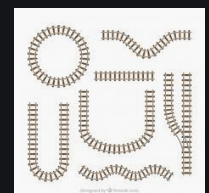
            If you have a train track, put it out.  If you do not have a train track, hang a picture of a train on the track low in the center and encourage the children to make their own track.

Mathematics/Geometry & SPatial Sense; progresses in ability to put together and take apart shapes. AND Creative Arts/Dramatic PLay; shows growing creativity and imagination in using materials and in assuming different roles in dramatic play situations.

Art

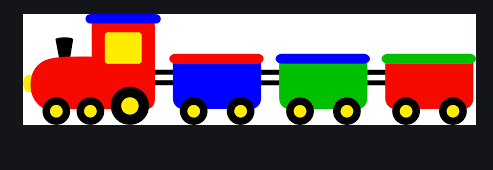
            Remind the children some things are hard to do and require practice.  Explain that today we are going to practice cutting with scissors.  Ahead of time draw rectangles and circles onto colored paper.  Have the children practice cutting these out.  Suggest to them to see if they can make a train car from all their rectangles and circles that they have cut.  If your children are competent with scissors, give them school equipment catalogs to cut out toys and put them into their train cars. Remind them to say, “I think I can, I think I can” as they practice cutting the shapes out.

Physical Health & Development/Fine Motor Skills; grows in hand-eye coordination in building with blocks, putting together puzzles, reproducing shapes and patterns, stringing beads, and using scissors. AND Approaches to Learning/Engagement & Persistence; grows in abilities to persist in and complete a variety of tasks, activities, projects, and experiences.

Library and Writing

            Find a time today to play this whole class game. Put out two lines of chairs, one for every child playing the game.  On the chair tape a letter.  Make a second set of identical letters, these are the tickets.  Give each child a ticket and then let them board the train and find their seat.  After all the passengers are seated, pretend to be the ticket collector and go up the aisle making sure that the children are in the correct seat.  As you collect the ticket you could ask the children to name the letter.  If they can not say, “This is the letter S, it makes the /s/ sound.  Can you think of a word that starts with S? Put on music and the children can walk around the chairs till the music stops. Then they must find the chair that matches their ticket. Switch out the tickets among the children and put the music back on.

Literacy/Alphabet Knowledge; shows progress in associating the names of letters with their shapes and sounds.

Sand and Water

            Add dampened sand and encourage the children to make a mountain. Give the children plastic spoons, Can they make a tunnel under the mountain?
Physical Health & Development/Fine Motor Skills; develops growing strength, dexterity, and control needed to use tools such as scissors, paper punch, stapler, and hammer.
Dramatic Play

            Bring in stuffed animals to the center.   Add chairs to allow the children to make a train for themselves and the animals.

Literacy/Book Knowledge & Appreciation; demonstrates progress in abilities to retell and dictate stories from books and experiences; to act out stories in dramatic play; and to predict what will happen next in a story.

Math and Manipulatives

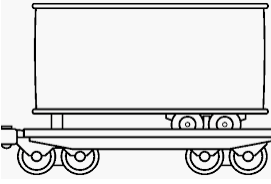
            Make copies of the train cars 1-10 and write the number on.  Let the children put the cars in 1-10 order and then  use small manipulatives to add the correct number of items.  Bear counters work well.

Mathematics/Number & Operations; begins to make use of one-to-one correspondence in counting objects and matching groups of objects. AND Mathematics/Number & Operations; begins to associate number concepts, vocabulary, quantities, and written numerals in meaningful ways.

Outdoor Play

            In the book the dolls and toys asked engines to push and pull them.  Use a wagon to demonstrate pushing and pulling. Encourage the children to push and pull each other in the wagon, on tricycles, and other riding toys.

Language Development/Listening & Understanding; understands an increasingly complex and varied vocabulary.

Transitions

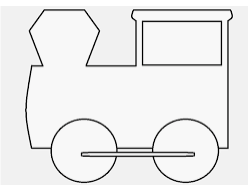
            Make a simple train car for each child in the class.  Put them up on the wall randomly to form a train.  After you have all the train cars up, tell the children that this is the order that you are going to line up in today.  Help the children read their names and put themselves into the correct order in line/to wash hands/brush teeth, etc.

Literacy/Alphabet Knowledge; identifies at least 10 letters of the alphabet, especially those in their name. AND Social & Emotional Development/Cooperation; develops increasing abilities to give and take in interactions; to take turns in games and using materials; and to interact without being overly submissive or directive.

            Have all the children line up and hold the child in front of them shoulders.  Tell the children that you are a train and that the teacher/you are the engine.  Walk very slowly announcing different centers like train stops.  Let children get off at each station (Our next stop will be blocks.  All those who are playing in blocks, prepare to exit the train).

Language Development/Listening & Understanding; shows progress in understanding and following simple and multiple-step directions.

Resources

cut out or draw shapes for the children to cut out to make simple train engines or cars