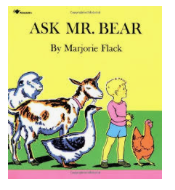
Ask Mr. Bear by Marjorie Flack

Farm animals try to help a little boy find the perfect gift for his Mother’s birthday. Find out what the perfect gift is while reading this simple book with your children.

Materials

  • Picture of cow and bear with word printed underneath.
  • Feely box (shoe box with a hole cut out of each end so child can put their hands inside) A pillowcase will work also.
  • Bear Face
  • 1 brown lunch bag per child
  • Many foil squares and wrapping bows
  • Roll of crepe paper
  • Homemade or store bought “birthday” hats and any other birthday supply

Vocabulary

  • Fine (something that is made very well)
  • Wool (a kind of fur)

 Introducing the Story

Turn to the first page and ask the children how they think the little boy is feeling. Why do you think he is feeling this way? Explain to the children that Danny is sad because he does not know what to get his Mother for her birthday. Ask the children what they would do if it were them?  Tell them the story is called Ask Mr. Bear, why do you think it is named that?

Social & Emotional Development/Social relationships; progresses in responding sympathetically to peers who are in need, upset, hurt, or angry; and in expressing empathy or caring for others.

 Reading the Story

As you read the story give the children the opportunity to name the animal and make the animal sound in the appropriate places  When you get to the page where Danny’s Mother is guessing what Danny has gotten her for her birthday, stop and ask the children if they can guess too.

Approaches to Learning/Initiative & Curiosity; chooses to participate in an increasing variety of tasks and activities. AND Approaches to Learning/Reasoning & Problem Solving; develops increasing ability to find o more than one solution to a question, task, or problem.

 After reading the Story

Show the children the front cover of the book. Ask the children to remember what animals were in the story that are not on the cover (bear and cow).

Literacy/Book Knowledge & Appreciation; demonstrates progress in abilities to retell or dictate stories from books and experiences; to act out stories in dramatic play; and to predict what will happen next in as story.

Cover the cow and bear picture with a piece of paper. Slowly slide the paper off the picture and stretch the word so the children can hear the individual sounds.

Literacy/Phonological Awareness; shows growing awareness f beginning and ending sounds in words.

 Discovery

Introduce the feely box. Put a familiar object inside the box/ pillowcase and show the children how to put their hands in the holes to feel it. Use familiar items from your classroom. Can they guess what you have put in the box? Teach them to play this game with their friends.

Science/Scientific Knowledge & Skills; begins to participate in simple investigations to test observations, discuss and draw conclusions, and form generalizations.

 Music and Movement

With the book in hand, ask the children to show you what walking looks like, skipping looks like, hopping, galloping, trotting, and running

Language Development/Listening & Understanding; understands an increasingly complex and varied vocabulary. AND Physical Health & Development/Gross Motor Skills; shows increasing levels of proficiency , control, and balance in walking, climbing, running, hopping, jumping, hopping, skipping, marching, and galloping.

 Blocks

Put out the many foil squares and encourage the children to wrap blocks like birthday gifts. Let them attach wrapping bows for decoration.

Physical Health & Development/Fine Motors; develops growing strength, dexterity, and control needed to use tools such as scissors, paper punch, stapler, and hammer.

 Art

Have the children cut a bear head out and glue it to a brown paper lunch sack to make puppets Let the children water color their puppet.

Physical Health & Development/Fine Motors; develops growing strength, dexterity, and control needed to use tools such as scissors, paper punch, stapler, and hammer. AND   Creative Arts/Art; develops growing ability to plan, work independently, and demonstrate care and persistence in a variety of art projects.

 Sand and Water

Fill the bottom of the sand table with an inch or two of dirt. Take the children outside to help gather sticks, small branches, and rocks. Put these into the table along with several plastic animals or people. Encourage the children to make a forest scene.

Science/Scientific Knowledge; expands knowledge of and abilities to observe, describe, and discuss the natural world, materials, living things, and natural processes.

Library and Writing

Put out the cow and bear pictures, encourage the children to practice writing the words and then drawing their own animals.

Literacy/Early Writing; experiments with a growing variety of writing tools and materials, such as pencils, crayons, and computers.

 Dramatic Play

Set up a birthday theme by adding hats, crepe paper, and small boxes that the children can put objects in. Add self sticking wrapping bows.

Creative Arts/Dramatic Play; shows growing creativity and imagination in using materials and in assuming different roles in dramatic play situations.

 Math and Manipulatives

Use counting bears to make simple patterns. Ask the children to make one just like yours. Ask the child to show you how many bears old they are, how many people are in their family

Mathematics/Patterns & Measurement; enhances ability to recognize, duplicate, and extend patterns using a variety of materials. AND Mathematics/Number & Operations; begins to use one-to-one correspondence in counting objects and matching groups of objects.

 Outdoor Play

Encourage the children to act out the story with you. Depending on how many children are interested you will have to include other animals and movements. Example; Then Kerry asked Kangaroo, do you have a gift I can give my mother? But Kangaroo said no and so they all jumped along and jumped along until they met Snake.

Literacy/Book Knowledge & Appreciation; demonstrates progress in abilities to retell or dictate stories from books and experiences; to act out stories in dramatic play; and to predict what will happen next in as story.

Transitions

           As children are laying down for nap or getting ready to leave, give each a hug and say; Here’s a big bear hug just from me.

Dear Parent- Today we read the book Ask Mr. Bear in which a child tries to find the perfect gift for his Mother’s birthday. Talk to your child about when his/her birthday is. Give the child the date and then state something that will happen close to the date so the child can begin to become aware of things that happen near their birthday. (Kerry your birthday is in the spring when it starts to get warmer outside. Roger, your birthday is just after your father’s birthday).

Resources

Screen Shot 2018-08-19 at 3.59.08 PM
Screen Shot 2018-08-19 at 3.59.24 PM

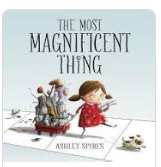
The Most Magnificent Thing, by Ashley Spires

A little girl knows what she wants to build; she just has to put it all together. With lots of trial and error she finally gets it and it is almost exactly as she predicted. This is a fun book for all budding inventors as it shows the persistence needed to have one’s imagination reach fruition. It also shows that a healthy cool down period can lead to positive results.

Materials

  • Blank head sheet
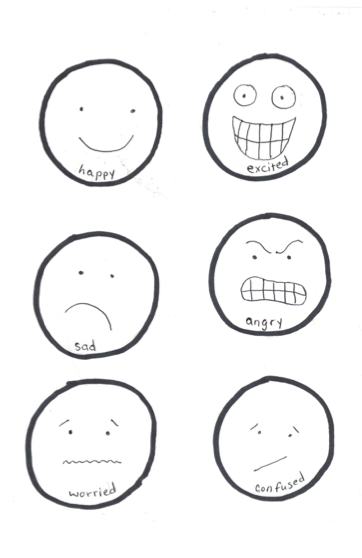
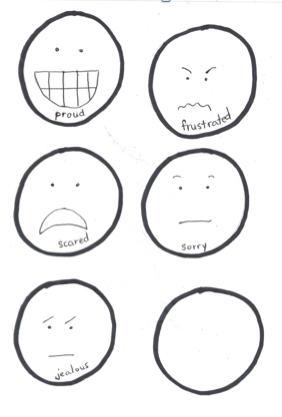
  • Emotion cards
  • Poster board or large sheet of paper (you will need to prep this before class, see blocks)

Vocabulary

  • Magnificent- wonderful and marvelous
  • Tinker-to play around with supplies trying to figure out what to do
  • Pummels-bashes
  • Proud-pleased with self or another
  • Frustrated-irritated and upset

Before Reading the Story

Ask the children if they know what the word proud means. If they cannot give you an answer, tell them that it means to do something that makes you really pleased or happy with yourself or another person. Use an example of learning to ride a bike. First you have to practice, practice, practice and then one day you finally figure out just how to peddle/balance and off you go riding. That is a proud moment. Explain to the children that many things take lots of practice and trial and error before you can figure out how to do them. Ask the children if they can tell you about any other proud moments they may have experienced. If they cannot come up with any, help them to think up moments that should make them proud (Andres poured his milk into his cup without any spills, Alison tied her shoe for the very first time, Paula learned how to spin the top, etc.).   Explain to the children that when we are learning something new, we must keep trying and trying and not give up. Tell the children that the story today is about a little girl who has to try and try again to build something very magnificent and special. Define magnificent to the children and introduce the book.

Language Development; Listening & Understanding; understands an increasingly complex and varied vocabulary. AND Social & Emotional Development/Self-Concept; begins to develop and express awareness of self in terms of specific abilities, characteristics, and preferences.

 Reading the Story

As you read, stop on the pages where the girl notices that the thing is still not right. Have the children look at the girls face and ask them if they can guess how she might be feeling (surprised, frustrated, angry). On the page where it says, “If only the thing would just work!”, stop and ask the children again to look at the girl. Ask them what they think is going to happen next. On the page where she finally finishes her invention, have the children look carefully at what is in her hands and ask the children if they can guess what it is she has made. On the last page again have the children look at the girls face and ask them what they think she might be feeling (happy, proud).

Social & Emotional Development/Social Relationships; progresses in responding sympathetically to peers who are in need, upset, hurt, or angry; and in expressing empathy or caring for others.

After Reading the Story

Remind the children that in the story the little girls invention did not work at first. Ask them if they remember what happened? What did the little girl do to get over her anger? Was that a good way? Talk to the children about what to do in school when you get irritated or upset (ask for help, walk away, take a break). Go over any anger management or cool down strategies that you use in your classroom.

Literacy/Book Knowledge & Appreciation; demonstrates progress in abilities to retell and dictate stories from books and experiences; to act out stories in dramatic play; and to predict what will happen next in a story. AND Social & Emotional Development/Self-Control; shows progress in expressing feelings, needs, and opinions in difficult situations and conflicts without harming themselves, others, or property.

Discovery

Put out tops or other toy that requires practice in order to be able to use correctly. Encourage the children to try and try again.

Physical Health & Development/Fine Motor Skills; develops growing strength, dexterity, and control needed to use tools such as scissors, paper punch, stapler, and hammer.Music and Movement;

Sing If You’re Happy and You Know It adding verses that include other emotions such as angry, frustrated, surprised, sad, and proud.

The teacher acts out an emotion using her/his whole body. The children guess the emotion and then act it out as well. (Excited=clap hands and jump up and down. Angry=make a fist and stomp the floor. Sad=rub eyes and shake like crying with whole body. Proud=extend hands up and take a bow. Bored=yawn and look around the room. Loving=give self a hug and an arm kiss).

Social & Emotional Development/Self-Control; shows progress in expressing feelings, needs, and opinions in difficult situations and conflicts without harming themselves, others, or property.

Blocks

Before class lay the poster board on the floor and use your wooden blocks to trace around. Fill as much of the paper as possible with block shapes. Let there sides touch but do not over lay the shapes. Lay the paper on the floor and challenge the children to fill it in using the appropriate blocks, kind of like a puzzle.

Mathematics/Geometry & Spatial Sense; begins to be able to determine whether or not two shapes are the same size and shape.

 Art

Give the children play dough today with scissors, hammers, and rollers. If you do not have hammers and rollers, wooden blocks work well (the half arch and the cylinder blocks).

Physical Health & Development/Fine Motor Skills; develops growing strength, dexterity, and control needed to use tools such as scissors, paper punch, stapler, and hammer.

Sand and Water

Put clean and empty bottles into the table today such as used shampoo and ketchup bottles. Challenge the children to fill the bottles to the top of the container. Put out a variety of tools to help but do not show your children how to use them. Tools could include measuring spoon, funnel, turkey baster, plastic hosing, and small teapot.

Approaches to Learning/Reasoning & Problem-Solving; grows in recognizing and solving problems through active exploration including trial and error, and interactions and discussions with peers and adults.

Library and Writing

Encourage the children to practice copying or writing their names today. Make sure to tell them that you are pleased to see them trying so hard and that they should be proud of themselves for their accomplishment.

Literacy/Early Writing; progresses from using scribbles, shapes, and pictures to represent ideas, to using letter-like symbols, to copying or writing familiar words such as their name.

Give the children a blank face sheet and ask them to draw an angry face. When they are finished, ask them to tell you one thing that makes them angry, write it on the bottom of their sheet. You can also use this for other emotions such as proud.

Social & Emotional Development/Self-Concept; begins to develop and express awareness of self in terms of specific abilities, characteristics, and preferences. Literacy/Early Writing; begins to represent stories and experiences through pictures, dictation, and in play.

 Dramatic Play

Add puppets to the dramatic play center today and encourage the children to put them on and pretend that they are the puppets. Encourage a puppet show.

Creative Arts/Dramatic Play; participates in a variety of dramatic play activities that become more extended and complex.

Math and Manipulatives

Play Memory with the children. Make two sets of the emotion cards on thick paper or glue a backing so the children cannot see through the paper. Shuffle the cards and lay face down on the table. The children take turns trying to find matches of cards. If they find a match they get to put the cards in a pile. When all the cards have been matched, have the children count the cards to see how many they have.

Mathematics/Patterns & measurement; shows progress in matching, sorting, putting in a series, and regrouping objects according to one or two attributes such as color, shape, or size. AND Social & Emotional Development/Cooperation; develops increasing abilities to give and take in interactions; to take turns in games and in using materials; and to interact without being overly submissive or directive.

Outdoor Play

Add bikes and other riding toys to the playground today. Encourage the children to try and try again as they work to develop their peddling and steering skills.

Physical Health & Development/Gross Motor Skills; demonstrates increasing abilities to coordinate movements in throwing, catching, kicking, bouncing balls, and using the slide and swings.

Draw a simple hopscotch board on the ground and encourage the children to 1) throw a beanbag or stone onto the correct number, 2)jump and hop accordingly to the hopscotch board.

Physical Health & Development/Gross Motor Skills; shows increasing levels of proficiency, control, and balance in waking, climbing, running, jumping, hopping, skipping, marching, and galloping.

Put out hula-hoops or jump ropes for the children to practice their skills.  Physical Health & Development/Health Status & Practices; progresses in physical growth, strength, stamina, and flexibility.

 Transitions

Ask the children to name one thing that makes them happy. Write their answer down on a large sheet of paper and hang it on the wall. At each transition, you can ask the children to tell you about a different emotion.

Language Development/Speaking & Communicating; develops increasing abilities to understand and use language to communicate information, experiences, ideas, feelings, opinions, needs, questions, and for varied purposes.

Dear Parent- today we read a story about a little girl who had to try and try gain to make her idea come to fruition. Tell your child about something you had to practice and practice to learn to do. Then tell your child how proud you felt afterwards by accomplishing your goal. If you see your child really trying at something, tell them you are proud at how hard they are working.

Resources

Screen Shot 2018-08-19 at 1.33.04 PM
Screen Shot 2018-08-19 at 1.32.19 PM
Screen Shot 2018-08-19 at 1.33.33 PM

The Snowy Day, by Ezra Jack Keats

Join Peter as he adventures out into the snow and how he discovers that when warmed, snow will melt.

 Materials

  • Several days’ worth of newspaper or ½ sheet of newsprint per child.
  • Bag of cotton balls
  • 1 bar of ivory soap, 1 roll of toilet paper, cheese-grater.
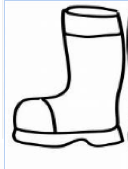
  • Piece of poster board cut into several simple boot shapes. Use a paper punch; to punch holes around the edge of the boot shape.
  • 10 inch lengths of yarn with masking tape wrapped around one end.
  • Copy of the hot and cold items cut out individually.
  • A bucket of snow if possible.

Vocabulary

 Before Reading the Story

            Talk to the children about snow. Have you ever seen the snow? Have you ever touched snow? What should you wear to go out in the snow, why? What kinds of things do you like to do in the snow? Make a list of the things the children like to do in the snow. If possible, bring in a bucket of snow and pass it around as you talk of the snow.

Science/Scientific Knowledge; develops growing awareness and beginning understanding of changes in time and temperature.

Reading the Story

            When you get to the page where something is sticking out of the snow, point to the new track and ask the children what might make a track like that? When you get to the part where Peter looks for the snowball in his pocket, ask the children what they think happened to it, why?

Approaches to Learning/Reasoning & Problem Solving; develops increasing ability to find more than one solution to a question, task, or problem.  AND Science/Scientific Knowledge; develops growing awareness and beginning understanding of changes in time and temperature.

After Reading the Story

            Compare the children’s list to what Peter did in the book. Have the children spread out and act out the different things that Peter did while playing in the snow (Walk with feet pointing out, then in, dragging feet, pretend to roll a snowman ball, lay on the floor and make an angel). Act out anything else the children have experienced while playing in the snow.

Literacy/Book Knowledge & Appreciation; demonstrates progress in abilities to retell and dictate stories from books and experiences; to act out stories in dramatic play; and to predict what will happen next in a story.  

Discovery

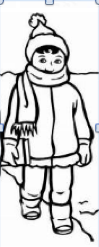
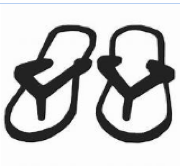
Make a copy of the hot and cold items and cut them out. Have the children sort them accordingly. As they sort, talk about any safety issues that the pictures show (matches and lighters are not toys, when you go outside to play in snow it is important to cover your body, etc.).

Mathematics/Patterns & Measurement; shows increasing abilities to match, sort, put in series, and regroup objects according to one or two attributes such as color, shape, and size.  AND Physical Health & Development/Health Status & Practices; builds awareness and ability to follow basic health and safety rules such as fire safety, traffic and pedestrian safety, and responding appropriately to potentially harmful objects, substances, and activities.

Music and Movement

            Ask the children if they can remember what the big boys were doing in the story (having a snowball fight). Ask the children why Peter did not join them in their snowball fight (he wasn’t big enough). Now ask the children to raise their hand if they have ever had a snowball fight. Tell the children that today you are all going to have a snowball fight. Give each child a half a sheet of newspaper or newsprint paper. Show them how to crumple it up into a ball. Use these to have a classroom snowball fight. Let the children have a few minutes to throw the paper balls at each other and you. Make sure to state any safety rules ahead of time (you may not throw your snowball near the fish tank, if someone is sitting in the dramatic center then they do not want you to throw your snowballs at them).  When you are finished you can have the children try to throw their paper ball into the trashcan or a box.

Language Development/Listening & Understanding; shows progress in understanding and following simple and multi-step directions.  

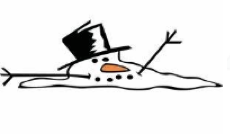
Pretend to be snowflakes floating and twirling down to the ground. Now pretend that you are rolling a snowball. It starts out very small and as you roll it gets bigger and bigger. Now pretend that you are a snow person standing tall. Uh oh, the sun is shining bright and you are beginning to melt smaller and smaller until you are just a puddle on the floor.

Approaches to Learning/Initiative & Curiosity; approaches tasks and activities with increased flexibility, imagination, and inventiveness.  

Blocks

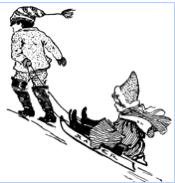
            Tell the children that in the story Peter climbed a hill and slid down. Challenge the children to use the blocks to make a hill/ramp that they can slide cars down. If they seem stumped, show them how to take a long block and prop one end up on a smaller block to make a ramp. As they experiment with the ramp, watch how they solve problems of cars going off the side of the ramp or how to make the ramp go faster. What else can they make slide down the ramp?

Science/Scientific Methods & Skills; begins t participate in simple investigations to test observations, discuss and draw conclusions, and form generalizations.

Art

            Show the children how to make a snowy day picture by taking a cotton ball and pulling it apart and then gluing it to a piece of construction paper. Let the children glue cotton balls onto the paper. When they are through, ask them if they would like to glue a person onto the snow. If they do, give them a person and ask them what the person is doing in the snow. Write their dictation down and attach it to their snow picture.

Literacy/Early Writing; begins to represent stories and experiences through pictures, dictation, and play.

Sand and Water

            If possible bring in snow today and add gloves, spoons, shovels, and sand molds. Talk to the children as they play asking them what is happening to the snow? (it’s melting, it’s turning to water).

Science/Scientific Knowledge; develops growing awareness and beginning understanding of changes in time and temperature.

Make clean mud. Have the children take turns grating the bar of ivory soap into the water table. While the child/ren are grating, others can be tearing the toilet paper into small lengths. When the children are finished preparing the soap and toilet paper, slowly add water and have the children mix. This will turn into a thick consistency that you will be able to sculpt with. It will feel very slick. Remind the children that this is made with soap so do not put your hands near your face.

Language Development/Listening & Understanding; shows progress in understanding and following simple and multi-step directions.  AND Science/Scientific Knowledge & Skills; begins to use senses and a variety of tools and simple measuring devices to gather information, investigate materials, and observe processes and relationships.

Library and Writing

            Give the children pieces of black construction paper and white colored pencils or white chalk to practice writing their names today.

Literacy/Early Writing; progresses from using scribbles shapes, and pictures to represent ideas, to using letter-like symbols, to copying and writing familiar words such as their own name.

 Dramatic Play

            Put out any dress-ups that encourage the children to practice their zipping, snapping, and buckling skills. Include gloves.

Physical Health & development/Fine Motor Skills; develops growing strength, dexterity, and control needed to use tools such as scissors, paper punch, stapler, and hammer.  AND Social & Emotional Development/Self-Concept; develops growing capacity for independence in a range of activities, routines, and tasks.

Math and Manipulatives

            Put out the boot shapes and the lengths of yarn. Show the children how to “sew” around the boot shape by going in and out the holes. This is hard for younger children so accept anything that they do.

Physical Health & Development/Fine Motor Skills; grows  hand-eye coordination in building with blocks, putting together  puzzles, reproducing shapes and patterns, stringing beads and using scissors.

 Outdoor Play

If there is snow on your playground, go out and re-act all the things that Peter liked to do in the snow.

Literacy/Book Knowledge & Appreciation; demonstrates progress in abilities to retell and dictate stories from books and experiences; to act out stories in dramatic play; and to predict what will happen next in a story.  

Transitions

            Use the hot and cold cards. Hold up a card and ask a child to name the object and tell you if it is something that feels hot or cold when touched.

Mathematics/Patterns & Measurement; shows increasing abilities to match, sort, put in series, and regroup objects according to one or two attributes such as color, shape, and size.

Dear Parent, today we talked about things that are hot and cold. Take a few minutes and talk to your child about safety with hot and cold items. Matches are hot and can burn, so can a pot on the stove. Dressing appropriately when going out into the cold. If possible go for a walk with your child and enjoy the snow!

Resources

Screen Shot 2018-08-27 at 5.28.04 PM
Screen Shot 2018-08-26 at 9.07.05 AM
Screen Shot 2018-08-27 at 5.22.10 PM
Screen Shot 2018-08-27 at 5.27.10 PM
Screen Shot 2018-08-27 at 5.28.14 PM
Screen Shot 2018-08-27 at 5.27.21 PM
Screen Shot 2018-08-27 at 5.28.21 PM
Screen Shot 2018-08-27 at 5.27.30 PM
Screen Shot 2018-08-27 at 5.28.32 PM
Screen Shot 2018-08-27 at 5.28.40 PM
Screen Shot 2018-08-27 at 5.27.44 PM
Screen Shot 2018-08-27 at 5.28.51 PM
Screen Shot 2018-08-27 at 5.30.12 PM
Screen Shot 2018-08-27 at 5.27.55 PM
Screen Shot 2018-08-27 at 5.29.09 PM
Screen Shot 2018-08-27 at 5.29.24 PM
Screen Shot 2018-08-27 at 5.29.16 PM
Screen Shot 2018-08-27 at 5.29.41 PM
Screen Shot 2018-08-27 at 5.29.49 PM
Screen Shot 2018-08-27 at 5.29.55 PM