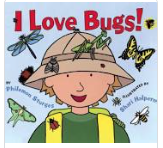
I Love Bugs! by Philemon Sturges

This very simple story introduces children to a variety of bugs and vocabulary to help describe them.

Materials

Vocabulary

  • Camouflage (to blend into the environment so you or an animal is difficult to find or see)
  • Insect (having 6 legs and three body parts and many have wings)
  • Habitat (where a bug or animal lives in nature)

Before Reading the Story

Put your large ladybug picture on the wall of your circle time where everyone can see. Let the children take a turn rolling the dice and then adding that many circle stickers to the ladybug. As a child puts the stickers on the ladybug, the other children can count along. Play a second round if the children are interested.

Mathematics/Number & Operations; begins to make one-to-one correspondence in counting objects and matching groups of objects.

Reading the Story

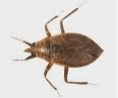
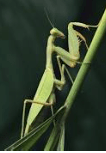
Read the title and then open the front cover. Ask the children of they can name any of the bugs on the page. Do the same with the back cover page. Then reintroduce the story and see if the children can name the bugs as you read, if not you name for them. (These bugs paddle, remember these are called water beetles because they can race across the water. This one’s like a twig, this is a hard one. It’s called a praying mantis. They sit on leaves and you can hardly see them because they blend in).

Language Development/Speaking & Communicating;uses an increasingly complex and varied vocabulary.

After Reading the Story

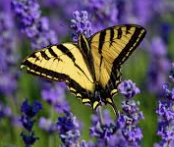
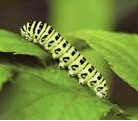
Ask the children ,where do bugs live? Do you have a bug that you really like, dislike? Talk to the children about bug safety. Some bugs are gentle like ladybugs and some bite when they are scared (spider, beetles). he praying mantis even spits! Explain to the children that bugs are for looking at but not for hurting. Bugs are important to our environment (some help compost garbage and waste. Some eat mosquitoes that are also a bug but an annoying one. Caterpillars will turn into butterflies or moths in time. Let the children share any information they have about bugs.

Language Development/Speaking & Communicating; develops increasing abilities to understand and use language to communicate information, experiences, ideas, feelings, opinions, needs, questions; and for other varied purposes. AND Physical Health & Development/Health Status & Practices; builds awareness and ability to follow basic health and safety rules such as fire safety, traffic and pedestrian safety, and responding appropriately to potentially harmful, objects, substances, and activities.

Discovery

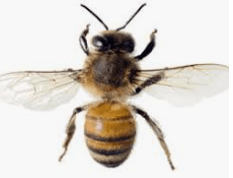
Bring a bug habitat into the classroom. Give the children magnifying glasses so that they can closely observe the insects/bugs in a more natural environment. Talk about special features that your ibug may have (How many legs do you see? Do you know what those funny things are called on the top of it’s head-antenna, Do you see how the wings lay flat on the back? Note; do not keep insects in a container for extended periods of time unless you understand it’s eating and surviving necessities.

Science/Scientific Skills & Methods; begins to use senses and a variety of tools and simple measuring devices to gather information, investigate materials, and observe processes and relationships.

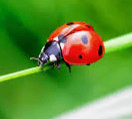
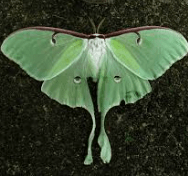
Make copies of the front and back inside of the book and also the real insects from resources. Have the children match the picture of the insect/bug to the real insect/bug. Talk about the pictures, how are they alike, ow are the different?

Mathematics/Patterns & Measurement; shows increasing abilities to match, sort, put in series, and regroup pictures according to one or two attributes such as shape or size. AND Science/Science Knowledge; expands knowledge of and abilities to observe, describe, and discuss the natural world, materials, living things, and natural processes.

Music and Movement

Here is the Beehive poem

Here is the beehive (make fist with hand)

But where are the bees? (shrug shoulders)

Flying around where no one see?

Oh wait, I can hear them now (hold cupped hand to ear)

They are in their hive (make fist again)

Here they come 1, 2, 3, 4, 5 (hold up fingers as you count)

Mathematics/Number & Operations; develops increasing ability to count to 10 and beyond. AND Creative Arts/Music; participates with increasing interest and enjoyment in a variety of music activities, including listening, singing, finger plays, games, and performances.

Put on a version of Flight of the Bumblebees and have the children dance and move to the music. https://www.youtube.com/watch?v=aYAJopwEYv8

Creative Arts/Movement; expresses through movement and dancing what is felt and heard in various musical tempos and styles.

Play the song, The Ants Go Marching and have the children march along. https://www.youtube.com/watch?v=Pjw2A3QU8Qg

Creative Arts/Movement; expresses through movement and dancing what is felt and heard in various musical tempos and styles.

Blocks

Add plastic insects/bugs along with some easter grass/real grass, sticks, and several rocks. Encourage the children to build a habitat for their bugs.

Language Development/Listening & Understanding; understands an increasingly and complex vocabulary.

Art

Making insects. Put out play dough and pieces of pipe cleaners. The children cn roll the playdough into balls and attach legs. Are they able to count out six legs? Encourage them to try rolling their playdough into a long hotdog shape and adding legs.

Mathematics/Number & Operations; begins to make use of one-to-one correspondence in counting objects and matching groups of objects.

Library and Writing

Add any insect non-fiction books that you have. Let the children see real pictures of bugs and insects.

Literacy/Book Knowledge & Appreciation; shows growing interest in reading-related activities, such as asking to have a favorite story read; choosing to look at books; drawing pictures based on stories; asking to take books home; going to the library; and engaging in pretend-reading with other children.

Sand and Water

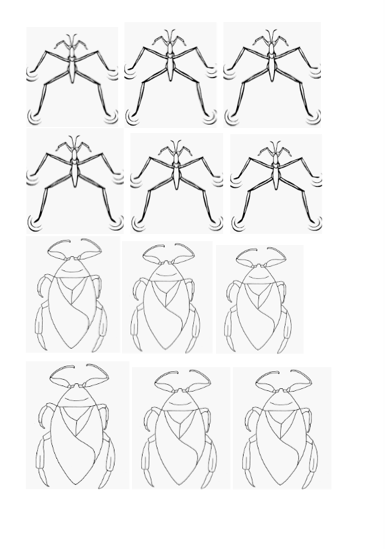
Water in the table today. Make a sheet of the water insects in several colors. Cut around them roughly and add to the water table today.

Creative Arts/Dramatic Play; shows growing creativity and imagination in using materials and in assuming different roles in dramatic play situations.

Dramatic Play

Math and Manipulatives

If you have rubber insects at your center, use these for pattern play. Or make several copies of 5 insects from resources and use these to make patterns with the children. (ant, luna moth, ant, luna moth, which comes next? Spider, bee, bee, spider, bee, bee, which comes next?

Mathematics/Patterns & Measurement; enhances abilities to recognize, duplicate, and extend simple patterns suing a variety of materials.

Outdoor Play

Look for bugs and insects on your playground. You can help encourage them to come by laying a piece of cardboard box down several days before hand. Or putting out food in areas where you have seen ant trails.

Science/Scientific Skills & Methods; begins to participate in simple investigations to test observations, discuss and draw conclusions, and form generalizations.

Transitions

Hold the front cover page of the book open and ask a child to name one of the bugs on the page. After they name, have them fly, jump, or crawl to the next activity by following the bugs example.

Language Development/Speaking & Communicating; uses an increasingly complex and varied vocabulary.

Resources
wooly bear
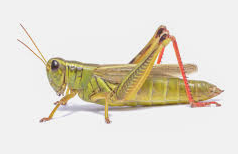
grasshopper
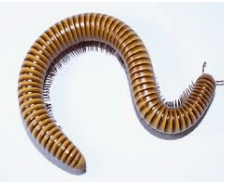
millipede
dragonfly
beetle
spider
waterbug
butterfly
bee
caterpillar
ant
praying mantis
cicada
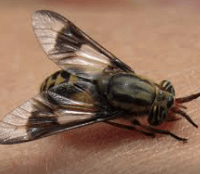
deerfly
moth
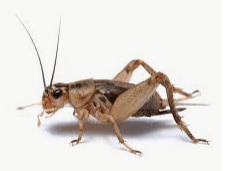
cricket
ladybug
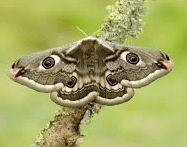
luna moth
firefly
water table water bugs

Lilly’s Purple Plastic Purse, by Kevin Henkes

Lilly loves school but when her teacher asks her to wait before sharing her new purse, Lilly gets upset and behaves in a way that she later regrets. This story touches upon consequences and forgiveness.

Materials

  • A pillowcase with some items from the story (quarter, sunglasses, crown, pencil, and familiar items from around your classroom)
  • 2 Copies of plastic purse per child
  • Two clean egg cartons
  • 10 pennies, 10 nickels, 10 dimes, 10 quarters

Vocabulary

  • Diva (a famous female singer of pop music)
  • Jaunty (someone who is cheerful and sure of themself)
  • Considerate (someone who thinks about how others might feel)
  • Glittery (covered with sequence so it makes it shiny and sparkly)
  • Not amused (Thinking that something is not funny)
  • Lurched (to jerk forward)
  • Furious (to be very, very angry)
  • Unique (one of a kind)
  • Encyclopedias (books that tell about the world)

Before Reading the Story

Begin a discussion about classroom rules. What are some of your hometime rules? What are some of our rules? What would happen if we did not have rules? Note to the children your rule about rug time. Why do you think we have to take turns talking? What would happen if we all talked at once? Explain that you have rules to help keep everyone safe and to make it fair for all children. Ask the children if the think it’s fair if one child gets to do all the talking? If one child gets to always do everything first or do what they want when other children can not? Explain that our story today is about a mouse named Lilly who did not want to follow the rules. What do you think will happen? Let’s read and find out.

Language Development/Speaking & Understanding; develops increasing abilities to understand and use language to communicate information, experiences, ideas, feelings, opinions, needs, questions; and for other varied purposes. AND Literacy/Book Knowledge Appreciation; demonstrates ability to retell and dictate stories from book and experiences; to act out stories in dramatic play; and to predict what will happen next in a story.

Reading the Story

Where Mr. Slinger provides a snack that is curly, cheesy, and crunchy. Ask the children to name some foods that are curly, cheesy, and/or crunchy?

Approaches to Learning/Reasoning & Problem Solving; develops increasing ability to find more than one solution to a question, task, or problem.

On the page where Mr. Slinger takes the purse away from Lilly, stop and the children what they think Lilly will do?

Literacy/Book Knowledge Appreciation; demonstrates ability to retell and dictate stories from book and experiences; to act out stories in dramatic play; and to predict what will happen next in a story.

After Reading the Story

Go back to the page where Lilly draws a picture of Mr. Slinger, how do you think he felt when he found it in his bag? (hurt, sad, feelings). What could you do to make him feel better?

Social & Emotional Development/Social Relationships; progresses in responding sympathetically to peers who are in need, upset, hurt, or angry; and in expressing empathy and caring for others.

Explain that Mr. Slinger forgave Lilly for drawing the not nice picture. Forgiving people is part of being a friend. Not everyone is always going to do exactly what you want when you want to do it. So being able to take turns and share are important things to learn about. Ask the children to share any examples they have of forgiving someone of sharing and taking turns with another. Praise all kind acts by telling the child, that was kind of you, that was being a good friend.

Social & Emotional Development/Social Relationships; shows progress in developing friendships with peers. Approaches to Learning/Initiative & Curiosity; grows in eagerness to learn about and discuss a growing range of topics, ideas, and tasks.

Discovery

Hide the items from the story and classroom somewhere where the children can not see them. Place one article in the pillowcase and ask a child to use their hands to feel the object. They may smell and shake the item but they may not look in the pillowcase. Can they name the item? Can they tell you what material it is made from? (plastic, wood, paper, glass stone, etc.) Pull it out and try another.

Science/Scientific Skills & Methods; begins to use senses and a variety of tools and simple measuring devices to gather information, investigate materials, and observe processes and relationships.

Music and Movement

Say the following poem to the children. After you have said what you are going to buy, invite the children to share their ideas by repeating the poem and adding their name to it.

I found a quarter, I found a quarter

I found a quarter shiny and new.

I’m gonna buy all kinds of ________

That’s what I’m gonna do.

Approaches to Learning/Reasoning & Problem Solving; develops increasing ability to find more that one solution to a question, task, or problem. AND Social & Emotional Development; Self-Concept; begins to develop and express awareness of self in terms of specific abilities, characteristics, and preferences.

Put on some jaunty music and dance!

Creative Arts/Movement; shows growth in moving to different patterns of beat and rhythm in music.

Blocks

While the children are in blocks today, ask them if they can tell you what material the block is made from? Look around for other items in the center, can the children name what they are made from? (wood, plastic, cardboard, rubber, fabric, etc.).

Science/Scientific Knowledge; expands knowledge of and abilities to observe, describe, and discuss the natural world, materials, living things, and natural processes.

Art

Lilly’s purse was purple. Put red, blue, and white paint at the easel today for the children to experiment making purple.

Science/Scientific Skills & Methods; begins to participate in simple investigations to test observations, discuss and draw conclusions, and form generalizations.

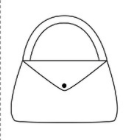
Give the children a copy of the purse along with old toy catalogs. Encourage them to cut out things they would like and glue them to their purse.

Physical Health & Development/Fine Motor Skills; grows in hand-eye coordination in building with blocks, putting together puzzles, reproducing shapes and patterns, stringing beads, and using scissors.

Library and Writing

Add non-fiction books on a variety of subjects. Explain that encyclopedias are books that tell us facts about the world, just like these books. Books that tell real information and not pretend is called non-fiction. Can the children show you examples of fiction and non-fiction?

Mathematics/Patterns & Measurement; shows increasing abilities to sort, put in a series, and regroup objects according to one or two attributes such as shape or size. AND Literacy/Book Knowledge & Appreciation;progresses in learning how to handle and care for books; knowing to view them one page at a time in sequence from front to back; and understanding that a book has a title, author, and illustrator.

Give the children a copy of the purse along with markers. Ask them to draw what they would put in their purse and dictate their response onto a index card and attach.

Physical Health & Development/Fine Motor Skills; progress in abilities to use writing, drawing, and art tools, including pencils, markers, chalk, paint brushes, and various types of technology. AND Literacy/Early Writing; begins to represent stories and experiences through pictures, dictation, and in play.

Sand and Water

Ask the children if they can remember what color lilly’s purse was (purple)? Ask them what material the purse was made from (plastic)? Add water to the table today and ask the children to help you find either purple or plastic items to add for the play. When they have gathered different purple or plastic items, ask them if they can predict if an item will float or sink in the water. As they discover what items float/sink have them sort into cubbies.

Science/Scientific Skills & Methods; develops growing abilities to collect, describe, adn record information through a variety of means, including discussion, drawings, maps, and charts.

Dramatic Pay

Add any purses that you can find along with toy money, pencils, paper, play glasses, old phone /no battery, play jewelry, small boxes such as altoids, etc. I have found that the children in my class like to squirrel items away inside purses. ( I have found puzzle pieces and playing cards). So provide lots of interesting smaller items that will fit.

Literacy/Early Writing; begins to represent stories and experiences through pictures, dictation, and in play.

Math and Manipulatives

Give a child an egg carton and the coins in a small bowl. Ask them if they can tell you what they are? Can they name the coins? Encourage them to look at the coins and tell you what they see. Ask them to sort the coins by like kinds into the cleaned egg carton.

Mathematics/Patterns & Measurement; shows increasing abilities to match, sort, put in a series, and regroup objects according to one or two attributes such as shape or size.

Outdoor PLay

Have the children line-up along a fence or wall. Tell them that Lilly used her purse to hold her special things. What can we use outside to hold something with (bucket!)? Have the children divide into teams and have bucket relay races. The children must run, hop, jump to and around a bucket and then come back. A child must run to the sandbox and fill the bucket with sand and bring it back, the next person runs and dumps it. The child must run to the bucket and jump over and them come back, the child must run to the bucket and them drop a rock into it from their waist height or higher, etc..

Physical Health & Development/Gross Motor Skills;shows increasing levels of proficiency, control, and balance in walking, climbing, running, jumping, hopping, skipping, and galloping. AND Social & Emotional Development/Cooperation;develops increasing abilities to give and take in interactions; to take turns in games and using materials; and to interact without being overly submissive or directive.

Transitions

In the story, Lilly said she loved when Mr. Slinger provided “tasty” snacks. Ask the children what they think are tasty school snacks? If you have a cook who prepares the snacks for you, have the children help write her/him a thank you note from the class.

Literacy/Early Writing; develops understanding that writing is a way of communicating for a variety of purposes. AND Social & Emotional Development/Self-Concept; begins to develop and express awareness of self in terms of specific abilities, characteristics, and preferences.

Resources
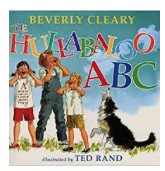
The Hullabaloo ABC, by Beverly Cleary

            This alphabet book encourages a loud and busy day on the farm.  Let the children have fun learning the alphabet through this noisy book.

Materials

  •  Index cards
  • Books or pictures of farm scenes
  • Stuffed animals that are farm related
  • Plastic Easter eggs

Vocabulary

  •             Hullabaloo (to make a whole lot of noise!)
  •             Echo (a repeated sound or word)
  •             Bawl (to cry)
  •             Yodel (a kind of singing)

Before Reading the Story

            Show the children the cover of the book and ask the children if they recognize what is on the girl’s shirt. Read the title of the book and ask the children if they know what a hullabaloo is? Tell them it is to make a whole lot of noise!  Ask the children what they can do while they sing the alphabet song to make a hullabaloo (clap, shout the words, stomp their feet), pick one idea and sing the alphabet song.  As you sing, point to the letters on your alphabet wall chart.

Literacy/Alphabet Knowledge; knows the letters of the alphabet are a special category of visual graphics that can be individually named.

Reading the Story

            As you read the story, talk about what is happening on the pages (A-B; can you tell what game they are playing? E; who knows what an echo is?  Have the children try a few/ Hello!/hello, Ms. ____ is the best teacher!/Ms ____is the best teacher!). Continue through the book.

Language Development/Listening & Understanding; demonstrates increasing ability to attend to and understand conversations, stories, songs, and poems.

After Reading the Story

            On index cards write the children’s first letter of their name, K=Kerry.  Hold up the letter and ask if anyone recognizes this letter, do you know it’s name?  Help the children think up a sound they can make with their letter (K=crow, R=roar, T=tap your feet on the floor).

Literacy/Alphabet Knowledge; shows progress in associating the names of letters with their shapes and sounds.

Discovery

Put out books or pictures of farm scenes for the children to talk about and compare. Can the children name different structures on the farm? Do they know the kinds of animals that might live on a farm or the produce that a farm might sow? Explain to the children that it takes many people to make a farm run and it is hard work. On farms where animals live, the animals must be fed and cleaned (someone has to muck up all that poop). And on farms that grow produce someone has to plant the seeds and water then. And when the produce is mature someone has to pick it and put it in the trucks to take it to the market.

Science/develops an increasing ability to observe and discuss common properties, differences and comparisons among objects and materials. AND Approaches to Learning/Initiative & Curiosity; grows in eagerness to learn about and discuss a growing range of topics, ideas, and tasks.
Music and Movement

            Sing the alphabet song pointing at the letters as you go.

Literacy/Alphabet Knowledge; shows progress in associating the names of letters with their shapes and sounds.

            Put out your music instruments to make lots of noise.  Add a metal coffee can to make the sound of drumming on the washtub.

Creative Arts/Music; experiments with a variety of instruments.

            Sing Down By the Bay and have the children echo back each line. https://www.youtube.com/watch?v=jAjhLexlrDc

            Teacher                                                             Child Response

            Down by the bay                                                 Down by the bay

            Where the watermelons grow                         Where the watermelons grow

            Back to my home                                                 Back to my home

            Where I dare not go                                            Where I dare not go

            For if I do                                                          For if I do

            My Mamma would say                                       My Momma would say

                                                Did you ever see a whale, waving his tail, down by the bay.

                                                Did you ever see a snake baking a cake, down by the bay

                                                Did you ever see a mouse painting a house, down by the bay

Encourage the children to help make up more verses.

Literacy/Phonological Awareness; progresses in matching sounds and rhymes in familiar words, games, songs, stories, and poems.

Sing Sweetly Sings the Donkey. Use the beginning of the song Down by the Station and then make the donkey braying sounds loudly!

Sweetly sing the donkey,

At the break of day.

If you do not feed him

This is what he’ll say…

Hee-haw, hee-haw, hee-haw, hee-haw, hee-haw!

Creative Arts/Music; participates with increasing interest and enjoyment in a variety of musical activities, including listening, singing, finger plays, games, and performances.

Teach the children how to yodel (o-d-lady, o-d-lady, o-d-lady-i-o).

Creative Arts/Music; participates with increasing interest and enjoyment in a variety of musical activities, including listening, singing, finger plays, games, and performances.

Go on a farm exercise adventure. https://www.youtube.com/watch?v=iHJ2fW3iJVE. Can the children help make up more adventure?

Physical Health & Development/Health Status & Practices; participates actively in games, outdoor play, and other forms of exercise that enhance physical fitness.

Blocks

            Use index cards and write the letters E,T, W, H, L, F, N. Add these to the center and encourage the children to try to make the letters using blocks.

Literacy/Alphabet Knowledge; shows progress in associating the names of letters with their shapes and sounds.

Art

            Ask the children if they remember where the setting was in the story ( a farm).  Encourage the children to draw farm animals.

Physical Health & Development/Fine Motor Skills; progresses in abilities to use writing, drawing, and art tools, including pencils, markers, chalk, paint brushes, and various types of technology.

Library and Writing

            Put the book in the center and let the children use magnet letters.  Can they put them in alphabet order? Can they match the letter to the page?

Literacy/Alphabet Knowledge; shows progress in associating the names of letters with their shapes and sounds.

Sand and Water

            Put dirt in the table today and let the children add water to make mud, slick and wet.

Science/Skills & Methods; begins to use senses and a variety of tools and simple measuring devices to gather information, investigate materials, and observe processes and relationships.

Dramatic Play

            Add any stuffed farm animals that you might have and plastic eggs to gather from the chickens. 

Creative Arts/Dramatic Play; shows growing creativity and imagination in using materials and in assuming different roles in dramatic play situations.

Math and Manipulatives

            Cut index cards in half.  On each half write a capital letter, you do not have to use all 26 letters, just make sure you have some that are made with all straight lines (WETIHL) and some that have curved lines (QRPSGJC).  Put out a piece of paper with a line drawn down the middle.  On one side write straight lined letters and on the other side write curved line letters.  Let the children sort the letters accordingly. Can they name any of the letters as they sort?

Mathematics/Patterns & Measurement’ shows increasing abilities to match, sort, put in a series, and regroup objects according to one or two attributes such as shape or size. AND Literacy/Alphabet Knowledge; identifies at least 10 letters of the alphabet, especially those in their name.

Outdoor Play

            Ask the children to help you think of ways to make noise on the playground today. (use a stick along the chain link fence, use a shovel to bang on a bucket,  kick a ball, scream, etc.)

Approaches to Learning/Reasoning & Problem Solving; develops increasing ability to find more than one solution to a question, task, or problem.

Transitions

            Turn to various pages in the book and ask the child if they can name the letter, then read the page and let them make the noise of that letter (J is for jabber, the child can say go away, go away!)

Literacy/Alphabet Knowledge; identifies at least 10 letters of the alphabet, especially those in their name. AND Language Development/Listening & Understanding; demonstrates increasing ability to attend to and understand conversations, stories, songs, and poems.

Resources