The Lion Who Had Asthma, by Jonathan London

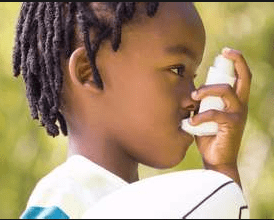
This book helps children who have asthma, or know of someone with asthma, to know what symptoms and signs to look for to help lessen an asthma attack and how to stay calm. It introduces children to a nebulizer. Preschool aged children are twice as likely to have an emergency asthma attack as older children. Use this book to help alleviate some of the fear and questions that are part of asthma and asthma management.

Materials

  • Bubbles and bubble wands.  (Wands can be made by twisting pipe cleaners into a loop at one end)
  • Small paper lunch plates
  • Lion features
  • Paper straws, one per child
  • Cornstarch and green food dye.
  • 2 sets of the Water Cards
  • Is/Is Not boards and magnet letters

Vocabulary

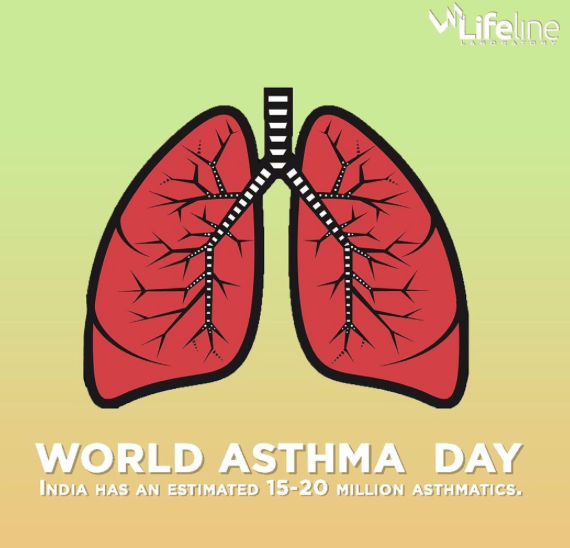
  • Asthma (when air cannot get into your lungs and you have trouble breathing)
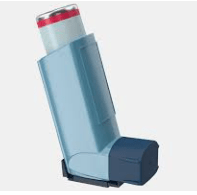
  • Inhaler (a machine that helps you breathe if you have asthma)
  • Imagination (to pretend something using your brain thoughts)
  • Imaginary (not real, pretend)

Before Reading the Story

Talk to the children about the importance of lungs.  Put your hands on your chest and tell the children that this is where your lungs are.  When your lungs are working properly, the air flows easily in and out.  Have the children hold the back of one of their hands near their mouth to feel how the air comes out.  Explain to the children that if you have asthma, that means your lungs make mucus which is thick and sticky making them feel tight and hard to breath.  It also makes you feel like coughing.  Explain that people with asthma can get help by using a special kind of machine called a nebulizer that has medicine inside and makes it easier for you to breath.  Tell the children that you cannot get asthma from another person.

Approaches to Learning/Initiative & Curiosity; grows in eagerness to learn about and discuss a growing range of topics, ideas, and tasks.

Reading the Story

On the first page where Sean is a lion, tell the children that Sean is using his imagination.    On the page where he is a giant, ask the children if they know what the trees really are that he is munching on?  (Broccoli).  On the page where Sean makes a wheezing sound, demonstrate what a wheeze sounds like to the children.  Ask them to look at his face; it looks like he might be a little bit afraid.  On the next page where his mother tells him it’s time for a treatment, explain that people with asthma can use a special inhaler machine that they breath into and it helps make their lungs feel better.  On the page where Sean is able to breathe again, ask the children to look at his face now, he looks so much better and happier.

Literacy/Book Knowledge & Appreciation; demonstrates progress to retell and dictate stories from books and experiences; to act out stories in dramatic play; and to predict what will happen next in a story.

After Reading the Story

In the story Sean was having trouble breathing, ask the children if they remember how that made him feel?  (He cried and coughed.  He was scared.  Sean used his imagination.  Ask the children to recall some of the things that Sean pretended to be.

Language Development/Speaking & Communicating; develops increasing abilities to understand and use language to communicate information, experiences, ideas, feelings, opinions, needs, questions; and for other varied purposes.

Talk to the children about watching out for their friends.  Ask the children How they can help when they see a friend who is having trouble breathing? (tell an adult right away).  If a child in your class has asthma, remind them to let you know right away if they feel like they cannot breathe very well.  Ask the children to help you make a list of things that should be done if someone is having an asthma attack. (Relax & stay calm.  stop, sit down, relax, take quick-relief medication (if prescribed by the child’s physician), tell a friend or adult). Post the list on the wall.

Literacy/Early Writing; develops an understanding that writing is a way of communicating for a variety of purposes.

Discovery

At lunch or snack today, give each child a straw. Tell them that you want to show them what breathing with asthma might feel like. Tell the children to sit and use the straw to breath in and out. Can they feel how they are not getting as full of lungs? The air is not going in well. Take the straw out and try a few breaths. Feel the difference. Let the children use the straws for their milk or juice today.

Science/Scientific Skills & Methods; bgins to participate in simple investigations to test observations, discuss and draw conclusions, and form generalizations.

Music and Movement

Teach the children the chorus of That’s What Breathings All About https://www.sesamestreet.org/toolkits/asthma

Science/Scientific Knowledge; expands knowledge of and respect for their bodies and the environment.

The Water Song. https://www.youtube.com/watch?v=gvuhAVH-BU8

Science/Scientific Knowledge; expands knowledge of and respect for their bodies and the environment.

Blocks

Show the children how to make a maze with the blocks. Give them a puf ball or ping pong ball to try to blow through the maze.

Approaches to Learning/Engagement & Persistence; demonstrates increasing ability to set goals and develop follow through on plans.

Art

Give each child a small paper lunch plate to paint in shades of orange (set out orange, red, yellow, and white paint).  After the paper plate has dried, have the children glue on the lion’s eyes, nose, mouth, and ears (The teacher will probably need to cut out the shapes for younger children).   Draw on whiskers with a marker.

Creative Arts/Art; progresses in abilities to create drawings, paintings, models, and other art creations that are more detailed , creative, or realistic.

Sand and Water

Make gooey mucus; Add one cup water, 2 cups cornstarch, and green food coloring.  Slowly mix this all together.  The mixture will appear solid but when you pick it up, it will ooze from your hand.  As the children play with the mucus, explain that this is like what happens in your lungs if you have asthma.  Have them pick up some of the goo.  Let it flow between your fingers, does it flow fast or slow?  If flows slow, that’s what happens in your lungs making it hard to breath.  Now add a few drops of water to the mucus.  Does it feel the same?  Does it flow through your fingers differently?  Explain to the children that it’s important to drink plenty of water as drinking lots of water thins the mucus and makes it easier to breathe.

Science/Scientific Skills & Methods; begins to participate in simple investigations to test observations, discuss and draw conclusions, and form generalizations.

Library and Writing

As children look a books today, ask them if the book they are looking at is fiction or not-fiction (Imaginary or not imaginary but real).

Literacy/Book Knowledge & Appreciation; shows growing interest and involvement in listening to and discussing a variety of fiction and non-fiction, and poetry.

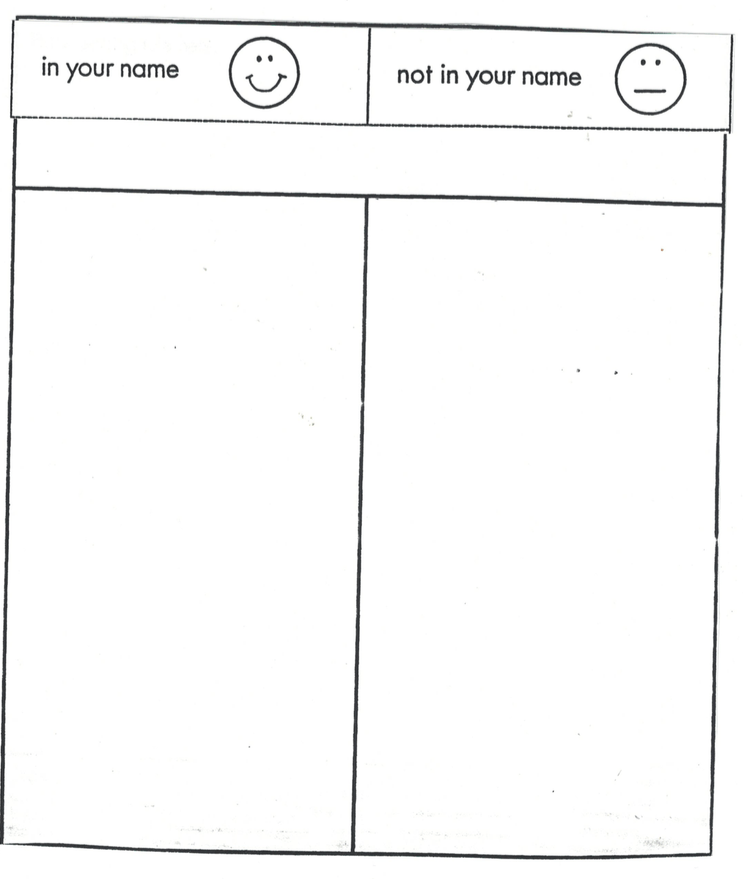
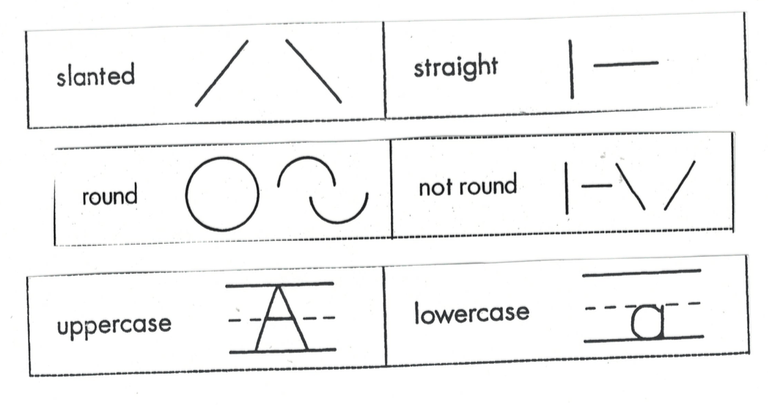
Put out the magnet letters and is/is not boards for the children to use tofday.

Dramatic Play

Ask the children what they think they might like to imagine play today.  As their play progresses, check in and tell them you like how they are using their imagination to __________.

Language Development/Speaking & Communicating; uses an increasingly complex and varied vocabulary.

Math and Manipulatives

Make two sets of the water drinking cards. Make sure the children cannot see through the back. Use to play Memory. Turn all the cards face down on the table. The children take turns picking cards trying to find sets.

Social & Emotional Development/Cooperation; develop[s and increasing abilities to give and take in interactions; to take turns during games or using materials; and to interact without being overly submissive or directive. AND Approaches to Learning/Engagement & Persistence; grows in abilities to persist in and complete a variety of tasks and activities.

Outdoor Play

Bring bubbles and wands out onto the playground today.  Show the children how to take a long slow breath out to make the bubbles.

Approaches to Learning/Engagement & Persistence; grows in abilities to persist in and complete a variety of tasks and activities.

Remind the children when they are out running that it sometimes feels hard to breathe.  When this happens you need to slow down and catch your breath and grab a glass of water.

Physical Health & Development/Health Status & practices; builds awareness and ability to follow basic health and safety rules such as fire safety, traffic and pedestrian safety, amd responding appropriately to potentially harmful objects, substances, or activities.

Transitions

Play snake breath.  Have the children take a breath in and then very slowly let their breath out while making a hissing snake sound.  Who can make the longest hissing sound?

Resources

The CDC has put out information specifically for children.  https://www.cdc.gov/asthma/pdfs/kids_fast_facts.pdf
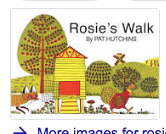
Rosie’s Walk, by Pat Hutchins

            Rosie decides she’d like to go for a walk and a hungry fox follows her.  Walk with Rosie around, across, under, through, and past the barnyard and find out if the fox gets her in the end.

Materials

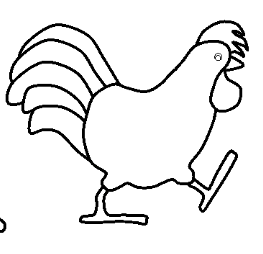
  • Draw an oval egg shape about 7 inches long onto several colors of paper.
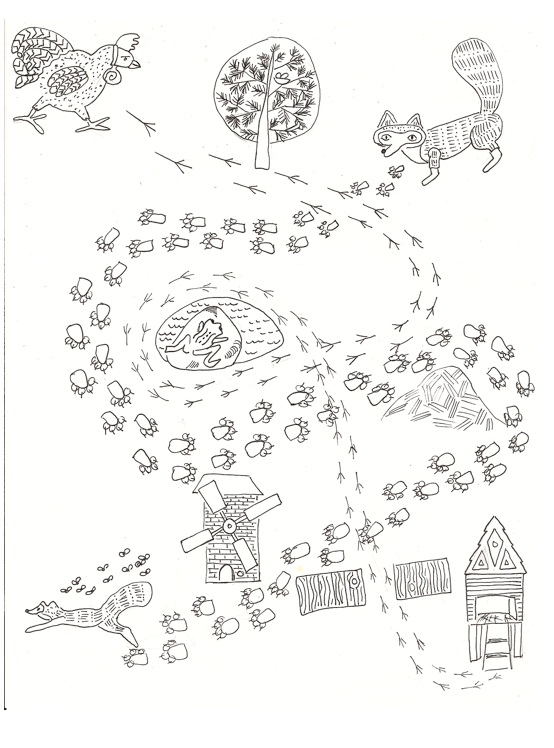
  • Animal walk maze
  • Magnet board and magnet wand

Vocabulary

  • Haycock (another word for haystack which is a pile of hay stacked up in a field and left to dry)
  • Mill (the factory where the wheat straw is made into flour)

Before Reading the Story

            Ask the children if they like to go for walks? Where do they walk, what do they see, who goes with them?  Tell them that today you are going to read a story about a chicken named Rosie who goes for a walk.  Show the children the cover of the book and ask them if they can guess what might happen while Rosie is out walking?

Literacy/Book Knowledge & Appreciation; demonstrates progress in abilities to retell and dictate stories from books and experiences; to act out stories in dramatic play; and to predict what will happen next in a story.

Reading the Story

            On each page where the author is telling what Rosie is doing, use your finger to show the preposition (across the yard, move your finger across the page).  Then point to the fox on that page and ask the children if they can guess what is going to happen to the fox?

Mathematics/Geometry & Spatial Sense; builds an increasing understanding of directionality, order, and positions of objects, and words such as up, down, over, under, top, bottom, inside, outside, in front, behind.

After Reading the Story

            Spend a minute talking about the fox in the story.  Why do you think he was following Rosie?  Do you think it was safe for Rosie to go out by herself?  Ask the children if they wanted to go out for a walk what should they do? (tell an adult).   Talk about strangers and how one should not go with strangers.  What would you do if a stranger came up to you and said to come with them?  Would you take candy from a stranger?

Physical Health & Development/Health Status & Practices; builds awareness and ability to follow basic health and safety rules such as fire safety, traffic and pedestrian safety, and responding appropriately to potentially harmful objects, substances, and activities.

Discovery

Make a magnet board by attaching the pictures of Rosie and the Fox to a magnet. On a piece of posterboard draw a simple path for the child to follow using the magnet. Give the child a second magnet to put under the posterboard. Show them how to move their hand to make the top Rosie magnet move along the page. Here are some simple instructions for a more elaborate magnet board. https://buggyandbuddy.com/creative-magnet-activity/

Physical Health & Development/Fine Motor Skills; progresses in abilities to use writing, drawing, and art tools, including pencils, markers, chalk, paint brushes, and various types of technology. AND Literacy/Early Writing; begins to represent stories and experiences through pictures, dictation, and in play.

Music and Movement

            Teach the children this traditional Mexican rhyme. It is used the same as children in the USA might use One potato, two potato or Eeny meeny miney moe.

La gallina Francolina, by Artuo Navarro

            La gallina Francolina                    Francolina, the hen

            Puso un huevo en la cocina.          Laid an egg in the kitchen.

            Puso uno, puso dos,                    She laid one, she laid two

            Puso tres, puso cuatro,                She laid three, she laid four

            Puso cinco, puso seis,                  She laid five, she laid six

            Puso siete, puso ocho,                  She laid seven, she laid eight

            Puso un pan de bizcocho!              She laid a good tasting cake!

Mathematics/Number & Operations; develops increasing ability to count to 10 and beyond. AND Language Development/Listening & Understanding; demonstrates increasing ability to attend to and understand conversations, stories, songs, and poems.

Blocks

            Bring a set of dominos to the block center.  Show the children how to stand them carefully on end close to each other making a domino trail.  When all the dominos are lined up in a row, gently push the first one.  This should cause the next to fall and all continue to fall making a domino trail.

Physical Health & Development/Fine Motor Skills;grows in eye-hand coordination in building with blocks, putting together puzzles, reproducing shapes and patterns, stringing beads, and using scissors.

Art

            Bring the book to the art table and note how all the illustrations have patterns.  Give the children materials that they can practice making patterns on paper.  You can use stamp pads and stampers or paint with various items to print repeated patterns (a cup turned upside down to make rows of circles)

Mathematics/Patterns & Measurement; enhances abilities to recognize, duplicate, and extend simple patterns using various materials.

Library and Writing

Make several copies of the maze, Rosie’s Walk.  Cover them with contact paper and give the children washable markers to trace the animal’s footprints around the page.

Physical Health & Development/Fine Motor Skills; progresses in abilities to use writing, drawing, and art tools, including pencils, markers, chalk, paint brushes, and various types of technology. AND Literacy/Early Writing; begins to represent stories and experiences through pictures, dictation, and in play.

            Go back through the book but this time instead of focusing on what Rosie does on each page; have the children talk about what the fox does on each page.  Put their thoughts down on paper and help the children write the foxes version of Rosie’s walk.

Literacy/Book Knowledge & Appreciation; shows growing interest in reading-related activities, such as asking to have a favorite book read; choosing to look at books; drawing pictures based on stories; asking to take books home; going to the library; and engaging in pretend-reading with other children.

Dramatic Play

            Add some stuffed farm animals to the center.  The children can pretend to gather eggs, milk a cow, and feed the various animals.

Creative Arts/Dramatic Play; shows growing creativity and imagination in using materials and in assuming different roles in dramatic play situations.

Math and Manipulatives

            Put out the colored egg shapes on paper and a variety of manipulatives.  Ask the children to each fill up their egg with the manipulative of their choice.  Count how many they could fit onto the egg shape.  No stacking only lying on the paper. (7 duplos fit on my egg, more then 11 puzzle pieces fit on my egg, 26 dots fit on my egg).  You can also use the egg shapes to have the children match items of the same color.

Mathematics/Number & Operations; develops increased abilities to combine, separate, and name “how many” concrete objects. AND Mathematics/Number & Operations; begins to use language to compare numbers of objects with terms such as more, less greater than, fewer, and equal to.

Outdoor Play

            Have the children help make an obstacle course on your playground.  Have the children go out of somewhere (the chicken coup), go across something (the yard), go around something (the pond), go over something (the haycock), go past something (the mill), go through something (the fence), and go under something (the beehives).  Label each part of the obstacle course according to Rosie’s walk.

Mathematics/Geometry & Spatial Sense; builds an increasing understanding of directionality, order, and positions of objects, and words such as up, down, over, under, top, bottom, inside, outside, in front, behind.

Transitions

            Bring a chair to the center of your circle.  As the children move to the next activity say a preposition and have them demonstrate as they go. (Go around the chair one time, jump behind the chair, go under the chair, sit on the chair and clap twice).

Mathematics/Geometry & Spatial Sense; builds an increasing understanding of directionality, order, and positions of objects, and words such as up, down, over, under, top, bottom, inside, outside, in front, behind. AND Language Development/Listening & Understanding; shows progress in understanding and following simple and multiple-step directions.

Resources


Clarabella’s Teeth, by An Vrombaut

Clarabella Crocodile and her friends all take good care of their teeth. The problem is that Clarabella has so many teeth!

Materials

  • Several small purse size mirrors
  • Camera
  • Masking Tape
  • Paper plates

Vocabulary

  • Scooter (a thing you ride on while pushing with your foot to make it go)
  • Hygiene (all the ways we keep our bodies clean)
  • Cavities (holes, cracks, or openings that get in our teeth)
  • Dentists (the doctor who helps keep your teeth clean and healthy)

Before Reading the Story

Ask the children if they know what the word hygiene means. If they do not, explain that hygiene means all the ways that we keep our bodies clean. Let the children share with you some of the things that they do or do not to keep their bodies clean and healthy. ( I take a bath at night, My Mom tells me to put socks on when I wear my gym shoes, Daddy brushes my hair after my bath). After they have shared, tell them that you want to think especially about ways that we keep our teeth clean. Again, let the children discuss the topic. (I brush my teeth, I use my red toothbrush and go up and down).

Physical Health & Development/Health Status & Practices; shows growing independence in hygiene, nutrition, and personal care when eating, dressing, washing hands, brushing teeth, and toileting.

Reading the Story

When you get to the page where everyone is getting ready for bed and Clarabella sighs a long sigh, stop and ask the children if they might know what Ruby’s idea is.

Approaches to Learning/Reasoning & Problem Solving; develops increasing ability to find more than one solution to a question, task, or problem. AND Literacy/Book Knowledge & Appreciation; demonstrates progress inabilities to retell and dictate stories from books and experiences; to act out stories in dramatic play; and to predict what will happen next in a story.

After Reading the Story

Explain to the children that we brush our teeth to keep the plaque germs away that can make our teeth sick and get holes, these holes are called cavities. Brushing teeth is very important to keeping our teeth strong and white. Show the children how to properly brush their teeth. If you brush teeth at school, take time to watch as each child brushes today to make sure they are following the proper steps.

Physical Health & Development/Health Status & Practices; shows growing independence in hygiene, nutrition, and personal care when eating, dressing, washing hands, brushing teeth, and toileting.

Discovery

Give a child a small mirror and ask them to try to count how many teeth they have in their mouth. While they are looking, help them become aware of the various shapes of teeth in their mouths. Talk about how the thick molar teeth are for chewing and the pointy incisors are for ripping and tearing food.

Science/Scientific Skills & Methods; develops increasing ability to observe and discuss common properties, differences, and comparisons among objects and materials. AND Mathematics/Number & Operations; begins to make use of one-to-one correspondence in counting objects and matching groups of objects.

Take a close-up picture of each child’s smile and make it into a guessing game book, Who’s Smiling Here?

Social & Emotional Development/Self-Concept; begins to develop and express awareness of self in terms of specific abilities, characteristics, and preferences.

Music and Movement

Do the Toothbrush Chant.

Brush your teeth everyday
Up and down it is the right way
Back and forth and sideways too
We know exactly what to do.

Language Development/Listening & Understanding; shows progress in understanding and following simple and multi-step directions.

Do the Smile Talk and Chew Rap

Smile talk and chew
Smile talk and chew
These are the things that I can do
With my mouth, with my mouth
Smile talk and chew.

Creative Arts/Music; participates with increasing interest and enjoyment in a variety of music activities, including listening, singing, finger plays, games, and performances.

Blocks

Put a mirror into the center and ask the children to count the number of teeth that they see in their mouth. Ask them to represent their teeth with blocks. Encourage them to line the blocks up in a row use one block to represent each tooth and to perhaps also make a pattern of tall-short-tall-short.

Mathematics/Number & Operations; demonstrates increasing interest and awareness of numbers and counting as a means of solving problems and determining quantity.

Art

Give each child a piece of newsprint cut out into a simple crocodile shape. Have the children crumple the paper into a ball and then un-crumple. Make slightly watery brown paint and let the children paint the crocodile shape. When it has dried, add small white triangle shaped teeth. The crumpling of the paper makes the paint take on sort of a crocodile skin texture.

Creative Arts/Art; gains ability in using different art media and materials in a variety of ways for creative expression sands representation.

Make several crocodile heads on cardboard or thicker paper and let the children use play dough to make teeth by rolling the dough into small balls and placing it in the crocodile’s mouth. As they work, ask them how many teeth they have or show me four teeth, three teeth.

Mathematics/Number & Operations; demonstrates increasing interest and awareness of numbers and counting as a means of solving problems and determining quantity.

Library and Writing

Play ABC River Crossing. On the floor mark off a large “river” area with 2 pieces of masking tape. On the paper plates write letters of the alphabet. Use only a few if your children are just learning about letters and more if they have had some practice identifying letters. Have the children stand on one side of the river and hold up a letter card and name the letter and the letter sound. The child must jump to the corresponding paper plate/rock. Once the child is across, another child tries to get across the river.

Literacy/Alphabet Knowledge; shows progress in associating the names of letters with their shapes and sounds. And; identifies at least 10 letters of the alphabet, especially those in their own name.

Sand and Water

Fill the table with damp sand today and dig holes. Remind the children that cavities are holes in our teeth caused by germs called plaque. Tell the children that they are going to be the dentist. Pretend the sand is a tooth and let’s dig a cavity.  Then use sand toys or Popsicle sticks to fill the cavity/hole back in.

Creative Arts/Dramatic Play; shows growing creativity and imagination in using materials and in assuming different roles in dramatic play situations.

Dramatic Play

As the children play in the kitchen area today, ask them to identify which foods are crunchy and which are soft to chew.

Mathematics/Geometry & Spatial Sense; shows growth in matching, sorting, putting in a series, and regrouping objects according to one or two attributes.

Math and Manipulatives

Make a graph that represents toothbrush colors. Let the children mark the color toothbrush that they have (at school or at home).

Literacy/Print Awareness & Concepts; develops growing understanding of different functions of forms of print such as signs, letters, newspapers, lists, messages, and menus. AND Mathematics/Numbers & Operations[ begins to use language to compare numbers of objects with terms such as more, less, greater than, fewer, and equal to.

Outdoor Play

In the story Clarabella’s friends rolled over, leaped, bounced up and down, and spin round and round. Can you do these things on the playground? What other cool movements can you do?

Physical Health & Development/Gross Motor Skills; shows increasing levels of proficiency, control, and balance in walking, climbing, running, jumping, hopping, skipping, marching, and galloping.

Transitions;

Explain to the children that teeth are very important to help them to be able to say words correctly. Ask the children to try to wrap their lips around their teeth and then tell you their name, first and last. (My children find this funny to try to say their names with no teeth.) Science/Scientific Methods & Skills; begins to participate in simple investigations to test observations, discuss and draw conclusions, and form generalizations.

Dear Parent, Today we read a story about brushing teeth. Spend a moment tonight and brush your teeth along with your child and guide them through proper tooth brushing. Also take a moment to check their toothbrush for wear and tear; it might be time for a new replacement. Happy brushing!

Accompanying book;  A Day in the Life of a Dentist by Heather Adamson