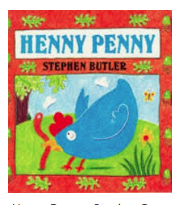
Henny Penny, by Stephen Butler

            Henny Penny thinks the sky is falling and runs off in a panic.  On the way she meets some of her friends and gets them all afraid too.  What will happen when they meet the fox who pretends to be the king?  Is the sky really capable of falling? 

Materials

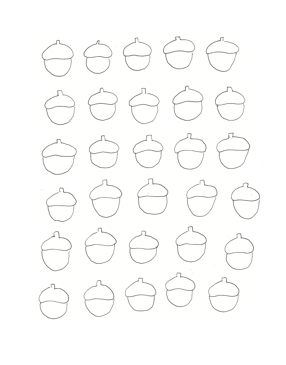
  •   Numbers 1-5 and lots of acorns
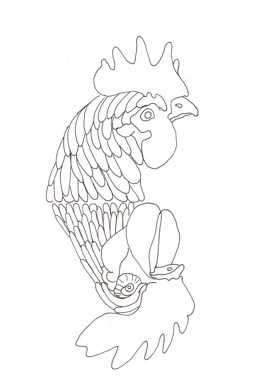
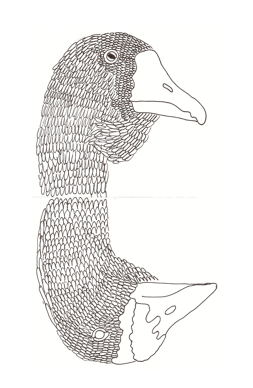
  •  Bird masks
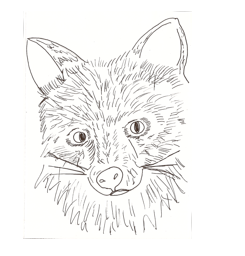
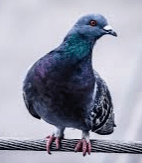
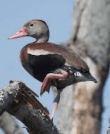
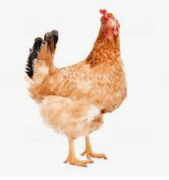
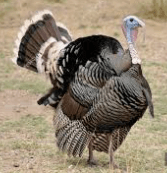
  •  Puppets; acorn, henny penny, cocky locky, ducky lucky, goosey loosey, turkey lurkey, foxy loxy

Vocabulary

  • Acorn (the seed from an oak tree)
  • Disguise (To dress up to look like someone else)
  • Cave (a hole in the rocks or the ground)
  • Emergency (something bad happens and it has to be taken care of immediately)

Before Reading the Story

            Tell the children that today you are going to put on a puppet show with them.  Ahead of time, cut out the puppet figures and attach to a popsicle stick.  Ask the children if they know what it means when you say characters of the story (the people/animals in the story).  Tell the children that you would like to introduce the characters of the puppet show.  This is Henny Penny, can you tell shat kind of an animal she is?  Continue to introduce all the characters.  When you have finished, tell the children that one of the characters is very different from the others, can you tell me who?  (The fox is the only animal, the rest are birds).

Mathematics/Patterns & Measurement; begins to make comparisons between several objects based on a single attribute.

Reading the Story

            Make puppets and either hold them up yourself or ask several children help you as you read the story.  As you read, encourage the children to repeat, “The sky is falling!  The sky is falling!”

Literacy/Book Knowledge & Appreciation; shows growing interest and involvement in listening and discussing a variety of fiction, non-fiction, and poetry.

After Reading the Story

Tell the children that in the story, Henny Penny thought it was an emergency.  Explain that sometimes at school we practice for an emergency by having a fire drill.  If it was a real fire emergency, do the children know what they should do?  Go over your fire drill plan, your tornado plan and any other emergency plans that the children would partake in at school.

Physical Health & Development/Health Status & practices; builds awareness and ability to follow basic health and safety rules such as fire safety, traffic and pedestrian safety, and responding appropriately to potentially harmful objects, substances, and activities.

Ask the children if they think Henny Penny handled herself in a safe way? Why or why not?

Language Development/Speaking & Communicating; develops increasing abilities to understand and use language to communicate information, experiences, ideas, feelings, opinions, needs, questions; and for other varied purposes.

Ask the children if they have ever had a scary dream.  Let them talk about their dreams.  Are scary dreams for real?  What can you do if you have a scary dream? 

Language Development/Speaking & Communicating; develops increasing abilities to understand and use language to communicate information, experiences, ideas, feelings, opinions, needs, questions; and for other varied purposes.

Discovery

            Ask the children to think about all of Henny Penny’s friends.  They were birds.  Ask the children to draw birds.  How many feet do birds have?  What do they have instead of a mouth, instead of arms?  We have skin all over our bodies, what are chickens covered with?

Science/Scientific Knowledge; expands knowledge of and abilities to observe, describe, and discuss the natural world, materials, living things, and natural processes.

Music and Movement

            Sing Rhyming Words Sound the Same, to the Mexican Hat Dance.

Rhyming words sound the same, (clap, clap)

Rhyming words sound the same. (clap, clap)

Rhyming words sound the same. (clap, clap)

Rhyming words sound the same.

(ask a child to make a rhyming word that goes along with their name, it does not have to be a real word)

Literacy/Phonological Awareness; progresses in recognizing matching sounds and in rhymes familiar words, games, songs, stories, and poems.

Blocks

            The fox tricked Henny Penny and her friends into a cave.  Ask the children to see if they can make a cave where they can put something inside.  Also encourage them to make a castle for the king.

Approaches to Learning/Engagement & Persistence; demonstrates increasing ability to set goals and develop and follow through on plans.

Art

            Cut out simple Kings Crowns and let the children decorate them. (I have made stencils of shapes for the children to cut and glue onto their crown and a co-worker got out the glitter and sequences for very fancy crowns).

Creative Arts/Art; begins to share opinions about artistic products and experiences.

Library and Writing

            Ask the children to help you write a new ending to the story where Henny Penny looks up at the tree when the acorn falls.  How would this story go?  They can illustrate their ending?

Literacy/Early Writing; begins to represent stories and experiences through pictures, dictation, and in play.

Sand and Water

            If you live in an area where there might be acorns, put some into the water table.  If not, look for other kinds of tree seeds that you can use. Let the children scoop and pour the acorns into a variety of vessels. Do they make different sounds in plastic versus wood or metal?

Science/Scientific Skills & Methods; begins to participate in simple investigations to test observations, discuss and draw conclusions, and form generalizations.

Dramatic Play

            Cut and color the masks and attach to sentence strips so the children can act out the story.  For the king, a child can wear a crown that was made in art.

Literacy/Book Knowledge & Appreciation; demonstrates progress in abilities to retell and dictate stories from books and experiences; to act out stories in dramatic play; and to predict what will happen next in a story.

Math and Manipulatives

            Put out 1-5 or 1-10 pieces of paper with the number written upon it. Cut out the acorns on the acorn page and let the children make piles on the corresponding numbers.

Mathematics/Number & Operations; begins to make use of one-to-one correspondence in counting objects and matching groups of objects.

Outdoor Play

            Play follow the leader.

Physical Health Development/Health Status & practices; participates actively in games, outdoor play, and other forms of exercise that enhance physical fitness.

Transitions

            As the children leave to go to the next activity, simply ask them where they are going.  Find a word real or silly that rhymes with their name.  (Kerry Berry, where are you going?  Roger Dodger, where are you going?)

Approaches to Learning/Initiative & Curiosity; develops increased ability to make independent choices.
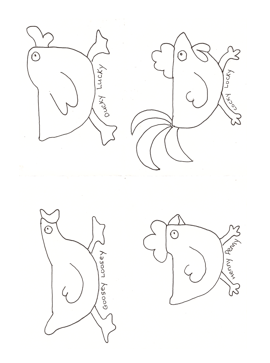
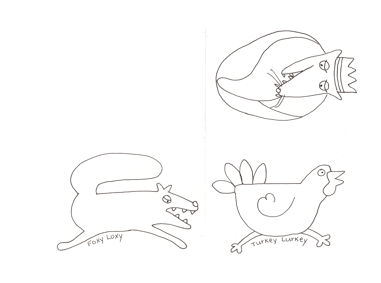
Puppets for story, glue to popsicle stick

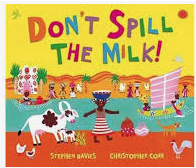
Don’t Spill The Milk! By Stephen Davies

Materials

  • Paper plates , one for each child and 10 extra for transitions

Vocabulary

  • Grasslands (Park lands with tall grass)
  • Dunes (giant hills made of sand)
  • Desert jinn’s (genies)
  • Looming (approaching)
  • Absorb (to soak into something)
  • Chore (to do a task or job for someone)

Introducing the Book

Ask the children if they ever help their parent/s at home. What kinds of things do you do to help? (I helped my Daddy wash his car, I make my bed, I play with my baby when Grandma is cooking supper) Hold up the cover of the book and tell the children that this is the story about a little girl who helps her Mother. Explain that in the bowl is milk that she is to carry to her Father. Ask the children if they have ever carried anything on their heads. Tell them in parts of the world people carry things on their heads and they get SO good at it that they do not even have to hold onto the item/bowl. Introduce the story.

Social & Emotional Development/Knowledge of Families & Communities; develops growing awareness of jobs and what is required to perform them.

Reading the Book

On the pages where Penda is talking to herself, read a little slower so the children can feel her determination to get the milk on top of her head to her father without spilling a drop.

Language Development/Listening & Understanding; understands an increasingly complex and varied vocabulary.  

When you get to the page where the milk spills and Penda says, “It’s all gone!” ask the children what they think will happen next. 

Approaches to Learning/Reasoning & Problem Solving; develops increasing ability to find more than one solution to a question, task, or problem AND LIteracy/Book Knowledge & Appreciation; demonstrates abilities to retell and dictate stories from book sna experiences; to act out stories in dramatic play; and to predict what will happen next in a story.

After Reading the Book

When you get to the page that says, “Tell her it comes with all my love”, see if the children can look at the picture and recall some of the places that Penda carried the milk.

Literacy/Book Knowledge & Appreciation; demonstrates progress in abilities to retell and dictate stories from books and experiences; to act out stories in dramatic play; and to predict what will happen next in a story.

Music and Movement

Get out the beanbags and tell the children to put a beanbag on top of their head. Can they walk forward without the beanbag falling? Backwards? Can they bend down slowly and touch the ground? What other ways can they think of to carry the beanbag (on their foot, on their bent over back, on their shoulder). Let them practice doing different walks and movements without dropping the beanbag.

Physical Health & Development/Gross Motor Skills; shows increasing levels of proficiency, control, and balance in walking, climbing, running, jumping, hopping, skipping, marching, and galloping.

Discovery

Put a tray or cookie sheet onto the science center table. On the tray put a variety of objects that will absorb water and some that will not. (Cotton ball, paper towel, part of a clean-unused diaper, a scarf, and a piece of construction paper. Also include items such as a crayon, a Lego, and a plastic animal). Give the children a small cup of water and an eyedropper. Let them experiment filling the dropper with water and squirting it onto the object. What happens to the water? Talk with them as they experiment asking, “Do you think that paper towel will absorb the water”? Have them sort the items by those that absorb water and those that do not.

Science/Scientific Skills & Methods; begins to use senses and a variety of tools and simple measuring devices to gather information, investigate materials, and observe processes and relationships.

Art

Open the book to the mask dance page and tell the children that they are going to make their own masks. Put out markers and collage materials. When the children have completed their masks they can be attached to a sentence strip to be worn, or to a popsicle stick to be held in front of their face.

Creative Arts/Art; develops growing abilities to plan, work independently, and demonstrates care and persistence in a variety of art project.

Sand and Water

Put water in the table today and add plastic lids of various sizes and small manipulatives such a counting bears. Challenge the children to put different amounts of bears onto the plastic lid that is floating in the water. Do certain lids hold more bears? Does the shape of the lid matter? Let the children explore floating and buoyancy (the ability to stay afloat).

Science/Scientific Knowledge; begins to describe and discuss predictions, explanations, and generalizations based on past experiences. AND       Mathematics/Number & Operation; begins to use language to compare numbers of objects with terms such as more, less, greater than, fewer, and equal to.

Library and Writing

Put the book into the center along with any other multicultural books you may have and a globe/world map. As the children pick up a book, show them on the globe/map, where the story takes place. Always show them where your school is located also.

Social & Emotional Development/Knowledge of Families & Communities; begins to express and understand concepts and language of geography in the contexts of the classroom, home, and community.

Dramatic Play

Encourage the children to work together and clean the center. Give them damp paper towels to wipe the shelves. Tell them thank you for your good cooperation.

Social & Emotional Development/Cooperation; increases abilities to sustain interactions with peers by helping, sharing, and discussing.

Math and Manipulatives

Give children a small manipulative such as a counting bear and have them follow your verbal directions. Ask them to make their manipulative climb up their body and then back down to their knee. Have the manipulative go around their knee and hide behind. Have their manipulative now come around to the front of their body and now go beside. Ask the children if they can make their manipulative go under a body part and then over another body part. Have them put the manipulative beside them and clap their hands as they did a good listening job.

Mathematics/Geometry & Spatial Sense; builds an increasing understanding of directionality, order, and positions of objects, and words such as up, down, over, under, top, bottom, inside, outside, in front, behind.

Outdoor play

Challenge the children to work together today using shovels to dig a long river in your sandbox. Can they add some dunes to the side of the river? If the weather is not too cold, let the children help fill the river up with water. What happens to the water? Remind those who were in the science center today that this is another form of absorption!

Science/Scientific Knowledge; shows increased awareness and beginning understanding of changes in materials and cause-effect relationships.  AND    Social & Emotional Development/Cooperation; develops increasing abilities to give and take in interactions; to take turns in games or using materials; and to interact without being overly submissive or directive.

Transitions

On 1-10 paper plates, write a letter on each. These should be letters that begin with the children’s names or letters that you have been working on with the children. Scatter the letters about on the floor about a step away from each other. Tell the children that they will have to walk the path to get to the next activity. Have one child at a time stand up beside the letters. Ask them if they can name the letter as they step onto the paper plate. Or you can name the letters and then they step onto the plate. Have them walk on 3-5 letters and then send them off to the next activity.

Literacy/Alphabet Knowledge; Knows that the letters of the alphabet are a special category of visual graphics that can be individually named.

Resources

Dear Parents-Today we read a book about a little girl who helps her Mother by carrying milk to her Father who is up in the grasslands shepherding sheep. See if you can find a way that your child can be a helper to you doing something for someone else or around the house. Make sure to thank them after they have completed the chore and to tell them how much you appreciate them being a helper to you.

A Gardener’s Alphabet, by Mary Azarain

So many new words to learn about the garden all done with beautiful detailed pictures.

Materials

  • 1-10 plastic cups, labeled with the numbers 1-2-3-etc.
  • Many plastic or silk flowers (if you have just the heads, use pipe cleaners for stems.)
  • Old play dough
  • Small basket and several dish towels
  • Sheet of poster board or large piece of paper
  • 1-2 potted plants (since you will be pulling these out of the pot, you do not need a fancy plant. I have stuffed garden weeds into a cup as a potted plant to do this project)

Vocabulary

  • Arbor (a little nook or gazebo)
  • Bulbs (some plants grow from seeds, and some plants grow from bulbs)
  • Compost (food scraps that you let deteriorate to make dirt for your garden)
  • Greenhouse (a house made out of glass so you can grow things in the cold weather)
  • Manure (animal poop that you can put in your compost)
  • Nibble (to take little bites or tastes)
  • Topiary (to make fancy shapes out of bushes)
  • Weed (to take out all the plants you do not want in the garden)
  • Xeriscape (a garden that needs hardly any watering at all!)

Introducing the Story

Talk to the children about their gardening experiences. Do they have a garden at home? What do they grow, vegetables or flowers? Do you have a garden at school? How do the children help maintain it? Tell the children that today’s book is about words that tell about a garden. Ask the children if they can think of any words that tell about a garden and write them on a large piece of paper (dirt, zucchini, smells good, sprinkler, seeds). Introduce the book and as you go through the pages, help define what each word is.

Science/Scientific Knowledge; expands knowledge of and abilities to observe, describe, and discuss the natural world, materials, living things, and natural processes.

Reading the Story

As you read each page, introduce the letter it represents, its letter sound and point to it at the beginning of each word. Take your time reading the story allowing the children to talk about what they see on the page and experiences that come from looking at the pictures.

Literacy/Alphabet Knowledge; identifies at least 10 letters of the alphabet, especially those in their own name. Knows that letters of the alphabet are a special category of visual graphics that can be individually named.

After Reading the Story

Open the book up randomly to a page, Say the letter name and the word that corresponds with it; M-manure. Ask the children if they can think of any other words that start with the letter sound /M/ for manure?   Do several pages. This could also be used as a transition activity. Let the child open the book, see if they can name the first letter of the word, say the word and think of another that begins with that letter sound.

Literacy/Alphabet Knowledge; identifies at least 10 letters of the alphabet, especially those in their own name. Knows that letters of the alphabet are a special category of visual graphics that can be individually named.

Music and Movement

Sing or chant while doing motions that go along;

Dig a little hole and put the seed in.
Cover it with dirt and let the sun shine in.
Add a little water, to keep it fed,
Soon a little plant will show its head.

Creative Arts/Music; participates with increasing interest and enjoyment in a variety of music activities, including listening, singing, finger plays, games, and performances.

Discovery

Bring in several real plants in pots. Ask the children if they can name the parts of the plant (leaves, petals, stem, flower). If not, help them to name. Count the leaves, smell the flower, etc.). Pull the plant out of the soil and show the children the roots of the plant. Give them pieces of paper and encourage them to draw the plant. You can label their plant parts with them when they are finished drawing.

Science/Scientific Skills; develops growing abilities to collect, describe, and record information through a variety of means, including discussion, drawings, maps, and charts.

Blocks

Ahead of time, trace around blocks onto a piece of poster board or large paper. Lay this out in the center and challenge the children to find the correct blocks to lie over the traced shapes. When we did our garden unit, we made flower type shapes using the blocks and traced them onto the poster board.

Mathematics/Geometry & Spatial Sense; begins to be able to determine whether or not two shapes are the same size and shape.

Art

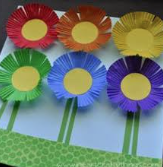
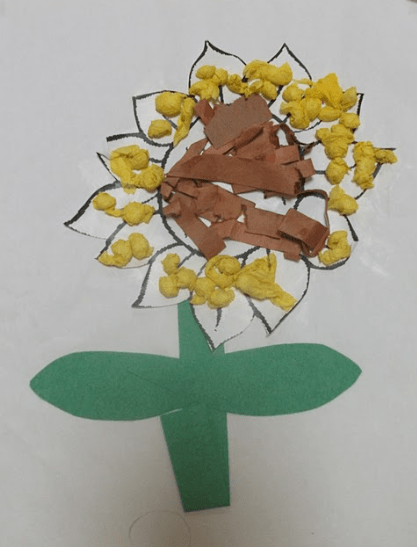
Look on the Internet for flower collage projects to do with preschoolers. There are many different and lovely ideas. Pick one and let the children collage flowers today.

Creative Arts/Art; develops growing abilities to plan, work independently, and demonstrate care and persistence in a variety of art projects.

Sand and Water

Bring the play fruits and vegetables from the dramatic center today and let the children wash them in the water table.   As they wash them, they can dry them with a dishtowel and place in a small basket. Washing our harvest so we can eat it, yummy.   Can the children name the various vegetables? Remind them that by washing the vegetables, you are removing any dirt and manure that still might be on them. This is a healthy habit.

Physical Health & Development/Health Status & Practices; builds awareness and ability to follow basic health and safety rules such as fire safety, traffic and pedestrian safety, and responding appropriately to potentially harmful objects, substances, and activities.

Library and Writing

Put out seed catalogs for the children look at. For your oldest children, encourage them to write the names of the flowers or foods that they would like to grow. Show them where to find the name of the plant on the page of the catalog.

Literacy/Early Writing; progresses from scribbles, shapes or pictures to represent ideas, to using letter-like symbols, to copying or writing familiar words such as their own name.

Dramatic Play

If you have extra silk flower heads today, let the children arrange them into a plastic vase (an old mayonnaise jar works well) and put them onto the dramatic table.

Creative Arts/Dramatic Play; participates in a variety of dramatic play activities that become more extended and complex.

Math and Manipulaties

Ahead of time label plastic cups 1-10 depending upon the age of your children and the numbers that you are working on. In each cup put a ball of play dough that fills the bottom ½ of the cup. Put out the silk/plastic flowers on the table. Encourage the children to add the proper number of flowers to each cup (#3=three silk flowers)

Mathematics/Number & Operations; develops increased abilities to combine, separate, and name “how many” concrete objects.

Outdoor Play

Plant a garden or work in your classroom garden with the children. If you do not have a school garden, pretend to plant a garden in the sandbox. Use shovels to make rows and acorns, rocks, or pinecones to be the ‘seeds’.

Approaches to Learning/Initiative & Curiosity; approaches tasks and activities with increased flexibility, imagination, and inventiveness.

Bring out scissors and let the children cut the grass.

Physical Health & Development/Fine Motor Skills; develops growing strength, dexterity, and control needed to use tools such as scissors, paper punch, stapler, and hammer.

Transitions

Explain to the children that in the garden one can find many colors. Dismiss the children to the next activity by colors that they are wearing. If they are proficient in colors, use patterns in tier clothing (stripes, polka dots, words, numbers, plaid, etc.).

Resources

Dear Parents, Today we read an alphabet book about gardening. Play a game with your child using the letters in their name. Write the letters, not in the correct order, and ask them if they can name the letters. If not tell them the letter name and also the letter sound. Then take your finger and point to the letters in the correct order of your child’s name and slowly say their name saying each letter and then each syllable.