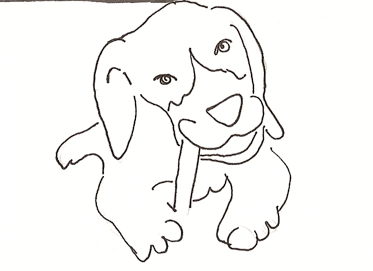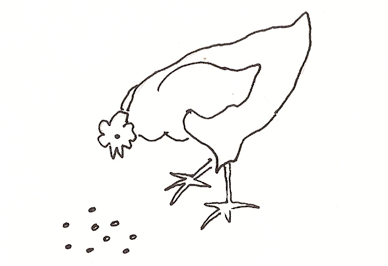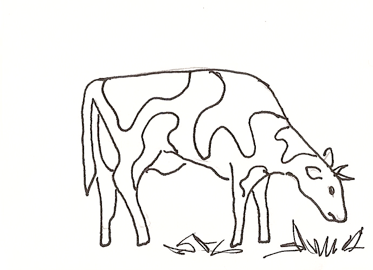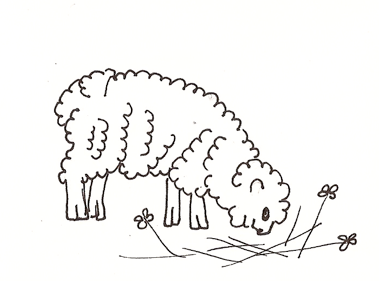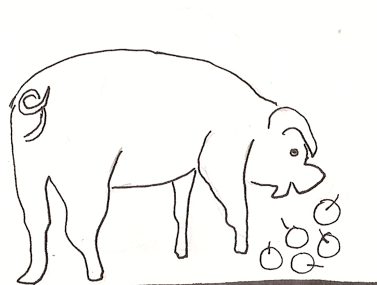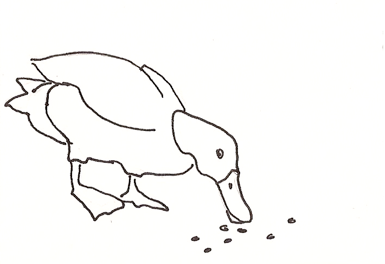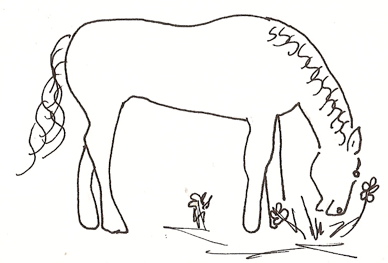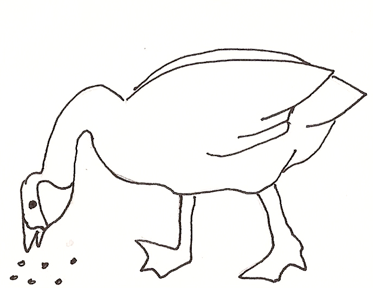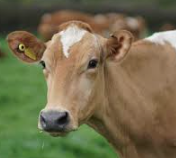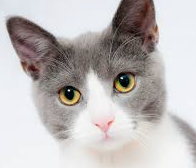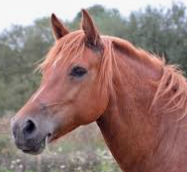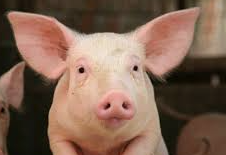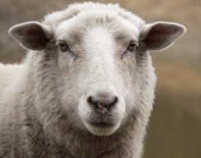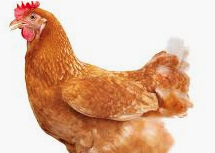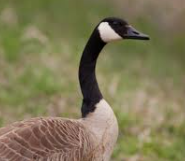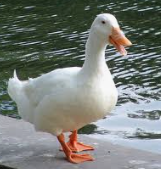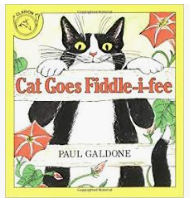
Cat Goes Fiddle-i-fee, by Paul Galdone

This book is a good introduction to farm animals. It also is a fun recall game.

Materials

  •            A bag of dried corn or birdseed
  •             Animal flannels
  •             Any stuffed animals you might have that go along with the story

Vocabulary

  •             Sty (the same thing as a pigpen)
  •             Yonder (Over there)

Before Reading the Story

Put the farm animal pictures onto the flannel board one at a time.  Ask the children if they know the animals name and the animals voice.  Once they are all on the flannel board cover the board with a sheet and remove one animal.  Ask the children if they know what is missing.  Continue to play removing different animals or combinations of animals. 

Approaches to Learning/Initiative & Curiosity; chooses to participate in an increasing variety of tasks and activities.  

Reading the Story

As you read, pause and encourage the children to recite how the animals ‘go’ with you.

Literacy/Book Knowledge & Appreciation; shows a growing interest and involvement in listening to and discussing a variety of fiction and non-fiction and poetry.

After Reading the Story

Place all the flannel board animals at the top of the flannel board and ask the children to help recall the order that the animals appeared in the story.  How did the cat go?  How did the hen go?

Literacy/Book Knowledge & Appreciation; demonstrates progress in abilities to retell and dictate stories from books and experiences; to act out stories in dramatic play; and to predict what will happen next in a story.

Discovery

Bring in real pictures of farm animals for the children to discuss

Language Development/Speaking & Understanding; develops increasing abilities to understand and use language to communicate information, experiences, ideas, feelings, opinions, needs, questions; and for other  varied purposes.

Music and Movement

Sing the Cows in the Barn, to The Wheels on the Bus

The cows in the barn say moo, moo, moo,

Moo, moo, moo,

Moo, moo, moo

The cows in the barn say moo, moo, moo,

We want our lunch.

The horse in the stable say neigh, neigh, neigh

The pig in the sty say oink, oink, oink

The sheep in the pasture say baa, baa, baa

The goose in the grass say honk, honk, honk

Duck in the puddle say quack, quack, quack

The chicken in the coop say buck, buck, buck

Science/Scientific Knowledge; expands knowledge and abilities to observe, describe, and discuss the natural world, materials, living things, and natural processes.  And Creative Arts/Music; participates with increasing interest and enjoyment in a variety of music activities, including listening, singing, finger plays, games, and performances.

Blocks

 Bring out the farm animals and encourage the children to build houses for the animals.  I see you built a chicken coop, that is a big barn you made for the cows, I see the stable for the horses, those pigs must like that sty you built them).

Physical Health & Development/Fine Motor Skills; grows in hand-eye coordination in building with blocks, putting together puzzles, reproducing shapes and patterns, stringing beads, and using scissors.  AND Language Development/Listening & Understanding; understands an increasingly complex and varied vocabulary.

Art

In the story the sheep and the cow ate hay or long grasses.  Bring in a handful of hay or long grass and rubber band together several pieces to let the children experiment using these as paint brushes.

Creative Arts/Art; begins to understand and share opinions about artistic products and experiences.

Library and Writing

Tell the children that you are going to write your own Fiddle-i-fee book.  Have the children draw a picture of an animal that they like (lion, monkey, sheep, snake) and on the top of each page write; I had a ____ and the ___ pleased me.  Ask the child if they think they know what the animal might eat.  Write their response at the bottom of the page; I fed my ___ ___by yonder tree. (I had a monkey and the monkey pleased me, I fed my monkey bananas by yonder tree. I fed my snake fishes by yonder tree. I fed my tiger meat by yonder tree)

Science/Scientific Knowledge; expands knowledge and abilities to observe, describe, and discuss the natural world, materials, living things, and natural processes.  AND Literacy/Early Writing; begins to represent stories and experiences through pictures, dictation, and in play.

Sand and Water

In the story the boy feeds the hen, the duck, and the goose dried corn.  Bring in dried corn to put into the table today.  The children can use it to pour and sift.  If you can not find dried corn, you can use birdseed.

Social & Emotional Development/Self-Control; demonstrates increasing capacity to follow rules and routines and to use materials purposefully, safely, and respectfully.

Dramatic Play

 Add any stuffed farm animals that you might have to the center.  What does a pig eat?  How should we pretend to feed the pig, on  a plate or in a bowl?  You can also make an extra set of the flannel animals and staple them to sentence strips to make animal hats.  The children can pretend to be the different animals in the story.

Literacy/Book Knowledge & Appreciation; demonstrates progress in abilities to retell and dictate stories from books and experiences; to act out stories in dramatic play; and to predict what will happen next in a story.  AND Creative Arts/Dramatic Play;shows growing creativity and imagination in using materials and in assuming different roles in dramatic play situations.

Math and Manipulatives

Play a listening game with the children.  Make 2-4 sets of the animals  For each animal set, make a set of food pictures.  Tell the children that they are going to have to listen carefully and put the correct food in front of each animal.  Give directions for two animals at a time (put the apple in front of the goose and the ice cream in front of the cat.  When they can do 2 directions try three and then four.  You can also have one child put a food in front of each animal and the other children copy what the first child did.

Language Development/Listening & Understanding; shows progress in understanding and following simple and multi-step directions.  AND Mathematics/Patterns & Measurement; enhances abilities to recognize, duplicate, and extend simple patterns using a variety of materials.

Outdoor Play

Do animal walks and make the sounds that go with the story.  Have the children do the walks from one tree to the one over yonder.

Physical Health & Development/Health Status & practices; participates actively in games, outdoor play, and other forms of exercise that enhance physical fitness.

Transitions

Have the children go from here to yonder center or line as an animal.  Let the children take turns naming animals for each other and let the children decide the way the animal goes.  (the snake goes sssssss, the elephant goes thump, thump, thump).

Approaches to Learning/Reasoning & Problem Solving; develops increasing ability to find more than one solution to a question, task, or problem.

Resources
Millions of Cats, Wanda Gag

What happens when only the prettiest cat can stay? And how is it decided which cat is the prettiest?

Materials

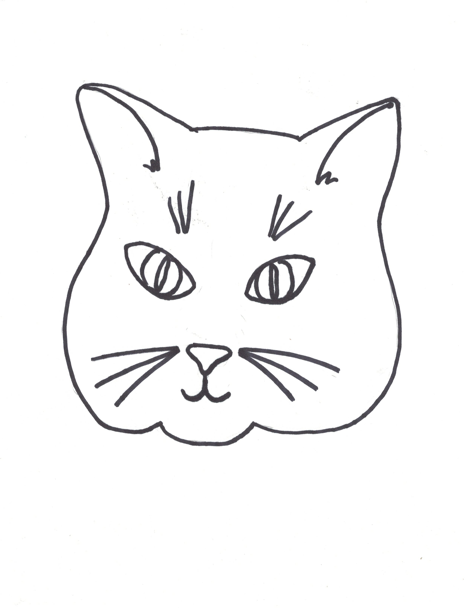
  • Cat head
  • Pictures of cats from magazines or calendar
  • Turkey baster (or sponge if you do not have a turkey baster)
  • Stuffed cat and box big enough to go inside of.

Vocabulary

  • Lonely (feeling sad because needing a friend)
  • Fuzzy (to have fluffy hair/fur all over the body)
  • Quarrel (to fight)
  • Homely (not pretty)
  • Kitten (a baby cat)
  • Whiskers (cat whiskers help them to see in the dark by feeling what is beside them)

Before Reading the Story

Bring in a picture or pictures of cats for the children to look at. Talk with the children about cats, who has a cat at home? How many feet does a cat have? Do they know what whiskers are? Talk to them about how to care for a cat and how to be safe with a cat. Talk about how cats do not like to be handled roughly and may bite if you try to hold them or restrain them. Most cats do not like to be pet on their lower back and abdomen. Cats will bite or scratch if they are scared.

Language Development/Speaking & Communicating; develops increasing abilities to understand and use language to communicate information, experiences, ideas, feelings, opinions, needs, questions; and for other varied purposes.

Reading the Story

Emphasize the quantity of cats. A million fills the whole page; a million would not even fit in our classroom!

Mathematics/Number & Operations; demonstrated increasing interest and awareness of numbers and counting as a means for solving problems and determining quantity.

After Reading the Story

Bring in pictures of real cats cut from magazines or calendars. Put them up on the wall and let the children show which cat they like best. Give each child a sticky note with their name on it to put beside their favorite cat picture. Literacy/Print Awareness; develops growing understanding of different functions to forms of print such as signs, letters, newspapers, lists, messages, and menus. Then count with the children how many children liked each cat. Take another sticky note and write the number on it and put beside the cat. (Look, 4 children liked this cat best).

Mathematics/Numbers & Operations; begins to associate number concepts, vocabulary, quantities, and written numerals in meaningful ways.

Discovery

Put pictures or a non-fiction book of cats in the center today for the children to be able to examine. As you look at the pictures with the children, use words to describe cats; calico, striped, furry, whiskers, paws, etc).

Language Development/Listening and Understanding; understands an increasingly complex and varied vocabulary.

Music and Movement

Sing or chant Naughty Pussy Cat

Naughty Pussy Cat    (Hold up pointer and move back & forth)

You are very bad.      (Continue to shake pointer finger)

You have butter on your whiskers                                                                  

                                      (Pretend to pull on your whiskers)

Naughty Pussy Cat-SCAT!     (When you get to SCAT! pretend to shoo                                          cat away)                                                                                                            

Creative Arts/Music; participates with increasing interest and enjoyment in a variety of music activities, including listening, singing, finger plays, games, and performances.

Blocks

Give the children a basket of counters (bears, unifix cubes, insects). As they build encourage them to add the counters to their construction. You can then talk about millions, many, or lots.

Mathematics/Numbers & Operations; begins to associate number concepts, vocabulary, quantities, and written numerals in meaningful ways.

Art

Give each child a cathead to cut out and paint with watercolors. These can be attached to a sentence strip to make a cat hat. On the cat hat, ask the child what they would name their cat and write it out for them. Then use your finger to point out the name and/or the letters.

Literacy/Print Awareness & Concepts; shows progress in recognizing the association between spoken and written words by following print as it is read aloud.

Have the children draw a house on a piece of paper. Then let them use a stamp pad and their finger to put “cats” in the house. Ask them to put four cats in their house, then two more. Ask them to put hundreds of cats and millions of cats in their house.

Physical Health & Development/Fine Motor Skills; progresses in abilities’ to use writing, drawing, and art tools, including pencils, markers, chalk, paint brushes, and various types of technology. AND Mathematics/Numbers & Operations; develops increasing ability to count in sequence to 10 and beyond.

Library and Writing

Ask the children to make a self-portrait and then tell you something that they like about themselves. (My grandpa says he likes my freckles, I got pretty hair, I am strong and can beat up my big brother).

Social & Emotional Development/Self-Concept; begins to develop and express awareness if self in terms of specific abilities, characteristics, and preferences.

Sand and Water

The cats drank up all the water in the story. Show the children how to use a turkey baster to suck up the water in your water table. They can then fill up a bowl or transfer the water from one container to another. If you do not have a turkey baster you can use a clean sponge.

Physical Health & Development/Fine Motor Skills; develops growing strength, dexterity, and control needed to use tools such as scissors, paper punch, stapler, and hammer.

Dramatic Play

Make several cat head hats by stapling the heads onto a sentence strip. The children can use these to act out the story in the dramatic center. Invite as many children into the center today who want to join in the play. Talk about how millions of cats would be very crowded! Bring in cat props; a can of cat food, a brush, a ball, a stuffed cat, etc.

Literacy/Book Knowledge and Appreciation; demonstrates progress in abilities to retell and dictate stories from books and experiences; to act out stories in dramatic play; and to predict what will happen next in a story.

Math and Manipulatives

Put out a bowl of small counting objects (bears, crayons, pom poms). Ask the children to grab a handful. Before they put it down, ask them if they can guess how many they have picked up. Then have them put the items down and count them. Did they guess more, less, or correctly?

Mathematics/Number & Operations; begins to make use of one-to-one correspondence in counting objects and matching groups of objects.

Outdoor Play

Play Cat and Mice. The teacher is the cat/it and chases the mice/children. The children can run to their home (a safe area/tree) but if the cat catches them they are eaten and must sit out for several minutes.

Social & Emotional Development/Self Control; demonstrates increasing capacity to follow rules and routines.

Transitions

Bring in a stuffed cat and a box. (If you do not have a stuffed cat, use any animal). Tell the children you are going to play a game called Where’s the cat? As the children go to the next activity have them take turns following a placement direction. (Kerry can you put the cat on the box, Roger put the cat in front of the box, Tammie put the cat in the box). Use; under, over, in, out, in front of, behind, next to, over.

Mathematics/Geometry & Spatial Sense; builds an increasing understanding of directionality, order, and positions of objects, and uses words such as up, down, over, under, top, bottom, inside, outside, in front, and behind.

Dear Parent- Today we read a story about cats. If you have a pet at your home, let your child help care for it (feed, walk, brush). Tell the story of how you chose your pet to become a member of your family.

Resources

Accompanying Book;  Everything Cats:What kids Really Want to Know About Cats, Marty Crisp

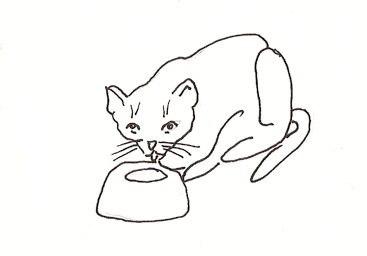
JANBRETT.COM has several nice cat coloring pages you could use instead of this cat.

Untitled1.png

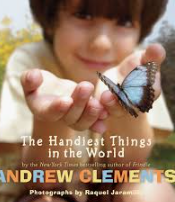
The Handiest Things in the World, by Andrew Clements

Tools help make our jobs and lives easier.  This book shows how using our hands helped influence the invention of tools.

Materials

  • Several clothespins
  • A bowl full of puffballs or cotton ball

Vocabulary

  • Tools (tools are things we use to make our work easier or our lives nicer)
  • Calculator (a tool that helps to add or subtract numbers)

Introducing the Story

Hold up your hands and ask the children what these are (hands). Ask the children if they can name the parts of their hands (fingers, thumbs, palms, and knuckles). Tell the children that our hands are also tools. Ask them if they know what you mean when you say hands are tools (our hands can do many things to make our work easier or life nicer). Ask the children what kinds of things they can do with their hands. Read the back cover of the book out loud to the children and then introduce the book.

Science/Scientific Knowledge; expands knowledge of and respect for their bodies and the environment

Reading the Story

As you read each page, say; “You can use your hands to do ______, or you can use this tool to make life easier/life nicer” Ask the children if they can name the tool on each page.

Science/Scientific Knowledge; shows increased awareness and beginning understanding of changes in materials and cause-effect relationships.

After Reading the Story

Ask the children if they can think of any other ways we use our hands as a tool. Are there tools to help your hands? (Rip paper-scissors, hold clothes together-buttons, write name-computer keyboard, and lock car doors by turning key-using key fob to lock).

Literacy/Book Knowledge & Appreciation; shows growing interest and involvement in listening to and discussing a variety of fiction and non-fiction books and poetry.

Music and Movement

Sing Rhyming Words Sound the Same (sung to Here We Go Loopty Loo)

Rhyming words sound the same (clap, clap)
Rhyming words sound the same.

Teacher singsongs a word (frog), children try to name words that rhyme with frog. Do simple rhymes such as cat, up, dot, top (children’s words do not have to be real, it is the effect of rhyming that you are looking for)

Literacy/Phonological Awareness; shows growing awareness of beginning and ending sounds of words.

Hand Movement poem, children do movements as poem suggests

Clap them, clap them, clap them so
Clap them high
Clap them low.
Clap them very fast and
Clap them very slow,
Clap them, clap them, out of sight.

Continue poem by rolling them, flapping them, wiggling them, and snapping them.

Language Development/Listening & Understanding; shows progress in understanding and following simple and multiple-step directions.

Discovery

Stamp pads or small cups of paint to make fingerprints. Add a magnifying glass to look at each child’s individual fingerprints (see your curls and swirls)

Science/Scientific Knowledge; expands knowledge of and abilities to observe, describe, and discuss the natural world, materials, living things, and natural processes.

Blocks

Put out any play tools that you have so the children can pretend to build or repair block structures. As they play, ask them if they can name the tool that they are using, show me how to use it.

Social & Emotional Development/Knowledge of Families & Communities; develops a growing awareness of jobs and what is required to perform them.

Art

Put out several rulers, paper, and crayons. Encourage the children to experiment making lines and geometric shapes. Have them write their names on their paper. Crayons are tools to help us write and rulers are tools to help use make straight lines and to measure.

Literacy/Early Writing; experiments with growing number of writing tools and materials, such as pencils, crayons, and computers.

Sand and Water

Add watering cans to your water play today along pitchers and cups to pour and catch the water. Put lines on the cups so the children have to practice filling them just up to the line. You can also make water rainmakers by punching holes into the bottom of a plastic container, such as a clean cottage cheese container. If you have several containers punch a different number of holes in them so the children can experiment with how much water flows through.

Physical Health & Development/Fine Motor Skills; develops growing strength, dexterity, and control needed to use tools such as scissors, paper punch, stapler, and hammer.

Library and Writing

Help children to trace around their hand. Ask them to give you several ways they use their hands and write their responses under their handprint. (I eat, I feed the fish, I give my baby sister her toy when she drops it).

Literacy/Early Writing; begins to represent stories and experiences through pictures, dictation, and in play.

Dramatic Play

Put out gloves for the children to practice putting on. If you have clothing with snaps, buttons, and zippers, put these out also and encourage the children o use their hands to get dressed all by themselves.

Approaches to Learning/Engagement & Persistence; grows in abilities to persist in and complete a variety of tasks, activities, projects, and experiences.

Math and Manipulatives

Put two bowls on the table, one full of puffballs or cotton balls and the other empty. Challenge the children to use the clothespins to transfer the puffballs from one bowl to the other.

Physical Health & Development/Fine Motor Skills; develops growing strength, dexterity, and control needed to use tools such as scissors, paper punch, stapler, and hammer.

Outdoor Play

Encourage the children to use shovels today to dig in the dirt or sand.

Physical Health & Development/Fine Motor Skills; develops growing strength, dexterity, and control needed to use tools such as scissors, paper punch, stapler, and hammer.

Transitions

Play, 1-2-3, How Many Do You See? Make two fists and knock them together saying, “1-2-3, how many do you see”? As you say “do you see?” hold up 1-10 fingers depending upon your children’s counting abilities. Have the children take turns counting your fingers and them moving on to the next activity.

Mathematics/Number & Operation; begins to associate number concepts, vocabulary, quantities, and written numerals in meaningful ways.

Dear Parent- today we read a book about how our hands and tools do work for us. As you go about your evening routine, make notes to your child about a tool that you are using to make your life easier or nicer. (I’m using the TV clicker to change the channels; I’m using the water knobs to fill your bath with hot water; I’m using my toothbrush to clean my teeth).