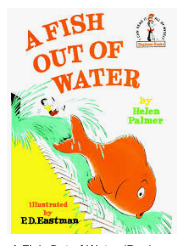
A Fish Out of Water, by Helen Palmer

When a boy does not follow the directions on how to feed his fish, things turn into a big problem. This is a good book to use to introduce a new fish tank into your room, or to help the children notice the fish you have. It is also a reminder about the importance of following directions.

Materials

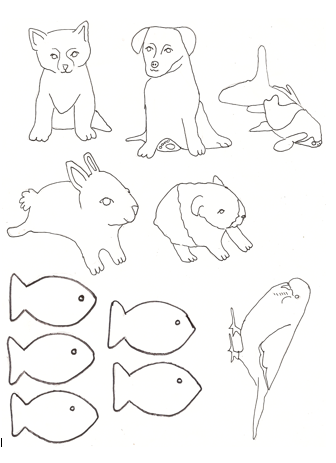
  • Animals for pet graph
  • Fish bowl and five simple fish
  • A live fish in a tank or even just a simple bucket

Vocabulary

  • Veterinarian (a doctor who takes care of animals)
  • Big, bigger, biggest/smaller, smallest

Before Reading the Story

Talk to the children about pets that they might have. Make a graph of pets that the children have. Use the animals for the pet graph but make sure to leave a space or two incase someone has an unusual pet.

Mathematics/Patterns & Measurement;  begins to make comparisons between several objects based on a single attribute.

Reading the Story

As the boy keeps moving the fish to different containers, ask what is happening (the fish is getting bigger). When the boy puts the fish into the bathtub and says this tub holds my father… ask the children what they think is going to happen. After the tub scene, let the children make some suggestions on what to do next.

Science/Scientific Skills & Methods; begins to describe and discuss predictions, explanations, and generalizations based on past experiences.  AND Literacy/Book Knowledge & Appreciation;demonstrates progress in abilities to retell and dictate stories from books and experiences; to act out stories in dramatic play; and to predict what will happen next in a story.

After Reading the Story

Continue your discussion about pets that the children might have. Ask them if they help care for their pet. (My Daddy and I walk my dog after we eat dinner. I put my cat in my room at night. My sister’s lizard has to have the light on when it is cold outside). Talk about how we have to be gentle with pets so that we do not hurt them.

Social & Emotional Development/Knowledge of Families & Communities; develops growing awareness of jobs and what is required to perform them.

Discovery

If you have fish in your room, this would be a good day to let the children record/draw the fish. Help them notice all the details of the fish (its fins, its little flippers. How he opens and closes his mouth). If you do not have fish in your room, consider setting up a tank or bowl. A beta fish is very easy and goldfish are not expensive. I have also gone fishing and brought in a 4-6 inch catfish for the children to observe for a day or two.

Science/Scientific Skills & Methods; develops growing abilities to collect, describe, and record information through a variety of means, including discussion, drawing, maps, and charts.

Music and Movement

Sing Bubble, Bubble, Bubble, Pop! https://www.youtube.com/watch?v=QTlbZL8XKa8   Make a fish bowl and five fish. With each verse remove a fish.

Five little fish are swimming in the water
Swimming in the water, swimming in the water
Five little fish are swimming in the water
Bubble, bubble, bubble, POP!
Four little fish are swimming in the water
Swimming in the water, swimming in the water
Four little fish are swimming in the water
Bubble, bubble, bubble, POP!

Mathematics/Number & Operations; begins to make use of one-to-one correspondence in counting objects and matching groups of objects.

Ask the children to make themselves big. Now make themselves bigger, and biggest. Make yourself small, smaller, and now smallest. Make yourself long, longer, longest.

Mathematics/Patterns & Measurement; shows progress in using standard and non-standard measures for length and area of objects.

Blocks

Otto grows so big that he needs a very long and deep tank to hold him! Ask the children to use your blocks to build a tank that might hold Otto.

Language Development/Listening & Understanding; shows progress in understanding and following simple and multiple-step directions.

Art

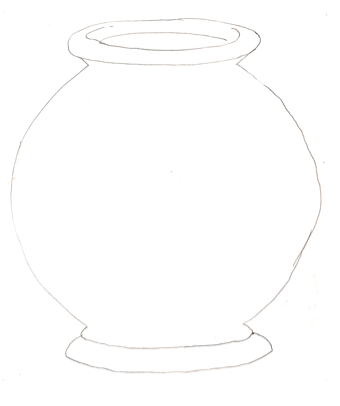
Give the children a copy of the fish bowl and encourage them to draw their own fish inside.  After they are finished with their drawing, ask them if they would like to tell you anything about their fish.  Write their response on the bottom of the page.  (My fish name is Sparkles.  I feed my fish just a little, my fish swims in the circle).

Literacy/Book Knowledge & Appreciation;demonstrates progress in abilities to retell and dictate stories from books and experiences; to act out stories in dramatic play; and to predict what will happen next in a story.

Library and Writing

Write each child’s name onto an index card.  Try to use the same size letters for each child.  Put the name cards on the table and encourage the children to put in order from shortest name to longest name.  For younger children just pick 2-3 names for them to put into order of shortest, the same, and longest.

Mathematics/Patterns & Measurement; shows progress in using standard and non-standard measures for length and area of objects.        

Sand and Water

Water Play today.  Add measuring cups and bowls of various sizes.  Ask the children if they can guess which container will hold the most water? Encourage the children to count how many scoops of water it takes to fill a container or bowl. Encourage them to scoop and count.

Mathematics/Patterns & Measurement; shows progress in using standard and non-standard measures for length and area of objects.        

Dramatic Play

Encourage the children to be animal owners for any stuffed animals you might have.  What does this animal need for food?  Where will it sleep?  Does it need any special equipment to help take care of it?  Can the child use his/her imagination to figure out what is needed?  (My dog needs a leash, can I use the red yarn?  My cat wants a toy, can I get the ball from the block center?  My tiger needs to be in this cubby/box because he bites).

Approaches to Learning/Initiative & Curiosity; approaches tasks and  activities with increased flexibility, imagination, and inventiveness.

Math and Manipulatives

Encourage the children to use building manipulatives today. As they build make comments about how big their structure is, can you build it bigger? Who can build is the biggest one on the table?

Mathematics/Patterns & Measurement; shows progress in using standard and non-standard measures for length and area of objects.       

Outdoor Play

Pretend to be fish swimming in the water. Then do other animals that the children have as pets. Let the children suggest what other animal walks they would like to do.

Approaches to Learning/Initiative & Curiosity; chooses to participate in an increasing variety of tasks and activities.  AND Physical Health & Development; participates actively in games, outdoor play, and other forms of exercise to that enhance physical fitness.

Transitions

Make several shapes that you are working on (oval, rectangle, and triangle). Cut out the shapes in three sizes, big, bigger, biggest. As the children move to the next activity ask them to show you a shape and a size. (Kerry, can you find the big triangle, Roger can you find a bigger triangle)?

Mathematics/Patterns & Measurement; shows progress in using standard and non-standard measures for length and area of objects.     

Resources
Screen Shot 2018-08-13 at 8.04.12 AM
Screen Shot 2018-08-13 at 8.04.43 AM

My Granny Went to Market, A Round-the World Counting Rhyme, by Stella Blackstone

Materials

  • Globe
  • Pieces of cardboard 4×8 inches, one per child
  • Hole puncher
  • Many pieces of yarn about 4-5 inches long
  • Dice, one with dots for numbers and one with numbers 1-6 written upon it
  • (If you have one inch cubes, these can easily be turned into dice)

Vocabulary

  • Flying Carpet (a magic carpet, small rug that flies in the air)
  • Tassels (the edging of the flying carpet)
  • Fierce (ferocious and wild looking)
  • Spiraled (swirled)
  • Market (a shop or store)

Introducing the Story

Bring out the globe and ask the children if they know what it is. Explain that a globe is a map of the world. Ask them why they think it is round instead of flat like most maps. Explain to the children that the world is really round like a ball and so the globe is round like a ball to show where things are. Now open the front cover of the book and show the children the map inside. Explain that mapmakers make maps flat so they can be folded up and taken with. Show the children the flat map and about the proximity where your school is located. Then find the approximate spot on the globe. These are both ‘here, where we are’ just looking at it from two different points of view. Use your finger and follow the map on the front cover while saying this is where Granny went on trip around the world.

Social & Emotional Development/Knowledge of Families & Communities; begins to express and understand concepts and language of geography in the contexts of classroom, home, and community.

Reading the Story

As you begin to read the story, start in North America and move your finger across the globe to each of Granny’s destinations. On the page where Granny goes to Istanbul, show the children the tassels on the end of her flying carpet. Ask the children if they think a flying carpet is real. Ask them how they think people really travel long distances. (plane, boat, train, car). Turn to the next page and explain to the children in this story we have to use our imagination as Granny flies on her carpet from one place to another. On each page hold up the number of fingers that states the number of objects that Granny bought. After the page with 4 lanterns, ask the children if they can guess how many items Granny will buy at the next destination. (The story goes up 1-10 items).

Mathematics/Number & Operations; begins to associate number concepts, vocabulary, quantities, and written numerals in meaningful ways. AND Literacy/Book Knowledge & Appreciation; shows growing interest and involvement in listening to and discussing a variety of fiction, non-fiction, and poetry.

After Reading the Story

After reading the story, ask the children if they can remember some of the items that Granny bought along her way. If they children cannot recall, go through the pages and let them see the pictures to help them remember what Granny bought in each country. As you finish up with the story, ask the children if they can remember which state they live in. Go back to the globe and find your state, then tell the children that it is in North America. Have the children repeat back to you, the name of your state and North America.

Social & Emotional/Knowledge of Families and Community; begins to express and understand concepts and language of geography in contexts of the classroom, home, and community. AND Literacy/Book KNowledge & Appreciation; demonstrates progress in abilities to retell and dictate stories from books and experiences; to act out stories in dramatic play; and to predict what will happen next in a story.

Music and Movement

Count to ten and back again. Have the children crouch down and together slowly count to ten. As you count hold up the correct number of fingers and begin to stand up slowly. You should reach 10 in a fully stood up position with hands over head. Now have them count back down slowly lowering their bodies into a crouching position and holding up the correct number of fingers. (My children liked to get to zero and yell, “Blast off!” and jump up).

Mathematics/Numbers & Operations; develops increasing ability to count in sequence to 10 and beyond.

Put on a variety of music from different countries and let the children explore moving and dancing to each. For example; put on the Mexican Hat Dance music from Mexico and teach the children the dance (All stand in a large circle. Tap your heels in beat with the music-left foot right foot, left. Right foot, left foot, right. Left foot, right foot, left. Right foot, left foot, right. Skip round and round the circle, skip round and round some more. Skip round and round the circle, then begin the tap once more).

Creative Arts/Movement; expresses through movement and dancing what is felt and heard in various musical tempos and styles

Today would be a fun day to let the children experiment with instruments during free play time. If you have any bell type instruments, you can put them out and remind the children that Granny bought 5 bells in Switzerland.

Creative Arts/Music; experiments with a variety of musical instruments.

Discovery

Show the children how to fold a simple paper airplane and let them practice flying them. https://www.diynetwork.com/made-and-remade/learn-it/5-basic-paper-airplanes

Language Development/Listening & Understanding; shows progress in understanding and following simple and multi-step directions. AND Physical Health & Development/Gross Motor Skills; demonstrates increasing abilities to coordinate movements in throwing, catching, kicking, bouncing balls, and using a slide and swing.

Blocks

Add any type of play material that the children can sort into like kinds (animals, small cars, colored cubes, etc.) Encourage them to build fences around the like kinds, or structures to house the like kinds.

Mathematics/Geometry & Spatial Sense; shows growth in matching, sorting, putting in a series, and regrouping objects according to one or two attributes such as color, shape, or size.

Art

Make flying carpets today. Ahead of time, punch holes along the 4-inch edge of the pieces of cardboard. Let the children use markers to decorate their carpet. Show them how to thread a piece of yarn through one of the holes and tie it off with a knot. These will become the tassels. You may want to trim the tassels down when the children are through making their carpet.

Physical Health & Development/Fine Motor Skills; grows in eye-hand coordination in building with blocks, putting together puzzles, reproducing shapes and patterns, stringing beads and using scissors.

Sand and Water

Granny flew over the ocean. Put out water play today and add float and sink items.

Science/Scientific Skills & Methods; begins to participate in simple investigations to test observations, discuss and draw conclusions, and form generalizations. 

Library and Writing

Ask the children if they have ever been to the market with their Granny or their parent. Talk about the kinds of things that they purchased when they went to the market. Encourage them to draw a picture of what they purchased and you write their dictation about their market experience on another piece of paper and then attach to their illustration.

Literacy/Book Knowledge & Appreciation; demonstrates progress in abilities to retell and dictate stories from books and experiences; to act out stories in dramatic play; and to predict what will happen next n a story.

This can easily be turned into a classroom book entitled; We Went to Market, a Classroom counting book. Have children draw a specific number of items that they purchased at the market (Roger bought 1 box of cereal, Alison bought 2 hair bows, Ryan bought 3 match box cars, etc.)

Mathematics/Number & Operations; begins to use one-to-one correspondence in counting objects and matching groups.

Dramatic Play

Travel play. Bring in any small suitcases or bags that the children can use to pack their things. Ask them which mode of transportation they are pretending to travel by. Help them to assemble what they need to make it (bring in extra chairs for seating in a plane or train, add a paper plate for a steering wheel, or let them use a beach towel if they want to travel by flying carpet.

Literacy/Book Knowledge & Appreciation; demonstrates progress in abilities to retell and dictate stories from books and experiences; to act out stories in dramatic play; and to predict what will happen next n a story.

Math and Manipulaties

Put out any kind of memory game that you have. If you do not have a memory game, you can use a deck of cards. Pull out a pair of the number cards 1-10. Turn the cards upside down on the table. The children take turns picking up two cards. If they are the same number, they get to keep the pair and go again. If they are not the same number, they turn the cards back over on the table and it is the next child’s turn. Play until all the pairs are found. Let the children count their cards to see who has the most.

Mathematics/Number Operations; begins to associate number concepts, vocabulary, quantities and written numerals in meaningful ways. Mathematics/Number Operations; begins to use language to compare numbers of objects with terms such as more, less, greater than, fewer, equal to.

Put out any type of seriating toy that you have in your classroom (nesting dolls, small to large counting bears, large to small stacking toys, puzzles)

Mathematics/Patterns & Measurement; shows growth in matching, sorting, putting in a series, and regrouping objects according to one or two attributes such a color, shape, or size.

Outdoor Play

Youtube shows how to make several simple boomerangs from both cardboard and paper. You will have to make these ahead of time as they will be difficult for the children to make. https://www.youtube.com/watch?v=p0A_Lwr7a9s

Show the children how to flip a hula-hoop so that it comes back to you, just like a boomerang!

Physical health & Development/demonstrates increasing abilities to coordinate movements in throwing, catching, kicking, bouncing balls, and using a slide and swing.

Transitions

Have the children take turns rolling the dice (dots for younger children, actual numbers for older children). If using dots, let the child count the dots and then go to the next activity. If using numbers, let the child state the number and then everybody can count to that number out loud. For more of a challenge, teach the children how to count in another language.

Mathematics/Number & Operations; begins to associate number concepts, vocabulary, quantities, and written numerals in meaningful ways.

Dear Parents, today we read a book about a Granny who went to market and bought many different things. Next time you go to the grocery store, take your child and let them count out 10 apples, 2 boxes of cereal, or 1 treat. Help them to practice counting objects in your home and out and about the neighborhood.

Raccoons and Ripe Corn, by Jim Arnosky

Materials

  • 6 fresh ears of corn in the husk (sorry to make you go out and buy something extra)
  • 5 paper plates
  • Several dish towels
  • Any small amount of leftover fruit from your breakfast or other food items
  • Raccoon masks
  • 3 shoe boxes or empty toy bins

Vocabulary

  • Autumn (another name for fall time)
  • Corn silk (the hairs that grow at the top of the corncob)
  • Plump and ripe (fat and ready to eat)
  • Kits (raccoon children are called kits)
  • Feast (a special yummy dinner or meal)
  • Rows (lines)
  • Sneak (creep quietly so no one can hear)
  • Sunrise (just before the sun comes up in the sky and morning begins)
  • Nocturnal (animals that sleep during the day and come out at night)

Introducing the Story

Hold up the cover of the book and ask the children if anyone knows what kind of animal is on the cover. Ask the children to look carefully at the cover and if they can tell you anything about raccoons. Point out the leaves of the ground, what season do you think it is? Point out the stars in the sky, what time of day do you think it is? Point out the corn and read the title of the book. Ask the children why do you think the raccoons are in the corn garden?

Literacy/Book Knowledge & Appreciation; shows a growing interest and involvement in listening to and discussing a variety of fiction and non-fiction books and poetry.

Reading the Story

On the page where is says; “At night, a mother raccoon and her almost-grown kits sneak into the cornfield”, ask the children why they think the raccoons are sneaking into the corn?

Approaches to Learning/Initiative & Curiosity; grows in eagerness to learn about and discuss a growing range of topics, ideas, and tasks

After Reading the Story

Go back and do a second reading of the story but this time let the children tell the story as you turn the pages. You may have to lead the children through the story (what was falling down from the trees? What season does the story take place? Where does the story take place? What is happening to the silk of the corn? What does it mean when the silk turns brown? Continue letting the children tell the children with you using leading questions if necessary. What happened next? Who were the characters of the story? How do you think the farmer will feel when he finds his corn all laying on the ground? Why?

Literacy/Book Knowledge & Appreciation; demonstrates progress in abilities to retell and dictate stories from books and experiences; to act out stories in dramatic play; and to predict what will happen next in a story.

Music and Movement

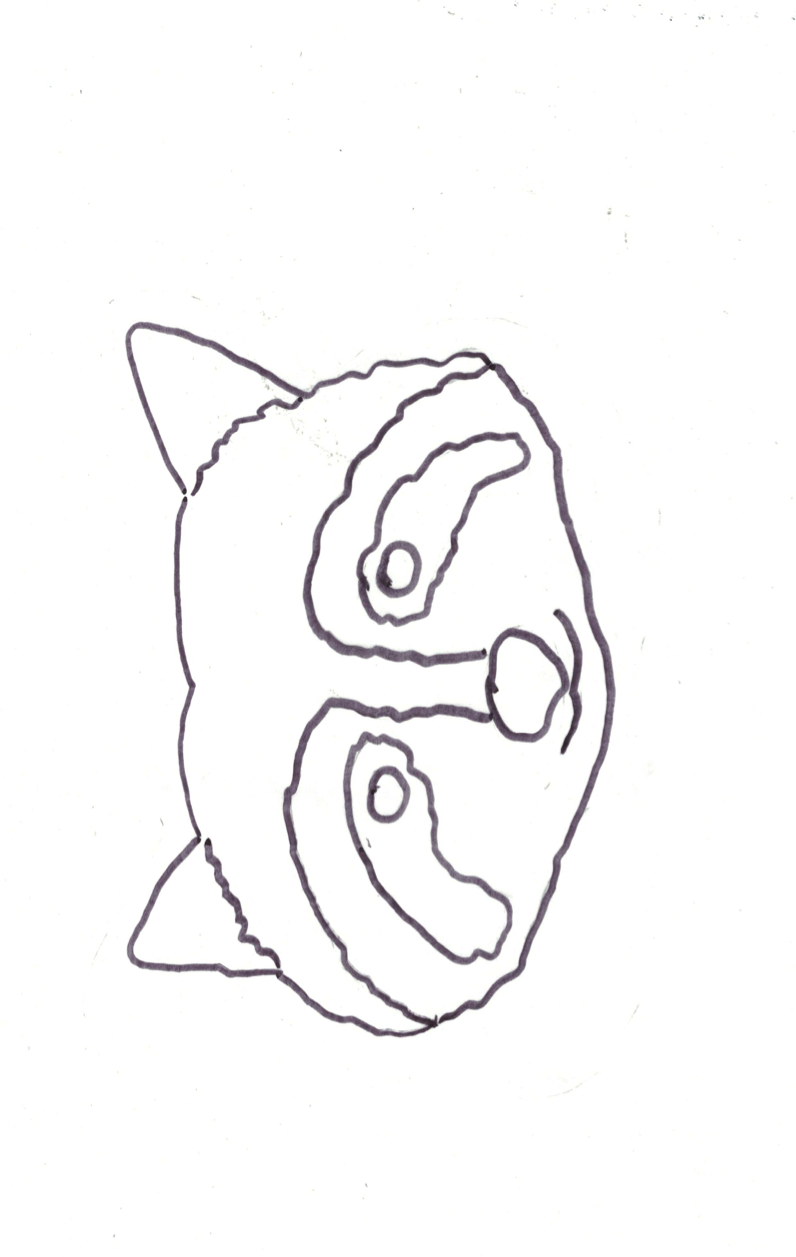
Turn off the lights and play Raccoons Scat! On paper plates, write a letter on each that you are working with the children to recognize. Have the children form as large a circle large as possible in your space. Put the paper plates in the center. Tell the children that when you call their name, they are to pretend to be a raccoon and sneak into the center of the circle and find a letter that you name and pretend to be nibbling on it like a raccoon. Call 1-5 children at a time depending upon your group’s maturity. When all the raccoons are nibbling another child can pretend to be the farmer and yell, “raccoons scat!”   The children crawl back quickly to the circle’s edge. Continue until everyone has a turn or the children grow tired of playing.  Have each child wear a raccoon mask by coloring and stapling the provided copy to a sentence strip.

Literacy/Alphabet Knowledge; shows progress in associating the names of letters with their shapes and sounds.

Discovery

Put the fresh ears of corn in the center today for the children to husk. Note the silk. Note how the kernels grow in rows.

Science/Scientific Knowledge; expands knowledge of and abilities to observe, describe, and discuss the natural world, materials, living things, and natural processes.

Blocks

Encourage the children to make rows of blocks today. Can they make a pattern with their rows (tall, short, tall, short)? Can you make 3 rows? Can you make a long row and a short row?

Mathematics/Patterns & Measurement; enhances abilities to recognize, duplicate, and extend simple patterns using a variety of materials.

Art

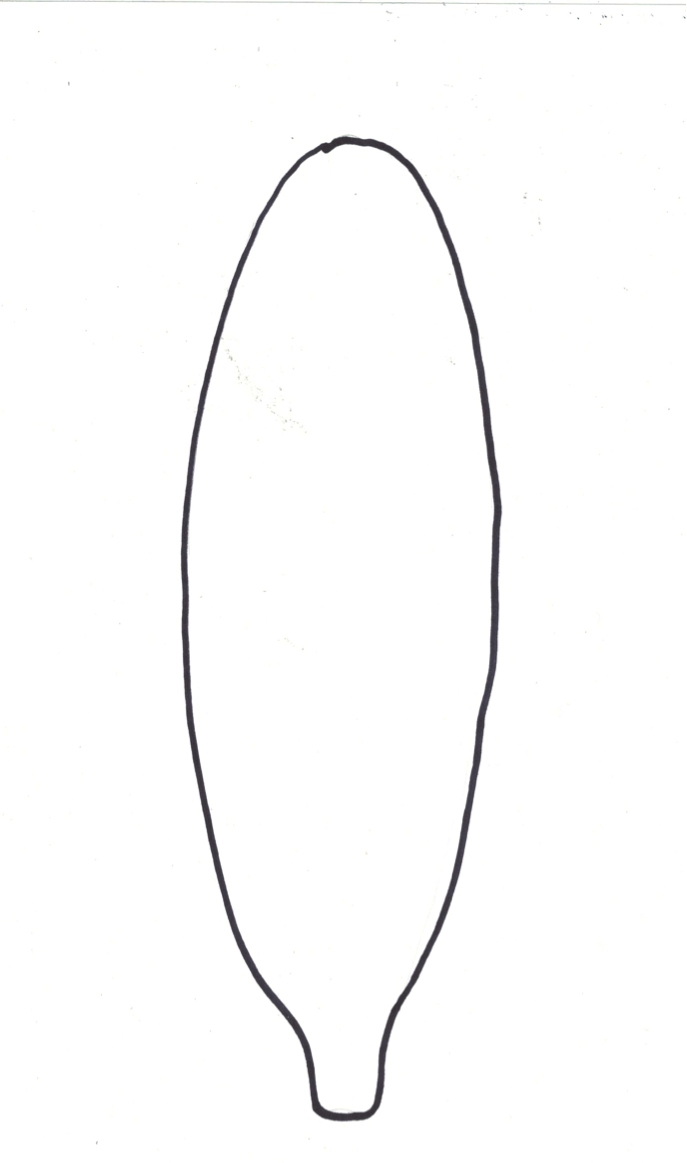
Give each child a copy of the corn shape. Using stamp pads or tempera paint, show the children how to make kernels of corn by using their finger to print (up and down, up and down). Challenge them to put the kernels in rows like a real corncob. When they are finished, let them cut out green husk shapes to glue on the side of their corn print.

Mathematics/Patterns & Measurement; enhances abilities to recognize, duplicate, and extend simple patterns using a variety of materials. Physical Health & Development/Fine Motor Skills; develops growing strength, dexterity, and control needed to use tools such as scissors, paper punch, stapler, and hammer.

Sand and Water

Tell the children that raccoons like to wash their food before eating it. Put any fruits or vegetables that you have in the dramatic play center into the table filled with water today. Let the children wash the fruits and vegetables and dry them with the dish towels.

Physical Health & Development/Health Status & Practices; shows growing independence in hygiene, nutrition, and personal care when eating, dressing, washing hands, brushing teeth, and toileting.

Library and Writing

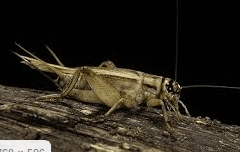
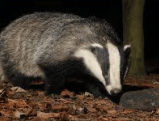
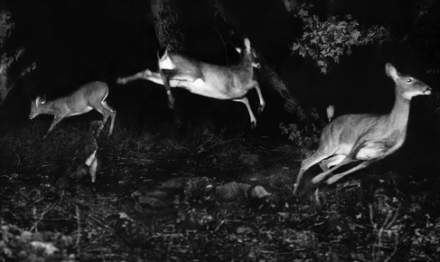
Bring in books or pictures of nocturnal animals for the children to look at and discuss.

Science/Scientific Knowledge; expands knowledge of and abilities to observe, describe, and discuss the natural world, materials, living things, and natural processes.

Dramatic Play

Tell the children that raccoons are nocturnal which means they come out while people are normally sleeping. Encourage them to act out nighttime rituals today. You can add blankets or towels to be used for beds.   Ask the children to tell you about some of their nighttime rituals and then encourage them to act them out. ( I brush my teeth in the sink, My big brother reads me books, I watch television, I put on my pajamas and jump on my bed).

Social & Emotional Development/Knowledge of Families & Communities; progresses in understanding similarities and respecting differences among people such as genders, race, special needs, culture, language, and family structures.

Math and Manipulaties

Make a bean bag toss game by setting out shoe boxes or toy bins from a tape mark line on the floor. Place the boxes about a foot apart. Have the children take turns standing on the tapeline and throwing bean bags into the boxes/toy bins. I usually use 3 beanbags to start. The children can then tell you how many they got into the box and how many did not get into the box. As they tell you hold up you fingers and say, “yep that makes three”. (The child might say, “I got one bean bag into the box”, teacher holds up one finger on left hand. “I got two outside the box”, teacher holds up three fingers on right hand. Teacher says, “1-2-3, yep that makes three”. If a child miss counts, 2 in the box and 2 out of the box, have the child count again.

Mathematics/Number & Operations; begins to make use of one-one correspondence in counting objects and matching groups of objects.

Outdoor Play

About an hour before the children go out to play, take your small amount of food scraps out to the playground and put it into a quiet area where you have seen ants in the past. When the children go out to play, draw them over to the food scraps. Have the ants found it yet? Have they begun to carry it back to their ant home? Did they choose one type of food over another? Encourage the children to observe the coming and going of the ants and to talk about what they are seeing.

Science/Scientific Knowledge; expands knowledge of abilities to observe, describe, and discuss the natural world, materials, living things, and natural processes.

Transitions

Tell the children that they are going to sneak to the next activity by tip toeing and being so quiet that no one will hear them. Send the children off using whispering voices.

Language Development/Listening & Understanding; shows progress in understanding and following simple and multiple-step directions.

Dear Parents- Today we read a book about raccoons who come out at night to feed. Take your child on an evening walk and see what creatures you might see, or hear, that are out and about after the sun sets.

Resources

1
2
bear
cricket
badger
deer
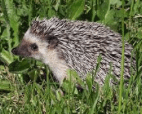
hedge hog
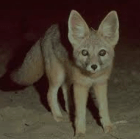
fox
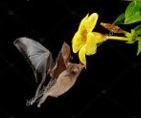
bat
racoon
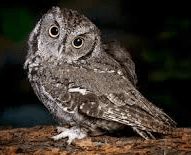
owl
mouse