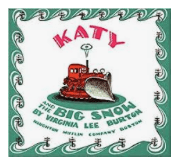
Katy and the Big Snow, by Virginia Lee Burton

Materials

  • Small bag of flour
  • Small cars or construction vehicles
  • Extra hats, mittens, and scarves
  • Stack of newspaper ripped in half
  • cotton balls and several pinching clothespins

Vocabulary

  • Crawler Tractor (a tractor type vehicle that has a continuous roller instead of wheels)
  • Steadily (slowly and gradually not stopping along the way)

Introducing the Story

Ask the children to raise their hands if they like to play I the snow. Let them talk about some of the things they like to do in the snow. Next tell them that some people have to work in the snow. Getting to work can be very hard if there is a lot of snow on the ground. Our story today is about a helper named Katy who moves all the snow from the roads. I wonder how she does it? Let children have a chance to respond if they choose to.

Science/Scientific Knowledge; develops growing awareness of ideas and language related to attributes of time and temperature. AND Language Development/Speaking & Understanding; develops increasing abilities to understand and use language to communicate information,experiences, ideas, feelings, opinions, needs, questions; and for other varied purposes.

Reading the Story

While reading, stop on the page after you read, “Katy had to stay home, not enough snow”. Ask the children how they think Katy might have felt. As Katy begins shoveling out the town, encourage the children to repeat ‘Follow me!” along with Katy.

Language Development/Speaking & Understanding; develops increasing abilities to understand and use language to communicate information,experiences, ideas, feelings, opinions, needs, questions; and for other varied purposes.

After Reading the Story

Tell the children that Katy was big and strong and moved all the snow so that the adults could go to work and the buses and cars could bring children to school. Katy is kind of a hero and a good friend to the whole town. Ask the children if they have ever helped someone to do something hard. Listen as they tell about their own experiences. (One time I helped my brother to shovel the snow on our sidewalk. I helped my grandma to make a cake. I had to stir and stir. I was really good).

Social & Emotional Development/Self-Concept; begins to develop and express awareness of self in terms of specific abilities, characteristics, and preferences.

Music and Movement

Play Follow the Leader; making an obstacle course. Have the children follow you around, under, over, beside, behind, across, and inside parts of your classroom, playground, and school.

Mathematics/Geometry & Spatial Sense; builds an increasing understanding of directionality, order, and position of objects, and words such as up, down, over, under, top, bottom, inside, outside, in front, and behind.

Discovery

Bring in a container of snow and watch as it melts. Do you see any objects in the snow? What happens to the snow? When the snow has melted, tell the children that you are going to put it back outside. Ask them what they think will happen to the melted snow now? When it is frozen, bring it back inside for the children to watch it melt again. What happened to the melted snow? Did it turn back into snow?

Science/Scientific Skills; begins to participate in simple investigations to test observations, discuss and draw conclusions, and form generalizations.

 Blocks

Add vehicles and encourage the children to make roads by laying blocks end to end for them to drive upon. Encourage the children to make some of the buildings that are in and around town (police station, library, grocery store, etc.).   Bring index cards, markers, and tape over so that the children can make signs to go with the buildings if they choose to.

Social & Emotional Development/Knowledge of Families & Communities; begins to express and understand concepts and language of geography in the contexts of the classroom, home, and community. AND Literacy/Early Writing; progresses from using scribbles, shapes, or pictures to represent ideas, to using letter-like symbols, to copying and writing familiar words such as their own name.

Art

Give the children pieces of construction paper to draw houses. Encourage them to add windows and a door as well as write their name on their house. When all have finished making a house, put them together on a map type background and hang low on the wall. Label each child’s house so they can use their finger to trace how to get from their house to a friends house.

Literacy/Print Awareness & Concepts; recognizes a word as a unit of print, or awareness that letters grouped to form words, and that words are separated by spaces.

Sand and Water

Dump the flour into the sand and water table today and pretend that it is snow. The children can use small vehicles or even shovels to pretend to push the snow aside. I would recommend that the children wear smocks and though flour is easy to wash from clothes, it is messy. Remind the children to not add water to the table!

Social & Emotional Development/Self Control; demonstrates increasing capacity to follow rules and routines and to use materials purposefully, safely, and respectfully. AND Literacy/Book Knowledge & Appreciation; demonstrates progress in abilities to retell and dictate stories from books and experiences; to act out stories in dramatic play; and to predict what will happen next in a story.

Library and Writing

Encourage the children to try to draw maps on how to get to the playground from your classroom or how your room is divided into centers (birds eye view)

Social & Emotional Development/Knowledge of Families & Communities; begins to express and understand concepts and language of geography in the contexts of the classroom, home, and community.

Dramatic Play

Bring in extra hats, mittens, and scarves so the children can pretend to go play out in the snow. Give them ½ sheets of newspaper and show them how to crumple it up into a ball. These make fun and safe snowballs for a snowball/paper fight.

Creative Arts/Drama; participates in a variety of dramatic play activities that become more extended and complex.

Math and Manipulaties

Put out a bowl of cotton balls along with a few clothespins or tongs. Label 5 plastic cups 1-5 with marker. Explain to the children that they must use the tongs to put the correct number of snowballs into each cup by using the clothespins or tongs. Encourage them to work in pairs.   One child can put the snowballs into the cups and the other child can count them as they go in. When they have filled the cups, empty them back into the bowl and trade places as picker upper and counter.

Mathematics/Numbers & Operations; begins to use one-to-one correspondence in counting objects and matching groups of objects.

Outdoor Play

If there is snow on the playground, challenge the children to roll really large snowballs (like you are making a snowman). As they work, tell them that they must be as strong as Katy like in the story.

Physical Health & Development/Large Motor Skills; demonstrates increasing abilities to coordinate movements.

Transitions

Ask each child to name something they like to do on snowy days as they line up or move to the next activity (I like to eat snow. I like to watch cartoons.). Encourage the children to answer using complete sentences.

Language Development/Speaking & Communicating; develops increasing abilities to understand and use language to communicate information, experiences, ideas, feelings, opinions, needs, questions; and for other varied purposes.

Dear Parents, Today we read a book about a helper named Katy who plowed all the snow from the streets of town. Encourage your child to be a helper around the house. Thank them for their service and let them know that they are appreciated.

Lively Elizabeth, What Happens When You Push, by Mara Bergman

Elizabeth is considered ‘lively’.  What happens when one becomes too lively at school?  Find out what happens when one forgets about their personal space and lands upon another’s.

Materials

  • One toilet paper tube per child, cut in half
  • One rubber band per child, big enough to fit around two toilet paper tube halves.

Vocabulary

  • Scowl (frown and make an annoyed or angry face at someone)
  • Blame (to say something is someone’s fault)
  • Glare (to stare at someone)
  • Lively (very active and bouncy)
  • Goggles (a kind of glasses that protects your eyes from wind)

 Introducing the Story

Explain that today our story is about a girl named Lively Elizabeth. Open the book up so the children can see both the front and back cover. Ask them if they can guess what Lively means. Let the children give you their ideas and then explain that lively means being very active and bouncy. Imitate a lively child at the rug time. Ask the children if they like sitting next to a lively child, why/why not? Tell them it’s hard to pay attention when someone is being bouncy and active next to you. Ask them what they think will happen if Elizabeth is very active and bouncy inside? (She could get hurt. She could hurt someone. The teacher may get mad. She could knock something over). Tell the children, let’s find out and introduce the book.

Literacy/Book Knowledge & Appreciation; shows a growing interest and involvement in listening to and discussing a variety of fiction and non-fiction, and poetry.

Reading the Story

Shake your head and look upset as you read the first pages about how Elizabeth behaved. Watch the children’s faces to see if they react to this kind of behavior. (I see Roger shaking his head no; I do not think he likes how Elizabeth is behaving. Alison, you look mad, you don’t like when your friends act this way?) When you get to the part where Elizabeth pushes Joe Fitzhugh; ask the children what they think might happen. After the children have been allowed to share their ideas, continue reading. When you get to the part where Joe yells, “What have you done? You pushed me and hurt everyone!” stop again but this time ask the children how they think Joe is feeling.

Social & Emotional Development/Self Control; develops growing understanding of how actions affect others and begins to accept the consequences for their actions.

After Reading the Story

Tell the children that you want to spend a minute talking about your classroom rules. If you do not have any, make 3-5 rules with the help of the children.   After the children have finished discussing the rules, remind them that you have rules to help keep everybody safe and happy.

Social & Emotional Development/Self Control; demonstrates increasing capacity to follow rules and routines and use materials purposefully, safely, and respectfully.

Music and Movement

Put on music with different music styles and tempos and have a dance party.

Creative Arts/Movement; expresses movement through and dancing what is felt and heard in various musical tempos and styles

Discovery

Put out the toilet paper tube halves and some rubber bands. Show the children how to put two halves inside the rubber band to make goggles (these will look more like binoculars but the children will not mind). Put out markers if they would like to decorate them. Encourage the children to look through their goggles around the room or out the window and tell you something that they see. For older children you can put out a variety of rubber band sizes for the children to experiment with which works best. For younger children, or children who put things in their mouths, use masking tape to tape the two halves together.

Science/Scientific Skills & Methods; begins to use senses and a variety of tools and simple measuring devices to gather information, investigate materials, and observe processes and relationships.

Blocks

Encourage the children to build tall towers to knock down. If you have hard blocks, set a height rule for building (IE-no higher that your belly button).

Physical Health & Development/Fine Motor Skills; grows in eye-hand coordination in building with blocks, putting together puzzles, reproducing shapes and patterns, stringing beads and using scissors.

Art

Finger paint today; use either large sheets of paper or let the children finger paint right onto the table. Table painting is messy but fun. Put on music and let the children walk around the table pushing the finger paint along. Encourage them to reach to the center of the table and make a big circle. Can they write their name in finger paint? Make sure to put smocks on and give yourself 10 minutes to clean up at the end of the play. The children can help with the cleanup after you get the majority of the paint off the table.

Literacy/Early Writing; progresses from using scribbles, shapes, or pictures to represent ideas to using letter-like symbols, to copying or writing familiar words such as their name.

Sand and Water

Water with soap to make bubbles. Use whiskers or hand beaters to whip up a soapy froth.

Science/Scientific Methods; begins to use senses and a variety of simple tools and simple measuring devices to gather information, investigate materials, and observe processes and relationships.

Library and Writing

Give the children pieces of paper and ask them if they can think of any new rule that they would like to write. Have them illustrate the rule. Or, have the children illustrate one of your classroom rules.

Literacy/Early Writing; begins to represent stories and experiences through pictures, dictation, and in play.

Dramatic Play

Encourage children who do not normally play in this center to spend some time here today. Watch to see how they interact and who is the leader of the group.

Social & Emotional Development/Cooperation; shows increasing abilities to use compromise and discussion in working, playing, and resolving conflicts with peers.

 Math and Manipulatives

Bring out the dominos today. Not to match the number of dots but to stand end to end to make a row. When the row is standing, have the child gently knock the first domino into the second and watch the chain reaction as the dominos fall. Just like the children in the story! ).

Physical Health & Development/Fine Motor Skills; grows in eye-hand coordination in building with blocks, putting together puzzles, reproducing shapes and patterns, stringing beads and using scissors.

Outdoor Play

Bring out the balls today. Encourage lots of kicking, running, and catching bouncing balls.

Physical Health & Development/Gross Motor Skills; demonstrates increasing abilities to coordinate movements in throwing, catching, kicking, bouncing balls, and using the slide and swing.

Transitions

Teach the children to play; Thumbs Up, Thumbs Down. Make up a scenario about two children in the classroom. If it is an act of kindness, the children put their thumbs up. If it is an act of aggression or not following a rule, the children put their thumbs down. (Roger asked Jose for a turn and Jose let him have one. Kerry told Liz you are not my friend. Tammie was running in the classroom and hurt herself. Alison said thank you when Jose gave her the truck).

Social & Emotional Development/Social relationships; progresses in responding sympathetically to peers who are in need, upset, hurt, or angry; and in expressing empathy or caring to others.

Dear Parents- Today we read a book about the importance of following rules.  If you see your child following your rules (brush your teeth before bedtime, put your clothes in the hamper), thank them and tell them you are proud that they remembered the rule.  Catch your child being good and praise them for it.  Preschool children are still learning to act in socially acceptable ways and to follow rules.  Be consistent with your home rituals as this may help cut down on children not following your home rules.  Children like to know what is expected of them.

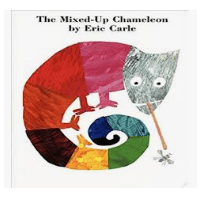
The Mixed-Up Chameleon, Eric Carle

Materials

  • Poster Board with a simple rainbow design drawn across (see blocks)
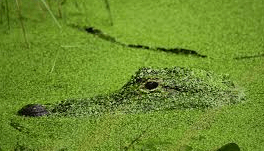
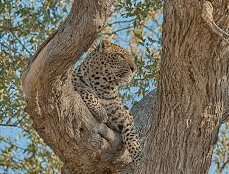
  • Books or pictures off the Internet that show animals camouflaged into the environment.
  • 26-52 Popsicle sticks
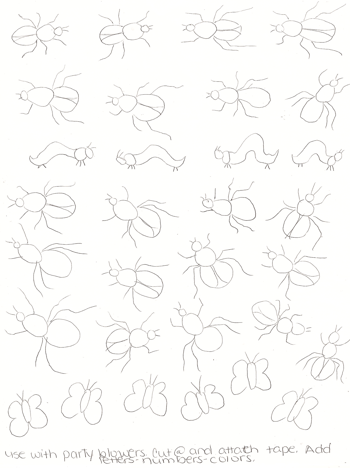
  • Insect page
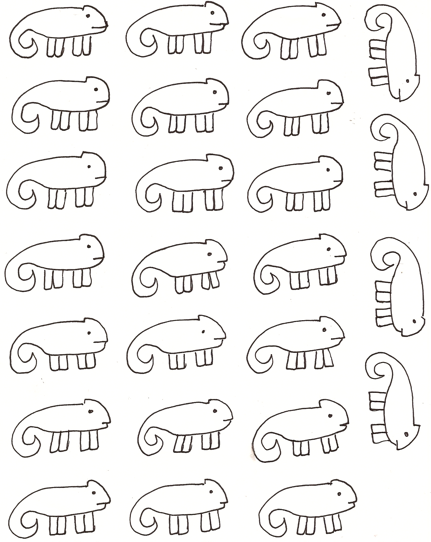
  • Chameleons page

Vocabulary

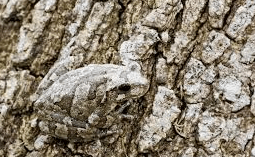
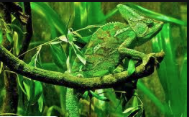
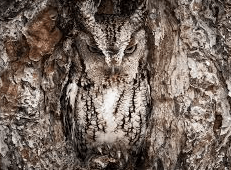
  • Camouflage (when an animal blends in with the world all around him)
  • Mixed-up (to be confused about something)

Before Reading the Story

Put a piece of paper on the wall and ask the children what their favorite animal is. Ask them to tell you something that makes that animals really special. Write their response on the paper. I would like to be a ________because______ (A big dog because I could jump on my brother, A butterfly because I could fly).

Science/Scientific Knowledge; expands knowledge of and abilities to observe, describe, and discuss the natural world, materials, living things, and natural processes.

Reading the Story

As you introduce the story, hold up the cover and ask the children what do they think it means to be a mixed up chameleon. If no one can answer, explain that to be mixed up means to be confused about something. Ask the children if they can predict what the chameleon might be confused/mixed-up about. As you turn to each new page and the chameleon wishes to be another animal, pause and see if the children can name the animal first.

Science/Scientific Skills & Methods; begins to describe and discuss predictions, explanations, and generalizations based of past experiences.

After Reading the Story

Go to the last page of the story (the one with the rainbow). Can the children name the animals and the colors? Ask, “Which animal is the color blue? Which animal has wings? “ Look on your chart from before reading to see if any of the children’s animals matched the ones in the story.

Mathematics/Geometry & Spatial Sense; shows growth in matching, sorting, putting in a series, and regrouping objects according to one or two attributes such as color, shape, or size.

Discovery

Bring in pictures or books that show animals camouflaged in nature. Use these to generate discussion of different ways that animals camouflage into their environment.

Literacy/Book Knowledge & Appreciation; shows growing interest and involvement in listening to and discussing a variety of fiction and non-fiction books and poetry. ALSO Science/Scientific Knowledge; expands knowledge of and abilities to observe, describe, and discuss the natural world, materials, living things, and natural processes.

Music and Movement

Sing Everybody Do This to the tune of Mammy’s Little Baby  (Pick a motion/action for all to follow)

Everybody do this, do this, do this,
Everybody do this just like me.
Everybody do this, do this, do this,
Everybody do this just like me.

(Now choose a child to lead)

Social & Emotional Development/Self-Concept; begins to develop and express awareness of self in terms of specific abilities, characteristics, and preferences.

Sing The Rainbow Song (bring pieces of construction paper to hold up as you name the colors while singing) https://kids.niehs.nih.gov/games/songs/childrens/sing-a-rainbow/index.htm

Red and yellow and pink and green,
Purple and orange and blue,
Black, brown and white
I can sing a rainbow, sing a rainbow,
Sing a rainbow. Can you?

Creative Arts/Music; participates with increasing interest and enjoyment in a variety of music activities, including listening, singing, finger plays, games, and performances.

Blocks

On a piece of poster paper make a simple rainbow using the colors of a block set you have (Legos, Duplo’s, unifix cubes, or small colored wooden blocks). Put out the blocks and encourage the children to match the colors and fill in the rainbow.

Mathematics/Geometry & Spatial Sense; shows growth in matching, sorting, putting in a series, and regrouping objects according to one or two attributes such as color, shape, or size.

Art

Ahead of time, use the chameleons’ page to make chameleons of different colors and cut out. Put these out on the art table with plenty of supplies for the children to collage. Explain to the children what the word camouflage means. You might even bring in a picture of an animal/s that are camouflaged in natural settings. Give each child a chameleon. Challenge the children to camouflage their chameleon within their picture?

Science/Scientific Skills & Methods; develops increased ability to observe and discuss common properties, differences, and comparisons among objects and materials.

Library and writing

Use the list that the children made during the ‘Before Reading the Story’ Session. Encourage them to draw their animal. Write the name of their animal on a piece of paper and ask them to try to copy the animals name onto their picture.

Literacy/Book Knowledge and Appreciation; shows growing interest in reading-related activities, such as asking to have a favorite book read; choosing to look at books; drawing pictures based on stories; asking to take books home.

Cut out/around each insect on the page. Write an alphabet letter on each one. Take a loop of tape and attach to the insect at one end. Attach a loop of tape to the end of a Popsicle stick. Explain to the children that the chameleon has a very long and sticky tongue like a frog. Tell the children that they are going to pretend the Popsicle stick is their long and sticky tongue and to see if they can pick up letters with it. Make small cards ahead of time with a letter written on it. The child can match the letter to an insect. Ask the child to find a letter that is in their name. To make this more challenging, we have done this with party blowers by attaching the tape to the end and then the children blow it causing it to unroll and catch an insect. You can also include several numbers to see if the children can distinguish letters-numbers.

Literacy/Alphabet knowledge; knows that letters of the alphabet are a special category of visual graphics that can be individually named.

Sand and Water

Put small animals and sand in the table today. Give the children tongs to use to poke around in the sand and pick up the animals. Can they name the animals that they have picked up?

Physical Health & Development/Fine Motor Skills; develops growing strength, dexterity, and control needed to use tools such as scissors, paper punch, stapler, hammer.

Dramatic Play

Put out any dress-ups that you might have that represent animals. (We have tiger striped gloves, a scarf with a snake looking skin design, several animal tales, and a chicken suit.)  Again, take your list of the children’s favorite animal and why. This time ask them to act their animal out. Can they remember any of the animals in the story? What did these animals have that made them special? Can the children act out these animals?

Literacy/Book Knowledge & Appreciation; demonstrates progress in abilities to retell and dictate stories from books and experiences; to act out stories in dramatic play; and to predict what will happen next in a story.

Math and Manipulatives

Make many chameleons and color them in 1-3 different colors. Use these to make patterns for the children to copy. ABAB, ABCABC,ACCBACCA. Encourage the children to try to make their own pattern for you to copy.

Mathematics/Patterns & Measurement; enhances abilities to recognize, duplicate, and extend simple patterns using a variety of materials.

Outdoor

Play Simon Says using colors. “If you’re wearing red, jump across the yard. If you’re wearing purple skip across the yard.”

Physical Health & Development/Gross Motor Skills; shows increasing levels of proficiency, control, and balance in walking, climbing, running, jumping, hopping, skipping, marching, and galloping.

 Transitions

As the children go to the next activity, ask them to think about and respond to the following sentence; ‘I like to be me because I can__________. ‘ Write their responses on another piece of large paper and hang next to the first chart.

Social & Emotional Development/Self-Concept; begins to develop and express awareness of self in terms of specific abilities, characteristics, and preferences.

Dear Parent- Today we read a story that involved many colors. Think of two colors that your child may not be too sure about and go together on a color hunt looking for that/those colors around the house.

Resources

Untitled2
Untitled3
alligator
tiger

jaguar
toad
chameleon
owl
elephant