Abuelo and The Three Bears, by Jerry Tello

This is the classic Three Bears but with a multi-culture twist. Read the original story and then use this to compare.

Materials

  • Tortillas, beans, salsa
  • Popsicle sticks
  • Bear Masks
  • Hot and cold cards

Vocabulary

  • At the end of the story all the Spanish words are translated.
  • Grumpy (grouchy and in a bad mood)
  • Stubborn (very determined and going to do it your way no matter what)
  • Family Reunion (when all the members of an extended family get together for a party)

Before Reading the Story

Ask the children if they ever have large family meals or meals where relatives and friends come to eat. What kinds of things do your parents make for these meals? (My Dad cooks spaghetti and Uncle Mark comes to my house, When Grandma came at Christmas we had turkey and cookies).

Social & Emotional Development/Knowledge of Families & Communities; progresses in understanding similarities and respecting differences among people such as genders, race, special needs, culture, language, and family structures.

Reading the Story

Make sure you stop and help the children understand the Spanish words.

Language Development/Listening & Understanding; understands a n increasingly complex and varies vocabulary.

After Reading the Story

Make a venn diagram and compare this story with the traditional Three bears. What are the similarities, what are the differences?

Literacy/Book Knowledge & Appreciation; shows growing interest and involvement in listening to and discussing a variety of fiction and non-fiction books and poetry.

Discovery

Bring in some tortillas and salsa for the children to try. Make some frijoles to put onto the tortillas. If a child is a picky eater, encourage them to try a new food.

Approaches to Learning/Initiative & Curiosity; chooses to participate in an increasing variety of tasks and projects.

Music and Movement

Sing People in a Family, sung to Frere Jaques. https://www.youtube.com/watch?v=7FXH36epPnY

People in a family, people in a family
Eat together, eat together
People in a family, eat together
All day long, all day long.
People in a family, people in a family
Laugh together, laugh together
People in a family, laugh together
All day long, all day long

(ask the children to help think of other things that families do together.

Social & Emotional Development/Knowledge of Families & Communities; progresses in understanding similarities and respecting differences among people such as genders, race, special needs, culture, language, and family structures.  AND Approaches to Learning/Reasoning & Problem Solving; develops increasing ability to find more than one solution to a question, task, or problem.

Tap out patterns in sets of three and see if the children can copy you. (3 claps or 1 clap, 2 stamps, etc.)

Creative Arts/Movement; shows growth in moving in time to different patterns of beat and rhythm in music.  

Blocks

Challenge the children to make a bed and/or a chair for blocks big enough for a stuffed animal and then themselves.

Approaches to Learning/Engagement & Persistence; demonstrates increasing ability to set goals and develop and follow through on plans.  AND Approaches to Learning/Reasoning and Problem Solving; grows in recognizing and solving problems through active exploration, in trial and error, and interactions and discussions with peers and adults.

Art

Remind the children that Abuelo said Trencitas came back later to glue Ositos chair back together. Put out Popsicle sticks and glue and ask the children if they can build something from wood.

Creative Arts/Art; gains ability in using different art media and materials in a variety of ways for creative expression and representation.

Library and Writing

Have the children dictate a recipe that their parent cooks to you. They can either draw the food or find a picture and cut it out. (My Mom makes me tuna sandwiches. She opens the can and puts it in a bowl. Put in 5 spoons of mayonnaise and some little pickle pieces. She puts a shake of that stinky stuff and mixes it all together. I like to eat it on bread with cheese).   

Social & Emotional Development/Knowledge of Families & Communities; progresses in understanding similarities and respecting differences among people such as genders, race, special needs, culture, language, and family structures.

Sand and Water

Add dampened sand to the table today and some cooking utensils and plates.  The children can pretend to cook various foods.

Creative Arts/Dramatic Play; shows growing creativity and imagination in using materials and in assuming different roles in dramatic play situations.

Dramatic Play

Add three bear masks and encourage the children to act out this or the traditional version of the three bears story. Add three bowls, three chairs and three blankets to represent beds.

Literacy/Book Knowledge & Appreciation; demonstrates progress in abilities to retell and dictate stories from books and experiences; to act out stories in dramatic play; and to predict what will happen next in a story.

Math and Manipulatives

Sort things by those that are hot and those that are cold.

Mathematics/Patterns & Measurement; shows increasing abilities to match, sort, put in a series, and regrouping objects according to one or two attributes such as shape or size.

Outdoor Play

Encourage the children to have a family reunion.  Help them figure what role they will play (aunt, grandparent, cousin, baby, father, etc).

 Social & Emotional Development/Knowledge of Families & Communities; progresses in understanding similarities and respecting differences among people such as genders, race, special needs, culture, language, and family structures. 

Transitions

As the children go off to the next activity, play categories.  Have them name one of their favorite foods, a food they eat for breakfast, a food their parent cooks, or a food they like to eat at a restaurant.

Social & Emotional Development/Self-Concept; begins to develop and express awareness of self in terms of specific abilities, characteristics, or preferences

Resources

Screen Shot 2018-09-09 at 1.37.20 PM

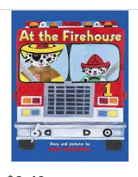
At the Firehouse, Anne Rockwell

This book introduces the children to what happens at a firehouse. It would be a good book to read before taking a field trip to the firehouse.

Materials

  •   Small syringes or spray bottles

Vocabulary

  •  Shiny (all bright and polished clean)
  • Glow in the dark
  • Extension ladder (something that gets longer and longer)
  • Exit (this way out/in case of a fire)

Before Reading the Story

Bring in a smoke detector and talk to the children about what it is and how it keeps us safe. Turn it on so they can hear the loud piercing sound. Talk about what they should do if they ever hear this sound at school or in their home.

Physical Health & Development/Health Status & Practices; builds awareness and ability to follow basic health and safety rules such as fire safety, traffic and pedestrian safety, and responding appropriately to potentially harmful objects, substances, and activities.

Reading the Story

Stop on the page that shows all the parts of a fire truck for a few moments and talk with the children about what the part is called and how it might be used.

Social & Emotional Development/Knowledge of Families & Communities; develops growing awareness of jobs and what is required to perform them.  AND Language Development/Speaking & Communicating; uses an increasingly complex and varied spoken vocabulary.

After Reading the Story

Have a pretend fire drill with your class. Do the children know where to go, what to do or not do when they hear the alarm? Do they know to walk versus run to the exit?

Physical Health & Development/Health Status & Practices; builds awareness and ability to follow basic health and safety rules such as fire safety, traffic and pedestrian safety, and responding appropriately to potentially harmful objects, substances, and activities.

Discovery

Bring in a smoke detector and show it to the children. Have the children cover their ears and then turn it on so they can hear the shrill sound. Talk about the sound that the smoke detector makes. Do you think you could hear it if you were sleeping? Talk about the fire alarm at your school. What do you do in case the alarm goes off at school? Practice having a fire evacuation with the children making sure to tell them what is going to happen before it happens so that they are prepared and will not become frightened.

Physical Health & Development/Health Status & Practices; builds awareness and ability to follow basic health and safety rules such as fire safety, traffic and pedestrian safety, and responding appropriately to potentially harmful objects, substances, and activities.

Music and Movement

Use masking tape to put a ladder design down on the floor. The children can use this for jumping or walking the lines.

Physical Health & Development/Gross Motor Skills; shows increasing levels of proficiency, control, and balance walking, climbing, running, jumping, hopping, skipping, marching, and galloping.

Sing Stop, Drop, and Roll to The Farmer in the Dell https://www.youtube.com/watch?v=1c0srtQUZtE

Stop, drop, and roll
If my clothes are on fire
I stop, drop, and roll.

Creative Arts/Music; participates with increasing interest and enjoyment in a variety of music activities, including listening, singing, finger plays, games, and performances.

Blocks

Add any fire trucks that you may have to the center. If you have none, draw a simple fire truck like that in the story and tape it to the side of the blocks. Encourage the children to be firemen and save the burning building.

Creative Arts/Dramatic Play; shows growing creativity and imagination in using materials and in assuming different roles in dramatic play situations.  AND Social & Emotional Development/Cooperation; increases abilities to sustain interactions with peers by helping, sharing, and discussion.

Art

Put out red, orange and yellow finger paint. Show the children how to make zig zags like fire flames. Also practice making circles and wavy lines.

Creative Arts/Art; progresses in abilities to create drawings, paintings, models, and other art creations that are more detailed, realistic, and creative.

Sand and Water

Fire persons use lots of water. Put out water today with small syringes and/or spray bottles. The children can practice putting out fires. Give them bowls to aim their spray at, or make bulls eyes using cardboard and markers so that when they hit the mark, the color bleeds.

Physical Health & Development/Fine Motor Skills; develops growing strength, dexterity, and control needed to use tools such as scissors, paper punch, stapler, and hammer.

Library and Writing

Put the book on the writing table and the children can try to draw their own fire trucks using the design on the balloons in the story. Take a moment and discuss and name all the parts of the fire truck.

Literacy/Early Writing; begins to represent stories and experiences through pictures, dictation, and in play.

Make EXIT signs that resemble those in your classroom. Ask the children to show you where the signs are, in the room and then practice writing the letters on a piece of paper.

Literacy/Early Writing; progresses from using scribbles, shapes, or pictures to represent ideas, to using letter-like symbols, to copying or writing familiar words such as their own name.

Dramatic play

Add some fire hats, jackets, and boxes to the center so the children can drive their own fire truck. If this is an extended unit they can take the box outside and paint it red.

Approaches to Learning/Initiative & Curiosity; approaches tasks and activities with increased flexibility, imagination, and inventiveness.

Math and Manipulatives

Bring in a play phone and have the children take turns practicing dialing 911.

Mathematics/Number & Operation; begins to associate number concepts, vocabulary, quantities, and writen numerals in meaningful ways.

Outdoor Play

Have a tricycle wash today or a chair wash to make them nice and shiny.

Social & Emotional Development/Cooperation; increases abilities to sustain interactions with peers by helping, sharing, and discussion.

Transitions

As the children prepare to go to the next center say, “My Firefighter Friend hold up a card with a child’s name written on it may go and fight a fire. Continue until all the children’s names have been held up.

Literacy/Alphabet Knowledge; identifies at least 10 letters of the alphabet, especially those in their own name.

Dear Parent-

            Today we talked about fire safety. Have you made an evacuation plan for your family in case of a fire or emergency? Find a spot away from the house to meet and practice getting there safely with your child.

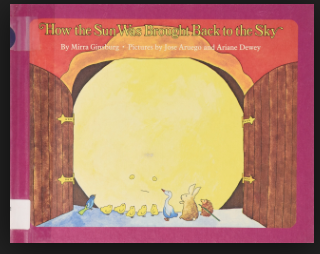
How the Sun Was Brought Back to the Sky, by Mirra Ginsburg

            For three long days the sun has not come out to shine its warmth and light upon the earth.  Follow the adventures of 5 little chicks to set out to see if they can help the sun begin to shine again. 

Materials

  • 2-4 beach balls.
  • Several pair of sunglasses, sun hats, and empty sunscreen container

Vocabulary

Before Reading the Story

            Bring a pair of sunglasses, a hat, and an empty sunscreen container to the carpet.  Hold up the items and ask the children what they all have in common (these two are red, they came from your house, my Dad has those).  After the children have had the opportunity to guess.  Tell the children that they all help keep you safe when you are in the sun.  Explain how each item keeps your safe.  Ask, who uses each item?

Language Development/Speaking & Communicating; develops increasing abilities to understand and use language to communicate information, experiences, ideas, feelings, opinions, needs, questions, and for other varied purposes. AND Physical Health & Safety/Health Status & Practices; builds awareness and ability to follow basic health and safety rules such as fire safety, traffic and pedestrian safety, and responding appropriately to potentially harmful objects, substances, and activities.

            Ask the children who likes sunny days?  What do you like to do on sunny days?  Show the children the cover of the book.  Tell them that today’s story is about the sun.  Look at the sun’s face, how do you think he is feeling?  I wonder what made him so sad.  Read the title.  I wonder where the sun had been? Let’s find out.

Literacy/Book Knowledge & Appreciation; demonstrates abilities to retell and dictate stories from books and experiences; to act out stories in dramatic play; and to predict what will happen next in a story. AND Science/Scientific Knowledge; develops growing awareness of ideas and language related to the attributes of time and temperature.

Reading the Story

            On the page that shows the animals climbing the mountain, take a moment to show the children what a long way the chicks have traveled to try to help the sun.

After Reading the Story

            Talk with the children about how the animals helped the sun to shine again.  Do you think that they were being good friends?  Do you ever help your friends or your parents?  When you help people it makes them feel loved.

Social & Emotional Development/Social Relationships; progresses in responding sympathetically to peers who are in need, upset, hurt, or angry; and in expressing empathy for others.

Discovery

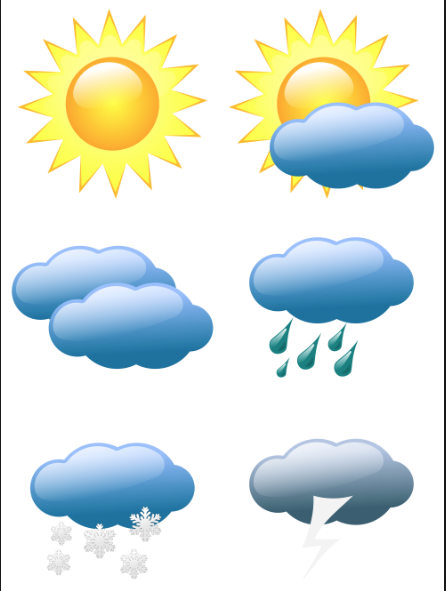
            Make small weather signs that will fit onto your calendar.  Count how many sunny days there are in a week, a month.

Science/Scientific Knowledge; develops growing awareness of ideas and language related to the attributes of time and temperature. AND Mathematics/Number & Operations; demonstrates increasing interest and awareness of numbers and counting as a means for solving problems and determining quantity.

Music and Movement

            Teach the children the song, Mister Sun https://www.youtube.com/watch?v=hlzvrEfyL2Y

Mister Sun, Sun, Mister Golden Sun

Please shine down on me.

Mister  Sun, Sun, Mister Golden Sun

Hiding behind the tree.

These little children are asking you

To please come out so we can play with you

Mister Sun, Sun, Mister Golden Sun

Please shine down on me.

            Sing You Are My Sunshine https://www.youtube.com/watch?v=dh7LJDHFaqA

You are my sunshine, my only sunshine.

You make me happy when skies are grey

You’ll never know dear

How much I love you

Please don’t take my sunshine away.

Creative Arts/Music; participates with increasing interest and enjoyment in a variety of music activities, including listening, singing, finger plays, games, and performances.

Blocks

            Cut out a yellow circle from construction paper.  Put this on the floor of blocks and suggest to the children that they use the blocks to make rays coming off the sun in a pattern. (You might have to make the first ray to get them started).

Mathematics/Patterns & Measurement; enhances abilities to recognize, duplicate, and extend simple patterns using a variety of materials.

Art

            Give each child a piece of yellow construction paper.  Ask them to trace around a paper plate and then cut out the circle.  Ahead of time cut out plenty to yellow triangles.  The children can collage the triangles around their circle to make a sun shape. 

Physical Health & Development/Fine Motor Skills; develops strength, dexterity, and control needed to use tools such as scissors, paper punch, stapler, and hammer.

Library and Writing

Talk to the children for a moment about what they like to do on sunny days. (I like to play outside, I drink lemonade, I wear my baseball hat). Encourage the children to draw a picture about what they like to do. Under the picture write, Dear Mr. Sun, Please come out so I can _________________. Have the child then sign their name.

Literacy/Early Writing; begins to represent stories and experiences through pictures, dictation, and in play.

Sand and Water

            In the story the animals polished the sun.  Put a small amount of water in to the table.  Add sponges or rags and beach balls.  The children can pretend to be polishing the sun.

Literacy/Book Knowledge & Appreciation; demonstrates abilities to retell and dictate stories from books and experiences; to act out stories in dramatic play; and to predict what will happen next in a story.

Dramatic Play

            Bring in sunglasses and sun hats for the children to use in their play.  Clean and empty sunscreen bottle. Watch and listen to see if the children recall your talk about sun safety in their play.

Physical Health & Safety/Health Status & Practices; builds awareness and ability to follow basic health and safety rules such as fire safety, traffic and pedestrian safety, and responding appropriately to potentially harmful objects, substances, and activities.

Math and Manipulatives

            Have the children collect all your old crayons and peel the paper off of them.  Sort the crayons into a muffin tin or paper drinking cups according to colors.  Place the muffin tin out on a hot sunny day (this is a summer activity).  Observe over the next hours to see if the crayons have melted.  If not, this experiment can also be done by placing the muffin tin in the oven.  Bring inside and let cool down some so that a large crayon starts to form in each muffin tin.  Turn the crayons out and let them finish cooling. Save them to use on another day.

Physical Health & Development/Fine Motor Skills; develops strength, dexterity, and control needed to use tools such as scissors, paper punch, stapler, and hammer. AND Science/Scientific Knowledge; develops growing awareness of ideas and language related to the attributes of time and temperature.

Outdoor Play

            Step out into the sunshine, now step into the shade.  Can you feel a difference, see a difference? (The sun will feel warmer and makes everything very bright).

Science/Scientific Knowledge; develops growing awareness of ideas and language related to the attributes of time and temperature.

Transitions

          Cut out a simple sun shape. On the wall where all the children can see, tape a piece of rectangular construction paper. Move the sun about the construction paper and ask the children to tell you where/what position the sun is in. Encourage the children to use whole sentences. (The sun is under the rectangle. The sun is behind the rectangle. The sun is on top of the rectangle.

Mathematics/Geometry & Spatial Sense; builds an increasing understanding of directionality, order, and positions of objects, and words such as up, down, under, over, top, bottom, inside, outside, in front, and behind.

Resources