Two Bad Ants, by Chris Van Allsburg

A colony of ants discover delicious crystals in a far off place.  As they go to gather the crystals, two ants decide not to return with their fellow ants but to stay and eat crystals forever.  The illustrations depict the story from an ants point of view which makes this a wonderful first mystery story for young children. 

Materials

  • Several small pitchers or pouring containers and plastic cups with lines marked at various heights.
  • Large box of raisins.

Vocabulary

  • Mystery (something that you must figure out)
  • Deemed (thought or to consider something)
  • Dew (condensation or water that forms when the water meets cold air, like on a glass of water with ice or on the grass when it gets cold at night).
  • Battered (beaten up)
  • Garbage disposal (chews up food products in some people’s sinks)

Before Reading the Story

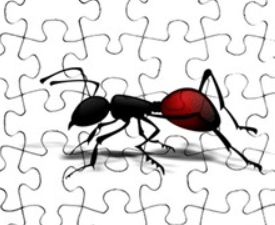
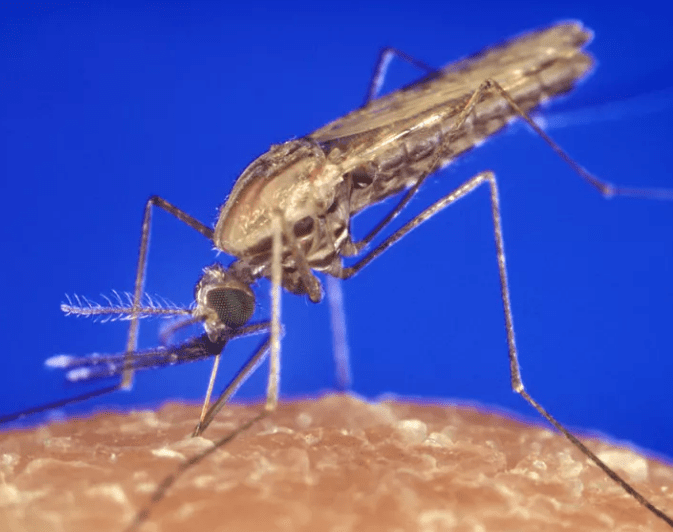
Hold up the cover of the book and ask the children what insect that is? Spend a few minutes talking about ants. Where have you seen ants? What color were the ants you saw? Do ants bite? Have you ever seen an anthill? Are ants dangerous?

Science/Scientific Knowledge; expands knowledge of and abilities to observe, describe, and discuss the natural world, materials, living things, and natural processes.

Reading the Story

All along the way stop and ask the children what is happening?  Can they tell by the illustrations what is happening or where the ants are? 

Read the text to the children and then ask them to guess where the ants are

Pg 4=what do you think that crystal might be?

Pg 7=they walked through the woods, what are they really walking through?

Pg 10= Do you think this is really a mountain?  What else could it be?

Pg 18=what did the two bad ants fall into?

22=can you guess where the two bad ants are now?

24=What is the fountain really?  Where would you find one of these in your home?

26=explain that this is called a garbage disposal.  This is not a toy, very dangerous.

28=never stick anything in an electric socket.  You can get very hurt!

Literacy/Book Knowledge & Appreciation; demonstrates growing abilities to retell and dictate stories from books and experiences; to act out stories in dramatic play; and to predict what will happen next in a story. AND Approaches to Learning/Initiative & Curiosity; grows in eagerness to learn about and discuss a growing range of topics, ideas, and tasks.

After Reading the Story

The two bad ants finally decide to go back home to their family of ants. What prompts their decision? What matters to them about their home community? What matters to you about your home community? 

Literacy/Book Knowledge & Appreciation; demonstrates growing abilities to retell and dictate stories from books and experiences; to act out stories in dramatic play; and to predict what will happen next in a story.

Talk about safety, especially plugs.  What happened to the ants that went into the plug?

Physical Health & Development/Health Status & Practices; builds awareness and ability to follow basic health and safety rules and by responding appropriately to potentially harmful objects, substances, and activities.

Discovery

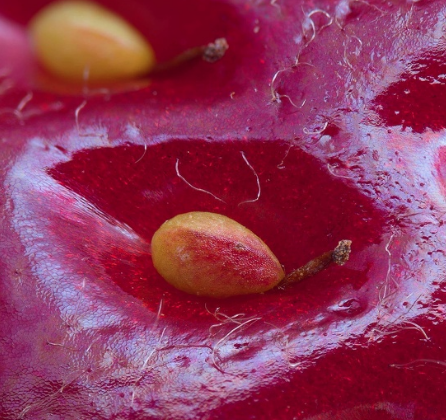
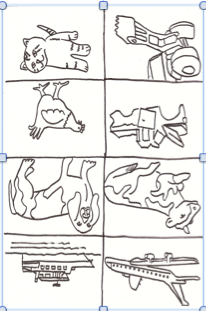
Print the close up cards for the children to look at and discuss. Are they able to name all the items? Make two sets of the close-up cards and use them to play Memory by turning all the cards upside down and the children take turns trying to find matched pairs.

Approaches to Learning/Engagement & Persistence; shows growing capacity to maintain concentration over time on a stask, question, set of directions or interactions, despite distractions and interruptions. AND Social & Emotional Development/Cooperation; develops increasing abilities to give and take in interactions; to take turns in games and using materials; and to interact without being overly submissive or directive.

If you are lucky enough to have a class camera, show the children how to use it and then allow them to take 2-4 pictures each of anything in the classroom that they choose. Print these and hang them on the wall for all the children to see. or make them into a classroom book.

Creative Arts/Art; begins to understand and share opinions about artistic products and experiences.

Music and Movement

Make an obstacle course for the children to follow. Include crawling under a table, over a chair, around the easel, along the wall, behind the bookshelf, etc..

Mathematics/Geometry & Spatial Sense; builds an increasing understanding of directionality, order, and positions of objects, and words such as up, down, over, under, on top, bottom, inside, outside, in front, and behind.

March in an ant line to various tempos of music.

Creative Arts/Movement; shows growth in moving in time to different patterns of beat and rhythm in music.

Blocks

Use the many cut out ants and the blocks.  The children can build a structure and then put an ant line on.

Creative Arts/Dramatic Play; shows growing creativity and imagination in using materials and assuming different roles in dramatic play situations.

Art

Add salt to easel paint to make shiny-crystals

Creative Arts/Art; begins to understand and share opinions about artistic products and experiences.

Cut out many 1” circles.  Show the children how they can put three together to make a simple ant shape.  Encourage them to glue sets of circles all over their picture.  When they are through gluing, show them how to add ant features (2 antenna, 6 legs, and big eyes)

Creative Arts/Art; progresses in abilities to create drawings, paintings, models, and other art creations that are more detailed, creative, or realistic.

Sand and Water

Let the children practice pouring from pitchers today. On plastic cups draw lines. Show the children how to pour stopping when they get to the line.

Physical Health & Development/Fine Motor Skills; grows in hand-eye coordination in building with blocks,putting puzzles together, reproducing shapes and patterns, stringing beads, and using scissors.

Library and Writing

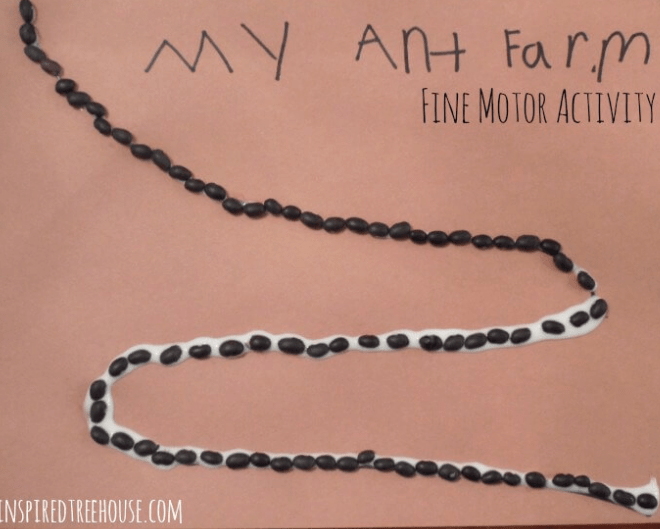
Tell the children that you are going to make letters using ants today.  Show them the raisins and explain that they are going to use the raisins for pretend ants.  On a piece of construction paper write the first letter of the child’s name in large print.  Give the child a bottle of glue to follow the lines and then use raisins to go over the glue. 

Literacy/Alphabet Knowledge; knows that letters of the alphabet are a special category of visual graphics that can be individually named.

Dramatic Play

Explain to the children that ants come into kitchens looking for food and water.  Suggest to the children that they clean the center today to make sure there is no food about.  Let them use spray bottles with water and paper towels to wipe down the shelves and toys.  Encourage them to put the toys away in their proper place and to show you any toy that might be broken or ripped.

Social & Emotional Development/Knowledge of Families & Communities; develops growing awareness of jobs and what is required to perform them. AND Approaches to Learning/Engagement & Curiosity; grows in abilities to persist in and complete various tasks, activities, projects, and experiences.

Math and Manipulatives

Use the close-ups and items pictures to match those that belong together.

Mathematics/Geometry & Spatial Sense; progresses in ability to put together and take shapes apart.

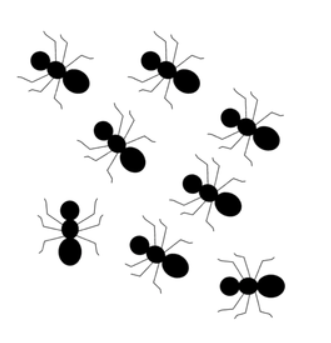
Make many copies of the ant page. Have the children roll a dice and add that many ants to their ant hill.

Mathematics/Number & Operations; begins to use one-to-one correspondence in counting objects and matching groups of objects.

Outdoor Play

Look around your playground for something heavy or awkward to lift (a small table, a wagon, a lounge chair). Tell the children that you would like to move the object to the otherside of the yard. Have the children work together to move the object from one side of the playground to another.

Social & Emotional Development/Cooperation; shows increasing abilities to use compromise and discussion in working, playing, and resolving conflicts with peers.

Bring out some food scraps and look for ants. When you find them, put the food down near their path. Come back later and see if there is any ant activitiy. Observe and talk about what you see happening.

Science/Scientific Knowledge;expands knowledge of and abilities to observe, describe, and discuss the natural world, materials, living things, and natural processes.

Transitions

Use the close-up cards and see if the children can guess what each item is. Later put the cards into the Math & Manipulative center for the children to use individually.

Mathematics/Geometry & Spatial Sense; progresses in ability to put together and take shapes apart.

Resources
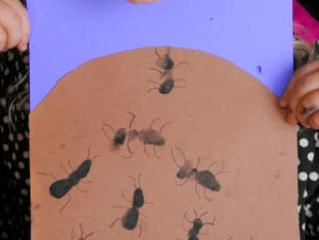
ant hill for counting ants game
ants for counting

writing letters w/ raisin ants
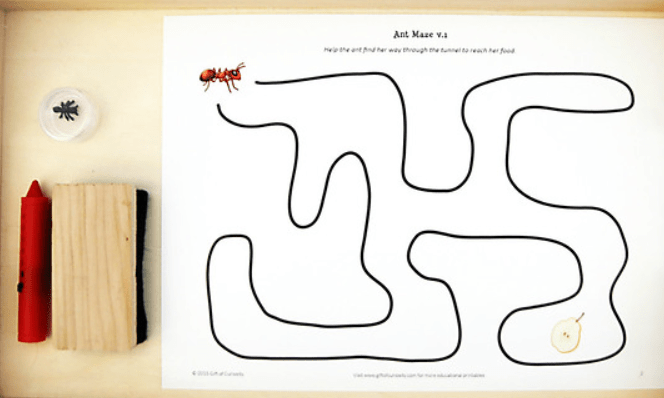
you can make simple mazes for writing center

Are You My Mother? by PD Eastman

One day a baby bird hatches from his egg and his mother is not there! Follow little birds’ trail as he looks for his mother.

Materials

  • Pictures of things that are alive/not alive from story and magazines
  • Several scarves or bandanas
  • Colored feathers or pieces of paper strips to represent feathers

Vocabulary

  • Alive (something that eats/drinks, grows, depends upon their environment where they live, and breaths.)

Before Reading the Story

Ask the children if they know what it means to be alive. Define for them that being alive means things that eat/drink, grow, depend upon their environment where they live, and breathe. Ask the children if a fish is alive, a bear, their Mom, a rock, a tree? Make a list of alive-not alive with the children. Ask the children about a variety of objects and list them on a sheet of paper as ‘alive’-‘not alive’. Add any items to the list that they might share.

Science/Scientific Knowledge; Expands knowledge of and abilities to observe, describe, and discuss the natural world, materials, living things and natural processes.

Reading the Story

As you read the story, ask the children about each thing that the baby bird thinks is its Mother. What is it? Is it alive, or not alive?  Why or why not? (a car does not breathe and does not grow).

Language Development/Speaking and Communicating; develops increasing abilities to understand and use language to communicate information, experiences, ideas, feelings, opinions, needs, questions; and for other varied purposes.

After Reading the Story

Ask the children if they remember why the mother bird left the nest. Talk to the children about what they would do if they woke up and could not find their mother? Would you be scared? Ask if anyone has ever gotten lost in a store or a park. How did it feel? If the children have not had this experience, share one of yours with them.   What should you do if you are lost or you cannot find your parent?

Physical Health & Development/Health Status & Practices; Builds awareness and ability to follow basic health and safety rules such as fire safety, traffic, and pedestrian safety, and in responding appropriately to potentially harmful objects, substances, and activities.

Discovery

Tell the children that the baby bird thought all kinds of things were his mother.   Some were alive and some were not, cut and sort magazine pictures by things that are alive and things that are not alive.

Mathematical/Geometry & Spatial Sense; shows growth in matching, sorting, putting in a series, and regroup objects according to one or two attributes such as color, shape, or size. AND Physical Health & Development/Fine Motor Skills; develops strength, dexterity, and control needed to use tools such as scissors, paper punch, stapler, and a hammer.

Music and Movement

Act out being birds. Sit on your eggs and get comfortable. (Children can squat down and pretend to rustle their wings by flapping their arms). Fly down from your nest and look for food. (Children can stand up and pretend to fly around the room). What do you eat? Look for worms and bugs. (Show the children how to pinch their thumb and fingers to make a pretend beak). Use your beak to pick the worm out of the ground. Hold the worm in your beak and fly back to nest and feed your babies. (Open and shut your beak and pretend to feed baby birds in the nest). Now be the baby birds and pop out of the egg. Stretch your wings and peep for food because you are hungry from all that pecking. Practice flapping your wings and then try to fly, slowly at first and then faster.

Creative Arts/Dramatic Play; shows growing creativity and imagination in using materials and in assuming different roles in dramatic play situations.

 Blocks

Add animals, preferably adults and their babies or large and small similar animals for the children to sort as they play.

Mathematics/Patterns & Measurement; shows increasing abilities to match, sort, put in a series, and regroup objects according to one or two attributes such as shape or size.

 Art

Bring out the play dough. Ask the children if they can make a ball, an egg, a long snake, and a mother bird.

Creative Arts/ Art; gains ability in using different art media and materials in a variety of ways for creative expression and representation.

Library and Writing

Ask the children to draw a picture of their Mom, or other caretaker, doing something special with them. Write what the children dictate about their Mom, or other caretaker. (My Mom gives me ice cream, My Grandma took me to the park and we saw a squirrel that runned up the tree).

Literacy/Early Writing; begins to represent stories and experiences through pictures, dictation, and in play.

Sand and Water

Add grass and mud to the table. Challenge the children to make a nest for baby bird. Add small rocks to be eggs.

Approaches to Learning/Initiative & Curiosity; approaches tasks and activities with increased flexibility, imagination, and inventiveness.

Dramatic Play

Put out scarves or bandanas like Mother Bird is wearing. Encourage the children to cook nutritious meals for their babies. (Do you have a fruit for your baby? What vegetable will you cook? What is your baby drinking?)

Physical Health & Development/Health Status & Practices; builds awareness to follow basic health and safety rules.

Math and Manipulatives

Add a variety of colored feathers and a piece of dark paper. Show the children how they can use the feathers to make designs and patterns on the paper.

Mathematics/Patterns & Measurements; enhances abilities to recognize, duplicate, and extend simple patterns using a variety of materials.

Outdoor Play

Teach the children how to not get kidnapped. Tell the children that you are going to pretend to be a stranger and try to take them into your car. Explain to the children that you are going to grab them by the arm and pretend to try to get them in your (pretend) car. Explain to the children that if this were to happen they should throw themselves on the ground and shout loudly, “You are not my mother!” Practice giving each child a turn. Encourage them to shout loud!

Physical Health & Development/ Health Status & Practices; Physical Health & Development/Health Status & Practices; Builds awareness and ability to follow basic health and safety rules such as fire safety, traffic, and pedestrian safety, and in responding appropriately to potentially harmful objects, substances, and activities.

Transitions

As the children go off to the next area, tell them that they are to think of an animal that starts with a letter sound. Use the child’s first letter or one that is simple to think of an animal. Call each child and give them the letter sound i.e.; Kerry-cat, Roger-rhinoceros. Then ask them, “are you my mother?” Help the children respond using a full sentence; “No I am not your mother, I am a cat, meow” “No I am not your mother, I am a rhinoceros, hunn.”

Literacy/Phonological Awareness; shows growing awareness of beginning and ending sounds of words.

Dear Parents, Today we read the book, Are You My Mother? By PD Eastman. In the book the baby bird does not know what his Mother looks like and goes to find her. It might be fun to take a few minutes and look through old pictures that you might have of family members and talk about each one. (This is a picture of me when I was your age and that is Grandpa holding me in his lap.

Resources

Screen Shot 2018-08-08 at 3.29.50 PM

A Chair for My Mother, by Vera B. Williams

Imagine how you would feel if your home caught on fire! This is the story of a girl named Rosa and her family that this happened to. Her friends and neighbors all pitch in to help her family but still there was something missing. Through hard savings they finally had the money for that one last item they dreamed about; a chair for her Mother.

Materials

  • 5-10 pennies for each child
  • Box of salt
  • Jar of vinegar
  • A variety of real or play coins

Vocabulary

  • Tips (a gift of money for a job well done)
  • Spoiled (to be ruined)
  • Sofa (another name for couch or davenport)

Before Reading the Story

Bring a chair to the rug to read from today. Ask the children if they have ever lost something that was really special to them. Let them talk about how they felt (sad, angry). Tell the children that our story today is about a family that lost everything, all their clothes and toys and furniture because a big fire burned it all up. Give the children time to talk about any fire experience that they may have had. Hold up the back of the book with the picture of the chair and introduce the story.

Social & Emotional Development/Social Relationships; progresses in responding sympathetically to peers who are in need, upset, hurt, or angry; and in expressing empathy or caring for others. AND Language Development/Speaking & Communicating; develops increasing abilities to understand and use language to communicate information, experiences, ideas, feelings, opinions, needs, questions; and for other varied purposes.

Reading the Story

Read the story using emotion.

After Reading the Story

Turn to the page where the neighbors were bringing Rosa’s family things for their new house. Ask the children if they thought their friends and neighbors were being kind? Ask the children what they would have given to Rosa’s family? Take a few minutes and talk about fire and fire safety. What should you do if your house catches on fire (get out, call 911, find your parent, call “help,help,help” if you are inside, get down low to the floor)

Social & Emotional Development/Social Relationships; progresses in responding sympathetically to peers who are in need, upset, hurt, or angry; and in expressing empathy or caring for others.  AND Physical Health & Development/Health Status & Practices; builds awareness and ability to follow basic health and safety rules such as fire safety, traffic, and pedestrian safety; and responding appropriately to potentially harmful objects, substances, and activities.

Discovery

Give each child 5-10 pennies. Ask them to sort them by shiny pennies and not shiny pennies. Ask them to count how many shiny pennies they have, how many not shiny, how many total, Let the children mix a teaspoon of salt, a teaspoon of vinegar, and 5 teaspoons of water into a small bowl. Put a couple pennies into the bowl and stir. Take the pennies out and wipe dry with a paper towel. The mixture helps remove the tarnish and make the pennies shiny. When they are finished have them put their pennies into a jar like Rosa and her family did in the story.

Mathematics/Number & Operations; develops increased abilities to combine, separate, and name “how many” concrete objects.  AND Science/Scientific Knowledge & Skills; begins to use senses and a variety of tools and measuring devices to gather information, investigate materials, and observe processes and relationships.

Music and Movement

Teach the children the song/chant I’ve Got a Penny sung to the chorus of Playground in my Mind. https://www.youtube.com/watch?v=Slp69VwEj4w

I’ve got a penny, I’ve got a penny
I’ve got a penny shiny and new.
I’m gonna buy all kinds of candy
That’s what I’m gonna do.

Put a variety of coins in a bag. Take turns picking out and naming the coin. Replace the word penny with the appropriate coin name. Let the child then decide what they are going to buy (Kerry’s gonna buy all kinds of headbands, that’s what she’s gonna do).

Language Development/Listening and Understanding; demonstrates increasing ability to attend to and understand conversations, stories, songs, and poems.

Blocks

Put fire trucks into the center. Encourage the children to build houses and act out being fire persons.   For older children ask them if they can build a fire house.  Can they include a roof?

Approaches to Learning/Initiative & Curiosity; approaches tasks and activities with increased flexibility, imagination, and inventiveness.  AND Physical Health & Development/Fine Motor Skills; grows in hand-eye coordination in building with blocks, putting together puzzles, reproducing shapes and patterns, stringing beads,and using scissors.

Art

Make a group chair collage. Have the children go through magazines and furniture ads and cut out pictures of chairs. When you finish the collage, the children can tell which chair is their favorite and write their name beside.

Physical Health & Development/Fine Motor Skills; grows in hand-eye coordination in building with blocks, putting together puzzles, reproducing shapes and patterns, stringing beads,and using scissors.

Sand and Water

Water play today.  Add turkey baster, hosing, and funnels.

Social & Emotional Development/Self Control; demonstrates increasing capacity to follow rules and routines and use materials purposefully, safely, and respectfully.

Library and Writing

Remind the children that Rosa was saving to buy a chair for her mother.  Ask the children to draw a picture of what they would buy their Mom if they had $100.00. Write their response under their picture. ‘I would buy a ______for my Mother.’

Literacy/Early Writing; begins to represent stories and experiences through pictures, dictation, and in play.

Dramatic Play

Add play money and cash register.   Remind the children that Rosa’s Mom was a waitress at a restaurant.  Encourage the children to pretend to play restaurant taking turns being the waitress, the cook, and the customers.  Add a cash register and pretend money along with a real or home-made menu.

Social & Emotional Development/Knowledge of Families and Communities; develops a growing awareness of jobs and what is required to perform them.

Math and Manipulatives

In a clean egg carton, glue 2 pennies head/tail, 2 nickels head/tail, 2 dimes head/tail, and 2 quarters head/tail side by side. Use the four extra egg cups to hold a variety of coins. Explain that the glued ones show the front and back of each coin. Have the children sort the loose coins into the appropriate coin cup (it does not matter if it’s heads/tails). Make sure they wash their hands afterwards as money is known to be dirty.

Mathematics/Geometry & Spatial Sense; shows growth in matching, sorting, putting in a series, and regrouping objects according to one or two attributes such as color, shape, or size.

Outdoor Play

Teach the children how to play Categories. Teacher picks a category (things in your kitchen, kinds of clothes, fruits).   You can either toss a bean bag to a child who then must answer or if you have a slide, the child must answer before he/she can go down the slide.

Approaches to Learning/Reasoning & Problem-Solving; develops increasing ability to find  more than one solution to a question, task, or problem.

Transitions

Have the children sit in a circle.  In the center of the circle put a chair.  Give each child a block and take turns asking them to put them on, under, beside, in front, behind, near, and far from the chair.  Each child can be given one or two directions before they head off to the next activity.

Mathematics/Geometry & Spatial Sense; builds an increasing understanding of directionality, order, and positions of objects, and words such as up, down, over, under, top, bottom, inside, outside, in front behind.

Dear Parents- Today we read a story about a family whose household belongings burnt in a fire.  Although this might be a subject that is a little scary to talk about with your child, it is important.  Show your child how to dial 911 (do not really call).  Talk about what to do and where to go if there is ever a family emergency and you get separated (go to the neighbors house, the mailbox, the lamp post at the end of the block).  It is important that children learn what you want them to do when there is not an emergency going on.  Talk to them calmly and answer all their questions.  Who knows, this may one day save yours or their life.