But No Elephants, by Jerry Smath

Grandma Tildy decides that she would like to get a variety of pet animals but is quite clear that she does not want an elephant. What will happen when an elephant decides to stay anyway?

Materials

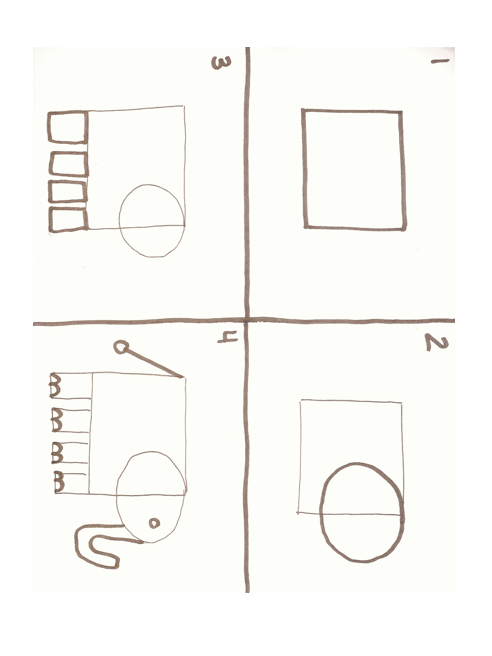
  •             Directions on drawing an elephant.
  •             Stuffed “pet”animals and pet supplies to along with.
  •             Pictures of animal helpers.

Vocabulary           

  •              Pet (an animal that you keep in your home to love and enjoy).
  •             Animal helpers (animals that help people to do work or chores).
  •             Strong (able to hold up under the weight)

Before Reading the Story

 Tell the children that the story today is about a lady who decides she wants a pet. What kind do you think she should get, why?  Ask the children if they have any pets at home.  Make a graph that shows who has what kind of pet. 

Approaches to Learning/Reasoning & Problem Solving; develops increasing ability to find more than one solution to a question, task, or problem.  AND Mathematics/Patterns & Measurement; begins to make comparisons about several objects based on a single attribute. 

Reading the Story

As Grandma Tildy acquires each pet, stop and ask the children if they think it would make a good pet why or why not?.  When the elephant gets stuck in the house, ask the children if they can think what might happen.  When he begins walking, ask the children where they think he might be walking to.

Literacy/Book Knowledge & Appreciation; demonstrates progress in abilities to retell and dictate stories from books and experiences; to act out stories in dramatic play;  and to predict what will happen next in a story.  AND Approaches to Learning/Initiative & Curiosity; grows in eagerness to learn about and discuss a growing range of topics, ideas, and tasks.

After Reading the Story

Bring in pictures of animals and ask the children if they would like to have it for a pet and what special thing the pet could do (A tiger could scare away the bad guys, a penguin could wash my Daddy’s car).

Approaches to Learning/Initiative & Curiosity; grows in eagerness to learn about and discuss a growing range of topics, ideas, and tasks.

Discovery

Pictures of animal helpers.   Put the pictures out where the children can look and discuss the ways animals help people.

Science/Scientific Knowledge; expands knowledge of and abilities to observe, describe, and discuss the natural world, materials, living things, and natural processes.  AND Social & Emotional Development/Knowledge of Families & Communities; progresses in understanding similarities and respecting differences among people such as genders, race, special needs, culture, language, and family structures.

Music and Movement

Sing the Opposite song, to the tune of All Around the Mulberry Bush.

Everything I always say,
You always say the opposite.
When I say cold, you say hot
(sunny-cloudy,big-little, yes-no)

Language Development/Speaking & Communicating; progresses in abilities to initiate and respond appropriately in conversation and discussions with peers and adults.

Sing the Elephant Song. https://www.youtube.com/watch?v=wQf6yWEScB8

One elephant, went out to play
All ona spider’s web one day.
He had such enormous fun
That he called for another elephant to come.
One elephant……
Two elephants, went out to play

(With each verse have a child dance in the middle of the circle)

Mathematics/Number & Operations; develops increasing ability to count in sequence to 10 and beyond.

Blocks

 Add animals and people to the center.  Encourage the children to build houses.  Can they act out parts of the story?  Can they adapt the story to fit the animals in your center?

Literacy/Book Knowledge & Appreciation; demonstrates progress in abilities to retell and dictate stories from books and experiences; to act out stories in dramatic play;  and to predict what will happen next in a story.  

Art

Encourage the children to draw pictures of houses and then draw or cut out an animal picture to put inside. 

Literacy/Book Knowledge & Appreciation; demonstrates progress in abilities to retell and dictate stories from books and experiences; to act out stories in dramatic play;  and to predict what will happen next in a story.  AND Literacy/Early Writing; experiments with a growing variety of writing tools and materials, such as pencils, crayons and computer.

Library and Writing

Make a copy of the Elephant drawing directions. Encourage the children to read the directions and draw elephants.

Literacy/Early Writing; experiments with a growing variety of writing tools and materials, such as pencils, crayons and computer.  AND Creative Arts/Art; progresses in abilities to create drawings, paintings, models, and other art creations that are more detailed, creative, or realistic.

Sand and Water

If you read this story during the winter months bring in snow to put in the water table for the children to play with.  As the day progresses, help the children to notice what is happening to the snow.  Ask them why they think this is happening.

Science/Scientific Skills & Methods; begins to describe and discuss predictions, explanations, and generalizations based on past experiences.  AND Science/Scientific Knowledge; develops growing awareness of ideas and language related to the attributes of time and temperature.

Dramatic Play

Add any  stuffed animals that could represent a pet. Bring in pet supplies to enhance the play of caring for a pet, (A stuffed cat with a collar, a can of cat food, a brush, and a mouse toy).

Creative Arts/ Dramatic Play; participates in a variety of dramatic play activities that become more extended and complex.

Math and Manipulatives

Make two simple bar graphs.  At the bottom of the first, draw animals that show any pets that the children might have at home.  On the bottom of the second graph, draw animals that the children wish they could have for a pet.  These two graphs will probably have some overlapping animals but be prepared to draw an alligator or shark at the bottom of graph number two.

Mathematics/Number & Operations; begins to use language to compare numbers of objects with terms such as more, less, greater than, fewer, equal.  AND Mathematics/Number & Operations; begins to associate number concepts, vocabulary, quantities, and written numerals in meaningful ways.

Outdoor Play

Put a blanket or sheet onto the ground and pretend that it is a house.  Everybody must fit on it (inside).  Talk about moving the house.  The children can hold onto the edges of the sheet and move as a unit to a new area. Talk about how everyone must cooperate and work together.

Social & Emotional Development/Cooperation; increases abilities to sustain interactions with peers by helping, sharing, and discussing.

Transitions 

Make up simple animal riddles.  (I’m thinking of an animal pet with long floppy ears who hops and likes to eat carrots.  I’m thinking of an animal pet that lives in a bowl of water and swims around and around.)

Approaches to Learning/Reasoning & Problem Solving; develops increasing abilities to classify, compare, and contrast objects, events, and experiences.

Resources
Millions of Cats, Wanda Gag

What happens when only the prettiest cat can stay? And how is it decided which cat is the prettiest?

Materials

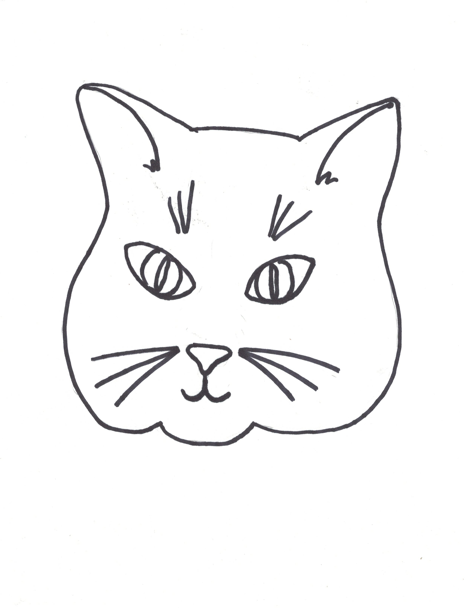
  • Cat head
  • Pictures of cats from magazines or calendar
  • Turkey baster (or sponge if you do not have a turkey baster)
  • Stuffed cat and box big enough to go inside of.

Vocabulary

  • Lonely (feeling sad because needing a friend)
  • Fuzzy (to have fluffy hair/fur all over the body)
  • Quarrel (to fight)
  • Homely (not pretty)
  • Kitten (a baby cat)
  • Whiskers (cat whiskers help them to see in the dark by feeling what is beside them)

Before Reading the Story

Bring in a picture or pictures of cats for the children to look at. Talk with the children about cats, who has a cat at home? How many feet does a cat have? Do they know what whiskers are? Talk to them about how to care for a cat and how to be safe with a cat. Talk about how cats do not like to be handled roughly and may bite if you try to hold them or restrain them. Most cats do not like to be pet on their lower back and abdomen. Cats will bite or scratch if they are scared.

Language Development/Speaking & Communicating; develops increasing abilities to understand and use language to communicate information, experiences, ideas, feelings, opinions, needs, questions; and for other varied purposes.

Reading the Story

Emphasize the quantity of cats. A million fills the whole page; a million would not even fit in our classroom!

Mathematics/Number & Operations; demonstrated increasing interest and awareness of numbers and counting as a means for solving problems and determining quantity.

After Reading the Story

Bring in pictures of real cats cut from magazines or calendars. Put them up on the wall and let the children show which cat they like best. Give each child a sticky note with their name on it to put beside their favorite cat picture. Literacy/Print Awareness; develops growing understanding of different functions to forms of print such as signs, letters, newspapers, lists, messages, and menus. Then count with the children how many children liked each cat. Take another sticky note and write the number on it and put beside the cat. (Look, 4 children liked this cat best).

Mathematics/Numbers & Operations; begins to associate number concepts, vocabulary, quantities, and written numerals in meaningful ways.

Discovery

Put pictures or a non-fiction book of cats in the center today for the children to be able to examine. As you look at the pictures with the children, use words to describe cats; calico, striped, furry, whiskers, paws, etc).

Language Development/Listening and Understanding; understands an increasingly complex and varied vocabulary.

Music and Movement

Sing or chant Naughty Pussy Cat

Naughty Pussy Cat    (Hold up pointer and move back & forth)

You are very bad.      (Continue to shake pointer finger)

You have butter on your whiskers                                                                  

                                      (Pretend to pull on your whiskers)

Naughty Pussy Cat-SCAT!     (When you get to SCAT! pretend to shoo                                          cat away)                                                                                                            

Creative Arts/Music; participates with increasing interest and enjoyment in a variety of music activities, including listening, singing, finger plays, games, and performances.

Blocks

Give the children a basket of counters (bears, unifix cubes, insects). As they build encourage them to add the counters to their construction. You can then talk about millions, many, or lots.

Mathematics/Numbers & Operations; begins to associate number concepts, vocabulary, quantities, and written numerals in meaningful ways.

Art

Give each child a cathead to cut out and paint with watercolors. These can be attached to a sentence strip to make a cat hat. On the cat hat, ask the child what they would name their cat and write it out for them. Then use your finger to point out the name and/or the letters.

Literacy/Print Awareness & Concepts; shows progress in recognizing the association between spoken and written words by following print as it is read aloud.

Have the children draw a house on a piece of paper. Then let them use a stamp pad and their finger to put “cats” in the house. Ask them to put four cats in their house, then two more. Ask them to put hundreds of cats and millions of cats in their house.

Physical Health & Development/Fine Motor Skills; progresses in abilities’ to use writing, drawing, and art tools, including pencils, markers, chalk, paint brushes, and various types of technology. AND Mathematics/Numbers & Operations; develops increasing ability to count in sequence to 10 and beyond.

Library and Writing

Ask the children to make a self-portrait and then tell you something that they like about themselves. (My grandpa says he likes my freckles, I got pretty hair, I am strong and can beat up my big brother).

Social & Emotional Development/Self-Concept; begins to develop and express awareness if self in terms of specific abilities, characteristics, and preferences.

Sand and Water

The cats drank up all the water in the story. Show the children how to use a turkey baster to suck up the water in your water table. They can then fill up a bowl or transfer the water from one container to another. If you do not have a turkey baster you can use a clean sponge.

Physical Health & Development/Fine Motor Skills; develops growing strength, dexterity, and control needed to use tools such as scissors, paper punch, stapler, and hammer.

Dramatic Play

Make several cat head hats by stapling the heads onto a sentence strip. The children can use these to act out the story in the dramatic center. Invite as many children into the center today who want to join in the play. Talk about how millions of cats would be very crowded! Bring in cat props; a can of cat food, a brush, a ball, a stuffed cat, etc.

Literacy/Book Knowledge and Appreciation; demonstrates progress in abilities to retell and dictate stories from books and experiences; to act out stories in dramatic play; and to predict what will happen next in a story.

Math and Manipulatives

Put out a bowl of small counting objects (bears, crayons, pom poms). Ask the children to grab a handful. Before they put it down, ask them if they can guess how many they have picked up. Then have them put the items down and count them. Did they guess more, less, or correctly?

Mathematics/Number & Operations; begins to make use of one-to-one correspondence in counting objects and matching groups of objects.

Outdoor Play

Play Cat and Mice. The teacher is the cat/it and chases the mice/children. The children can run to their home (a safe area/tree) but if the cat catches them they are eaten and must sit out for several minutes.

Social & Emotional Development/Self Control; demonstrates increasing capacity to follow rules and routines.

Transitions

Bring in a stuffed cat and a box. (If you do not have a stuffed cat, use any animal). Tell the children you are going to play a game called Where’s the cat? As the children go to the next activity have them take turns following a placement direction. (Kerry can you put the cat on the box, Roger put the cat in front of the box, Tammie put the cat in the box). Use; under, over, in, out, in front of, behind, next to, over.

Mathematics/Geometry & Spatial Sense; builds an increasing understanding of directionality, order, and positions of objects, and uses words such as up, down, over, under, top, bottom, inside, outside, in front, and behind.

Dear Parent- Today we read a story about cats. If you have a pet at your home, let your child help care for it (feed, walk, brush). Tell the story of how you chose your pet to become a member of your family.

Resources

Accompanying Book;  Everything Cats:What kids Really Want to Know About Cats, Marty Crisp

JANBRETT.COM has several nice cat coloring pages you could use instead of this cat.

Untitled1.png