Baby Alligator, by Ginjer L. Clarke

 This story shares alligator facts with children in a way that is easy to understand. 

Materials

  •             Alligator- make about 9” long
  •             Alligator puppet or draw eyes on the back of your hand to be                  an alligator puppet
  •             Deck of cards, face cards removed.
  •             Plastic eggs

Vocabulary

  •             Fade away (will disappear)
  •             Male (father’s and brother’s are males.  Boy animals)

Before reading the Story

            Do animal riddles with the children.  (I’m thinking of an animal that lives far away in the jungle or the zoo.  It looks kind of like a giant cat and has stripes all over its body and long whiskers beside its nose.  It is a meat eater and hunts in the night/tiger).  End by saying; I’m thinking of an animal that has many sharp and fearsome teeth. It lives beside the swamps.  It’s body is long and it has short legs but a very long and strong tail. It is a fast swimmer and eats many kinds of smaller animals/alligator.  Tell the children that this is who we are going to read about today, the alligator. Let the children make any comments they have about alligators before you begin.

Approaches to learning/Reasoning & Problem Solving; develops increasing abilities to classify, compare and contrast objects, events, and experiences.   Language Development/Listening & Understanding; understands an increasingly complex and varied vocabulary.

Reading the Story

            This book is full of facts.  Take your time and let the children talk about the pictures if they like. 

Science/Scientific Knowledge; expands knowledge of and abilities to observe, describe, and discuss the natural world, materials, living things, and natural processes.

After Reading the Story

            Introduce an alligator puppet/ hand.  Tell the children that you are going to pretend that the cards from the deck of cards are fish.  Pass out the cards so everyone has at least one.  Do a quick movement activity with the children pretending the cards are ‘fish’. Can you make your fish swim high, low, behind your back, etc.  After a moment of this tell them that you are going to play a game using the numbers on their fish/card. 

Teach the children the chant; Alligator, Alligator.

Alligator, alligator in the swamp,
How many fish can you chomp?

After the children are able to repeat this, have the alligator call up two children.  The children repeat the chant.  The Alligator then states “Well, I’m very, very hungry, so I will eat whatever is more.  Look at the children’s numbers; ask the children if they know what the numbers are holding?  Then the Alligator says, ____is less then ____, ____ is more then ____so I will eat _____.  Have the alligator grab the number and say yummy, thanks. The child who lost his card to the alligator then calls up another child to take his place and the chant begins again. (Hmmm, I’m a very hungry alligator so I will eat which ever has more.  Let me see, 5 is less than 6, 6 is more than 5 so I will eat six! Oh yummy, yummy, yummy, thanks)

Mathematics/Number & Operations; begins to associate number concepts, vocabulary, quantities, and written numerals in meaningful ways.

Discovery

            After reading the story, put the book in the discovery center with any other alligator books/pictures that you might have.

Literacy/Book Knowledge & Appreciation; shows growing interest in reading-related activities, such as asking to have a favorite book read, choosing to look at books; drawing pictures based on stories; asking to take books home; going to the library; and engaging in pretend reading with other children.

Music and movement

            Make a feeding the Alligator game.  Take a brown grocery sack and tape it to a chair with the top opening facing the children.  Make a line for the children to stand at.  Let the children use bean bags to try to throw them into the alligators mouth.

Physical Health & Development/Gross Motor Skills; demonstrates increasing abilities to coordinate movements in throwing, catching, kicking, bouncing balls, and using the slide and swing.

Sand and water

            Add plastic eggs and long wooden blocks to the water table today to simulate an alligator Mother and her eggs, the children can open the eggs and pour and scoop.

Creative Arts/ Dramatic Play; shows growing creativity and imagination in using materials and in assuming different roles in dramatic play situations.

Blocks

            Encourage the children to make “stepping stones” and “logs” all over the floor of the block center.  They can then walk on these and try not to fall into the alligator water/rug.  This is a balancing game.

Physical Health & Development/Gross Motor Skills; shows increasing levels of proficiency, control, and balance in walking, climbing, running, jumping,  hopping, skipping, marching, and galloping.

Art

           Make copies of the alligator for each child on green paper.  Cut out many one inch squares of green tissue paper. Show the children how to scrunch these into tiny balls and glue onto their alligators back.

Physical Health & Development/Fine Motor Skills; develops growing strength, dexterity, and control needed to use tools such as scissors, paper punch, stapler, and hammer.  AND Approaches to Learning/Engagement & Persistence; grows in abilities to persist in and complete a variety of tasks, activities, projects, and experiences.

Library and Writing

           Make a copy of the alligator for each child.  Ask the child to share any information that they have about alligators with you.  As they share the information, write it down on the alligator page.  When they have finished sharing information, let them use crayons to color the alligator.  Write whatever they say about alligators, whether you know it to be true or not.  This is their dictation of information.  (I’ve had children say, “I don’t know”,”Alligators eat people and dogs so you better watch out!””I have a alligator at home named Bo”.  I did not ask if these were true statements, this is what the child told me so this is what I wrote)

Literacy/Book Knowledge & Appreciation; demonstrates progress in abilities to retell and dictate stories from books and experiences; to act out stories in dramatic play; and to predict what will happen next in a story.  AND Literacy/Early Writing; develops understanding that writing is a way of communicating for a variety of purposes.  

Dramatic play;


Math and Manipulatives

            The story states that a mother alligator can lay up to 40 eggs at a time.  Use a set of manipulatives that has many pieces and have four children at a time come and count a set of ten items.  Put them all together and that’s how many baby alligators a mother alligator can have at once!  That’s a lot of babies.

Mathematics/Number & Operations; demonstrates increasing interest and awareness if numbers and counting as a means for solving problems and determining quantity.

            Use the alligator copy and make about 10 to use for measuring.  Have the children measure how many alligators tall their friend is by having them lay on the floor.  Measure how many alligators long the table is, the carpet, the path from the cubbies to the bathroom.  Is there anything in the classroom that is about the same size as a baby alligator?

Mathematics/Patterns & Measurement; shows progress in using standard and non-standard measures for length and area of objects.

Outdoor play

            Dampen the sand in the sandbox and dig deep tunnels, homes for alligators in the winter.

Approaches to learning/Engagement & Persistence; demonstrates increasing ability to set goals and develop and follow through on plans.

Transitions

            Ask the  children if they can remember any alligator fact as they head off to the next activity.  If you have to, turn to different pages of the book to help the children recall facts.

Science/Scientific Knowledge; expands knowledge of and abilities to observe, describe, and discuss the natural world, materials, living things, and natural processes. AND Literacy/Book KNowledge & Appreciation; shows growing interest and involvement in listening to and discussing a variety of fiction and non-fiction, and poetry.

Resources
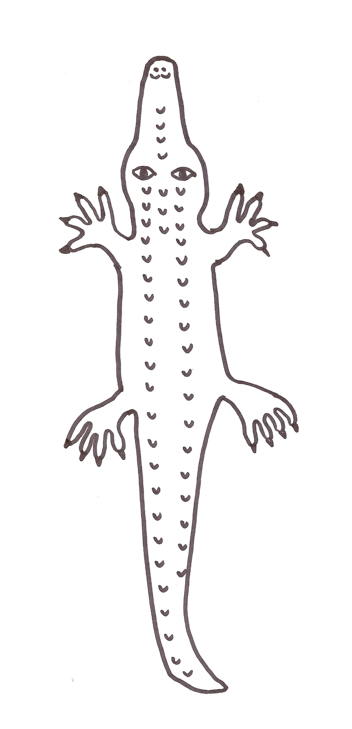
Baby alligators are about 9 inches long.
Duckling at Home on the Pond, by Judith Love

This story tells about a duckling named Dabble and what his first day out of the egg is like. It gives some duck facts in a simple and well-illustrated manner.

Materials

  • Rubber ducks
  • Smooth and rough textured items from room and home        (sandpaper, rock, bark, piece of foil, the lens of an old pair of sunglasses, a plastic protector, a block, a color paddle, a marker, a lego, etc).
  • 1 white paper plate per child.
  • Flannel board parts for Little White Duck
  • Plastic eggs, 6 for blocks and some for the water table.

Vocabulary

  • Reeds (grassy plants that grow beside a pond)
  • Cattail stems (another plant that grows beside a pond)
  •  Gleefully (happily)
  • Dazzled (very impressed)
  •  Smooth (flat)

Before Reading the Story

 If ducks are something that lives in your area and the children might be familiar with, ask them to share their knowledge about ducks. (Where do they live, what do they eat, what sound do they make, can they swim, walk, fly?). 

Science/Scientific Knowledge; expands knowledge of and abilities to observe, describe, and discuss the natural world, materials, living things, and natural processes.

Reading the Story

On the page where Mother duck swims quickly between the snapping turtle and the duckling, ask why do you think that the Mother duck calls her babies to swim ashore?

Literacy /Book Knowledge & Appreciation; demonstrates progress in a bilities to retell and dictate stories from books and experiences; to act out stories in dramatic play; and to predict what will happen next in a story.

After Reading the Story

Look at the list you made of things you know about ducks, can the children add any new facts? (Turtles eat ducklings, baby ducks are called ducklings, Mother Duck makes a soft nest from grass, and she plucks feathers from her breast to make the nest.)

Science/Scientific Knowledge; expands knowledge of and abilities to observe, describe, and discuss the natural world, materials, living things, and natural processes.  AND Literacy /Book Knowledge & Appreciation; demonstrates progress in a bilities to retell and dictate stories from books and experiences; to act out stories in dramatic play; and to predict what will happen next in a story.

Discovery

The story talks about how the eggs were smooth. Talk to the children about things in the room that are smooth.  Put out a box of items that have a variety of textures and let the children sort them by smooth and rough.

Science/Scientific Skills & Methods; develops increased ability to observe and discuss common properties, differences and comparisons among objects and materials.  AND Mathematics/Patterns Skills & Methods; shows increasing abilities to match, sort, put in a series, and regroup objects according to one or two attributes such as color, shape, or size.

Music and Movement

In the story Dabble liked to tip his head down into the water and catch little fish.  Have the children get down on their haunches and pretend to swim by using their hands as feet.  Now encourage them to try to tip their heads down and catch a fish (they will have to use their hands to support them-this should look like the beginnings of a head stand).

Physical Health & Development/Health Status & Practices; progresses in physical growth, strength, stamina, and flexibility.

Make the flannel board parts for Little White Duck and present it to the children. https://www.youtube.com/watch?v=Y57RWhz76y8

There’s a little white duck, sitting in the water

(Put pond, duck and lily pad onto your board)

A little white duck, doing what he oughter.

He took a bite of the lily pad,

He flapped his wings and he said I’m glad

I’m a little white duck sitting in the water, quack, quack, quack.

There’s a little green frog, swimming in the water

(put frog on to lily pad)

A little green frog, doing what he oughter.

He jumped right on that lily pad

That the little duck bit and he said I’m glad

I’m a little green frog swimming in the water, glug, glug. glug.

There’s a little black bug, floating in the water

(put bug on top of the water)

A little black bug doing what he oughter.

He tickled the frog on the lily pad,

That the little duck bit and he said I’m glad

I’m a little black bug floating in the water, chirp, chirp, chirp

There’s a little red snake, lying in the water

(put snake in the water)

A little red snake, doing what he oughter.

He frightened the duck and the frog so bad,

He ate the black bug and he said I’m glad

I’m a little red snake lying in the water, ssss, ssss, ssss.

(remove all the animals)

Now there’s nobody left sitting in the water

Nobody left doing what he oughter.

There’s nothing left but the lily pad

The duck and the frog ran away, I’m sad.

There’s nobody left sitting in the water

Boo, hoo, hoo.

Language Development/Listening & Understanding; demonstrates increasing ability to attends to and understand conversations, stories, songs, and poems.

Blocks

Add several plastic eggs to the center and ask the children if they can build a block nest to keep them safe and from rolling away.

Approaches to Learning/Reasoning & Problem Solving; develops increasing ability to find more than one solution to a question, task, or problem.

Art

Make paper plate ducks. Draw a line across the white paper plate and have the children cut the plate in half along the line.  Help them to staple the two halves together at a right angle.  This is the duck body.  They can collage feathers, triangle shapes, use crayons, or paint their duck bodies. Add a small bill and webbed feet when the duck is dry.

Language Development/Listening & Understanding; shows progress in understanding and following simple and multi-step directions.  AND Physical Health & Development/Fine Motor Skills;develops growing strength, dexterity, and control needed to use tools such as scissors, paper punch, stapler, and hammer.

Library and Writing

 Add flannel board parts for Little White Duck.

Literacy/Book Knowledge & Appreciation; shows growing interest in reading-related activities such as asking to have a favorite book read; choosing to look at books; drawing pictures based on stories; asking to take books home; going to the library; and engaging in pretend-reading with other children.

Sand and Water

            Add rubber ducks and plastic eggs to the water table if you have them.  If not just enjoy water play today.

Dramatic Play

 Remind the children that in the story the Mother duck took very good care of her babies.  Encourage the children to take good care of their babies also.  They can snuggle them, make them a comfortable bed, swaddle them, feed them, and dress them.

Social & Emotional Development/Knowledge of Families & Communities; progresses in understanding similarities and respecting differences among people such as genders, race, special needs, culture, language, and family structures.

Math and Manipulatives

Cut out multiple copies of the insects and use them to show the children how to make simple patterns (ABAB, ABCABC).

Mathematics/Patterns & Measurement; enhances abilities to recognize, duplicate, and extend simple patterns using a variety of materials.

Outdoor Play

Play Turtle tag.  Pretend to be little ducklings swimming around the playground.  The person who is “it” is the snapping turtle who tries to catch a baby duckling for its meal.  Take turns being the turtle and encourage the children to swim little duckling swim!

Physical Health & Development/Health Status & practices; participates actively in games, outdoor play, and other forms of exercise that enhance physical fitness.

Transitions

Hold up 1-5 fingers.  The child must quack the correct number of times as they go off to the next activity.  Older children try 1-10 fingers.

Mathematics/Number & Operations; demonstrates increasing interest and awareness of numbers and counting as a  means for solving problems and determining quantities.

Resources