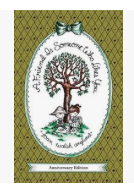
A Friend is Someone Who Likes You, Joan Walsh Anglund

This is a sweet book that tells what a friend is, and it is not always a person. It is a nice supplement to a friendship theme.

Materials

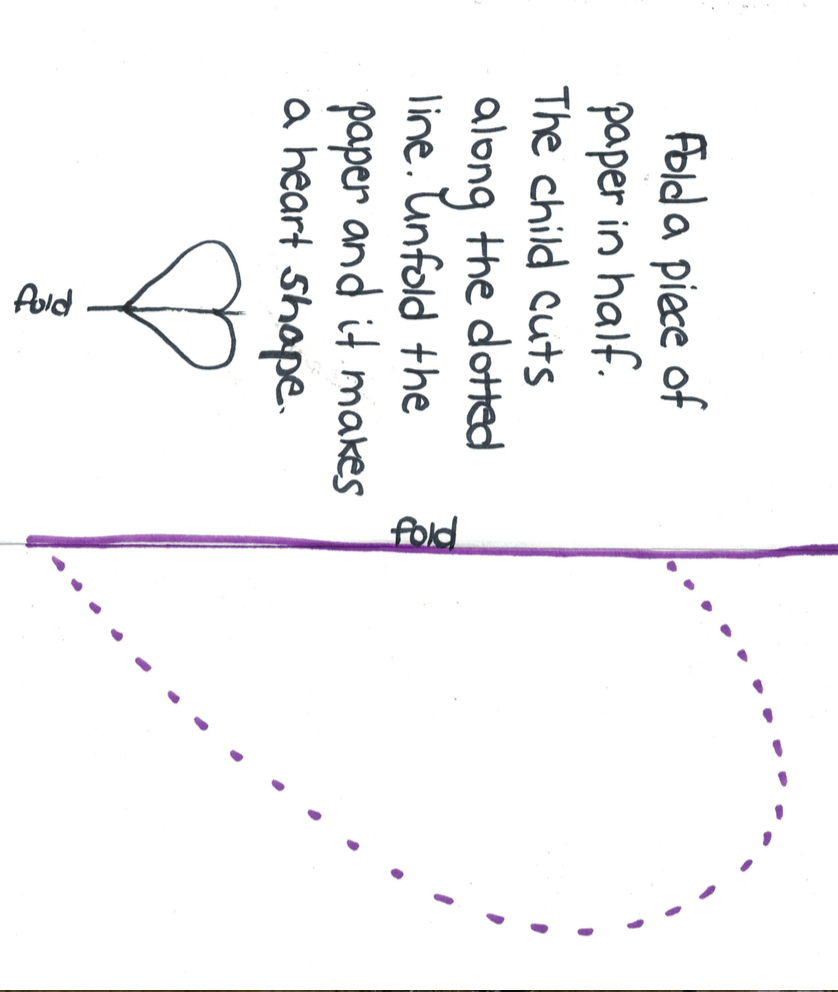
  • Directions for drawing a heart
  • 2-3 rulers
  • Place mats. Cover with contact paper or laminate for longer use.
  • 1-2 box tops

Vocabulary

  • Friend-a buddy, a playmate, a comrade
  • Compliment-to say something nice or friendly about someone.

Before Reading the Story

Ask the children if they know what it means to be a friend. Let them take time to talk about what makes someone a friend. Introduce the story. 

Social & Emotional development/Self-Control; develops a growing understanding of how their actions affect others and begins to accept the consequences of their actions.

Reading the Story

This book has small illustrations so is best read to a small group.  Allow the children to talk about the pages as you read.

Literacy/Book Knowledge & Appreciation; shows growing interest and involvement in listening to and discussing a variety of fiction and non-fiction, and poetry.  AND Language Development/Speaking & Communicating; develops increasing abilities to understand and use language  to communicate information, experiences, ideas, feelings, opinions, needs, questions, and other varied purposes.

After Reading the Story

Ask the children if they have a friendly place they like to go, like the tree or the brook. (I go to my room, I like the park). Ask the children how it makes them feel when they are there (happy, fun, not mad). Talk about how your centers can be a friendly place to go also. Remind them that we have rules at school to help keep our room and centers friendly. Ask the children to talk about what they like to do in each center.

Language Development/Speaking & Communicating; develops increasing abilities to understand and use language to communicate information, experiences, ideas, feelings, opinions, needs, questions, and other varied purposes.  AND Social & Emotional Development/Self-Control; demonstrates  increasing capacity to follow rules and routines and use materials purposefully, safely, and respectfully.

Discovery

If you have a tape recorder, bring it into the classroom today. Give every child a chance to talk into the tape. Record your group singing or playing in your friendship band. During choice time, put the recorder out so the children can listen to the tape and try to guess whose voice they are hearing.

Science/Scientific Methods & Skills; begins to use senses and a variety of tools and simple measuring devices to gather information, investigate materials, and observe processes and relationships.

Music and Movement

Sing I Love You, https://www.youtube.com/watch?v=XwLLH9EZiqc

I love you. You love me
We’re the best friends like friends should be
With a great big hug
And a kiss from me to you
Won’t you say you love me to?

Creative Arts/Music; participates with increasing interest and enjoyment in a variety of music activities, including listening , singing, finger plays , games, and performances.

Get out the instruments today and make music. Tell the children that you are going to be a friendship band because you all have to work together to make your music.

Creative Arts/Music; experiments with a variety of musical instruments.                 

Blocks

Are your block shelves labeled? If not, trace around the various block shapes and tape them to the shelves. At cleanup time, encourage the children to work together to put the blocks away on the shelf where the shape sign shows they belong.

Mathematics/Geometry & Spatial Sense; begins to be able to determine whether or not two shapes are the same size and shape. 

Art

Put out interesting collage materials and one or two box tops. Give the children bottles of glue and explain that they are going to work together to make a 3D collage. This project can be done over several days. Spend one or two days gluing all the ‘stuff inside the box lid and another dripping paint over the whole thing. (We’ve used small food boxes and plastic lids, pipe cleaners, popsicle sticks, pine cones, shells, plastic silverware, buttons and bottle caps.)

Creative Arts/ Art; begins to understand and share opinions about artistic products and experiences. AND Social & Emotional Development/Cooperation; develops increasing abilities to give and take in interactions; to take turns in games and in using materials; and to interact without being overly submissive or directive.

Sand and Water

Add plastic tubing and funnels to the water today. To use these materials together effectively, the children will have to do some cooperating. You can also add any kind of piping you may have such as a marble works type toy.

Social & Emotional Development/Cooperation; develops increasing abilities to give and take in interactions; to take turns in games and in using materials; and to interact without being overly submissive or directive.

Library and Writing

Teach the children how to cut out hearts. Write the children’s names on index cards. Have the children cut out hearts and then encourage them to write the names of their friends on one side and their name on the other side if the hearts. They can either make a collage of hearts or give them to their friends.

Physical Health & Development/Fine Motor Skills; develops growing strength, dexterity, and control  needed to use tools such as scissors, paper punch, stapler, and hammer.

Dramatic Play

Put out your laminated placemats and let the children practice setting the table.  Physical Health & Development/Health Status & Practices; shows growing independence in hygiene, nutrition, and personal care when eating, dressing, washing hands, brushing teeth, and toileting.

Math and Manipulatives

Put out any kind of board game that requires children to take turns.

Social & Emotional Development/Cooperation; develops increasing abilities to give and take in interactions; to take turns in games and in using materials; and to interact without being overly submissive or directive.

Show the children how to use the ruler to measure how long something is (the table). Keep it simple and do not measure by inches but by rulers (the table is 4 and ½ of the rulers long). Challenge the children to measure each other by one child laying on the floor and the other using the ruler to measure length.

Mathematics/Patterns & Measurement; shows progress in using standard and non-standard measure for length and area of objects.

Outdoor Play

Pin a large sheet of paper to the fence. Ideally it should be 3-5 feet in length and of a light color or white. Bring out your easel paints and brushes. Encourage the children to paint their hand with paint and press it onto the paper. Have the children continue until the paper is full of overlapping handprints making different colors and a classroom art piece. Have a bucket of water available for the children to wash their hands upon completion.

Social & Emotional development/Cooperation; increases abilities to sustain interactions with peers by helping, sharing, and discussion.  AND Approaches to Learning/Engagement & Persistence; grows in abilities to persist in and complete a variety of tasks, activities, projects,and experiences.

Transitions

Ask the children if they know what a compliment is. Compliments are something nice or friendly that we say to another person so that they know we are trying to be friendly.   Dismiss the children by having child A say a compliment to child B. Child B then says a compliment to child C. If a child says they cannot think of something nice to say about one of their peers, Make sure you say one or two things before continuing. Every child should walk to the next activity hearing a compliment about themselves, no child should be left forgotten.

Language Development/Speaking & Communicating; develops increasing abilities to understand and use language to communicate information, experiences, ideas, feelings, opinions, needs, questions, and for varied purposes.

Dear Parent-  Today we  were talking about what is a friend.  Talk with your child about one or two things that you think are important qualities for a friend to have.  If you see your child doing something friendly for another, praise him/her and let them know that they are being a good friend. 

Resources

Screen Shot 2018-08-21 at 5.16.15 PM
Screen Shot 2018-08-21 at 5.22.28 PM

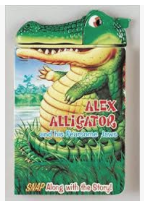
Alex Alligator and his Fearsome Jaws, by Paul Flemming

Alex alligator does not understand why no one wants to be his friend. This book is a good book to talk about bullying behaviors and also teeth! Children like this story because the alligator snaps.

Materials

Alligator mouth for game

Example of A for alligator drawing, B for butterfly, A for ice cream cone****

Several toothbrushes for painting.

Vocabulary

Fearsome (terrifying or frightening)

Handsome (good looking)

Before Reading the Story

Tell the children that each of us is very special and each has a feature/something special they should be proud of themselves for/about. Give the children an example about yourself ( I like that my legs are strong so I am a good runner, I like that my hair is long so it moves in the wind, I like that my eyes are green like my cats). Let the children name some things that they like about themselves. Introduce the story by showing the children the cover. Tell them that this is Alex Alligator and he is proud about something too. Can anybody guess? He is proud of his fearsome jaw and many teeth. Ask, What do you think will happen if he shows all those teeth to the other animals?

Social & Emotional Development/Self-Concept;begins to develop and express awareness of self in terms of specific abilities, characteristics, and preferences.  AND Literacy/Book Knowledge & Appreciation; demonstrates progress in abilities to retell nad dictate stories from books and experiences; to act out stories in dramatic play; amd to predict what will happen next in a story.

Reading the Story

Use the snapper that the story provides and show the children how to make an alligator using their hand in an open/closed fashion. Have them snap along with the story.

Language Development/Listening & Understanding; demonstrates increasing ability to attend to and understand conversations, stories, songs, and poems.

After Reading the Story

Ask, why were all the animals afraid of Alex alligator? (He had mean teeth, they thought he was gonna eat them, he’s an alligator). Explain to the children that sometimes people do not know that they are doing things that make other people afraid of them or not want to play with them. Give some examples, minus names, of things that you have seen in your classroom. (Yesterday I saw one of my friends go into the block center and another child snapped at him, You can’t play here! This morning I saw one of my friends ask if she could have the glue and another child just pretended that she was not even there). How does it make you feel when people treat you badly or snap at you (sad, scared, mad). Let’s practice some better ways to talk to people. Tell the children that you are going to play a friend game. Go around the circle and ask the children questions about being friends. (Kerry what would you do if I asked you for the scissors but you were still using them? What could you say if a friend was watching you build with legos? What should you say if a friend pushes you when we are lining up to go outside?). Think of times in your own room where you see situations arise. If necessary help the children by talking through appropriate responses.

Social & Emotional Development/Social relationships; progresses in responding sympathetically to peers who are in need, upset, hurt, or angry; and in expressing empathy or caring for others.

Discovery

Bring in any real teeth that you might have for the children to look at with a magnifying glass. If you have no real teeth, bring in a book of animals that shows their teeth. (Ask your Dentist for any of your old x-rays)

Science/Scientific Skills & Methods; begins to use senses and a variety of tools and simple measuring devices to gather information, investigate materials, and observe processes and relationships.

Music and Movement

Do the movement rhyme, Here Comes Hungry Alligator by Lori Van Winden

Here comes hungry alligator       

(Put one hand on top of the other and sway back & forth )

He goes chomp, chomp, chomp    

(Open and close hands)

In the swamp, swamp, swamp.

So swim fast little fish                     

(Use one hand to make a fish swimming)

Birds, fly away!                                 

(Raise arms and flap)

Move along turtles and crabs        

(wiggle fingers)

Hurry out of the way!

Because here comes the hungry  Alligator   

(Put one hand on top of the other and sway back & forth.)

Going chomp, chomp, chomp       

(Open and close hands)

In the swamp, swamp, swamp.

Creative Arts/Music; participates with increasing interest and enjoyment in a variety of music activities, including listening, singing, finger plays, games, and performances.

Blocks

Challenge the children to make a path using blocks from one side of the center to the other.  Can they walk across without falling off?  Can they walk it backwards?  When finished the path may look thin like a balance beam or wider like a sidewalk.

Mathematics/Patterns & Measurement; shows progress in using standard and non-standard measures for length and area of objects.  AND Physical Health & Development/Gross Motor Skills; shows increasing levels of proficiency, control, and balance in walking, climbing, running, jumping, hopping, skipping, marching, and galloping.

Art

Give the children pieces of yellow paper that has been cut into a large tooth shape. Put out bowls of white paint and toothbrushes. The children can brush the teeth to a pearly white.  While they work, talk to them about dental hygiene and allow them to share their toothbrushing experiences.

Creative Arts/Art; begins to understand and share opinions about artistic products and experiences.

Library and Writing

Show the children how to make a capital A on a piece of paper. Now turn it on its side and draw an alligator head! The children can add teeth and an eye. Try doing lots of different letters, what shapes can they make?

Literacy/Alphabet Knowledge; shows progress in associating the names of letters with their shapes and sounds.

Sand and Water

Water play. Add long rectangle blocks to pretend to be alligators.

Creative Arts/Dramatic Play; shows growing creativity and imagination in using materials and in assuming different roles in dramatic play situations.

Dramatic Play

While brushing your teeth today, pretend that you are alligators. Brush all your handsome teeth and when you are through, smile a toothy grin and then chomp, chomp, chomp just for fun.

Physical Health & Development/Health Status & Practices; shows growing independence in hygiene nutrition, and personal care when eating , dressing, washing hands, brushing teeth, and toileting.

Math and Manipulatives

Play, The Alligator’s Fearsome Teeth. Make 4 copies of the alligator mouth. Cover them with contact paper. Show the children how to roll tiny balls of play dough to represent the teeth. Now you are ready to begin the game. The children take turns rolling the dice. They may then add that many teeth to their alligator. The winner is the first to fill the alligator’s mouth with fearsome teeth.

Mathematics/Numbers & operations; begins to associate number concepts, vocabulary, quantities, and written numerals in meaningful ways.

Outdoor Play

Use a balance beam and practice walking the plank.  My class liked to use the edge of the sandbox as the balance beam.  They often played that if they fell off into the sandbox that there was an alligator or shark ready to eat them.  Encourage them to try walking forward, backward, and sliding along the beam.

Physical Health & Development/Gross Motor Skills; shows increasing levels of proficiency, control, and balance in walking, climbing, running, jumping, hopping, skipping, marching, and galloping.

Transitions

As the children go to the next activity ask them to answer a question about teeth and dental care. (What kind of doctor takes care of your teeth? When should you brush your teeth? What will happen if you do not brush your teeth? Is drinking soda pop healthy for your teeth? Is it ok to try to open things with your teeth? Why not?).

Physical Health & Development/Health Status & Practices; builds awareness and ability to follow basic health and safety rules such as  fire safety, traffic and pedestrian safety , and responding appropriately to potentially harmful objects, substances, and activities.

Dear Parent- today we talked about the importance of brushing our teeth.  Children should brush their teeth every day.  Watch your child to make sure that he/she is brushing up and down as well as back and forth.

Resources

Screen Shot 2018-09-15 at 7.00.35 PM
Screen Shot 2018-09-15 at 7.03.09 PM

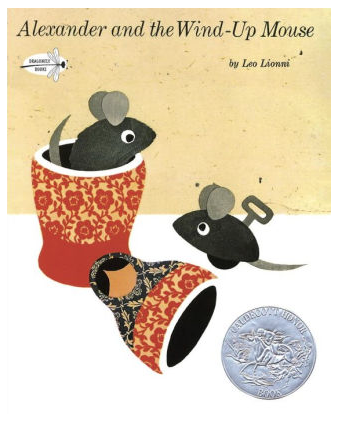
Alexander and the Wind-Up Mouse, by Leo Lionni

Alexander Mouse befriends a little wind-up mouse named Willy.  But one day Willy’s life is about to change.  The child he belongs to has thrown him into the trash.  What will become of Willy?  What will Alexander do to help his friend?

Materials

  • A pebble that is purple or painted purple
  • Pictures of animals both real and not-real
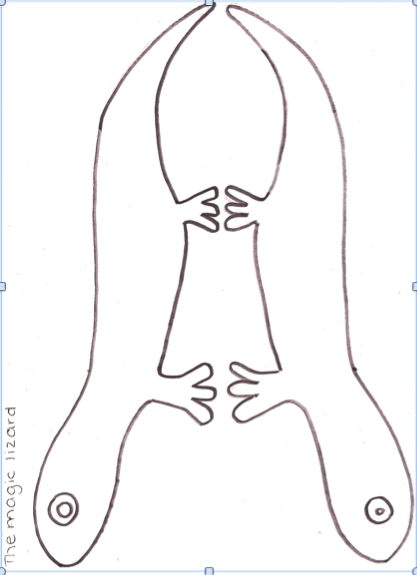
  • lizard shape
  • Eye droppers and food coloring
  • 3-4 wind-up toys

Vocabulary

  • Envy (wishing to be like someone else)
  • Vain (to think you are the best looking, always)

Before reading the Story

Bring a purple pebble to your rug time.  Tell the children that this is a magical purple pebble.  With this pebble you can pretend to be any animal that you wish to become.  Pass the pebble around and let the children tell you what kind of an animal they would choose to be.  Or, ask them to make the animals call sound and see if you can guess what animal they chose to be.

Approaches to Learning/Initiative & Curiosity; chooses to participate in an increasing variety of tasks, activities, projects, and experiences. AND Social & Emotional Development/Self-Concept; begins to develop and express awareness of self in terms of specific abilities, characteristics, and preserfences.

Reading the Story

When you get to the part where Willy is telling Alexander about the magic lizard, stop and ask the children what they think is going to happen next.

Literacy/Book Knowledge & Appreciation; demonstrates progress in abilities to retell and dictate stories from books and experiences; to act out stories in dramatic play; and to predict what will happen next in a story.

After Reading the Story

Ask the children if they thought Alexander was a good friend, why or why not?  Ask the children if they have a favorite toy at home, what is it?

Language Development/Speaking & Communicating; develops increasing abilities to understand and use language to communicate information, experiences, ideas, feelings, opinions, needs, questions; and for varied other purposes.

Discovery

Sort animal pictures by real animals verses not real animals.

Mathematics/Patterns & Measurement; shows increasing abilities to match, sort, put in a series, and regroup objects according to one or two attributes such as shape or color.

Music and Movement

Sing, There is a Child, to the tune of BINGO.  https://www.youtube.com/watch?v=JuBBo8uudYw

Write the children’s names onto sentence strips.  Hold up one of the names as you sing and point to the letters.

There is a child at our school,
Can you guess his/her name-o
S-e-a-n, S-e-a-n, S-e-a-n,
Yes, Sean is his name-o.

Literacy/Alphabet Knowledge; identifies at least 10 letters of the alphabet, especially those in their  name.

Blocks

Add a variety of animals today.  Ask the children to sort them, build a house for their favorite animal, or arrange from smallest to largest.

Mathematics/Patterns & Measurement; shows increasing abilities to match, sort, put in a series, and regroup objects according to one or two attributes such as shape or color.

Art

Cut the lizard out of white construction paper or watercolor paper.  Put out cups filled with water that you have added food coloring to.  Show the children how to pinch the eye dropper to suck the water up and then drop it onto the lizard shape.  Let the children experiment with mixing colors by dropping them onto the lizard shape.

Physical Health & Development/Fine Motor Skills; develops strength, dexterity, and control needed to use tools such as scissors, paper punch, stapler, and hammer.

Sand and Water

Depending upon the children in your care, fill the table up with fish gravel and small pebbles that the children can scoop or pick up with tongs or tweezers.  If you have children that you fear might put the small stones into their facial orifices, use larger stones with sand to scoop and pour as they look for the pebbles.

Physical Health & Development/Fine Motor Skills; develops strength, dexterity, and control needed to use tools such as scissors, paper punch, stapler, and hammer.

Library and Writing

On top of a piece of paper write: I wish, I wish , I wish I was a ___________.  Ask the children to fill in the blank, write their response and then ask the child to draw a picture of what they would like to become.  For older children you can ask them why they chose to become a _______.  Write their response on the paper.

Social & Emotional Development;Self-Concept; begins to develop and express awareness of self in terms of specific abilities, characteristics, and preferences.

Dramatic Play

Give the children a box or bag and ask them to help you clean the center.  Use the box for all the broken or unused items.  It’s time to bring in some new dramatic supplies.

Math and Manipulatives

Bring in any wind up toys that you may have.  (Children seem to really like music boxes where they can see the gears move).

Physical Health & Development/Fine Motor Skills; develops strength, dexterity, and control needed to use tools such as scissors, paper punch, stapler, and hammer.

Outdoor Play

Rhythm march to or around the playground.  As you march chant, “Friends forever, friends forever”.

Creative Arts/Movement; shows growth in moving in time to different patterns of beat or rhythm of music.

Transitions

Have the children repeat the following phrase and insert an animal into the blank.  They can then do the animal movement on their way to the next activity.  “I wish, I wish, I wish I was a ________”.

Social & Emotional Development;Self-Concept; begins to develop and express awareness of self in terms of specific abilities, characteristics, and preferences.

Resources

Screen Shot 2018-09-16 at 6.28.09 PM
Screen Shot 2018-09-16 at 7.00.54 PM
Screen Shot 2018-09-16 at 7.01.06 PM
Screen Shot 2018-09-16 at 7.03.05 PM
Screen Shot 2018-09-16 at 7.02.39 PM
Screen Shot 2018-09-16 at 7.01.23 PM
Screen Shot 2018-09-16 at 7.01.13 PM
Screen Shot 2018-09-16 at 7.01.54 PM
Screen Shot 2018-09-16 at 7.02.05 PM
Screen Shot 2018-09-16 at 7.01.44 PM
Screen Shot 2018-09-16 at 7.01.33 PM
Screen Shot 2018-09-16 at 7.02.30 PM
Screen Shot 2018-09-16 at 7.02.21 PM
Screen Shot 2018-09-16 at 7.03.30 PM
Screen Shot 2018-09-16 at 7.03.20 PM
Screen Shot 2018-09-16 at 7.03.45 PM
Screen Shot 2018-09-16 at 7.03.55 PM
Screen Shot 2018-09-16 at 7.04.11 PM
Screen Shot 2018-09-16 at 7.04.03 PM