Pie pan, baby food oil, eye dropper, and food coloring
Feathers for gluing
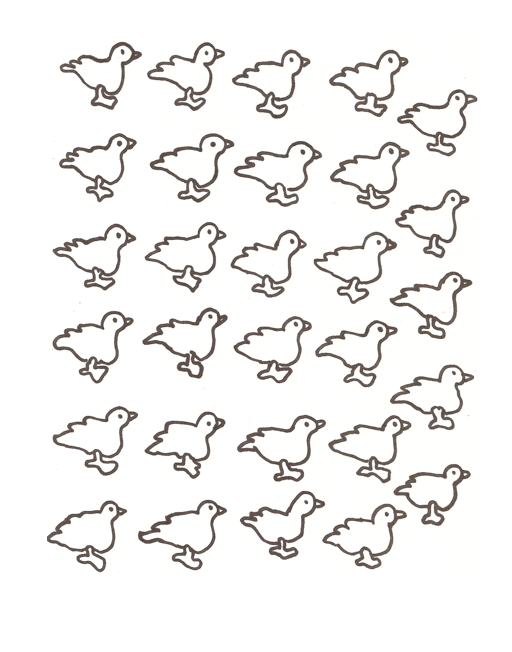
26 ducks
Vocabulary
Before Reading the Story
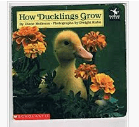
Tape a large piece of paper to the wall divided into three columns. In the first write, What we know. In the second write, What we want to know, In the third write, What we learned. Show the children the cover of the book. Ask the children what they know about ducks. Write their responses in column one. After the children have told all they know about ducks, ask them what they would like to know about ducks. Write these responses in column two.
Science/Scientific Knowledge; expands knowledge of and abilities to observe, describe, and discuss the natural world, materials, living things, and natural processes. AND Literacy/Early Writing; develops understanding that writing is a way of communicating for a variety of purposes.
Reading the Book
Take your time reading the story so that the children can have time to study the pictures. Allow discussion along the way.
Approaches to Learning/Initiative & Curiosity; grows in eagerness to learn about and discuss a growing range of topics, ideas, and tasks.
After Reading the Story
Tell the
children that the third column you made was for things that the children
learned from the book about ducks. Let
them respond. Use the pictures if they
do not respond to help them begin to talk more about ducks.
Science/Scientific Knowledge; expands knowledge of and abilities to observe, describe, and discuss the natural world, materials, living things, and natural processes.
Discovery
Put the book into the center along with paper and pencil so the children can try to draw ducks.
Creative Arts/Art; progresses in abilities to create drawings, paintings, models, and other art creations that are more detailed, creative, and realistic.
In the book it talked about how water rolls off the ducks feather because they have oil in them. Bring in a pie pan and fill it with a little water. Mix some baby oil with food coloring. Let the children use an eye dropper to drop colored oil into the water and see what happens.
Science/Scientific Skills & Methods; begins to use senses and a variety of tools and simple measuring devices to gather information, investigate materials, and observe processes and relationships.
Creative Arts/Music; participates with increasing interest and enjoyment in a variety of music activities including listening, finger plays, singing, games, and performances.
Blocks
Encourage the children to make a pond or lake for the ducks. If you have a rubber duck put it into the center.
Approaches to Learning/Engagement & Persistence; demonstrates increasing ability to set goals and develop follow through on plans.
Art
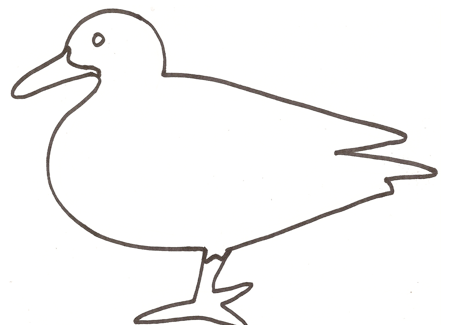
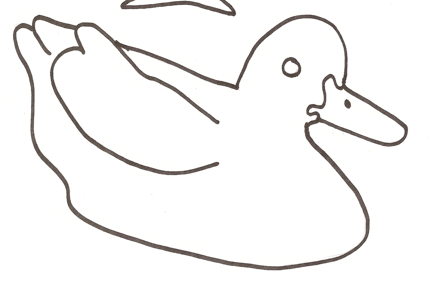
Cut out duck shapes from construction paper. Let the children make a feather collage on top of the duck.
Creative Arts/Art; gains ability using different art media and materials in a variety of ways for creative expression and representation.
Sand and Water
Fill the table with water and add rubber ducks to float. Encourage the children to find other objects in the room that float.
Science/Scientific Skills & Methods; begins to participate in simple investigations to test observations, discuss and draw conclusions, and form generalizations.
Dramatic Play
Math and Manipulatives
Make two sets of the 26 ducks page. Cut them out and let the children match the like ducks. Put an alphabet letter onto each duck pair or numbers, colors that you are working on.
Literacy/Alphabet Knowledge; identifies at least 10 letters of the alphabet, especially those in their own name.
Outdoors
Play follow the leader. The teacher can be the mother duck and the children follow along behind. Make quacking noises as you lead the children to or around the playground.
Physical Health & Development/Health Status & Practices; participates actively in games, outdoor play, and other forms of exercise that enhance physical fitness.
Transitions
Tell the children to listen closely and count your quacks. Quack out loud for each child 1-10 quacks depending upon where each child is developmentally.
Mathematics/Number & Operations; demonstrates increasing interest and awareness of numbers and counting as a means for solving problems and determining quantity.
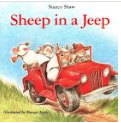
Five sheep go out in a jeep for an adventure but things do
not go as planned. The illustrations
and rhyming words make this the kind of book that young children seem to enjoy
over and over.
Steep (that goes down very quickly and sharply) use arm to show
Leap (to jump)
Yelp (to shout)
Weep (to cry)
Before Reading the Story
Look at the cover of the book with the children. Ask them if they know what kind of animal is in the jeep? Tell the children that the sheep are going on an adventure; I wonder where they could be going? Allow the children to make guesses about where the sheep might be going. Introduce the book and read.
Approaches to Learning/Reasoning & Problem Solving; develops an increasing ability to find more than one solution to a question, task, or problem.
Reading the Story
When you get to page that says, “sheep don’t think to look up front”. Ask the children what they think might be about to happen? If necessary, remind the children that the sheep are on a steep hill (use arm to show). On page where, “sheep shrug”, ask the children now what could the sheep do? On the page where the sheep shout, have the children notice the sheep’s faces. How do you think they are feeling? Why? When you get to the page that says, “the driver sheep forgets to steer”, ask the children again what they think might happen?
Literacy/Book Knowledge & Appreciation; demonstrates progress in abilities to retell and dictate stories from books and experiences; to act out stories in dramatic play; and ability to predict what will happen next in a story. AND Language Development/Speaking & Communicating; develops increasing abilities to understand and use language to communicate information, experiences, ideas, feelings, opinions, needs, questions,; and for other varied purposes.
After Reading the Story
Now go back and reread the story without stopping and asking comprehension questions. Read it with a good rhythm so that it flows and the children can really hear the rhyming that occurs throughout the story. When you are finished reading play a game with rhyming words. Say AT and have the children try to make words that rhyme with it (cat, bat, fat, hat, etc.). Try other sounds such as IT, OG, and EEP.
Literacy/Phonological Awareness; progresses in recognizing matching sounds and rhymes in familiar words, games, songs, stories, and poems.
Discovery
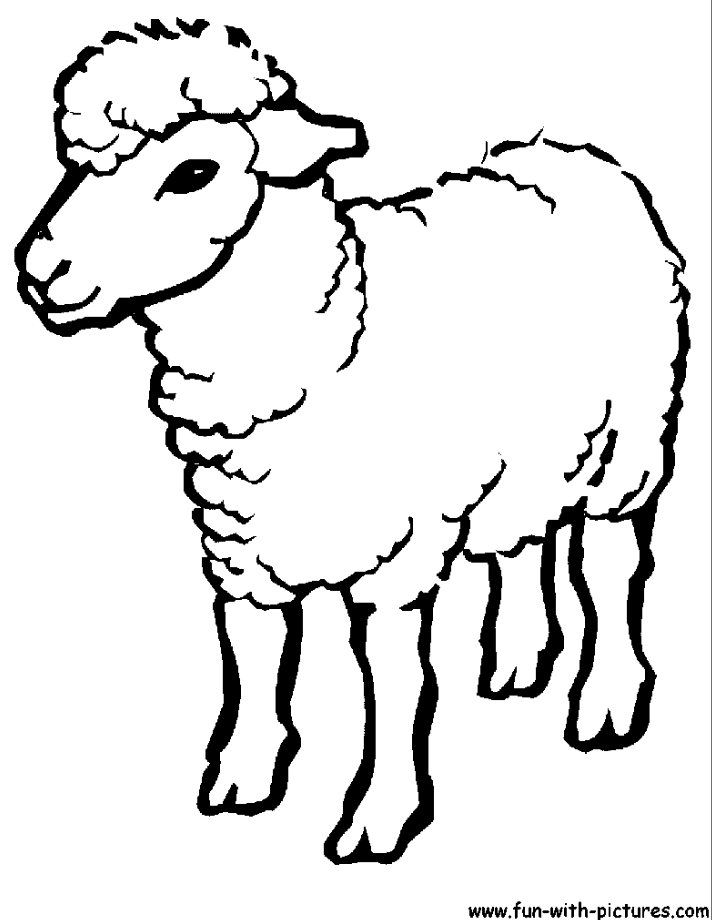
Put out a variety of textured objects for the children to feel and talk about. Can they name the various textures or relate them to something else? (this tree bark is rough and bumpy like this sandpaper). Ask the children if they can guess which texture object is most like a real sheep? (soft like a cotton ball).
Science/Scientific Skills & Methods; begins to use senses and a variety of tools and simple measuring devices to gather information, investigate materials, and observe processes and relationships.
Music and Movement
Sing Rhyming Words
Sound the Same sung to tune of Loopty Loo.
Rhyming words sound the same (clap, clap)
Rhyming words sound the same. (clap, clap)
Rhyming words sound the same (clap, clap)
Rhyming words sound the same.
As you are singing this put out three pictures, two of rhyming words and one that does not rhyme. Have a child tell you which does not belong and then begin again.
Literacy/Phonological Awareness; progresses in recognizing matching sounds and rhymes in familiar words, games, songs, stories, and poems.
1 little 2 little 3 little sheep
4 little 5 little 6 little sheep
7 little 8 little 9 little sheep
10 little sheep say “Baaaa”.
Hold up fingers as you sing or recite.
Mathematics/Number & Operations; develops increasing ability to count in sequence to 10 and beyond.
Blocks
Add small cars and long pieces of sturdy cardboard to make ramps. Show the children how when they make a bigger angle, the car will go down the ramp quicker. Add a ruler so they can measure the length from the bottom of the ramp to where the car stops rolling.
Science/Scientific Skills & Methods; begins to use senses and a variety of tools and simple measuring devices to gather information, investigate materials, and observe processes and relationships. AND Mathematics/Number & Operations; begins to associate number concepts, vocabulary, quantities, and written numerals in meaningful ways.
Art
Sheep cotton balls For more artistic sheep, use puff balls
Creative Arts/Art; develops growing abilities to plan, work independently, and demonstrate care and persistence in a variety of art projects.
Sand and Water
Make mud. Empty the dirt into the table and then have the children add water one measuring cup full at a time. What will happen when you mix the dirt and water? How many cups did it take to make mud? How have the children figured out how to mix the dirt and water?
Science/Scientific Skills & Methods; begins to participate in simple investigations to test observations, discuss and draw conclusions, and form generalizations.
Library and Writing
Remind the children that the book today was called Sheep in a Jeep. Ask the children if sheep could really drive a jeep? What else could you pretend the sheep are in? Encourage the children to use their imagination and then draw an illustration of Sheep in a __________. After they have finished, you can write their response on the bottom of their paper or on another piece of paper and attach it. (Sheep in a car, truck, washing machine, swimming pool, grocery store).
Literacy/Early Writing; begins to represent stories and experiences through pictures, dictation, and in play.
Dramatic Play
Bring in several chairs today and something to be a steering wheel. The children can pretend that they are sheep in a jeep. (I have used a Styrofoam plate or the cardboard under a pizza for a steering wheel).
Literacy/Early Writing; begins to represent stories and experiences through pictures, dictation, and in play. AND Creative Arts/Dramatic Play; shows growing creativity and imagination in using materials and in assuming different roles in dramatic play situations.
Math and Manipulatives
Give each child a bowl or cup and a pincher type clothespin. Spread two handfuls of cotton balls out on the table or floor. The children take turns rolling a dice and picking up that many cotton balls using the clothespin and dropping them into their bowl. When all the cotton balls are picked up, have the children count how many they have. Who has the most? The least?
Mathematics/Number & Operations; begins to use one-to-one correspondence in counting objects and matching groups of objects. AND Mathematics/Number & Operations; begins to use language to compare numbers of objects with terms such as more, less, greater than, fewer, equal to.
Outdoor Play
If you have a hill in your play yard, roll balls or hula-hoops down. If using balls, roll the ball down the hill and see if the children can kick it back up the hill.
Physical Health & Development/Gross Motor Skills; demonstrates increasing abilities to coordinate movements in throwing, catching, kicking, bouncing balls, and using the slide and swing.
Remind the children that in the story the sheep tried to tug their jeep from the mud. Use a jump rope to make a tug of war game. Have two children on each team. The children pull and tug trying to get the other team to move forward. Let different groups of children try being tugging teams.
Physical Health & Development/Health Status & Practices; participates actively in games, outdoor play, and other forms of exercise that enhance physical fitness.
Transitions
Play I’m Thinking of a child that rhymes with __________. That child may then move on to the next activity. (I’m thinking of a child that rhymes with berry. I’m thinking of a child that rhymes with favid).
Literacy/Phonological Awareness; progresses in recognizing matching sounds and rhymes in familiar words, games, songs, stories, and poems.
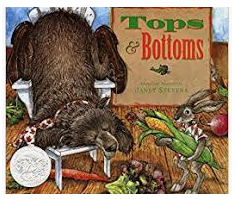
Bear is too lazy to plant his own garden and relies on
Hare. Using his creative powers, Hare
finds a way to get the best of the deal for him and his family.
Materials
Silk flower tops (ask your local craft store if they have any loose flowers that you can have)
Pipe cleaners cut into 4-6 inch pieces.
Several pieces of celery and several carrots.
Model of Jumping from Top to Bottom of the Alphabet board.
Vocabulary
Hare (another word for rabbit)
Cheated (swindle or deceive)
Clever (to be smart)
Crops (what a farmer plants in the fields)
Business Partners (someone you work with or do a job with)
Debt (money owed)
Profit (crop yield)
Harvest (the time to pick produce)
Before Reading the Story
Bring any plastic fruits and vegetables that you have to the group time. Explain to the children that your story today is about a Hare, or rabbit, that plants many different kinds of vegetables. Hold up one of your plastic produce pieces and ask if it is a fruit or a vegetable? Sort them accordingly. Put the fruits aside and hold up one of the vegetables, can the children name them? Continue through all your plastic vegetables. Introduce the story. Read the Title of the book and then open it up to the first page. Ask the children if they notice something different about the book (it opens vertically).
Language Development/Listening & Understanding; demonstrates increasing ability to attend to and understand conversations, stories, songs, amd poems.
Reading the Story
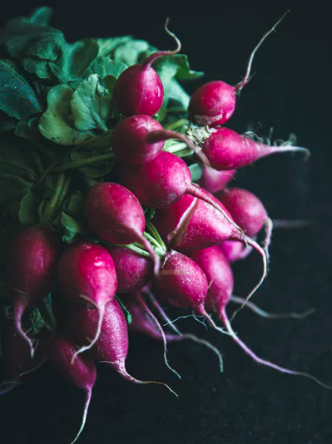
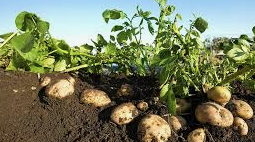
When you get to the page where Hare and his family dug up all the carrots, radishes, and beets, ask the children if they know which part of these plants we eat? When you get to the part where Bear says “You plant this field again-and this season I want the bottoms!” Ask the children what they think is going to happen. (Bear will get mad, He’s gonna get the carrots, The rabbit tricked him). Ask again when you get to the page where Bear says he gets the tops and the bottoms. (The rabbit won’t get any, He will trick Bear, Bear will help plant the garden and they will share).
Literacy/Book KNowledge & Appreciation; demonstrates progress in abilities to retell and dictate stories from books and experiences; to act out stories in dramatic play; and to predict what will happen next in a story.
After Reading the Story
Ask the children why Bear got mad? Do you think it was fair that Bear should get all the vegetables if he did not help plant and care for the garden? Begin a discussion on how everybody needs to cooperate and work together. Make a Thumbs Up, Thumbs Down game out of it using classroom examples. The children put their thumb up if they feel the statement is fair and their thumb down if they feel the statement is unfair. 1) Everyone has to cleanup to go outside except one child who got to look at books. 2) Everyone has to throw his or her food in the garbage after lunch except one child because he is too tired. 3) All the children worked together to bring the toys outside. 4) No one got to look at books because one child was not taking care of them. 5) All the children were working hard so the teacher said they could go outside ten minutes early. Make examples of incidents that have happened in your own classroom, leaving out any child’s name.
Social & Emotional Development/Cooperation; shows increasing abilities to use compromise and discussion in working, playing, and resolving conflicts with peers. AND Approaches to Learning/Initiative & Curiosity; chooses to participate in an increasing variety of tasks and activities.
Discovery
Bring in a couple of pieces of celery and several carrots. Let the children use their senses to explore the produce and write down their thoughts. (The celery has bumps, it smells good, the leaves are at the top. The carrot has dirt on it, it is pointy on the bottom, it’s got circles around it). After everyone has had a chance to observe the celery and carrots, cut them into small pieces and do a taste test. Make a chart showing which one each child liked best; carrot-celery. WARNING, carrots are considered checkable when cut into round circle. Cut the carrot into thin strips instead. This activity could be done using more vegetables if monies allow.
Science/Scientific Skills & Methods; develops growing abilities to collect, describe, and record information through a variety of means, including discussion, drawings, maps, and charts.
At lunch talk about any vegetable that you are eating. Do we eat the top, bottom, or middle of the vegetable? Is it crunchy or soft? Is it cooked or raw? Ask children to describe the vegetable as best they can.
Science/Scientific Skills & Methods; develops growing abilities to collect, describe, and record information through a variety of means, including discussion, drawings, maps, and charts.
Music and Movement
The Opposite Song
Everything I always say, you always say the opposite.
When I say up, you say down.
Include other opposites such as top/bottom, lazy/active, in/out, under/over
Language Development/Speaking & Communicating; uses an increasingly complex and varied vocabulary. AND Mathematics/Geometry & Spatial Sense; builds an increasinging understanding of directionality, oeder, positions of objects, and words such as up, down, oover, under, top, bottom, inside, outside, in front, behind.
Act out the poem, Dig a little hole
Dig a little hole and put the seed in.
Cover it with dirt and let the sun shine in.
Add a little water and keep it fed,
pretty soon a little plant will show it’s head.
Language Development/Listening & Understanding; demonstrates increasing ability to attend to and understand conversations, stories, songs, and poems.
Pretend to be a seed and grow into a plant. Ask the children what kind of a plant they grew in to.
Creative Arts/Dramatic Play; participates in a variety of dramatic play activities that become more extended and complex.
Blocks
Cut out a triangle, a square, and a rectangle from paper. Show the children the shapes and say that many people put fences around their gardens to keep critters out. Give the children a paper shape and encourage them to copy the shape out of blocks. When they are finished they can trade shapes with one another.
Mathematics/Geometry & Spatial Sense; progresses in ability to put together and take shapes apart.
Art
Put out orange playdough today and make lots of carrots. Ask the child, “Can you make 5 carrots”? Or “How many carrots did you make in all”?
Mathematics/Number & Operations; begins to make use of one-to-one correspondence in counting objects and matching groups of objects.
Have carrot shapes drawn on orange paper for the children to cut out. Glue this to a piece of construction paper. When the carrot is dry, put out bowls of brown paint that you have mixed a little sand into (this will give the paint a full body and texture). Have the children paint over the carrot bottom. When this is dry, add a few strips of green to make the carrot top.
Creative Arts/Art; progresses in abilities to create drawings, paintings, models, and other art creations that are more detailed, creative, or realistic.
Sand and Water
Put damp sand in the table today. Add pipe cleaners cut into 4-6 inch pieces and the flower tops. Show the children how to put the flower onto the pipe cleaner and then pretend to plant them in the damp sand. Add a couple of spoons to help with the digging.
Creative Arts/Dramatic Play; shows growing creativity and imagination in using materials and in assuming different roles in dramatic play situations.
Library and Writing
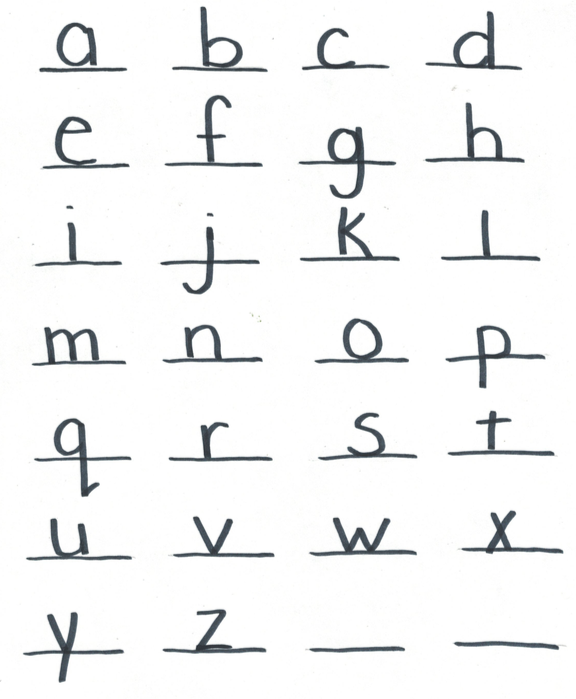
Give the children the above the line/below the line page along with alphabet magnets or letters. Have the children sort by those that the letter goes below the line and those that the letter stays above the line.
Literacy/Alphabet Knowledge; shows progress in associating the names of letters with their shapes and sounds.
Dramatic Play
Pull out your play produce and 3 bowls. Challenge the children to sort the produce by which part of the plant we eat. The bottom/roots, top/flower, or middle/stems- leaves.
Mathematics/Patterns & Measurements; begins t make comparisons between several objects based on a single attribute.
Math and Manipulatives
On a piece of paper draw a line across the center. Label Tops and Bottoms. The children use the vegetable cards to sort by those that we eat the tops of and those that we eat the bottoms of.
Mathematics/Patterns & Measurements; begins t make comparisons between several objects based on a single attribute.
Outdoor Play
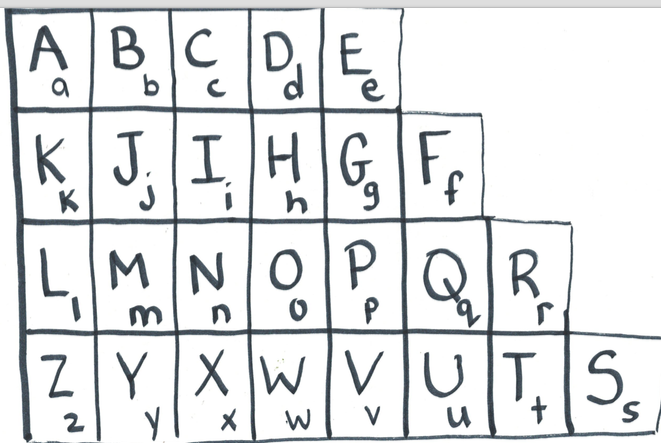
Play Jumping to the Top of the Alphabet. Look under resources to see how to draw the jumping board on your sidewalk area. Make each square big enough for a child to jump inside of. The child starts with A and jumps along naming the letters. If they miss a letter, they must return to A and start again. For older children who know many of their letters, after they jump and name the letter, they must say a word that begins with the letter.
Literacy/Alphabet Knowledge; identifies at least 10 letters of the alphabet, especially those in their name.
Transitions
Tell the children that the littlest rabbit was hungry but
Mrs. Rabbit and Hare could not understand what she wanted to eat! When she said Weet, she really meant
Beet. When she said Warrot, she really
meant ________. When she said Welery,
she really meant _________. When she
said Woccoli, she really meant ________.
When she said Wettuce, she really meant ________. When she said Worn, she really meant
________.
Continue making up words until everyone has had a turn to name a vegetable.
Literacy/Phonological Awareness; progresses in recognizing matching sounds and rhymes in familiar words, games, songs, stories, and poems.





















 Book Play Everyday
You must be logged in to post a comment.