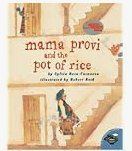
Mama Provi and the Pot of Rice, by Sylvia Rosa-Casanova

            When Lucy gets the chicken pox, Mama Provi knows just what she needs to feel better.  She cooks up some arroz con pollo and heads up the eight flights of stairs to her grand daughters apartment.  On the way she meets some of her neighbors and the simple meal turns into a feast.

Materials

  • Local real-estate advertisements.  Two of each to use for matching.
  • Face picture
  • Dice
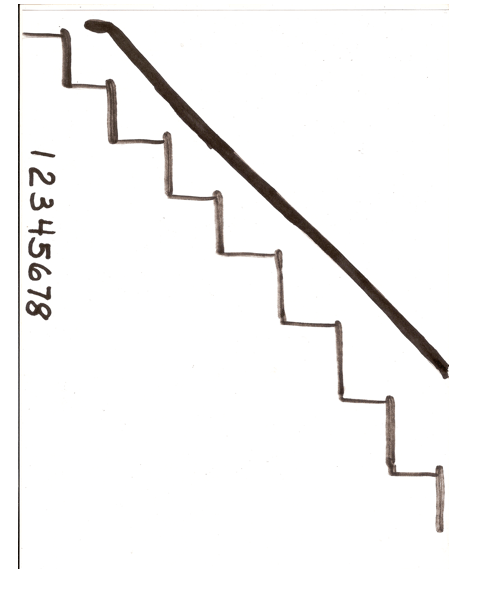
  • Picture of stairs
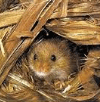
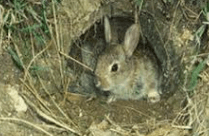
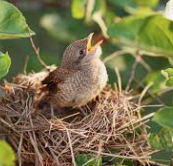
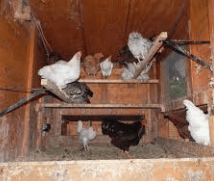
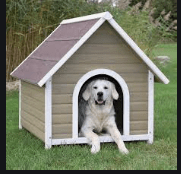
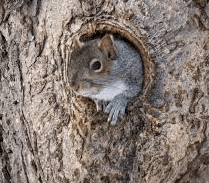
  • Animals in their homes

Vocabulary

  • Apartment  (a home in a large building that has more than one home in it).
  • Dozen (12 of something)
  • Tremendous (something really great or wonderful)

Introducing the Reading the Story

            Ask the children if they know if they live in a house or an apartment? If you do not have any children who live in an apartment, show the children a picture of one, or draw one and explain that it has many floors that people live on.  Sometimes there is an elevator and sometimes there are only stairs.  Show the children the book cover and tell the children that Mama Provi lives in an apartment.  She lives on the bottom floor and her grand daughter lives on the top floor.  Read the title of the book and ask the children if they can guess why Mama Provi might be carrying a pot of rice up to her granddaughter Lucy. 

Approaches to Learning/Reasoning & Problem Solving; develops increasing abilities to classify, compare, and contrast objects, events, and experiences.

Reading the Story

            As Mama Provi goes up each flight of stairs, huff and puff a little as though you are slightly out of breath. 

After Reading the Story

 In the story Lucy had the Chickenpox.  Ask the children if they have ever had the chickenpox or been sick in bed.  Who took care of you, what did they do to make you feel better?  

Social & Emotional Development/Knowledge of Families & Communities; progresses in understanding similarities and respecting differences among people, such as genders, race, special needs, culture, language, and family structures. AND Language Development/Speaking & Communicating; develops increasing abilities to understand and use language to communicate information, experiences, ideas, feelings, opinions, needs, questions; and for other varied purposes.

Music and Movement 

            Play the Pretend game.  Pretend to carry something heavy.  Pretend to carry something wiggly, something enormous, and something very small. 

Creative Arts/ Dramatic Play; shows growing creativity and imagination in using materials and in assuming different roles in dramatic play situations.

Teach the children The Elevator Song. https://www.youtube.com/watch?v=mfrn5_v_eCM Make your bodies go up and down with the song.

Mathematics/Geometry & Spatial Sense; builds an increasing understanding of directionality, order, and positions of objects, and words such as up, down, over,under, top, bottom, inside, outside, in front, and behind.

Do the song, Let’s Go Riding an Elevator using scarves to act out. https://www.youtube.com/watch?v=1sOlpdcEjsQ

Creative Arts/ Movement; shows growth in moving in time to different patterns of beat and rhythm in music.

Discovery

            Bring in pictures or books about animals and their homes.

Science/Scientific Knowledge; expands knowledge of and abilities to observe, describe, and discuss the natural world, materials, living things, and natural processes.

Blocks

            Give the children 10 cube shaped blocks or similar shaped blocks and challenge them to build stairs. 

Mathematics/Geometry & Spatial Sense; progresses in ability to put together and take shapes apart.

Art

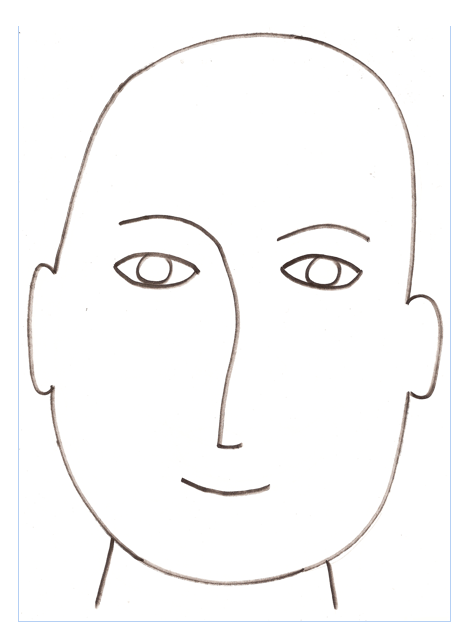
            Encourage the children to draw a large head shape, or use the one provided.  Let the children use bingo daubers or their fingers to make chicken pocks on the head shape.  The children can also personalize by adding hair or extending features.

Creative Arts/Art; gains ability in using different art media and materials in a variety of ways for creative expression and representation.

Sand and Water

            If your center allows, add rice to the table for pouring and scooping.  If not, try birdseed as it makes the same kind of soothing sound when being scooped and poured. 

Library and Writing

            Give each child a picture of the stairs and encourage them to copy or write the numbers on each level.  They can then cut out pictures of food to glue on the picture, or draw a picture of their own favorite food/s. 

Physical Health & Development; Fine Motor Skills; progresses in abilities to use writing, drawing, and art tools, including pencils, markers, chalk, paint brushes, and various types of technology. AND Mathematics/Number & Operations; begins to associate number concepts, vocabulary, quantities, and written numerals in meaningful ways.

Dramatic Play

            Bring in gift bags or shopping bags that the children can use in their play today.

Encourage the children to do some delicious cooking.  Can they name all the pretend foods in your dramatic center? 

Language Development/Speaking & Communicating; uses an increasingly complex and varied vocabulary. 

Math and Manipulatives

            Put the picture of the face on the table and explain to the children that when a person has the chicken pox that they get a rash that is all spotty.  Let the children take turns rolling the dice.  They can count the number of spots on the dice and then use a marker to make the corresponding spots on the face picture.  As the children continue to add spots make comments about how the face sure has many chicken pox! 

Mathematics/Number & Operations; begins to use one-to-one correspondence in counting objects and matching groups of objects.

Outdoor Play

            Use mud, sand, dirt, rocks, and other natural ingredients to cook a yummy feast today. 

Creative Arts/Dramatic Play; shows growing creativity and imagination in using materials and in assuming different roles in dramatic play situations.

Transitions

            In the story everyone made their food trades “En un dos port res” which means lickedty split or quickly.  As the children move to the next activity ask them to move En un dos port tres or lickedty split. 

Language Development/Listening & Understanding; understands an increasingly complex and varied vocabulary.

Resources

Dear Parent,

            Cooking is a wonderful way to share an experience with your child.  While cooking you are introducing your child to math (add 2 cups of _______, ¼ teaspoon ____) and also science concepts (what happens to an egg when you add heat?  What happens when you mix milk with flour?).  Find a simple recipe that you and your child can make together.
Description: Macintosh HD:Users:rogercormier:Desktop:Scan.tiff
Description: Macintosh HD:Users:rogercormier:Desktop:Scan 1.tiff

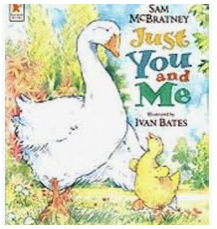
Just You and Me, by Sam McBratney

            The rain is coming and Little Goose and Gander Goose must find a place to hide.  Along the way they meet several woodland animals who are willing to share their space.  But Little Goose wants to be alone with Gander Goose.  What will happen when the storm comes?

Materials

  •             Umbrella shape
  •             Empty plastic food containers with holes punched in them.
  •             Food coloring
  • Bag of Cotton balls
  •             Eye droppers
  •             Many white coffee filters

Vocabulary

  •             Gosling ( a baby goose)
  •             Gander (A father goose)
  •             Ditch (a drain for water on the side of the road or path)

Before Reading the Story

            Ask the children if they have ever been outside when a storm is approaching.  How could they tell it was going to rain?  Talk about storm safety and how it is important to get indoors when they hear the thunder.  Tell the children that the story today is about a little goose and his father who must find a place to get out of the storm.

Science/Science Knowledge; expands knowledge of and abilities to observe, describe, and discuss the natural world, materials, living things, and natural processes. AND Physical Health & development/Health Status & Practices; builds awareness and ability to follow basic health and safety rules such as fire safety, traffic and pedestrian safety, and responding appropriately to potentially harmful objects, substances, and activities.

Reading the Story

            When Little Goosey tells Gander Goose that he wants to be alone, just you and me, ask the children why they think that is?  Each time you get to the line “Just you and me” have the children repeat it with you.

Approaches to Learning/reasoning & Problem Solving; grows in recognizing and solving problems through active exploration, including trial and error, and interactions and discussions with peers and adults. AND Literacy/Book Knowledge & Appreciation; shows growing interest and involvement in listening to and discussing a variety of fiction and non-fiction, and poetry.

After Reading the Story

            Ask the children if they were out in the woods where they would go to get out of a storm?  Pretend to be forest animals (ask the children what kind of animal they want to be) and all go and look for places in the room to hide (under the tables).   When the storm is over come back to the carpet area.

Creative Arts/ Dramatic PLay; shows growing creativity and imagination in using materials and in assuming different roles in dramatic play situations.

Discovery

Fill a bowl up with colored water. Have the children drop a cotton ball into the water. What happens? Tell them that clouds soak up the water from lakes and river. Ask the child to squeeze the water out of the cotton ball back into the bowl. Explain that when a cloud gets too heavy with water, then it makes rain (or snow). Let the children experiment making rain clouds and then squeezing them to produce rain. Challenge the children to pick up the cotton balls using tongs or tweezers to work their fine motor muscles.

Science/Scientific Skills & Methods; begins to participate in simple investigations to test observations, discuss and draw conclusions, and form generalizations.


Music and Movement

            Sing Rain, Rain, Go Away https://www.youtube.com/watch?v=twabSyJmppI

Rain, rain go away

Come again another day

We want to go out and play.

Creative Arts/Music; participates with increasing interest and enjoyment in a variety of music activities, including listening, singing, finger plays, games and performances.

            Make a rain storm with the children

 Drip, drop, drip, drop…rain,rain,rain          Tap fingers on legs

 Pitter,patter,pitter,patter…rain,rain,rain        Tap hands on legs

 Downpour, downpour…rain,rain,rain        Slap hands on legs

  Thunder,thunder…rain,rain,rain                 Clap hands together

  Downpour, downpour…rain,rain,rain        Slap hands on legs

Pitter patter, pitter patter…rain,rain,rain       Tap hands on legs

 Drip drop, drip drop…rain, rain, rain          Tap fingers on legs

 Out comes the sun…ah,ah,ah                     Hands over head in circle, smile

Creative Arts/Music; participates with increasing interest and enjoyment in a variety of music activities, including listening, singing, finger plays, games and performances.

Blocks

            ASk the children if they can make a shelter from the rain for the play people or animals?  Make sure you add a sturdy roof.

Approaches to Learning/Initiative & Curiosity; approaches tasks and activities with increased flexibility, imagination, and inventiveness.

Art

            Give the children umbrella shapes to decorate.  After it is dry, glue it to a piece of paper and have the children draw a self portrait under the umbrella.  Write their rain poem underneath (see Library and Writing).

Creative Arts/ Art; progresses in abilities to create drawings, paintings, models, and other art creations that are more detailed, creative, or realistic. AND Physical Health & Development/Fine Motor Skills; progresses in abilities to use writing, drawing , and art tools, including pencils, markers, chalk,paint brushes, and various types of technology.

Sand and Water

            Use a nail to make holes into empty plastic food containers.  Put a few holes in some and many in others.  The children can fill them up with water and make rain.

Science/Scientific Skills & Methods; develops increased ability to observe and discuss common properties, differences and comparisons among objects and materials.

Library and Writing

            Recite to the children the poem Rain.

Rain on the roof tops,

And rain on the trees.

Rain on the green grass,

But not on me!

            Have the children write their own version by changing the bolded words to their own. (Rain on the cat, rain on my Dad, rain on the car, but not on me!)

Literacy/Early Writing; begins to represent stories and experiences through pictures, dictation, and in play.

Dramatic Play

            Put slickers and boots into the center so the children can play rainy day. Remind them again about being safe during a thunderstorm.

Science/Scientific Knowledge; expand knowledge of and respect for their bodies and the environment.

Math and Manipulatives

            Make a class collage.  Make a large rainbow on a piece of poster board with crayons.  Give the children long pieces of paper (1inch by 10 inches) in colors that correspond to your rainbow.  Have the children make snips with the paper and then glue the snips onto the rainbow.  Practice “Not a lot, just a drop” as they glue the paper snips to the rainbow.

Mathematics/Geometry & Spatial Sense; shows growth in matching, sorting, putting in a series, and regrouping objects according to one or two attributes such as color, shape, or size. AND Physical Health & development/Fine Motor Skills; develops growing strength, dexterity, snd control needed to use tools such as scissors, paper punch, stapler, and hammer.

Outdoor Play

            Let the children dig a hole and add water.  Mud play after a rain!

Science/Scientific Skills & Methods; begins to use senses and a variety of tools and simple measuring devices to gather information, investigate materials, and observe processes and relationships.

Transitions

Encourage the children to waddle like a goose as they go to the next activity.

Creative Arts/ Dramatic PLay; shows growing creativity and imagination in using materials and in assuming different roles in dramatic play situations.

Resources

Katy No-Pocket, by Emmy Payne

            Kangaroos carry their young in front pockets on their bodies.  What is to become of Katy’s son Freddy when she has no way to carry him?

Materials

  • Pocket chart or hanging shoe holder.
  • Animals from the story and several others that begin with the same letter
  • Picture of a kangaroo with a pocket and a baby
  • Pocket shape
  • Several long scarves

Vocabulary

  • Awfully (extremely) really big hops
  • Enormous (another word for really big)
  • Cross (angry or crabby)
  • Carpenter (a person who uses tools to build houses and things of wood)

Before Reading the Story

            Hold up the picture of the kangaroo and ask the children if they know what kind of an animal this is?  Ask them if they can see the baby kangaroo?  Explain that the mother kangaroo has a special pocket in her stomach to carry the baby kangaroo.  Read the title of the book.  Ask the children what they can guess what the problem is in the story (the mother has no way to carry her baby).  Ask them if they can think of a way to help the mother kangaroo to carry her baby.  Have the children look at their clothing and count the number of pockets that they are wearing.  Show the children the front of the book and re-read the title and begin.

Literacy/Book Knowledge & Appreciation; demonstrates progress in abilities to retell and dictate stories from books and experiences; to act out stories in dramatic play; amnd to predict what will happen next in a story. AND Mathematics/Number & Operations; begins toi use one-to-one correspondence is counting objects and matching groups of objects.

Reading the Story

As you read, pay attention to the different feelings that the animals are experiencing. Let the children talk about them.

Language Development/Speaking & Understanding; develops increaing abilities to understand and use language to communicate information, experiences, ideas, feelings, opinions, needs, questions; and for other varied purposes.

After Reading the Story

            Use the pocket chart and put an animal into each pocket.  Ask the children if they can guess which animal is hiding in each pocket by listening to you make the sounds.  Sss-nake/snake, cro-co-d-ile/crocodile.  As the children guess the animals, pull them out of the pockets so they can see them.

Literacy/Phonological Awareness; shows growing ability to hear and discrimainate separate syllables in words.

Discovery

            Bring in pictures or books of real animal adults and babies for the children to look at, compare, and discuss. Do the babies look like the adults?

Science/Scientific Knowledge; expands knowledge of and abilities to observe, describe, and discuss the natural world, materials, living things, and natural processes.

Music and Movement

            Finger play, Kangaroo.

 Jump, jump, jump goes the Kangaroo                    

(jump fist up and down)

I thought there was one, but now I see two              

( Hold up one finger, then two fingers)

The mother takes her baby along in a pouch            

(put thumb inside palm of other hand)

 Where he can nap like a baby on a couch.

  (open palm and lay thumb across)

Language Development/Listening & Understanding; demonstrates increasing ability to attend to and understand conversations, stories, songs, and poems.

            Sing,  I’ve Got Something in My Pocket.       https://www.youtube.com/watch?v=MkO7UKUBXUY

I’ve got something in my pocket,

That belongs across my face.

I keep it very close at hand

In this most convenient place.

I’m sure you will not guess it

If you guess a long, long while

So I’ll take it out and put it on,

It’s a great big happy smile!

Language Development/Listening & Understanding; demonstrates increasing ability to attend to and understand conversations, stories, songs, and poems.

Blocks

            In the story the carpenter who helped Katy carried many tools.  Add a carpenters apron or tool belt and tools for the children to build.

Creative Arts/ Dramatic PLay; participates in a variety of dramatic play activities that become more extended and complex.

Art

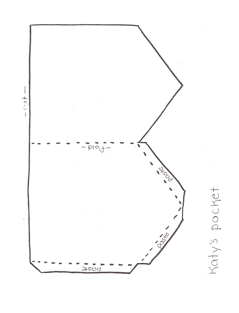
            Give each child a pocket shape that they can cut out and decorate.  They can then cut out pictures from magazines and put them in their pockets.  (My children like to cut out pictures from toy magazines).

Physical Health & Development/Fine Motor Skills; grows in hand-eye coordination in building with blocks, putting together puzzles, reproducing shapes and patterns, stringing beads, and using scissors.

Library and Writing

            Color and cut out the animals from the story.  On the pocket chart attach the letters that correspond. (L,T,C,B for lion, turtle, crocodile, and bird).  Have the children match the animal to the correct letter/letter sound.

Literacy/Phonological Awareness; shows growing awareness of beginning and ending sounds of words. AND Literacy/Alphabet Knowledge; increases in ability to notice the beginning letters in familiar words.

Sand and Water

Dramatic Play

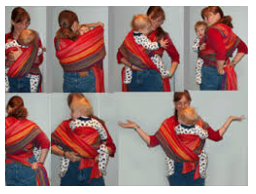
            Add several aprons with pockets.  (Ask your local home improvement store for donations) Or… Explain to the children that many mothers use or make baby carriers to help hold their babies. Show the children how to take a large scarf and turn it into a carrier for their baby dolls.

Approaches to Learning/Initiative & Curiosity; chooses to participate in a variety of tasks and activities.

Math and Manipulatives

            Copy the kangaroo picture onto a manila file and punch holes all around to make a lacing board.

Physical Health & Development/Fine Motor Skills; grows in hand-eye coordination in building with blocks, doing puzzles, reproducing shapes and patterns, stringing beads, and using scissors.

Outdoor Play

            Explain to the children that kangaroos are really good jumpers and can jump over 10 feet in one jump.  Let the children pretend to be kangaroos and measure their jumping abilities.  Measure and record, standing broad jumps and running long jumps.

Mathematics/Pattern & Measurements; shows progress in using stand and non-standard measures for length and area of objects. AND Physical Health & Development/Gross Motor Skills; shows increasing levels of proficiency, control, and balance in walking, climbing, running, jumping, hopping, skipping, marching, and galloping.

Transitions

            As the children go off to the next activity ask them to name something that could fit in their pocket or as the teacher ask them if something could fit in their pocket. (Could a tree fit in your pocket?  Could a penny fit in your pocket?  Could an apple fit in your pocket?)

Mathematics/Patterns & Measurement; begins to make comparisons between several objects based on a single attribute. AND Language Development/Listening & Understanding; demonstrates increasing ability to attend to and understand conversations, stories, songs, and poems.

fold along dotted lines and glue
tying a scarf to hold a baby