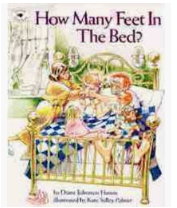
How Many Feet in the Bed?, by D. Johnston Hamm

This book offers a fun and different way of counting. It talks about morning rituals that will counterbalance all the books out there about night time rituals.

Materials

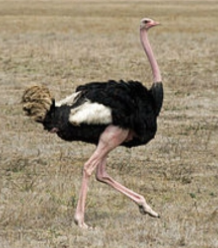
  • Pictures of animals and their feet.
  • Several sentence strips or long strips of paper with the numbers 0-10 written across.
  • A sentence strip for each child.

Vocabulary

  • Names of body parts. Include ones that the children might not know such as eye lashes, knuckles, thighs, ear lobes, etc..

Before Reading the Story

Ask the children to help name body parts that people have two of. Now ask the children if they can name body parts that you only have one of, ten of, many of (teeth, hairs, freckles)? Introduce the children and tell them that as you read the story, they will need to help you count the feet.

Mathematics/Number & Operations; begins to use one-to-one correspondence in counting objects and matching groups of objects. AND Language Development/Speaking & Communicating; uses an increasingly complex and varied vocabulary.

Reading the Story

While reading the story, touch the feet as you count them.

Mathematics/Number & Operations; begins to use one-to-one correspondence in counting objects and matching groups of objects.

After Reading the Story

Have all the girls stick their feet into the circle and ask, how many feet do you think there are? Count all the girl’s feet. Repeat with the boy’s feet. Which have more feet, girls or boys? Now count all the feet together, there are a lot of feet!

Mathematics/Number & Operations; Begins to use language to compare numbers of objects with terms such as more, less, greater that, fewer, equal to. AND Mathematics/Number & Operations; demonstrates increasing interest and awareness of numbers and counting as a means to solving problems and determining quantity.

Discovery

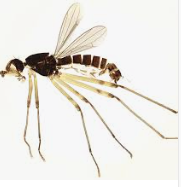
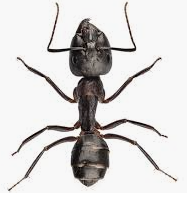
Bring in an insect that is common to your area. Put it into a container that the children can observe it through. How many feet does this insect have? Do you see it’s eyes? How does the creature move? (I have found that roly polies and crickets work well).

Science/Scientific Skills & Methods; develops increasing ability to observe and discuss common properties, differences, and comparisons among objects and materials.

Music and Movement

Teach the children Hap Palmer’s song, What a Miracle.https://www.youtube.com/watch?v=mFlVciz8aGs

Social & Emotional Development/Self-Concept; begins to develop and express awareness of self in terms of specific abilities, characteristics, and preferences

Teach the chant, Left Foot Right Foot.

Left foot, right foot I am cool

Left foot, right foot I learned at school.

Make sure you are standing facing the children when you do this. You will put out your opposite foot so the children will mimic using their correct foot. Continue doing, hand, knee. elbow, hip. etc..

Language Development/Listening & Understanding; demonstrates increasing ability to attend to and understand conversations, stories, songs, and poems.

Blocks

Ask the child if they can build a structure using only ten blocks. Then ask them if they can build a structure using only five blocks, etc.? Observe if they are able to build using the correct number of blocks.

Mathematics/Number & Operations; begins to use one-to-one correspondence in counting objects and matching groups of objects. AND Language Development/Listening & Understanding; shows progress in understanding and following swimple and multi-step directions.

Art

Help each child draw around their shoe onto a piece of paper. Challenge them to decorate their shoe from a looking down perspective. For younger children it is easier to trace around their hand and then decorate it (fingernails, rings, freckles, hairs).

Social & Emotional Development/Self-Concept; begins to develop and express awareness of self in terms of specific abilities, characteristics, and preferences. AND Science/Scientific Scientific Knowledge; expands knowledge of and respect for their bodies and the environment.

Sand and Water

Put large rubber animals in the table today with wet sand. Stamp out animal foot prints.

Approaches to Learning/Initiative a& Curiosity; chooses to participate in an increasing variety of tasks and activities.

Library and Writing

On a sentence strip make the numbers 0-10. Give the children each their own sentence strip and encourage them to copy the numbers onto it. They can then cut these out and glue them to a piece of paper.

Literacy/Early Writing; experiments with a variety of writing tools and materials, such as pencils, crayons, and computers. AND Approaches t Learning/Engagement & Persistence; grows in abilities to persist in and complete a variety of tasks , activities, projects, and experiences.

Dramatic Play

Put out many pairs of shoes today so the children will be aware of their feet as they play. If you have the supplies, you could set up a pretend shoe store. As the children try on the different shoes, help them be aware if the shoes are too big, too small, or just right for their feet.

Approaches to Learning/Reasoning & Problem Solving; grows in recognizing and solving problems through active exploration, including trial and error, and interactions and discussions with peers and adults.

Math and Manipulatives

On a piece of paper write the number 0. On another write the number 2, 4, and 6. Put the papers on the table and give the child the picture so animals. Have the child count the number of feet and put the picture on the correct piece of paper. Put the 1 paper on the left and the 6 paper on the right. After the children sort the animals, point to the piles and say,”more, more, and most”.

Mathematics/Number & Operations; demonstrates increasing interest and awareness of numbers and counting as a means of solving problems and determining quantity. AND begins to use language to compare numbers of objects with terms such as more, less, greater than, fewer, equal to.

Outdoor Play

Take off your shoes and socks today and let the children walk barefoot on a variety of surfaces (sand, wet sand, grass, cement, gravel). Talk about how each one feels and which one they like the best.

Science/Scientific Skills & Methods; begins to use senses and a variety of tools and simple measuring devices to gather informations, investigate materials, and observe processes and relationships.

Take off your shoes today and let the children paint with their feet. Use a long piece of bulletin board paper, have the children paint their feet with a paintbrush, and then hold the hand of a friend as they walk across the paper. Have either a hose or a pan of water they can wash their feet off with. Supply several towels for drying.

Creative Arts/Art; gains ability in using different art media and materials in a variety of ways for creative expression and representation.

Transitions

Ask several children stand together. Ask another child to count how many feet there are in the grouping. Ask different groups of children 1-5 come up and let the others count their feet.

Mathematics/Number & Operations; demonstrates increasing interest and awareness of numbers and counting as a means of solving problems and determining quantity.

Resources
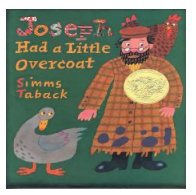
Joseph Had a Little Overcoat, by Simms Taback

Joseph has a blanket that he loves. Instead of throwing it away, his Grandfather helps him turn it into something new.

Materials

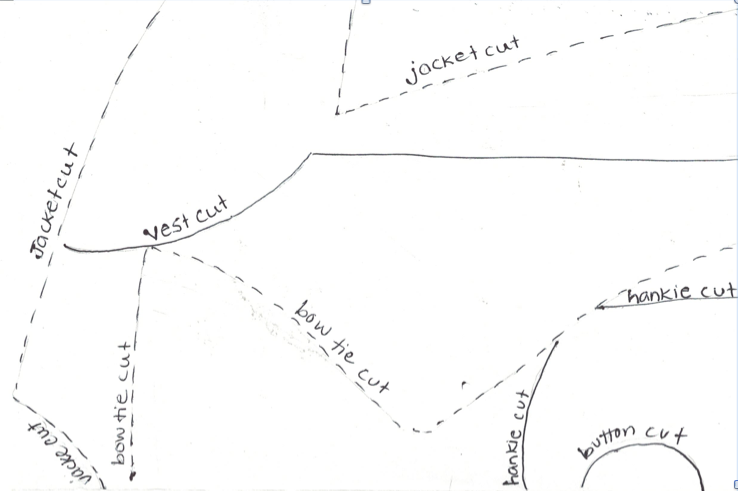
  • Master of cuts to tell the story with
  • Paper plates with holes punched one inch from edge all the way around. 1 per child
  • Colored yarn
  • Precut squares of various colors of construction paper cut into 7-inch squares, 5-inch squares, 3-inch and 1-inch squares.
  • Several precut shapes of cardboard or poster board (square, rectangle, triangle, oval, circle)

Vocabulary

  • Frazzled-exhausted
  • Kaput-finished, done
  • Tattered-all torn and scruffy

Introducing the Story

Begin by telling the children that when you were a little child you had a special blanket or stuffed animal. Ask the children how many of them have something special that they sleep with or use to comfort them? Let the children share about their special blanket or animal. (My sister gots a blankey, I have a purple cow that I sleep with, I like to sleep with my duck that Aunt Lara gived to me). Tell the children that today’s story is about a little boy who had a special blanket that got worn and tattered. Ask them what they think might happen to the blanket.

Language Development/Speaking & Communicating; progresses in abilities to initiate and respond appropriately in conversation and discussions with adults and peers. AND Language Development/Speaking & Communicating; develops increasing abilities to understand and use language to communicate information, experiences, ideas, feelings, opinions, needs, questions, and for other purposes.

Reading the Story

As you read the story, cut out the different items that grandfather sewed. As you are cutting help the children to repeat, “it’s getting smaller and smaller”.

Literacy/Book Knowledge & Appreciation; shows growing interest and involvement in listening to and discussing a variety of fiction, and non-fiction, and poetry.

After Reading the Story

Ask the children if they can remember what Grandfather gave to Joseph when he was born (a blanket). What happened to the blanket? Then what happened? Help them list the items that the blanket was made into. What was the smallest thing that Grandfather made from the blanket? Explain to the children that Grandfather was recycling Joseph’s blanket. Ask the children if they recycle anything at home (food scraps, newspapers, bottles?). Explain that instead of throwing things away, they can recycle it. Ask if anyone has ever been to a yard sale? This is one way families recycle things they no longer want or need. Allow the children to talk about any recycling that their families might do. Lastly tell the children that you are going to set up a recycle center in your discovery area.

Language Development/Speaking & Communicating; develops increasing abilities to understand and use language to communicate information, experiences, ideas, feelings, opinions, needs, questions, and for other varied purposes.

Music and Movement

Sing songs that have the children going from a squatting position to an upright position and then back down small again.

When I was one years old, I was very very small.  But now I’m 3 years old, and I’ve grown up big and tall!

There was a King of York, he had 500 men.  He marched them  up to the top of the hill, And then marched down again.  And when you’re up you’re up, And when you’re down you’re down, But when you’re only half way up, you’re neither up nor down.https://www.youtube.com/watch?v=KGvEQTQaTbQAs you sing this, have the children move and down with the words.

I’m going up, up, up, I’m the elevator man.  Up, up, up, as high as I can.  Coming down so be careful of the doors.  Coming down to the very first floor.

Mathematics/Geometry & Spatial Sense; builds an increasing understanding of directionality, order, and position of objects, and words such as up, down, over, under, top, bottom, inside, outside, in front, and behind.

 Discovery

Put out a box to collect used paper in. Put out a box to collect used soda cans in. Put out a box to put used clothing in. Write what the box is for on the front of each box. Send a note home and to the other teachers stating that you are collecting cleaned used soda cans. As the cans come into your classroom, show the children how to stomp on the can and toss it into the box marked ‘cans’. How to put paper scraps in the recycle instead of the garbage, and encourage them to bring unwanted clothing to school.

Literacy/Early Writing; develops understanding that writing is a way of communicating for a variety of purposes.

Make Play Dough with the children. In a large bowl add 3 cups of flour and 1 cup of salt. Add in ¾ cup of water and begin stirring with a wooden spoon. At this point it should be similar to bread dough. Keep adding small amounts of water until the dough is workable and not sticky. Give each child a ball of dough and have them punch a hole in the middle. Add 2-3 drops of food coloring into the hole. The children can continue to knead the dough until the color is throughout and the dough is soft and pliable.

Science/Scientific Knowledge; shows increased awareness and beginning understanding of changes in materials and cause-effect relationships.

Blocks

Challenge the children to use two or more blocks to make and name a new shape. (2-small rectangle wood blocks put together makes a square).

Mathematics/Geometry & Spatial Sense; progresses in ability to put together and take apart shapes.

Art

Lay out your precut squares of colored construction paper on the art table. Give each child a piece of paper and show them how to glue a 7inch square with a 5 inch square on top, with a 3 inch square on top of the 5 inch square, and lastly a 1 inch square on top of the 3 inch square. This should make a seriated square from large to small. Glue the whole thing onto the piece of paper. Let the children practice gluing largest to smallest onto their paper. Some children will find this difficult to do. Any finished product is wonderfully correct.

Mathematics/Geometry & Spatial Sense; shows growth in matching, sorting, putting in a series, and regrouping objects according to one or two attributes such as color, shape, or size.

Sand and Water

Put dampened sand into the table today and various sized measuring cups or sand forms. Have the children practice making the shapes by filling the container, tapping the sand, then turning over quickly and tapping again. Pull the shape off. “Look you made something from nothing”.

Physical Health & Development/Fine Motor Skills; grows in eye-hand coordination in building with blocks, putting together puzzles, reproducing shapes, and patterns, stringing beads, and using scissors.

Library and Writing

Give children your precut shapes that they can trace around onto paper and then decorate like a special blanket.

Literacy/Early Writing; experiments with a growing variety of writing tools and materials, such as pencils, crayons, and computers. AND Physical Health & Development/Fine Motor Skills; progresses in abilities to use writing, drawing, and art tools, including pencils, markers, chalk, paint brushes, and various types of technology.

Dramatic Play

Put out many different items of clothing today. Can the children name all the different items? Can they do the zippers, buttons, Velcro, and snaps?

Physical Health & Development/Fine Motor Skills; develops growing strength, dexterity, and control needed to use tools such as scissors, paper punch, stapler, and hammer.

Math and Manipulatives

Give each child a paper plate and a length of yarn about 18 inches long. At one end of the yarn, fasten a piece of masking tape round and round to make a stiff “needle”. Tie the other end of the yarn through one hole of the paper plate. Show the children how to weave in and out of the holes, sewing the edges of the paper plate. When they have sewn all around the edge of the paper plate, let them use crayons or markers to draw a design or picture inside.

Physical Health & Development/Fine Motor Skills; grows in eye-hand coordination in building with blocks, putting together puzzles, reproducing shapes and patterns, stringing beads, and using scissors.

Outdoor Play

Play Sculpture with the children. Take each child and hold their hands. Spin around and around with them and then let go of their hands. As they land they have to stand still and decide what kind of a creature or object they have become and act it out. I have found when we play this game I have lots of dinosaurs and sharks or kittens and ponies. It’s all good and the idea is to make oneself something.

Approaches to Learning/Initiative & Curiosity; approaches tasks and activities with increased flexibility, imagination, and inventiveness.

Transitions

Play Is It Bigger Than or Smaller Than. Ask children one at a time to name an object that is bigger or smaller than an object you name. Bigger than a cat, smaller than a mouse, bigger than a car, smaller than a flower, etc.. Let each child name one bigger than or smaller than as they head off to the next activity.

Approaches to learning/Reasoning & Problem Solving; develops increasing abilities to classify, compare, and contrast objects, events, and experiences.

Dear Parent- Today we read about a boy whose Grandfather made him clothing from an old blanket. Do you have anything in your house that has been up-cycled? If so, point it out to your child. Some examples might be a boo-boo bunny from a washcloth, a rug from old rags, a flower pot from an old coffee mug, etc.. Also we are recycling old clothes for the next week. If your child has any clothing that they have outgrown, you may send it to school and we will find another child who is able to wear it or add it to our dramatic play center.

Resources

This picture represents a folded piece of paper.

Screen Shot 2018-08-10 at 3.58.12 PM
This side is the folded edge side

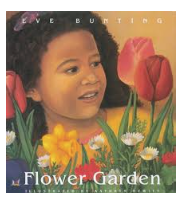
Flower Garden, Eve Bunting

           This is a wonderful book about spring and a little girls gift to her mother.  It is inspiration to those who live in the city and a reminder of the joy that plants bring to people everywhere.

Materials;

  • Silk flowers (these can often be gotten at craft stores for a few dollars. If they do not have stems, cut pipe cleaners into 6-8 inch pieces and attach to the silk flower heads.)
  • Petal Power game
  • Gardening catalogs or spring fliers from local garden stores
  • At least one real flowering plant

Vocabulary

  • Trowel ( a shovel for planting flowers or vegetables)
  • Jamboree ( a celebration, in the story it is a celebration of colors!)

Before reading the Story

            Show the children the cover of the book.  Ask them if they have ever helped plant a garden before?  Where do you get the plants?  What did you have to do to make the garden? What do you have to do to take care of the garden?  If you live in the city, this might be more difficult for the children to answer.  In that case, talk about if they have ever seen a flower garden?  Did you like it?  What did you like/not like about it?  Where did you see the garden?

Science/Scientific Knowledge; expands knowledge of and abilities to observe, describe, and discuss the natural world, materials, living things, and natural processes.

Reading the Story

           As you read the story, ask who, what, where, when, and why questions.  (Where are the girl and her father going with the flowers, what are they going to do? Why are they lighting candles?  Whose birthday do you think it is? What time of year is this story taking place?)

Language Development/Speaking & Communicating; develops increasing abilities to understand and use language to communicate informations, experiences, ideas, feelingsw, opinions, needs, questions,; and for other varied purposes.

After Reading the Story

            Talk about the sequence of the story.  Where did the story start? (In the store), then where did they go? (On the bus).  Where does this story take place? (in the city).  Where did the girl live? (High in the building).  Who was the last one to come home?  What special day was it?  Does anyone know when their special birth date is?

Literacy/Book Knowledge & Appreciation; demonstrates progress in abilities to retell and dictate stories from books and experiences; to act out stories in dramatic play; and to predict what will happen next in a story.

Discovery

           Put the real flower/s into the center today.  Encourage the children to uses their senses to tell you about the flower.  Let the children take it out of the container so they can see the roots.  Talk about what a plant needs to live and grow (water, dirt, air, and sunshine). Encourage them to draw the plant showing the various parts, including the roots.

Science/Scientific Skills & Methods; develops growing abilities to collect, describe, and record information through a variety of means including discussion, drawings, maps, and charts.

Music and Movement

           Sing or chant, Dig a Little Hole

You dig a little hole Pretend to dig a hole

And you put the seed in. Drop a pretend seed into the hole

And you cover it with dirt, Use hands to cover pretend hole

And let the sun shine in. Arms over head to make a circle

You give a little water Wiggle fingers over hole to make rain

And keep it fed,

Pretty soon a little plant will show its head. Bring one hand up through the other

Language Development/Listening & Understanding; demonstrates increasing ability to attend to and understand conversations, stories, songs, and poems.

            Go through the motions of making a birthday cake with the children and then sing Happy Birthday.

Language Development/Listening & Understanding; demonstrates increasing ability to attend to and understand conversations, stories, songs, and poems. AND Approaches to Learning/Initiative & Curiosity; chooses to participate in an increasing variety of tasks and activities.

Blocks

            In the story, the girl and her father planted the flowers in a window box.  Encourage the children to build a long window box out of blocks.  If you have enough silk flowers/plants, you could add these to the block center today.

Approaches to Learning/Engagement & Persistence; demonstrates increasing ability to set goals and develop and follow through on them.

Art

            Give each child a piece of brown paper and tell them to pretend that this is their window box.  Put out gardening catalogs and let the children cut and glue what their window box would look like.

Physical Health & Development/Fine Motor Skills; develops growing strength, dexterity, and control needed to use tools such as scissors, paper punch, stapler, and hammer.

Library and Writing

            Encourage the children to make cards for family members, friends, or a staff person.  Show them how to fold the paper in half.  Encourage them to draw a lovely flower design on the front.  Open it up and you can help them write a message or they can write/scribble their own message.  Make sure they sign the card.

Literacy/Early Writing; develops understanding that writing is a way of communicating for a variety of purposes. AND Literacy/Early Writing; progresses from using scribbles, shapes, or pictures to represent ideas, to using letter-like symbols, to copying or writing familiar words such as their own name.

Sand and Water

            Add dirt to the table along with several garden trowels or shovels.  Add silk plants, or real plants for the children to pretend to plant.  Bring in several containers that the children can use for the garden box.

Creative Arts/ Dramatic Play; participates in a variety of dramatic play activities that become more extended and complex.

Dramatic Play

            Add silk flowers and a plastic vase ( a water bottle works) so the children can arrange some cut flowers for the table or counter.

Math and Manipulatives

           Play Petal Power.  Give each child a potted plant from the resource page.  Cut out a quantity of petals in various colors and place in the center of the table.  Take turns rolling the dice.  The child counts the number on the dice and takes that many petals from the pile and places on her circle.  Play until all the petals are used up. Use glue sticks as you play to make your pots part of a wall display afterwards.

Mathematics/Number & Operations; begins to use one-to-one correspondence in counting objects and matching groups of objects. AND Social & Emotional Development/Cooperation; develops increasing abilities to give and take in interactions; to take turns in games and using materials; and to interact without being overly submissive or directive.

Outdoor Play

            Look for signs of nature growing around your playground.  Help the children to name the plants that they see.  That is a Loblolly Pine, that is a Dandelion, that is Oregano.

Science/Scientific Knowledge; expands knowledge of and abilities to observe, describe, and discuss the natural world, materials, living things, and natural processes.

Transitions

            Show the children the page where the Mother sees her garden.  Ask the children if the Mother liked her present?  Ask the children what they would like to get their Mother for her birthday?

Approaches to Learning/Reasoning & Problem Solving; develops an increasing ability to find more that one solution to a question, task, or problem.