Night Shift, by Jessie Hartland

When most of us are getting ready for bed, there are many people who are just going to work.  Meet the many people and the jobs they do while you and I are sleeping.  Meet the people who work the Night Shift.

Materials

  • Paper dolls and clothing cut out.  (For a long lasting paper doll set, cover with contact paper and attach small Velcro circles to attach.  Or make out of felt and use with the felt board.
  • Collage materials (feather, sequence, fabric squares, buttons, pipe cleaner bits, silk flower heads, etc.).
  • Alphabet print letters and inkpad
  • Several buckets and 2-inch paintbrushes
  • Plastic lids and containers of various sizes
  • Pictures of Donuts for Finger play
  • Colored chalk

Vocabulary

  • Mannequin (model of a person or animal)
  • Topiary ( cutting and trimming of bushes, shrubs, and trees)
  • Askew (crooked)
  • Evaporate (to turn from liquid to vapor from the heat of the sun)

Before Reading the Story

Ask the children if any of them know what their parent does for work?  Ask; is your parent home at night with you?  That is because your parent works the day shift.  They work during the day and sleep at night.  Our story today is about the nightshift.  Ask the children if anyone can guess what that means (the people work all night and sleep during the day while we are here at school.  Ask the children if they can think of any job that you might have to do at night?  After giving them an opportunity to answer, introduce the book.

Social & Emotional Development/Knowledge of Families & Communities; develops growing awareness of jobs and what is required to perform them. AND Approaches to Learning/Initiative & Curiosity; grows in eagerness to learn about and discuss a growing range of topics, ideas, and tasks.

Reading the Story

Each introduction to a night shift job starts with a question.  Turn the page and see if the children can name the job. Before reading the title of the worker.

Social & Emotional Development/Knowledge of Families & Communities; develops growing awareness of jobs and what is required to perform them.

After Reading the Story

Tell the children that there are a lot of important jobs that are done during the night shift when you and I are sleeping!  Turn to any page in the book and read the title of the night shift worker.  Ask the children, “Who can remember what this person does”?  Give the children a moment to talk about the job and then turn to another page and continue in the same fashion.

Language Development/Speaking & Communicating; develops increasing abilities to understand and use language to communicate information, experiences, ideas, feelings, opinions, needs, questions; and for other varied purposes.

Discovery

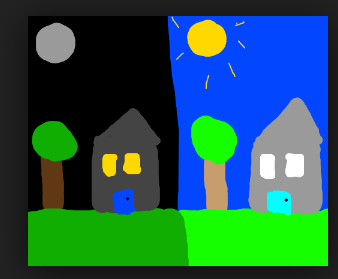
Use the pictures of day and night for sorting. As the children sort, ask them questions about what they like to do during the day and at night. Ask about their evening rituals and talk about some of your daily rituals/routines.

Language Development/Speaking & Communicating; develops increasing ability to understand and use language to communicate information, experiences, ideas, feelings, opinions, needs, questions; and for other varied purposes.

Music and Movement

Remind the children that the Late-Night Radio DJ plays favorite songs for people.  Let the children choose the music that you will sing and the CD’s that you will dance to today.

Creative Arts/Music; participates with increasing interest and enjoyment in a variety of music activities, including listening, singing, finger plays, games, and performances.

Five Little Donuts make five donuts by either cutting out pictures or drawing. Put tape on the back and attach to the wall where the children can all see and come up and take one.

Down around the corner  (point to the right)
In the bakery shop
There were 5 little doughnuts  (hold up 5 fingers)
With sprinkles on top
Along came _________ all alone
She/he grabbed a big one and ran on home  (clap hands)
(Repeat 4, 3, 2, 1)

Mathematics/Number & Operations; begins to associate number concepts, vocabulary, quantities, and written numerals in meaningful ways.

Blocks

Remind the children that the Zookeeper works all night to keep the animals of the zoo safe and healthy.  Put your zoo animals in the center today and encourage the children to make cages for like animals.

Mathematics/Geometry & Spatial Sense; shows growth in matching, sorting, putting in a series, and regrouping objects according to one or two attributes such as color, shape. or size.

Art

Remind the children that the window Dressers decorated the windows with feathers and fluff and lots of fun stuff.  Put out your best collage materials today.  Give each child a piece of construction paper and let them create their own fancy designs.

Creative Arts/ Art; gains ability in using different art media and materials in a variety of ways for creative expression and representation.

Give each child a piece of dark colored paper and a small cup of water.  Show them how to dip the colored chalk in the water and then write on the dark colored paper.  Can they write their name?  Let the children practice drawing and writing and letters.

Literacy/Early Writing; progresses from using scribbles, shapes, or pictures to represent ideas, to using letter-like symbols, to copying or writing familiar words such as their own name.

Sand and Water

Remind the children that the Freighter Captain works all night to bring containers of food to the ports where they will go to the grocery store.  Put out the plastic lids and containers along with many 1-inch cubes or other manipulative.  Explain to the children that you are going to see which container/lid can hold the most 1-inch cubes without sinking in the water.  Show the children how to carefully place the cubes onto the lid/container.  Count, which holds the most.  Count, how many does each hold?  Who can put the most containers (cubes) onto a boat?

Mathematics/Number & Operations; begins to associate number concepts, vocabulary quantities, and written numerals in meaningful ways. AND Science/Scientific Skills & Methods; begins to use senses and a variety of tools and simple measuring devices to gather information, investigate materials, and observe processes and relationships.

Library and Writing

Remind the children that the Newspaper Printer prints the paper all night long so that in the morning it will be ready to read.  Put out Alphabet ink pad letters and ink pads.  The children practice printing-going in an up and down movement to make letters on their paper.

Literacy/Alphabet knowledge;identifies at least 10 letters of the alphabet, especially those in their own name.

Dramatic Play

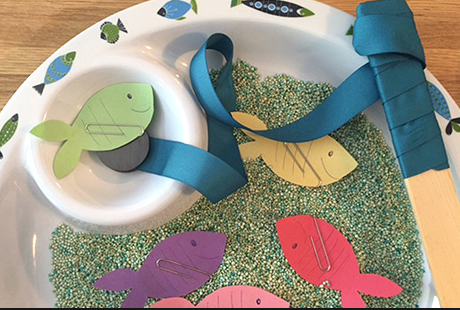
Remind the children that Fishermen sometimes work all night trying to catch fish for people to eat.  Turn your dramatic center into a fishing boat by bringing in 4-6 chairs and facing them all together touching.  Make fishing poles out of rulers with pieces of yarn tied at one end.  At the other end, tie a magnet.  Make fish and label each fish with a concept that you are learning (letters, numbers, colors).  Add several large paperclips to each fish.  The children can pretend to be fishing as they try to tap a magnet onto a paper clipped fish.

Creative Arts/Dramatic Play; participates in a variety of dramatic play activities that become more extended and complex.

Math and Manipulatives

 Put out paper dolls for the children to dress.   http://teachingbymom.blogspot.com/2012/10/free-printable-paper-doll-dress-up.html   OR            https://www.freekidscrafts.com/playtime-paper-doll-bodies/

Physical Health & Development/Fine Motor Skills; grows in hand-eye coordination in building with blocks, putting together puzzles, reproducing shapes and patterns, stringing beads, and using scissors.

Outdoor Play

Fill buckets with water and give the children the 2-inch paint brushes to paint the playground!  As they are painting, help them to notice what happens to the water/paint after a few moments in the sun (it evaporates)

Science/Scientific Skills & Methods; begins to participate in simple investigations to test observations, discuss and draw conclusions, and form generalizations.

As the children ride their tricycles around the path today, stop them and tell them that you have to work on the road before they can pass.  Use a broom to sweep the walk.  After a moment, wave the riders on.  Let other children take turns working on the road, being the sweeper, and the riders.

Creative Arts/Dramatic Play; shows growing creativity and imagination in using materials and in assuming different roles in dramatic play situations.

Transitions

At lunch today, pretend to be a waitress.  Ask the child if they would like coffee or tea to drink?  Then pour their drink for them today and say, “Enjoy your Coffee/Tea”.

Resources
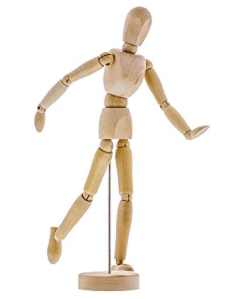
Mannequin (model of a person or animal)


fishing game

for sorting day and night pictures

Ella Sarah Gets Dressed, by Margaret Chodos-Irvine

Ella Sarah needs to get dressed but no one in her family agrees upon what she wants to wear.

Materials

  • 15 index cards cut in half the long way. On 20 of the halves, make a small circle of color using a crayon or marker. On the remainder 10, make a bean shape with arms and legs (jumping beans)
  • Paint swatches from local paint store. You will need two to three of each color swatch you choose.
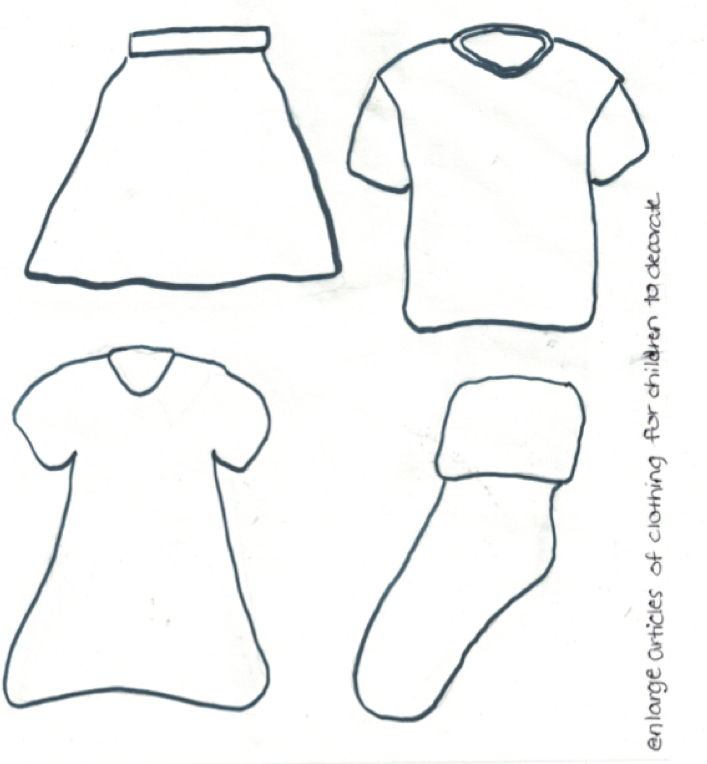
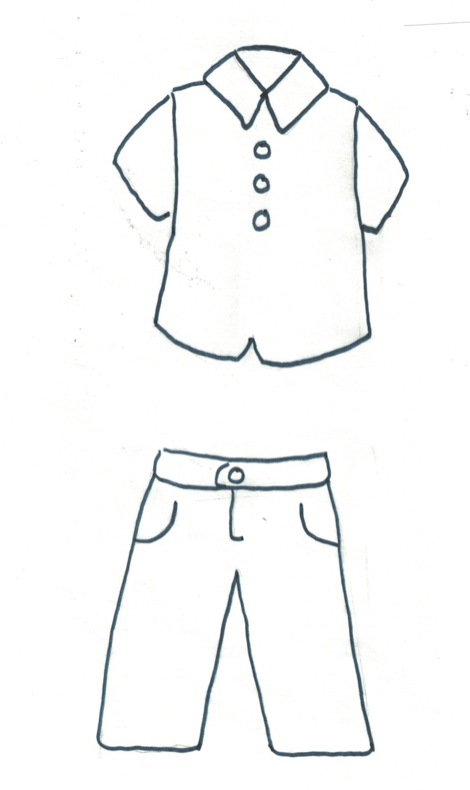
  • Clothing pattern, enlarge for children to color individual items.
  • An assortment of larger buttons, about 20-25 in all.
  • A parachute or large flat sheet. Colored scarves.

Vocabulary

  • Naming articles of clothing (short sleeves, t-shirt, blouse, long sleeves, sandals, sneakers, slippers, etc.)

Introducing the Story

Wear something that is one or more of your favorite articles of clothing to school today. Introduce the story by saying’ “I wore my favorite (socks) to school today because (they have cats all over them and cats are my favorite animal). If you know of a child who has a favorite article of clothing, mention it (I see Roger is wearing his baseball shirt, he told me once that he loves baseball. Roger is it one of your favorite shirts?). Let the children share their favorites if they choose to.

Language Development/Listening & Understanding; demonstrates increasing ability to attend to and understand conversations, stories, songs, and poems.

Reading the Story

As you read the story, use your voice to show Ella Sarah’s displeasure at being told not to wear her favorite outfit. Note to the children after these pages that you think Ella Sarah really wants to wear her pink polka-dot pants, her dress with orange and green flowers, her purple and blue striped socks, her yellow shoes, and her red hat! On the page where Ella Sarah looks in the mirror and feels her outfit is just right, ask the children to look at her face and tell you what they think she might be feeling.

Literacy/Book Knowledge & Appreciation; shows growing interest and involvement in listening to and discussing a variety of fiction and non-fiction books, and poetry.   AND Social & Emotional Development/Self-Concept; begins to develop and express awareness of self in terms of specific abilities, characteristics, and preferences.

After Reading the Story

Tell the children that Ella Sarah really had on a variety of colors. Ask them if they can remember some of the colors that she was wearing.   Then say, “Let’s play a color game”. Get out your jumping bean cards directions on how to make is under materials.   Hold the cards face down so the children cannot see the marks/colors on the opposite side. Let the children take turns picking a card and naming the color. If they get a jumping bean card they shout ‘Jumping Bean!” and everyone jumps up and down. Continue playing until all the children have had a turn or they lose interest.

Social & Emotional Development/Cooperation; develops increasing abilities to give and take interactions; to take turns in games or using materials; and to interact without being overly submissive or directive.

Music and Movement

Sing What Are You Wearing Today?   https://www.youtube.com/watch?v=-vmhPxdR_do

Creative Arts/Music; participates with increasing interest and enjoyment in a variety of music activities, including listening, singing, finger plays, games, and performances.

Discovery

Put out the paint color swatches on the table and encourage the children to find the matching cards. For older children you can get several hues in the same color family. For younger children, use swatches that are more defined. When they have matched the color swatches, ask the child if he/she can name the colors.

Mathematics/Patterns & Measurement; shows growth in matching, sorting, putting in a series, and regrouping objects according to one or two attributes such as color, shape, or size.

Blocks

Put out colored blocks today. Encourage them to sort the blocks by colors or to match the blocks to colors that they are wearing. As they build ask them to name some of the colors they are using or if they have a favorite color.

Mathematics/Patterns & Measurement; shows growth in matching, sorting, putting in a series, and regrouping objects according to one or two attributes such as color, shape, or size.

Art

Ask each child if they have a favorite article of clothing at home. Challenge them to draw their favorite outfit or give the child a clothing pattern to match their choice and markers or crayons to color them. As they work encourage them to talk about the article with detail., just like Ella Sarah and her family did in the story today.

Creative Arts/Art; progresses in abilities to create drawings, paintings, models, and other art creations that are more detailed, creative, or realistic.

Sand and Water

Bring the baby doll clothes over to the center today and fill the water table with soapy water. Let the children wash the clothes. As they wash, talk about the articles of clothing. Can they name them? Do they wear these at home? When do you wear the article of clothing? (I have pajamas at my house for nighttime. I have a fancy dress to wear when I go to parties. My baby has one of these.)

Language Development/Speaking & Communicating; develops increasing abilities to understand and use language to communicate information, experiences, ideas, feelings, opinions, needs, questions; and for other purposes.

Library and Writing

Put the book in the center today. With one or two children at a time take a picture walk through the book.   As you go through the pages ask the children what happened first, next, and last. Can they remember what Ella Sarah’s favorite outfit was?

Literacy/Book Knowledge & Appreciation; demonstrates progress in abilities to retell and dictate stories from books and experiences; to act out stories in dramatic play and to predict what will happen next in a story.

Dramatic Play

Get out all the dress up clothes today. Add jewelry and scarves if you have them. Suggest to the children to dress for a party. Comment on how lovely they look (Alison I love your blue striped skirt and green lace blouse, you look marvelous for the party!).

Creative Arts/Dramatic Play; participates in a variety of dramatic play activities that become more extended and complex. Physical Health & Development/Fine Motor Skills

Math and Manipulaties

Call several children over to the table to play a counting game with you. Give each child a copy of the large shirt pattern and put a bowl of buttons in the middle. The children take turns rolling a dice and adding that many buttons to their shirt pattern. After their turn they put the buttons back into the bowl for the next player’s turn. Continue rolling the dice and counting out buttons until each child has had several turns or loses interest.

Mathematics/Number & Operations; begins to make use of one-to-one correspondence in counting objects and matching groups of objects.

Outdoor Play

Bring your parachute and colored scarves out onto the playground. Spread the parachute out flat and have the children stand all around the edges. Give each child a colored scarf. Have them name the color/s of their scarf and toss it onto the parachute. Once all the scarves are on the parachute, the children pick up the chute by the edges or handles and make the scarves dance by shaking their arms up and down. Repeat giving each child a different color scarf.

Physical Health & Development/Gross Motor Skills; demonstrates increasing abilities to coordinate movements in throwing, catching, kicking, bouncing balls, and using the slide and the swing.

Transitions

Call the children to the next activity or to line up by what they are wearing. (If you are wearing a shirt with buttons, shoes with laces, pants with a zipper, etc.)

Language Development/Listening & Understanding; understands an increasingly complex and varied vocabulary.

Dear Parents, Today we read a story about a little girl who wanted to choose what she was going to wear, even if it did not match well. Encourage your child to help pick out their clothes for school. As they do, mention the colors or the patterns on the clothing. Give your child a few extra minutes to practice dressing themselves in the morning. This is good not only for their self-esteem but is a wonderful way for your child to develop large and small muscles.

Resources

Screen Shot 2018-08-10 at 3.01.31 PM
Screen Shot 2018-08-10 at 3.01.52 PM
Screen Shot 2018-08-10 at 3.02.54 PM

Llama Llama Red Pajama, by Anna Dewdney

Baby Llama is waiting for Mama but Mama does not come right away. Baby Llama has a melt down until Mama comes and makes things right.

Materials

  • Several boxes/blankets to be used as beds for wither the children or the dolls in the dramatic center.
  • Many 2-inch squares of paper to be used to make a quilt design. I have used old wrapping paper as well as colored construction paper to make squares.
  • Several flashlights, 1 for each number of children allowed in center

Vocabulary

  • Fret (to worry or become upset)
  • Whimper (to whine or moan)
  • Moan (to groan or sigh)
  • Tizzy (to become panicked or really upset)

Introducing the Story

Hold up the cover of the book and ask the children to look at Llama’s face, how do you think he is feeling? I have gotten answers from sad to scared. Read the title of the book to the children. Ask why they think Llama is feeling this way (he does not like the dark, he does not want to go to bed, he wants to watch TV). Steer the conversation around bedtime rituals. Tell the children. “Let’s find out what is going on with Llama” and introduce the book.

Language Development/Speaking & Communicating; develops increasing abilities to understand and use language to communicate information, experiences, ideas, feelings, opinions, needs, questions; and for other varied purposes. Social & Emotional Development/Self-Control; show progress in expressing feelings, needs, and opinions in difficult situations and conflicts without harming themselves, others, or property.

Reading the Story

On the page where Llama and Mama are reading a story, ask the children if they think Llama likes this time of day (note Llama’s facial expression). Ask the children how many of their families read to them at night? When you get to the page where Llama starts to stomp and pout, ask the children what they think is happening (Llama is having a temper tantrum). Read the next 2 pages and stop after the sentence, “Mama Llama run, run, run”. Ask the children if they think this is a good way to get what they want, why/why not? Turn the page where it shows Mama coming into the room. Ask the children to look at Mama’s face, how do you think she is feeling? If they cannot place the emotion, tell them that Mama is afraid/scared.   Why? (She is scared that her baby is sick, she thinks baby fell off the bed and got hurt, there is a robber in the house).   On the page when Mama is in the room, (Baby Llama what a tizzy) again stop and look at the Llama’s faces. How do you think Mama and Llama are feeling?

Literacy/Book Knowledge & Appreciation; shows growing interest and involvement in listening to and discussing a variety of fiction and non-fiction, and poetry. AND Language Development/Speaking & Communicating; develops increasing abilities to understand and use language to communicate information, experiences, ideas, feelings, opinions, needs, questions; and for other varied purposes.

After Reading the Story

Ask the children if they ever feel sad or angry when it is time to go to bed?Tell them that getting good night’s sleep is important because that’s when our brains grow to help make us smarter. Explain to them that their parents need adult time to do things that they cannot do when they are at work (laundry, pay bills, relax, time to talk to their friends). Remind them that they have time to do this during the day at school but their parents have to wait until they get home.

Social & Emotional Development/Knowledge of Families & Communities; progresses in understanding similarities and respecting differences among people such as genders, race, special needs, culture, language, and family structures.

Music and Movement

Sing, If You’re Happy and You Know It. Sing and make movements for different emotions as you sing; happy, sad, frustrated, angry, excited, and loving.

Social & Emotional Development/Self-Control; show progress in expressing feelings, needs, and opinions

Do the fingerplay, 5 Little Monkeys Jumping on the Bed.

Mathematics/Number & Operation; begins to associate number concepts, vocabulary, quantities, and written numerals in a meaningful way.

If you have a tumble mat or large pillow, put it on the floor and have the children make a large circle around it. The pillow is going to be used for different kinds of large movements so make sure the children are seated far enough away not to be kicked. Let the children take turns trying to do a forward somersault roll. Older children may like to try a backward somersault roll however this is much more difficult. For children new to forward rolling, tell them to put their hands beside their feet, bend their knees, and look at their belly button so your head is tucked in tight. Challenge the children to do a log roll. Lay on the floor with your hands above your head and roll your body to the side making you roll from back to front to back again.

Physical Health & Development/Gross Motor Skills; shows increasing levels of proficiency, control , and balance in walking, climbing, running, jumping, hopping, skipping, marching, and galloping.

Discovery

Find a way to slightly darken your science center today and put out flashlights for the children to experiment with. Put out a variety of materials and ask the children to see which ones the light will shine through. Suggestions of things in your room that might provide the light to shine through; an article of doll clothing, a scarf, construction paper, paper plate, nap time blanket, easel paper, or a crystal. Include items that the light cannot pass through also.

Science/Scientific Skills & Methods; begins to use senses and a variety of tools and simple measuring devices to gather information, investigate materials, and observe processes and relationships.

 Blocks

Challenge the children to make beds, either for themselves or stuffed animals in your room. Is the bed long enough? How many blocks long does the bed need to be for the stuffed rabbit? How many blocks long does the bed need to be for the child?

Mathematics/Patterns & Measurement; shows progress in using standard and non-standard measures of length and area of objects.

Art

Use the many 2-inch squares of colored paper that you have and a sheet of paper to make quilts. Open up the book, Llama, Llama Red Pajama, and show the children the quilt design. Tell the children that they are going to make their own quilts today by gluing the 2-inch squares to the sheet of paper. As the children work, you can talk about the colors they are using and papers that may have design. For older children you can challenge them to make a pattern using the squares ABAB or ABBABBA, etc.

Mathematics/Patterns & Measurement; enhances abilities to recognize, duplicate, and extend simple patterns using a variety of materials.

Sand and Water

In the water table today, put out small pitchers and cups so the children can practice pouring. Remind them that in the story Llama thought he wanted a drink. If you are using disposable cups, mark lines on them at various heights so the children can practice filling a cup full, half full, and just a little bit full/quarter full.

Physical Health & Development/Fine Motor Skills; develops growing strength, dexterity and control needed to use tools such as scissors, paper punch, stapler, or hammer.

Library and Writing

Youtube has a reading of this story by author Anna Dewdney

Literacy/Book Knowledge & Appreciation; shows growing interest in reading related activities, such as having a favorite book read: choosing to look at books; drawing pictures based on stories; asking to take a book home; going to the library; and engaging in pretend reading with other children.

Dramatic Play

Nighttime rituals. Bring in several boxes or blankets the children can use for beds. Encourage the children to be the parent and read to their dolls or stuffed animals. If you have doll clothes, encourage the children to dress the dolls in their pajamas.

Literacy/Book Knowledge & Appreciation; shows growing interest in reading related activities, such as having a favorite book read: choosing to look at books; drawing pictures based on stories; asking to take a book home; going to the library; and engaging in pretend reading with other children. AND Physical Health & Development/Fine Motor Skills; grows in hand-eye coordination in building with blocks, putting together puzzles, reproducing shapes and patterns, stringing beads, and using scissors.

Math and Manipulatives

Put out any activity that you have that has pattern play today. My children enjoy matching the numbers on the dominos.

Mathematics/Patterns & Measurement; enhances abilities to recognize, duplicate, and extend simple patterns using a variety of materials.

Outdoor Play

Have the children gather round and tell them you want to have a classroom tantrum or fret. Ask the children if they can remember some of the things that Llama did? Act out the children’s recall and suggestions. In the story Llama boo-hooed, stomped, pouted, jumped, and shouted. But let the children run and scream or whatever else they might suggest that will not hurt each other (NO HITTING). The idea is to be very noisy and let off steam. When you are ready to end your classroom fret, holler ” Llama’s Stop!” and call all the children back to you. Give them all a kiss or a hug and send them on their way to play.

Literacy/Book Knowledge & Appreciation; demonstrates progress in abilities to retell and dictate stories from books and experiences; to act out stories in dramatic play; and to predict what will happen next in a story.

Transitions

Tell the children that today’s story was full of rhyming words. Give the example; pajama-mama. Ask them if they can tell you what a rhyming word is (rhyming words sound the same). As you dismiss the children to the next activity, say a word and see if they can make a rhyming word to go along with it. Use some of the sounds in the story; /air/ink/oon/un/ as well as those that are not; /at/ow/in/un/.

Literacy/Phonological Awareness; progress in recognizing matching sounds and rhymes in familiar words, games, songs, stories, and poems.

Dear Parents- Today we read a story about a llama who did not want to go to bed.  Talk to your child about the importance of getting a good night’s sleep, it helps our brains to grow and our bodies to rejuvenate.  Try setting up a bedtime ritual to help prepare your child for sleep.  (After you brush your teeth I will read you one story and then we will turn the light off and you need to rest).  Your child might fight you on this but being consistent will help with any routine that you are trying to enforce.