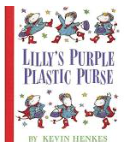
Lilly’s Purple Plastic Purse, by Kevin Henkes

Lily has a new purse that she is very proud of, but what happens when she brings it to school and tries to interrupt the teacher?

Materials

  • Blue Prints
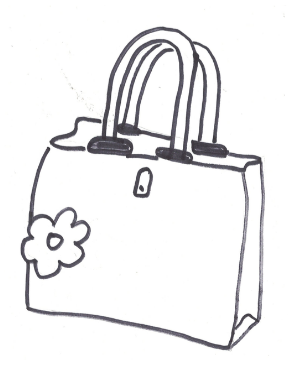
  • Purse shape
  • Pillowcase

Vocabulary

  • Jaunty (playful)
  • Lurched (jerked forward)
  • Furious (very angry)
  • Demonstrated (to show how something works)
  • Diva (a starlet)

Before Reading the Story

Ask the children to think about a career that they think they would like to be when they grow up?  Help the children learn to recognize that things that they like doing can perhaps be a career later.  (Andres likes to build with blocks, maybe he will grow up and build houses.  Lisa likes to pretend to cook in the dramatic center, maybe she will grow up to be a famous cook and write a cookbook.  Wanita is always playing with the musical instruments, maybe she will grow up to be in a rock and roll band).

Social & Emotional Development/Knowledge of Families & Communities; develops growing awareness of jobs and what is required to perform them.

Reading the Story

Stop on  the page where Lily reads the note that Mr.Slinger placed in her purse.  Though the pictures are small, ask the children to see if they can tell how Lily is feeling,shy?  On the page where Lily’s father makes a tasty snack, ask the children why he said,”I think Mr. Slinger will understand” (Lily said he was a fat mean teacher-she was angry)

Literacy/Book Knowledge & Appreciation;Shows growing interest and involvement in listening to and discussing a variety of fiction and non-fiction, and poetry.

After Reading the Story

Tell the children that you will have a day that they can bring something special to share with the rest of the class.  Let them know that you will send a letter home telling their parent what day they may bring their special item to share.

Discovery

Gather up several objects from each of your centers.  For younger children choose more familiar objects.  Keep these items out of view of the children and place one inside a pillowcase.  Challenge a child to put their hand inside the pillow case and try to figure out what the object is by using their sense of touch only.  Encourage the children to play this game with a partner.

Science/Scientific Skills & Methods; begins to use senses and a variety of tools and simple measuring devices to gather information, investigate materials, and observe processes and relationships.

Music and Movement

Put on some music and tell the children that you are all going to do some “Interpretive Dancing” just like Lilly and Mr Slinger did.  Put on the music and have fun.

Creative Arts/Movement; expresses through movement and dancing what is felt and heard in various musical tempos and styles.

Sing I’ve Got A Penny

            I’ve got a penny, I’ve got a penny

            I’ve got a penny shiny and new.

            I’m gonna buy all kinds of ______

            That’s what I’m gonna do.

Child names what they would buy if they had money.  Use a quarter like in the story and as you sing the children can pass it around so that the person with the quarter gets to name what they would buy.

Approaches to Learning/Reasoning  & Problem Solving; develops increasing ability to find more than one solution to a question, task, or problem.

Blocks

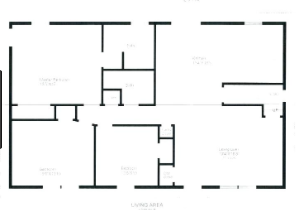
Add blueprints to the center and encourage the children to see if they can follow them just  like a real builder or architect would. 

Mathematics/Patterns & Measurement; enhances abilities to recognize, duplicate, and extend simple patterns using a variety of materials.

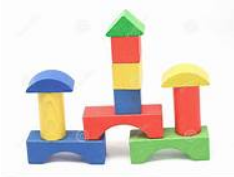
Ahead of time, make simple block structures using 3-6 blocks. Challenge the children to copy your structure.  This can also be done by taking pictures of the structures and tape them to the wall for the children to copy using the blocks.  As they copy tell them that they are reading the directions.

Mathematics/Patterns & Measurement; enhances abilities to recognize, duplicate, and extend simple patterns using a variety of materials. 

Art

Give each child a simple purse shape.  Put out magazines and scissors and have the children cut out items and then glue them onto their purse.  These can be hung on the wall with a sign that states, “What’s In Your Purse?”.   (When I have told the children that this is what out bulletin board says, they begin to have fun and cut out crazy stuff and laugh that it would be found inside a purse (cars, spaghetti on a plate,animals, a baby). 

Approaches to Learning/Reasoning & Problem Solving; develops increasing ability to find more than one solution to a question, task, or problem. 

Sand and Water

Add play money/coins to the sand today.  As the children dig and find the coins, ask them if they can name the coins.  After they have found a handful, encourage them to sort the coins by like kinds. Then have them bury them back into the sand for another child to dig and find.

Mathematics/Geometry & Spatial Sense; begins to be able to determine whether or not two shapes are the same size and shape.

Library and Writing

Remind the children that in the book, the children went to the Lightbulb Lab where they could draw and write about any ideas that they had. Tell the children that today you are going to use your writing center as a Lightbulb Lab.  Encourage the children to use paper and pencil to draw out inventions or things that they would like.  Go over occasionally and ask the children if they would like you to add any dictation to their work.

Literacy/Early Writing; begins to represent stories and experiences through pictures, dictation, and in play.  AND Science/ScientificSkills & Knowledge; develops growing abilities to collect, describe, and record information through a variety of means, including discussion, drawings, maps, and charts.

Dramatic Play

Add purses to the center today.  Try to have many smaller items that the children can put into their purses (play money, wallet, small mirror, paper and pencils, sunglasses, gloves, etc.)

Approaches to Learning/Initiative & Curiosity; chooses to participate in an increasing variety of tasks and activities.

Math andManipulatives

Put out any puzzles that you might have that depict children at school.  As the children work on the puzzles ask them to talk about what is happening in the picture. Can they describe using full sentences? 

Language Development/Speaking & Communicating; progresses in abilities to initiate and respond appropriately in conversation and discussion with peers and adults.

Outdoor Play

Remind the children that in the story, Lily was so happy that she ran and skipped and hopped all the way home.  Play a follow the leader game on the playground and run and skip and hop about.

Physical Health & development/Gross Motor Skills; shows increasing levels of proficiency, control, and balance in walking, climbing, running, jumping, hopping, skipping, marching, and galloping.

Transitions

Bring a purse to the rug and a box or bag that the children cannot see through filled with different pieces of equipment from the room.  Put an item into the bag without the children seeing and let a child feel inside to guess what it is in the purse.  Make sure you use items that the children are familiar with.  (Some things that I have used are; small cars, crayons, magnifying glass, play person, wallet from dress-ups, a shoe from dress-ups, turkey baster from water table, etc)

Science/Scientific Skills & Methods; begins to use senses and a variety of tools and simple measuring devices to gather information, investigate materials, and observe processes and relationships.

Dear Parent-  We have decided that we would like to do ashow and tell at school.  Your child isbeing asked to bring something that they consider special to school to shareand talk about with the other children. We will make sure that this item is put up safely after your child hasshared  it with the class.  Your child’s day is _____________.

Resources
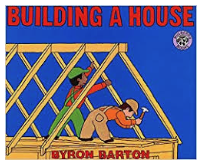
Building a House, by Bryon Barton

 This simple text story and wonderful bright pictures makes it easy for children to see all that goes into building a house. 

Materials

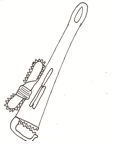
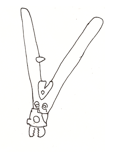
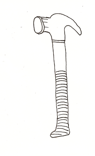
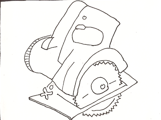
  •             Pictures of tools
  •             Several large boxes, the bigger the better!
  •             A sharp knife/Exacto blade
  •             5 paintbrushes 2-3 inch width and also rollers
  •             Pictures of animal homes
  •             Block center blueprints
  •             Box of graham crackers, can of frosting, string licorice cut into                small pieces

Vocabulary

Before Reading the Story

Open the book up to the page that reads,” The house is built”.   Ask the children to help name all the parts of a house (window, door, roof, wall, chimney, and step).  Ask the children if they know who the people are that help to build houses, perhaps a parent does some sort of construction.  Explain to the children that it takes lots of people to help build a house.  Turn to the front cover and introduce the book.

Social & Emotional Development/Knowledge of Families & Communities; develops growing awareness of jobs and what is required to perform them.

Reading the Story

 Take your time on each page and talk about what the people are doing.  Talk about the tools and name the objects.  Point out all the work that goes into building a house.

Social & Emotional Development/Knowledge of Families & Communities; develops growing awareness of jobs and what is required to perform them.  AND Approaches to Learning/Initiative & Curiosity; grows in eagerness to learn about and discuss a growing range of topics, ideas, and tasks.

After Reading the Story

Ask  the children if they can remember the kinds of work/ers that build the house.  If they are having trouble recalling do a walk through of the book one more time and see if the children can recall what is happening on each page.  Show the children the last page where the family is moving in.  Ask the children to think about where things go on the inside of the house.  Where would you put the oven (kitchen)?  Where would you put the bed, your toothbrush, the TV, the car, etc)? 

Literacy/Book Knowledge & Appreciation; shows growing interest and involvement in listening to and discussing a variety of fiction and non-fiction and poetry. AND Approaches to Learning/Reasoning & Problem Solving; develops increasing abilities to classify, compare, and contrast objects, events, and experiences.

Discover

Make two copies of the animal in their homes cards and cover the back so the children cannot see through the paper.  Use these to play Memory with the children.  Mix all the cards and lay out on the table picture side down.  The children take turns picking up two cards.  If they match, they get to keep them.  If they do not match they must put the cards back on the table picture side down where they found them.  Have the children take turns picking up 2 cards until all the pairs have been found.

Social & Emotional Development/Cooperation; develops increasing abilities to give and take in interactions; to take turns in games and using materials; and to interact without being overly submissive or directive.

Music and Movement

Teach the finger play, Houses.

This is a nest for the Bluebird            Cup both hands, palms up fingers together        
 This is the hive for the bee                 Make a fist with one hand
 This is a hole for the rabbit                Make a hole placing fingers to thumb
 And this is a house for me.                 Fingertips from both hands together to make a peak

Language Development/Listening & Understanding; demonstrates increasing ability to attend to and understand conversations, stories, and poems

Blocks

Make block blueprints and put in center along with hard hats.  To keep these for repeated use, cover them with contact paper.  As the children build with the blocks today, encourage them to read the blueprints and see if they can make the structure using your classroom blocks.  I have included several examples under resources but this works best when you use your own classroom blocks and the skill levels of your children to build.

Literacy/Early Writing; develops understanding that writing is a way of communicating for a variety of purposes.  AND Physical Health & Development/Fine Motor Skills; grows in hand-eye coordination in building with blocks, putting together puzzles, reproducing patterns and shapes, stringing beads, and using scissors.

Art

Explain to the children that you are going to build houses.  Give each child 3 graham crackers and a tiny bit of frosting.  First show them how to carefully break the graham crackers in half to get 6 squares and then them how to spread the frosting on the edges of the cracker to use for paste.  Put on the walls and the roof.  Use small pieces of licorice strings to embellish with windows and doors.  Glue embellishments on with frosting.

Approaches to Learning/Engagement & Persistence/grows  in abilities to persist and complete a variety of tasks, activities, projects, and experiences.  AND Creative Arts/Art; gains ability in using different art media and materials  in a variety of ways for creative expression and representation.

Sand and Water

Add dampened sand today and encourage the children to dig burrows and make caves.  

Creative Arts/Art; gains ability in using different art media and materials  in a variety of ways for creative expression and representation.

Library and Writing

Have the children to draw a picture of their house. Ask the children to tell you three things about their house (the door is red, my room is upstairs, I got a window that looks at the street).  Write their responses at the bottom of the page.  Put all the pictures in a book form and title it Whose House?  As you read the pages, the children can guess whose house it is.

Literacy/Early Writing; begins to represent stories and experiences through pictures, dictation, and in play.  AND Literacy/Book Knowledge & Appreciation; shows growing interest in reading-related activities, such as asking to have a favorite books read;  choosing to look at books; drawing pictures based on stories; asking to take books home; going to the library; and engaging in pretend reading with other children.

Dramatic Play

Put out any play tools you have and let the children pretend to build a house.  Add flashlight, tape measure or ruler, and hard hats.

Creative Arts/Dramatic Play; participates in a variety of dramatic play activities that become  more extended and complex.

Math and Manipulatives

 On index cards write numbers 1-5.  Use the tool pictures and ask the children to name the item.  Repeat back the object clapping out the syllables.  Ask the child to count the syllables while they repeat/clap the word. Put the item above the correct number index card.  How many items have one syllable, two syllables, etc..

Literacy/Phonological Awareness; shows growing ability to hear and discriminate separate syllables in words.  AND Mathematics/Number & Operations; begins to make use of one-to-one correspondence in counting objects and matching groups of objects,

Outdoor Play

Bring out any large boxes that you have collected. Put paint into large enough containers that the children can easily get the paintbrushes and rollers into it.  Put the boxes with the opening facing down.  Allow the children to paint the boxes to make houses. With the children decide where the teacher will cut the windows and doors once the paint dries.  Let the children use the houses on the playground.

Social & Emotional Development/Cooperation; develops increasing abilities to give and take in interactions; to take turns in games and using materials; and to interact without being overly submissive or directive.  AND Physical Health & Development/Fine Motor Skills; progresses in abilities to use writing, drawing, and art tools, including pencils, markers, chalk, paint brushes, and various types of technology. 

Transitions

Hold up a tool card.  Can the child name the tool?  Can they tell how the tool is used or pantomime using the tool?  Let the children take turns naming tools as they go to their next activity.

Language Development/Speaking & Communicating; develops increasing abilities to understand and use language to communicate information, experiences, ideas, feelings, opinions, needs, questions, and for other varied purposes.

Dear Parent- Today we read a story about building a home.  Take a walk through your house today and see if your child can name all the different rooms and their purpose.  Or, open up your home tool box and show your child the various tools that you use to keep up and maintain your home.  If possible, give your child a scrap of wood so that they may experience hammering, screwing, and sawing.

Resources

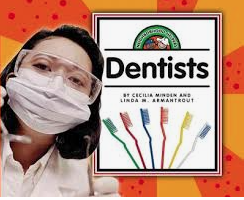
Dentists, by Cecila Minden

            This book answers the Who, What, When, Where, and Why of being a dentist.  This is a good book to use for further study of dentists.

Materials

  • Vinegar
  • Baking soda
  • Small bowls
  • Old toothbrushes
  • 3-4 dirty pennies per child
  • Camera
  • Pictures of foods cut from magazines, off the Internet, or from a nutrition set

Vocabulary

  • Pediatric (a doctor whose patients are only children)
  • Cavity (a hole that occurs in your tooth from decay and not brushing)
  • Explorer (the pick like tool that dentists use)
  • Operatory (the special room that you see the dentist in that has his tools)

Before Reading the Story

           Begin a discussion about the many different kinds of jobs that are in your area.  Ask the children what they think they would like to be.  If no one says they want to be a dentist, ask them if they ever thought that a dentist would be a good job to have?  Introduce the book.

Social & Emotional Development/Knowledge of Families & Communities; develops awareness of jobs and what is required to perform them.

Reading the Story

            This book has a lot of information that might be too much for preschool aged children.  Use this to do a picture walk and touch upon highlights on each page.  When the book talks about the education needed to be a dentist, make sure to tell the children that they have to continue to work hard at school and let them know that you are proud of them. 

Literacy/Book Knowledge & Appreciation; shows growing interest and involvement in listening to and discussing a variety of fiction and non-fiction books and poetry.

After Reading the Story

            Go back through the pages with the children asking who, what, where, when, and why questions and see which children are able to answer.  

Literacy/Book Knowledge & Appreciation; demonstrates progress in abilities to retell and dictate stories from books and experiences; to act out stories in dramatic play; and to predict what will happen next in a story. And Physical Health & Development/Health Status & Practices; builds awareness and ability to follow basic health and safety rules.

Discovery

Pour a small amount of baking soda and vinegar into several bowls to make a paste like consistency.  Have the children drop 3-4 dirty pennies into the baking soda and vinegar mixture.  Show them how to use the toothbrush to scrub the penny.  The combination of baking soda and vinegar will begin to clean the penny.  Talk about how the mixture is like your toothpaste and the penny is like your teeth.  Make the pennies shine. 

Science/Scientific Skills & Methods; begins to use senses and a variety of tools and simple measuring devices to gather information, investigate materials, and observe processes and relationships. AND Physical Health & Development/Fine Motor Skills; develops growing strength, dexterity, and control needed to use tools such as scissors, paper punch, stapler, and hammer.
Music and Movement

           Sing the Toothbrush Song to the tune of Here We Round the Mulberry Bush. https://www.youtube.com/watch?v=UFrEVhOPwvc

We use our toothbrush to clean our teeth, clean our teeth, clean our teeth.

We use our toothbrush to clean our teeth after we eat.

Physical Health & Development/Health Status & Practices; builds awareness and ability to follow basic health and safety rules.

            Have the children sit in a circle and put on some lively music.  The children can pass a toothbrush around the circle and when the music stops the child holding the toothbrush must name something that you use your teeth for.  Expect children to repeat answers, which is o.k. because they are understanding that teeth are important.  If the children cannot think of something that they use their teeth for you can pantomime eating, chewing, talking, smiling, and biting. 

Approaches to Learning/Reasoning & Problem Solving; develops increasing ability to find more than one solution to a question, task, or problem.

Art

            Show the children how to form cubes with play dough by squeezing a ball on the sides and top.  Encourage the children to make a row of play dough cubes and gently stick them together.  Give the children Popsicle sticks or toothpicks and tell them to pretend that these are the “explorer” that the dentist uses.  Poke between the teeth, on top of the teeth, underneath the teeth. 

Creative Arts/Dramatic Play; shows growing creativity and imagination in using materials and in assuming different roles in dramatic play situations. AND Approaches to Learning/Engagement & Persistence; grows in abilities to persist in and complete a variety of tasks, activities, projects, and experiences. AND Mathematics/Geometry & Spatial Sense; builds an increasing understanding of directionality, order, and positions of objects, and words such as up, down, over, under, top, bottom, inside, out-side, in front, and behind.

Library and Writing

            Remind the children that Dentists have to be good readers and writers.  On index cards write the word Dentist and tooth.  Encourage the children to copy the words onto a piece of paper. 

Literacy/Early Writing; progresses from using scribbles, shapes, or pictures to represent ideas, to using letter-like symbols, to copying or writing familiar words such as their own name.

Make a book titled, “Whose Teeth?”  Take two pictures of the child.  One will be a picture of the child’s face as he/she is smiling.  The other will be just of the child’s smile so that you can see minimal amount of the face.  On the front page put the picture of the smile only and write, “Whose smile?”  On the back of the page put the picture of the child’s smiling face.  Ask the children to tell you something that makes them smile and write it under their picture.  (I smile when my Mom makes me pizza!  I smile when my Grandpa comes to my house). 

Language Development/Speaking & Communicating; develops increasing abilities to understand and use language to communicate information, experiences, ideas, feelings, opinions, needs, questions; and for other varied purposes.

Blocks

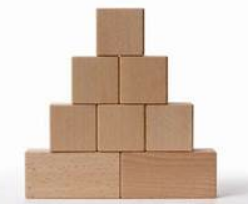
            Challenge the children to use the blocks to make a letter T for tooth and a letter D for Dentist. Encourage them to try to make letters in their names.  

Literacy/Alphabet Knowledge; shows progress with associating th names of letters with their shapes and sounds.

Dramatic Play

            Give the children some of the materials that you use at large group time (dry erase board, flannel board, an attendance sheet, etc.) and let the children play school. 

Creative Arts/Dramatic Play; participates in a variety of dramatic play activities that become more extended and complex.

Math and Manipulatives

            On a piece of paper draw a tooth and give it a happy face.  On another piece of paper draw a tooth and give it a sad face.  Let the children use the pictures of food that you have brought and sort them by food that is good for your teeth on the happy tooth and food that is not good for your teeth on the sad tooth. 

Mathematics/Patterns & Measurement; shows growth in matching, sorting, putting in a series, and regrouping objects according to one or two attributes such as shape or size.

Outdoors

           Look for small rocks on the playground that look kind of like teeth.  Collect them in a bucket.  At the end of your outdoor time, help the children to count the number of ‘teeth’ that you have collected. 

Mathematics/Number & Operations; begins to make use of one-to-one correspondence in counting objects and matching groups of objects.

Transitions

            As children leave to go to the next center, ask them if they think they might like to be a dentist, make a graph of yes and no. 

Mathematics/Number & Operations; begins to associate number concepts, vocabulary, quantities, and written numerals in meaningful ways. AND Social & Emotional Development/Self-Concept; begins to develop and express awareness of self in terms of specific abilities, characteristics, and preferences.

As the children go to brush their teeth today say the following poem from the Colgate web site.

(Kerry’s)/_______ off the brush his/her teeth

The front, the sides, the back

He’ll/she’ll clean away and move away

The yucky, yucky plaque.

Dear Parent-

           Today we learned about what it takes to become a Dentist.  Ask your child if they think they would like to become a Dentist.  If they say yes, ask them why?  If the say no, ask them if they know what they would like to become?