Cat’s Colors, by Jane Cabrera

Can you guess Cat’s favorite color?  This is a nice book to help children review different basic colors.

Materials

  •                  White coffee filters or white absorbent paper towels
  •                  Eye droppers
  •                  Food coloring.
  •                  M&M’s-optional

Vocabulary

  •                   Swoop (to make a sweeping descent)

Before Reading the Story;

 Make a simple bar graph and add colors to the bottom.  Ask the children to name which is their favorite color.  Count out the names above each color and write the amount on top.  Can the children see which color had the most votes?  Can they name the number that is written above the names?

Mathematics/Number & Operations; begins to associate number concepts, vocabulary, quantities, and written numerals in meaningful ways.

Reading the Story

                  As you read the story, ask the children if they can think of something else that is the color mentioned. (And green is like my shirt!)

Mathematics/Geometry & Spatial Sense; shows growth in matching, sorting, putting in a series, and regrouping objects according to oneor two attributes such as color, shape, or size.

After Reading the Story

Play Hiding Cat.  Cut out 4-7 squares of different colored paper, big enough to cover the cat.  One child hides their eyes and another puts the cat under a colored square.  The child who had their eyes hidden then tries to guess what color the cat is under.  Give the children 3 tries to guess and then let someone else hide their eyes and try.  Play until everyone has a turn.

Social & Emotional Development/Self-Control; develops growing understanding of how their actions affect others  and begins to accept the consequences of their actions.  AND Social & Emotional Development/Cooperation; develops increasing abilities to give and take in interactions; to take turns in  games or using materials; and t interact without being overly submissive or directive.

Discovery

Add food coloring to water in ice cube trays. Show the children how to suction up the water with an eye dropper or small syringe.  The children can then drop the water onto a white coffee filter and watch as the colors mix together.

Science/Scientific Skills & Methods; begins to participate in simple investigations to test observations, discuss and draw conclusions, and form generalizations.  AND Physical Health & Development/Fine Motor Skills; develops growing strength, dexterity, and control needed to use tools such as scissors, paper punch, stapler, and hammer.

Music and Movement

Sing The Rainbow Songhttps://www.youtube.com/watch?v=nRTdq0VsLGQ

Red and yellow and pink and green,

Purple and orange and blue.

I can sing a rainbow, sing a rainbow, sing a rainbow too.

Creative Arts/ Music; participates with increasing interest and enjoyment in a variety of music activities, including listening, singing, finger plays, games, and performances.

Blocks

  Add colored blocks to the center today.

Physical Health & Development/Fine Motor Skills; grows in hand-eye coordination in building with blocks, putting together puzzles, reproducing shapes and patterns, stringing beads, and using scissors.

Art

In the illustrations the artist used finger painting.  Put out finger paint today.  Encourage the children to practice writing their name in finger paint and making shapes.

Physical Health & Development/Fine Motor Skills; progresses in abilities to use writing, drawing, and art tools, including pencils, markers, chalk, paint brushes, and various types of technology.  AND Literacy/Early Writing; progresses from using scribbling, shapes, or pictures to represent ideas, to using letter-like symbols, to copying or writing familiar words such as their own name.

 Sand and Water

 Add food coloring to the water today to change the color.  Give the children a choice of equipment to use in the table today.

Social & Emotional Development/Self-Concept;  develops growing capacity for independence in a range of activities, routines, and tasks.

Library and Writing

 Ask the child to name their favorite color and tell you why.  Write their response and ask them to illustrate.  Name a color and encourage the children to think of objects that are not present in the classroom but more in tune to the book. Write down their responses, these could be turned into a class book.

Literacy/Early Writing; begins to represent stories and experiences through pictures, dictation, and in play.  AND Approaches to Learning/Reasoning & problem Solving; develops increasing abilities to find more than one solution to a question, task, or problem.

Math and Manipulatives

Any classroom objects that you have that the children can use to sort by color.

Mathematics/Geometry & Spatial Sense; shows growth in matching , sorting, putting in series, and regrouping objects according to one or two attributes such as color, shape, and size.

Bring in M&M’s, jelly beans, or other food item that comes in a variety of colors.  These can be used to sort and add & subtract with. (Sort your candies by color, which has the most?  Eat all the blue ones, how many are left?  Take 2 and add 3 more, how many?  Now eat one, how many?)

Mathematics/Number & Operations; develops increased abilities to combine, separate, and name “how many” concrete objects,

Outdoor Play

Have the children help you do a color search. They can look around the playground for items that are yellow (a shovel, a dandelion, Kerry’s shoes, the hula hoop.  Then look for green items, red, blue etc.)p

Mathematics/Geometry & Spatial Sense; shows growth in matching , sorting, putting in series, and regrouping objects according to one or two attributes such as color, shape, and size. 

Transitions

Dismiss the children by colors to go to the next activity.  (If you are wearing red, you may go line up).

Language Development/Listening & Understanding; shows progress in understanding and following simple and multi-step directions.
Come to Town, by Anne Rockwell

Follow the bears as they go to town.  This is a great talking through book about what goes on in the different buildings around town.

Materials

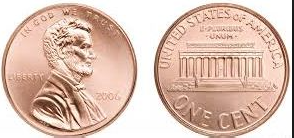
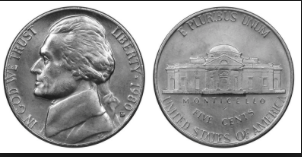
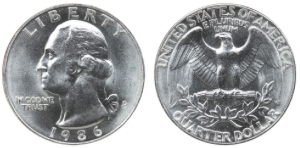
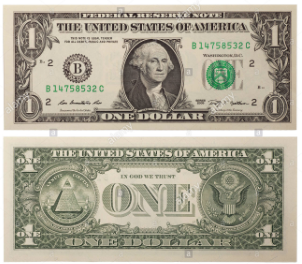
  •    Picture of penny, nickel, dime, quarter, and dollar bill
  •    10 pennies, 2 nickels, 1 dime
  •    Store Labels
  •    2 pictures of shape buildings
  •    Pictures of storefronts and items they might sell.

Vocabulary

  •   Town (This is where all the buildings are that people go to during the day).

Before Reading the Story

Turn to the page that says “Morning has come to town”.   Ask the children if they know what town means.  Help the children define it by using your town as the example.  Ask the children what kinds of buildings are in their town? If they cannot answer, ask them if they ever go to the bank, library, grocery store, department store, fish store, etc.

Social & Emotional Development/Knowledge of Families & Communities; begins to express and understand concepts and language of geography in the contexts of the classroom, home, and community.

Reading the Story

Take your time on the pages that describe what is going on in the buildings.  Let the children take turns describing something that they see.

Language Development/Speaking & Communicating;develops increasing abilities to understand and use language to communicate information, experiences, ideas, feelings, opinions, needs, questions; and for other varied purposes.

After Reading the Story      

Tell the children that town is where all the stores are. Ask the children to help you make a list of all the kinds of buildings that are in your town and that they might go

Language Development/Speaking & Communicating;develops increasing abilities to understand and use language to communicate information, experiences, ideas, feelings, opinions, needs, questions; and for other varied purposes.  AND Social & Emotional Development/Knowledge of Families & Communities; begins to express and understand concepts and language of geography in the contexts of the classroom, home, and community.

Discovery

 Explain to the children that many people get to town by driving in their car or taking public transportation.  Talk about how most land transportation has wheels and wheels roll.  Ask the children if they can recall what shape wheels are (round, circle),  Ask the children if they think a rectangle block would roll (no, because  it is not round).  Show the children how a cylinder block is round like a wheel.  Ask them if they think it will roll?  Invite the children to collect objects in the room that they think will roll.  Make a small ramp using a piece of cardboard and let the children experiment finding objects that will roll and not roll.

Science/Scientific Skills & Methods; begins to participate in simple investigations to test observations, discuss and draw conclusions, and form generalizations.

Music and Movement

Sing or chant, I’ve Got a Penny

I’ve got a penny, I’ve got a penny

I’ve got a penny shiny and new

I’m going to by all kinds of _______

That’s what I’m going to do.

Also sing nickel, dime, quarter, and dollar

(Give each child a piece of money.  When you sing the song see if they can name the piece of money that they have and also what they would buy.)

Approaches to Learning/Reasoning & Problem Solving; develops increasing ability to find more than one solution to a question, tsdk, or problem.  AND Creative Arts/Music; participates with increasing  interest and enjoyment in a variety of music activities, including listening, singing, finger plays, games, and performances.

Chant One a Penny

One a penny, Two a penny, Three a penny, more

Four a penny, Five a penny

That makes a nickel for the store

Six a penny, Seven a penny, Eight a penny more

Nine a penny, Ten a penny

Now that’s a dime for the store!

(As you do this poem, hold up pennies until you get to 5 then replace with a nickel.  Continue adding pennies to the nickel until you get to ten and replace with a dime.  Count out five pennies and ask the children what this is equal to.  Then count out ten pennies and ask them what it is equal to (2 nickels or a dime)

Mathematics/Number & Operations; develops increased abilities to combine, separate, and name “how many” concrete objects.  AND Mathematics/Number & Operations; begins to associate number concepts, vocabulary, quantities, and written numerals in meaningful ways.

Blocks

Put tape on familiar store labels and let the children build a town.  Have them tape on the store names to label each building in town.

Approaches to Learning/Engagement & Persistence; demonstrates increasing ability to set goals and develop and follow through on plans.

Art

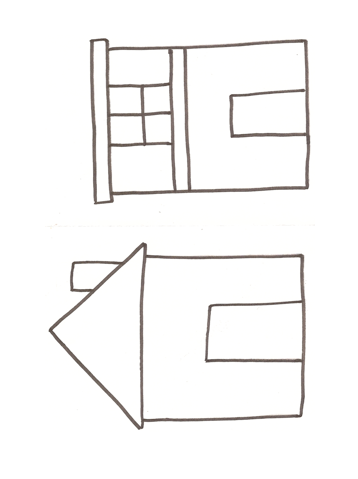
Contact over the building shapes pages.  Show the children how to use the play dough to cover the shapes of the buildings.  They can roll it out or pinch it on.  You can also make letters for them to cover. 

Physical Health & Development/Fine Motor Skills; develops strength, dexterity, and control ineeded to use tools such as scissors, paper punch, stapler, andhammer.

Sand and Water

Place play coin money in the table with sand.  The children sift through the sand and find the coins.  Put a cupcake tin near the center with a penny, nickel, dime, and quarter glued to the bottom.  The children find the coins and put them into the correct tin.

Mathematics/Geometry & Spatial Sense; begins to determine whether or not two shapes are the same size and shape.

Library and Writing

            Make two sets of the store labels and glue them to index cards.  These then can be used to make a memory matching game.  TUrn all the cards upside down.  The children take turns picking up two cards.  If they ar a match they get to keep them.  If they are not a match, the cards get put back in their place upside down and the next child takes a turn.

Social & Emotional Development/Cooperation; develops increasing abilities to give and take in interactions; tpo take turns in games and in using materials; and to interact without being overly submissive or directive.  AND Mathematics/Patterns & Measurement; shows increasing abilities to match, sort, put in a series, and regroup  objects according to one or two attributes such as color, shape, or size.

Dramatic Play

 Add an office prop box (briefcase, clip board, pencil and paper, old calendars and memo books, calculator, paperclips, stapler, computer keyboard and phone.

Creative Arts/Dramatic Play; participates in a variety of dramatic play experiences that become more extended and complex.  AND Physical Health & Development/Fine Motor Skills; develops strength, dexterity, and control ineeded to use tools such as scissors, paper punch, stapler, andhammer.  AND Literacy/Early Writing; experiments with a growing variety of writing tools and materials, such as crayons, pencils, and computers.

Math and Manipulatives

Match the store to the items that belong in them game. Make a copy of the pages, cover them with contact paper and have the children match the items that belong in each store.

Mathematics/Patterns & Measurement; shows increasing abilities to match, sort, put in a series, and regroup  objects according to one or two attributes such as color, shape, or size.  AND Social & Emotional Development/Knowledge of Families & Communities; develops growing awareness of jobs and what is required to perform them.

Outdoor Play

Tell the children that you are going to act out a story with them.  Pretend to get up and dressed, eat breakfast etc.  Now it is time to go to town.  Get in your car, put on your seatbelt, turn the key and drive.  When in town, decide what stores you are going to (Kerry you go to McDonald’s and get everyone French fries, Roger you go to the hardware store and buy a hammer, etc).  Gather everyone back; ask them if they can remember what they bought.  All get in the car and head back home.

Creative Arts/Dramatic PLay; participates in a variety of dramatic play activities that become more extended and complex.  AND Approaches to Learning/Engagement & Persistence; shows growing capacity to maintain concentration over time on a task, question, set of directions or interactions, despite distractions and interruptions.

Transitions

Ask each child if they know what their parent does for work.  List these on a piece of paper.  (Alison’s Mom is a teacher.  Ryan’s Dad works for the cable company.  Paula’s Mom is an artist.  Sean’s Mom makes books.  Raven’s Mom is a Mom).

Social & Emotional Development/Knowledge of Families & Communities; progresses in understanding similarities and respecting differences among people such as genders, race, special needs, culture, language, and family structures.  AND  Language Development/Speaking & Communicating; develops increasing abilities to understand and use language to communicate information, experiences, ideas, feelings, opinions, needs, questions,; and for varied other purposes.

Resources

to use with play dough

But No Elephants, by Jerry Smath

Grandma Tildy decides that she would like to get a variety of pet animals but is quite clear that she does not want an elephant. What will happen when an elephant decides to stay anyway?

Materials

  •             Directions on drawing an elephant.
  •             Stuffed “pet”animals and pet supplies to along with.
  •             Pictures of animal helpers.

Vocabulary           

  •              Pet (an animal that you keep in your home to love and enjoy).
  •             Animal helpers (animals that help people to do work or chores).
  •             Strong (able to hold up under the weight)

Before Reading the Story

 Tell the children that the story today is about a lady who decides she wants a pet. What kind do you think she should get, why?  Ask the children if they have any pets at home.  Make a graph that shows who has what kind of pet. 

Approaches to Learning/Reasoning & Problem Solving; develops increasing ability to find more than one solution to a question, task, or problem.  AND Mathematics/Patterns & Measurement; begins to make comparisons about several objects based on a single attribute. 

Reading the Story

As Grandma Tildy acquires each pet, stop and ask the children if they think it would make a good pet why or why not?.  When the elephant gets stuck in the house, ask the children if they can think what might happen.  When he begins walking, ask the children where they think he might be walking to.

Literacy/Book Knowledge & Appreciation; demonstrates progress in abilities to retell and dictate stories from books and experiences; to act out stories in dramatic play;  and to predict what will happen next in a story.  AND Approaches to Learning/Initiative & Curiosity; grows in eagerness to learn about and discuss a growing range of topics, ideas, and tasks.

After Reading the Story

Bring in pictures of animals and ask the children if they would like to have it for a pet and what special thing the pet could do (A tiger could scare away the bad guys, a penguin could wash my Daddy’s car).

Approaches to Learning/Initiative & Curiosity; grows in eagerness to learn about and discuss a growing range of topics, ideas, and tasks.

Discovery

Pictures of animal helpers.   Put the pictures out where the children can look and discuss the ways animals help people.

Science/Scientific Knowledge; expands knowledge of and abilities to observe, describe, and discuss the natural world, materials, living things, and natural processes.  AND Social & Emotional Development/Knowledge of Families & Communities; progresses in understanding similarities and respecting differences among people such as genders, race, special needs, culture, language, and family structures.

Music and Movement

Sing the Opposite song, to the tune of All Around the Mulberry Bush.

Everything I always say,
You always say the opposite.
When I say cold, you say hot
(sunny-cloudy,big-little, yes-no)

Language Development/Speaking & Communicating; progresses in abilities to initiate and respond appropriately in conversation and discussions with peers and adults.

Sing the Elephant Song. https://www.youtube.com/watch?v=wQf6yWEScB8

One elephant, went out to play
All ona spider’s web one day.
He had such enormous fun
That he called for another elephant to come.
One elephant……
Two elephants, went out to play

(With each verse have a child dance in the middle of the circle)

Mathematics/Number & Operations; develops increasing ability to count in sequence to 10 and beyond.

Blocks

 Add animals and people to the center.  Encourage the children to build houses.  Can they act out parts of the story?  Can they adapt the story to fit the animals in your center?

Literacy/Book Knowledge & Appreciation; demonstrates progress in abilities to retell and dictate stories from books and experiences; to act out stories in dramatic play;  and to predict what will happen next in a story.  

Art

Encourage the children to draw pictures of houses and then draw or cut out an animal picture to put inside. 

Literacy/Book Knowledge & Appreciation; demonstrates progress in abilities to retell and dictate stories from books and experiences; to act out stories in dramatic play;  and to predict what will happen next in a story.  AND Literacy/Early Writing; experiments with a growing variety of writing tools and materials, such as pencils, crayons and computer.

Library and Writing

Make a copy of the Elephant drawing directions. Encourage the children to read the directions and draw elephants.
Literacy/Early Writing; experiments with a growing variety of writing tools and materials, such as pencils, crayons and computer.  AND Creative Arts/Art; progresses in abilities to create drawings, paintings, models, and other art creations that are more detailed, creative, or realistic.

Sand and Water

If you read this story during the winter months bring in snow to put in the water table for the children to play with.  As the day progresses, help the children to notice what is happening to the snow.  Ask them why they think this is happening.

Science/Scientific Skills & Methods; begins to describe and discuss predictions, explanations, and generalizations based on past experiences.  AND Science/Scientific Knowledge; develops growing awareness of ideas and language related to the attributes of time and temperature.

Dramatic Play

Add any  stuffed animals that could represent a pet. Bring in pet supplies to enhance the play of caring for a pet, (A stuffed cat with a collar, a can of cat food, a brush, and a mouse toy).

Creative Arts/ Dramatic Play; participates in a variety of dramatic play activities that become more extended and complex.

Math and Manipulatives

Make two simple bar graphs.  At the bottom of the first, draw animals that show any pets that the children might have at home.  On the bottom of the second graph, draw animals that the children wish they could have for a pet.  These two graphs will probably have some overlapping animals but be prepared to draw an alligator or shark at the bottom of graph number two.

Mathematics/Number & Operations; begins to use language to compare numbers of objects with terms such as more, less, greater than, fewer, equal.  AND Mathematics/Number & Operations; begins to associate number concepts, vocabulary, quantities, and written numerals in meaningful ways.

Outdoor Play

Put a blanket or sheet onto the ground and pretend that it is a house.  Everybody must fit on it (inside).  Talk about moving the house.  The children can hold onto the edges of the sheet and move as a unit to a new area. Talk about how everyone must cooperate and work together.

Social & Emotional Development/Cooperation; increases abilities to sustain interactions with peers by helping, sharing, and discussing.

Transitions 

Make up simple animal riddles.  (I’m thinking of an animal pet with long floppy ears who hops and likes to eat carrots.  I’m thinking of an animal pet that lives in a bowl of water and swims around and around.)

Approaches to Learning/Reasoning & Problem Solving; develops increasing abilities to classify, compare, and contrast objects, events, and experiences.

Resources