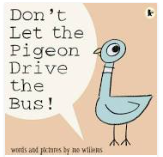
Don’t Let the Pigeon drive the Bus! By Mo Williams

A naughty pigeon tries to convince your children that he should be able to drive the bus. Children enjoy interacting with this fun book.

 Materials

  • Simple pigeon shapes
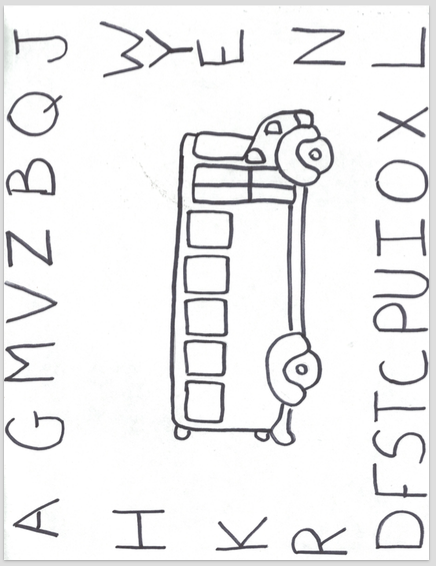
  • Alphabet bus page, one per child

 Vocabulary

 Before Reading the Story

Talk to the children about rules. Why do we have rules? What are some of our classroom rules? What do you think would happen if nobody followed the rules? Is it fair for one person to not have to follow the rules but everyone else does?

Social & Emotional Development/Self-Control; demonstrates increasing capacity to follow rules and routines and use materials purposefully, safely, and respectfully. 

 Reading the Story

Read it as though you are trying to convince the children that you (the pigeon) should really drive the bus. Turn to the last page with the truck and ask the children what they think the pigeon might be thinking? (I’ll drive the truck!)

Literacy/Book Knowledge & Appreciation; demonstrates progress in abilities to retell and dictate stories from books and experiences; to act out stories ain dramatic play; and to predict what will happen next in the story. 

After Reading the Story

Tell the children that you are going to play a game about listening and following the directions. Play The Bus Driver Says… which is really Simon Says. The teacher either says,”Bus Driver says to jump up and down” or “jump up and down” The children only follow the direction if the Bus Driver says to do. Think of lots of fun and silly things for the children to do mixing up times when the Bus Driver says and times when the the Bus Driver does not say what to do.

Language Development/Listening & Understanding; shows progress in understanding and following simple and multi-step directions.

 Discovery

Do you have any feathers? Put out several and a magnifying glass. Encourage the children to look through the magnifying glass and see how feathers are made. Up close, they are truly lovely.

Science/Scientific Skills & Methods; begins to use senses and a variety of tools and simple measuring devices to gather information, investigate materials, and observe processes and relationships.

Music and Movement

Sing The Wheels On The Bus doing the actions to go along with each verse.

The wheels on the bus go round and round,
Round and round, round and round.
The wheels on the bus go round and round,
All through the town.

Creative Arts/Music; participates with increasing interest and enjoyment in a variety of music activities, including listening, singing, finger plays, games, and performances.

Blocks

Put out your transportation vehicles today, especially if you have a bus. Encourage the children to make roads using blocks.

Approaches to Learning/Initiative & Curiosity; chooses to participate in an increasing variety of tasks and activities.

Art

Put the book on the table so the children can see the cover. Explain that today they are going to make pigeons. Put out the pigeon shapes, either pre-cut for younger children or with scissors for older children.  The children can then look at the book cover and see if they can put their shapes together in a similar pigeon fashion. Put out markers so that they can add beaks and eyes and embellishments.

Mathematics/Geometry & Spatial Sense; progresses in ability to put shapes together and to take them apart.  

Sand and Water

Library and Writing

There is a Youtube of this story.

Literacy/Book KNowledge & Appreciation; shows growing interest in reading related activities, such as asking to have a favorite story read; choosing to look at books; drawing pictures based on stories; asking to take books homes; going to the library; and engaging in pretend reading with other children.

Make copies of the alphabet bus page and small pieces of paper with a letter on each. The children take turns picking up and letter and naming it. They can then all look for the letter on the bus page and color it in.  Continue until all the letters are found.

Literacy/Alphabet Knowledge; identifies at least 10 letters of the alphabet, especially those in their own name.

Dramatic Play

Add a police type hat and call it a bus driver hat for today. Let the children bring in chairs to make a bus. A paper plate makes a simple steering wheel. The children can take turns driving the bus.

Creative Arts/Dramatic PLay; shows growing creativity and imagination in using materials and in assuming different roles in dramatic play situations.

Math and Manipulatives

Put out your counting bears or similar small counters and several duplos/large legos of different sizes and shapes.  Ask the children to pretend that a duplo is a bus and to see how many of the bear counters they can get onto or into the bus.  As they experiment, ask them why they think one duplo can hold more counting bears that another.  (The red one is longer so it has more room.  The yellow one is tiny.  This one has a circle so it is big)

Mathematics/ & Operations; demonstrates increasing interest and awareness of numbers and counting as a means for solving problems and determining quantity.  AND Approaches to Learning/Reasoning & Problem Solving; grows in recognizing and solving problems through active exploration, including trial and error, and interactions and discussions with peers and adults.  AND Mathematics/Number & Operations; begins to use language to compare numbers of objects with terms such as more, less, greater than, fewer, equal.

Outdoor Play

Play Duck, Duck, Goose.  Have all the children hold hands and make a large circle. Drop hands and have everyone sit down. Choose one child to be ‘It’. It walks around the circle gently tapping each child on the head saying either duck or goose. If the ‘It’ says duck, nothing happens. But if ‘It’ taps a child and says, “goose” the child quickly stands up and tries to chase ‘It’ around the circle. ‘It’ tries to get to the child’s open spot before the child can tag him/her. This child is the new ‘It’ and the game continues.

Language Development/Listening & Understanding; shows progress in understanding and following simple and multi-step directions.

Transitions

Have all the children get in a line behind you. Tell them that you are going to pretend to be the bus driver and drive them to the different centers today. Have the children follow you as you make your way around the room announcing each center and letting children ‘off’ the bus to go play.

Social & Emotional Development/Cooperation; develops increasing ability to give and take in interactions; to take turns in games and using materials; and to interact without being over submissive or directive.

 Dear Parents, today we read a story about a pigeon who did not want to follow the rules and begged and pleaded to be able to drive the bus. Talk to your child about house rules, why do you have them? What happens if you do not follow them? Does begging change your mind?

Resources
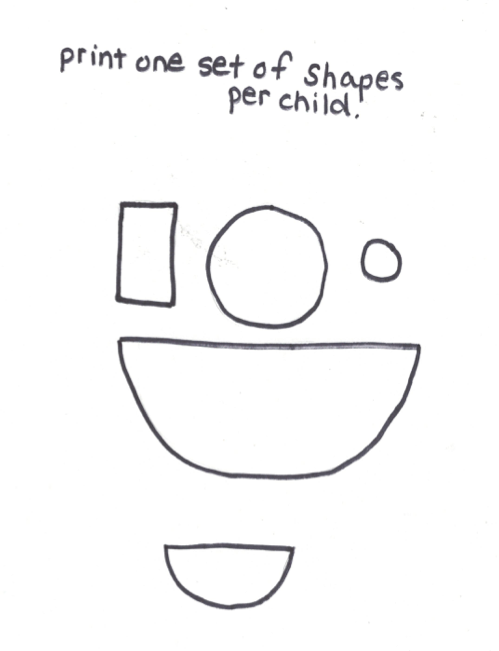
Screen Shot 2018-11-13 at 5.30.36 PM
Use this to make a pigeon
Screen Shot 2018-11-13 at 5.36.44 PM

Careers, Following Rules

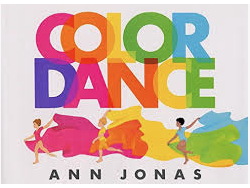
Color Dance, by Ann Jonas

 Four children dance across the pages of this book to mix and make colors.  This is a great book to use to reinforce how primary colors make secondary colors.

Materials

  •   Examples of colors in pairs (paint or material swatches, paper)
  •   Clear glasses or jars of water
  •   Food coloring
  •   Several rolls of crepe paper
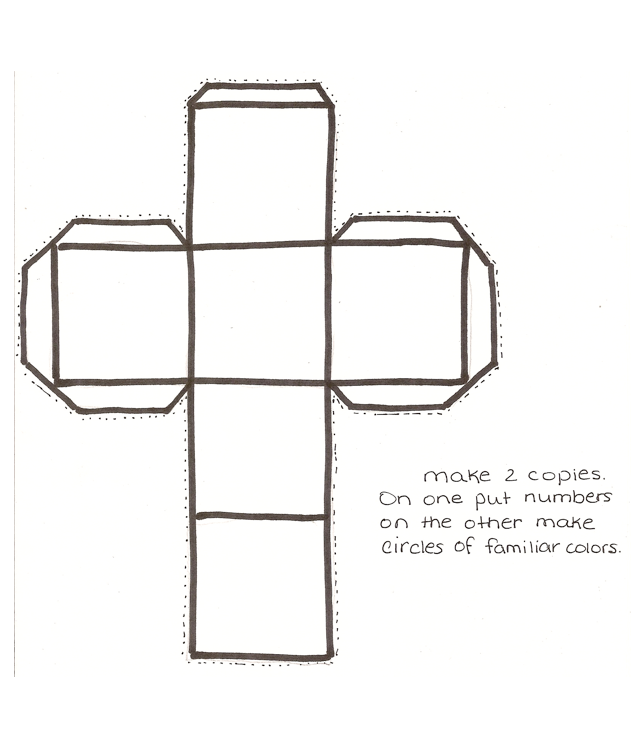
  •   2-dice.  On one, tape six different basic colors to each of the 6 sides.
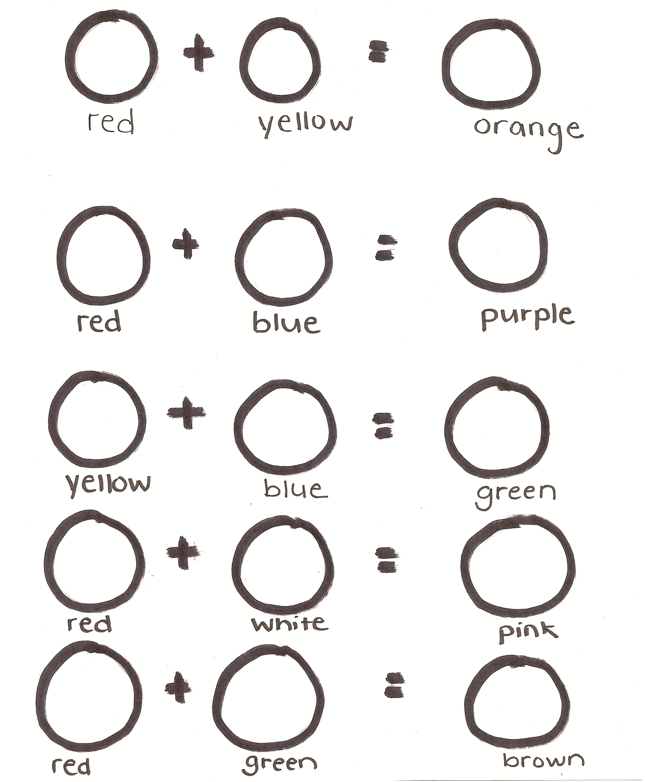
  •  Color mixing chart.
  •  Make several ice cube trays filled with colored ice the night before (color ice with food coloring or non-toxic water soluble paint)

Vocabulary

  • Disappear (to look like it is not even there)

Before Reading the Story

 Make a simple graph to show the children’s favorite colors.  After everyone has given his or her input, look at the graph together.  Which color has the most votes?  Which color has the least?  Is there any color that did not get a vote?  

Mathematics/Number & Operations; begins to use language to compare numbers of objects with terms such ass more, less, greater than, fewer, equal to.

Reading the Story

As you begin to say some of the unusual color names that the dancers make, look at the children’s clothing to see if any of them are wearing the named color. (Look, Kerry is wearing magenta on her shirt. Roger has an aquamarine blue stripe right here). 

Language Development/Listening & Understanding; understands an increasingly complex and varied vocabulary.

After Reading the Story

Ask the children if they can remember what color red and blue make?  Follow the directions on the back of the food coloring box and mix a variety of colors in the glasses or jars so the children can watch the colors mix together.  

Science/Scientific Skills & Methods; begins to participate in simple investigations to test observations, discuss and draw conclusions, and form generalizations.

Discovery

Do your science on the art table today.  Put several blobs of red, yellow, and blue finger paint directly onto the table.  Add some soothing music and have the children use their hands to slide/dance across and around the table with their hands.  As the colors mix, make note,“how did you do that?  What colors did you mix here to make that orange?”

 Science/Scientific Skills & Methods; begins to use senses and a variety of tools and simple measuring devices to gather information, investigate materials, and observe processes and relationships.

Music and Movement

 Give the children scarves and play some cheerful music. Let them experiment with throwing the scarves up in the air and catching them, swirl around, make circles over head, in front of, etc.   As the children move to the music use movement words such as swish, swing, choppy, zigzag, smoothly, up and down.

Creative Arts/Music; participates with increasing interest and enjoyment in a variety of music activities, including listening, singing, finger plays, games, and performances.  AND Language Development/Listening & Understanding; understands an increasingly complex and varied vocabulary.

Sing the Rainbow Songhttps://www.youtube.com/watch?v=nRTdq0VsLGQ Have a piece of construction paper to represent each color and let the children hold them up when their color is called.

Red and yellow and pink and green

Purple and orange and blue

I can sing a rainbow, sing a rainbow, you can sing a rainbow too.

Creative Arts/Music; participates with increasing interest and enjoyment in a variety  of music activities, including listening, singing, finger plays, games, and performances.

Blocks

If you have any colored blocks, put them out as the feature building block for the day.

Physical Health & Development/Fine Motor Skills; grows in hand-eye coordination in building with blocks, putting together puzzles, reproducing shapes and patterns, stringing beads, and using scissors.

Art

 Put out red, yellow, blue, and white paint in small cans or jars (I use old Gatorade bottles).  Show the children how to pour paint into small cups and make their own colors for the easel.  This takes practice.  Encourage each child to wash out their cups and brushes when they are finished.  Add a color-mixing chart (red + blue = purple) 

Language Development/Listening & Understanding; shows progress in understanding and following simple and multi-step directions.  AND Science/Scientific Skills & Methods; begins to participate in simple investigations to test observations, discuss and draw conclusions, and form generalizations.

Library and Writing

Cut out squares and rectangles from colored construction paper.  Write the name of the color on the shape.  Put the shapes out on the table along with corresponding markers.  Have the children find a colored shape and marker that are the same (i.e. blue) and show them the word on the shape and marker. Encourage the children to write the color names with the correct color marker.  

Literacy/Early Writing; experiments with a growing variety of writing tools and materials, such as pencils, crayons, and computers.  AND Mathematics/Geometry & Spatial Sense; shows growth in matching, sorting, putting in a series, and regrouping objects according to one or two attributes such as color, shape, or size.

Sand and Water

Add a small amount of water to the table and let the children experiment by adding colored ice cubes.  You can talk about how the colors melt and change the water color as well as how the ice makes the water cold to the touch. 

Science/Scientific Skills & Methods; begins to use senses and a variety of tools and simple measuring devices to gather information, investigate materials, and observe processes and relationships.

Dramatic Play

Put the scarves into the dramatic center and let the children use them to make articles of clothing or to continue their color dancing. 

Creative Arts/Dramatic PLay; shows growing creativity and imagination in using materials and in assuming different roles in dramatic play situations.

Math and Manipulatives

Bring in pairs of color swatches (paint swatches, materials, paper, etc) for the children to match up.  For older children use swatches that are similar in color.

Mathematics/Geometry & Spatial Sense; shows growth in matching, sorting, putting in a series, and regrouping objects according to one or two attributes such as color, shape, or size.

Outdoor Play

Take several rolls of crepe paper outside and let the children weave lengths in and out of the fence.  Or just run around with a crepe paper ribbon.

Physical Health & Development/Fine Motor Skills; grows in hand-eye coordination in building with blocks, putting together puzzles, reproducing shapes and patterns, stringing beads, and using scissors.

Transitions

Bring two dice to the carpet.  Leave one untouched and on the other one, tape on six small paper dots in six different basic colors.  The children take turns rolling the two dice.  The one dice tells them what color item they must search for in the room and the other tells them how many of that color item they must find. For example if a child was to roll a 3 and a red the child must find 3 red items and bring them back to the carpet. 

Mathematics/Number & Operations; demonstrates increasing interest and awareness of numbers and counting as a means for solving problems and determining quantity.  AND Language Development/Listening  Understanding; shows progress in understanding and following simple and multi-step directions.

Dear Parent,   Today we read a book about many colors.  Help your child be able to identify his or her basic color names. When he/she is proficient at these, introduce some of the more exotic color names such as chartreuse, maroon, violet, magenta, or copper.

Resources

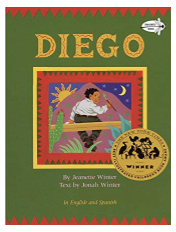
Diego, by Jeannette Winter

This is the story of a famous Mexican artist/muralist, Diego Rivera.  It is written in simple text so that even young children can love and appreciate the inspiration of his vibrant colors and style.  It is a good way to introduce fine arts to children.

Materials

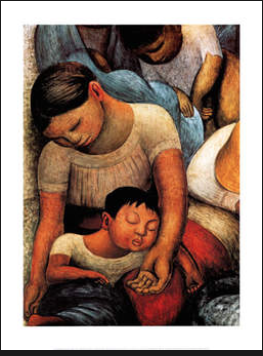
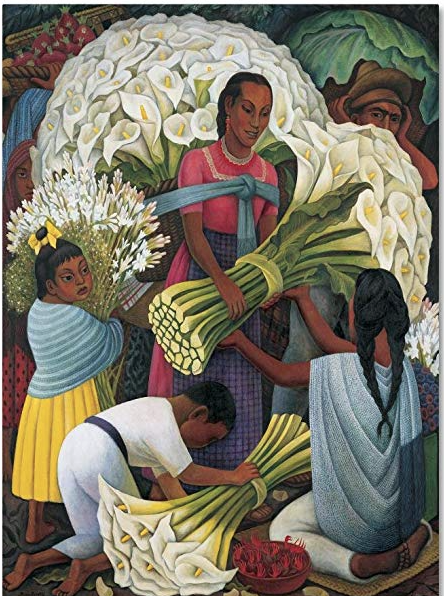
  • Visit the Diegorivera.com web site to find a picture that you can share with the children. I have chosen La Noche de los Pores.                                  
  • Colored chalk
  • Watercolors
  • A variety of paper types to watercolor on (construction, printer, waxed, cardboard, and newspaper).                         

Vocabulary

  • Artist (Someone who creates paintings or other creative works)
  • Mural (a very large painting, usually painted onto a wall)

Before Reading the Story

Show the children the picture that you have chosen and begin by encouraging the children to talk about the picture.  What do they see?  How many people are in the picture?  What are they doing?  Do you see the baby wrapped in the blue blanket?  Do you ever nap or rest with your family members?  How do you feel when you are all snuggled in with your family?

Approaches to Learning/Initiative & Curiosity; grows in eagerness to learn about and discuss a growing range of topics, ideas, and tasks.

Explain that this picture was painted by a man named Diego Rivera.  Mr. Rivera was an artist.  Tell the children that they also are artists.  When they draw or paint they are making art work.  Explain that some people choose to be artists for a job.

Social & Emotional Development/Knowledge of Families & Communities; develops growing awareness if jobs and what is required to perform them.

Reading the Story

Introduce the book.  As you read, note the images on the pages.  Talk about how Diego drew things that he saw in the world.  Note any picture hanging on the wall that a child might have drawn that depicts something from their life.  Let the children know that they are artists too.

Creative Arts/Art; begins to understand and share opinions about artistic products and experiences.

After Reading the Story

Tell the children that today you are going to all practice being artists.  Explain that some artists are painters like Diego and other artists are dancers and sculptures, and actors, and singers.  Explain that today we are going to use our imaginations and creativity to be artists.

Social & Emotional Development/Knowledge of Families & Communities; develops growing awareness of jobs and what is required of them.

Discovery

Let the children experiment with water color paints on a variety of paper types.

Science/Scientific Skills & Methods; develops increased ability to observe and discuss common properties, differences and comparisons among objects and materials.

Music and Movement

 Sing or chant  The Rainbow Song.https://www.youtube.com/watch?v=nRTdq0VsLGQ

Red and yellow and pink and green,

Purple and orange and blue.

I can sing a rainbow, sing a rainbow, sing a rainbow

How about you?

(give children slips of color and as you sing, they can hold up their colors accordingly)

Mathematics/Geometry & Spatial Sense; shows growth in matching, sorting, putting in a series, and regrouping objects according to one or two attributes such as color, shape, or size.

Put on instrumental music and give each child a scarf. Encourage them to dance with the scarf.  Can they throw the scarf into the air and then catch it, twirl it over their head, or make a circle around their body?   Explain that dancers are a different kind of artist

Creative Arts/Movement; expresses through movement and dancing what is felt and heard in various musical tempos and styles.  AND Language Development/Listening & Understanding; shows progress in understanding and following simple and multi-step directions.

Blocks

Diego used to make murals on walls.  Ask the children if they can build a large wall today.

Language Development/Listening & Understanding; shows progress in understanding and following simple and multi-step directions.  AND Physical Health & Development/Fine Motor SKills; grows in hand-eye coordination in building with blocks, putting together puzzles, reproducing shapes and patterns, stringing beads, and using scissors.

Art

Put pieces of dark construction paper on the easel today and let the children draw with colored chalk.  Try dipping the chalk into a cup of water for a different effect. 

Creative Arts/Art; gains ability in using different art media and materials in a variety of ways for creative expression and representation.

Put a still life on the table and encourage the children to try to draw what they see.  This should be something simple like several flowers in a vase or a stick with leaves attached.

Creative Arts/ Art; progresses in abilities to create drawings, paintings, models,  and other art  creations that are more detailed, creative, or realistic.

Library and Writing

Bring in art books that the children can look through. As the children look, talk about the images on the page.  Help the children be aware of art and artistic styles.

Literacy/Book Knowledge & Appreciation; shows growing interest in reading-related activities, such as asking to have a favorite book read; choosing to look at books; drawing pictures based on stories; asking to take books home; going to the library;and engaging in pretend-reading with other children.  AND Approaches to Learning/Initiative & Curiosity; grows in eagerness t learn about and discuss a growing range of topics, ideas, and tasks.

Have the children are practice writing their names today, explain to them that artists should always write their names on their artwork so that people will know who painted or drew the beautiful work.  

Literacy/Early Writing; progresses from using scribbles, shapes, or pictures to represent ideas, to using letter-like symbols, to copying or writing familiar words such as their own name.  AND Literacy/Early Writing; develops understanding that writing is a way of communicating for a variety of purposes.

Sand and Water

Dampen the sand today and add plastic bowls or sand forms to fill and make castles/shapes.  Tell the children that they are like sculptures creating shapes in the sand.  For young children this can be slightly difficult.  Show them how to count 1-2-3 and then quickly turn the plastic form over, tap the top lightly and carefully pull off the form to expose the shaped sand.

Physical Health & Development/Fine Motor Skills; develops growing strength, dexterity, and control needed to use tools such as scissors, paper punch, stapler, and hammer.

Dramatic Play

Put out a doctor kit today.  Remind the children that Diego spent much of his childhood very ill. Encourage the children to pretend to be doctors and get the dolls or each other well.

Social & Emotional Development/Knowledge of Families & Communities; develops growing awareness if jobs and what is required to perform them.

Outdoor Play

            Ahead of time take a large roll of paper and draw a simple mural outline.  It could be something like a flower garden or a giant school bus.  Tape it to the wall or fence and then bring out your paints and encourage all the children to help paint the mural.  Praise the children for all working so well together on the mural. You can suggest that they try to stay inside the lines but do not worry if they do not.  If you add flour to the paint, it will thicken it so that it is less drippy.

Social & Emotional Development/Cooperation; shows increasing abilities to use compromise and discussion in working, playing, and resolving conflicts with peers.

Take chalk outside to draw on the sidewalk.

Transitions

Bring in a second artwork by Diego or another artist. As the children move to the next activity,  ask each to answer a specific questions that related to the art work or to make an observation about the piece.

Creative Arts/Art; begins to understand and share opinions about artistic products and experiences.

Resources

La Noche de los Pobres
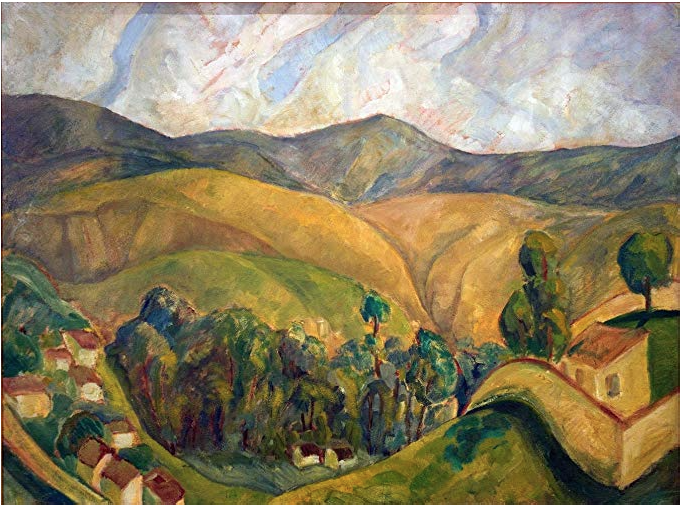
Landscape
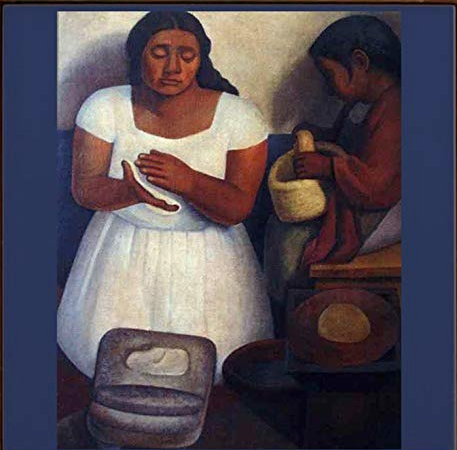
Tortilla Maker
The Flower Vendor