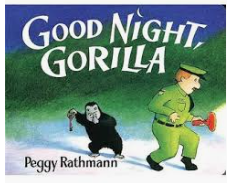
Good Night Gorilla, by Peggy Rathmann

This is a cute story told with few words.  As the zookeeper puts the animals to bed, something fishy is going on.  Children will delight in the silliness of the story.  This book is almost wordless and children will delight in retelling it over and over.

Materials

  • 1-2 flashlights.
  • A liquor store sized box with a hole cut out on one side big enough for a child to shine a flashlight in and see.
  • Animal cards
  • Old keys (ask at a place that makes them)
  • Several bath or dishtowels
  • Zookeeper maze, 1 per child

Vocabulary

Before Reading the Story

Look at the cover of the book.  Can the children tell what time it is?  Ask them what the gorilla is holding?  What do they think the story might be about? Introduce the book.

Literacy/Book Knowledge & Appreciation; demonstrates progress in abilities to retell and dictate stories from books and experiences; to act out stories in dramatic play; and to predict what will happen next in a story.

Reading the Story

As you read the story, stop on each page and ask a question about the illustration.  What is the gorilla taking out of the zookeeper’s pocket?  What do you think the gorilla will do when the zookeeper says goodnight to the elephant?  Where are all the animals going?  What do the two eyes say in the picture?  What do you think the zookeeper’s wife will do?  Look who is still following the zookeeper’s wife, what do you think will happen next?  Look at the banana, whom do you think ate it?

Literacy/Book Knowledge & Appreciation; demonstrates progress in abilities to retell and dictate stories from books and experiences; to act out stories in dramatic play; and to predict what will happen next in a story.

After Reading the Story

Ask the children if they thought the gorilla was being good or naughty, why?  (He let all the animals out so they could play.  He sneaked. My Mom would be mad. Me and my sister sneak to watch t.v. when we sleep)  What happens when you disobey your parents?  Why do you think your parents, and teachers, make rules? (To be safe, to be mean, to make me go to bed).

Approaches to Learning/Reasoning & Problem Solving; develops increasing abilities to classify, compare, and contrast objects, events, and experiences.

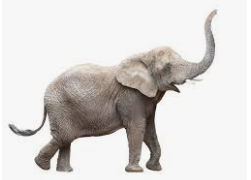
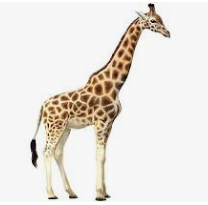
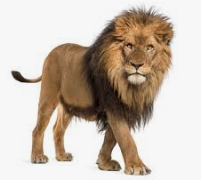
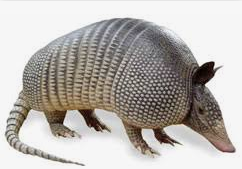
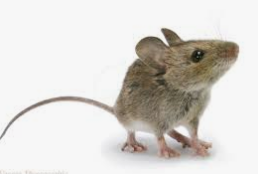
Put the pictures of the animals where the children can see them.  Cover them up with a cloth and take one away.  Can the children remember which animal is missing?  After you have done this several times, challenge then to recall the order in which the animals appeared in the story.  What was the mouse carrying throughout the story?

Approaches to Learning/Reasoning & Problem Solving; grows in recognizing and solving problems through active exploration, including trial and error, and interactions and discussions with peers and adults. AND Literacy/Book Knowledge & Appreciation; demonstrates progress in abilities to retell and dictate stories from books and experiences; to act out stories in dramatic play; and to predict what will happen next in a story.

Discovery

Provide flashlights for the children to use today.  Bring in a box and cut a hole in it.  The children can take turns putting something under the box and then using the flashlight to look through the hole and see what is inside.

Science/Scientific Skills & Methods; begins to use senses and a variety of tools and simple measuring devices to gather information, investigate materials, and observe processes and relationships.

For older children start with the flashlight totally disassembled.  Can they figure out how to put it back together so they can shine the light into the box?

Approaches to Learning/Engagement & Persistence; grows in abilities to persist in and complete a variety of tasks, activities, projects, and experiences.

Music and Movement

Teach the children the finger play, The Mouse.

Here is a mouse with ears so funny,            Make a peace sign with fingers

And here is a hole in the ground.                On other hand make a circle

When a noise he hears,                               

He pricks up his ears                                    Pop up fingers of peace sign hand

And he runs to his hole in the ground.       Put peace sign into circle hand

Creative Arts/Music; participates with increasing interest and enjoyment in a variety of music activities, including listening, singing, finger plays, games, and performances.

Play Monkey See, Monkey Do

Start in a large circle and sing or chant the following. he children can take turns choosing an action that the other children imitate. Make sure you have plenty of room as it seems jumping, twirling, and running in place are popular actions.

When I clap, clap, clap, my hands,               Choose an action for the children to copy

The monkeys clap, clap, clap, their hands.   Children copy action

Monkeys see and monkeys do                    

Monkeys do the same as you.                      Switch out a child’s name for next round

Language Development/Listening & Understanding; shows progress in understanding and following simple and multi-step directions. AND Physical Health & Development/Health Status & Practices; participates actively in games, outdoor play, and other forms of exercise that enhance physical fitness.

Blocks

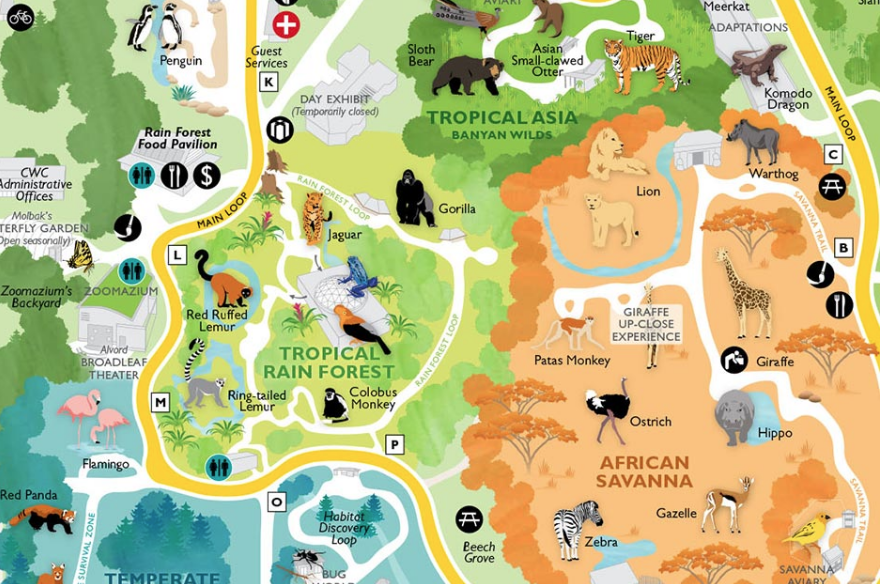
The story takes place in a zoo.  Challenge the children to make a zoo.  Where do the animals go, where can the people walk?  Put any book you may have depicting a zoo in the center for the children to use as a guideline to their building.

Social & Emotional Development/Knowledge of Families & Community; begins to express and understand concepts and language of geography in the context of the classroom, home, and community.

Art

Roll play dough out into pretend bananas and give the children plastic knives to practice cutting.  Can they cut in slices?  Can they cut the long way?  Can they cut it in half? Can they cut 4 pieces?

Physical Health Development/Health Status & Practices; shows growing independence in hygiene, nutrition, and personal care when eating, dressing, washing hands, brushing teeth, and toileting. AND Mathematics/Number & Operations; begins to associate number concepts, vocabulary, quantities, and written numerals in meaningful ways?

Put dark paper and light colored paints at the easel today and let the children paint night time pictures.

Creative Arts/Art; gains ability in using different art media and materials in a variety of ways for creative expression and representation.

Sand and Water

Add hard plastic baby dolls and water to the table.  Tell the children since the story took place at night that you thought it would be good to bath the babies before bedtime.  Give the children several dish towels or bath towels to dry the babies.

Creative Arts/Dramatic PLay; participates in a variety of dramatic play activities that become more extended and complex. AND Physical Health & Development/Health Status & Practices; participates actively in games, outdoor play, and other forms of exercise that enhance physical fitness.

Library and Writing

This story is available on YouTube.

Literacy/Book KNowledge & Appreciation; shows growing interest in reading related activities, such as asking to have a favorite book read,; choosing to look at books; drawing pictures based on stories; asking to take books home; going to the library; and engaging in pretend-reading with other children.

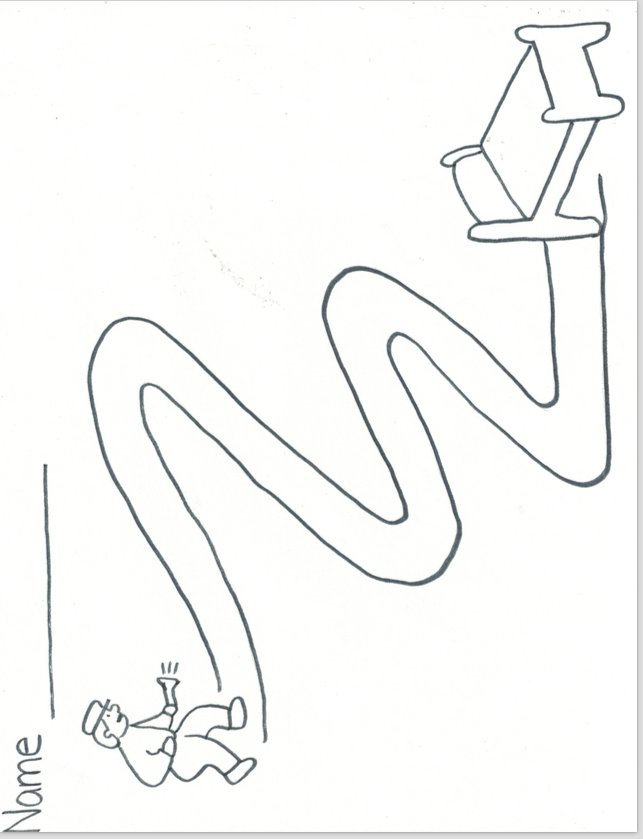
Give children a copy of the Zookeeper maze and a pencil.  Are they able to follow the maze and get the zookeeper to the bed without going over the lines?

Literacy/Early Writing; experiments with a growing variety of writing tools and materials, such as pencils, crayons, and computers.

Dramatic Play

Add stuffed animals to the center today and encourage the children to prepare the animals for night.  Add several naptime blankets so they can tuck the animals in.

Social & Emotional Development/Knowledge of Families & Communities; progresses in understanding similarities and respecting differences among people such as genders, race, special needs, culture, language, and family structures.

Math and Manipulatives

If you can get old keys, they are great for sorting and counting.

Mathematics/Number & Operations; develops increased abilities to combine, separate, and name “how many” concrete objects. AND Mathematics/Patterns & Measurement; begins to determine whether two or not two shapes are the same size and shape.

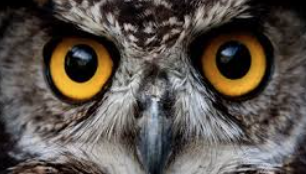
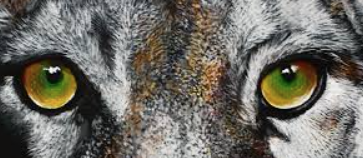
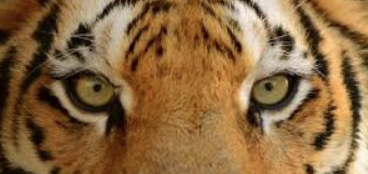
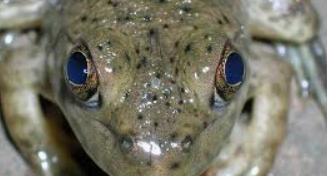
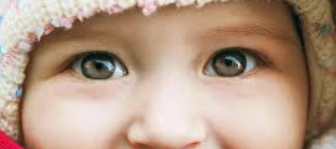
Make two sets of the animal eyes cards and put them out for the children to match.  You can use this like a Memory Game.

Mathematics/Patterns & Measurement; shows increasing abilities to match, sort, put in a series, and regroup objects according to one or two attributes such as color, shape, or size.

Outdoors Play

Play follow the leader with a twist.  Have the children line up behind you and follow you as quietly as possible around the playground.  Go around the tree, behind the sandbox, under the cover, etc.  At intervals say “Do I hear a noise”?  This is the signal for the children to freeze and you to turn around.  If all are frozen still, turn back around and continue.  If someone is still moving when you turn around, they go to a designated area and wait until the next freeze cycle.

Language Development/Listening & Understanding; shows progress in understanding and following simple and multiple-step directions.

Transitions

As the children move to the next activity tell them to move so quietly that no one can hear them.  (My children used to like to do this as we passed by the offices on the way to the playground).

Language Development/Listening & Understanding; shows progress in understanding and following simple and multiple-step directions.

Resources
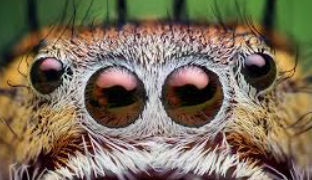
owl
wolf
spider
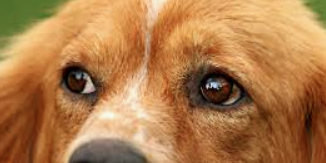
dog
cat
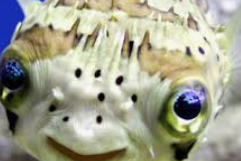
puffer fish
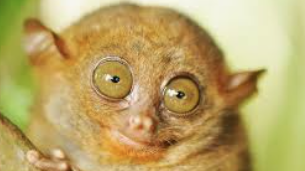
lemur
tiger
frog
child

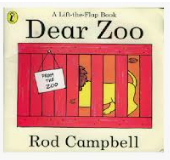
Dear Zoo, by Rod Campbell


Materials

  • A couple paper lunch bags
  • A large piece of bulletin board paper 4-6 feet long.
  • Many lengths of yarn 2-feet in length
  • Beanbags
  • Several boxes about the size that comes from the liquor store.

Vocabulary

  • Fierce (ferocious)
  • Grumpy (grouchy and in a bad mood)
  • Descriptive Words  (words that help explain and make something easier to imagine)

Before Reading the Story

Put a familiar classroom object inside each brown paper bag.  Let the children take turns guessing what is in the bag without touching it.  They may ask questions about what is in the bag but they may not touch it.  If your children are not good at asking questions, you can prompt them (This is something shiny from our science center, This came from the Book Nook, but, it’s not a book).  When they guess correctly have a child come up and feel the bag to confirm before taking the item out.

Approaches to Learning/Reasoning & Problem Solving; grows in recognizing and solving problems through active exploration, including trial and error, and interactions and discussions with peers and adults.

Reading the Story

Stop on each page and let the children try to guess what animal is in the container before opening and showing and showing them.

Literacy/Book Knowledge & Appreciation; demonstrates progress in abilities to retell and dictate stories from bookstand experiences; to act out stories in dramatic play; and to predict what will happen next in a story.

After Reading the Story

Ask the children if any of them have a pet at home.  Allow them to share their pets’ kind and name.  Steer the conversation to ‘What does a pet need’?  (Food, shelter, water)  Let the children talk about their own pets.  As they mention their pet, ask questions to the children.  “Where does your pet sleep?  What does it eat?  Do you have to walk it everyday”?  Allow the children to share as much or as little about pets as they want.

Language Development/Speaking & Understanding; develops increasing abilities to understand and use language to communicate information, experiences, ideas, feelings, opinions, needs, questions; and for varied other purposes.

Discovery

Make a bar graph.  At the bottom draw the animals that the children say are pets at home.  Help each child to be able to mark their pets on the graph (I give each child a sticky note or piece of tape with their name on it that they can then put on the graph in the appropriate spot. For older children I ask them to write their name).  Allow the children to continue talking about pets if they choose.  Bring in books or pictures about animals for the children to explore.

Science/Scientific Knowledge; expands knowledge of and abilities to observe, describe, and discuss the natural world, materials, living things, and natural processes. AND Literacy/Early Writing; develops understanding that writing is a way of communicating for a verity of purposes.

Music and Movement

There is a cute YouTube called, We’re Going  to the Zoo, Zoo, Zoo.  Have the children make up movements to go with the lyrics.

Creative Arts/Music; participates with increasing interest and enjoyment in a variety of music activities, including listening, singing, finger plays, games, and performances.

Put on music and practice walking like different kinds of animals.  As you change animals you can say, “Zoo keeper Juan says jump like a frog”.  Call out different zookeepers to name the next animal and begin the movement.

Creative Arts/Movement; expresses through movement and dancing what is felt and heard in various musical tempos and styles.

Blocks

Put Zoo animals in the center today.  Encourage the children to make cages for the like kind of animals.  How many elephants are there in the cage?

Mathematics/Number & Operations; begins to associate number concepts, vocabulary, quantities, and written numerals in meaningful ways.

Art

Secure bulletin board paper to the floor with tape.  Put out several trays of paint and many 2-foot lengths of yarn.  Show the children how to walk beside the paper. The children dip the yarn into the paint and them drag it across the bulletin board paper. This will be a group painting.

Sand and Water

The zoo and home both have animals that live in water. Put out any aquatic animals with plastic lids or tupperware that they can try to float them in. How many animals can they get into the container before it sinks?

Science/Scientific Methods & Skills; begins to use senses and a variety of tools and simple measuring devices to gather information, investigate materials, and observe processes and relationships.

Library and Writing

Have a small group of children sit in circle with you.  You will write their responses and turn it into a story or dictation. Ask the first to name an animal.  Then say “The _______”.  Ask the next child to name a size of animal.  Then say “The ____ ____. Ask the next child to name a color.  After each repeat back what has already been said.  Continue adding pieces to either make sentences with the children or an older group might be able to make a whole story using lots of descriptive words.

Social & Emotional Development/Cooperation; increases abilities to sustain interactions with peers by helping, sharing, and discussion. AND Literacy/Early Writing; begins to represent stories and experiences through pictures, dictation, and in play.

Make you own Dear Zoo book by having the children draw an animal.  Write their description of the animal underneath.  If they give a short answer, encourage them to add descriptive words. 

Literacy/Early Writing; begins to represent stories and experiences through pictures, dictation, and in play.

Dramatic Play

Add some stuffed animals to the center today and encourage the children to pretend that they are their pets.  If you or a parent has empty pet food containers, toys, or special equipment for a pet, add it to the center today.  (I took my class to a children’s museum that had stuffed dogs with leashes and food bowls, etc.  The class loved walking the stuffed dogs and pretending to take care of them).

Creative Arts/Dramatic Play; shows growing creativity and imagination in using materials and in assuming different roles in dramatic play situations.

Math and Manipulatives

Show the children the pet cards.  Ask them to help you sort them by those that would make a good pet, and those that would not make a good pet.  As you sort, talk to them about any pets they may have at home.

Mathematics/Patterns & Measurements; shows increasing abilities to match, sort, put in a series, and regroup objects according to one tor two attributes such as shape or size. AND Social & Emotional Development/Knowledge of Families & Communities; develops ability to identify personal characteristics, including gender and family composition.

Outdoor Play

Take the beanbags outside today to play a throwing game. Scatter the boxes out at various distances from a throw zone (where the child will stand to throw the beanbags). Give each child the opportunity to throw 5 beanbags into the boxes. After they have taken their turn throwing, let them help count how many went into the boxes and how many did not. Which had more?

Mathematics/Number & Operations; develops increased abilities to combine, separate, and name “how many” concrete objects.

Transitions

Do animal riddles with the children.  (I’m thinking of an animal that lives on a farm and gives us milk.  I’m thinking of an animal that was in the story and was too scary to keep.  I’m thinking of an animal that lives in the ocean and has many sharp teeth and they are scary!).

Language Development/Listening & Understanding; demonstrates increasing ability to attend to and understand conversations, stories, songs, and poems.

Resources
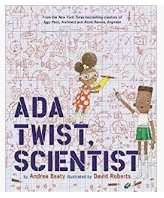
Ada Twist, Scientist, by Andrea Beatty

Ada Twist did not talk until she was three and then her world was filled with how and why questions.  This book gives young children an introduction into what being a scientist is all about.

Materials

  • 1 index card per child with their name written on it.
  • 5-8 baggies with cotton balls inside. Before class, make smell bags by either putting  a liquid onto the cotton balls or adding a powder. I have used; shampoo, perfume, lemon juice, pickle juice, onion powder, oregano, thyme, baby powder.
  • 2 diet colas
  • 1 packet of mint Mentos
  • White vinegar
  • Baking soda
  • Many colored shapes; triangle, circle, square, and rectangles of various sizes.
  • A tray or two of ice cubes

Vocabulary

  •  Frazzled-Tired and weary
  • Chaos-A giant mess
  • Quivered-Shook
  • Dazed-Bewildered, to not know what to think
  • Traits-Behaviors
  • Stench-Gross smell
  • Research-to study or investigate something
  • Hypothesis-to make a guess about something
  • Fiction-Not real, fake

Before Reading the Story 

Ask the children if they know what a scientist does. (He/she is an inventor or a researcher. Talk about how scientists invent things to make life easier. Name some inventions that the children use in your classroom. Someone had to invent the scissors that you use to cut paper. Someone had to invent the cups we use at lunch to drink out of. And a scientist researched and figured out how to make the cold/warm air blow from the vents in our classroom. Scientists make the world a better place for everyone. Tell the children that there are two questions every scientist asks, can they guess what they are? How? and why? Have the children repeat the words how? and why? Introduce the story.

Social & Emotional Development/Knowledge of Families & Communities; develops growing awareness of jobs and what is required to perform them.

Reading the Story 

On the page where Ada’s parents yell “STOP!” Ask the children if they can guess why her parents said no. As you finish the book, ask the children to come up with something that they think has a gross and stinky stench. List their answers on a piece of paper and hang it on the wall.

Literacy/Book Knowledge & Appreciation; demonstrates progress in abilities to retell and dictate stories from books and experiences; to act out stories in dramatic play; and to predict what will happen next in a story.  

After Reading the Story 

Ask the children if they can remember two questions that every scientist asks (how? And why?). Ask the children if they recall what Ada was investigating (what made the stinky stench). Ask the children if they have any why questions or how questions. Write them down and over the next few days, encourage the children to help think of the answers or show the children how to look up answers with a resource book or the computer. With young children you do not need the scientifically correct answer as much as showing them how to find an answer. (Why does my brother always get more candy than me?  How come my cat meows to wake me up?)  Let other children respond to the questions and answer them according to their personal experiences.

Language Development/Speaking & Communicating; progresses in abilities to initiate and respond appropriately in conversations and discussions with peers and adults.  AND Science/Scientific Skills & Methods; begins to describe and discuss predictions, explanations, and generalizations based on past experiences.

Discovery 

Tell the children that today you are going to investigate stinky smell. Put the smell baggies into the science center today for the children to experience. Can they guess any of the smells? Are there any that they like or dislike?

Science/Scientific Skills & Methods; begins to describe and discuss predictions, explanations, and generalizations based on past experiences.

Music and Movement

 Sing Rhyming Words Sound the Same sung to Loopdy Loo

Rhyming words sound the same (clap, clap)
Rhyming words sound the same.
Rhyming words sound the same (clap, clap)
Rhyming words sound the same.

(Now make a chanting sounding word such as house and see if the children can make a word that rhymes. For younger children I have added pictures of rhyming words to help them visualize the rhyme).

Literacy/Phonological Awareness; shows growing awareness of beginning and ending sounds of words.

Play Teacher May We? Have the children stand in a large circle. Ask a child to show you a movement (jumping, flapping arms, etc.) Then help all the children to say “Teacher may we”? The teacher then says “Only if _______can make a word that rhymes with ______ (frog, wig, and). The child makes the rhyme and everybody does the movement.

Literacy/Phonological Awareness; shows growing awareness of beginning and ending sounds of words.  AND Physical Health & Development/Health Status & Practices; participates actively in games, outdoor play, and other forms of exercise that enhance physical fitness.

 Blocks

 Put out any alphabet blocks or cubes you might have and encourage the children to find the letters in their name as they build today. If you do not have alphabet blocks, put sticky notes onto the blocks with letters written on them.

Literacy/Alphabet Knowledge; identifies at least 10 letters of the alphabet, especially those in their own name.

 Art

Put out the many shapes of triangles, circles, squares, and rectangles along with glue sticks. Give children a piece of paper and encourage them to make objects using the shapes. Add magic markers for embellishing.

Mathematics/Geometry & Spatial Sense; progresses in ability to put together and take shapes apart.

Sand and Water

Fill the table with water today, then ask the children what they think will happen if you add ice cubes to the water? Let them hypothesis and then add the cubes and see if they were correct.

Science/Scientific Knowledge; shows increased awareness and beginning understanding of changes in materials and cause-effect relationships.

Library and Writing

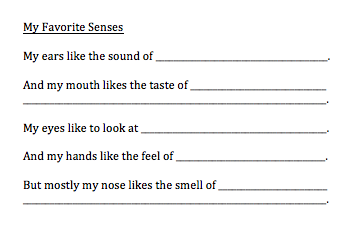
Use the My Favorite Senses sheet. Fill one out for each child. Suggest that they illustrate one of their favorite senses.

Literacy/Early Writing; begins to represent stories and experiences through pictures, dictations, and in play.  AND Literacy/Early Writing; develops understanding that writing is a way of communicating for a variety of purposes.

 Dramatic Play

 Let the children invent their own play today. Observe where it goes and how the children respond to one another.

Social & Emotional Development/Cooperation; develops increasing abilities to give and take interactions; to take turns in games or using materials; and to interact without being overly submissive or directive.

Math and Manipulatives

Put out a bowl of puff balls or other small manipulative. Encourage the children to take a handful and guesstimate how many puff balls they have in their hand. Then have the child count out the manipulatives in their hand. Ask the child, “did you have more, less, or the exact amount”?

Mathematics/Number & Operations; begins to use language to compare numbers of objects with terms such as more, less, greater than, fewer, equal to.

Outdoor Play

In the book, Ada does a science investigation in her classroom by making a geyser. On the playground take the following ingredients and try it as a class. You will need several bottles of diet soda/coke and mint Mentos. Ask the children what they think will happen when the mint Mentos are put into the soda? Have the children stand back, open the soda and quickly put 5-7 Mentos into the bottle. You can continue experimenting with different sodas or the amount of Mentos added.

Have the children make a big volcano in the sand box. Put a small pail in the center and let the children take turns putting several tablespoon of baking soda in the pail. Next add a cup of white vinegar and see what happens.

Which was more impressive, the geyser or the volcano?

Science/Scientific Skills & Methods; develops increased ability to observe and discuss common properties, differences, and comparisons among objects and materials.

Transitions

Point to one of the pages where the blocks spell out ADA’s name. Ask the children if they recognize any of the letters. Then take the index cards with the children’s names on them and hold them up one at a time. Can the children recognize their name in print? Can they name any of the letters in their name?

Literacy/Alphabet Knowledge; identifies at least 10 letters of the alphabet, especially those in their own name.

Dear Parents- Today we read a book about a girl scientist who asked many how and why questions.  When your child asks you these questions, help them find the answer by looking on the computer or sharing your experience/knowledge.  

Resources
Screen Shot 2018-08-20 at 11.25.21 PM