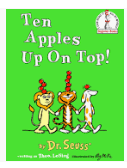
Ten Apples Up On Top, by Dr. Seuss

            What happens when three bears decide to put apples on top of their heads?  Will they be able to keep them there?  This is a fun 1-10 counting book for children.

Materials

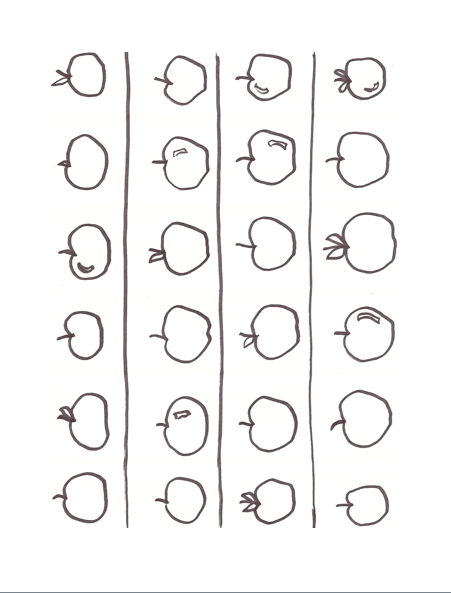
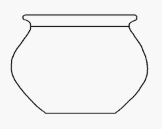
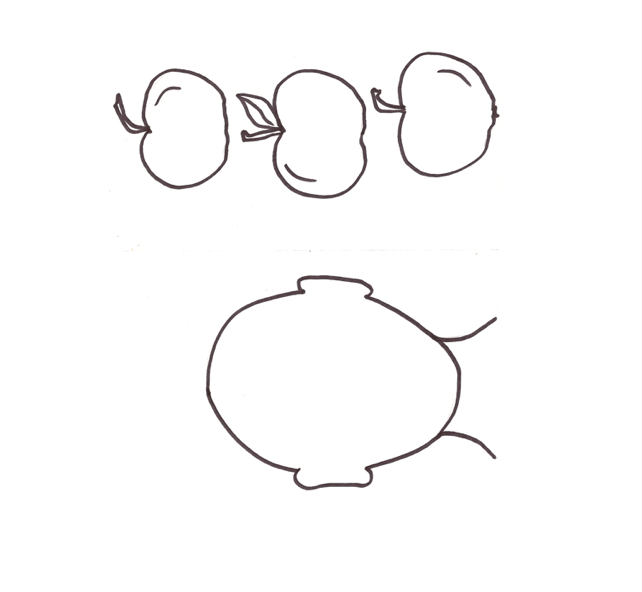
  •  Head shape and apple shape
  • Apple pattern cards
  • Enough apples for each child to have a piece of two-three different varieties to sample. Ask parents to send an apple to school for their child.

Vocabulary

  • Stack (to put one on top of another)

Before Reading the Story

            Bring an apple to the rug.  Ask the children if they know what it is.  Ask the children who likes to eat apples?  Ask if they can think of any food items made from apples (applesauce, apple pie, apple granola bars).  Show the children the cover of the book.  Read the cover and then have the children count to 10 holding up fingers to correspond.  Count to ten then back down to one again. 

Mathematics/Number & Operations; develops increasing ability to count in sequence to 10 and beyond.

Reading the Story

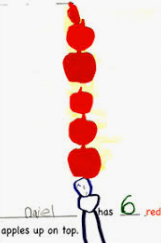
            On various pages, stop and have the children help count the number of apples up on top.

Mathematics/Number & Operations; begins to make use of one-to-one correspondence in counting objects and matching groups of objects.

  After Reading the Story

            Draw a simple tree on a large piece of easel paper.  Have the children take turns rolling a dice and then drawing that many apples/circles onto the tree.  Go around the circle several times until the children loose interest. 

Physical Health & Development/Fine Motor Skills; progress in abilities to use writing, drawing, and art tools, including pencils, markers, chalk, paint brushes, and various types of technology.

Discovery

            As the children go to science, give each an apple that they can cut apart with a plastic knife.  Encourage them to look at the seeds through a magnifying glass.  Talk about and help record the children’s observations using all their senses on how they describe the parts of the apple. (Tell me about the apple’s skin; tell me about what is inside the apple).   

Science/Scientific Skills & Methods; begins to participate in simple investigations to test observations, discuss and draw conclusions, and form generalizations. AND Science/Scientific Knowledge; expands knowledge of and abilities to observe, describe, and discuss the natural world, materials, living things, and natural processes.

Music and Movement

            Sing 10 Red Apples, to tune of ten little Indians

1 red, 2 red, 3 red apples

4 red, 5 red, 6 red apples

7 red, 8 red, 9 red apples

10 red apples on top.

 Mathematics/Number & Operations; develops increasing ability to count in sequence to 10 and beyond.

Play Apple Round.  Have the children sit in a circle and turn on some music.  While the music is playing the children pass an apple around the circle.  When the music stops whoever is holding the apple must tell how many fingers the teacher is holding up, 0-10. Then put on the music and begin again.

Mathematics/Number & Operations; demonstrates increasing interest and awareness if numbers and counting as a means for solving problems and determining quantity.

Give each child a bean bag to place on their head. Ask them to try touching their toes, walking backwards, turning in a circle, standing on on foot, etc. without letting the bean bag fall from their head.

Physical Health & Development/Gross Motor Skills; shows increasing levels of proficiency, control, and balance in walking, climbing, running, jumping, hopping, skipping, marching, and galloping.

Blocks

            Encourage the children to make stacks of ten blocks. 

Mathematics/Number & Operations; begins to make use of one-to-one correspondence in counting objects and matching groups of objects. AND Physical Health & development/Fine Motor Skills; grows in hand-eye coordination in building with blocks, putting together puzzles, reproducing shapes and patterns, string beads, and using scissors.

Art

            Put large apple shapes on the easel and let the children paint them however they choose. 

Creative Arts/Art; develops growing abilities to plan, work independently, and demonstrate care and persistence in a variety of art projects.

Library and Writing;

            Give children a head shape and ask them to draw facial features on it.  Then give each child enough apples so each apple contains a letter of the child’s name (Kerry would have 5 apples, one with a K, one with an E, two with R and one with Y).  Encourage the children to write the letters of their name in each apple shape. Ask the children to put them on top of the head in the correct order and glue.  Talk about whose name has more apples and fewer apples.  Whose name has more letters and fewer letters?  Can the children name the letters? 

Literacy/Early Writing; progresses from using scribbles, shapes, or pictures to represent ideas, to using letter-like symbols, to copying or writing familiar words such as their own name. AND Mathematics/Number & Operations; begins to make use of one-to-one correspondence in counting objects and matching groups of objects. AND Mathematics/Number & Operations; begins to use language to compare numbers of objects with terms such as meore, less, greater than, fewer, equal to.

Sand and Water

            Put several apples in the water table.  Notice how they float.  What other objects in the classroom can the children find that will float? 

Science/Scientific Skills & Methods; begins to participate in simple investigations to test observations, discuss and draw conclusions; and form generalizations.

Dramatic Play

            As the children play in the center today, ask them if there is an apple in the pretend foods?  What other fruits can they find in the pretend foods?  What color apple is there?  What other foods can they find that are the same color as the apple?  Apples are crunchy to eat, what other foods can they find that would be crunchy to eat? 

Approaches to Learning/Logic & Reasoning; develops increasing ability to find more than one solution to a question, task, or problem. AND Mathematics/Patterns & Measurement; shows increasing abilities to match, sort, put in series, and regroup objects according to one or two attributes such as size or shape.Logic and Reasoning; classifies, compares, and contrasts objects, events, and experiences.

Math and Manipulatives

            Color the apple pattern strips to show simple patterns using red, yellow, and green.  The children can then match the pattern cards with small pieces of construction paper or unifix cubes. 

Mathematics/Patterns & Measurement; enhances abilities to recognize, duplicate, and extend simple patterns using a variety of materials.

Outdoor Play

            Bring bean bags outside with you.  Play a follow the leader type game.  Show the children how to balance the bean bags on their head, their arm, and their foot and move about.  Can they climb the stairs with a beanbag on their head?  Can they ride a bicycle with a beanbag on their head? 

Physical Health & Development/Gross Motor Skills; shows increasing levels of proficiency, control, and balance in walking, climbing, running, jumping, hopping, skipping, marching, and galloping.

Transitions

            Make a head from the head shape pattern and 10 apples.  Cover these with contact paper and put a loop of tape on the back.  Put the head on the wall or flannel board.  Put some apples up on top (1-10).  Say the following rhyme; Apples, Apples up on top.  Count them _____before they drop!  The child who was called them counts the apples and is dismissed to the next activity. 

Mathematics/Number & Operations; begins to make use of one-to-one correspondence in counting objects and matching groups of objects.

Resources

Dear Parent,

            Today we read a story about apples.  As you prepare your meal tonight, ask your child if he can name the different foods that you are using. Talk to your child about foods. (I am cutting this onion to add to the ground beef to make a meatloaf.  Smell this; this is garlic powder which I am adding also.  Do you want green beans or peas to go with our meatloaf and potatoes tonight?)
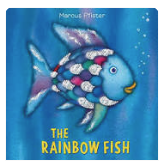
The Rainbow FIsh, by Marcus Pfister

Rainbow fish thinks he is so beautiful and special that he does not want to share with others. What he learns is that to have friends, one must be a friend and share.

Materials

  • Shiney and silver materials that can be used for collaging (foil, ribbon, sequence, papers)
  • A silver writing marker or pen
  • Sidewalk chalk and spray bottle
  • Minnows (found in a bait shop) This is an added expense but if you can afford is really fun to do.

Vocabulary

  • Shiney (something that sparkles)
  • Silver (a color)
  • Scales (the skin covering of fish)
  • Fin (the part that moves to help fish swim)
  • Gills (the part of the fishes body that help it get air to breath)

Before Reading the Story

Ask the children how they feel when someone ignores them or is not nice to them? Ask the children what does it mean to share? How do you feel when someone shares with you or you share with someone else? Allow the children to discuss any ideas they have about friendship and sharing.

Language Development/Speaking & Understanding; develops increasing abilities to understand and use language to communicate information, experiences, ideas, feelings, opinions, needs, questions; and for other varied purposes. AND Social & Emotional Development/Social Relationships; progresses in responding sympathetically to peers who are in need, upset, hurt, or angry; and in expressing empathy and caring in others.

Reading the Story

On the page where the octopus tells Rainbow Fish to share his scales, ask the children if they know why this will make Rainbow Fish happy? (Because he is sharing)

Literacy/Book Knowledge & Appreciation;demonstrates progress in abilities to retell and dictate stories from books and experiences; to act out stories in dramatic play; and to predict what will happen next in a story.

After Reading the Story

Ask the children if they know what makes a good friend? Allow them to discuss and write their responses onto a piece of paper (or small fish shapes) and hang it on the wall. (My brother is my friend because he plays with me, Amy is my friend cause she let me ride the bike). As the children discuss, reinforce the concepts of sharing and kind acts.

Approaches to Learning/Initiative & Curiosity; grows in eagerness to learn about and discuss a growing range of topics, ideas, and tasks.

Discovery

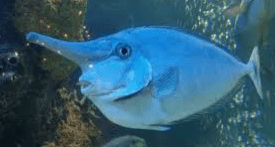
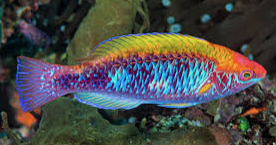
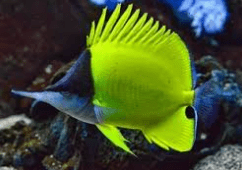
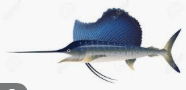
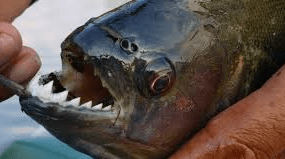
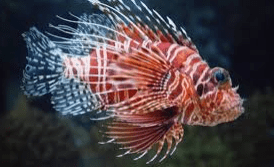
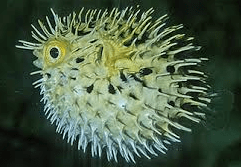
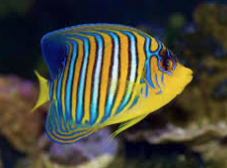
Bring in pictures of real fish for the children to examine and compare. Ask them to describe each fish with 2-3 attributes. (It is fat, it has stripes, it has a big mouth, it has teeth, it is long). As the children compare pictures, introduce words such as fin, scale, and gills. Have them repeat the words back and try to use in sentence.

Science/Scientific Knowledge; expands knowledge of and abilities to observe, describe, and discuss the natural world, materials, living things, and natural processes. AND Language Development/Speaking & Communicating; uses an increasingly complex and varied vocabulary.

Music and Movement

Sing 5 Little Fish Swimming in the Water. https://www.youtube.com/watch?v=VtgdKHt1W9E

Teach the children the first verse of Fish Song. https://www.youtube.com/watch?v=vRRe6bHNDkA

Fish have fins and are covered with scales.

They swim in the water and breath with their gills.

(After the children can repeat the verse, pretend to be fish and swim around the classroom. Can you swim fast, slow, in circles, very low, backwards?)

Language Development/Listening & Understanding;demonstrates increasing ability to attend to and understand conversations, stories, songs, and poems.

Blocks

Tell the children that many fisher people fish from a boat. Challenge the children to build a boat they can get inside of.

Approaches to Learning/Initiative & Curiosity; approaches tasks and activities with increased flexibility, imagination, and inventiveness.

Art

Put out shiney and silver materials that the children can collage with today. These will show up nicely on black construction paper.

Creative Arts/Art; begins to understand and share opinions about artistic products and experiences.

Library and Writing

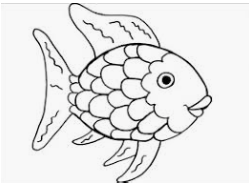
Cut out scale shapes, one per child. Encourage the child to write or mark their letters on the scale using a marker. Then ask the child what they are willing to share with others? Write their response under their name. Hang all the scales together on the wall with a fish head shape and a tail.

Literacy/Early Writing; progresses from using scribbles, shapes, or pictures to represent ideas, to using letter-like symbols, to copying or writing familiar words such as their own name. AND Social & Emotional Development/Social Relationships; progresses in responding sympathetically to peers who are in need, upset, hurt, or angry; and in expressing empathy and caring in others.

Sand and Water

Fill the table with COLD water today. Add the live minnows. Make sure the children wash their hands both before and after touching the fish and stress the importance of being gentle when touching. (When I have done this with children, some are very interested and some are a bit afraid. Though this will require some adult supervision, it is a fun and different sensory activity for children).

Science/Scientific SKills & Methods; begins to use senses and a variety of tools and simple measuring devices to gather information, investigate materials, and observe processes and relationships. AND Approaches to Learning/Initiative & Curiosity; chooses to participate in an increasing variety of tasks and activities.

Dramatic Play

Math and Manipulatives

Cut out a simple fish shape in small, medium, large, and largest. Cut these out in several colors. The children can use them to sort by size or shape or put them in order from small to large. If you cut out a large variety they can use to make patterns.

Mathematics/Patterns & Measurement; shows increasing abilities to match, sort, put in series, and regroup objects according to one or two attributes such as size or shape.

Outdoor Play

Give the children sidewalk chalk to write on the cement today. ENcourage them to practice writing their name or draw fish. When they are finished they can use a spray bottle of water to spray over their writing/fish.

Literacy/Early Writing; progresses from scribbles, shapes or pictures to represent ideas, to using letter-like symbols, to copying or writing familiar words such as their own name. AND Physical Health & Development/Fine Motor Skills; progresses in abilities to use writing , drawing, and art tools, including pencils, markers, chalk paint brushes, and various types of technology.

Transitions

Send the children to the next activity by having them pretend to swim like a fish. Call out colors starting with silver, then gold. (If you are wearing silver go line up. Remind children to check around zippers and shoelace holes).

Language Development/Listening & Understanding; shows progress in understanding and following simple and multiple-step directions.

Resources

The Day the Crayons Quit, by Drew Daywalt

Duncan just wants to color but when he opens up his box of crayons, he finds notes from them that explain that they are not very happy. Why? And what will Duncan do so that he can again color with his crayons again? This book is not only a review of colors but hits upon emotions also.

Materials

  • Color chart
  • Oil pastels
  • Crayon letter in an envelope
  • color domino game
  • A piece of construction paper in all the colors
  • Emotion cards
  • Food coloring

Vocabulary

  • Quit- to stop doing something.
  • Proud- happy or satisfied with someone or who you are.
  • Empty- to feel sad or unimportant.
  • Persuade- to try to make someone understand your point of view/opinion by giving examples.

Before Reading the Story

Hold up an Emotion Card. Ask the children if they can name the emotion. Ask them to give an example of what makes them feel that way. (Angry-when someone tells me I can’t play with them. When my Mom doesn’t let me watch TV).

Language Development/Speaking & Communicating; develops increasing abilities to understand and use language to communicate information, experiences, ideas, feelings, opinions, needs, questions; and for other varied purposes.

Tell the children that you are going to teach them a new word today. Say the word persuade and ask the children to repeat it. Tell them that it means to try to make someone understand your point of view or opinion by giving examples. Ask the children to persuade to you why your class should go outside early today (Cause I like to run! My sister’s class will be outside and I can say hello). Or why you should not have to wear your jackets when you go outside (I will be too hot, I have long sleeves on). Explain to the children that today’s story is about a box of crayons that are not happy. That they write letters to a boy named Duncan to try to persuade him/explain why to use them more often.

Language Development/Speaking & Communicating; progresses in abilities to initiate and respond appropriately in conversations and discussions with peers and adults.

Reading the Story

As you read each letter, stop and ask the children if they can tell you in their own words why the crayon was unhappy or had a concern.

Language Development/Listening & Understanding; demonstrates increasing ability to attend to and understand conversations, stories, songs, and poems.

After Reading the Story

Ask the children if they thought that the crayons had a reason to complain? If you were a crayon, what color would you want to be and why? Do you think writing a letter was a good idea for the crayons to do? Why/Why not?

Social & Emotional Development/Self-Control; shows progress in expressing feelings, needs, and opinions in difficult situations and conflicts without doing harm to self, others, or property. AND Literacy/Early Writing; develops understanding that writing is a way of communicating for a variety of purposes.

Make a letter from the crayons that asks the children to please use all the colors today. Open the letter from the crayons and read it aloud to the children. Ask them if they can think of some things they can draw that use many colors? List their responses and hang it on the wall along with the letter.

Literacy/Early Writing; develops understanding that writing is a way of communicating for a variety of purposes. AND Approaches to Learning/Reasoning & Problem-Solving; develops increasing ability to find more than one solution to a question, task, or problem.

Discovery

If you have a computer, watch How Crayons Are Made with Mr. Rogers. https://www.youtube.com/watch?v=zPAF50bdO1U

If the weather is hot, have the children peel the paper off the crayons and sort old broken crayons into plastic cups by color. Put the cups out into the direct sun and ask the children what they think will happen to the crayons? Have the children check on the crayon cups through the day to see and report what is happening. When the crayons have melted, bring them back inside and let the children experiment with them by writing with very softened crayons or pouring the melted crayons onto the paper. Have them discuss what happened, what they are doing, and what they think will happen to the crayons in another day or two.

Science/Scientific Skills & methods; develops growing abilities to collect, describe, and record information through a variety of means, including discussion, drawings, maps, and charts.

Music and Movement

Put on the song Rock Your Bodies to the Colors by Jack Hartman. https://www.youtube.com/watch?v=n_oeKDVJTss

Creative Arts/Movement; expresses through movement and dancing what is felt and heard in various musical tempos and styles. AND Literacy/Phonological Awareness; progresses in recognizing matching sounds and rhymes in familiar words, games, songs, stories, and poems.

Sing and Dance to This is a Song About Color by Hap Palmer. https://www.youtube.com/watch?v=4v-nocdm20g

For children who are able to better follow directions, try Parade of Colors. https://www.youtube.com/watch?v=kXTaknCm0lg

Language Development/Listening & Understanding; shows progress in understanding and following simple and multiple-step directions.

Sing My Favorite Color. https://www.youtube.com/watch?v=zxIpA5nF_LY. As you sing, go around the circle and let the children name their color. The teacher then holds up that color sheet of construction paper as the children sing. Allow every child to have a choice of their favorite color to sing about.

Social & Emotional Development/Self Concept; begins to develop and express awareness of self in terms of specific abilities, characteristics, and preferences.

Blocks

Put out colored blocks today to be sorted by color and then made into towers of ten.

Mathematics/Geometry & Spatial Sense; shows growth in matching, sorting, putting in series, and regrouping objects according to one or two attributes such as color, shape, or size. AND Mathematics/Number & operations; begins to make use of one-to-one correspondence in counting objects and matching groups of objects.

Art

At the easel add red, yellow, blue, and white paint today. Encourage the children to experiment making new colors.

Science/Scientific Skills & Methods; begins to participate in simple investigations to test observations, discuss and draw conclusions, and form generalizations.

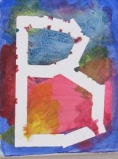
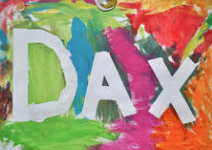
On a piece of white construction paper use tape to make each child’s name. Give the children oil pastels to color the paper. Encourage them to add many colors and to fill the paper in. Make a light wash of watercolor paint over the entire picture. When it is dry, carefully pull the tape off the page. See resources for example.

Creative Arts/Art; gains in ability in using different art media and materials in a variety of ways for creative expression and representation. AND Literacy/Alphabet Knowledge; identifies at least 10 letters of the alphabet, especially those in their own name.

Library and Writing

Put out crayons today and ask the children to draw using their favorite color/colors/ When they are finished, help them write why it is their favorite color. (Dear blue, you are my favorite color because…).

Literacy/Early Writing; begins to represent stories and experiences through pictures, dictation, and in play. AND Physical Health & Development/Fine Motor Skills; progresses in abilities to use writing, drawing, and art tools, including pencils, markers, chalk, paint brushed, and various types of technology.

Sand and Water

Ahead of time make colored sand to put into the table today. Unfortunately this is a job for the teacher as food coloring will stick to your skin until well mixed. In a bowl add sand and several drops of food coloring. Mix with a spoon. Continue to mix sand and food coloring until your get the color desired. Keep it on the lighter side so that the children’s hands will not be colored by the dye. Make two primary colors and dump into piles in the table. Let the children mix and combine.

Science/Scientific Skills & Methods; begins to participate in simple investigations to test observations, discuss and draw conclusions, and form generalizations.

Dramatic Play

If your play dishes are in various colors, encourage the children to set a red place setting, a blue place setting, etc.

Mathematics/Geometry & Spatial Sense; shows growth in matching, sorting, putting in series, and regrouping objects according to one or two attributes such as color, shape, or size.

Math and Manipulatives

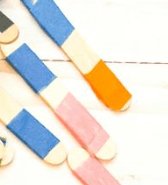
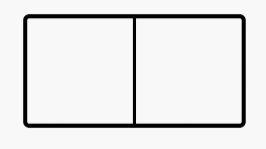
Make a domino game for the children to play. On one half of the domino write the name of a color in that color marker. On the other half of the domino make a dot of a color using a marker. Make 20 or so domino pieces and mix them up by colors. The children then use the domino to make chains by connecting color names to color dots. Alternate, use craft sticks. On one end write the color name and on the other end make a dot of a color.

Mathematics/Geometry & Spatial Sense; shows growth in matching, sorting, putting in series, and regrouping objects according to one or two attributes such as color, shape, or size.

Outdoor Play

Bring your crayons out to the playground and let the children color outside.

Arts/Creative Arts; begins to understand and share opinions about artistic products and experiences.

Transitions

Dismiss the children to the next activity by colors. (If you are wearing _____ line-up, wash hands, etc). For children who already know their basic colors, introduce words like rust, magenta, violet, lime, etc..

Language Development/Listening & Understanding; understand an increasingly complex and varied vocabulary.

Resources

2 ways to make domino game

Dear Children, After reading about us we hope that you can think of something that you can draw using all us beautiful colors. Please share your ideas with each other because we really want to be used. Signed, All Your Crayons.