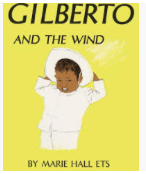
Gilberto and the Wind, by Marie Hall Ets

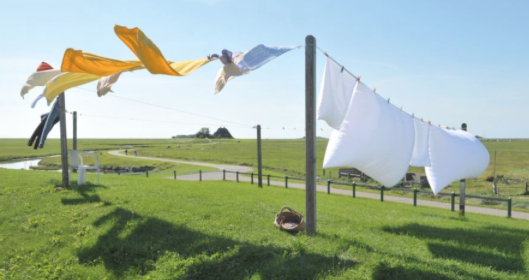
Gilberto goes out to play with the wind.  What he finds is Wind can be a moody friend.

Materials

  • Several empty toilet paper tubes
  • Plastic straws
  • Several ping pong balls or large puffballs
  • 26 Clothespins and a drying rack. If you do not have a drying rack, you could attach a piece of yarn to make a clothesline.

Vocabulary

  • Invisible (You can not see it but it is still there)

Before Reading the Story

Ask the children to look out the window and tell you what they see.  If someone mentions that they see something that is moving ( a tree branch) ask them what they think is making it move.  Explain to the children that the wind is always moving things but that the wind is invisible. We can not see the wind but we can see what it is moving.  How else can we tell if the wind is around? (You can hear it, you can feel it)  Recite the following poem to the children.  The Wind, Christina Rossetti.

Who has seen the wind?

Neither I nor you;

But where the leaves hang trembling,

The wind is passing through.

Who has seen the wind?

Neither you nor I;

But when the trees bow down their heads,

The wind is passing by.

Language Development/Listening & Understanding; demonstrates increasing ability to attend to and understand conversations, stories, songs, and poems.

Reading the Story

As you read give the children opportunity to talk about similar experiences they might have had.

Science/Scientific Knowledge; expands knowledge of and abilities to observe, describe, and discuss the natural world, materials, living things, and natural processes.

After Reading the Story

This might be a good day to talk to the children about severe weather and your school policy in case of.  Do you and your children know what to do and where to go if there is a tornado?

Physical Health & Development/Health Status & Practices; builds awareness and ability to follow basic health and safety rules such as fire safety, traffic and pedestrian safety, and responding appropriately to potentially harmful objects, substances, and activities.

Discovery

Let the children use bubbles in the center today.  Give them small containers of solution.  You can make simple bubble blowers from pipe cleaners. As they blow the bubbles, talk about how their breath is like the wind and pushes the bubbles to move. (Blowing bubbles is difficult for children to learn to do. Show then how to gently blow by blowing on the back of their hand.

Science/Scientific Skills & Methods; begins to use senses and a variety of tools and simple measuring devices to gather information, investigate materials, and observe processes and relationships.

Music and Movement

Have the children stand up and spread out.  They should be standing far enough apart that with their arms outstretched they are touching nobody. As you recite the poem, Wind, the children can move their arms like a windmill round and round.

Blow and turn then blow again, Round and round the windmill spins.

Whooshing fast, then creaking slow

Come on wind and make us go!

(Play with moving your arms fast and slow).

Language Development/Listening & Understanding; demonstrates increasing ability to attend to and understand conversations, stories, songs, and poems.

Tell the children that you are going to pretend to be trees on a windy day.  Plant your roots into the ground because they are strong.  Use your arms to be the branches.  First the wind is just a breeze and you hardly move at all.  Then the wind gets gusty and you bend and over and come back up.  Then the wind gets blustery and you don’t know which way to move so your branches (arms) are swirling all around as you bend and come back up.

Creative Arts/Dramatic Play; participates in a variety of dramatic play activities that become more extended and complex. AND Language Development/Listening & Understanding; understands an increasingly complex and varied vocabulary.

Look back over the story and challenge the children and yourself to act out more wind scenarios.

Creative Arts/Dramatic Play; participates in a variety of dramatic play activities that become more extended and complex.

Blocks

Ask the children to build a fenced around a large area of your block center with the blocks. Inside the fenced area build small tunnels and halls. (Think mini golf course). After the children have finished building, give them each a ping pong ball and challenge them to blow it around the fenced area, trying to go under or through the blocks.

Approaches to Learning/Engagement & Persistence; demonstrates increasing ability to set goals and develop follow through on plans.

Art

Water down several colors of tempera paint.  Place a small spoonful onto a piece of paper.  The child uses a straw to blow the paint across the paper.  Make sure to have the children practice blowing out a few times before they begin.  Plastic straws work best.

Creative Arts/Art; gains ability in using different art media and materials in a variety of ways for creative expression and representation.

Library and writing

Make letters of the alphabet on pieces of paper (white like the white sheets in the story or fancy shirts).  Hang a clothesline and encourage the children to clothespin the letters to the line in the proper order.  Make sure to put out an alphabet line where the children can easily see it.

Literacy/Alphabet Knowledge; knows that letters of the alphabet are a special category of visual graphics that can be individually named. AND Identifies at least 10 letters of the alphabet, especially those in their own name.

Sand and Water

Put water into the table today with small boats. Encourage the children to pretend to be the wind and blow the boat across the water table.

Science/Scientific Skills & Methods; begins to use senses and a variety of tools and simple measuring devices to gather information, investigate materials, and observe processes and relationships.

Dramatic Play

Hang pictures of different kinds of weather events in the center for the children to use as a jumping board to their play. For a more permanent look, turn these pictures into window scenes.

Science/Scientific Skills & Methods; begins to use senses and a variety of tools and simple measuring devices to gather information, investigate materials, and observe processes and relationships.

Math and Manipulatives

Collect a variety of lightweight objects ( a feather, piece of yarn, paperclip, a leaf, a cotton ball, a piece of wadded up paper).  Show the children how to put the toilet tube over their mouth and blow hard!  Have the children take turns blowing the different objects.  For older children they can measure how far an object went by using a ruler or chain links.  Now add some heavier items.  How does the weight of an object affect the way it moves when it is blown?

Mathematics/Patterns & Measurement; shows progress in using standard and non-standard measures of length and area of objects. AND Science/Scientific Skills & Methods; develops increasing abilities to observe and discuss common properties, differences, and comparisons among objects and materials.

Outdoor Play

Look for evidence of the wind.  Do you see the wind moving anything?  Stand very still, is it moving anything on your body? Can you feel the wind upon your skin?

Science/Scientific Skills & Methods; develops increasing abilities to observe and discuss common properties, differences, and comparisons among objects and materials.

Bring your bubbles and wands outside. Can the children tell what direction the wind is blowing by looking at the bubbles floating? Can they pop the bubbles before they reach the ground? Can they catch a bubble on a bubble wand without popping it?

Physical Health & development/Fine Motor Skills; grows in hand-eye coordination in building with blocks, putting together puzzles, reproducing shapes and patterns, stringing beads, and using scissors.

Transitions

Tell the children that in the story the wind moved many objects.  Ask the children to recall something in the story that the wind moved or something from their own lives.

Literacy/Book Knowledge & Appreciation; demonstrates progress in a bilities to retell and dictate stories from books and experiences; to act out stories in dramatic play; and to predict what will happen next in a story.

Resources

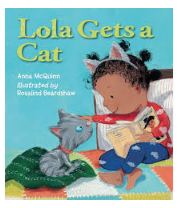
Lola Gets a Cat, by Anna McQuinn

Lola wants a cat but she must prove to her Mother that she will learn what she needs to do to care for it.

Materials

  • Stuffed cat/s
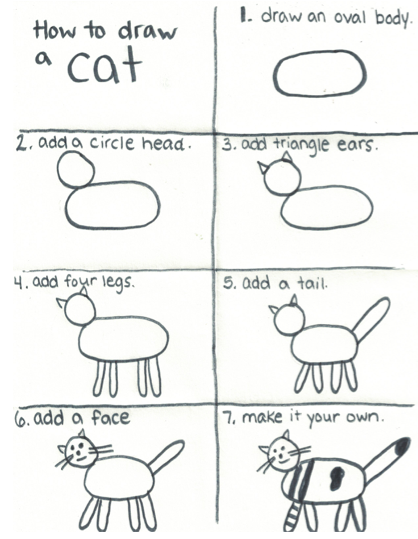
  • Directions on how to draw a cat
  • Smelling Baggies.  Scent a cotton ball and put it into a baggie.  Make 5-10 using scents such as perfume, vinegar, onion, ketchup, lemon, peppermint, vanilla, dried herbs and spices.  Make two of each.
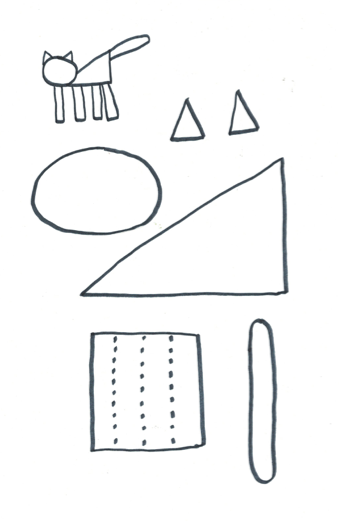
  • Cat shapes.  For younger children cut out many colored shapes.  For older children cut out the shapes on manila folders for the children to trace and cut themselves.
  • A cookbook with many pictures

Vocabulary

  • Cat Shelter (where one goes to adopt a cat)
  • Settle in (to get comfortable in a new home)

Before reading the Story

Show the children the cover of the book.  Ask if they can guess what the story is about today.  Take a count of who has a cat at home. Read the title of the book. Explain that Lola needs to learn how to care for a cat.  Allow the children to discuss their cat/s and any other pet they may have how they help care for them at home.

Science/Scientific Knowledge; expands knowledge of and abilities to observe, describe, and discuss the natural world, materials, living things, nad natural processes.

Reading the Story

On the page where “Lola decides to find out more”, ask the children if they can tell where Lola is (the library).  Explain that the library has books that tell people how to do things and books that tell stories. On the page where Jeremy is showing Lola three perfect cats, ask the children to guess which one Lola might pick, why? 

Literacy/Book Knowledge & Appreciation; demonstrates progress in abilities to retell and dictate stories from books and experiences; to act out stories in dramatic play; and to predict what will happen next in a story.

After Reading the Story

Ask the children if they can remember which of the five senses that cats are good at (smelling and hearing).  If the children cannot recall, point to your nose and ears and ask the children what they are used for.  Remind the children that it took time for Makeda Cat to feel safe and comfortable in her new home.  Ask the children what Lola did to make her cat feel safe and loved?  (She read to her.  She played with the cat.  He didn’t scare it.  She feeded it). 

Literacy/Book Knowledge & Appreciation; demonstrates progress in abilities to retell and dictate stories from books and experiences; to act out stories in dramatic play; and to predict what will happen next in a story.

Explain to the children that cats make different sounds to tell us how they are feeling. Imitate various cat sounds and ask the children if they can guess what a cat is feeling. Meow, meow, meow (pay attention to me), Purr (happy), Faint cry or chirp (excited), Hiss (Angry, ready to fight), Yowl (Stay away or I am sick), Snarl or Growl (afraid or angry).

Language/Speaking & Communicating; develops increasing abilities to understand and use language to communicate information, experiences, ideas, feelings, opinions, needs, questions,; and for other varied purposes.

Discovery

Remind the children that cats are very good at smelling.  Put out the plastic baggies with cotton balls and see if the children can guess what they small like.  Make sets, can they find the two that smell alike?

Science/Scientific Skills & Methods; begins to use senses and a variety of tools and simple measuring devices to gather information, investigate materials, and observe processes and relationships.

Music and Movement

Sing Naughty Pussy Cat.https://www.youtube.com/watch?v=Og71b45JdrU

Approaches to Learning/Reasoning & Problem Solving; develops increasing ability to find more than one solution to a question, task, or problem.

Sing I know a Little Pussy. Have the children start in a squat position and as you sing begin to slowly raise up taller and taller. When you get to the meow part have them move back down into a squat and then jump up on scat! https://www.youtube.com/watch?v=LrLeF-0RylM

Creative Arts/Movement; shows growth in moving to different patterns of beat and rhythm in music.

Play Copy-cats.  Clap out a pattern. The children copycat the pattern by clapping it back. Let the children take turns leading the pattern.

Mathematics/Patterns & Measurement; enhances abilities to recognize, duplicate, and extend simple patterns using a variety of materials.

Blocks

Can the children use the blocks today to write cat.  What other letters can they make using the blocks?

Literacy/Alphabet Knowledge; shows progress in associating the names of letters with their shapes and sounds. Approaches to Learning/Engagement & Curiosity; approaches tasks and activities with increased flexibility, imagination, and inventiveness.

Art

Depending upon your children’s cutting abilities, the teacher can cut out many of the cat shapes onto colored paper for the children to assemble into a cat shape.  For children who are proficient at cutting, make several sets of the shapes and cut out of a manila folder or thin cardboard.  The children can trace around the shapes onto pieces of colored paper and cut them out themselves to assemble their cat.  Put out markers so the children can embellish their cat and add a face.

Mathematics/Geometry & Spatial Sense; progresses in ability to put together and take apart shapes. AND Physical Health & Development/Fine Motor Skills; develops growing strength, dexterity, and control needed to use tools such as scissors, paper punch, stapler, and hammer.

Sand and Water

Library and Writing

Put out the step by step directions on How to Draw a Cat along with paper and drawing utensils. Show the children how to follow the directions for Drawing a Cat. After they have drawn their cat, encourage them to write ‘cat’ on their paper.

Literacy/Early Writing; experiments with a growing variety of writing tools and materials, such as pencils, crayons, and computers. AND Social & Emotional Development/Self Concept; demonstrates growing confidence in a range of abilities and expresses pride in accomplishments.

Dramatic Play

Add stuffed cats to the center along with a shoe box with a blanket stuffed inside (for a bed), a couple of puff balls (for toys), a can of unopened tuna (for food) and any other cat paraphernalia you might have.

Creative Arts/Dramatic Play; shows growing creativity and imagination in using materials and in assuming different roles in dramatic play situations.

Remind the children that the library has many books that tell people how to do things. Show the children a cookbook that has many pictures of the foods that are made in it. Let the children pretend to follow the recipes using the book for guidance.

Literacy/Print Awareness & Concepts; develops growing understanding of the different functions of forms of print such as signs, letters, newspapers, lists, messages, and menus.

Math and Manipulatives

Make 6 copies of 5 different cats and use these to make patterns with the children.  Can the children follow your ABAB pattern?  ABCABC?  Can they make their own pattern for you to follow?

Mathematics/Patterns & Measurement; enhances abilities to recognize, duplicate, and extend simple patterns using a variety of materials.

Outdoor Play

Play Cat and Mice.  This game is similar to catch. The teacher is the cat,  The children are the mice.  Set up a safe place/mouse house where the children can run to to be safe from the cat.  The cat chases the children.  If the cat catches a mouse, the mouse must sit down and count to 10 before they can get up and be a mouse again.  Let the children take turns being the cat.

Language Development/Listening & Understanding; shows progress in understanding and following simple and multiple-step directions. AND Mathematics/Number & Operations; develops increasing ability to count in sequence to 10 and beyond.

Transitions

Ask the children to think of a word, real or made-up, that rhymes with cat.

Literacy/Phonological Awareness; progresses in recognizing matching sounds and rhymes in familiar words, games, songs, stories, and poems.

Resources

Shapes for art

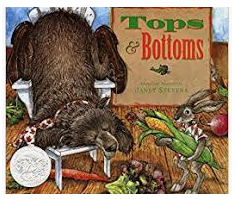
Tops & Bottoms, by Janet Stevens

Bear is too lazy to plant his own garden and relies on Hare.  Using his creative powers, Hare finds a way to get the best of the deal for him and his family.

Materials

  • Silk flower tops (ask your local craft store if they have any loose flowers that you can have)
  • Pipe cleaners cut into 4-6 inch pieces.
  • Several pieces of celery and several carrots.
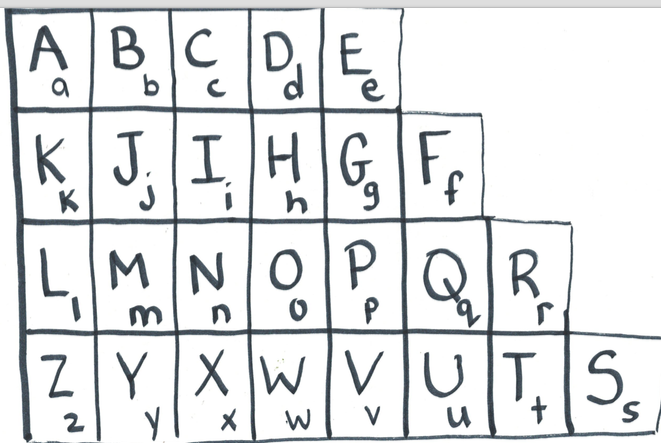
  • Model of Jumping from Top to Bottom of the Alphabet board.

Vocabulary

  • Hare (another word for rabbit)
  • Cheated (swindle or deceive)
  • Clever (to be smart)
  • Crops (what a farmer plants in the fields)
  • Business Partners (someone you work with or do a job with)
  • Debt (money owed)
  • Profit (crop yield)
  • Harvest (the time to pick produce)

Before Reading the Story

Bring any plastic fruits and vegetables that you have to the group time.  Explain to the children that your story today is about a Hare, or rabbit, that plants many different kinds of vegetables.  Hold up one of your plastic produce pieces and ask if it is a fruit or a vegetable?  Sort them accordingly.  Put the fruits aside and hold up one of the vegetables, can the children name them?  Continue through all your plastic vegetables.  Introduce the story.  Read the Title of the book and then open it up to the first page.  Ask the children if they notice something different about the book (it opens vertically).

Language Development/Listening & Understanding; demonstrates increasing ability to attend to and understand conversations, stories, songs, amd poems.

Reading the Story

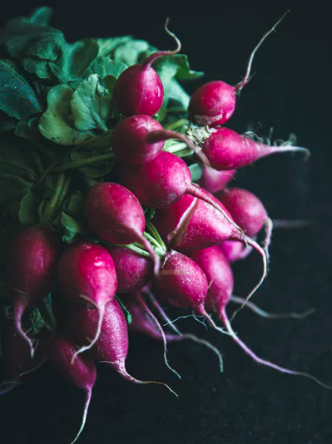
When you get to the page where Hare and his family dug up all the carrots, radishes, and beets, ask the children if they know which part of these plants we eat?  When you get to the part where Bear says “You plant this field again-and this season I want the bottoms!”  Ask the children what they think is going to happen.  (Bear will get mad, He’s gonna get the carrots, The rabbit tricked him).  Ask again when you get to the page where Bear says he gets the tops and the bottoms.  (The rabbit won’t get any, He will trick Bear, Bear will help plant the garden and they will share).

Literacy/Book KNowledge & Appreciation; demonstrates progress in abilities to retell and dictate stories from books and experiences; to act out stories in dramatic play; and to predict what will happen next in a story.

After Reading the Story

Ask the children why Bear got mad?  Do you think it was fair that Bear should get all the vegetables if he did not help plant and care for the garden?  Begin a discussion on how everybody needs to cooperate and work together.  Make a Thumbs Up, Thumbs Down game out of it using classroom examples.  The children put their thumb up if they feel the statement is fair and their thumb down if they feel the statement is unfair.  1) Everyone has to cleanup to go outside except one child who got to look at books.  2) Everyone has to throw his or her food in the garbage after lunch except one child because he is too tired.  3) All the children worked together to bring the toys outside.  4) No one got to look at books because one child was not taking care of them.  5) All the children were working hard so the teacher said they could go outside ten minutes early.   Make examples of incidents that have happened in your own classroom, leaving out any child’s name.

Social & Emotional Development/Cooperation; shows increasing abilities to use compromise and discussion in working, playing, and resolving conflicts with peers. AND Approaches to Learning/Initiative & Curiosity; chooses to participate in an increasing variety of tasks and activities.

Discovery

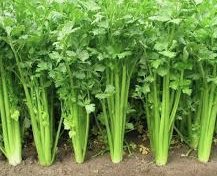
Bring in a couple of pieces of celery and several carrots.  Let the children use their senses to explore the produce and write down their thoughts.  (The celery has bumps, it smells good, the leaves are at the top.  The carrot has dirt on it, it is pointy on the bottom, it’s got circles around it).  After everyone has had a chance to observe the celery and carrots, cut them into small pieces and do a taste test.  Make a chart showing which one each child liked best; carrot-celery.  WARNING, carrots are considered checkable when cut into round circle.  Cut the carrot into thin strips instead.  This activity could be done using more vegetables if monies allow. 

Science/Scientific Skills & Methods; develops growing abilities to collect, describe, and record information through a variety of means, including discussion, drawings, maps, and charts.

At lunch talk about any vegetable that you are eating.  Do we eat the top, bottom, or middle of the vegetable?  Is it crunchy or soft?  Is it cooked or raw?  Ask children to describe the vegetable as best they can. 

Science/Scientific Skills & Methods; develops growing abilities to collect, describe, and record information through a variety of means, including discussion, drawings, maps, and charts.

Music and Movement

The Opposite Song

Everything I always say, you always say the opposite.

When I say up, you say down.

Include other opposites such as top/bottom, lazy/active, in/out, under/over

Language Development/Speaking & Communicating; uses an increasingly complex and varied vocabulary. AND Mathematics/Geometry & Spatial Sense; builds an increasinging understanding of directionality, oeder, positions of objects, and words such as up, down, oover, under, top, bottom, inside, outside, in front, behind.

Act out the poem, Dig a little hole

Dig a little hole and put the seed in.

Cover it with dirt and let the sun shine in.

Add a little water and keep it fed,

pretty soon a little plant will show it’s head.

Language Development/Listening & Understanding; demonstrates increasing ability to attend to and understand conversations, stories, songs, and poems.

Pretend to be a seed and grow into a plant. Ask the children what kind of a plant they grew in to.

Creative Arts/Dramatic Play; participates in a variety of dramatic play activities that become more extended and complex.

Blocks

Cut out a triangle, a square, and a rectangle from paper.  Show the children the shapes and say that many people put fences around their gardens to keep critters out.  Give the children a paper shape and encourage them to copy the shape out of blocks.  When they are finished they can trade shapes with one another.

Mathematics/Geometry & Spatial Sense; progresses in ability to put together and take shapes apart.

Art

Put out orange playdough today and make lots of carrots.  Ask the child, “Can you make 5 carrots”? Or “How many carrots did you make in all”?

Mathematics/Number & Operations; begins to make use of one-to-one correspondence in counting objects and matching groups of objects.

Have carrot shapes drawn on orange paper for the children to cut out.  Glue this to a piece of construction paper.  When the carrot is dry, put out bowls of brown paint that you have mixed a little sand into (this will give the paint a full body and texture).  Have the children paint over the carrot bottom.  When this is dry, add a few strips of green to make the carrot top.

Creative Arts/Art; progresses in abilities to create drawings, paintings, models, and other art creations that are more detailed, creative, or realistic.

Sand and Water

Put damp sand in the table today.  Add pipe cleaners cut into 4-6 inch pieces and the flower tops.  Show the children how to put the flower onto the pipe cleaner and then pretend to plant them in the damp sand.  Add a couple of spoons to help with the digging.

Creative Arts/Dramatic Play; shows growing creativity and imagination in using materials and in assuming different roles in dramatic play situations.

Library and Writing

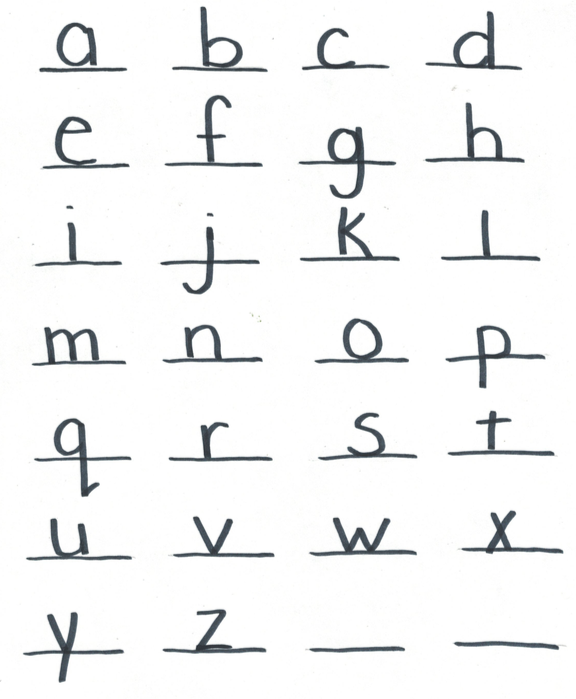
Give the children the above the line/below the line page along with alphabet magnets or letters. Have the children sort by those that the letter goes below the line and those that the letter stays above the line.

Literacy/Alphabet Knowledge; shows progress in associating the names of letters with their shapes and sounds.

Dramatic Play

Pull out your play produce and 3 bowls.  Challenge the children to sort the produce by which part of the plant we eat.  The bottom/roots, top/flower, or middle/stems- leaves.

Mathematics/Patterns & Measurements; begins t make comparisons between several objects based on a single attribute.

Math and Manipulatives

On a piece of paper draw a line across the center.  Label Tops and Bottoms.  The children use the vegetable cards to sort by those that we eat the tops of and those that we eat the bottoms of.

Mathematics/Patterns & Measurements; begins t make comparisons between several objects based on a single attribute.

Outdoor Play

Play Jumping to the Top of the Alphabet.  Look under resources to see how to draw the jumping board on your sidewalk area.  Make each square big enough for a child to jump inside of.  The child starts with A and jumps along naming the letters.  If they miss a letter, they must return to A and start again.  For older children who know many of their letters, after they jump and name the letter, they must say a word that begins with the letter.

Literacy/Alphabet Knowledge; identifies at least 10 letters of the alphabet, especially those in their name.

Transitions

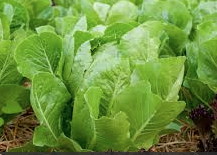
Tell the children that the littlest rabbit was hungry but Mrs. Rabbit and Hare could not understand what she wanted to eat!  When she said Weet, she really meant Beet.  When she said Warrot, she really meant ________.  When she said Welery, she really meant _________.   When she said Woccoli, she really meant ________.  When she said Wettuce, she really meant ________.  When she said Worn, she really meant ________.

Continue making up words until everyone has had a turn to name a vegetable.

Literacy/Phonological Awareness; progresses in recognizing matching sounds and rhymes in familiar words, games, songs, stories, and poems.

Resources

Jumping to the top of the alphabet