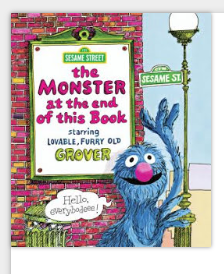
The Monster at the End of this Book, by Jon Stone

What did that say? There’s a monster at the end of the book? Poor Grover is SO scared! What will he do to keep from reaching the end of the book? Will it work? And what will become of Grover when he meets the monster?

 Materials

  • Front and back cards
  • Many Lengths of yarn about 12 inches long
  • Monster Head, one per child

 Vocabulary

  • Embarrassed-self conscious, uncomfortable with self

 Before Reading the Story

Go over all the parts of the book today. Do the children know which is the front of the book and the back of the book? The spline? Do they know were the cover page is? Introduce the story by author, illustrator and title.

Literacy/Book Knowledge & Appreciation; progresses in learning how to handle and care for books; knowing to view one page at a time in sequence from front to back; and understanding that a book has a title, author, and illustrator.

 Reading the Story

Open to the title page and use your finger to underline the title, The Monster at the End of this Book. Make sure to read Grover’s response to this page before turning the page. On the page where Grover builds a brick wall, stop and ask the children do they think that we will be able to turn the page?

Literacy/Book Knowledge & Appreciation; shows growing interest and involvement listening to and discussing a variety of fiction and non-fiction and poetry.

 After Reading the Story

Ask the children if they were afraid? Ask the children who was afraid (Gover)? Why? (there’s a monster at the end of the book) Why was Grover embarrassed? (He is a monster, the monster at the end of the book).

Language Development/Listening & Understanding; demonstrates increasing ability to attend to and understand conversations, stories, songs and poems.

 Discovery

Put out a hammer and nail type activity today. These can be home-made using a block of Styrofoam, golf tees, and half arch blocks or small hammers.

Physical Health & Development/Fine Motor Skills; develops growing strength, dexterity , and control needed to use tools such as scissors, paper punch, stapler, and hammer.

Music and Movement

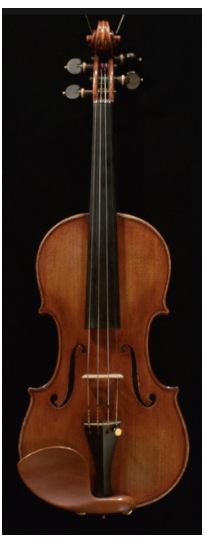
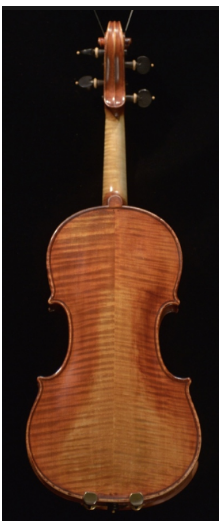
 Use the front and back match cards to play a musical chairs type game.  Put a chair for each child into two lines that are back to back.  Give each child one half of a front and back set.  Tape the other side onto the back of a chair.  The children walk/march/jump around the chairs until the music stops and then they must find the other half of their set and sit on the chair.  Collect the halves the children are holding and repass them out.  Continue to play until the children grow tired.

Mathematics/Geometry & Spatial Sense; builds an increasing understanding of directionality, order, and positions of objects, and words such as up, down, over, under, top, bottom, inside,outside, in front, behind.

 Blocks

Remind the children that Grover built a heavy, thick, solid, strong brick wall. Encourage the children to build a wall with the blocks today?

Physical Health & Development/Fine Motor Skills; grows in eye-hand coordination in building with blocks, putting together puzzles, reproducing shapes and patterns, stringing beads, and using scissors.

 Art

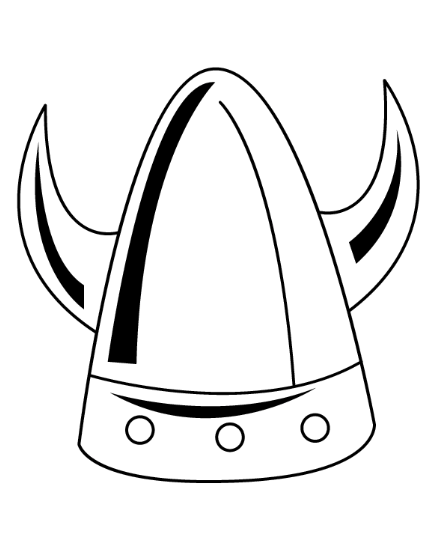
Put out markers today.  Give each child a Monster head and let the children create their own monsters.

Approaches to Learning/Initiative & Curiosity; approaches tasks and activities with increased flexibility, imagination, and inventiveness.

Sand and Water

Add some blue food coloring to the water in the table today.  Put out scooping toys along with funnels and pieces of plastic hosing that fit the funnel end.  As the children pour and scoop, they can see how the water moves from high to low and container to container.

Science/Scientific Knowledge; expands knowledge of and abilities to observe describe, and discuss the natural world, materials, living things, and natural processes.

Library and Writing

M is for Monster. Ask the children to practice writing M’s on paper.

Literacy/Early Writing; experiments with a growing variety of writing tools and materials, such as pencils, crayons, and computers.

 Put out many alphabet magnets and shapes. Challenge the children to go through the letters and pull out all the M’s. How many did they find? This works best if you have several sources of alphabet letters that you can dump onto the table or int a bin for sorting.

Literacy/Alphabet Knowledge; shows progress in associating the names of letters with their shapes and sounds.

 Dramatic Play

Put your puppets in the center today and encourage the children to make up a story. The Monster at the end of this Book often gives children a good jumping off place to start.

Creative Arts/Dramatic Play; shows growing creativity and imagination in using materials and in assuming different roles in dramatic play situations.

 Math and Manipulatives

Remind the children that in the story Grover tied pages together. Show the children how to take the lengths of yarn and tie them to the legs of your classroom chairs or side of the easel. Show the children how to tie a knot. For older children they can practice tying bows such as on lace shoes.

Physical Health & Development/Fine Motor Skills; grows in eye-hand coordination in building with blocks, putting together puzzles, reproducing shapes and patterns, stringing beads, and using scissors.

 Outdoor Play

The teacher can pretend to be a monster and chase the children about the playground. When she catches a child she can say that she is a lovable monster and give the child a hug or kiss and then chase after someone else.

Physical Health & Development/Gross Motor Skills; shows increasing levels of proficiency, control, and balance in walking, climbing, running, jumping, hopping, skipping, marching, and galloping.

Transitions

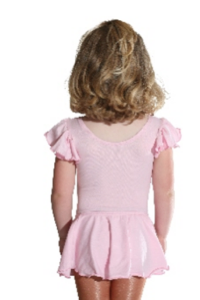
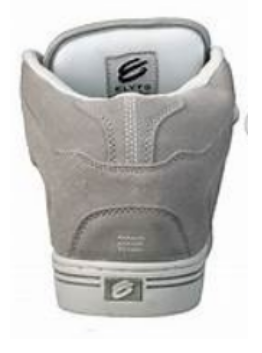
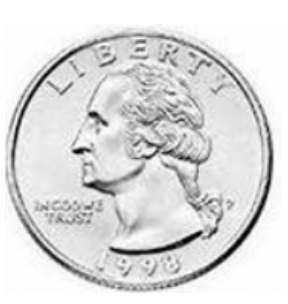
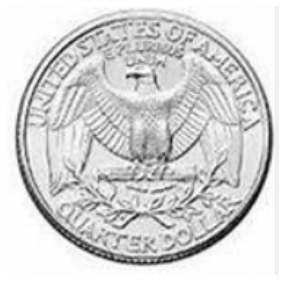
Again use the front and back cards. Give children either a front or back card. They must find the child who has the matching card, give them to you, and then go off to the next activity. As they hand the cards to you, ask them, “Is this a picture of the front or back of the ____”?

Mathematics/Geometry & Spatial Sense; builds an increasing understanding of directionality, order, and positions of objects, and words such as up, down, over, under, top, bottom, inside,outside, in front, behind.  AND Approaches to Learning/Engagement & Persistence; grows in abilities to persist in and complete a variety of tasks, activities, projects, and experiences.

Resources
Screen Shot 2018-11-03 at 10.42.29 AM
back
front
back
front
front
back
front
back
back
front
front
back
back
front

back
front
front
back
front
back
front
back
front
back
back
front
front
back
front
back
front
back
front
back
front
back
front
back
back
front

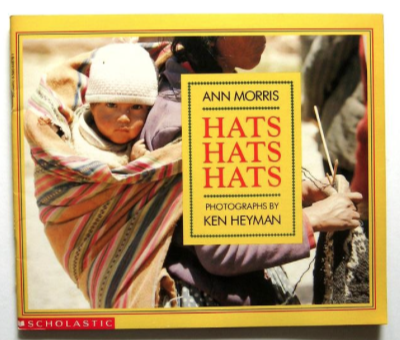
Hats, Hats, Hats, by Ann Morris

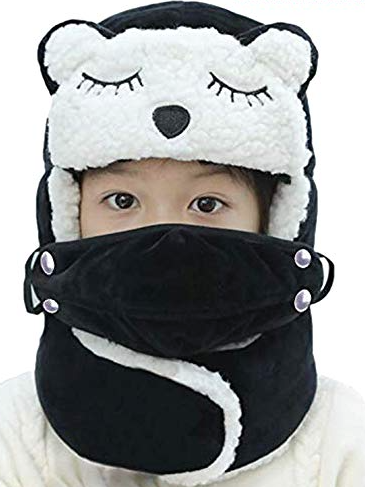
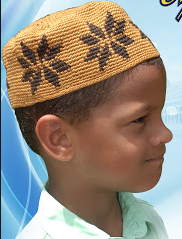
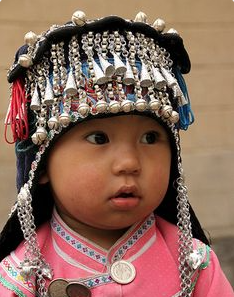
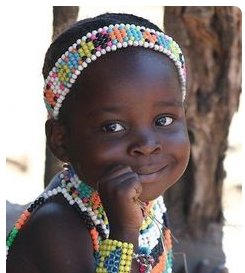
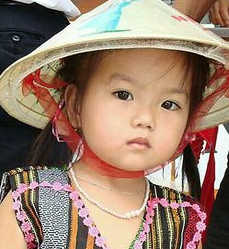
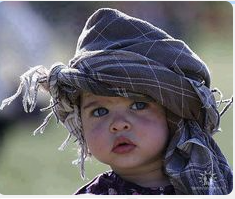
            People wear hats throughout the world for a variety of reasons.  Go for a trip around the world and discover all the wonderful hats.

Materials

  • Directions for easel paper hat
  • Send a note home a day or two ahead asking the parents to let their child wear a hat for hat day.
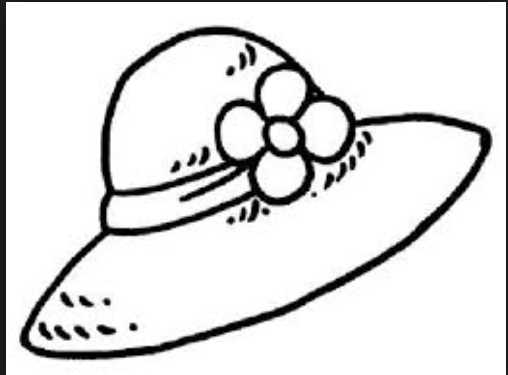
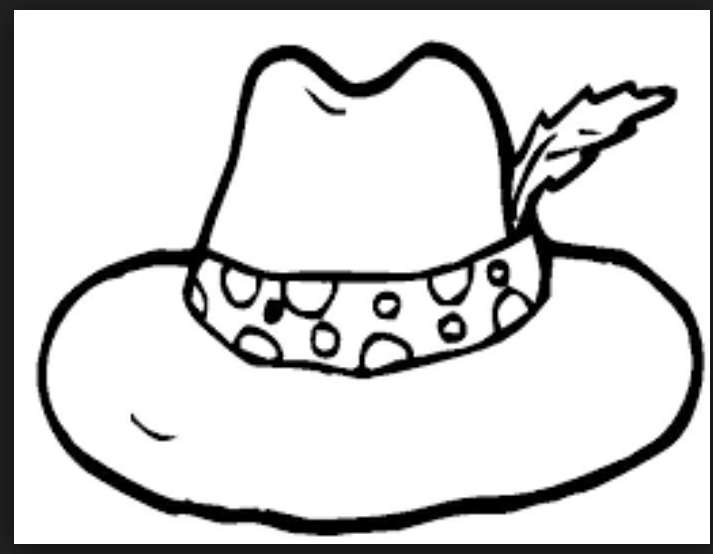
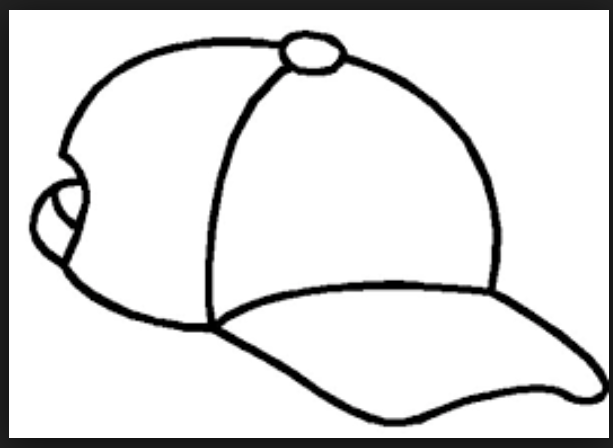
  • Hats for hat match game with extras for coloring.

Vocabulary

  • Hat (a covering for your head)
  • Crown (the top part of the hat)
  • Brim ( the part of the hat that surrounds the crown of the hat)
  • Names of different kinds of hats as you discuss with the children

Before Reading the Story

            Bring in several varieties of hats from your dramatic center or from your home.  Tell the children that you are going to hide an object under a hat (it can be anything) and then let the children take turns guessing under which hat the object is hiding. 

Social & Emotional Development/Cooperation; develops increasing abilities to give and take in interactions; to take turns in games and using materials; and to interact without being overly submissive or directive.

Reading the Story

            Talk about the more unusual hats as you read.  Can you tell what it is made of?  Why do you think that he is wearing that kind of hat?

Approaches to Learning/Reasoning & Problem Solving; develops increasing abilities to classify, compare, and contrast objects, events, and experiences.

After Reading the Story

            Put up 4-5 pictures of hats on the wall. Give each child a slip of paper with their name on it. Let them take turns putting their name under the hat that they would like to wear best. After everyone has had a turn to put their name up count and talk about your graph. Which hat had the most votes? Why did you like this one best? Which hat had the least votes? Why did you like this one best?

Mathematics/Number & Operations; begins to associate number concepts, vocabulary, quantities, and written numerals in meaningful ways.

Discovery

            Put the Hats, Hats, Hats book into the center and add a globe or map of the world. Help the children find where different hats originated from.

Social & Emotional Development/Knowledge of Families & Communities; progresses in understanding similarities and respecting differences among people such as genders, race, special needs, culture, language, and family structures.

Music and Movement;

            Sing My Hat it Has Three Corners https://www.youtube.com/watch?v=l4xXiHllJO8

            Put on the Mexican Hat Dance music and teach children how to dance to it.  Lay a hat in the center of the circle. https://www.youtube.com/watch?v=XgRMRfQgslM

Left foot, right foot, left.

Right foot , left foot, right.

Left foot, right foot, left

Right foot, left foot, right.

(Go around the circle to the right.)

We’re dancing, we’re dancing, we’re dancing.

We’re dancing around the hat

We’re dancing, we’re dancing, we’re dancing.

Now that’s the end of that.

Language Development/Listening & Understanding; shows progress in understanding and following simple and multiple-step directions.

Blocks

            Add fire hats and fire trucks to the center.  Or add construction hats and tools.

Social & Emotional Development/Knowledge of Families & Communities; develops an awareness of jobs and what is required to perform them.

Art

            Make hats with the children.  These could be paper plate hats with the center cut out or these could be crown like hats from a sentence strip.  The children can either collage on them or you can put out theme based hat materials (silk leaves and flowers to glue on: shapes to cut out and glue: long strips of colors to fold and glue)

Creative Arts/Art; gains ability in using different art media and materials in a variety of ways for creative expression and representation.

Library and Writing

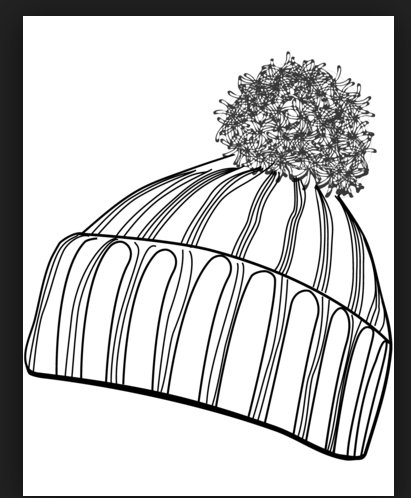
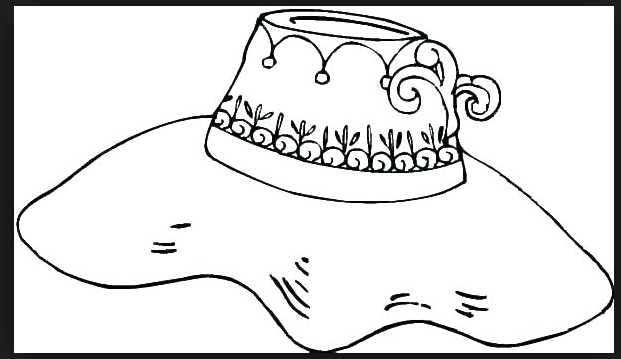
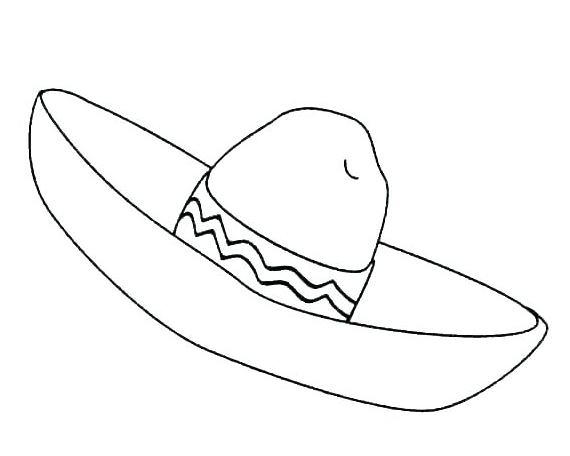
            Put out copies of the hats for matching and allow each child to pick their favorite hat and color it.  Ask them to tell you why they like that hat and write their responses down.  Attach the hat and the response to a piece of paper.

Literacy/Early Writing; begins to represent stories and experiences through pictures, dictation, and in play. AND Literacy/Early Writing; experiments with a growing variety of writing tools and materials, such as pencils, crayons, and computers.

Sand and Water

Dramatic Play

            Add a variety of “worker” hats to the dramatic center. If you have enough hats the children can pretend to buy and sell them at a hat store using play money and a cash register.

Social & Emotional Development/Knowledge of Families & Communities; develops an awareness of jobs and what it is required to perform them.

Math and Manipulatives

            Show the children how to make a paper hat by folding two sheets of easel paper together. They can then decorate it with markers or paints. https://www.babycentre.co.uk/v25014841/how-to-make-a-paper-hat-video

Creative Arts/Art; gains ability in using different art media and materials in a variety of ways for creative expression and representation.

  Outdoor Play

            Bring out several of your classroom hats and beanbags.  Line the hats up and let the children take turns tossing the bean bags into or at the hats.

Physical Health & Development/Gross motor Skills; demonstrates increasing abilities to coordinate movements in throwing, catching, kicking, bouncing balls, and using a slide and swing.

Transitions

            Let the children take turns telling about their hat they brought from home. Why is it special? Where or when do you wear it? If they did not bring a hat from home, have pictures of hats that they can take turns talking about.

Approaches to Learning/Initiative & Curiosity; grows in eagerness to learn about and discuss a growing range of topics, ideas, and tasks.

Winter warm
Fez
China
Africa
Vietnam
Afghanastan
Summer
Shade
Winter
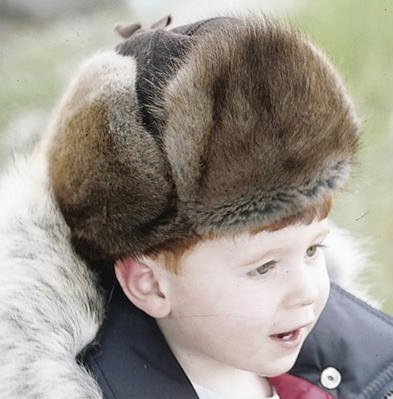
Ushanka
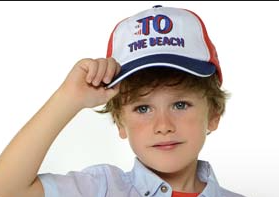
Baseball Cap
Ear Muffs
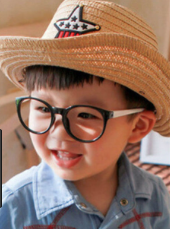
Cowboy
Birthday
Bowler hat

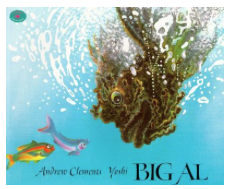
Big Al, by Yoshi

Big Al is a fish that is very big and scary looking.  All the other fish stay away never realizing that he is kind and brave until one day…Big Al saves the day.

Materials

  • Camouflage pictures
  • Alphabet Fish page
  • Five little fish
  • 20 more big ugly fish
  • Individual picture of each child in your classroom
  • One index card per child

Vocabulary

  • Plowed (run right into someone or something)
  • Tremendous (great big)
  • Camouflage (to disguise or hide)

Before Reading the Story

Reading the Story

On the page when Big Al thought that he would never have a friend and something happened, stop and ask the children if they can guess what they think Big Al is going to do?  When you finish the story, ask the children if Big Al was a good friend, why? 

Language Development/Speaking Understanding; develops increasing abilities to understand and use language to communicate information, experiences, ideas, feelings, opinions, needs, questions; and for other varied purposes.

After Reading the Story

Talk with the children about how friends can help each other.  Mention any incidents that you have recently seen of one classmate helping another (At breakfast I saw Ryan help Michael to cut his waffle, Alison helped Ann to zipper her party dress in the dramatic corner).  Ask the children if they can think of a time when a friend helped them.  Ask the children what they should say to another person who helps them (thank you). 

Social & Emotional Development/Social Relationships; shows progress in developing friendships with peers.

Discovery

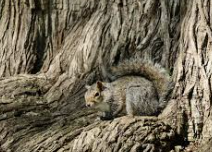
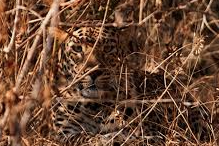
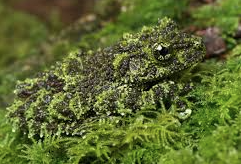
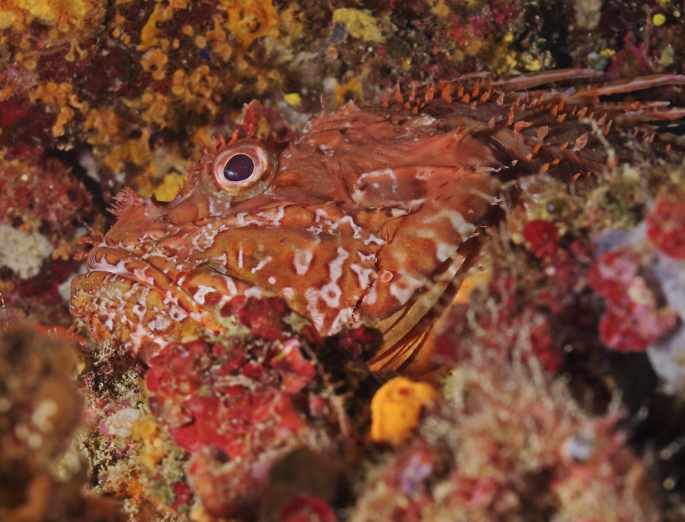
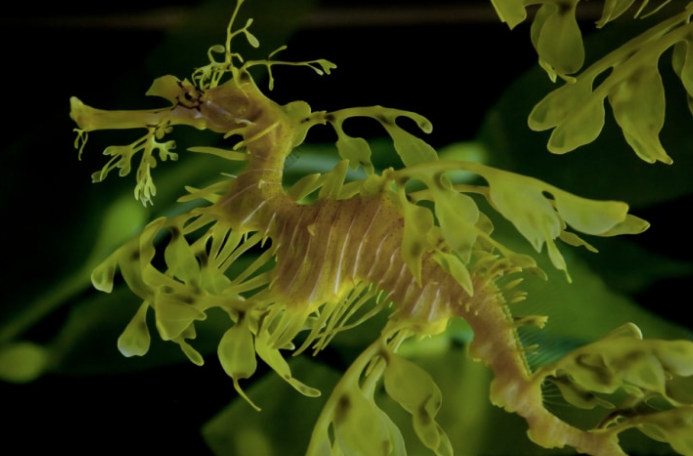
In the story, Big Al tried to camouflage himself.  Put out pictures of animals that are camouflaged for the children to look at. 

Science/Scientific Knowledge; expands knowledge of and abilities to observe, describe, and discuss the natural world, materials, living things, and natural processes.

Music and Movement

Sing The More We Get Together  https://www.youtube.com/watch?v=lldmkrJXQ-E

Creative Arts/Music; participates with increasing interest and enjoyment in a variety of music activities, including listening, singing, finger plays, games, and performances.

Do the chant, 2,4,6,8, Who Do We Appreciate?  Then add a child’s name and clap out the syllables.  2,4,6,8, who do we appreciate?  Ro-ger, Ro-ger, Ro-ger.  2,4,6,8, who do we appreciate?  Pri-scil-la, Pri-scil-la, Pri-scil-la.  Go around the circle and do everyone’s name.

Literacy/Phonological Awareness; shows growing ability to hear and discriminate separate syllables in words.

Finger play, Five Little Fish

One little fish alone and new

Soon she finds a friend and now there are two.

Two little fish swimming in the sea

They meet another friend and now there are three.

Three little fish swim along the shore

Soon they see a friend and now there are four.

Four little fish go for a dive

There they find another friend and now there are five.

1,2,3,4,5.

Mathematics/Number & Operations; begins to associate number concepts, vocabulary, quantities, and written numerals in meaningful ways.

Blocks

Cut around pictures of the children and tape or contact paper each one to a small unit block.  As the children play in the block center they can use their friend pictures as part of their play.

Approaches to Learning/Initiative & Curiosity; approaches tasks and activities with increased flexibility, imagination, and inventiveness.

Art

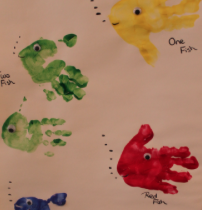
Finger-paint today.  As the children finger paint, have them make a handprint on a separate piece of paper.  When this dries, embellish.  Cut around and glue them all onto a large piece of blue paper.  Make a bulletin board, A School of Friends.

Creative Arts/Art; gains ability in using different art media and materials in a variety of ways for creative expression and representation.

Sand and Water

Put sand into the table today and then pour water on top. Add any plastic sea creatures/fish that you have.  The children can bury the creatures in the sand to hide and camouflage or pretend to swim them in the water. 

Creative Arts/ Dramatic PLay; shows growing creativity and imagination in using materials and in assuming different roles in dramatic play situations.

Library and Writing

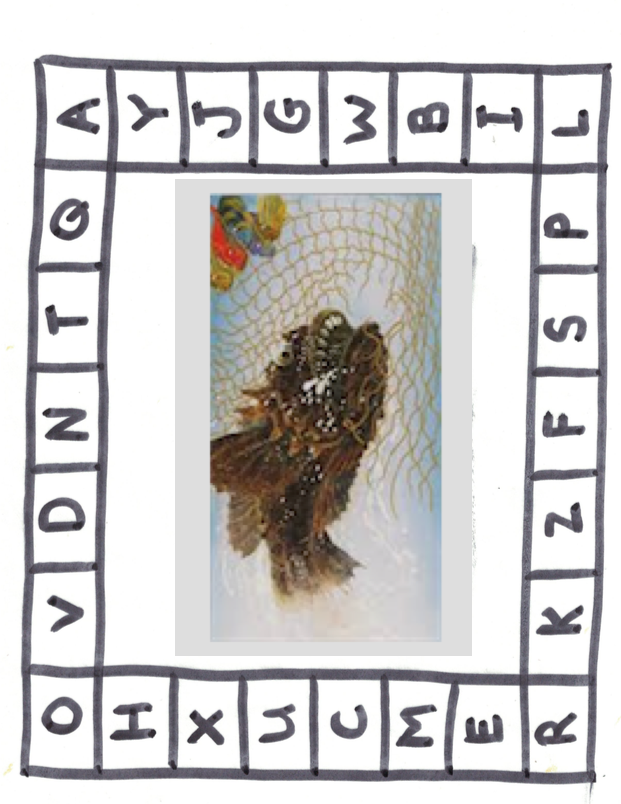
Give each child a copy of the Alphabet Fish Page and several crayons or markers.  Put a basket of magnet letters in the middle of the table.  Let the children take turns picking a magnet letter out of the bowl.  The children then look for that letter on their alphabet page and color it in.  Play until all 26 letters have been found.

Literacy/Alphabet Knowledge; shows progress in associating the names of letters with their shapes and sounds.

Dramatic Play

Encourage the children ask a friend to help with the zippers, buckles, and buttons on your dress-up clothing.

Social & Emotional Development/Cooperation; increases abilities to sustain interactions with pers by helping, sharing, and discussion.

Math and Manipulatives

Cut out 20 fish shapes.  Make two sets of fish labeled 1-10.  Challenge the children to line the fish up starting with number one and going to number ten.  Are they able to identify the numbers?  For younger children use 1-5 and add dots that they can count.

Mathematics/Number & Operations; begins to associate number concepts, vocabulary, quantities, and written numerals in meaningful ways.

Outdoor Play

Play Swimming in a School.  The teacher is the leader and the children follow as in Follow the Leader.  Swim around the tree, under the climber, on top of the bench, etc.

Physical Health & Development/Health Status & Practices; participates actively in games, outdoor play, and other forms of exercise that enhance physical fitness.

Transitions

Write each child’s name on an index card.  Hold up the card and ask whose name is this?  That child can then help name the letters before going off to the next activity.

Literacy/Alphabet Awareness; identifies at least 10 letters of the alphabet, especially those in their own name.

Resources