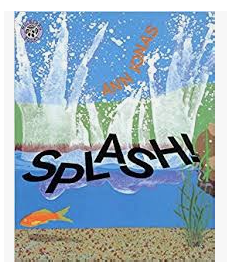
Splash!, By Ann Jonas

This book offers a fun way to add and subtract objects one to ten

Materials

  • 10 objects when dropped into water will make a small splash (small blocks, crayons,
  • Several sponges
  • 10 paper plates with a number written on it 1-10
  • Stickers of pond animals or a bingo dauber

Vocabulary

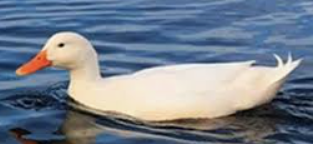
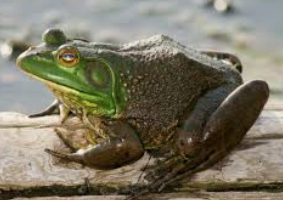
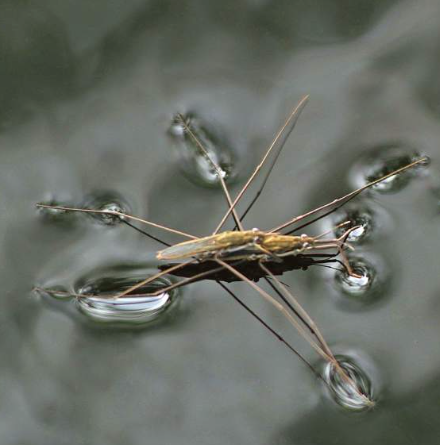
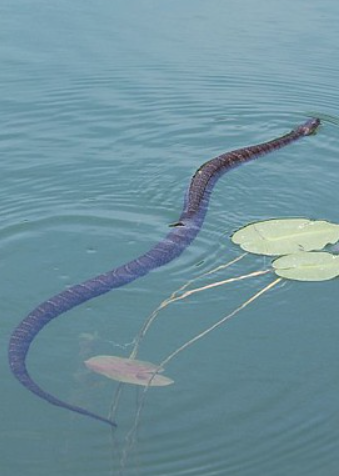
  • Pond (a small body of water with different animals and plants that live in or beside it).
  • Habitat (environments or homes where different animals live)

Before Reading the Story

Talk about habitats (environments or homes where different kinds of animals live).  Ask the children if they know who lives in a forest environment?  A jungle environment?  A desert environment?  A pond environment?  Tell them that today’s story is about animals that live in a pond environment.  Introduce the story.

Science/Scientific Knowledge; expands knowledge of and abilities to observe describe, and discuss the natural world, materials, living things, and natural processes.

Reading the Story

Stop and count how many are in the pond on each page.

Mathematics/Number & Operations; develops increasing ability to count in sequence to 10 and beyond.

After Reading the Story

Who can remember what happened to the dog in the story?  Why do you think the cat was mad?

Literacy/Book Knowledge & Appreciation; demonstrates progress in abilities to retell and dictate stories from books and experiences; to act out stories in dramatic play; and to predict what will happen next in a story. AND Language Development/Speaking & Communicating; develops increasing abilities to understand and use language to communicate information, experiences, ideas, feelings, opinions, needs questions; and for other varied purposes.

Discovery

If you are fortunate to have a pond nearby, collect a large container (clean mayonnaise jar) of the water.  Try to get some of the mud, scum, and any water insects.  Put this into the center with magnifying glasses so the children can observe and talk about their observations. Encourage the children to draw their observations on paper. Dictate any observations/discussions that take place.

Science/Scientific Skills & Methods; develops growing abilities to collect, describe, and record information through a variety of means, including discussion, drawings, maps, and charts.

Music and Movement

Play in the pond on the bank. Mark off an area large enough for all the children to be able to comfortably jump inside of. Use the edge of a carpet or chalk/tape to make a ‘pond’. Have all the children stand on the outside of the pond. Explain that they are on the bank (where the land meets the water). Tell them that when you say, “In the pond” everyone is to jump inside the area. Practice a couple of times saying “In the pond” or “On the bank”. The children jump accordingly. After they have gotten good, speed up your calling or call on the bank two times in a row, etc.. This is a listening game, can they follow the directions?

Language Development/Listening & Understanding; shows progress in understanding and following simple and multiple-step directions.

Teach the children the song, Swimming swimming in the swimming hole. https://www.youtube.com/watch?v=c15F0h0fyoo. Make motions to go with the song.

There’s a little white duck. https://www.youtube.com/watch?v=Y57RWhz76y8

Here is My Turtle…Finger play
Here is my turtle,  ( Form fist and extend thumb.)
He lives in a shell.  (Put thumb inside fist.)
He like his home
Very well.  (Nod head) He pokes his head out    (Pop out thumb.)
When he wants to eat.   (Circle thumb around.)
And pulls it back in
When he wants to sleep.  (Put thumb back inside fist)

1,2,3,4,5, (Hold up fingers as you count) I caught a fish alive (point to self) 6,7,8,9,10 (hold up fingers as you count) Then I threw him back again.  (pretend to throw) What made you let him go? (shrug shoulders) Because he bit my finger so! (make a scowl face) Which finger did he bite? The little pinky on the right. (hold up right pinkie and kiss it)

Approaches to Learning/Initiative & Curiosity; chooses to participate in a variety of tasks and activities AND Creative Arts/Music; participates with increasing interest and enjoyment in a variety of music activities, including listening, singing, finger plays, games, and performances.

Blocks

Tell the children that they can pretend to be frogs jumping from lily pad to lily pad today.  Have them use the blocks to make a pond that goes around the edge of the center.  Spread the paper plates marked 1-10 within the pond.  Show the children how to jump from 1 to 2, 2 to 3, etc. to 10.  Mix the plates up in the center and begin again.

Mathematics/Number & Operations; begins to associate number concepts, vocabulary, quantities, and written numerals in meaningful ways.

Art

Paint with watercolors today.

Creative Arts/Art; gains ability in using different art media and materials in a variety of ways for creative expression and representation.

Sand and Water

Fill the table with water and give the children objects that they can drop in.  As they drop the items ask them to count for you.  How many did you drop? Now drop one more, how many are in the water now?

Mathematics/Number & Operations; begins to use one-to-one correspondence in counting objects and matching groups of objects.

Add items that will make a splash sound such as; watering can, water wheel and squirt bottles to the water table today. Can the children find any other items in the classroom that will make a splashing sound? Which one sounds louder? Why do you think that?

Science/Scientific Skills & Methods; begins to participate in simple investigations to test observations, discuss and draw conclusions, and form generalizations.

Library and Writing

Help the children make a number chart today. Going down the left side of a piece of paper write the numbers 1-10.  Give the children stickers to put the appropriate number beside each number.  If you do not have stickers, use a bingo dauber or something similar.

Mathematics/Number & Operations; begins to use one-to-one correspondence in counting objects and matching groups of objects.

Dramatic Play

Encourage the children to set the table for four, three, or two.  Do they understand how many plates they need?  Can they add all the utensils that are needed for setting a table?  Do they know where to put the plate, cup, spoon, etc?

Mathematics/Number & Operations; begins to use one-to-one correspondence in counting objects and matching groups of objects. AND Mathematics/Number & Operations; begins to use language to compare numbers of objects with terms such as more, less, greater than, fewer, equal to.

Math and Manipulatives

Trace and cut out ten turtles. Color them green and number them one through ten.  Cut out spots for on the turtle’s back and color them brown.  Have the children add correct number of spots to turtles back.

Mathematics/Number & Operations; begins to use one-to-one correspondence in counting objects and matching groups of objects.

Outdoor Play

Fill a bucket up with water and give the children sponges to throw at a target such as a large piece of cardboard or  a hula hoop hung on the fence.

Physical Health & Development/Gross Motor Skills; demonstrates increasing abilities to coordinate movements in throwing, catching, kicking, bouncing balls, and using a slide and swing.

Mud play. Have the children dig a hole in the ground and then add water. Let the children continue to make the hole bigger adding more water. After the hole is a good size, let them make mud pies!

Physical Health & Development/Health Status & Practices; participates actively in games, outdoor play, and other forms of exercise that enhance physical fitness. AND Science/Scientific Skills & Methods; begins to use senses and a variety of tools and simple measuring devices to gather information, investigate materials, and observe processes and relationships.

Transitions

On a dry-erase board or a chalkboard write/draw 3 letters, 3 numbers, 3 shapes, and 3 words.  Ask a child to come up and use a dry erase marker to circle a number, a letter, or a word.  Continue giving each child a turn to circle a letter, a number, a shape, or a word.  Were they able to tell which one was what?

Literacy/Print Awareness & Concepts; recognizes a word as a unit of print, or awareness that letters are grouped to form words, and that words are separated by spaces. AND Literacy/Alphabet Knowledge; knows that letters of the alphabet are a special category of visual graphics that can be individually named.

Resources

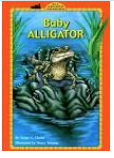
Baby Alligator, by Ginjer L. Clarke

 This story shares alligator facts with children in a way that is easy to understand. 

Materials

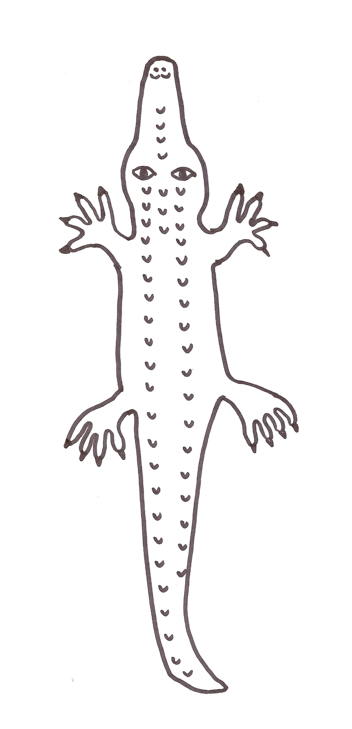
  •             Alligator- make about 9” long
  •             Alligator puppet or draw eyes on the back of your hand to be                  an alligator puppet
  •             Deck of cards, face cards removed.
  •             Plastic eggs

Vocabulary

  •             Fade away (will disappear)
  •             Male (father’s and brother’s are males.  Boy animals)

Before reading the Story

            Do animal riddles with the children.  (I’m thinking of an animal that lives far away in the jungle or the zoo.  It looks kind of like a giant cat and has stripes all over its body and long whiskers beside its nose.  It is a meat eater and hunts in the night/tiger).  End by saying; I’m thinking of an animal that has many sharp and fearsome teeth. It lives beside the swamps.  It’s body is long and it has short legs but a very long and strong tail. It is a fast swimmer and eats many kinds of smaller animals/alligator.  Tell the children that this is who we are going to read about today, the alligator. Let the children make any comments they have about alligators before you begin.

Approaches to learning/Reasoning & Problem Solving; develops increasing abilities to classify, compare and contrast objects, events, and experiences.   Language Development/Listening & Understanding; understands an increasingly complex and varied vocabulary.

Reading the Story

            This book is full of facts.  Take your time and let the children talk about the pictures if they like. 

Science/Scientific Knowledge; expands knowledge of and abilities to observe, describe, and discuss the natural world, materials, living things, and natural processes.

After Reading the Story

            Introduce an alligator puppet/ hand.  Tell the children that you are going to pretend that the cards from the deck of cards are fish.  Pass out the cards so everyone has at least one.  Do a quick movement activity with the children pretending the cards are ‘fish’. Can you make your fish swim high, low, behind your back, etc.  After a moment of this tell them that you are going to play a game using the numbers on their fish/card. 

Teach the children the chant; Alligator, Alligator.

Alligator, alligator in the swamp,
How many fish can you chomp?

After the children are able to repeat this, have the alligator call up two children.  The children repeat the chant.  The Alligator then states “Well, I’m very, very hungry, so I will eat whatever is more.  Look at the children’s numbers; ask the children if they know what the numbers are holding?  Then the Alligator says, ____is less then ____, ____ is more then ____so I will eat _____.  Have the alligator grab the number and say yummy, thanks. The child who lost his card to the alligator then calls up another child to take his place and the chant begins again. (Hmmm, I’m a very hungry alligator so I will eat which ever has more.  Let me see, 5 is less than 6, 6 is more than 5 so I will eat six! Oh yummy, yummy, yummy, thanks)

Mathematics/Number & Operations; begins to associate number concepts, vocabulary, quantities, and written numerals in meaningful ways.

Discovery

            After reading the story, put the book in the discovery center with any other alligator books/pictures that you might have.

Literacy/Book Knowledge & Appreciation; shows growing interest in reading-related activities, such as asking to have a favorite book read, choosing to look at books; drawing pictures based on stories; asking to take books home; going to the library; and engaging in pretend reading with other children.

Music and movement

            Make a feeding the Alligator game.  Take a brown grocery sack and tape it to a chair with the top opening facing the children.  Make a line for the children to stand at.  Let the children use bean bags to try to throw them into the alligators mouth.

Physical Health & Development/Gross Motor Skills; demonstrates increasing abilities to coordinate movements in throwing, catching, kicking, bouncing balls, and using the slide and swing.

Sand and water

            Add plastic eggs and long wooden blocks to the water table today to simulate an alligator Mother and her eggs, the children can open the eggs and pour and scoop.

Creative Arts/ Dramatic Play; shows growing creativity and imagination in using materials and in assuming different roles in dramatic play situations.

Blocks

            Encourage the children to make “stepping stones” and “logs” all over the floor of the block center.  They can then walk on these and try not to fall into the alligator water/rug.  This is a balancing game.

Physical Health & Development/Gross Motor Skills; shows increasing levels of proficiency, control, and balance in walking, climbing, running, jumping,  hopping, skipping, marching, and galloping.

Art

           Make copies of the alligator for each child on green paper.  Cut out many one inch squares of green tissue paper. Show the children how to scrunch these into tiny balls and glue onto their alligators back.

Physical Health & Development/Fine Motor Skills; develops growing strength, dexterity, and control needed to use tools such as scissors, paper punch, stapler, and hammer.  AND Approaches to Learning/Engagement & Persistence; grows in abilities to persist in and complete a variety of tasks, activities, projects, and experiences.

Library and Writing

           Make a copy of the alligator for each child.  Ask the child to share any information that they have about alligators with you.  As they share the information, write it down on the alligator page.  When they have finished sharing information, let them use crayons to color the alligator.  Write whatever they say about alligators, whether you know it to be true or not.  This is their dictation of information.  (I’ve had children say, “I don’t know”,”Alligators eat people and dogs so you better watch out!””I have a alligator at home named Bo”.  I did not ask if these were true statements, this is what the child told me so this is what I wrote)

Literacy/Book Knowledge & Appreciation; demonstrates progress in abilities to retell and dictate stories from books and experiences; to act out stories in dramatic play; and to predict what will happen next in a story.  AND Literacy/Early Writing; develops understanding that writing is a way of communicating for a variety of purposes.  

Dramatic play;


Math and Manipulatives

            The story states that a mother alligator can lay up to 40 eggs at a time.  Use a set of manipulatives that has many pieces and have four children at a time come and count a set of ten items.  Put them all together and that’s how many baby alligators a mother alligator can have at once!  That’s a lot of babies.

Mathematics/Number & Operations; demonstrates increasing interest and awareness if numbers and counting as a means for solving problems and determining quantity.

            Use the alligator copy and make about 10 to use for measuring.  Have the children measure how many alligators tall their friend is by having them lay on the floor.  Measure how many alligators long the table is, the carpet, the path from the cubbies to the bathroom.  Is there anything in the classroom that is about the same size as a baby alligator?

Mathematics/Patterns & Measurement; shows progress in using standard and non-standard measures for length and area of objects.

Outdoor play

            Dampen the sand in the sandbox and dig deep tunnels, homes for alligators in the winter.

Approaches to learning/Engagement & Persistence; demonstrates increasing ability to set goals and develop and follow through on plans.

Transitions

            Ask the  children if they can remember any alligator fact as they head off to the next activity.  If you have to, turn to different pages of the book to help the children recall facts.

Science/Scientific Knowledge; expands knowledge of and abilities to observe, describe, and discuss the natural world, materials, living things, and natural processes. AND Literacy/Book KNowledge & Appreciation; shows growing interest and involvement in listening to and discussing a variety of fiction and non-fiction, and poetry.

Resources

Baby alligators are about 9 inches long.

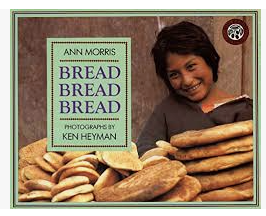
Bread, Bread, Bread by Ann Morris

 Ann Morris shares bread with us from around the world. This book celebrates our love of bread in all its various forms.

Materials

  • Ingredients for uncooked playdough
  • 2 cups plain flour (all purpose)
  • 2 tablespoons vegetable oil  (baby oil and coconut oil work too)
  • 1/2 cup salt
  • 2 tablespoons cream of tartar
  • 1 to 1.5 cups boiling water (adding in increments until it feels just right)
  • few drops glycerine 
  • A piece of bread and a plastic knife per child. 
  • A spread to go onto the bread.

Vocabulary

  • Knead (to roll and smush and pound the dough until it is smooth)
  •  Loaf (a pans worth of bread, usually cut up into pieces)

Before Reading the Story

            Look at the cover of the book and ask the children if they can guess what the story is about.  Ask if any of them like to eat bread, do they eat it plain or do they put something on their bread?  Read the title and tell the children that people everywhere eat bread.  Begin the book.

Literacy/Book Knowledge & Appreciation; shows growing interest and involvement in listening to and discussing a variety of fiction and non-fiction books and poetry.  AND Language Development/Speaking & Communicating; progresses in abilities to initiate and respond appropriately in conversations and discussions with peers and adults.

Reading the Story

            As you read, ask the children if they have tried the various kinds of breads shown in the pictures.  Do they know the name of the different breads?

Language Development/Speaking & Communicating; uses an increasingly complex and varied spoken vocabulary.

After Reading the Story

            Show the children a globe or map of the world and point to some of the places where the pictures were taken.

Social & Emotional Development/Knowledge of Families & Communities; begins to express and understand concepts and language of geography in the contexts of the classroom, home, and community.

Discovery

            Let the children make non-cooked playdough and pretend that they are kneading the dough for bread. 

2 cups plain flour (all purpose)

2 tablespoons vegetable oil  (baby oil and coconut oil work too)

1/2 cup salt

2 tablespoons cream of tartar

1 to 1.5 cups boiling water (adding in increments until it feels just right)

food colouring (optional)

few drops glycerine 

  • Mix the flour, salt, cream of tartar and oil in a large mixing bowl
  • Add food colouring TO the boiling water then into the dry ingredients
  • Stir continuously until it becomes a sticky, combined dough
  • Add the glycerine (optional)
  • Allow it to cool down then take it out of the bowl and knead it vigorously for a couple of minutes until all of the stickiness has gone. * This is the most important part of the process, so keep at it until it’s the perfect consistency!*
  • If it remains a little sticky then add a touch more flour until just right

Creative Arts/ Dramatic Play; shows growing creativity and imagination in using materials and in assuming different roles  in dramatic play situations.  AND Science/Scientific Methods & Skills; begins to participate in simple investigations to test observations, discuss & draw conclusions, and form generalizations.

Music and Movement

Mr Mike has a You Tube called Peanut Butter and Jelly. https://www.youtube.com/watch?v=67A3XmpVAGI

Creative Arts/Music; participates with increasing interest and enjoyment in a variety of music activities, including listening to music, singing, finger plays, games, and performances.

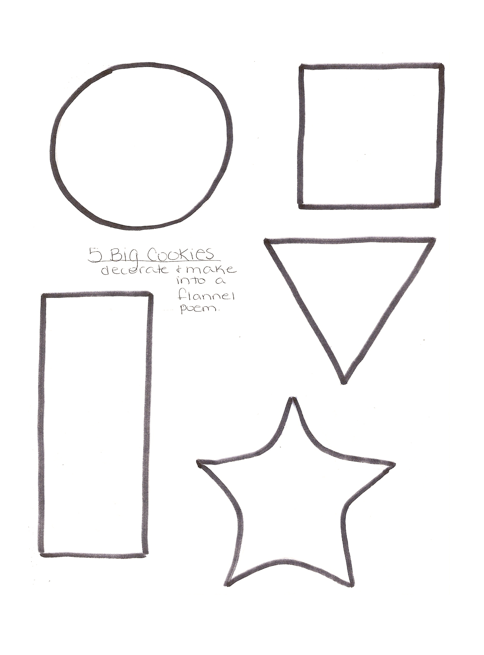
Cut out and color the shape cookies and Teach the children the finger play, Five Little Cookies

Five little cookies in the bakery shop

Shining bright with sugar on top.

Along comes (name a child) with a nickel to pay,

He/she buys a cookie and takes it away.

What shape cookie did (child) buy?  How many cookies are left?

Continue with 4, 3, 2, 1.

Mathematics/ Number & operations; begins to associate number concepts, vocabulary, quantities, and written numerals  in meaningful ways.

Blocks

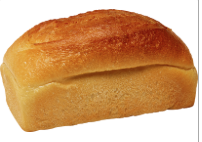
            Encourage the children to use the small rectangle wooden blocks as loaves of bread.  Can they build an oven where the bread can fit inside?  For younger children, let them use a shoe box or cubby on its side to represent an oven.  How many loaves can they fit in the oven at one time?  Ask them to load the oven and then count all the loaves of bread.

Creative Arts/ Dramatic Play; shows growing creativity and imagination in using materials and in assuming different roles  in dramatic play situations.   AND Mathematics/Number & Operations; demonstrates increasing interest and awareness of numbers and counting as a means for solving problems and determining quantity.

Art

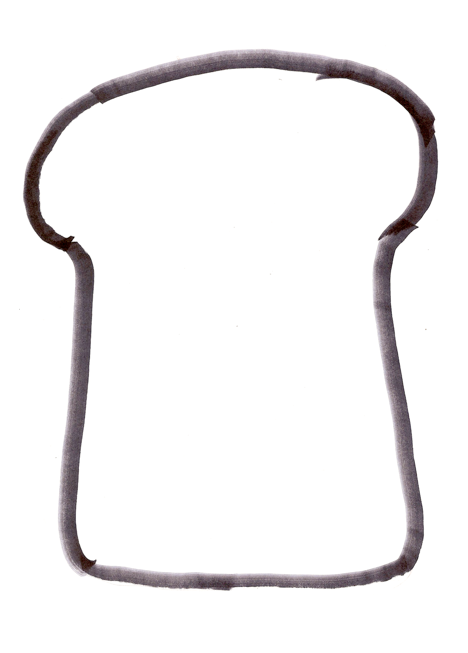
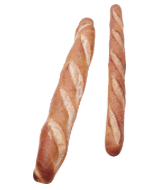
            Cut out bread shapes from white construction paper. The children can paint it shades of brown to make wheat bread or rye breads.  Put the paints out in an old muffin tin.  Use brown, white, and black paints today.

Physical Health & Development/Fine Motor Skills; progresses in abilities to use writing, drawing, and art tools, including pencils, markers, chalk, paint brushes, and various types of technology.

Library and writing

            If you have a flannel board and flannels of foods, put this into the center today.  Challenge the children to find all the bread/grain products and put them on the flannel board.  If you have done some nutrition teaching with the children, ask them to divide the foods up by food groups (fruits, vegetables, proteins, grains, and dairy)

Mathematics/Patterns  & Measurement; shows increasing abilities to match, sort, put in a series, and regroup objects according to one or two attributes such as shape or size.

Sand and water

            Bring in some bread pans and muffin pans for the children to use with dampened sand as they pretend to bake bread.  Include measuring cups, bowls, and measuring spoons, and a small roller.  Ask the children to count how many cups of flour/sand it takes to fill the bread pan, etc..

Creative Arts/ Dramatic Play; shows growing creativity and imagination in using materials and in assuming different roles  in dramatic play situations. 

Dramatic Play

             Bring out any restaurant props that you might have and encourage the children to act out the different roles (waitress, chef, customer). 

Creative Arts/ Dramatic Play; shows growing creativity and imagination in using materials and in assuming different roles  in dramatic play situations.  AND Social & Emotional Development/Cooperation; develops increasing abilities to give and take in interactions; to take turns with in games and using materials; and to interact without being overly submissive or directive.

Math and Manipulatives

            Bring in a kind of bread and a spread that goes with it. Have the children spread onto their bread using a plastic knife. (Bagel and soft crème cheese, bread and butter, bread and jelly)

Physical Health & Development/Fine Motor Skills; develops growing strength, dexterity, and control needed to use tools such as scissors, paper punch, stapler, and hammer.

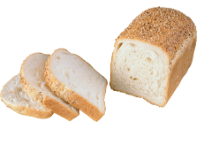
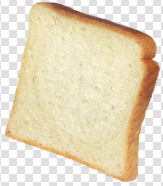
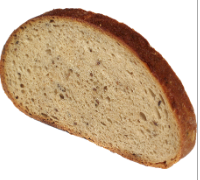
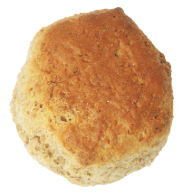
            Make 2 copies of the bread pictures on paper that the children cannot see through.  Use these to play Memory by turning all the pictures upside down on the table.  A child picks two cards.  If they match he keeps them, if they do not match he turns them back upside down on the table.  The next child goes.  Continue till all the pairs are collected and have the children count how many cards they have.

Mathematics/Patterns  & Measurement; shows increasing abilities to match, sort, put in a series, and regroup objects according to one or two attributes such as shape or size.

Outdoor Play

            Tell the children that crackers are a kind of bread or grain.  Today you are going to pretend that you are crackers, animal crackers!  Call out animals and the children act them out both in their actions and their voices.  Encourage them to run and roar as different animals.  Give them a moment to act out each animal and then shout “Animal crackers freeze!”.  This cues the children to stop and listen for the next animal.

Language Development/Listening & Understanding; shows progress in understanding and following simple and multi-step directions.  AND Physical Health & Development/Health Status and Practices; participates actively in games, outdoor play, and other forms of exercise that  enhance physical fitness.

Transitions

            Ask children if they can think of words that rhyme with bread (spread, head, red,said, bed).  Continue to dismiss by playing with rhyming words.

Literacy/Phonological Awareness; progresses in recognizing matching sounds and rhymes in familiar words, games, songs, stories, and poems.

Resources