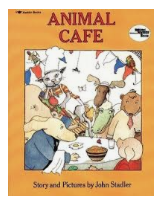
Animal Cafe,by John Stradler

This story is about an all night cafe for the animals of the neighborhood. Children will delight in learning all that goes into what makes this restaurant run.

Materials

  • Ingredients used for a cooking project or to make your favorite play dough.
  • Several restaurant bags or boxes that would be familiar to the children.
  • Magazines
  • Poster Board
  • Cookbooks with illustrations
  • Pictures of foods on index cards
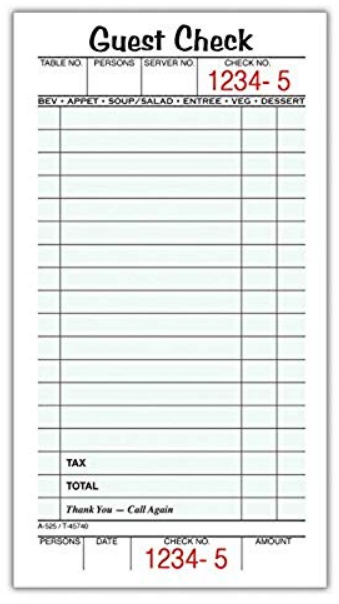
  • Guest Checks
  • Placemats

Vocabulary

  • Magic (it means something happens which you can not explain, a mystery)
  • Spicing (To add flavor to food to make it taste better)
  • Café (a place where food and drinks are sold, like a restaurant)

Before Reading the Story

Bring several food bags (McDonald’s, Chick-Fil-A, Bojangles) and a pizza box. Ask the children if they know where these come from.

Literacy/Print Awareness & Concepts; recognize a word as a unit of print, or awareness that letters are grouped to form words, and that words are separated by spaces.  

Hold up one of the bags and ask the children to clap their hands if they have eaten there. Hold up the next bag and ask them to put their hands on their head.

Language Development/Listening & Understanding; shows progress in understanding and following simple and multi-step directions.

Count with the children each time to see how many children have visited each restraint.

Mathematics/Numbers & Operations; demonstrates increasing interest and awareness of numbers and counting as a means for solving problems and determining quantity.

After a short discussion on where the children have eaten and like to eat, hold up the book cover and tell them that the story today is called Animal Café.

Reading the Story

Ask questions along the way. What do you think the magic is? Why do you think Casey the cat is in the kitchen, slicing, dicing, and spicing? When the guests start arriving say to the children, “Oh, Casey and Sedgewick are opening up a restaurant or café!”

Literacy/Book KNowledge & Appreciation; shows growing interest and involvement in listening to and discussing a variety of fiction and non-fiction books and poetry.

After Reading the Story

With the children list all the things that Casey and Sedgewick had to do to prepare the café for the animals (slicing,dicing,and spicing, decorating, setting the tables, writing the menu, greeting, serving, taking the money and cleaning up).

Social & Emotional Development/Knowledge of Families & Communities; develops growing awareness of jobs and what is required to perform them.

Music and Movement

Turn this into a song by making up verses to the tune of Fere Jaqua. https://www.youtube.com/watch?v=QI0abuwq31g

At the café, at the café,                               At the café, at the café,
There’s a chef, there’s a chef                   There’s a menu, there’s a menu
He chops and he dices,                             It tells us all the good foods
He cooks and he spices                            We can order
At the café, at the café.                               At the café, at the café.
Waitress takes our order                          The cleaner scrubs the café
Brings the yummy food                            Keeps it safe and clean

Social & Emotional Development/Knowledge of Families & Communities; develops growing awareness of jobs and what is required to perform them.

Discovery

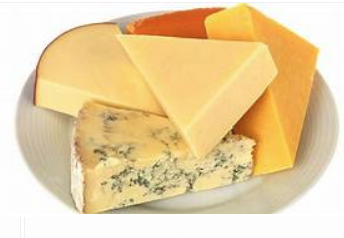
This would be a great day to do a cooking project with your children in small group. Dice cheese, slice apples, and spice the apples with cinnamon for an easy snack. Or make a batch of play dough with the children and talk about what happens when you mix the ingredients.

Science/Scientific Skills & Methods; begins to use senses and a variety of tools and simple measuring devices to gather information, investigate materials, and observe other processes and relationships.  AND Language Development/Listening & Understanding; shows progress in understanding and following simple and multiple-step directions.

Art

Give the children magazines to cut out food pictures and glue them to a piece of poster board.  This can later be hung in the dramatic center as a wall menu for restaurant play.

Physical Health & Development/Fine Motor Skills; develops growing strength, dexterity, and control needed to use tools such as scissors, paper punch, stapler, and hammer . 

Sand and Water

Put out dampened sand and several dishes. Let the children pretend to make sand food.

Approaches to Learning/Initiative & Curiosity; approaches tasks and activities with increased flexibility, imagination, and inventiveness.

Library and Writing

Add several cookbooks that have illustrations.

Literacy/Print Awareness & Concepts; develops growing understanding of the different functions of forms of print such as signs, letters, newspapers, lists, messages, and menus.

Cut out pictures of food ahead of time and glue them to index cards. Label the foods. Ask the children if they can help put them onto your word wall.

Literacy/Alphabet Knowledge; increases in ability to notice the beginning letters of familiar words. 

Dramatic Play

Turn your dramatic play area into a restaurant for an extended period of time. Have the children help organize the dishes by putting all the like kinds together

Mathematics/Geometry & Spatial Sense; begins to be able to determine if two shapes are the same size and shape.

 Make copies of the placemat and cover them with contact paper. Show the children how to set the table/s by placing the like dishes over the placemat cutouts. As they are setting the table/s talk to them about how the fork goes on the left and the cup goes above the plate.

Mathematics/Patterns & Measurement; enhances abilities to recognize , duplicate, and extend simple patterns using a variety of materials.

Add any menus and food containers that you have collected to the center.  Encourage the children to participate in a variety of roles related to the kitchen and as a guest.  Show the children how to use the guest check to pretend to write down their order.  Observe the children as they play, are they able to  switch and share roles?  Are they able to use restaurant related words (menu, waitress, cook, chef, order)?

Social & Emotional Development/Cooperation; develops increasing abilities to give and take in interactions; to take turns in games and in using materials; and to interact without being overly submissive or directive.

Math and Manipulatives

Put out all your food related puzzles

Physical Health & Development/Fine Motor Skills; grows in hand-eye coordination in building with blocks, putting together puzzles, reproducing shapes, stringing beads, and using scissors.

 Outdoor Play

Play a bounce and catch game.  Have several children stand in a circle.  Bounce the ball to a child and name a food.  The child must catch the bounced ball, name a food and bounce the ball to another.  Continue naming foods.  For older children, make food categories.  Bounce and name food s that you keep in the refrigerator, foods that you might eat for breakfast, favorite foods, etc.

Physical Health & Development/Gross Motor Skills; demonstrates increasing abilities to coordinate movements in throwing, catching, kicking, bouncing balls, and using the swing and slide.  AND Mathematics/Patterns & Measurement; begins to make comparisons between several objects based on a single attribute.

 Transitions

Put any play foods that you might have into a pillow case or bag that the children can not see through.  Let them take turns pulling out a food item and then naming it.

Social & Emotional Development/Cooperation; develops increasing abilities to give and take in interactions; to take turns in games and in using materials; and to interact without being overly submissive or directive.

Resources
Screen Shot 2018-10-30 at 4.34.48 PM
Screen Shot 2018-10-30 at 4.52.56 PM
Screen Shot 2018-10-30 at 4.53.12 PM
Screen Shot 2018-10-30 at 4.53.23 PM
Screen Shot 2018-10-30 at 4.51.00 PM
Screen Shot 2018-10-30 at 4.44.06 PM
Screen Shot 2018-10-30 at 4.42.44 PM
Screen Shot 2018-10-30 at 4.43.33 PM
Screen Shot 2018-10-30 at 4.47.02 PM
Screen Shot 2018-10-30 at 4.51.14 PM
Screen Shot 2018-10-30 at 4.53.38 PM
Screen Shot 2018-10-30 at 4.53.49 PM
Screen Shot 2018-10-30 at 4.51.32 PM
Screen Shot 2018-10-30 at 4.42.53 PM
Screen Shot 2018-10-30 at 4.54.12 PM
Screen Shot 2018-10-30 at 4.51.41 PM
Screen Shot 2018-10-30 at 4.43.05 PM
Screen Shot 2018-10-30 at 4.49.08 PM
Screen Shot 2018-10-30 at 4.50.34 PM
Screen Shot 2018-10-30 at 4.52.06 PM
Screen Shot 2018-10-30 at 4.39.58 PM

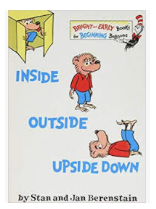
The Berenstain Bears Inside, Outside, Upside Down by Stan & Jan Berenstain

This silly book has few words but wonderful descriptions of inside and outside, as well as upside down.

Materials

  • Boxes big enough for the children to climb inside of.  (Ask your cook to save boxes that the schools food is delivered in).
  • A tumble mat or large pillow
  • Roll of masking tape
  • Hoola Hoop
  • 3-5 bean bags
  • One smaller box with a school object inside
  • A tray of ice cubes and a glass

Vocabulary

Before Reading the Story

Before the children arrive, put one favorite school toy in a box  and seal it shut.  Bring it to the group area and tell the children that you have put something inside the box.  Let the children take turns asking a question and then guessing what it might be.  If your children are unable to ask questions, give them clues.  Pass the box around and let the children shake it.  Tell them that it might be something that they would see in a particular center.  Tell them what color it is or what material it is made out of.  The idea is for the children to be able to guess from clues that you have given or questions that they have asked.

Approaches to Learning/Reasoning & Problem Solving; develops increasing abilities to classify, compare, and contrast objects, events, and experiences.  AND Language Development/Speaking & Communicating; develops increasing abilities to understand and use language to communicate information, experiences, ideas, feelings, opinions, needs, questions, and for other varied purposes.

Reading the Story

This is a super short story.  Read it to the children and then go back and help the children read it to you.

Literacy/Book Knowledge & Appreciation; demonstrates progress in abilities to retell and dictate stories from books and experiences: to act out stories in dramatic play; and to predict what will happen next in a story.

 After Reading the Story

Bring a doll or stuffed animal to the group area.  Using the box from Before Reading the Story, have the first child put the doll inside the box.  Have the next child put the doll outside the box.  The next child puts the doll upside down.  Continue like this until everyone has had a turn.

Language Development/Listening & Understanding; shows progress in understanding and following simple and multiple-step directions.

 Discovery

Tell the children that you are going to try a watching experiment.  Fill the glass with the ice cubes and then add water to the top.  Put the glass out where it is visible to the children.  Every few minutes, go and examine the glass, do you see any changes?  (The glass should begin to sweat and the water drip out as the ice cubes begin to melt).   Encourage the children to tell you what they see happening.

Science/Scientific Skills & Methods; begins to use senses and a variety of tools and simple measuring devices to gather information, investigate materials, and observe processes and relationships.

Music and Movement

Encourage the children to take turns practicing somersaults.  Help them by telling them to put their hands next to their feet and to tuck in their chin.  Some children may need a gentle push from an adult to help them get over.

Physical Health & Development/Health Status & Practices; progresses in physical growth, strength, stamina, and flexibility.

Play In The Pond.  Mark a large area on the floor to be the pond (or use your group rug as the pond if there is room to stand beside it.  Tell the children that when you say “In the pond”, everyone is to jump into the large marked off area.  When you say,”Out of the pond”, everyone is to jump out of the marked area.  Start by slowly saying in the pond, out of the pond.  Try calling faster or saying in the pond two and three times in a row before saying out of the pond.

Language Development/Listening & Understanding; shows progress in understanding and following simple and multiple-step directions.

Do The Hokey Pokey with the children.  https://www.youtube.com/watch?v=g11SI1nUcf8

You put your foot in, you put your foot out                                                                You put your foot in and you shake it all about.                                                        You do the hokey pokey and you turn yourself around                                            That’s what it’s all about!                                                                                                    Move up your body doing knees, hips, etc.  Do your whole body last.

Language Development/Listening & Understanding; understands an increasingly complex and varied vocabulary.  

Blocks

Ask the children to build structures and then put manipulatives inside and outside their structure.  Manipulatives may include people, animals, or small cars.

Language Development/Listening & Understanding; understands an increasingly complex and varied vocabulary.  

 Art

Give each child a piece of white construction paper.  Help them take strips of masking tape and tape from one side of the paper to the other.  Give each child 3-6 strips of masking tape.  Put out small containers of colored paint.  Encourage the children to paint inside each shape made by the masking tape a different color.  When the paint has dried, carefully pull the masking tape of f the paper.  The result will be a stain glass type look with white between each color.

Language Development/Listening & Understanding; shows progress in understanding and following simple and multiple-step directions.  AND Creative Arts/Art; develops growing abilities to plan, work independently, and demonstrate persistence in a variety of art projects.

Sand and Water

Fill the table up with water today and add a variety of containers.  Challenge the children to see which container holds the most water.  Show the children how to scoop with a measuring cup and count how many scoops it takes to fill a container.  Can they guess which will hold the most water?

Mathematics/Number & Operations; develops increasing ability to count in sequence to 10 and beyond AND Mathematics/Number & Operations; begins to use language to compare numbers of objects with terms such as more, less, greater than, fewer, equal to.  AND Science/Scientific Skills & Knowledge; begins to describe and discuss predictions, explanations, and generalizations based on past experiences.

 Library and Writing

Give each child a piece of drawing paper that has a line drawn down the middle.  Challenge the children to draw a picture of something that they like to do inside on one half and outside on the other.  Write a their responses on the bottom of each half.

Literacy/Early Writing; begins to represent stories and experiences through pictures, dictation, and in play.

Dramatic Play

Suggest to the children that they play that they are going to town.  What do they need to take with them? (purse, money, dressing up, food basket, car keys).  Let them bring chairs into the center to make a car or truck to drive to town.

Literacy/Book Knowledge & Appreciation; demonstrates progress in abilities to retell and dictate stories from books and experiences: to act out stories in dramatic play; and to predict what will happen next in a story.

 Math and Manipulatives

Place a hoola hoop on the floor (or make a masking tape square).  Put a line back about 6 feet from the hoola hoop/square.  Give a child 3-5 bean bags and ask them to see if they can throw them into the hoola hoop/square.  After they have thrown their bean bags, have the child count how many are in the hoola hoop/ square and how many are outside.  Have them hand the bean bags off to the next child.  Older children can be encouraged to try to draw their results on a piece of paper.

Mathematics/Number & Operations; begins to make use of one-to-one correspondence in counting objects and matching groups of objects.

 Outdoor Play

Bring out any boxes that you have been able to collect and allow the children to play inside and outside of them.  Can they turn themselves upside down?

Social & Emotional Development/Cooperation; shows increasing abilities to use compromise and discussion in working, playing, and resolving conflicts with peers.

 Transitions

Use one of your boxes and ask each child to find something of a particular color to put inside the box.  (Aubrey can you find something red to put into the box, Alison can you find something green).  For children who are just learning their colors you can give them a small piece of colored paper or a crayon in the color that you would like them to find.

Language Development/Listening & Understanding; shows progress in understanding and following simple and multiple-step directions.   AND Mathematics/Geometry & Spatial Sense; shows growth in matching, sorting, putting in a series, and regrouping objects according to one or two attributes such as color, shape, or size.

Dear Parent- today we read a book about inside, outside, and upside down.  Ask your child to show you what inside looks like using a closet or bedroom.  (Can you put yourself inside the closet?)   Ask your child to show you what outside and upside down look like also.

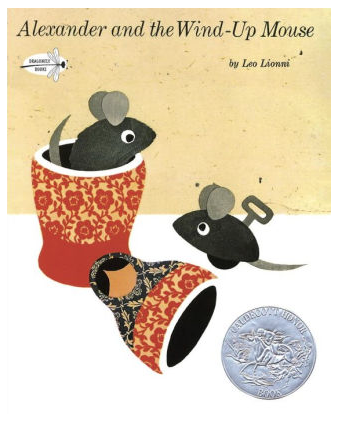
Alexander and the Wind-Up Mouse, by Leo Lionni

Alexander Mouse befriends a little wind-up mouse named Willy.  But one day Willy’s life is about to change.  The child he belongs to has thrown him into the trash.  What will become of Willy?  What will Alexander do to help his friend?

Materials

  • A pebble that is purple or painted purple
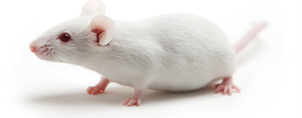
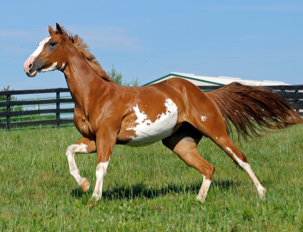
  • Pictures of animals both real and not-real
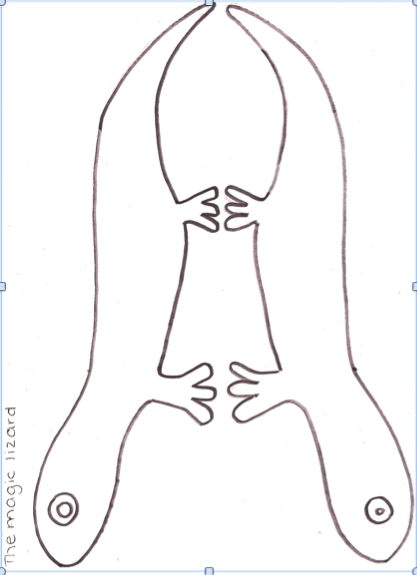
  • lizard shape
  • Eye droppers and food coloring
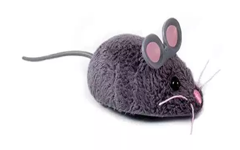
  • 3-4 wind-up toys

Vocabulary

  • Envy (wishing to be like someone else)
  • Vain (to think you are the best looking, always)

Before reading the Story

Bring a purple pebble to your rug time.  Tell the children that this is a magical purple pebble.  With this pebble you can pretend to be any animal that you wish to become.  Pass the pebble around and let the children tell you what kind of an animal they would choose to be.  Or, ask them to make the animals call sound and see if you can guess what animal they chose to be.

Approaches to Learning/Initiative & Curiosity; chooses to participate in an increasing variety of tasks, activities, projects, and experiences. AND Social & Emotional Development/Self-Concept; begins to develop and express awareness of self in terms of specific abilities, characteristics, and preserfences.

Reading the Story

When you get to the part where Willy is telling Alexander about the magic lizard, stop and ask the children what they think is going to happen next.

Literacy/Book Knowledge & Appreciation; demonstrates progress in abilities to retell and dictate stories from books and experiences; to act out stories in dramatic play; and to predict what will happen next in a story.

After Reading the Story

Ask the children if they thought Alexander was a good friend, why or why not?  Ask the children if they have a favorite toy at home, what is it?

Language Development/Speaking & Communicating; develops increasing abilities to understand and use language to communicate information, experiences, ideas, feelings, opinions, needs, questions; and for varied other purposes.

Discovery

Sort animal pictures by real animals verses not real animals.

Mathematics/Patterns & Measurement; shows increasing abilities to match, sort, put in a series, and regroup objects according to one or two attributes such as shape or color.

Music and Movement

Sing, There is a Child, to the tune of BINGO.  https://www.youtube.com/watch?v=JuBBo8uudYw

Write the children’s names onto sentence strips.  Hold up one of the names as you sing and point to the letters.

There is a child at our school,
Can you guess his/her name-o
S-e-a-n, S-e-a-n, S-e-a-n,
Yes, Sean is his name-o.

Literacy/Alphabet Knowledge; identifies at least 10 letters of the alphabet, especially those in their  name.

Blocks

Add a variety of animals today.  Ask the children to sort them, build a house for their favorite animal, or arrange from smallest to largest.

Mathematics/Patterns & Measurement; shows increasing abilities to match, sort, put in a series, and regroup objects according to one or two attributes such as shape or color.

Art

Cut the lizard out of white construction paper or watercolor paper.  Put out cups filled with water that you have added food coloring to.  Show the children how to pinch the eye dropper to suck the water up and then drop it onto the lizard shape.  Let the children experiment with mixing colors by dropping them onto the lizard shape.

Physical Health & Development/Fine Motor Skills; develops strength, dexterity, and control needed to use tools such as scissors, paper punch, stapler, and hammer.

Sand and Water

Depending upon the children in your care, fill the table up with fish gravel and small pebbles that the children can scoop or pick up with tongs or tweezers.  If you have children that you fear might put the small stones into their facial orifices, use larger stones with sand to scoop and pour as they look for the pebbles.

Physical Health & Development/Fine Motor Skills; develops strength, dexterity, and control needed to use tools such as scissors, paper punch, stapler, and hammer.

Library and Writing

On top of a piece of paper write: I wish, I wish , I wish I was a ___________.  Ask the children to fill in the blank, write their response and then ask the child to draw a picture of what they would like to become.  For older children you can ask them why they chose to become a _______.  Write their response on the paper.

Social & Emotional Development;Self-Concept; begins to develop and express awareness of self in terms of specific abilities, characteristics, and preferences.

Dramatic Play

Give the children a box or bag and ask them to help you clean the center.  Use the box for all the broken or unused items.  It’s time to bring in some new dramatic supplies.

Math and Manipulatives

Bring in any wind up toys that you may have.  (Children seem to really like music boxes where they can see the gears move).

Physical Health & Development/Fine Motor Skills; develops strength, dexterity, and control needed to use tools such as scissors, paper punch, stapler, and hammer.

Outdoor Play

Rhythm march to or around the playground.  As you march chant, “Friends forever, friends forever”.

Creative Arts/Movement; shows growth in moving in time to different patterns of beat or rhythm of music.

Transitions

Have the children repeat the following phrase and insert an animal into the blank.  They can then do the animal movement on their way to the next activity.  “I wish, I wish, I wish I was a ________”.

Social & Emotional Development;Self-Concept; begins to develop and express awareness of self in terms of specific abilities, characteristics, and preferences.

Resources
Screen Shot 2018-09-16 at 6.28.09 PM
Screen Shot 2018-09-16 at 7.00.54 PM
Screen Shot 2018-09-16 at 7.01.06 PM
Screen Shot 2018-09-16 at 7.03.05 PM
Screen Shot 2018-09-16 at 7.02.39 PM
Screen Shot 2018-09-16 at 7.01.23 PM
Screen Shot 2018-09-16 at 7.01.13 PM
Screen Shot 2018-09-16 at 7.01.54 PM
Screen Shot 2018-09-16 at 7.02.05 PM
Screen Shot 2018-09-16 at 7.01.44 PM
Screen Shot 2018-09-16 at 7.01.33 PM
Screen Shot 2018-09-16 at 7.02.30 PM
Screen Shot 2018-09-16 at 7.02.21 PM
Screen Shot 2018-09-16 at 7.03.30 PM
Screen Shot 2018-09-16 at 7.03.20 PM
Screen Shot 2018-09-16 at 7.03.45 PM
Screen Shot 2018-09-16 at 7.03.55 PM
Screen Shot 2018-09-16 at 7.04.11 PM
Screen Shot 2018-09-16 at 7.04.03 PM