The Hungry Thing, by Jan Slepian and Ann Seidler

When the Hungry Thing comes to town, he wants food! But the people are confused as to what to feed him. This is a fun book for the children to help solve the mystery of what the Hungry Thing wants to eat.

 Materials

  • Hungry Thing container
  • Cut out circles (see directions at end)
  • Several colors of yarn

Vocabulary

 Before Reading the Story

Tell the children that your story today is about rhyming words. Does anyone know what a rhyming word is? (2 words that sound the same). Let the children practice making rhymes to words such as log, bat, and dish. Introduce the story.

Literacy/Phonological Awareness; progresses in recognizing matching sounds and rhymes in familiar words, games, songs, stories, and poems.

 Reading the Story

As the little boy in the story begins to sound out the words that the Hungry Thing is trying to say, slow down and allow the children to see if they can find the correct answer.

Literacy/Phonological Awareness; progresses in abilities matching sounds and rhymes in familiar words, games, songs, stories, and poems.  AND Literacy/Book Knowledge & Appreciation; demonstrates progress in abilities to retell and dictate stories from books and experiences; to act out stories in dramatic play; and to predict what will happen next in a story.

After Reading the Story

As you dismiss the children from the rug time, make up a silly rhyme that goes along with their name. Can they figure out whose name you are calling? Werry, Herry, Kerry! Pom, Dom, Tom!

Literacy/Phonological Awareness; progresses in abilities matching sounds and rhymes in familiar words, games, songs, stories, and poems.

Discovery

Take a piece of food from your meal and put it in a baggie. Ask the children what they think will happen to the food if you left it out for a day or two? Let the children make predictions and then hang the baggie on the wall so that you can check it daily. (It’s gonna stink, that’s gross, it will get mushy, it will turn yellow).

Science/Scientific Methods & Skills; begins to participate in simple investigations to test observations, discuss and draw conclusions, and form generalizations. AND Science/Scientific Methods & Skills; begins to describe and discuss predictions, explanations, and generalizations based on past experiences.

Music and Movement

Sing Rhyming Words Sound The Same sung to Here We Go Looby Loo. https://www.youtube.com/watch?v=dwPo1anFhXg

Rhyming words sound the same,
Rhyming words sound the same.
Rhyming words sound the same,
Rhyming words sound the same.
Now slowly chant; If I say log……you can say_______.

Repeat using different words to rhyme.

Literacy/Phonological Awareness; progresses in abilities matching sounds and rhymes in familiar words, games, songs, stories, and poems.

Do a rhyming name chant.

Paula, Paula, bo Boula. Bonana fana foe Faula. Me mi mo Maula, Paula!
Ryan, Ryan bo Byan. Bonana fana foe Fyan. Me mi mo Myan, Ryan!

 Creative Arts/Music; participates with increasing interest and enjoyment in a variety of music activities including listening, finger plays, games, and performances.   

Blocks

Put several strips of masking tape onto the floor. Each should be a different length from 1-4 feet long. Encourage the children to lay blocks along the tapeline. How many blocks did it take to cover the line? Or have the child walk heel to toe down the line. How many steps did it take you? Which line is longest? Which line took the most blocks to cover? Why?

Mathematics/Patterns & Measurement; shows progress in using standard and non-standard measures for length and area of objects.

Art

Make one circle for each child (see Resources). Cut the circles from cardboard or poster board. Cut out slits about ¼ inch from edge towards center. Let the children cut bits of yarn to weave around the circle and slip into the slots. When the children are finished you can punch a hole into each circle and hang them from the ceiling.

Literacy/Alphabet Knowledge; identifies at least 10 letters of the alphabet, especially those in their own name. AND Physical Health & Development/Fine Motor Skills; grows in hand-eye coordination in building with blocks, putting together puzzles, reproducing patterns and shapes, stringing beads, and using scissors.

Sand and Water

Put damp sand and play pots and pans into the table today so the children can pretend to make food. As you pass by the center, ask the children to make you ‘thicken’ or ‘goup with whackers’. Encourage the children to make rhyming words as they play.

Literacy/Book Knowledge & Appreciation; demonstrates progress in abilities to retell and dictate stories from books and experiences; to act out stories in dramatic play; and to predict what will happen next in a story.

Library and Writing

Tell the children that you want to play a joke on the cook today. Write on a piece of paper; Feed Me. Give the children each a piece of paper so that they can practice copying the letters. Then punch holes and add string. Have the children put on like bibs for lunch before the cook comes in with the food. Then the children can all say together, “We’re Hungry Things”!

Literacy/Early Writing; progresses from scribbles, shapes, or pictures to represent ideas, to using letter-like symbols, to copying or writing familiar words such as their name.

Give each child a piece of paper and a marker. Tell them that you are going to make Hungry Things. Ask them to first make a great big circle to be the head. With younger children you can do it with them and they can follow your drawn example. Put a long oval nose in the middle of the circle. Add two little eyes. Now give your Hungry Thing a great big mouth. Add some teeth and some curly hair. For older children you can show them how to write ‘Feed Me’ under their Hungry Thing.

Language Development/Listening & Understanding; shows progress in understanding and following simple and multi-step directions.  AND Literacy/Early Writing; experiments with  a growing variety of writing tools and materials, such as pencils, crayons, and computer.

Dramatic Play

As the children play in the center today, encourage them to cook foods for the Hungry Thing. Ask them if they can make some ‘regehtti’ or ‘wackcaroni with meese’.

Literacy/Phonological Awareness; progresses in abilities matching sounds and rhymes in familiar words, games, songs, stories, and poems.  AND Literacy/Book Knowledge & Appreciation; demonstrates progress in abilities to retell and dictate stories from books and experiences; to act out stories in dramatic play; and to predict what will happen next in a story.

Math and Manipulatives

Put out play dough and a dice today. Or make cards with the numbers 1-6 written on them. Have a child roll the dice/pick a card and name the number. Then they roll that many playdough meatballs. Put out a small paper plate to stack the meatballs on to. When it is full let the children pretend to be Hungry Things. Count and eat (smash) the meatballs and begin again.

Mathematics/Numbers & Operations; begins to make use of one-to-one correspondence in counting objects and matching groups of objects.  

Outdoor Play

If you have a piece of equipment such as a slide, stop the children before they got down and say a word and have them make a rhyming word to it. The rhyme can be a real word or a made up word. Then pretend to open the gate so they may slide. Continue until the children loose interest.

Literacy/Phonological Awareness; progresses in abilities matching sounds and rhymes in familiar words, games, songs, stories, and poems. 

Transitions

Attach the Hungry Thing face to a box or bag. Place many triangles, circles, and squares on the floor in front. Say the following poem and allow the children to take turns feeding the shape monster.

Shape Monster, Shape Monster
Munch, munch, munch.
What shape would you like for lunch?

(Make a monster voice and ask one child to feed a specific shape to the monster. “Alison, I would like a blue triangle please”. The child then finds the correct shape and feeds it to the shape monster. My children like this when the monster occasionally burps, says thank you or gracias”

Mathematics/Geometry & Spatial Sense; begins to recognize, describe, compare, and name common shapes, their parts and attributes.

Dear Parent-today we played with many rhyming words both real and make believe.  This is a part of literacy development that will be important to reading someday.  We encourage you to make rhymes with your child and read books with rhyming words.  Playing with rhymes helps your child to hear and decipher the sounds of letters and words.

Resources

Screen Shot 2018-09-15 at 5.29.24 PM
Screen Shot 2018-09-15 at 5.39.04 PM

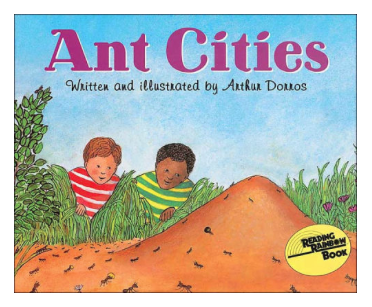
Ant Cities, by Arthur Dorros

This book is full of ant facts. It would be a good introduction for children who show interest in ant communities.

Materials

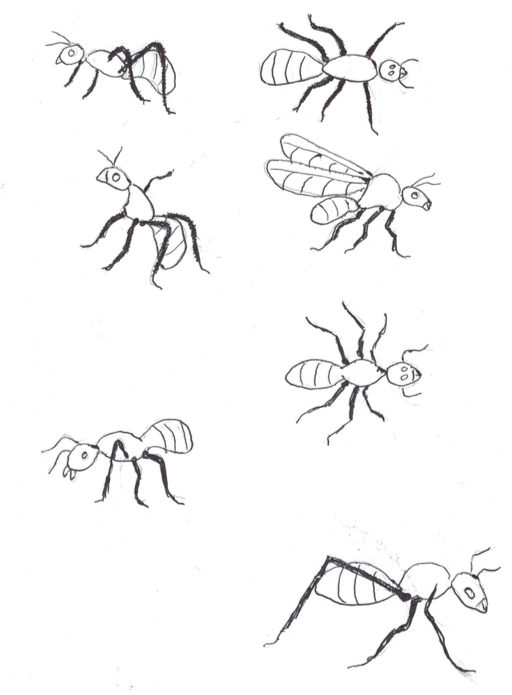
  • Ant picture
  • Dice

Vocabulary

  • Harvester ants (the little black ants that collect seeds for food)
  • Larvae (little worm looking babies that will turn into ants as they grow)
  • Tunnels (underground passageways)
  • Colonies (the home where ants live, underground)

Before Reading the Story

Show the children the cover of the book. Ask the children if they know what the boys are looking at? Ask the children if they have ever seen any ants and where? What were the ants doing when you saw them? Tell the children that the story today is about ants and how they live. Give the children a chance to share any information they might have about ants.

Science/Scientific Knowledge; expands knowledge of and abilities to observe, describe, and discuss the natural world, materials, living things, and natural processes.  

Reading the Story

This book has detailed pictures, it should be read in smaller groups where you can really point out the ants and what is happening.  

Literacy/Book Knowledge & Appreciation; shows growing interest and involvement in listening to and discussing a variety of fiction and non-fiction and poetry.

After Reading the Story

Ask the children if they have any questions about ants? If it is something that was in the book, go back and review that page. If it was not in the book, tell the child/ren that you will help them find the answer, and do. Remind the children that ants can bite and sting. Be careful that you do not step on their colony.

Physical Health & Development/Health Status & Practices; builds awareness and ability to follow basic health and safety rules such as fire safety, traffic, and pedestrian safety, and responding appropriately to potentially harmful objects, substances, and activities.

Discovery

Make an ant farm and bring in ants to observe. There are directions in the back of the book. Make sure to only make it temporary and put the ants back when you are done.

Science/Scientific Methods & Skills; begins to participate in simple investigations to test observations, discuss and draw conclusions, and form generalizations.

Set out three small plates in a place where you have seen ants. On one put sugar, on the second put a piece of fruit, on the third put bread. Occasionally check to see if the ants have found the plates. When they have, invite the children to observe the ants. Which food do they seem to like best? Can you see their path, where are they taking the food?

Science/Scientific Methods & Skills; begins to participate in simple investigations to test observations, discuss and draw conclusions, and form generalizations.

Music and Movement

Have the children line up on their hands and knees and crawl like ants in a line. They can crawl into their hole (under the table), over a stick (a chair), around a rock (another chair).

Creative Arts/Dramatic Play; shows growing creativity and imagination in using materials and in assuming different roles in dramatic play situations.

Sing the Ants Go Marching One by One https://www.youtube.com/watch?v=Pjw2A3QU8Qg

Teach the children La hormiguita, a traditional Mexican fingerplay

La hormigita                                           The Little Ant
Andaba la hormiguita            A little ant was walking               ( Fingers climb up arm)
Juntando su comidita             Gathering her food                       (Cup hands together)
Le coge un aguacerito            When along came a rainstorm        (Use fingers to show rain)
Que corre para su casita       So she ran towards home             ( Run fingers down arm)
Y se metio’ en su covachita     And dove straight into her anthill                                                             (Place fingers under your  lap)
English translation by r. trevino

Language Development/Listening & Understanding; demonstrates increasing ability to attend to and understand conversations, stories, songs, and poems.

Blocks

Cut out ants from ant page and put in the center. Ask the children if they can make tunnels for the ants to go inside of.

Mathematics/Geometry & Spatial Sense; begins to determine whether or not two shapes are the same size and shape.  AND Approaches to Learning/Engagement & Persistence; demonstrates increasing ability to set goals and develop follow through plans.

Art

Let the children help make ant antenna’s by twisting together two pipe cleaners. These can then be stapled to a sentence strip and used in dramatic play.

Physical Health & Development/Fine Motor Skills; develops growing strength, dexterity, and control needed to use tools such as scissors, paper punch, stapler, and hammer.

Let the children cut out food pictures and glue them to a paper plate. When they are dry, hang several on the wall with a sign that says No Ants Allowed!

Physical Health & Development/Fine Motor Skills; develops growing strength, dexterity, and control needed to use tools such as scissors, paper punch, stapler, and hammer.

Sand and Water

Put out damp sand and let the children experiment making tunnels.  

Approaches to Learning/Engagement & Persistence; grows in abilities to persist in and complete a variety of tasks, activities, projects, and experiences.

Library and Writing

Review with the children that ants live in groups called colonies. In the colony everybody has a certain job. Explain to them that in your child care center everybody has a job also. On a piece of paper write the names of the people in your center whom the children know. Ask the children to explain what this person’s job is and write their definitions beside. When you have made a list, you can have the children make thank you cards for each person and deliver them.

Ms. Ada-she cooks our food

Ms. Edna-she drives the bus

Ms. Ivette-she sits with me until my Mommy comes if I am sick

Ms. Annette-she helps me get off the bus

Ms Janey-she types letters for my parents

Social & Emotional Development/Knowledge of Families & Communities; develops a growing awareness of jobs and what is required to perform them.  AND Literacy/Early Writing; develops an understanding that writing is a way of communicating for a variety of purposes.

Dramatic Play

Make ant hats by attaching pipe cleaners to a sentence strip. Encourage the children to play ant colony and everybody work together to prepare a meal.

Creative Arts/Dramatic Play; shows growing creativity and imagination in using materials and in assuming different roles in dramatic play situations.

 Math and Manipulatives

Copy the ant picture page and cut out the ants. Make sure you make, black, brown, and red as these are the colors of real ants. Also make several other colors. On index cards write the color names using magic markers that correspond. Ask the children to sort the ants and put them on the correct color name. Ask them which colors they think real ants are. What other color ants are there? Have them choose their favorite color ant and copy the color name onto an index card and then cut around an ant and color it.   As a group look at the cards and decide which color is the most popular.

 Mathematics/Geometry & Spatial Sense; shows growth in matching, sorting, putting in series, and regrouping objects according to one or two attributes such as color, shape, or size.  AND Mathematics/Number & Operations; begins to use one-to-one correspondence in counting objects and matching groups of objects.

Outdoor Play

Ask the children why they think ants like to join people on picnics? Bring out a picnic basket, blanket, dishes, and let them use plastic food or sand to make food for a picnic. Children can pretend to be ants and crawl up and sneak off the food crumbs.

 Social & Emotional Development/Cooperation; develops increasing abilities to give and take in interactions, to take turns in games or using materials, and to interact without being overly submissive or directive.  AND Creative Arts/Dramatic Play; participates in a variety of dramatic play activities that become more extended and complex.

Transitions

Tell the children that you are going to pretend that the dots on the dice are ants.  Let the children take turns rolling the dice and counting the number of ants that they see.

Mathematics/Numbers & Operation;demonstrates increasing interest and awareness of numbers and counting as a means for solving problems and determining quantity.

Dear Parent-today we read a book about ants.  Though ants are interesting to watch, please remind your child that ants bite and to keep a distance between themselves and an ant colony.

Resources
Screen Shot 2018-09-10 at 9.09.48 PM

Archibald’s Opposites, by Phil Vischer

This little story helps teach the concepts of opposites in a fun and silly way.

Materials

  • Opposite cards
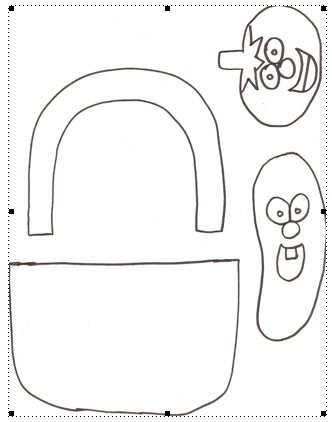
  • Templates for basket, cucumber, and tomato
  • Roll of aluminum foil
  • Black and white paper

Vocabulary

  • Absurd (so crazy it doesn’t even make sense)
  • Opposites (two things that are totally different)

Before Reading the Story

Ask the children if they have ever heard the word opposites? Ask them to explain to you what it means. Give them the definition of opposites and ask if they can think of any. If they can not or they have finished doing so, introduce the book and say that this story will help us understand opposites better.

Language Development/Listening & Understanding; understands an increasingly complex and varied vocabulary.

Reading the Story

As you read, pause on each page to see if the children can name the opposite.  After you have read the page say, “____ and ____ are opposites.  Have the children repeat.

Approaches to Learning/Reasoning & Problem Solving; develops increasing abilities to classify, compare, and contrast objects, events, and experiences.

After Reading the Story

Make a set of the opposite cards. Give each child a card from half the set. Hold up a card from the second set and see if the children can figure out who has the opposite.

Approaches to Learning/Reasoning & Problem Solving; develops increasing abilities to classify, compare, and contrast objects, events, and experiences.  AND Mathematics/Geometry & Spacial Sense; builds an increasing understanding of directionality, order, and positions of objects, and words such as up, down, over, under, top, bottom, inside, outside, in front, behind.

Discovery

Show the children pictures of two objects/items. Ask the children to help you make a list of how they are alike/how they are different. (try bringing in a picture of a dog and a horse, a chair and a crate, bird and an insect, a worm and a snake)

Approaches to Learning/Reasoning & Problem Solving; develops increasing abilities to classify, compare, and contrast objects, events, and experiences.  AND Science/Scientific Skills & Methods; develops growing abilities to collect, describe, and record information through a variety of means, including discussion, drawings, maps, and charts.

Music and Movement

Teach the children Everything I Always Say, to chorus of Pop Goes the Weasel. https://www.youtube.com/watch?v=oWGp9rsKuEU

Everything I always say,
You always say the opposite.
When I say open,
You say (closed).

(Continue with opposites that you and the children have been working on.)

Language Development/Listening & Understanding; demonstrates increasing ability to attend to and understand conversations, stories, songs, and poems.  AND Mathematics/Geometry & Spacial Sense; builds an increasing understanding of directionality, order, and positions of objects, and words such as up, down, over, under, top, bottom, inside, outside, in front, behind.

Sing the King of York and stand up and squat down as the song goes along. https://www.youtube.com/watch?v=TWWNFB8grkw

Language Development/Listening & Understanding; demonstrates increasing ability to attend to and understand conversations, stories, songs, and poems.

Blocks

Challenge the children to build a pattern with the blocks using large and small blocks.

Mathematics/Patterns & Measurement; enhances abilities to recognize, duplicate, and extend simple patterns using a variety of materials.

Art

Cut out a 12 inch sheet of aluminum foil. Put out a variety of shapes cut from only black and white paper. Encourage the children to collage onto the foil.

Creative Arts/Art; gains ability in using different art media and materials in a variety of ways for creative expression and representation.

Library and Writing

Make tracing templates out of a manila file folder for the basket, cucumber, and tomato. Have the children trace them and cut them out. Assemble the basket. Ask the children to glue one of the vegetables inside the basket and one outside the basket. Have them tell you which is in and which is out. Write it on the basket. (The tomato is in the basket, the cucumber is outside the basket).

Physical Health & development/Fine Motor Skills; develops growing strength, dexterity, and control needed to use tools such as scissors, paper punch, stapler, and hammer.  AND Mathematics/Geometry & Spatial Sense; builds an increasing understanding of directionality, order, and positions of objects, and words such as up, down, over, under, top, bottom, inside, outside, in front, behind.

Sand and water

Put sand in the table today. Make 56 1 inch cards from a manila file. Write a set of capital alphabet letters and a set of lower case alphabet letters. Mix them up into the sand and see if the children can match the upper and lower case letters as they dig through the sand.

Literacy/Alphabet Knowledge; identifies at least 10 letters of the alphabet, especially those in their own name.

Dramatic Play

Encourage the children to act out or make opposites while playing in the center today.  (I can sit and I can stand, I put all the food in the fridge, I took all the food out of the fridge).

Approaches to Learning/Reasoning & Problem Solving; develops increasing ability to find more than one solution to a question, task, or problem.

Math and Manipulatives

Use counters with the children. Put 3 bears on the table. Ask the child if he can show you more. Ask her if she can show you less.  Take a handful and have the child take a handful, can the child tell you who has more and less?  Sort the bears by color, does one color have more or less than the other?

Mathematics/Number & Operation; begins to use language to compare numbers of objects with terms such as more, less, greater than, fewer, equal to.

Outdoor Play

Draw several large shapes on the sidewalk. Give the children bean bags and call out a shape. The child sees if he can throw his bean bag to land inside the shape.

Physical Health & Development/Gross Motor Skills; demonstrates increasing abilities to coordinate movements in throwing, catching, kicking, bouncing balls, and using the slide and swing.

Transitions

The teacher says an opposite word and the child tries to name the correct response.  In-Out, Under-Over, etc..

Language Development/Listening & Understanding; understands an increasingly complex and varied vocabulary.

Dear Parent- today we talked about opposites.  This can be a confusing concept for young children but you can help by making a game out of it.  Give your child a simple word/concept and ask them if they can think of the opposite.  Some that we use in school are day-night, up-down, in front-behind, tall-short, young-old, near-far, and happy-sad.

Resources

Screen Shot 2018-09-09 at 3.37.52 PM