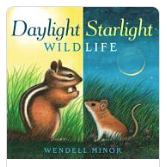
Daylight Starlight Wildlife, by Wendell Minor

This book explores animals that are diurnal/awake during the day and those that are nocturnal/awake at night.  Mr. Minor has painted beautiful lifelike pictures to bring this story alive.

Materials

  • Star cutouts
  • Tissue paper in 1-inch squares
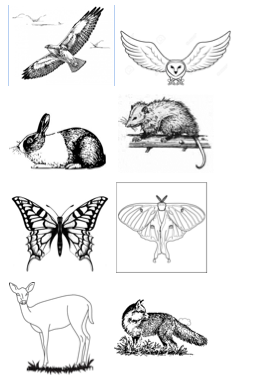
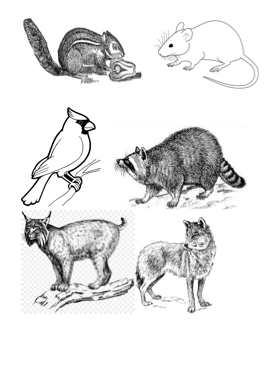
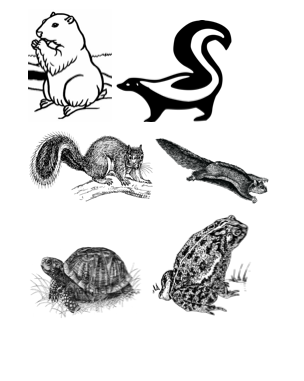
  • Animal cards to sort
  • 1-2 small flashlights
  • 1-4 small blankets or towels from dramatic center
  • Packet of star stickers

Vocabulary

  • Soars- flies high in the sky
  • Kits-baby rabbits are called kits
  • Forage-to look for food
  • Luminous-glowing or shimmering
  • Fearless- to be unafraid
  • Sprightly-active, always moving
  • Scope-checking out
  • Diurnal-awake during the day
  • Nocturnal-awake during the night

Before Reading the Story

Tell the children that you are going to read a book about nocturnal animals (animals who come out at night) and diurnal animals (animals who come out during the day). Have the children repeat the words. Ask them if they can think of an animal that might be nocturnal, remind them that nocturnal means to come out at night. Then ask them if they can think of an animal that is diurnal. Allow them a chance to brainstorm and write their responses on a piece of paper.   Look at the cover; Ask the children if they can tell which side represents daylight and which represent the night or starlight? How can they tell? (It’s yellow like the sun, it’s got stars and the moon on it). Ask them if they can name the animal that is diurnal, nocturnal. Introduce the book.

Science/Scientific Knowledge; expands knowledge of and abilities to observe, describe, and discuss the natural world, living things, and natural processes.

Reading the Story

Stop on the first page and see how many of the animals the children can name. Stop on the page with the red fox and ask the children if they can see what he is pouncing on (a mouse, dinner). Take your time turning the pages, allowing the children the opportunity to share any experiences they might have about the animal/s on the page.

Science/Scientific Knowledge; expands knowledge of and abilities to observe, describe, and discuss the natural world, living things, and natural processes.  AND Language Development/Speaking & Communicating; develops increasing abilities to understand and use language to communicate information, experiences, ideas, feelings, opinions, needs, questions; and for other varied purposes.

After Reading the Story

Post your list from before reading the story onto the wall and re-read it aloud to the children. Ask them if they can recall any other animals that might have been mentioned in the story. When they name an animal, ask if it should be written on the nocturnal side or the diurnal side?

Mathematics/Patterns & Measurement; shows growth in matching, sorting, putting in series, and regroup objects according to one or two attributes such as color, shape, or size.

Discovery

Cut around the many animal cards and put into a bowl. Put out one piece of dark paper with the word ‘nocturnal’ written across the top and one piece of light paper with the word ‘diurnal” written across the top. The children can take the animal cards and sort them onto the correct sheet of paper. Once they are finished, ask them if they can name the animals.

Mathematics/Patterns & Measurement; shows growth in matching, sorting, putting in series, and regroup objects according to one or two attributes such as color, shape, or size.

Music and Movement

Remind the children that nocturnal/night and diurnal/day are opposites. Sing Everything I Always Say to Pop Goes the Weasel verse. https://www.youtube.com/watch?v=FtfpkI-2CKg

Everything I always say, you always say the opposite.
When I say up, you say down.
Everything I always say, you always say the opposite.
When I say diurnal, you say nocturnal.

(As you sing and name the first half of the opposite, stop and see if the children can name the 2nd half. Continue naming opposites until the children loose interest).

Do the following as a chant.

Left foot, right foot I am cool                                Tap left foot and right foot accordingly.
Left foot, right foot I learned at school.                                    
Do left hand, right hand, left ear, eye, nostril, etc                                                                                                                                                                                                                                                                                   

Social & Emotional Development/Self-Concept; begins to develop and express awareness of self in terms of specific abilities, characteristics, and preferences.

Blocks

Encourage the children to use the blocks to make patterns.   Show them how to stand a rectangle block, square block, rectangle block, square block, etc.

Mathematics/Patterns & Measurement;enhances abilities to recognize, duplicate, and extend simple patterns using a variety of materials.

Art

Make stained glass windows by laying a sheet of waxed paper on the table. Put out many 1-inch square of tissue paper and a cup/bowl of glue and a paintbrush for each child. Show them how to paint the glue onto the tissue paper and then lay a piece of tissue paper on top of the waxed paper. Continue painting on the glue and adding tissue paper. As the pieces of tissue paper overlap, new colors will appear. Encourage the children to paint the tissue paper on flat instead of balled. Allow it to dry flat. When it is dry, cut a star shape out of black construction paper. Staple the child’s tissue art behind the star cutout. These look lovely in a sunny window.

Creative Arts/Art; develops growing abilities to plan, work independently, and demonstrate care and persistence in a variety of art project.

Sand and Water

Add baby dolls, a washcloth and several dish towels for bathing the babies.  While the children are bathing the babies, ask them if they take a bath or shower at home?  Do they take it in the morning/day or at night?   

Social & Emotional Development/Knowledge of Families & Communities; develops growing awareness of jobs and what is required to perform them.

Library and Writing

Put the book into the center and add a flashlight for fun reading.

Literacy/Book Knowledge & Appreciation; shows growing interest in reading related activities, such as asking to have a favorite book read; choosing to look at books; drawing pictures based on stories; asking to take a book home; going to the library; and engaging in pretend reading with other children.

Dramatic Play

Darken your dramatic corner as much as possible and tell the children that you have added some blankets to the center so they can pretend that it is nighttime. Ask them what else they might need and help them to supply what you can and to problem solve those items you cannot supply. (My group said they needed more books and toothbrushes. We got more books but problem-solved using their fingers as pretend toothbrushes). Encourage them to act out their nighttime rituals.

Social & Emotional Development/Knowledge of Families & Communities; progresses in understanding similarities and respecting differences among people such as genders, race, special needs, culture, language, and family structure.

Math and Manipulatives

Bring a dice and the star stickers to the table. Give each child a half a piece of dark construction paper. Let the children take turns rolling the dice and adding that many stars on to their paper. When children have had 4 turns, help them to count the number of stars on their paper. With a white pencil or crayon write their name and the number of stars they counted. (Kerry has 17 stars).  If your children are wild dice rollers, bring a box top or a cubby to roll the dice into.

Mathematics/Numbers & Operations; develops increasing ability to count to 10 and beyond.  AND Mathematics/Numbers & Operations;  begins to use one-to-one correspondence in counting objects and matching groups of objects.

Outdoor Play

Take the book out onto the playground and re-read the story. Open the book and go through the pages having the children act out the different animal walks or flights.

Physical Health & Development/Gross Motor Skills; shows increasing levels of proficiency, control, and balance in walking, climbing, running, jumping, hopping, skipping, marching, and galloping.

Transitions

Play category with the children. Say the word nocturnal/during the night or diurnal/during the day and the child must name something they do during that period.

Approaches to learning/Reasoning & Problem-Solving; develops increasing ability to find more than one solution to a question, task, or problem.  AND Language Development/Speaking & Communicating; uses an increasingly complex and varied spoken vocabulary.

Resources

Screen Shot 2018-08-14 at 5.55.43 PM
Screen Shot 2018-08-14 at 5.54.34 PM
Screen Shot 2018-08-14 at 5.55.06 PM
Screen Shot 2018-08-14 at 5.54.50 PM

Crow Not Crow, by J. Yolen & A. Stemple

Materials

  • Binoculars
  • Crow crowns/mask
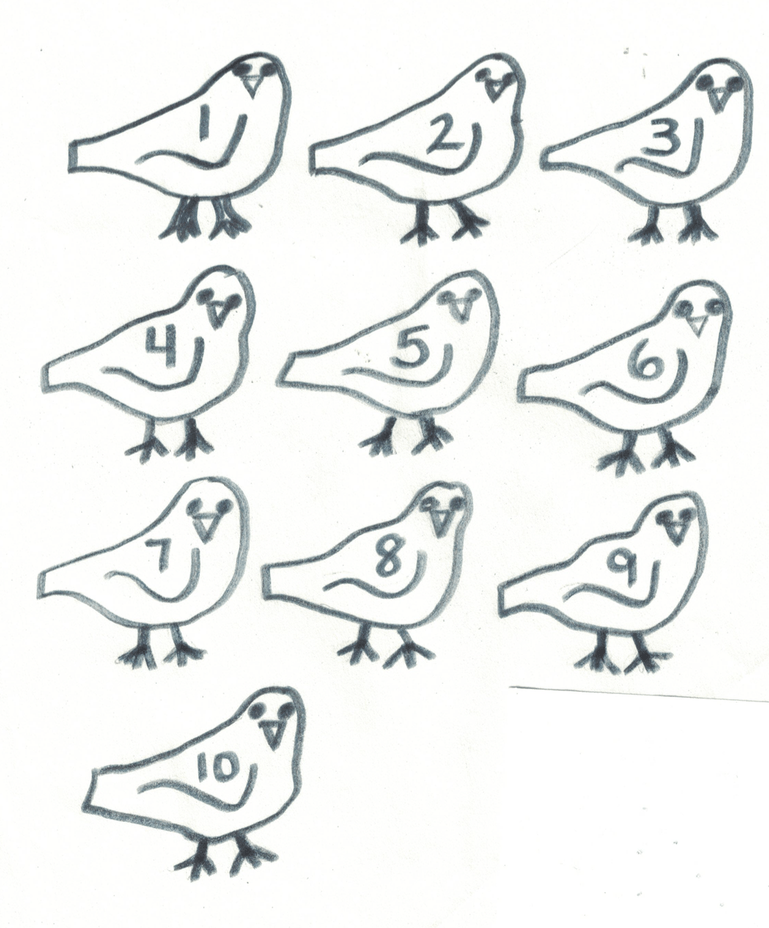
  • Crow shape, add numbers 1-10 onto bellies
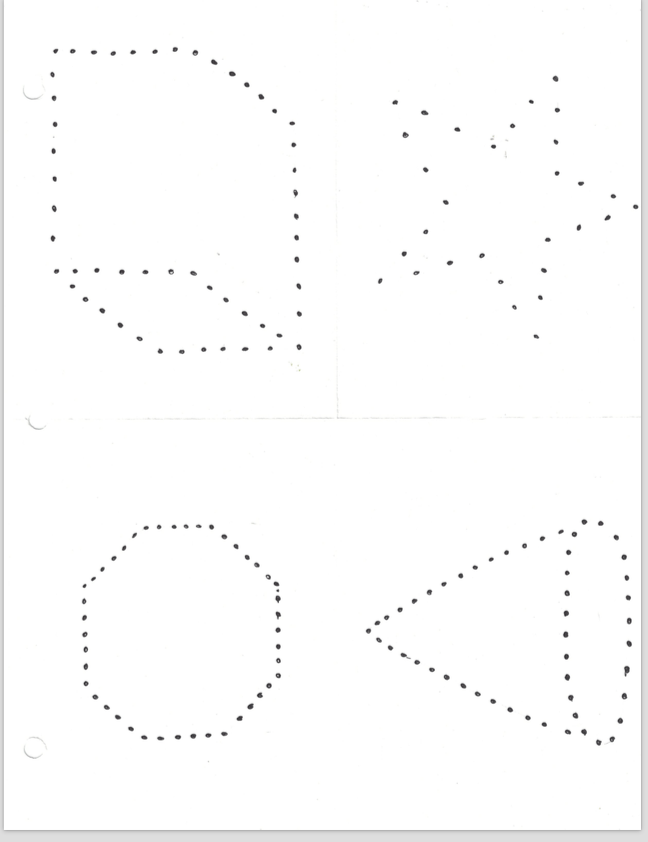
  • toothpicks and shape page per child

Vocabulary

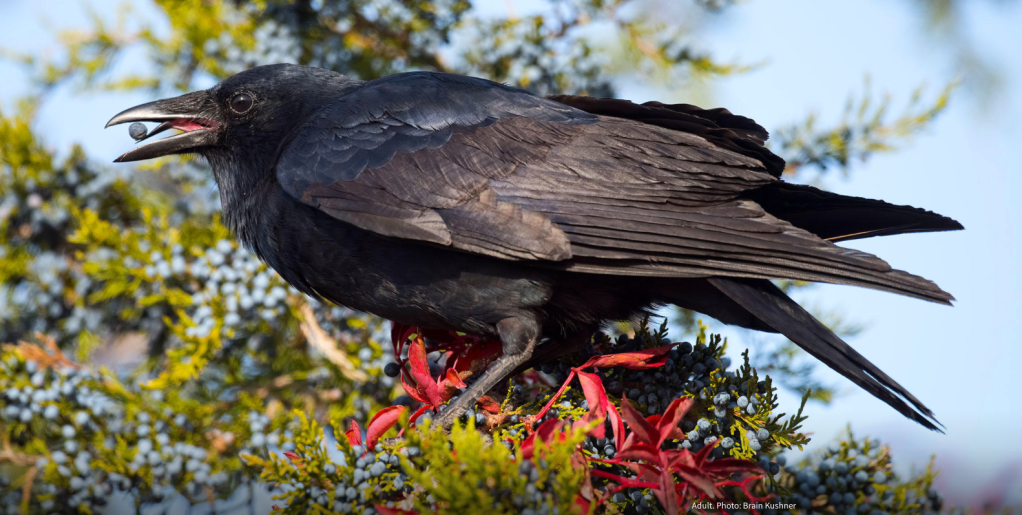
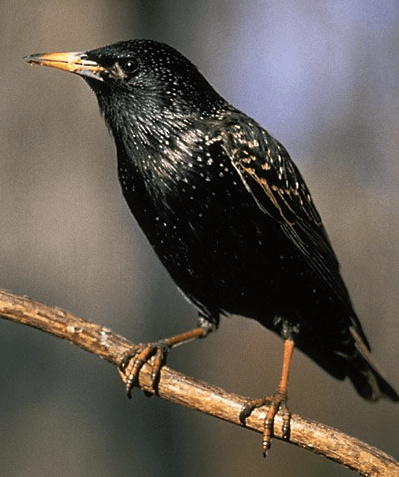
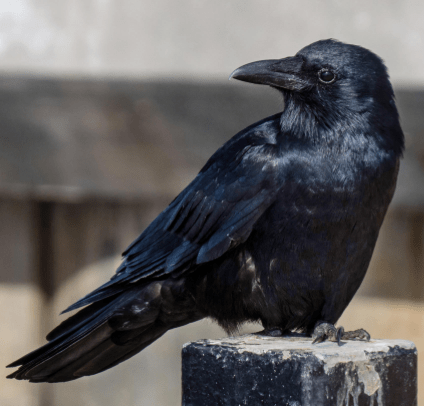
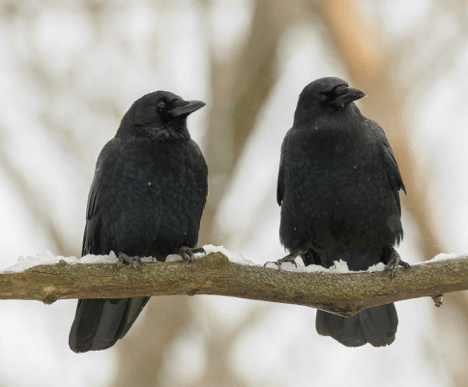
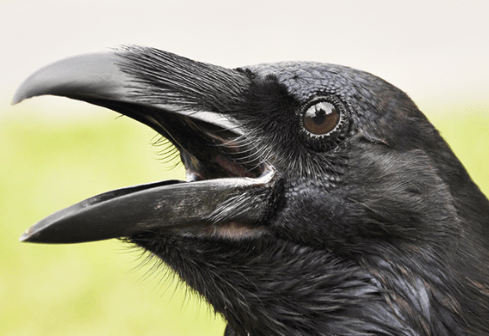
  • Crow (an all black bird )
  • Draped (covered with)
  • Omnivore (one who eats both plants and meat)

Before Reading the Story

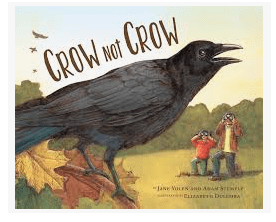
Show the children the front of the book. Tell the children that this bird is called a crow. Explain to the children that some people do not like crows because of the way they look and they have loud voices. Talk about how the crow can not help how he looks or sounds. Ask the children how they would feel if someone talked badly about them because of the way they looked?

Explain to children that farmers don’t like crows because they love to eat corn, it is one of their favorite foods! This is why farmers put scarecrows in fields to scare the birds away. But crows actually help farmers and our environment too. Crows are omnivores fruits and seeds but also eat worms and bugs that destroy farmer’s crops. They also eat animals that have died and this helps clean up our roads and land.

Language Development/Speaking & Communicating; develops increasing abilities to understand and use language to communicate information, experiences, ideas, feelings, opinions, needs, questions; and for other varied purposes.

Reading the Story

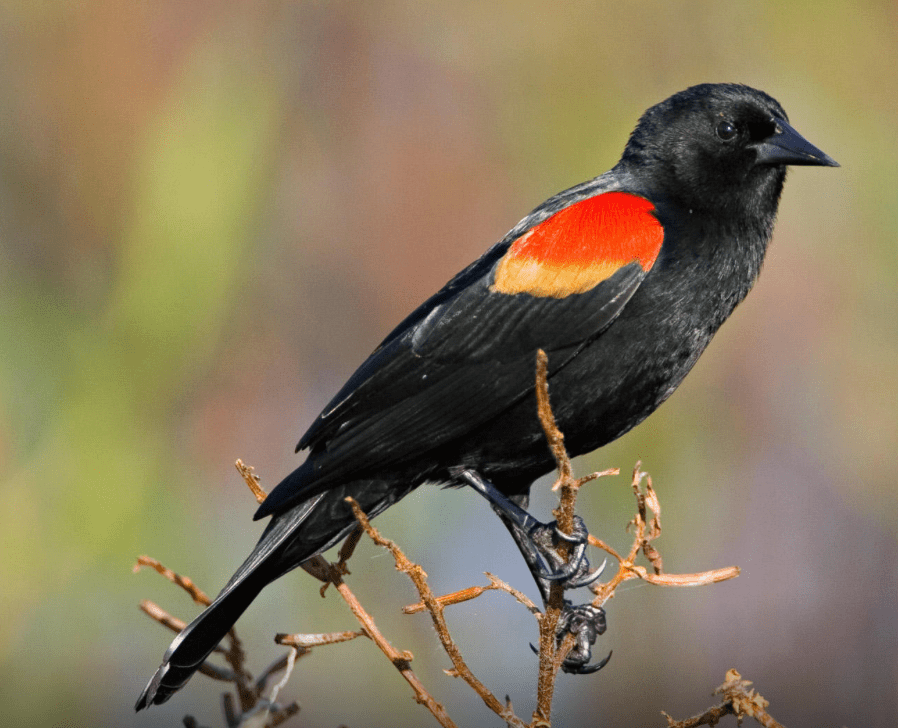
Point out the wings, beak, and feet.  On the page with the red winged blackbird, point out the red medallion. Asdk the children ,”Crow not crow’?

Language Development/Listening & Understanding; demonstrates increasing ability to attend to and understand conversations, stories, songs, and poems.

After Reading the Story

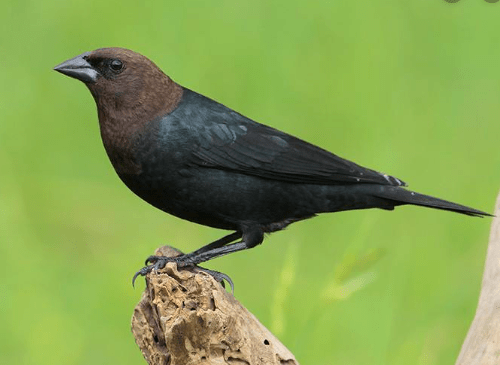
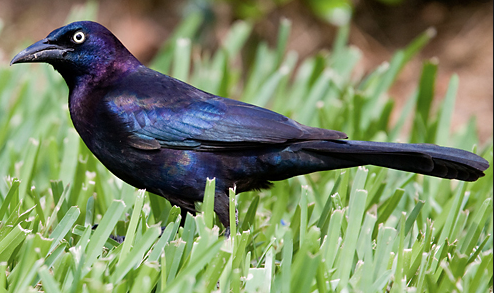
Play crow-not crow using the bird cards. If it is not a crow, ask the children to tell you why not.

Science/Scientific Knowledge; expands knowledge of and abilities to observe, describe, and discuss the natural world, materials, living things, and natural processes.

Discovery

Put out binoculars for the children to use to look for birds. Add a bird identification book or poster.

Science/Scientific Skills & Methods; begins to use senses and a variety of tools and simple measuring devices to gather information, investigate materials, and observe processes and relationships.

Learn one or two bird calls including the crow (caw caw). https://www.youtube.com/watch?v=RHnzqKfxSQw

Science/Scientific Knowledge; expands knowledge of and abilities to observe, describe, and discuss the natural world, materials, living things, and natural processes.

Music and Movement

Pretend to fly like birds. Put on some music and fly about the room. Can the children swoop down low? Fly high into the clouds? Flap their wings quickly, slowly? Can they fly in circles? Can they touch the ground while the flap their wings? Etc.

Physical Health & Development/ Health Status & Practices; progresses in physical growth, strength, stamina, and flexibility.

Teach the children the fingerplay 2 Little Blackbirds. https://www.youtube.com/watch?v=gjv5Jwgsn7I

Language Development/Listening & Understanding; demonstrates increasing ability to attend to and understand conversations, stories, songs, and poems.

Sing, 5 Shiney Crows https://youtu.be/qoSFIswtDss using your fingers to denote the number of crows.

Mathematics/Number & Operations; begins to associate number concepts, vocabulary, quantities, and written numerals in meaningful ways.

Blocks

Make 10 crow shapes and number them 1-10 and tape to blocks.  Challenge the children to put the crows in number order.

Mathematics/Number & Operations; develops increasing ability to count in sequence to 10 and beyond.

Or have the child choose two crow blocks and add that many blocks together. (Simple addition)

Mathematics/ Number & Operations; develops increased abilities to combine, separate, and name “how many” concrete objects.

Art

Have the children paint 2 paper plates black.  Cut one in half and use staples or brads to attach to the sides of the whole plate to make a crow body and wings.  Let the children embellish with eyes, beaks, and feet when dry.

Creative Arts/Art; gains ability in using different art media and materials in a variety of ways for creative expression and representation.

Sand and Water

If you have a shredder, shred newspaper to fill the table. Add pieces of pipe cleaner to represent worms and tweezers or pinchers. The children can pretend to be crows and pick up the worms for lunch.

Physical Health & Development/Fine Motor Skills; Develops growing strength, dexterity, and control needed to use tools such as scissors, paper punch, stapler, and hammer.

Library and Writing

Bring in bird identification book.

Science/Scientific Skills & Methods; begins to use senses and a variety of tools and simple measuring devices to gather information, investigate materials, and observe processes and relationships.

Dramatic Play

Explain to the children that crows live in extended and close family units.  Put out the crow crowns and encourage the children to do family play.  What roles does each child take? 

Social & Emotional Development/Cooperation; develops increasing abilities to give and take in interactions; to take turns in games and using materials; and to interact without being overly submissive or directive.

Math and Manipulatives

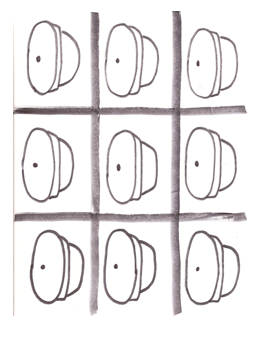
Make copies of the shape page. Give each child a toothpick and have them sit on the carpet with their shape page in front of them. Show the children how to tke the toothpick and push it down onto the dots of the shapes. It will go through the paper and into the carpet. Have the children make one or more shapes by pushing down and up wit the toothpick.

Approaches to Learning/Engagement & Persistence; grows in a bilities to persist in and complete a variety of tasks, activities, projects, and experiences.

Outdoor Play

Look for a mostly black bird.  A singing bird.  2 or more birds together.  A bird in a tree. A bird on the ground. 

Approaches to Learning/Initiative & Curiosity; chooses to participate in an increasing variety of tasks and activities.

Play, You’re Only Safe If… which is really just a variation of tag. The teacher calls out “You’re only safe if…” and then call out a specific tree or other landscape feature on your playground. This helps your children learn to recognize various trees or shrubs by name (the loblolly pine tree, the hickory nut tree, the bridal wreath bush). The person who is IT then chases the children and tries to tag them before they reach the safety item. If they are tagged, then they can help tag other children. When most of the children are tagged, start again changing the safety item.

Physical Health & Development/Health Status & Practices; participates actively in games outdoors and other forms of exercise that enhance physical fitness.

Transitions

Make and laminate 10 crows with a number on each one (1-10). Have one child pretend to be a scarecrow. Other children will get a numbered crow. The Scarecrow stands in the front of the room and yells ‘caw, caw, caw.’ When the Crows hear this, they must scatter and try to line up in numerical order. Scarecrow can also call out a number and that Crow comes to the front the room.

Mathematics/Number & Operations; begins to associate number concepts, vocabulary, quantities, and written numerals in meaningful ways.

Resources

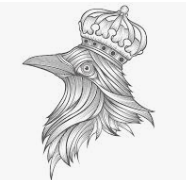
Make crown from sentence strip and attach crow in crown to front.
use with toothpick to punch holes and make shapes

Caps for Sale, by Esphyer Slobodkina

             A peddler goes out to sell his caps and falls asleep under a tree. When he wakes up, his caps are gone!  Who could have taken them?  Read this classic children’s story to discover the mystery of what became of the caps.

Materials

  •             Caps page

Vocabulary

  •             Peddler (a salesman who sells an item door to door)
  •             Cap (a kind of hat)

Before Reading the Story

            Ask the children if any of them have a hat at home? Can they tell you about their hat?  Does it serve a purpose? (I have to wear my ball hat when I watch my big brother play little league, I wear my hat to keep the sun out of my eyes when I go fishing.  I have a hat I wear when I get dressed up on Sunday).  Or bring in several kinds of hats from the dramatic center or home. (The fireman wears that hat to keep the fire off his head, the construction hat is hard so you won’t hurt your head if something falls on it). 

Social & Emotional Development/Knowledge of Families and Communities; develops growing awareness of jobs and what is required of them.

Reading the Story

            If you have a cap type hat, bring it in and wear it while telling the story.  Introduce the book and note who is behind the tree. Ask the children to predict what they think the story might be about.   When you read the page where he is refreshed and rested, ask the children if they notice anything (all but one cap is gone).  What do you think is going to happen?

Approaches to Learning/Reasoning & Problem Solving; grows in recognizing and solving problems through exploration including discussions with peers and adults. AND Literacy/Book Knowledge & Appreciation; demonstrates progress in abilities to retell and dictate stories from books and experiences; to act out stories in dramatic play; and to predict what will happen next in a story.

After Reading the Story

            Talk about the book with the children. Does anyone remember what a cap is?  Where do you wear a cap?  Did the peddler sell any of his caps?  Why did he want to sell his caps?  Have you ever been very hungry, how did it make you feel?  What happened when the peddler took a nap?  Why do you think he got so angry?  What did the monkeys do when he stomped his foot?  How did the peddler get all his hats back from the monkeys?  What did the peddler call out as he walked with the hats on his head? 

Literacy/Book Knowledge & Appreciation; demonstrates progress in abilities to retell and dictate stories from books and experiences; to act out stories in dramatic play; and to predict what will happen next in a story.

            Ask the children if they would like to act out the story.  If so, choose a peddler and have all the other children pretend to be monkeys.  

Creative Arts/Dramatic Play; shows growing creativity and imagination in using materials and in assuming different roles in dramatic play situations.

Discovery

            Make a color match game.  Use the caps pattern and make caps of various colors.  On an index card write the color names using a coordinating color marker or crayon.  The children can then sort the caps by color. Are your children proficient in sorting by color? Make hats of various sizes and colors for the children to sort and/or put in series of small to large.,

Mathematics/Patterns & Measurement; shows increasing abilities to match, sort, put in a series, and regrouping objects according to one or two attributes such as color, shape, or size.

Music and Movement

            Let the children take turns leading in this Monkey See, Monkey Do song. https://www.youtube.com/watch?v=I_o3EyR8tww (I like to sing this song slower than the video shows).

When you shake, shake, shake, shake your fist

The monkey shakes, shakes, shakes his fist

Monkeys see and monkeys do

Monkeys do the same as you!

(Jump up and down, twirl around, touch your toes, stomp your foot)

Creative Arts/Music; participates with increasing interest and enjoyment in a variety of music activities, including listening, singing, finger plays, games, and performances.

            In the story, the peddler balances a huge amount of caps upon his head.  Get out the beanbags and let the children practice balancing beanbags on different parts of their bodies while moving to music.  Who can balance more than one? 

Physical Health and Development/Gross Motor; shows increasing levels of proficiency, control, and balance in walking, marching, hopping, or jumping. 

Sing I’ve Got a Penny

I’ve got a penny; I’ve got a penny

I’ve got a penny shiny and new.

I’m going to buy all kinds of _______

That’s what I’m going to do!

(Children can fill in blank with what they will buy.  You can let the children pick coins out of a container and then the child must name the coin and the class can sing about the coin value in place of a penny.  I’ve got a nickel; I’ve got a dime, quarter).

Mathematics/Number & Operations; begins to associate number concepts, vocabulary, quantities, and written numerals in meaningful ways.

Blocks

            In the story the Peddler stacked his hats.  Encourage the children to do stacking today.  How many blocks tall can they stack before the pile falls over? Remind the children about your stacking rules before they begin. (Build no higher than your elbow and you can only knock down your stack).

Mathematics/Number & Operations; demonstrates increasing interest and awareness of numbers and counting as a means for solving problems and determining quantity. AND Physical Health & Development/Fine Motor Skills; grows in hand-eye coordination in building with blocks, putting together puzzles, reproducing shapes and patterns, stringing beads, and using scissors.

Art   

            Put out paper plates and collage materials.  The children can design their own hats to wear.  Attach long pieces of yarns in two places opposite.  These can be used to tie the hat under the child’s chin. 

Creative Arts/Art; Gains ability in using different art media and materials in a variety of ways for creative expression and representation.

Library and Writing

            Caps starts with the /c/ sound.  What other words can the children think of that starts with this sound?  Make a list. 

Literacy/Phonological Awareness; shows growing awareness of beginning and ending sounds of words.

Non-fiction book to go along with; Monkeys! A Kids Book About Monkeys – Facts, Figures and High Quality Pictures of Animals in Nature by, Maya Lee Shye

Sand and Water

            Fill the table with water today and encourage the children to wash any hats that you may have in your classroom.  As they wash can they identify the person who might wear the hat or the purpose of wearing the hat.

Social & Emotional Development/Knowledge of families and communities; develops growing awareness of jobs and what is required to perform them.  Language Development/Speaking & Communicating; develops increasing abilities to understand and use language to communicate information, experiences, ideas, feelings, opinions, needs, questions; and for further varied purposes.

Dramatic Play

            Make sure to include play money and a cash register in the center today.  As the children play, talk to them about the coins and their values.  Bring in a set of real coins to match the play coins to.  Add any extra hats and caps that you might have. Make paper tags that show the cost of the hat or other items in the center (hat 10 cents, shoes $5). 

Mathematics/Number & Operations; begins to associate number concepts, vocabulary, quantities, and written numerals in meaningful ways.

Math and Manipulatives

            Use the caps page to color and cut out primary color caps.  Make a pattern with the caps and then see if the children can follow with more caps or a manipulative in the same colors (Unifix cubes).  Practice making patterns today. 

Mathematics/Patterns & Measurement; enhances abilities to recognize, duplicate, and extend simple patterns using a variety of materials.

 Outdoor Play

            Play a mimic type game.  You can play similar to Simon Says but instead of Simon telling the children what to do, the Peddler tells them.  “The Peddler says turn around, the Peddler says run to the tree and back”. 

Language Development/Listening & Understanding; shows progress in understanding and following simple and multiple-step directions.

Transitions

            Make enough copies of the hats for each child.  Color them according to colors that you might be working on with your group of children.  I use between 4-6 colors.  Tape all of these to a flannel board or the wall where everyone can see them.  Say the following poem and either point to a child/monkey or name them.

            Monkey, monkey in the tree.                     Roger monkey, Roger monkey in the tree

            Give  the purple cap down to me.               Give the purple cap to me.

This is fun to do when you are teaching colors like silver, aqua, and violet.

Mathematics/Geometry & Spatial Sense; shows growth in matching, sorting, putting in series, and regrouping objects according to one or two attributes such as color, shape, or size.

Dear Parent-

            Being able to copy and make patterns is an important skill to learn for later math acquisitions.  Find some objects in your house that you have multiples of (silverware, socks, colored paperclips, etc.) and make a pattern for your child to copy.   When they are able to copy your patterns, challenge them to make a pattern for you to copy.

caps pattern