Llama Llama Red Pajama, by Anna Dewdney

Baby Llama is waiting for Mama but Mama does not come right away. Baby Llama has a melt down until Mama comes and makes things right.

Materials

  • Several boxes/blankets to be used as beds for wither the children or the dolls in the dramatic center.
  • Many 2-inch squares of paper to be used to make a quilt design. I have used old wrapping paper as well as colored construction paper to make squares.
  • Several flashlights, 1 for each number of children allowed in center

Vocabulary

  • Fret (to worry or become upset)
  • Whimper (to whine or moan)
  • Moan (to groan or sigh)
  • Tizzy (to become panicked or really upset)

Introducing the Story

Hold up the cover of the book and ask the children to look at Llama’s face, how do you think he is feeling? I have gotten answers from sad to scared. Read the title of the book to the children. Ask why they think Llama is feeling this way (he does not like the dark, he does not want to go to bed, he wants to watch TV). Steer the conversation around bedtime rituals. Tell the children. “Let’s find out what is going on with Llama” and introduce the book.

Language Development/Speaking & Communicating; develops increasing abilities to understand and use language to communicate information, experiences, ideas, feelings, opinions, needs, questions; and for other varied purposes. Social & Emotional Development/Self-Control; show progress in expressing feelings, needs, and opinions in difficult situations and conflicts without harming themselves, others, or property.

Reading the Story

On the page where Llama and Mama are reading a story, ask the children if they think Llama likes this time of day (note Llama’s facial expression). Ask the children how many of their families read to them at night? When you get to the page where Llama starts to stomp and pout, ask the children what they think is happening (Llama is having a temper tantrum). Read the next 2 pages and stop after the sentence, “Mama Llama run, run, run”. Ask the children if they think this is a good way to get what they want, why/why not? Turn the page where it shows Mama coming into the room. Ask the children to look at Mama’s face, how do you think she is feeling? If they cannot place the emotion, tell them that Mama is afraid/scared.   Why? (She is scared that her baby is sick, she thinks baby fell off the bed and got hurt, there is a robber in the house).   On the page when Mama is in the room, (Baby Llama what a tizzy) again stop and look at the Llama’s faces. How do you think Mama and Llama are feeling?

Literacy/Book Knowledge & Appreciation; shows growing interest and involvement in listening to and discussing a variety of fiction and non-fiction, and poetry. AND Language Development/Speaking & Communicating; develops increasing abilities to understand and use language to communicate information, experiences, ideas, feelings, opinions, needs, questions; and for other varied purposes.

After Reading the Story

Ask the children if they ever feel sad or angry when it is time to go to bed?Tell them that getting good night’s sleep is important because that’s when our brains grow to help make us smarter. Explain to them that their parents need adult time to do things that they cannot do when they are at work (laundry, pay bills, relax, time to talk to their friends). Remind them that they have time to do this during the day at school but their parents have to wait until they get home.

Social & Emotional Development/Knowledge of Families & Communities; progresses in understanding similarities and respecting differences among people such as genders, race, special needs, culture, language, and family structures.

Music and Movement

Sing, If You’re Happy and You Know It. Sing and make movements for different emotions as you sing; happy, sad, frustrated, angry, excited, and loving.

Social & Emotional Development/Self-Control; show progress in expressing feelings, needs, and opinions

Do the fingerplay, 5 Little Monkeys Jumping on the Bed.

Mathematics/Number & Operation; begins to associate number concepts, vocabulary, quantities, and written numerals in a meaningful way.

If you have a tumble mat or large pillow, put it on the floor and have the children make a large circle around it. The pillow is going to be used for different kinds of large movements so make sure the children are seated far enough away not to be kicked. Let the children take turns trying to do a forward somersault roll. Older children may like to try a backward somersault roll however this is much more difficult. For children new to forward rolling, tell them to put their hands beside their feet, bend their knees, and look at their belly button so your head is tucked in tight. Challenge the children to do a log roll. Lay on the floor with your hands above your head and roll your body to the side making you roll from back to front to back again.

Physical Health & Development/Gross Motor Skills; shows increasing levels of proficiency, control , and balance in walking, climbing, running, jumping, hopping, skipping, marching, and galloping.

Discovery

Find a way to slightly darken your science center today and put out flashlights for the children to experiment with. Put out a variety of materials and ask the children to see which ones the light will shine through. Suggestions of things in your room that might provide the light to shine through; an article of doll clothing, a scarf, construction paper, paper plate, nap time blanket, easel paper, or a crystal. Include items that the light cannot pass through also.

Science/Scientific Skills & Methods; begins to use senses and a variety of tools and simple measuring devices to gather information, investigate materials, and observe processes and relationships.

 Blocks

Challenge the children to make beds, either for themselves or stuffed animals in your room. Is the bed long enough? How many blocks long does the bed need to be for the stuffed rabbit? How many blocks long does the bed need to be for the child?

Mathematics/Patterns & Measurement; shows progress in using standard and non-standard measures of length and area of objects.

Art

Use the many 2-inch squares of colored paper that you have and a sheet of paper to make quilts. Open up the book, Llama, Llama Red Pajama, and show the children the quilt design. Tell the children that they are going to make their own quilts today by gluing the 2-inch squares to the sheet of paper. As the children work, you can talk about the colors they are using and papers that may have design. For older children you can challenge them to make a pattern using the squares ABAB or ABBABBA, etc.

Mathematics/Patterns & Measurement; enhances abilities to recognize, duplicate, and extend simple patterns using a variety of materials.

Sand and Water

In the water table today, put out small pitchers and cups so the children can practice pouring. Remind them that in the story Llama thought he wanted a drink. If you are using disposable cups, mark lines on them at various heights so the children can practice filling a cup full, half full, and just a little bit full/quarter full.

Physical Health & Development/Fine Motor Skills; develops growing strength, dexterity and control needed to use tools such as scissors, paper punch, stapler, or hammer.

Library and Writing

Youtube has a reading of this story by author Anna Dewdney

Literacy/Book Knowledge & Appreciation; shows growing interest in reading related activities, such as having a favorite book read: choosing to look at books; drawing pictures based on stories; asking to take a book home; going to the library; and engaging in pretend reading with other children.

Dramatic Play

Nighttime rituals. Bring in several boxes or blankets the children can use for beds. Encourage the children to be the parent and read to their dolls or stuffed animals. If you have doll clothes, encourage the children to dress the dolls in their pajamas.

Literacy/Book Knowledge & Appreciation; shows growing interest in reading related activities, such as having a favorite book read: choosing to look at books; drawing pictures based on stories; asking to take a book home; going to the library; and engaging in pretend reading with other children. AND Physical Health & Development/Fine Motor Skills; grows in hand-eye coordination in building with blocks, putting together puzzles, reproducing shapes and patterns, stringing beads, and using scissors.

Math and Manipulatives

Put out any activity that you have that has pattern play today. My children enjoy matching the numbers on the dominos.

Mathematics/Patterns & Measurement; enhances abilities to recognize, duplicate, and extend simple patterns using a variety of materials.

Outdoor Play

Have the children gather round and tell them you want to have a classroom tantrum or fret. Ask the children if they can remember some of the things that Llama did? Act out the children’s recall and suggestions. In the story Llama boo-hooed, stomped, pouted, jumped, and shouted. But let the children run and scream or whatever else they might suggest that will not hurt each other (NO HITTING). The idea is to be very noisy and let off steam. When you are ready to end your classroom fret, holler ” Llama’s Stop!” and call all the children back to you. Give them all a kiss or a hug and send them on their way to play.

Literacy/Book Knowledge & Appreciation; demonstrates progress in abilities to retell and dictate stories from books and experiences; to act out stories in dramatic play; and to predict what will happen next in a story.

Transitions

Tell the children that today’s story was full of rhyming words. Give the example; pajama-mama. Ask them if they can tell you what a rhyming word is (rhyming words sound the same). As you dismiss the children to the next activity, say a word and see if they can make a rhyming word to go along with it. Use some of the sounds in the story; /air/ink/oon/un/ as well as those that are not; /at/ow/in/un/.

Literacy/Phonological Awareness; progress in recognizing matching sounds and rhymes in familiar words, games, songs, stories, and poems.

Dear Parents- Today we read a story about a llama who did not want to go to bed.  Talk to your child about the importance of getting a good night’s sleep, it helps our brains to grow and our bodies to rejuvenate.  Try setting up a bedtime ritual to help prepare your child for sleep.  (After you brush your teeth I will read you one story and then we will turn the light off and you need to rest).  Your child might fight you on this but being consistent will help with any routine that you are trying to enforce.
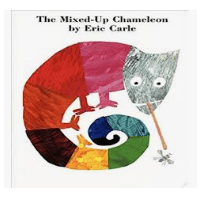
The Mixed-Up Chameleon, Eric Carle

Materials

  • Poster Board with a simple rainbow design drawn across (see blocks)
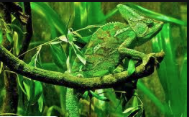
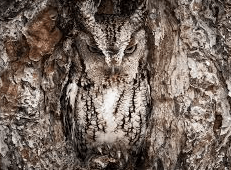
  • Books or pictures off the Internet that show animals camouflaged into the environment.
  • 26-52 Popsicle sticks
  • Insect page
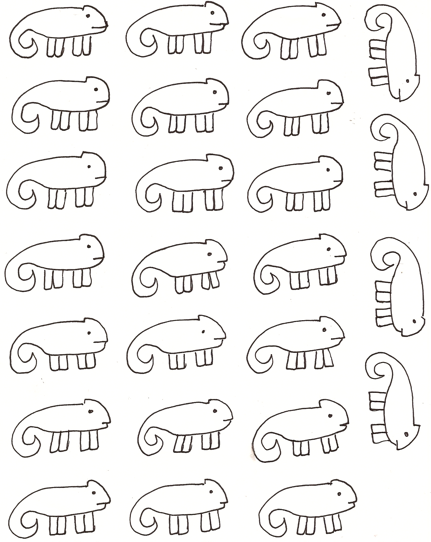
  • Chameleons page

Vocabulary

  • Camouflage (when an animal blends in with the world all around him)
  • Mixed-up (to be confused about something)

Before Reading the Story

Put a piece of paper on the wall and ask the children what their favorite animal is. Ask them to tell you something that makes that animals really special. Write their response on the paper. I would like to be a ________because______ (A big dog because I could jump on my brother, A butterfly because I could fly).

Science/Scientific Knowledge; expands knowledge of and abilities to observe, describe, and discuss the natural world, materials, living things, and natural processes.

Reading the Story

As you introduce the story, hold up the cover and ask the children what do they think it means to be a mixed up chameleon. If no one can answer, explain that to be mixed up means to be confused about something. Ask the children if they can predict what the chameleon might be confused/mixed-up about. As you turn to each new page and the chameleon wishes to be another animal, pause and see if the children can name the animal first.

Science/Scientific Skills & Methods; begins to describe and discuss predictions, explanations, and generalizations based of past experiences.

After Reading the Story

Go to the last page of the story (the one with the rainbow). Can the children name the animals and the colors? Ask, “Which animal is the color blue? Which animal has wings? “ Look on your chart from before reading to see if any of the children’s animals matched the ones in the story.

Mathematics/Geometry & Spatial Sense; shows growth in matching, sorting, putting in a series, and regrouping objects according to one or two attributes such as color, shape, or size.

Discovery

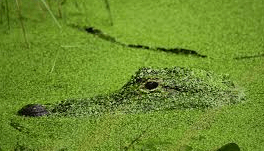
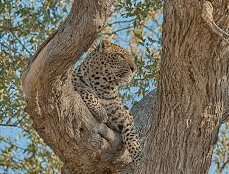
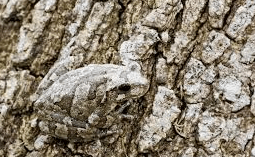
Bring in pictures or books that show animals camouflaged in nature. Use these to generate discussion of different ways that animals camouflage into their environment.

Literacy/Book Knowledge & Appreciation; shows growing interest and involvement in listening to and discussing a variety of fiction and non-fiction books and poetry. ALSO Science/Scientific Knowledge; expands knowledge of and abilities to observe, describe, and discuss the natural world, materials, living things, and natural processes.

Music and Movement

Sing Everybody Do This to the tune of Mammy’s Little Baby  (Pick a motion/action for all to follow)

Everybody do this, do this, do this,
Everybody do this just like me.
Everybody do this, do this, do this,
Everybody do this just like me.

(Now choose a child to lead)

Social & Emotional Development/Self-Concept; begins to develop and express awareness of self in terms of specific abilities, characteristics, and preferences.

Sing The Rainbow Song (bring pieces of construction paper to hold up as you name the colors while singing) https://kids.niehs.nih.gov/games/songs/childrens/sing-a-rainbow/index.htm

Red and yellow and pink and green,
Purple and orange and blue,
Black, brown and white
I can sing a rainbow, sing a rainbow,
Sing a rainbow. Can you?

Creative Arts/Music; participates with increasing interest and enjoyment in a variety of music activities, including listening, singing, finger plays, games, and performances.

Blocks

On a piece of poster paper make a simple rainbow using the colors of a block set you have (Legos, Duplo’s, unifix cubes, or small colored wooden blocks). Put out the blocks and encourage the children to match the colors and fill in the rainbow.

Mathematics/Geometry & Spatial Sense; shows growth in matching, sorting, putting in a series, and regrouping objects according to one or two attributes such as color, shape, or size.

Art

Ahead of time, use the chameleons’ page to make chameleons of different colors and cut out. Put these out on the art table with plenty of supplies for the children to collage. Explain to the children what the word camouflage means. You might even bring in a picture of an animal/s that are camouflaged in natural settings. Give each child a chameleon. Challenge the children to camouflage their chameleon within their picture?

Science/Scientific Skills & Methods; develops increased ability to observe and discuss common properties, differences, and comparisons among objects and materials.

Library and writing

Use the list that the children made during the ‘Before Reading the Story’ Session. Encourage them to draw their animal. Write the name of their animal on a piece of paper and ask them to try to copy the animals name onto their picture.

Literacy/Book Knowledge and Appreciation; shows growing interest in reading-related activities, such as asking to have a favorite book read; choosing to look at books; drawing pictures based on stories; asking to take books home.

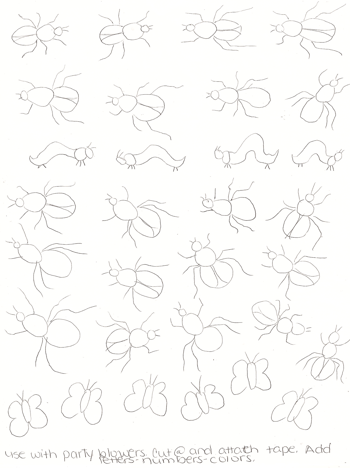
Cut out/around each insect on the page. Write an alphabet letter on each one. Take a loop of tape and attach to the insect at one end. Attach a loop of tape to the end of a Popsicle stick. Explain to the children that the chameleon has a very long and sticky tongue like a frog. Tell the children that they are going to pretend the Popsicle stick is their long and sticky tongue and to see if they can pick up letters with it. Make small cards ahead of time with a letter written on it. The child can match the letter to an insect. Ask the child to find a letter that is in their name. To make this more challenging, we have done this with party blowers by attaching the tape to the end and then the children blow it causing it to unroll and catch an insect. You can also include several numbers to see if the children can distinguish letters-numbers.

Literacy/Alphabet knowledge; knows that letters of the alphabet are a special category of visual graphics that can be individually named.

Sand and Water

Put small animals and sand in the table today. Give the children tongs to use to poke around in the sand and pick up the animals. Can they name the animals that they have picked up?

Physical Health & Development/Fine Motor Skills; develops growing strength, dexterity, and control needed to use tools such as scissors, paper punch, stapler, hammer.

Dramatic Play

Put out any dress-ups that you might have that represent animals. (We have tiger striped gloves, a scarf with a snake looking skin design, several animal tales, and a chicken suit.)  Again, take your list of the children’s favorite animal and why. This time ask them to act their animal out. Can they remember any of the animals in the story? What did these animals have that made them special? Can the children act out these animals?

Literacy/Book Knowledge & Appreciation; demonstrates progress in abilities to retell and dictate stories from books and experiences; to act out stories in dramatic play; and to predict what will happen next in a story.

Math and Manipulatives

Make many chameleons and color them in 1-3 different colors. Use these to make patterns for the children to copy. ABAB, ABCABC,ACCBACCA. Encourage the children to try to make their own pattern for you to copy.

Mathematics/Patterns & Measurement; enhances abilities to recognize, duplicate, and extend simple patterns using a variety of materials.

Outdoor

Play Simon Says using colors. “If you’re wearing red, jump across the yard. If you’re wearing purple skip across the yard.”

Physical Health & Development/Gross Motor Skills; shows increasing levels of proficiency, control, and balance in walking, climbing, running, jumping, hopping, skipping, marching, and galloping.

 Transitions

As the children go to the next activity, ask them to think about and respond to the following sentence; ‘I like to be me because I can__________. ‘ Write their responses on another piece of large paper and hang next to the first chart.

Social & Emotional Development/Self-Concept; begins to develop and express awareness of self in terms of specific abilities, characteristics, and preferences.

Dear Parent- Today we read a story that involved many colors. Think of two colors that your child may not be too sure about and go together on a color hunt looking for that/those colors around the house.

Resources

Untitled2
Untitled3
alligator
tiger

jaguar
toad
chameleon
owl
elephant

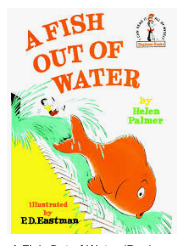
A Fish Out of Water, by Helen Palmer

When a boy does not follow the directions on how to feed his fish, things turn into a big problem. This is a good book to use to introduce a new fish tank into your room, or to help the children notice the fish you have. It is also a reminder about the importance of following directions.

Materials

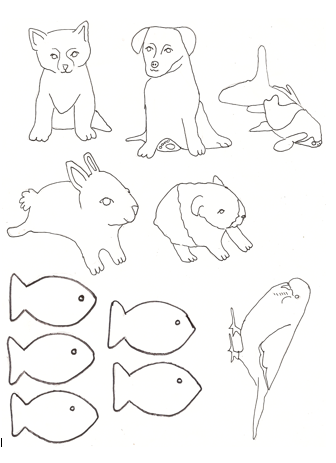
  • Animals for pet graph
  • Fish bowl and five simple fish
  • A live fish in a tank or even just a simple bucket

Vocabulary

  • Veterinarian (a doctor who takes care of animals)
  • Big, bigger, biggest/smaller, smallest

Before Reading the Story

Talk to the children about pets that they might have. Make a graph of pets that the children have. Use the animals for the pet graph but make sure to leave a space or two incase someone has an unusual pet.

Mathematics/Patterns & Measurement;  begins to make comparisons between several objects based on a single attribute.

Reading the Story

As the boy keeps moving the fish to different containers, ask what is happening (the fish is getting bigger). When the boy puts the fish into the bathtub and says this tub holds my father… ask the children what they think is going to happen. After the tub scene, let the children make some suggestions on what to do next.

Science/Scientific Skills & Methods; begins to describe and discuss predictions, explanations, and generalizations based on past experiences.  AND Literacy/Book Knowledge & Appreciation;demonstrates progress in abilities to retell and dictate stories from books and experiences; to act out stories in dramatic play; and to predict what will happen next in a story.

After Reading the Story

Continue your discussion about pets that the children might have. Ask them if they help care for their pet. (My Daddy and I walk my dog after we eat dinner. I put my cat in my room at night. My sister’s lizard has to have the light on when it is cold outside). Talk about how we have to be gentle with pets so that we do not hurt them.

Social & Emotional Development/Knowledge of Families & Communities; develops growing awareness of jobs and what is required to perform them.

Discovery

If you have fish in your room, this would be a good day to let the children record/draw the fish. Help them notice all the details of the fish (its fins, its little flippers. How he opens and closes his mouth). If you do not have fish in your room, consider setting up a tank or bowl. A beta fish is very easy and goldfish are not expensive. I have also gone fishing and brought in a 4-6 inch catfish for the children to observe for a day or two.

Science/Scientific Skills & Methods; develops growing abilities to collect, describe, and record information through a variety of means, including discussion, drawing, maps, and charts.

Music and Movement

Sing Bubble, Bubble, Bubble, Pop! https://www.youtube.com/watch?v=QTlbZL8XKa8   Make a fish bowl and five fish. With each verse remove a fish.

Five little fish are swimming in the water
Swimming in the water, swimming in the water
Five little fish are swimming in the water
Bubble, bubble, bubble, POP!
Four little fish are swimming in the water
Swimming in the water, swimming in the water
Four little fish are swimming in the water
Bubble, bubble, bubble, POP!

Mathematics/Number & Operations; begins to make use of one-to-one correspondence in counting objects and matching groups of objects.

Ask the children to make themselves big. Now make themselves bigger, and biggest. Make yourself small, smaller, and now smallest. Make yourself long, longer, longest.

Mathematics/Patterns & Measurement; shows progress in using standard and non-standard measures for length and area of objects.

Blocks

Otto grows so big that he needs a very long and deep tank to hold him! Ask the children to use your blocks to build a tank that might hold Otto.

Language Development/Listening & Understanding; shows progress in understanding and following simple and multiple-step directions.

Art

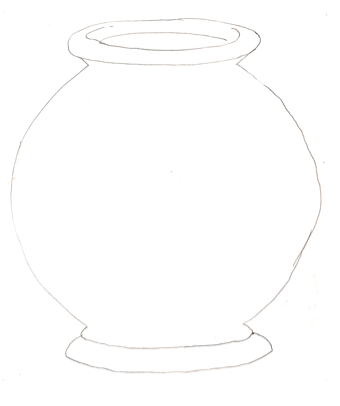
Give the children a copy of the fish bowl and encourage them to draw their own fish inside.  After they are finished with their drawing, ask them if they would like to tell you anything about their fish.  Write their response on the bottom of the page.  (My fish name is Sparkles.  I feed my fish just a little, my fish swims in the circle).

Literacy/Book Knowledge & Appreciation;demonstrates progress in abilities to retell and dictate stories from books and experiences; to act out stories in dramatic play; and to predict what will happen next in a story.

Library and Writing

Write each child’s name onto an index card.  Try to use the same size letters for each child.  Put the name cards on the table and encourage the children to put in order from shortest name to longest name.  For younger children just pick 2-3 names for them to put into order of shortest, the same, and longest.

Mathematics/Patterns & Measurement; shows progress in using standard and non-standard measures for length and area of objects.        

Sand and Water

Water Play today.  Add measuring cups and bowls of various sizes.  Ask the children if they can guess which container will hold the most water? Encourage the children to count how many scoops of water it takes to fill a container or bowl. Encourage them to scoop and count.

Mathematics/Patterns & Measurement; shows progress in using standard and non-standard measures for length and area of objects.        

Dramatic Play

Encourage the children to be animal owners for any stuffed animals you might have.  What does this animal need for food?  Where will it sleep?  Does it need any special equipment to help take care of it?  Can the child use his/her imagination to figure out what is needed?  (My dog needs a leash, can I use the red yarn?  My cat wants a toy, can I get the ball from the block center?  My tiger needs to be in this cubby/box because he bites).

Approaches to Learning/Initiative & Curiosity; approaches tasks and  activities with increased flexibility, imagination, and inventiveness.

Math and Manipulatives

Encourage the children to use building manipulatives today. As they build make comments about how big their structure is, can you build it bigger? Who can build is the biggest one on the table?

Mathematics/Patterns & Measurement; shows progress in using standard and non-standard measures for length and area of objects.       

Outdoor Play

Pretend to be fish swimming in the water. Then do other animals that the children have as pets. Let the children suggest what other animal walks they would like to do.

Approaches to Learning/Initiative & Curiosity; chooses to participate in an increasing variety of tasks and activities.  AND Physical Health & Development; participates actively in games, outdoor play, and other forms of exercise to that enhance physical fitness.

Transitions

Make several shapes that you are working on (oval, rectangle, and triangle). Cut out the shapes in three sizes, big, bigger, biggest. As the children move to the next activity ask them to show you a shape and a size. (Kerry, can you find the big triangle, Roger can you find a bigger triangle)?

Mathematics/Patterns & Measurement; shows progress in using standard and non-standard measures for length and area of objects.     

Resources

Screen Shot 2018-08-13 at 8.04.12 AM
Screen Shot 2018-08-13 at 8.04.43 AM