A Cake All For Me!, by Karen Magnuson Beil

Pig is making a cake, all for himself but just as he is about to eat it some friends stop by. Will he share his cake with his friends? Count along to find the answer.

Materials

  • White cake mix
  • Bag of chocolate chips
  • Assorted colors of food coloring
  • A plastic spoon and cup for each child
  • Flour sifters and egg whips
  • Graters and a bag of carrots
  • 3 empty one gallon milk jugs and cups for pouring and scooping.
  • An index card for each child with their name printed on it.

Vocabulary

  • Share (to let somebody use something, to give part of what you have to someone else)

Before Reading the Story

Ask the children if they know what it means to share. Give examples of how you have seen the children share among themselves over the last day or two (I remember yesterday when Roger shared his markers with Kerry, that was being a good friend. I liked when I saw Sean let Alison have a turn on the bike).

Social & Emotional Development/Cooperation; shows increasing abilities to use compromise and discussion in working, playing, and resolving conflicts with peers.

Reading the Story

Practice reading the story beforehand so that you have a nice rhythm as this is written in poem form. Point out some of the actions as you read. Also stop after 1,2, get out the moo. Ask the children if they think they know what ‘moo’ means in the story.

Literacy/Book Knowledge & Appreciation; shows growing interest and involvement in listening to and discussing a variety of fiction and non-fiction, and poetry.

After Reading the Story

Ask the children if Pig was a good friend, why? Talk about the importance of sharing. Tell the children sometimes it is hard to share but when you do it lets another person know you are friends.

Social & Emotional Development/Social Relationships; shows progress in developing friendships with peers.

Discovery

Make up the white cake mix according to directions. Scoop it into equal portions to make one plastic cup per child. Ask each child what color cake they would like to make. Drop the appropriate food coloring into their mix and give them a spoon to mix well. Have each child count out 5-10 chocolate chips and drop them into their batter. Continue to mix. Have a cupcake pan/s ready. The children (you may have to help) scoop their batter into a cupcake pan to make a class cake. Cook and cool before eating. If you like you can spread with a thin layer of cool whip as frosting. Yummy

Mathematics/Numbers & Operations; develops increasing ability to count in sequence to 10 and beyond.   

Music and Movement

Sing 1 Little 2 Little 3 Little children (sung to 1 Little 2 Little 3 Little Indians)

1 little 2 little 3 little children
4 little 5 little 6 little children
7 little 8 little 9 little children
10 children baking a cake! Yum!

Then count down 10-1 eating the cake! Yum!

Hold up fingers as you sing the numbers.  Mathematics/Numbers & Operations; begins to make use of one-to-one correspondence in counting objects and beginning to match sets.

Do Patty Cake Patty Cake with the children but change out the letter to match children’s names and see if they can fill in the name where you would have said “For baby and me”.   With children who are just learning to recognize letters, make the letter sound also so the children can hear the letter sound before they guess.

Literacy/Phonological Awareness; associates sounds with written words, such as awareness that different words begin with the same sound.

Blocks

Bring in a pan from the dramatic center and encourage the children to make a stove/oven that they can bake a cake in.

Approaches to Learning/Reasoning & Problem-Solving; develops increasing ability to find more than one solution to a question, task, or problem.

Art

Get out the play dough and your cookie cutters to pretend making cookies. Put out pieces of cardboard to put the cookies on so they can go in the oven.

Creative Arts/Dramatic Play; shows growing creativity and imagination in using materials and in assuming different roles in dramatic play situations.

Sand and Water

Put sifters in to the table with sand. Also egg whips, measuring cups, and several bowls.  Encourage the children to pretend to be bakers making a cake.

Creative Arts/Dramatic Play; shows growing creativity and imagination in using materials and in assuming different roles in dramatic play situations.

Library and Writing

Ask the children if they have a favorite recipe. Ask them how it is made, dictate their directions onto a piece of paper. They can then go through magazines to see if they can find their favorite food. Let them cut it out and glue it to their recipe.

Language Development/Speaking & Communicating; progresses in abilities to initiate and respond appropriately in conversation and discussions with peers and adults.  AND Literacy/Early Writing; begins to represent stories and experiences through pictures, dictation, and play.

Dramatic Play

Encourage the children to pretend to bake or cook a yummy treat. Add the book to the center as a reference guide. Or add a cookbook that has many pictures of food.

Social & Emotional Development/Cooperation; develops increasing abilities to give and take in interactions; to take turns in games and using materials; and to interact without being overly submissive or directive.

Math and Manipulatives

Bring in several graters and a bag of carrots for the children to try their hand at grating.  Remind them to be careful to not grate too close to the end or they might scrape their knuckles.

Physical Health & Development/Fine Motor Skills; grows in eye-hand coordination in building with blocks, putting together puzzles, reproducing patterns and shapes, stringing beads, and using scissors.  AND Approaches to Learning/Engagement & Persistence; shows growing capacity to maintain concentration over time on a task, question, set of directions or interactions, despite distractions or interruptions.

Outdoor play

Put the empty milk jugs into the sand box along with a variety of cups to scoop and pour. Challenge the children to pour the sand into the jugs and count how many scoops it took ( 16 cups=gallon, 8 pints=gallon)

Mathematics/Number & operations; demonstrates increasing interest and awareness of numbers and counting as a means for solving problems and determining quantity.

Transitions

Write each child’s name on an index card.  Tape the index cards onto the wall in front where the children can clearly see the names.  Tell the children that you are going to pretend that this is a delicious cake.  Now teach your children the following poem;  Down around the corner at the bakery shop, there was a beautiful cake with icing on top.  Along came (child’s name) all alone, and she took a piece of cake and then went home.  The child then comes up and finds their name among the names hanging on the wall.

Literacy/Print awareness; recognizes a word as a unit of print, or awareness that letters are grouped together to form words, and words are separated by spaces.

Dear Parent- Today we read a story about a pig who got to bake a cake.  Find a time this week when your child can help cook something in the kitchen.  It can be as simple as pouring milk into cereal or as complicated as baking and frosting a cake. Not only is it fun but following a recipe requires math skills and watching a cake rise in the oven involves science!

A Chair for My Mother, by Vera B. Williams

Imagine how you would feel if your home caught on fire! This is the story of a girl named Rosa and her family that this happened to. Her friends and neighbors all pitch in to help her family but still there was something missing. Through hard savings they finally had the money for that one last item they dreamed about; a chair for her Mother.

Materials

  • 5-10 pennies for each child
  • Box of salt
  • Jar of vinegar
  • A variety of real or play coins

Vocabulary

  • Tips (a gift of money for a job well done)
  • Spoiled (to be ruined)
  • Sofa (another name for couch or davenport)

Before Reading the Story

Bring a chair to the rug to read from today. Ask the children if they have ever lost something that was really special to them. Let them talk about how they felt (sad, angry). Tell the children that our story today is about a family that lost everything, all their clothes and toys and furniture because a big fire burned it all up. Give the children time to talk about any fire experience that they may have had. Hold up the back of the book with the picture of the chair and introduce the story.

Social & Emotional Development/Social Relationships; progresses in responding sympathetically to peers who are in need, upset, hurt, or angry; and in expressing empathy or caring for others. AND Language Development/Speaking & Communicating; develops increasing abilities to understand and use language to communicate information, experiences, ideas, feelings, opinions, needs, questions; and for other varied purposes.

Reading the Story

Read the story using emotion.

After Reading the Story

Turn to the page where the neighbors were bringing Rosa’s family things for their new house. Ask the children if they thought their friends and neighbors were being kind? Ask the children what they would have given to Rosa’s family? Take a few minutes and talk about fire and fire safety. What should you do if your house catches on fire (get out, call 911, find your parent, call “help,help,help” if you are inside, get down low to the floor)

Social & Emotional Development/Social Relationships; progresses in responding sympathetically to peers who are in need, upset, hurt, or angry; and in expressing empathy or caring for others.  AND Physical Health & Development/Health Status & Practices; builds awareness and ability to follow basic health and safety rules such as fire safety, traffic, and pedestrian safety; and responding appropriately to potentially harmful objects, substances, and activities.

Discovery

Give each child 5-10 pennies. Ask them to sort them by shiny pennies and not shiny pennies. Ask them to count how many shiny pennies they have, how many not shiny, how many total, Let the children mix a teaspoon of salt, a teaspoon of vinegar, and 5 teaspoons of water into a small bowl. Put a couple pennies into the bowl and stir. Take the pennies out and wipe dry with a paper towel. The mixture helps remove the tarnish and make the pennies shiny. When they are finished have them put their pennies into a jar like Rosa and her family did in the story.

Mathematics/Number & Operations; develops increased abilities to combine, separate, and name “how many” concrete objects.  AND Science/Scientific Knowledge & Skills; begins to use senses and a variety of tools and measuring devices to gather information, investigate materials, and observe processes and relationships.

Music and Movement

Teach the children the song/chant I’ve Got a Penny sung to the chorus of Playground in my Mind. https://www.youtube.com/watch?v=Slp69VwEj4w

I’ve got a penny, I’ve got a penny
I’ve got a penny shiny and new.
I’m gonna buy all kinds of candy
That’s what I’m gonna do.

Put a variety of coins in a bag. Take turns picking out and naming the coin. Replace the word penny with the appropriate coin name. Let the child then decide what they are going to buy (Kerry’s gonna buy all kinds of headbands, that’s what she’s gonna do).

Language Development/Listening and Understanding; demonstrates increasing ability to attend to and understand conversations, stories, songs, and poems.

Blocks

Put fire trucks into the center. Encourage the children to build houses and act out being fire persons.   For older children ask them if they can build a fire house.  Can they include a roof?

Approaches to Learning/Initiative & Curiosity; approaches tasks and activities with increased flexibility, imagination, and inventiveness.  AND Physical Health & Development/Fine Motor Skills; grows in hand-eye coordination in building with blocks, putting together puzzles, reproducing shapes and patterns, stringing beads,and using scissors.

Art

Make a group chair collage. Have the children go through magazines and furniture ads and cut out pictures of chairs. When you finish the collage, the children can tell which chair is their favorite and write their name beside.

Physical Health & Development/Fine Motor Skills; grows in hand-eye coordination in building with blocks, putting together puzzles, reproducing shapes and patterns, stringing beads,and using scissors.

Sand and Water

Water play today.  Add turkey baster, hosing, and funnels.

Social & Emotional Development/Self Control; demonstrates increasing capacity to follow rules and routines and use materials purposefully, safely, and respectfully.

Library and Writing

Remind the children that Rosa was saving to buy a chair for her mother.  Ask the children to draw a picture of what they would buy their Mom if they had $100.00. Write their response under their picture. ‘I would buy a ______for my Mother.’

Literacy/Early Writing; begins to represent stories and experiences through pictures, dictation, and in play.

Dramatic Play

Add play money and cash register.   Remind the children that Rosa’s Mom was a waitress at a restaurant.  Encourage the children to pretend to play restaurant taking turns being the waitress, the cook, and the customers.  Add a cash register and pretend money along with a real or home-made menu.

Social & Emotional Development/Knowledge of Families and Communities; develops a growing awareness of jobs and what is required to perform them.

Math and Manipulatives

In a clean egg carton, glue 2 pennies head/tail, 2 nickels head/tail, 2 dimes head/tail, and 2 quarters head/tail side by side. Use the four extra egg cups to hold a variety of coins. Explain that the glued ones show the front and back of each coin. Have the children sort the loose coins into the appropriate coin cup (it does not matter if it’s heads/tails). Make sure they wash their hands afterwards as money is known to be dirty.

Mathematics/Geometry & Spatial Sense; shows growth in matching, sorting, putting in a series, and regrouping objects according to one or two attributes such as color, shape, or size.

Outdoor Play

Teach the children how to play Categories. Teacher picks a category (things in your kitchen, kinds of clothes, fruits).   You can either toss a bean bag to a child who then must answer or if you have a slide, the child must answer before he/she can go down the slide.

Approaches to Learning/Reasoning & Problem-Solving; develops increasing ability to find  more than one solution to a question, task, or problem.

Transitions

Have the children sit in a circle.  In the center of the circle put a chair.  Give each child a block and take turns asking them to put them on, under, beside, in front, behind, near, and far from the chair.  Each child can be given one or two directions before they head off to the next activity.

Mathematics/Geometry & Spatial Sense; builds an increasing understanding of directionality, order, and positions of objects, and words such as up, down, over, under, top, bottom, inside, outside, in front behind.

Dear Parents- Today we read a story about a family whose household belongings burnt in a fire.  Although this might be a subject that is a little scary to talk about with your child, it is important.  Show your child how to dial 911 (do not really call).  Talk about what to do and where to go if there is ever a family emergency and you get separated (go to the neighbors house, the mailbox, the lamp post at the end of the block).  It is important that children learn what you want them to do when there is not an emergency going on.  Talk to them calmly and answer all their questions.  Who knows, this may one day save yours or their life.

The Mitten, by Jan Brett

After a little boy loses his mitten in the woods, all the forest animals want to snuggle inside where it is warm.

Materials

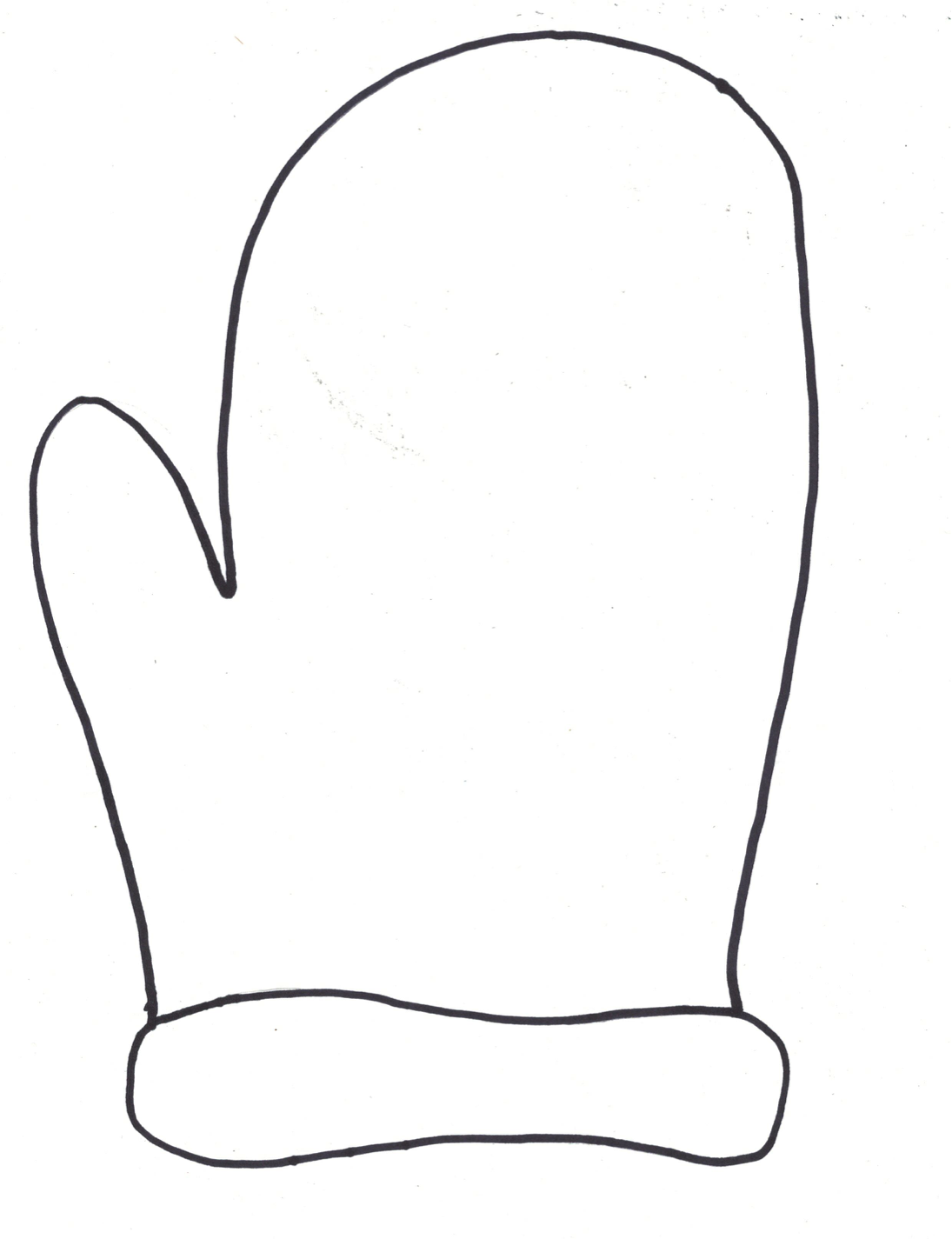
  • Mitten page colored and cut out
  • Twin size sheet or blanket
  • Food coloring
  • 4-5 eye droppers or small spray bottles

Vocabulary

  • Wool (a material, not leather)
  • Snuffling (sniffing around)
  • Commotion (a hubbub or disturbance)
  • Talons (the sharp fingernails on birds)
  • Muzzle (the nose of an animal)
  • Stretch (to have elasticity to make it expand)

Introducing the Story

Talk to the children about all the different articles of clothing that people wear to stay warm on snowy cold days. Make a graph to see which children like better, mittens or gloves.

Science/Scientific Knowledge; develops growing awareness of ideas and language related to attributes of time and temperature.

Reading the Story

As you read the story, note the side pictures to the story. Show the children that the picture on the right shows which animal will be next to climb into the mitten. Can the children name the animal that will come next?

Literacy/Book Knowledge & Appreciation/demonstrates progress in abilities to retell and dictate stories from books and experiences; to act out stories in dramatic play; and to predict what will happen next in a story.

After Reading the Story

Act out the story using a large bed sheet as the mitten. If you have more children than animals in the story, make up a few extra so everybody can squeeze under the blanket (into the mitten).

Literacy/Book Knowledge & Appreciation/demonstrates progress in abilities to retell and dictate stories from books and experiences; to act out stories in dramatic play; and to predict what will happen next in a story.

Music and Movement

Sing The Mitten Song https://www.youtube.com/watch?v=aHiiVQL3NIU

Thumbs in the thumbhole, fingers all together
This is the song we sing in mitten weather,
When it is cold, it does not matter whether
Mittens are wool or made of fine leather.
Thumbs in the thumbhole, fingers all together
This is the song we sing in mitten weather.

Language Development/Listening & Understanding/ demonstrates increasing ability to attend to and understand stories, songs , and poems.

Give each child a real or paper mitten. With their mitten play a listening game. Ask the children to put their mitten behind them, beside them, in front of them, on top of them, under them, and on them.

Mathematics/Patterns & Geometry; builds an increasing understanding of directionality, order, and position of objects, and words such as up, down, under, over, top, bottom, inside, outside, in front, and behind.

Have the children sit in a circle. Hand one mitten to a child. Begin to sing or chant “We will pass the mitten from me to you to you, we will pass the mitten and that’s just what we’ll do”. Each time you pass the mitten, ask the children to help you think of new ways to pass (behind your back, over your head, as fast as you can, under your knees, etc.).

Approaches to Learning/Reasoning & Problem Solving; develops increasing ability to find more than one solution to a question, task, or problem.

Discovery

Bring your cylinder shaped blocks to science today as well as a hand full of rubber bands. Show the children how to wrap the rubber band around by stretching it round and round the cylinder. Make sure to monitor any children who put things into their mouths. Depending on the size rubber band you are using, the children can also wrap them around small boxes, toilet tubes. You could also challenge them to rubber band two blocks together.

Science/Scientific Skills; begins to participate in simple investigations to test observations, discuss and draw conclusions, and form generalizations.

Blocks

Add animals to the center today, also a small scarf or doll blanket. Watch to see if the children act out today’s story even if different animals are used.

Literacy/ Book Knowledge & Appreciation; demonstrates progress in abilities to retell and dictate stories from books and experiences; to act out stories in dramatic play; and predict what will happen next in the story.

Art

Cut out large mitten shapes to put at the easel today. Add some Epson salts to your tempera paints. As the paint dries on the paper, it should make tiny crystals that sparkle.

Creative Arts/ Art; begins to understand and share opinions about artistic products and experiences.

Sand and Water

Put snow in the table today. Encourage the children to put their mittens or gloves on and play in the snow using sand molds and measuring cups. Can you make a snow castle?

Physical Health & Development/Fine Motor Skills; develops growing strength, dexterity, and control needed to use tools such as scissors, paper punch, stapler, and hammer.

Put snow in the table today and give the children cups filled with water and food coloring. Show them how to use an eyedropper and suction up some colored water and squirt it onto the snow. (I recommend using red, yellow, and blue-primary colors). You can also fill spray bottles with food coloring and water to spray onto the snow. The colors drip into the snow and form new colors as they combine.

Science/Scientific Skills & Methods; begins to use senses and a variety of tools and simple measuring devices to gather information, investigate materials, and observe processes and relationships.

Library and Writing

Give each child a mitten shape cut from a piece of copy paper. Encourage the children to draw a picture of an animal that crawled into the mitten. It can be one from the story or one of his or her own choosing. After they have drawn their animal, write, “A _________ squeezed into ______ mitten!” (A bear/cow squeezed into Roger’s mitten!) These can then be put together to make a classroom wall or stapled together to make a classroom book; The Amazing Mitten Stretch.

Literacy/ Book Knowledge & Appreciation; demonstrates progress in abilities to retell and dictate stories from books and experiences; to act out stories in dramatic play; and predict what will happen next in the story.

Dramatic Play

Add hats, scarves, mittens, and gloves. Encourage the children to pretend to dress up warm on a cold winter day.

Creative Arts/Dramatic Play; participates in a variety of dramatic play activities that become more extended and complex.

Math and Manipulaties

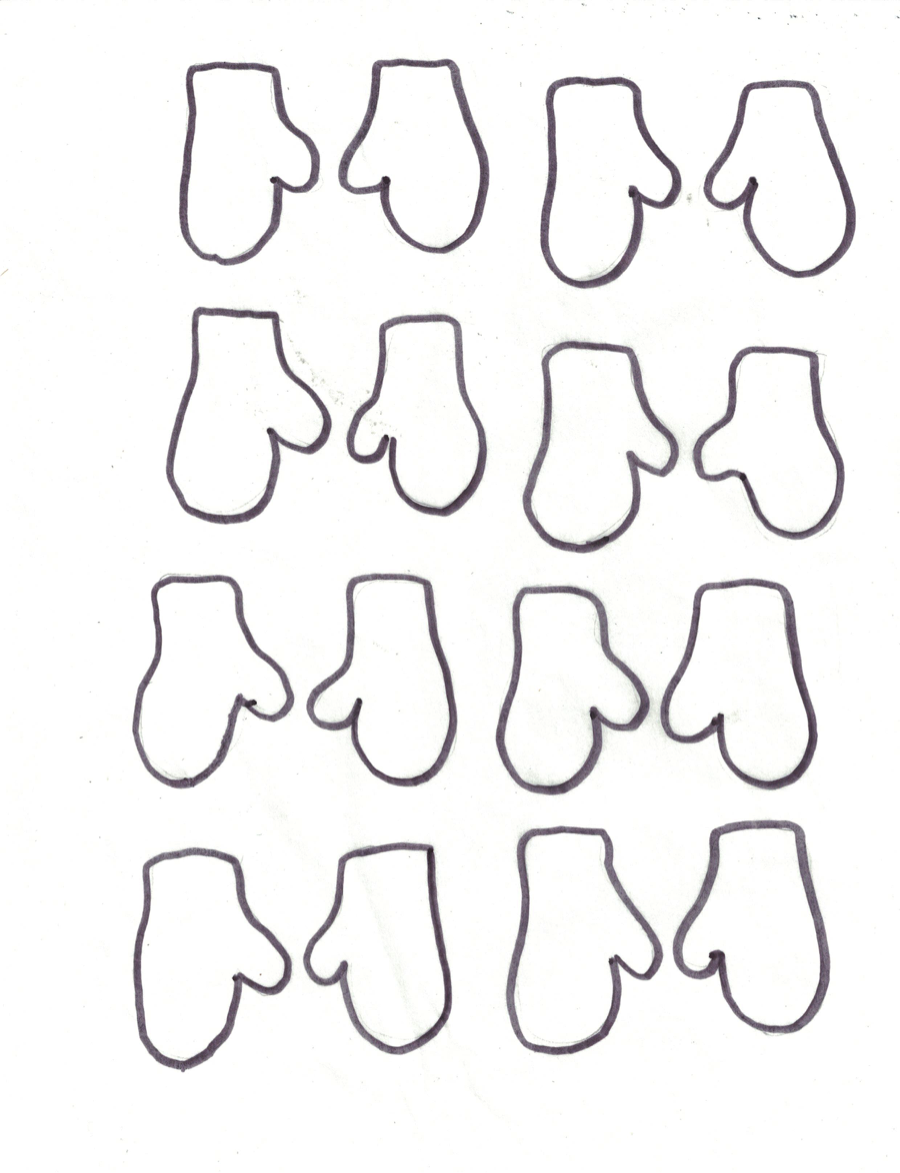
Ahead of time, decorate the pairs of mitten page with each pair being different. Cut them out and put into a bowl or pile. The children match the pairs of mittens. These can be decorated from simple to more difficult depending upon the age of the children.

Mathematics/Patterns & Measurement; begins to make comparisons between several objects based on a single attribute.

Outdoor Play

If there is snow on the ground, practice throwing snowballs at a target.  If not, use bean bags.

Physical Health & Development/Gross Motor Skills; demonstrates increasing abilities to coordinate movements in throwing catching, kicking bouncing balls, and using the slide and swing.

Transitions

Play Bigger Than, Smaller Than. Say, “I’m thinking of an animal that is bigger than a ___________”. The child must name an animal that is bigger. Do this with smaller than also. (Bigger than a horse, bigger than a mouse, smaller than a cat, smaller than a rabbit, etc.).

Approaches to Learning/Reasoning & Problem Solving; develops increasing abilities to classify, compare, and contrast objects, events, and experiences.

Resources

Untitled.png
1.png