The Dot, by Peter H. Reynolds

Materials

  • White coffee filters and a spray bottle
  • Water washable markers
  • Alphabet dot cards, 1 per child
  • Dot stickers-lots or BINGO daubers
  • Ahead of time; a note to parents collecting CLEAN tin cans and old CD’s.
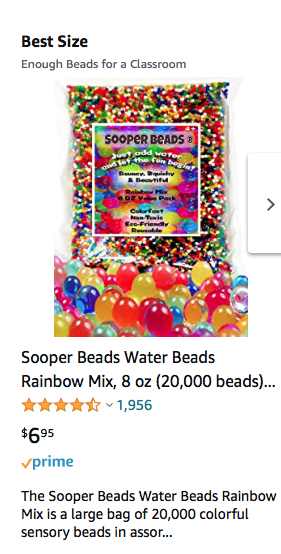
  • Water Beads
  • Several boxes of DOTS candy and a box of toothpicks

Vocabulary

  • Round (shaped like a circle, sphere, or cylinder)

Before Reading the Story

Show the children a picture of a circle, sphere, cylinder, dot, polka dots. Explain to the children that these are all called round shapes. Ask them if they can think of any objects that are round. As they name, tell them that what they named is a round circle shape, a round sphere shape, a round cylinder shape, a round polka dot shape, or a round dot shape. The idea is to put round with these basic shapes to help the children better visualize.

Language Development/Speaking & Communicating; develops increasing abilities to understand and use language to communicate information, experiences, ideas, feelings, opinions, needs, questions; and for other varied purposes. AND Mathematics/Geometry & Spatial Sense; shows progress in matching, sorting, putting in a series, and grouping objects according to one or two attributes such as color, shape, or size.

Reading the Story

Begin the story reading with the emotional anger that Vashti feels. On the page where it starts, “the next week when Vashti walked into art class…”, point to the picture and ask the children what it is. On the last page, ask the children why Vashti asked the boy to sign his line picture? Explain to the children that ALL artists sign their work. Have the children help retell the story by asking questions. WHy was Vashti angry at the beginning of the story? (She thought she could not draw and was not an artist). What did the teacher do? How did that make Vashti feel? What did Vashti do? Why did Vashti tell the boy to sign his line picture?

Literacy/Book Knowledge & Appreciation; demonstrates growing abilities to retell and dictate stories from books and experiences; to act out stories in dramatic play; and to predict what will happen next in a story.

After Reading the Story

Explain to the children that in the story Vashti thought she was not a good artist but her teacher knew that if she tried, she could be amazing. Ask the children to think about something they are really good at. If they are unable to think of something, tell them something that you see them doing well. (I like how well you can peddle the tricycle, I like how well you always clear your lunch plate and never spill food on the floor, I like how well you can cut with scissors, I like how well you play with your friends).

Social & Emotional Development/Self-Concept; begins to develop and express awareness if self in terms of specific abilities, characteristics, and preferences.

Discovery

Put out a variety of marker colors, bright colors work best. Have the children color white coffee filters using the markers. Once they are ‘finished’, fold the coffee filter in half and give it three sprays of water from the spray bottle. Open it up and the colors will have run together. Hang it to dry.

Approaches to Learning/Engagement & Persistence; grows in abilities to persist in an increasing variety of tasks and activities.

Put the DOTS candy into one bowl and the toothpicks in another. Demonstrate how to make squares, triangles, and pyramids by attaching the toothpicks to the DOTS.

Mathematics/Geometry & Spatial Sense; progresses in ability to put together and take shapes apart.

Music and Movement

Teach the children the chant, Round and Round.

Round and round and round again.

I have no beginning and I have no end.

Can you guess what I am?

A circle, a circle, a circle!

(Encourage the children to name items in the shape of a circle).

Mathematics/Geometry & Spatial Sense; begins to recognize, describe,compare, and name common shapes, their parts and attributes.

Put on the Bert & Ernie Circle Song and encourage the children to dance to it by spinning their bodies or body parts in circles. Give each child a scarf to use while dancing.

Creative Arts/ Movement; expresses through movement and dancing what is felt and heard in various musical tempos and styles.

Dance the Polka Dot Pants Dance. https://www.youtube.com/watch?v=chejyOzlv1U

Language Development/Listening & Understanding; shows progress in understanding and following simple and multiple-step directions.

Blocks

Ahead of time ask the parents to donate CLEAN tin food cans and old CD’s. Add these to the block center for extra building materials.

Approaches to Learning/Initiative & Curiosity; Approaches tasks and activities with increased flexibility, imagination, and inventiveness. AND Physical Health & Development/Fine Motor Skills; grows in hand-eye coordination in building with blocks, putting together puzzles, reproducing shapes and patterns, stringing beads, and using scissors.

Art

On a piece of paper per child, make a small black circle/dot near the center of the page. On the bottom write,”One small dot can become a _________”. Give the children drawing materials to make something from the dot.

Creative Arts/Art; begins to understand and share opinions about artistic products and experiences. AND Approaches to Learning/Initiative & Curiosity; Approaches tasks and activities with increased flexibility, imagination, and inventiveness.

Library and Writing

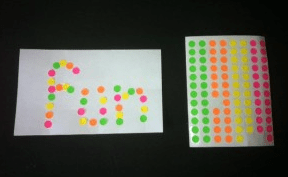
Make copies of the Alphabet Dot cards and add dots. The children can peel the dots and attach to a letter. https://easypeasylearners.com/free-alphabet-do-a-dot-printables/

Literacy/Alphabet Knowledge;knows that letters of the alphabet are a special category of visual graphics that can individually named. AND Physical Health & Development/Fine Motor Skills; develops growing strength, dexterity, and control needed to use tools such as scissors, paper punch, stapler, and hammer.

Sand and Water

Add water beads and water to the table today along with scoops and bowls. Remind the children that the beads need to stay in the table.

Social & Emotional Development/Self-Control; demonstrates increasing capacity to follow rules and routines and use materials purposefully, safely, and respectfully.

Dramatic Play

Math and Manipulatives

Help the children make number charts. On a piece of paper (per child) write numbers 1-5 or 1-10 down the side of the paper. Let the children use the dots or the BINGO daubers to make the appropriate number of ‘dots’ beside each number.

Mathematics/Number & Operations; begins to use one-to-one correspondence in counting objects and matching groups of objects.

Outdoor Play

Make a simple obstacle course using a crawl tunnel, hoola hoops, and circles drawn with chalk or any things that you might have that are a circle shape, like a dot.

Physical Health & Development/Gross Motor Skills; shows increasing levels of proficiency, control, and balance in walking, climbing, running, jumping, hopping, skipping, marching, and galloping.

Transitions

Ask each child to name something that is the shape of a circle, a sphere, or something that is round.

Language Development/Listening & Understanding; understands an increasingly complex and varied vocabulary.

Resources
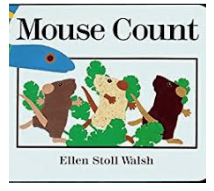
Mouse Count, by Ellen Stoll Walsh

What do snakes eat for dinner? Mice! This simple story is about a snake who is gathering mice for his dinner but will the mice become his supper? Read and count your way through this cute story.

Materials

  • 10 simple house shapes numbered 1-10 or 1-5
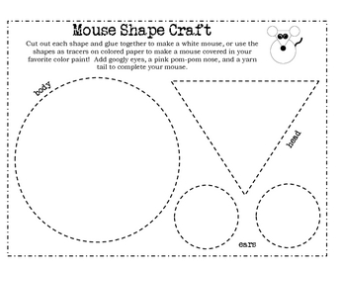
  • Mouse shape
  • Ahead of time, paint 2 stones (small enough to fit in their hand) per child in a tan type color
  • Bag of pompoms
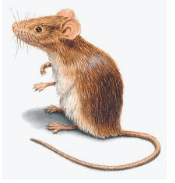
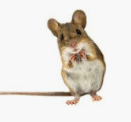
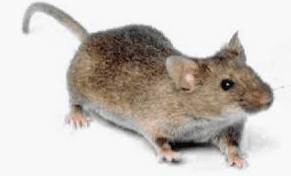
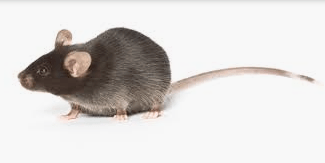
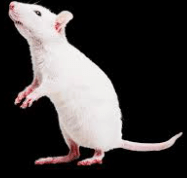
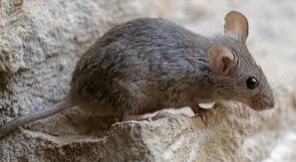
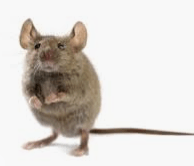
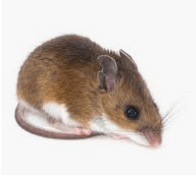
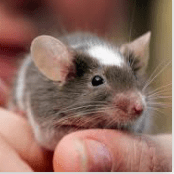
  • Pictures of mice
  • Rhyming cards
  • Dice
  • Basic shapes cut from a manilla folder (see resources)
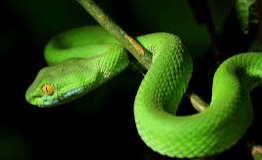
  • Snake picture

Vocabulary

Before reading the Story

Hold up the cover and ask the children if they know what animals are in the story today? Read the title and have the children count the mice with you. Tell them that today is going to be a number day. Count to 10 and back again holding up the appropriate fingers as you count. Encourage the children to join in.

Mathematics/Number & Operations; develops increasing ability to count in sequence to 10 and beyond.

Reading the Story

On the first page where the mice are careful watching for snakes, ask the children why the mice needed to be careful? Ask them what they think is going to happen in the story, will the mice be eaten? Let’s find out. Continue to read.

Literacy/Book Knowledge & Appreciation; demonstrates progress in abilities to retell and dictate stories from books and experiences; to act out stories in dramatic play; and to predict what will happen next in a story.

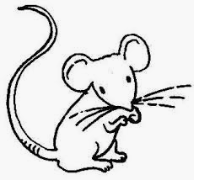
Have the children count along with you. Use the picture of the mouse and tape to the wall or flannel board for the children to help count.

Mathematics/Number & Operations; begins to make one-to-one correspondence in counting objects and matching groups of objects.

After Reading the Story

Put your houses labeled 1-10 or 1-5 in order on the floor where the children can see. Have one child close their eyes and put the mouse under one of the houses. The child then opens his eyes and must guess which house the mouse is under using their words. Help them count the houses if they do not know the numbers. Give each child 3 tries. Then the child who hid their eyes is the next person to hide the mouse and another child guesses. Continue until everyone who wants a turn gets one.

Mathematics/Number & Operations; begins to associate number concepts, vocabulary, quantities, and written numerals in meaningful ways.

Discovery

Print out the pictures of the mice in similar size. Cut off each mouse’s head. Put the bodies in one pile and the heads in another. Challenge the children to match the correct head to it’s body.

Mathematics/Geometry & Spatial Sense; progresses in ability to put together and take shapes apart.

Music and Movement

Have the children take turns showing an exercise (jumping jacks, hopping on one foot, touching toes). Do these to the count of ten.

Mathematics/Number & Operations; begins to make one-to-one correspondence in counting objects and matching groups of objects.

Ask them to pretend that they are a snake and do the following movements; Can you make your body a curled shape? Can you stretch your body out long? Can you wiggle only your one foot? Can you stretch one part of your body and curl another? Can you twist your body all around? Can you move only your head? Can you slither on the ground like a snake? Can you twist more than one body part?

Language Development/Listening & Understanding; understands increasingly complex and varied vocabulary. AND Physical Health & Development/Health Status & Practices; participates actively in games, outdoor play, and other forms of exercise that enhance physical fitness.

Recite the following poem and have the children act out. I’m Being Swallowed by a Boa Constrictor. https://www.youtube.com/watch?v=Xd0cX1dogtk

Blocks

Cut out 5-10 snakes and add them to the block center. Ask the children if they can measure how long each block or block structure is using the snakes as the measuring device.

Mathematics/Patterns & Measurement; shows progress ub using standard and non-standard measures for length and area of objects.

Art

Draw the basic mouse shapes onto a manilla folder and cut out. The children can then trace around the shapes and cut them out with scissors and put together to make a mouse.

Physical Health & Development/Fine Motor Skills; grows in hand-eye coordination in building with blocks, putting together puzzles, reproducing shapes and patterns, stringing beads, and using scissors.

Library and Writing

Put the animal and their rhyming word cards out for the children to match.

Literacy/Phonological Awareness; progresses in recognizing matching sounds and rhymes in familiar words, games, songs, stories, and poems.

Sand and Water

Fill the table with pompoms today. Give the children bowls or cups marked with the colors of the pompoms on the outside. Encourage the children to sort the pom poms into the correct cup using tongs, tweezers, or chopsticks. Which cup has the most, least?

Mathematics/Number & Operations; begins to use language to compare numbers of objects with terms such as more, less, greater than, fewer, equal to. AND Physical Health & Development/Fine Motor Skills;develops growing strength, dexterity, and control needed to use tools such as scissors, paper punch, stapler, and hammer.

Dramatic Play

If you have a doll house add several little toy mice (found in cat toy department) instead of people today.

Creative Arts/Dramatic Play; participates in a variety of play activities that becomes more extended and complex.

Cut out mouse ears from construction paper and attach to sentence strips that the children can wear on their heads and pretend to be mice today. Add large boxes if you have them and the children can pretend that they are theri mouse house.

Math and Manipulatives

Use the mouse shape and make 10 in each of several colors. The children take turns rolling the dice and collecting that many mice. After each turn, they count the number of mice in their pile. When all the mice are collected, the child with the most mice wins.

Mathematics/Number & Operations; develops increased abilities to combine, separate, and name “how many” concrete objects.

Outdoor Play

If possible ahead of time take your tan painted rocks and hide-scatter them about the playground. If you cannot do ahead of time, nonchalantly scatter them while the children are busy playing. Gather the children and show them one of the rocks. Tell them that you are pretending that it is a mouse. Explain that you saw many mice on the playground. Let’s pretend to be snakes and look for our supper. Have the children search the playground for tan rocks/mice. They can then bring them to you and count them out loud. (Riley, how many mice did you find? Who found more? Who found the most?).

Mathematics/Number & Operations; begins to use language to compare numbers of objects with terms such as more, less, greater than, fewer, equal to. AND Approaches to Learning/Engagement & Persistence; grows in abilities to persist in and complete a variety of tasks, activities, projects, and experiences.

Transitions

Play 1,2,3 How Many Do You See? As you go to the next activity. Make two fists with your hands. Knock them together and say, 1-2-3 how many do you see? On the word ‘see’ hold up 0-10 fingers and ask a child to tell you how many there are. Continue until all the children have had a turn.

Mathematics/Number & operations; demonstrates increasing interest and awareness if numbers and counting as a means for solving problems and determining quantity.

Resources
From Jennifer Miller website

Rhyming word cards

Abiyoyo, by Pete Seeger

Children always seem to delight in this scary story about a giant that comes to town and a small boy who thinks outside the box to save the people.

Materials

  • 2-3 flashlights
  • Bubbles and a bubble blower
  • Several small bars of soap, like the kind you would get in a hotel, or soft soap.
  • 8-10 small boxes (shoe box sized and smaller)
  • 2-4 dozen rubber bands big enough to fit snugly around the largest of your small boxes
  • Paint brushes and buckets

Vocabulary

  • Ukulele (an instrument kind of like a little guitar)
  • Ostracized (to be kicked out or excluded from the group)
  • Precious possessions (most important and loved things)
  • Disappear (make something vanish or go away)
  • Brave (to challenge something and show courage doing so)
  • Hygiene (how to keep oneself clean)

Before Reading the Story

Ask the children if they know what the word brave means. Explain that being brave means doing something even if it feels scary. Ask the children if they can think of any time that they were brave. (I stayed in my bed when there was thunder, I rode my bike on two wheels and fell down but now I can do it, I climbed to the top of the bars). Introduce the story by telling the children that it is about a very brave boy and his father who saved the whole town from a scary giant named Abiyoyo.

Social & Emotional Development/Self-Concept; begins to develop and express awareness of self in terms of specific abilities, characteristics, and preferences.  AND  Language Development/Speaking and Communicating; uses an increasingly complex and varied spoken vocabulary.

Reading the Story

As you read, stop and ask the children how the townspeople are feeling on different pages. Why do you think they are feeling that way?

Social & Emotional Development/Social Relationships; progresses in responding sympathetically to peers who are in need, upset, hurt, or angry; and in expressing empathy and caring for others.

Encourage the children to join in with you singing Abiyoyo, Abiyoyo. Become more vibrant, loud, and bouncy until you finally stop abruptly to end the story.

Literacy/Book Knowledge and Appreciation; shows growing interest and involvement in listening to and discussing a variety of fiction, non-fiction, and poetry.

After Reading the Story

Talk to the children about what Abiyoyo looked like. Did he have good hygiene? What should you do to keep your fingernails from getting long and dirty? How do you keep your feet from getting all stinky? When is it important to wash your hands, why? Ask the children why they think it is important to bath? Explain to  them that when they are clean, other people enjoy more to be around them.

Physical Health and Development/Health Status & Practices; shows growing independence in hygiene, nutrition, and personal care when eating, dressing, washing hands, brushing teeth, and  toileting.

Discovery

Try doing shadow play today. Shine a flashlight on the wall and let the children try making hand shadows or whole body shadows. Does it make a difference if there is a lot of light in the room, if you stand in front or behind the light? Can you make a whole body shadow or an animal using your hands?

Science/Scientific Skills & Methods; begins to participate in simple investigations to test observations, discuss and draw conclusions, and form generalizations.

Music and Movement

Put on some classic guitar music and have an air band while you play and dance to the music.

Creative Arts/Music; participates with increasing interest and enjoyment in a variety of music activities, including listening, singing, finger plays, games, and performances.

Sing  Momma Don’t Allow No Guitar Playing Around Here https://www.youtube.com/watch?v=U-ODoOHoNyQ

Momma don’t allow no guitar playing around here.
I don’t care what Momma don’t allow
Gonna play my guitar any how
Momma don’t allow no guitar playing around here.

(Momma don’t allow no hand clapping, jumping, foot stomping, etc.)

Language Development/Listening & Understanding; demonstrates increasing ability to attend to and understand conversations, stories, songs, and poems.

Encourage the children to clap out the syllables as they sing Abiyoyo. Start slowly and then speed up.

Literacy/Phonological Awareness; shows growing ability to hear and discriminate separate syllables in words.

 Blocks

Challenge the children to build something really gigantic out of the blocks today. If using wooden blocks, remind them about any height rule you may have.

Physical Health and Development/Fine Motor Skills; grows in eye-hand coordination in building with blocks, putting together puzzles, reproducing shapes and patterns, stringing beads, and using scissors.

Art

Encourage the children to draw big scary giants. Older children might enjoy drawing different parts of the story.  Remind them about the giant in the story, can they draw slobbery mouths and dirty fingernails?

Literacy/Early Writing; begins to represent stories and experiences through pictures, dictation, and in play.   Literacy/Book Knowledge & Appreciation; shows growing interest in reading related activities, such as asking to have a favorite story read, choosing books to look at, drawing pictures based on stories, and engaging in pretend reading with other children.

Sand and Water

Encourage the children to take turns practice washing their hands so they don’t get all yucky like Abiyoyo. Talk about the importance of hand washing and when children should wash their hands.

Physical Health and Development/Health Status & Practices; shows growing independence in hygiene, nutrition, and personal care when eating, dressing, washing hands, brushing teeth, and toileting.

Library and Writing

Paint with water on the sidewalk. The water will disappear. Can you write your name with this magic water paint before it disappears?

Literacy/Early Writing; progresses from using scribbles, shapes, or pictures to represent ideas, to using letter-like symbols, to copying or writing familiar words such as their name.

Dramatic Play

Add a stringed instrument and a magic wand to the center. Encourage the children to act out the story.

Creative Arts/Dramatic Play; participates in a variety of dramatic play activities that become more extended and complex.

Math and Manipulatives

Put out a variety of small boxes, minus the tops. Show the children how to wrap rubber bands around the box and make plunking instruments. Do all the boxes make the same sound?

Scientific/Scientific Skills & Methods; develops increased ability to observe and discuss common properties, differences, and comparisons among objects and materials.

Outdoors Play

Take some bubbles outside today. The teacher can blow the bubbles and children can use a small stick or their finger to pretend to be a wand a “zoop”/pop the bubbles to make them disappear.

Physical Health and Development/Fine Motor Skills; grows in eye-hand coordination used in building with blocks, putting together puzzles, reproducing shapes and patterns, stringing beads, and using scissors.

Transitions

Play “which is” during transitions today. Ask the children, which is… bigger, louder, scarier, taller, etc. depending upon the age of your children. Which is bigger, a cat or a goat? Which is taller a person or a house?

Approaches to Learning/Reasoning & Problem Solving; develops increasing abilities to classify, compare, and contrast objects, events, and experiences.  AND  Mathematics/Patterns & Measurements; begins to make comparisons between several objects based on a single attribute.

Dear Parent,  It is important for children to learn to bath and clean themselves independently. As you go through your evening routines with your child, monitor his/her washing and brushing and give encouragement as they practice these skills. When they are all clean and ready for bed, comment on how nice and clean they smell.