The Napping House, by Audrey Wood

            Naps are very important to help us grow.  This fun story is about a house that is napping, until a wakeful flea arrives, then everything goes crazy.

Materials

  • Copy of characters. Make into flannel pieces by covering with contact paper and taping to the board. Pictures come from; Projecto A casa sonolenta em LIBRAS

Vocabulary

  • Colored construction paper cut into one-inch lengths.
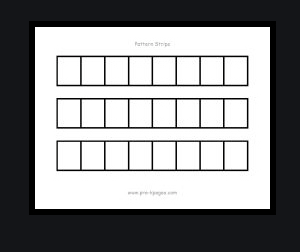
  • Construction paper that has been made into a weaving frame (see resources).

Before reading the story

            Hold up the cover of the book and say the title.  Ask the children why they think naps are important (we grow while we sleep, when we are tired we do not think as well, naps help us from getting crabby).  Talk about how the children sleep (Kerry always falls asleep first, Roger likes to read a book before he takes a nap, and Ryan you are usually the last to fall asleep).  Turn off the light if you have window light to darken the room slightly.

Social & Emotional Development/Self-Concept; begins to develop and express awareness of self in terms of specific abilities, characteristics, and preferences.

Reading the Story

            As you read the pages where everyone is sleeping, use a soothing voice and yawn as you turn the pages.  Point to each critter as they climb onto the bed.  When you get to the page where the flea bites the mouse, change your voice to one of surprise and a quicker pace.

After reading the story

            Ask the children if they noticed the flea in the first half of the story.  Go back through the pages and look for the flea.  Use the copy of the characters to put onto the bed in the correct order (Who was the first one on the bed?  Who was second, third, fourth, etc).

Literacy/Book Knowledge & Appreciation; demonstrates progress and abilities to retell and dictate stories from books and experiences; to act out stories in dramatic play; and to predict what will happen next in a story.

Discovery

            If you have nesting toys these would be good to put into the center.  I use the Russian nesting dolls and talk about smallest, bigger, bigger, and largest.

Mathematics/Patterns & Measurement; shows increasing abilities to match, sort, put in a series, and regroup objects according to one or two attributes such as color, shape, or size.

Music and Movement

            Put lullabies on during the day as background music.

Blocks

            Encourage the children to make a bed and load it up with animals.  How many animals can you get on the bed?  Can you put the cow on top of the tiger?

Mathematics/Number & Operations; demonstrates increasing interest and awareness of numbers and counting as a means for solving problems and determining quantity.

Art

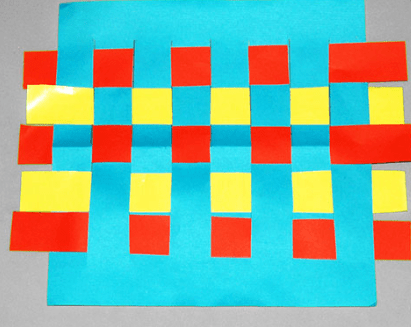
Make woven blankets. Fold a piece of construction paper in half the long length, one per child. Cut from the fold to approximately one inch from the outside edge. Open up, this is your weaving frame. Cut many one inch lengths of colored construction paper. Show the children how to take a length of colored paper and go under, over, under, over the weaving frame stripes. Take the next piece of colored paper and go over, under, over, under. Continue filling in the weaving frame.

Mathematics/Pattern & Measurement; enhances abilities to recognize, duplicate, and extend simple patterns using a variety of materials. AND Physical Health & Development/Fine Motor Skills; grows in hand-eye coordination in building with blocks, putting together puzzles, reproducing shapes and patterns, stringing beads, and using scissors.

Sand and Water

            Put out water and colanders or plastic containers with holes punched into the bottom to simulate rain.  Note that in the story it was raining outside the window. As they play, talk to them about rain. Talk about how it is important to be safe and come out of the rain if you hear thunder or see lightning.

Physical Health & Development/Health Status & Practices; builds awareness and ability to follow basic health and safety rules such as fire safety, traffic and pedestrian safety, and responding appropriately to potentially harmful objects, substances, and activities.

Library and Writing

            Give the children a piece of white paper and, tell them that you are going to tell them how to make a Mexican blanket.  Have them turn the paper the tall way (vertically).  On the top of the paper use a pencil and make an L on the left and an R on the right.  Model with your own piece of paper.  Tell, and show, the children to draw a blue dotted line from the left side to the right.  Next, tell and show them to draw a curly yellow line from the left side to the right.  Continue this using a variety of colors and different kinds of lines until they have filled their paper.  Use words that describe lines as you model ( dotted line, curly line, zig-zag line, straight line, thick line, wavy line). 

Language Development/Speaking & Communicating; uses an increasingly complex and varied vocabulary. AND Language Development/Listening & Understanding; show progress in understanding and following simple and multiple-step directions, AND Literacy/Early Writing; experiments with a growing variety of writing tools and materials, such as pencils, crayons, and computers.

Dramatic Play

            Use boxes and blankets to make beds.  Add stuffed animals. Encourage the children to act out the story.

Literacy/Book Knowledge & Appreciation; demonstrates progress and abilities to retell and dictate stories from books and experiences; to act out stories in dramatic play; and to predict what will happen next in a story.

Outdoor Play

            Tell the children that you are going to play a game of night and day.  Have the children sit in a circle.  Stand in the middle of the circle, holding your arms out and your hands up with your fingers spread.  Tell the children that your hands are the sun and when the sun is shining on them they are awake.  If your hands are not shining on them they are to pretend that they are asleep.  Slowly start turning in the circle and help them get the rhythm of the game.  As they are able to wake and sleep while you turn, speed up and slow down and see if they can keep up with your rhythm.

Approaches to Learning/Initiative & Curiosity; chooses to participate in an increasing variety of tasks and activities.

Transitions

Put a piece of tape on the backs of each of the napping house figures. Ask a child to put the dog over the cat or the grandmother under the mouse. Each child can have a turn moving pieces as they go to the next activity.

Mathematics/Geometry & Spatial Sense; builds an increasing understanding of directionality, order, and positions of objects, and words such as up, down, over, under, top, bottom, inside, outside, in front, behind.

Resources

Clarabella’s Teeth, by An Vrombaut

Clarabella Crocodile and her friends all take good care of their teeth. The problem is that Clarabella has so many teeth!

Materials

  • Several small purse size mirrors
  • Camera
  • Masking Tape
  • Paper plates

Vocabulary

  • Scooter (a thing you ride on while pushing with your foot to make it go)
  • Hygiene (all the ways we keep our bodies clean)
  • Cavities (holes, cracks, or openings that get in our teeth)
  • Dentists (the doctor who helps keep your teeth clean and healthy)

Before Reading the Story

Ask the children if they know what the word hygiene means. If they do not, explain that hygiene means all the ways that we keep our bodies clean. Let the children share with you some of the things that they do or do not to keep their bodies clean and healthy. ( I take a bath at night, My Mom tells me to put socks on when I wear my gym shoes, Daddy brushes my hair after my bath). After they have shared, tell them that you want to think especially about ways that we keep our teeth clean. Again, let the children discuss the topic. (I brush my teeth, I use my red toothbrush and go up and down).

Physical Health & Development/Health Status & Practices; shows growing independence in hygiene, nutrition, and personal care when eating, dressing, washing hands, brushing teeth, and toileting.

Reading the Story

When you get to the page where everyone is getting ready for bed and Clarabella sighs a long sigh, stop and ask the children if they might know what Ruby’s idea is.

Approaches to Learning/Reasoning & Problem Solving; develops increasing ability to find more than one solution to a question, task, or problem. AND Literacy/Book Knowledge & Appreciation; demonstrates progress inabilities to retell and dictate stories from books and experiences; to act out stories in dramatic play; and to predict what will happen next in a story.

After Reading the Story

Explain to the children that we brush our teeth to keep the plaque germs away that can make our teeth sick and get holes, these holes are called cavities. Brushing teeth is very important to keeping our teeth strong and white. Show the children how to properly brush their teeth. If you brush teeth at school, take time to watch as each child brushes today to make sure they are following the proper steps.

Physical Health & Development/Health Status & Practices; shows growing independence in hygiene, nutrition, and personal care when eating, dressing, washing hands, brushing teeth, and toileting.

Discovery

Give a child a small mirror and ask them to try to count how many teeth they have in their mouth. While they are looking, help them become aware of the various shapes of teeth in their mouths. Talk about how the thick molar teeth are for chewing and the pointy incisors are for ripping and tearing food.

Science/Scientific Skills & Methods; develops increasing ability to observe and discuss common properties, differences, and comparisons among objects and materials. AND Mathematics/Number & Operations; begins to make use of one-to-one correspondence in counting objects and matching groups of objects.

Take a close-up picture of each child’s smile and make it into a guessing game book, Who’s Smiling Here?

Social & Emotional Development/Self-Concept; begins to develop and express awareness of self in terms of specific abilities, characteristics, and preferences.

Music and Movement

Do the Toothbrush Chant.

Brush your teeth everyday
Up and down it is the right way
Back and forth and sideways too
We know exactly what to do.

Language Development/Listening & Understanding; shows progress in understanding and following simple and multi-step directions.

Do the Smile Talk and Chew Rap

Smile talk and chew
Smile talk and chew
These are the things that I can do
With my mouth, with my mouth
Smile talk and chew.

Creative Arts/Music; participates with increasing interest and enjoyment in a variety of music activities, including listening, singing, finger plays, games, and performances.

Blocks

Put a mirror into the center and ask the children to count the number of teeth that they see in their mouth. Ask them to represent their teeth with blocks. Encourage them to line the blocks up in a row use one block to represent each tooth and to perhaps also make a pattern of tall-short-tall-short.

Mathematics/Number & Operations; demonstrates increasing interest and awareness of numbers and counting as a means of solving problems and determining quantity.

Art

Give each child a piece of newsprint cut out into a simple crocodile shape. Have the children crumple the paper into a ball and then un-crumple. Make slightly watery brown paint and let the children paint the crocodile shape. When it has dried, add small white triangle shaped teeth. The crumpling of the paper makes the paint take on sort of a crocodile skin texture.

Creative Arts/Art; gains ability in using different art media and materials in a variety of ways for creative expression sands representation.

Make several crocodile heads on cardboard or thicker paper and let the children use play dough to make teeth by rolling the dough into small balls and placing it in the crocodile’s mouth. As they work, ask them how many teeth they have or show me four teeth, three teeth.

Mathematics/Number & Operations; demonstrates increasing interest and awareness of numbers and counting as a means of solving problems and determining quantity.

Library and Writing

Play ABC River Crossing. On the floor mark off a large “river” area with 2 pieces of masking tape. On the paper plates write letters of the alphabet. Use only a few if your children are just learning about letters and more if they have had some practice identifying letters. Have the children stand on one side of the river and hold up a letter card and name the letter and the letter sound. The child must jump to the corresponding paper plate/rock. Once the child is across, another child tries to get across the river.

Literacy/Alphabet Knowledge; shows progress in associating the names of letters with their shapes and sounds. And; identifies at least 10 letters of the alphabet, especially those in their own name.

Sand and Water

Fill the table with damp sand today and dig holes. Remind the children that cavities are holes in our teeth caused by germs called plaque. Tell the children that they are going to be the dentist. Pretend the sand is a tooth and let’s dig a cavity.  Then use sand toys or Popsicle sticks to fill the cavity/hole back in.

Creative Arts/Dramatic Play; shows growing creativity and imagination in using materials and in assuming different roles in dramatic play situations.

Dramatic Play

As the children play in the kitchen area today, ask them to identify which foods are crunchy and which are soft to chew.

Mathematics/Geometry & Spatial Sense; shows growth in matching, sorting, putting in a series, and regrouping objects according to one or two attributes.

Math and Manipulatives

Make a graph that represents toothbrush colors. Let the children mark the color toothbrush that they have (at school or at home).

Literacy/Print Awareness & Concepts; develops growing understanding of different functions of forms of print such as signs, letters, newspapers, lists, messages, and menus. AND Mathematics/Numbers & Operations[ begins to use language to compare numbers of objects with terms such as more, less, greater than, fewer, and equal to.

Outdoor Play

In the story Clarabella’s friends rolled over, leaped, bounced up and down, and spin round and round. Can you do these things on the playground? What other cool movements can you do?

Physical Health & Development/Gross Motor Skills; shows increasing levels of proficiency, control, and balance in walking, climbing, running, jumping, hopping, skipping, marching, and galloping.

Transitions;

Explain to the children that teeth are very important to help them to be able to say words correctly. Ask the children to try to wrap their lips around their teeth and then tell you their name, first and last. (My children find this funny to try to say their names with no teeth.) Science/Scientific Methods & Skills; begins to participate in simple investigations to test observations, discuss and draw conclusions, and form generalizations.

Dear Parent, Today we read a story about brushing teeth. Spend a moment tonight and brush your teeth along with your child and guide them through proper tooth brushing. Also take a moment to check their toothbrush for wear and tear; it might be time for a new replacement. Happy brushing!

Accompanying book;  A Day in the Life of a Dentist by Heather Adamson

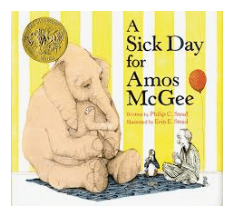
A Sick Day for Amos McGee, by Philip C. Stead

Amos McGee works at the city zoo.  Every day he visits his good animal friends until one day when he calls in sick and does not go to the zoo.  Find out what happens and how his friends come to make him feel better.

Materials

  • One head shape per child
  • Several boxes and marbles
  • Frozen ice block/s (see sand and water)
  • Many boxes, cubbies, or baskets
  • Stuffed animals from home
  • Box of animal crackers

Vocabulary

  • Amble (stroll or saunter)

Before Reading the Story

Talk to the children about the importance of washing hands and covering sneezes to prevent germ sharing. 

Physical Health & Development/Health Status & Practices; builds awareness and ability to follow basic health and safety rules such as fire safety, traffic and pedestrian safety, and responding appropriately to potentially harmful objects, substances, and activities.

Reading the Story

On the page where the animals ask, “Where is Amos?”, ask the children how they think the animals are feeling?  On the next page where it says, “Later that day…”, ask the children what they think the animals are doing?  And when they get on the bus, where do you think they might be going?

Literacy/Book Knowledge & Appreciation; demonstrates progress in abilities to retell and dictate stories from books and experiences; to act out stories in dramatic play; and to predict what will happen next in a story. AND Language Development/Speaking & CommunicAting; develops increasing abilities to understand and use language to communicate information, experiences, ideas, feelings, opinions, needs, questions; and for other varied purposes.

After Reading the Story

Talk about what you should do if you are sick? What should you do if you are unable to stay home? (Cover your mouth when you sneeze, wipe your nose when it runs, wash your hands often).

Physical Health & Development/Health Status & Practices; builds awareness and ability to follow basic health and safety rules such as fire safety, traffic and pedestrian safety, and responding appropriately to potentially harmful objects, substances, and activities.

In the story Amos was friends with many different animals and made each feel special by doing special things with them.  Name a way that you show kindness to someone around you/ a friend.

Social & Emotional Development/Social Relationships; shows progress in developing friendships with peers.

Talk about what Amos friends did to make him feel better.  What does your parent do when you are sick?  What kinds of things can you do to show you are a good friends?

Social & Emotional Development/Social Relationships; shows progress in developing friendships with peers.

Discovery

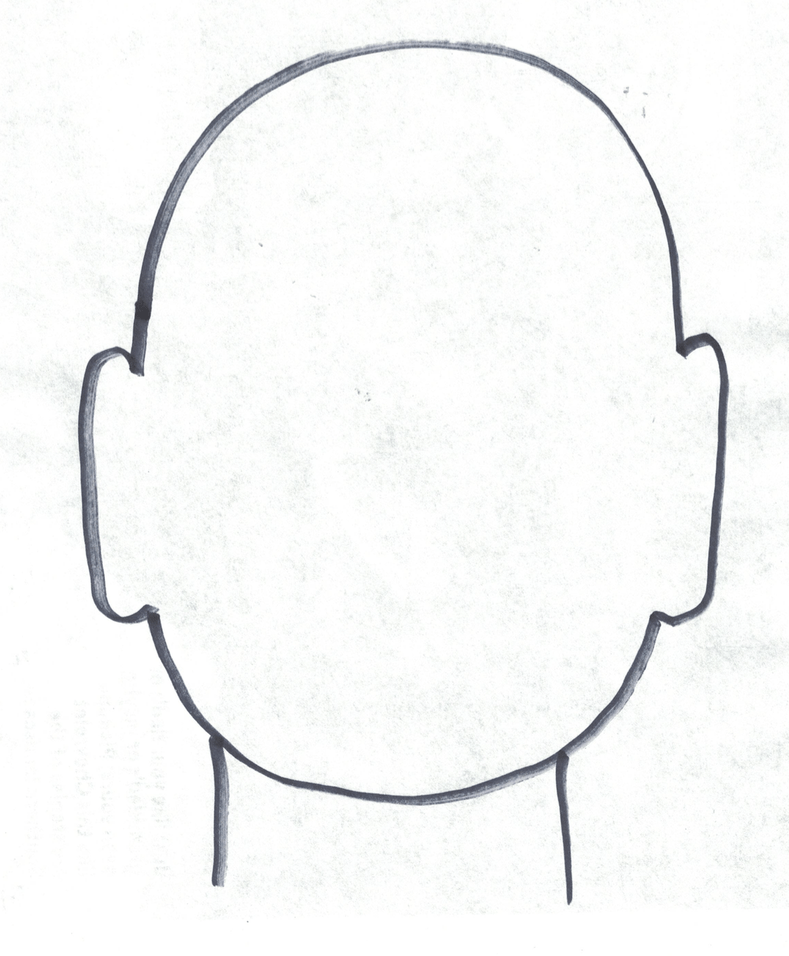
Make a Cover please when you sneeze poster. Give each child a head shape to color. Trace around their hand and help them cut it out. Glue a tissue paper onto the face and the hand on top of that. Write Cover please when you sneeze onto the paper.

Physical Health & Development/Health Status & Practices; builds awareness and ability to follow basic health and safety rules such as fire safety, traffic and pedestrian safety, and responding appropriately to potentially harmful objects, substances, and activities. AND Physical Health & Development/Fine Motor SKills; develops growing strength, dexterity, and control needed to use tools such as scissors, paper punch, stapler, and hammer.

Have the children take turns showing you their hand washing skills.

Physical Health & Development/Health Status & Practices; shows growing independence in hygiene, nutrition, and personal care when eating, dressing, hand washing, tooth brushing, and toileting.

Music and Movement

Teach the children, The Germ Stopping Song (see resources).

Physical Health & Development/Health Status & Practices; shows growing independence in hygiene, nutrition, and personal care when eating, dressing, hand washing, tooth brushing, and toileting.

While the children are washing their hands, teach them to repeat;

One bubble, two bubbles, three bubbles, four

Five bubbles, six bubbles, seven bubbles more.

Eight bubbles, nine bubbles, ten bubbles stop!

(Have children rinse hands and dry).

Mathematics/Number & Operations; develops increasing ability to count to ten and beyond.

Sing The Animals on the Bus go ____ on the way to the zoo. Sung to the tune The Wheels on the Bus. Let the children help make up what the animals do or say on the way to the zoo. (The tigers on the bus go growl, growl ,growl. The elephants on the bus sway back and forth, back and forth, back and forth)

Approaches to Learning/Reasoning & Problem Solving; develops more than one solution to a question, task, or problem.

Blocks

Today would be a perfect day to add zoo animals and encourage the children to make a zoo.

Literacy/Book Knowledge & Appreciation; demonstrates progress in abilities to retell and dictate stories from books and experiences; to act out stories in dramatic play; and to predict what will happen next in a story.

Art

Put out an art project today that can be done with a partner. Marble paint inside a box having two children each hold an end of the box and roll the marbles back and forth. Add a huge piece of paper to the easel and encourage the children to do a friendship painting together.

Social & Emotional Development/Cooperation; shows increasing abilities to use compromise and discussion in working, playing, and resolving conflicts with peers.

Sand and Water

Ahead of time freeze small plastic animals in blocks of ice.  Put into the table and ask the children to help you figure out how to get the animals out.  If you do not have small animals you could use pennies.  Several days ahead, fill a bowl aout an inch with water.  Drop in several small animals, freeze.  When it is frozen solid, make another layer.  Continue adding layers until the bowl is filled with small animals frozen in layers of ice.

Approaches to Learning/Reasoning & Problem Solving; grows in recognizing and solving problems through active exploration, including trial and error, and interactions and discussions with peers and adults.

Library and Writing

Amos read to the owl at night.  Read to the children as they are preparing for nap time.

If you could visit with any animal, what animal would you like to visit with and what would you do?  Illustrate   (I would visit the giraffe and we would pick apples,  I would visit the lion and we would slide on the bumpy slide).

Literacy/Early Writing; begins to represent stories and experiences through pictures, dictation, and play.

Dramatic Play

Let the children bring stuffed animals from home.  Provide boxes that they can use for cages.  Encourage them to be the zoo keeper and clean the cages, feed the animals, and play/exercise with the animals.

Literacy/Book Knowledge & Appreciation; demonstrates progress in abilities to retell and dictate stories from books and experiences; to act out stories in dramatic play; and to predict what will happen next in a story. AND Creative Arts/Dramatic Play; participates in a variety of dramatic play activities that become more extended and complex.

Math and Manipulatives

Use Animal Crackers to sort and count.

Mathematics/Number & Operations; begins to use one-to-one correspondence in counting objects and matching groups of objects.

Amos played a board game with the elephant.  Get out a board game and play with the children.

Social & Emotional Development/Cooperation; develops increasing abilities to give and take in interactions; to take turns in games and using materials; and to interact without being overly submissive or directive.

Outdoor Play

Remind the children that Amos McGee would run races with the tortoise everyday.  Make a set of races to do with your children.  (Run from point A to point B.  Roll a ball from point A to point B.  Hold hands and run).

Physical Health & Development/Health Status & Practices; participates actively in games, outdoor play, and other forms of exercise that enhance physical fitness.

Transitions

As you move about the room today, tell the children that you a want to go spend a little time visiting with the children in another center but that you will be back soon.

Approaches to Learning/Engagement & Persistence; shows capacity to maintain concentration over time on a task, question, set of directions or interactions despite distractions and interruptions.

Resources

for counting animal crackers
frozen ice blocks