Ten Terrible Dinosaurs, by Paul Strickland

            What child doesn’t like dinosaurs?  This fun book will help children with their number awareness. 

Materials

  • A variety of small dinosaurs
  • Some rocks, sticks, grass, etc. to make dinosaur habitats/dioramas

Vocabulary

  •   Enormous (really, really big)
  •   Spiky (sharp and pointed)
  •   Elated (to be happy)
  •   Feisty (acting pretty wild)
  •   Weary (tired)
  •   Carnivore (one who eats meat)
  •   Herbivore (one who eats plants)
  • Canine teeth (the pointed tooth between the incisors and the molars, people have   one on each side of their mouth.)

Before Reading the Story

            Today the children will be exploring their teeth before reading the story.  Make sure that the children have washed their hands appropriately before they come to the group today so that they will not be putting dirty fingers into their mouths.  On a piece of paper, draw a large tooth.  Ask the children if they know what it is.  Talk for a moment about dental care (brushing, dentist visits, minimal sugars, and not using teeth to open things).  After you have discussed dental care to your and the children’s satisfaction, point to the tooth you drew and ask the children if all teeth are shaped like this.  Draw a pointy canine tooth.  Tell them that some teeth are shaped like this and ask them to touch the tooth in their mouth that is pointy  like this.  Explain that this tooth is called a canine tooth. It is pointy so that it can tear and eat meat.  People and animals that eat meat are called carnivores.  Ask them to think about other animals that might have pointy teeth.  After each, if it is a meat eater say, “Yes, it’s a carnivore”.  Have the children go back into their mouths and touch a back molar.  Explain that some teeth are flat like these and are called molars. People and animals use them so that they can chew plants like vegetables and fruits.  Tell them that people and animals that eat plants are called herbivores.  Ask them to think of some animals that might be herbivores.  If it is a plant eater say, “Yes, a (rabbit) is an herbivore.  If the animal eats both meat and plants tell the children that it is both an herbivore and a carnivore and has a special name called omnivore.  Let the children name animals and guess. Make sure the children are repeating back the words to you. (I like meat and veggies so I am an omnivore. My sister only eats veggies so she is an herbivore like a rabbit).

Science/Scientific Skills & Methods; begins to participate in simple investigations to test observations, discuss and draw conclusions, and form generalizations. AND Language Development/Speaking & Communicating; uses an increasingly complex and varied vocabulary.

Reading the Story

            Tell the children that your story today is about a creature that is sometimes an herbivore and sometimes a carnivore.  Read the title of the book and look at the dinosaurs on the cover.  Point to each one and ask, could this one be a carnivore?  (Only the ones with visible teeth count)  When you get to the pages that say, “so then there were”…pause to see if the children can name the correct number. 

Mathematics/Number & Operations; demonstrates and increasing interest and awareness of numbers and counting as a means for solving problems and determining quantity.

After reading the Story

            Hold up 10 fingers and state, “10 take away one equals _____.  Let down a finger.  (take away one equals ____.)  Continue down to zero. 

Mathematics/Number & Operations; develops increased abilities to combine, seperate, and name “how many” concrete objects.

Discovery

            Bring in pictures of dinosaurs or books about dinosaurs.  Literacy Knowledge and skills; shows interest in shared reading experiences and looking at books independently. 

Literacy/Book Knowledge & Appreciation; shows growing interest in reading-related activities, such as asking to have a favorite book read; choosing to look at books; drawing pictures based on stories; asking to take books home; going to the library; and engaging in pretend reading with a peer.

Music and Movement

            Say, “Feel that shaking on the floor, must be the dancing of the dinosaurs!”  Turn on some lively music and stomp, twist and dance to the music. 

Creative Arts/Movement; shows growth in moving in time to different patterns of beat and rhythm in music.

Sing 10 Big Dinosaurs to the tune of 10 little indians.

1 big, 2 big, 3 big dinosaurs,

4 big, 5 big, 6 big dinosaurs,

7 big, 8 big, 9 big dinosaurs,

Ten big dinosaurs!

They all lived a long, long time ago.

They all lived a long, long time ago.

They all lived a long, long time ago.

.Now they are extinct. (Now they live no more)

Mathematics/Number & Operations;develops increasing ability to count to ten and beyond.

Blocks

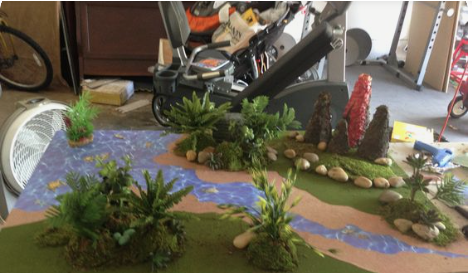
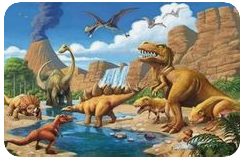
            Dinosaurs in blocks would be fun.  Encourage children to create a habitat. Hang a picture on the wall so the children can see what earth looked like during the dinosaur era.

Approaches to Learning/Engagement & Curiosity; demonstrates increasing ability to set goals and develop and follow through on plans.

Art

            Move the chairs away from your art table and have the children stand around the edges.  Tell them that you are going to be dancing, twirling, silly dinosaurs.  Put out two primary colors of finger paint directly on the table and some lively music.  As the children finger paint the table top, help them be aware that the two colors are mixing into a new one.  (This is really fun but make sure to give yourself ample clean-up time as it tends to be messy).

Creative Arts/Movement; shows growth in moving in time to different patterns of beat and rhythm in music. AND Science/Scientific Skills & Methods; begins to use senses and a variety of tools and simple measuring devices to gather information, investigate materials, and observe processes and relationships.

Library and Writing

            Make a large D on a piece of paper.  Tell the children that this is a capital D that begins the word dinosaur.  Ask the children to think of as many D words as they can and write them on the paper with the large D.

Literacy/Phonological Awareness; shows growing awareness of beginning and ending sounds of words.

Sand and Water

            Add small dinosaurs to the sand table.  Dampen the sand so the children can make mountains, craters, and volcanoes.  Add rocks and sticks to make a dinosaur diorama. 

Approaches to Learning/Initiative & Curiosity; approaches tasks and activities with increased flexibility, imagination, and inventiveness.

Dramatic Play

            As the children move about the room today, at intervals call out , “Dinosaurs Roar!” and encourage all the children to roar loudly with you.  When you are counting down 10 minutes to clean-up you can ask the dinosaurs if they heard you and they can roar, Kerry, it’s time to use the bathroom (have Kerry roar that she heard you). If a child is feeling frustrated ask them to roar and then ask them to raor again louder.

Social & Emotional Development/Self-Control; shows progress in expressing feelings, needs, and opinions in difficult situations and conflicts without harming self, others, or property.

Math and Manipulatives

            This would be a good day to put out any puzzles relating to dinosaurs, teeth, or numbers. 

Physical Health & Development/Fine Motor Skills; grows in hand-eye coordination in building with blocks, putting together puzzles, reproducing shapes and patterns, stringing beads, and using scissors. AND Approaches to Learning/Engagement & Persistence; grows in abilities to persist in and complete a variety of tasks, activities, projects, and experiences.

Outdoor Play

            Choose one child to be the ferocious, meat eating Tyrannosaurus Rex.  The rest of the children can be the gentle plant-eating dinosaurs.  The T Rex is it and chases the others.  If they are caught, they must go stand by a tree and pretend to eat the leaves until the T Rex has caught three children and then a new T Rex is chosen. 

Social & Emotional Development/Cooperation; develops increasing abilities to give and take in interactions; to take turns in games and using materials; and to interact without being overly directive or submissive. AND Mathematics/Number & Operations; begins to associate number concepts, vocabulary, quantities, and written numerals in meaningful ways.

Transitions

            As the children go to their next activity, ask them to make loud chomping sounds if they are an herbivore plant eater, roar if they are a carnivore meat eater, now stomp on off. 

Language Development/Listening & Understanding;understands an increasingly and complex vocabulary.

Resources

to hang in block center

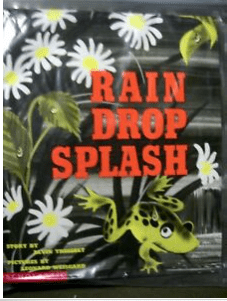
Rain Drop Splash, by Alvin Tresselt

            This is the story of rain that falls and makes its journey from a small stream out to the ocean.  It grows and changes and sees many things along they way.  This story simply tells the progression of rainfall from mountain to sea.

Materials

  •  Pipes for pipe game
  •  Life preserver
  • Ping pong ball
  • Variety of substances (old coffee grounds, cornstarch, flour, veggie oil, sand, dirt, salt, etc
  • Hula Hoops or taped squares on the floor
  • Raindrop page
  • Cloud with raindrop poem on it, one per child

Vocabulary

  • Docks (Where the captains park their boats, a parking lot for boats)
  • Evaporation (to disappear or vanish)
  • Repel (to resist and not mix into)

Before Reading the Story

  Ask the children if they like rainy days (why-why not?). Explain that rain is very important to people and the environment. Ask the children to help make a list of why water is important (fish live in it, animals and people drink water, you can swim in a lake, birds and animals live near the water, it makes plants grow, you can use a boat, we bath, brush teeth, etc.)  The idea is to show the children that water is very important and that people and animals and plants need it to live and do things.

Science/Scientific Knowledge; expands knowledge if and ability to observe, describe, and discuss the natural world, materials, living things, and natural processes.

Reading the Story

            Note all the important and interesting things that happen along the water’s edge as you read.  On the page that starts with “Still it rained”, stop and ask the children if they can see what is happening t the water?(Point out how the water continuously moves and grows larger). When the lake takes over the farmers meadow, ask the children what they think is going to happen?

Literacy/Book Knowledge & Appreciation; shows growing interest and involvement in listening to and discussing a variety of fiction, non-fiction, and poetry.

After Reading the Story

            Say to the children that that was a very busy story. Ask the children if they can remember some of the important things that happened in and on the edge of the water? Make a list that you can later hang on the wall.

Literacy/Book Knowledge & Appreciation; demonstrates progress in abilities to retell and dictate stories from books and experiences; to act out stories in dramatic play; and to predict what will happen next in a story.

            Talk to the children about water safety.  The importance of wearing a life preserver when you go to the lake, bring in a life preserver if you have one.  Talk about how children should not play in or near water without an adult.  Depending upon where you live and the kinds of water that your children might visit, lead your discussion.

Physical Health & Safety/Health Status & Practices; builds awareness and ability to follow basic health and safety rules such as fire safety, traffic and pedestrian safety, and responding appropriately to potentially harmful objects, substances, and activities.

Discovery

            Let the children explore how water mixes with other ingredients.  On a tray place an eye dropper or small spoon along with several bowls containing a variety of substances (old coffee grounds, cornstarch, flour, veggie oil, sand, dirt, salt, etc).  Let the children pour a bit of this and that into a cup and see how it mixes.  Does the ingredient mix with the water or repel the water?

Science/Scientific Skills & Methods; begins to participate in simple investigations to test observations, discuss and draw conclusions, and form generalizations.

Music and Movement

            Bring in hula hoops and ask the children to pretend that they are puddles.  Tell them that we are going to dance around the puddle and when the music stops everyone must jump into a puddle, careful because we will have to share the puddles.  You can also jump around the puddle, over the puddle, through the puddle.

Physical Health & Development/Health Status & Practices; participates actively in games, outdoor play, and other forms of exercise that enhance physical fitness. AND Mathematics/Geometry & Spatial Sense; builds an increasing understanding of directionality, order, and positions of objects, and words such as up, down, over, under, top, bottom, inside, outside, in front, and behind.

            Teach the children the poem, Rain

When the rain comes down drip drop drip drop,
(flutter fingers down in front of you)
Windshield wipers flip flop flip flop,
(bend arms in front and move them side to side)
Boots in puddles plip plop plip plop,
(move feet up and down)
I wish the rain would never stop.
Drip drop drip, (use motions as you say it)
Flip flop flip,(“” )
Plip plop plip plop, (“”)
PLOP! (do the motions and jump)

Language Development/Listening & Understanding; demonstrates increasing ability to attend to and understand conversations, stories, songs, abd poems.

          Play Don’t Fall In The Water.  Put two pieces of tape on the floor about 5 feet long.  These will make the river.  Cut out large organic shapes from brown construction paper.  These are the rocks in the middle of the river.  On each rock write a letter, number, or shape depending on the concept you want to reinforce.  Have the children stand on one side of the river.  As they take their turn crossing call out what letter you want them to step on.  If they get it wrong or miss then they fall into the river.

Language Development/.Listening & Understanding; shows progress in understanding and following simple and multiple-step directions. AND Literacy/Alphabet Knowledge; identifies at least 10 letters of the alphabet, especially those in their own name.

Sing, If All the Raindrops Were Lemon Drops and Gum Drops https://www.youtube.com/watch?v=cNvL_5COPtM. Just sing the first verse about raindrops. After the children get the hang of the song, you can have them help name kinds of candy, dinner foods, snacks, etc that the raindrops could be.

Approaches to learning/Reasoning & Problem Solving; develops increasing ability to find more than one answer to t a question, task, or problem.

Blocks

            Encourage the children to make a river with their blocks.  Encourage them to make the river bend and change direction. Show them how to blow the ping pong ball down the river.  Explain that they can pretend that the ping pong ball is a boat sailing down the river.

Approaches to Learning/Engagement & Persistence; demonstrates increasing ability to set goals and develop follow through on plans. AND Approaches to Learning/Reasoning & Problem Solving; grows in recognizing and solving problems through active exploration, including trial and error, and interactions and discussions with peers and adults.

Art

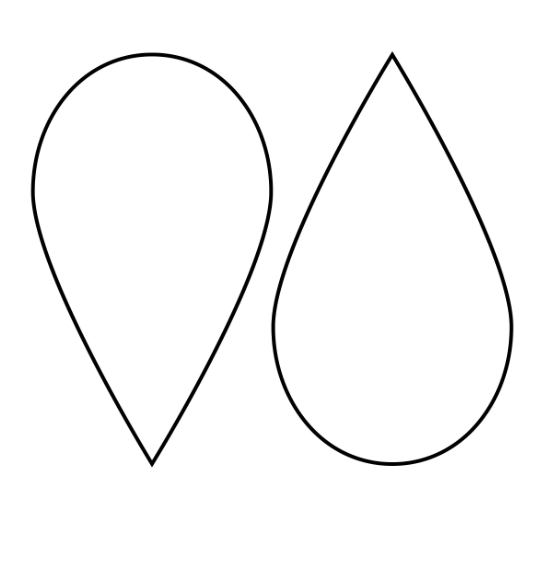
            Give the children a page with raindrops on it. Let them use watercolors to paint them. When they are dry, have older children, or teacher cut them out. You can punch a hole in them and hang them from the ceiling over the table. For older children you can draw and cut out several raindrop shapes out of a manila folder and the children can use this for a stencil to draw around and cut out and then paint.

Creative Arts/Art; progresses in abilities to create drawings, paintings, models, and other art creations that are more detailed, creative, or realistic. AND Physical Health & Development/Fine Motor Skills;grows in hand-eye coordination in building with blocks, putting together puzzles, reproducing shapes and patterns, stringing beads, and using scissors.

Library and writing

Give the children a copy of the Rain, Rain Go Away poem. Show them where the blank is for them to write their name. After they have written their name, let them color the cloud. Hang these on the wall so that people can see how hard the children are working on writing their names.

Literacy/Early Writing; progresses from scribbling, shapes, or pictures to represent ideas, to using letter-like symbols, to copying or writing familiar words such as their own name.

Sand and water

      Water play

Social & Emotional Development/Self-Control; demonstrates increasing capacity to follow rules and routines and use materials purposefully, safely, and respectfully.

Dramatic Play

            Bring in the life preservers and the children can pretend to be on a boat going down the river. Bring in boots and rain jackets and the children can pretend to be going out in the rain. Or just have your basic home center and the children can pretend that it is a rainy day. Ask them to think of things that could act out in each scenario.

Creative Arts/Dramatic PLay; shows growing creativity and imagination in using materials and in assuming different roles in dramatic play situations.

Math and Manipulatives

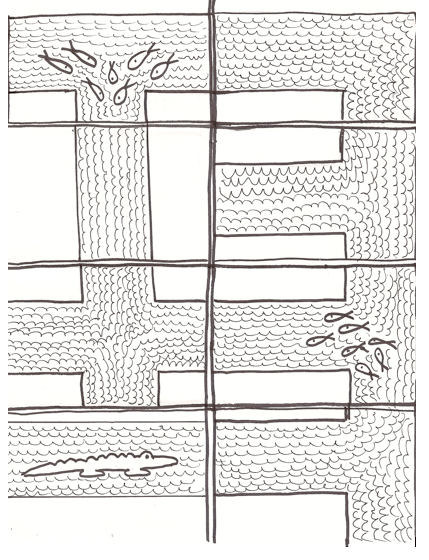
            Play Pipes.  Make several copies of the pipes cards.  Cut them out and contact them so they will last. Tell the children that water comes into your home and school through pipes under the ground.  Have the children use the pipes to connect and make an ongoing connection.

Physical Health & Development/Fine Motor Skills;grows in hand-eye coordination in building with blocks, putting together puzzles, reproducing shapes and patterns, stringing beads, and using scissors.

Outdoor play

            Water play on the playground.  Set a hose on trickle and let the children put the end in the dirt or sand to make rivers, lakes, and an ocean. Add plastic animals and boats if you have them. As they play, the water will evaporate. Teach them the definition of.

Transitions

Play 1-2-3 what number do you see? Call on a child and then make two fists with your hands and say,”1-2-3 __________ what number do you see”? At the see part hold up 0-10 fingers. The child must name the amount before they can move onto the next activity.

Mathematics/Number & Operations; begins to use one-to-one correspondence in counting objects and matching groups of objects.

Resources

Raindrops for Art
Cards for PIPE game

On Bird Hill, by Jane Yolan

On Bird Hill is a story that follows a boy and his dog as they discover a bird nest. The story follows a similar path as the song, The Green Grass Grew All Around. This is a nice book to introduce a unit on Ornithology or spring.

Materials

  • Find or make a poster of birds in your area. Hang by a window where the children can look out and look for common birds.
  • Pipe cleaners in 3-5 inch pieces and bowls that correspond in color.
  • Tweezers, tongs, clothes pins, chopsticks, forks.
  • Newspaper, shredded
  • Jelly Beans
  • 20 Egg shapes
  • Bird flying to nest picture, 1 per child
  • Box of Cheerios and 12 inch lengths of yarn

Vocabulary

  • Habitat (Where a bird or other animal lives. It is their home where they find food, water, and shelter).
  • Camouflage (To blend into the environment so difficult to see).
  • Ornithologist (A person who studies birds).
  • Chick (A baby bird).
  • Territorial (The area around the birds home/nest that they protect against strangers and other animals).

Before Reading the Story

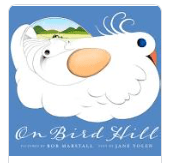
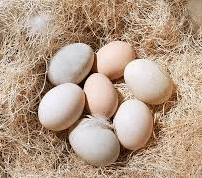
Hold up the cover of the book and ask the children if they can guess what today’s story is about. Begin a conversation about birds. Do the children know where they live? (Many birds live in trees but they also live in bushes and rocks. They live in the country and also in the city. Where there home is is called their habitat). Do they know the names of any birds? What makes a bird a bird? (All birds have feathers, 2 feet, and beaks. Most birds can fly). Ask the children what the brown oval like shape is on the cover of the book, an egg. Explain to the children that birds lay eggs. Show them a picture of several real eggs. Do all eggs look the same? Count the number of eggs in each of the pictures, which has the most, the least? Ask the children again what they think the story might be about. Introduce the story.

Science/Scientific Knowledge; expands knowledge of and abilities to observe, describe, and discuss the natural world, materials, living things, and natural processes. AND Mathematics/Number & Operations; develops increasing ability to count in sequence to 10 and beyond.

Reading the Story

At the end of the story, have the children crouch very small into an ‘egg’ shape and then slowly crack their shell by pecking. Slowly uncrouch, stretch wings/arms, shake out legs, look around, and then fly away around the room and back to their nest.

Creative Arts/Dramatic Play; participates in a variety of dramatic play activities that become more extended and complex.

After Reading the Story

Can the children recall the order in which the story took place? Ask them what happened first, then open the page to reveal. What happened next? Turn the page. Do this as a picture walk with the children telling what is happening on each page.

Literacy/Book Knowledge & Appreciation; demonstrates progress in abilities to retell and dictate stories from books and experiences; to act out stories in dramatic play; and to predict what will happen next in a story.

Discovery

Watch a video of baby birds hatching. https://www.youtube.com/watch?v=nAfm7ErYLXg

Science/Scientific Knowledge; expands knowledge of and abilities to observe, describe, and discuss the natural world, materials, living things, and natural processes.

Set out a bird feeder and a poster showing common birds in your area. Make several pairs of binoculars by taping two toilet tubes together. Encourage the children to look from the feeder to the poster and try to identify the birds. If your feeder is popular, keep a running tally of the birds who visit it.

Mathematics/Geometry & Spatial Sense; begins to be able to determine whether or not two shapes are the same size and shape. AND Science/Scientific Skills & Methods; develops growing abilities to collect, describe, and record information through a variety of means, including discussion, drawings, maps, and charts.

Music and Movement

Teach the children the song, The Green Grass Grew All Around. https://www.youtube.com/watch?v=6AsSBYIrZNo This song is a echo song where the children echo back to you line by line.

Language Development/Listening & Understanding; demonstrates increasing ability to attend to and understand conversations, stories, songs, and poems.

Put on the song, Just Flap Your Wings Together, and teach the children the movements. https://www.youtube.com/watch?v=VaARSaHa5GA

Language/Listening & Understanding; shows progress in understanding and following simple and multiple-step directions. AND Approaches to Learning/Initiative & Curiosity; chooses to participate in an increasing variety of tasks and activities.

Play the song, Three Little Birds by Bob Marley and let the children dance to the music. https://www.youtube.com/watch?v=zaGUr6wzyT8

Creative Arts/Movement; expresses through movement and dancing what ifs felt and heard in various musical tempos and styles.

Sing Two Little Blackbirds https://www.youtube.com/watch?v=08s1i5h2xFw. Start with holding up one finger from each hand and have them fly behind your backs. Sing again holding up 2 fingers on each hand, have the children count. Now sing about 4 little blackbirds and have them fly behind your backs. Continue till you have all 5 fingers on each hand held up and sing about 10 little blackbirds.

Mathematics/Number & Operations; develops increased abilities to combine, separate and name “how many” concrete objects.

Teach the children the chorus of Blue Bird and let them take turns going through the windows. https://www.youtube.com/watch?v=arwbBx1jmQY

Social & Emotional Development/Cooperation; develops increasing abilities to give and take in interactions; to take turns in games or using materials; and to interact without being overly submissive or directive.

Blocks

As the children build in blocks today, stop by and ask them to pretend they are woodpeckers. Explain that woodpeckers tap on trees to find insects to eat. Show them by tapping onto a block several times. Ask them if they have ever heard that sound when they are outside? If they have, it was probably a woodpecker! Now play the woodpecker game. Woodpecker, woodpecker tap for me…tap your beak to the number 1-10. The children then tap out the correct number while counting out loud.

Mathematics/Number & Operations; develops increased abilities to combine, separate and name “how many” concrete objects.

Art

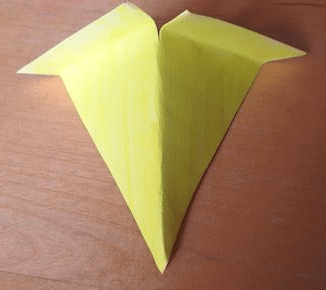
Make bird puppets. https://www.youtube.com/watch?app=desktop&v=vf3vqxEyRyg. Older children should be able to do most of the folding by themselves with some adult supervision.

Language/Listening & Understanding; shows progress in understanding and following simple and multiple-step directions.

Add sturdy feathers to the easel today to use as paint brushes.

Set out bowls of Cheerios. Give each child a 12-inch length of yarn (one end should have a Cheerio tied to it and the other end a bit of masking tape around it to make it firm). Let the children string the Cheerios and then take them to the playground or outside your science window for the children to watch the birds come to eat off them).

Physical Health & Development/Fine Motor Skills; grows in hand-eye coordination in building with blocks, putting together puzzles, reproducing shapes and patterns, stringing beads, and using scissors.

Library and Writing

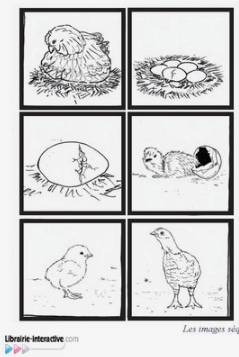
Use the sequence cards of a bird hatchling and also from The Green Grass Grew All Around. Can the children put them in correct sequential order?

Literacy/Book Knowledge & Appreciation; demonstrates progress in abilities to retell and dictate stories from books and experiences; to act out stories in dramatic play; and to predict what will happen next in a story.

Use the bird flying to nest picture (one per child) and have the children follow the lines with a marker from bird to nest. Are they able to stay within the lines?

Literacy/Early Writing; experiments with a growing variety of writing tools and materials such as pencils, crayons, and computers.

Sand and Water

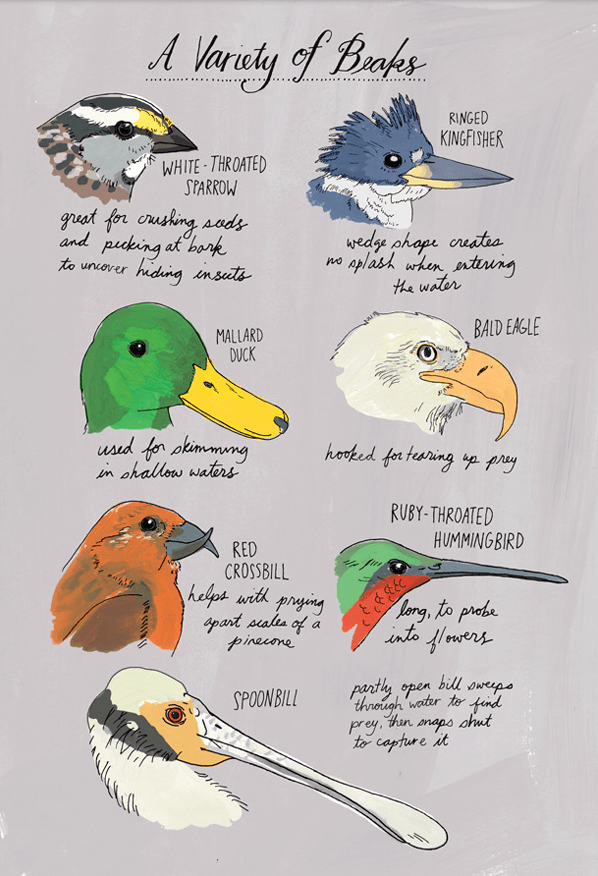
Fill the table with shredded newspaper about one inch deep. Cut pipe cleaners into 3-5 inch lengths. Add bowls to correspond with the colors of pipe cleaners (color the bottoms of the bowl). Explain to the children that birds use their beaks to gather food. Have the children pretend to be birds by using the tongs, tweezers, chopsticks, and fork to pick-up the worms from the table and put them in the matching colored bowls. (Hang the picture of the bird beaks over the table and share with the children the explanations of the different bills. Picture taken from A Glorious Illustrated Love Letter to Curiosity and the Magic of Our World, by J. Rothman)

Physical Health & Development/Fine Motor Skills; develops strength, dexterity, and control needed to use tools such as scissors, paper punch, stapler, and hammer.

Fill the table with birdseed today. Add small bird feeders and various sizes of containers for the children to fill and scoop. How many scoops from this container does it take to fill this bird feeder? Have the child count as they scoop. (when you are finished using the seed in the table, use it to feed the birds)

Dramatic Play

Add colorful scarves to the center and make simple beaks stapled to headband made from sentence strips (many children do not like wearing a mask that covers their face). Turn the table over or add boxes and blankets to make nests.

Creative Arts/Dramatic Play; shows growing creativity and imagination in using materials and in assuming different roles in dramatic play situations.

Math and Manipulatives

Give each child 10 jelly beans. Have them sort them by color and then count each color. Which color has the most? The least, any two colors have equal amounts? Which color is the child’s favorite? (Ask a child to eat one of the 3 red jelly beans, how many do you have left?).

Mathematics/Geometry & Spatial Sense; shows growth in matching, sorting, putting in a series, and regrouping objects according to one or two attributes such as color, shape, or size. AND Mathematics/Number & Operations; begins to use language to compare numbers of objects with terms such as more, less, greater than, fewer, and equal to.

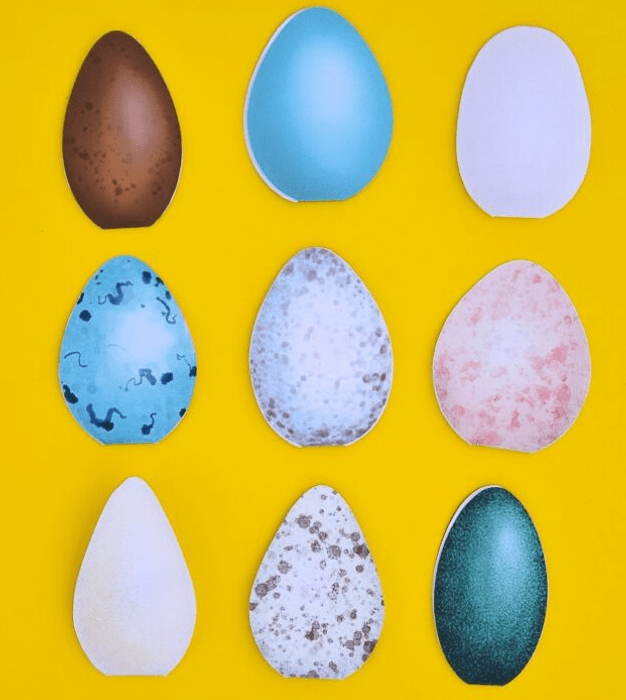
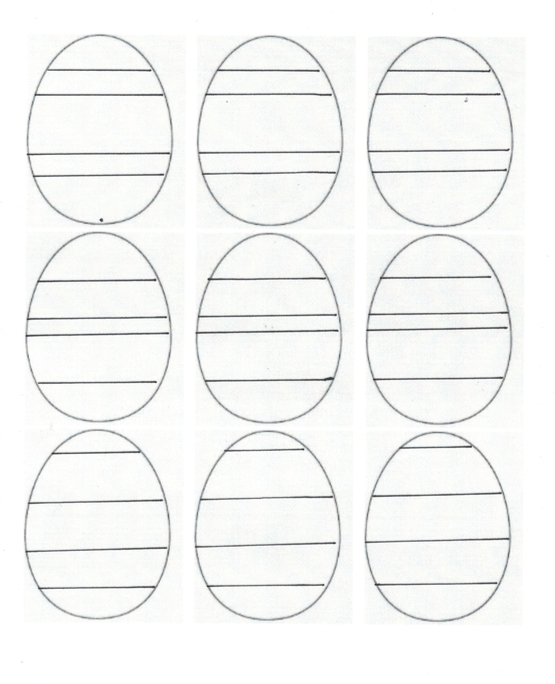
Ahead of time print 2 copies of the egg patterns page. Color the eggs to make 9 sets of 2. These can then be used for matching or playing memory.

Mathematics/Patterns & Measurement/ shows increasing abilities to match, sort, put in a series, and regroup objects according to one or two attributes such as shape or size.

Outdoor Play

My class used to like to use rakes, shovels, and brooms to gather pine needles to make a nest. The pine cones can then become the eggs.

Creative Arts/Dramatic Play; shows growing creativity and imagination in using materials and in assuming different roles in dramatic play situations.

Pretend to be birds and flap around the playground. Fly to your nest and feed your babies. Then fly back out around the playground to look for more bugs or seeds. Take turns being the adult birds flying around and coming back to feed the baby birds who sit in the nest and cheep loudly. The parent bird can pretend to feed the baby bird and then they can switch roles.

Creative Arts/Dramatic Play; shows growing creativity and imagination in using materials and in assuming different roles in dramatic play situations.

Transitions

Hang the pictures of the real eggs on the wall where the children can reach them. Give each child a piece of masking tape with their name written on it. Have them stick their name beside the nest that they think is the most beautiful. Which nest has the most votes?

Mathematics/Number & Operations; demonstrates increasing interest and awareness of numbers and counting as a way for solving problems and determining quantity.

Resources

This web site includes pictures, characteristics, and songs of common birds. https://www.audubon.org/news/get-know-these-15-common-birds

color eggs for pattern play