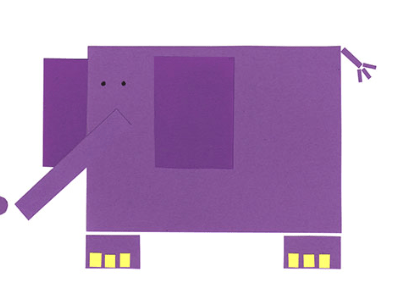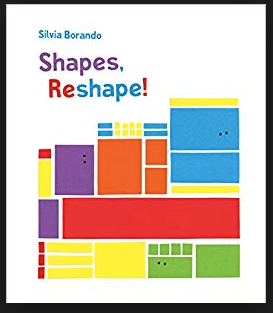
Shapes, Reshape! By Silvia Borando

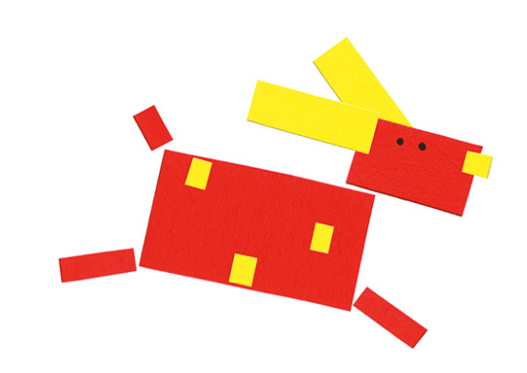
This book is a fun way to reinforce the shape rectangle.    Using riddles and counting from 10-1, Ms. Borando shows various ways to use rectangles in art.

Materials

  • Manila folder or cardboard cut into various sized rectangles.
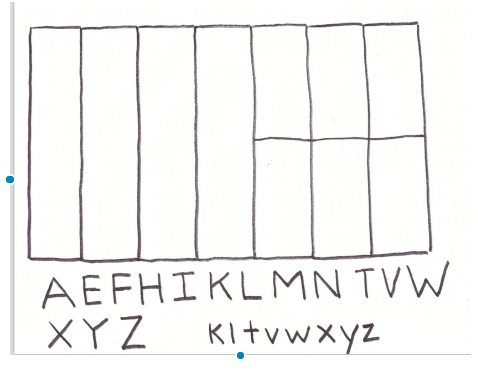
  • Rectangle shape page
  • Directions for drawing animals
  • Box of envelopes and stickers
  • List of names of the children in your classroom
  • Parquetry shapes

Vocabulary

  • Rectangle (a shape that has four sides, two are longer and two are shorter)

Before Reading the Story

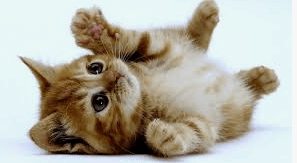
Play a shape game that you have already taught the children.  Or make a large triangle, rectangle, square, circle, and oval out of construction paper.  Cut out the kitten picture.  Have a child hide their eyes and hide the kitten under one of the shapes.  The child then uncovers their eyes and has three tries to guess which shape the kitten is hiding under.  Tell the children that they must call out the shapes name and not just point to their guess.  With younger children only use three shapes to start.  Give everyone a turn to hide his or her eyes and guess where the kitten is hiding.

Mathematics/Geometry & Spatial Sense; begins to recognize, describe, compare, and name common shapes, their parts and attributes.

Reading the Story

After each page with the riddle, wait before turning the page so the children have time to guess what the animal might be.  On the pages where it shows the animals, count the objects with the children.  Act out the actions in a simple manner to help the children understand all the words.

Approaches to Learning/Reasoning & Problem Solving; develops increasing abilities to classify, compare, and contrast objects, events, and experiences.

After Reading the Story

Ask the children if they can recall the animals in the story.  Give them hints by reading what the action is that the animal was doing. (10 and fluttering dragonflies, 7 peck, peck, pecking chickens, etc.).

Literacy/Book Knowledge & Appreciation; shows growing interest and involvement in listening to and discussing a variety of fiction and non-fiction, and poetry.

Discovery

Put out a shell or rock collection today along with a piece of black construction paper (this is a rectangular shape).  Encourage the children to use the collection to go around the edges of the paper.  You can also cut out a square, triangle, and circle shape to go around.  This is also fun to do with play dough.

Mathematics/Geometry & Spatial Sense; builds an increasing understanding of directionality, order, and positions of objects, and words such as up, down, over, under, top, bottom, inside, outside, in front, and behind.

Music and Movement

Teach the children The Rectangle Poem.  As you say the poem with the children, encourage them to draw the shape in the air.

A long line at the bottom,
A long line at the top,
A short line to connect each side,
A rectangle you’ve got!
A short line at the bottom
A short line at the top
A long line to connect each side
A rectangle you’ve got!

Mathematics/Geometry & Spatial Sense; begins to recognize, describe, compare, and name common shapes, their parts and attributes.

Sing The Shape Song to the tune of Frere Jacques /https://www.youtube.com/watch?v=BC6rvbxdywg

(Draw the shapes on a marker board as you sing the song).

This is a square, this is a square,
How can you tell? How can you tell?
It has four sides,
All the same size.
It’s a Square, It’s a Square.
This is a circle, this is a circle.
How can you tell? How can you tell?
It goes round and round,
No end can be found.
It’s a circle, It’s a circle.
This is a triangle, this is a triangle.
How can you tell? How can you tell?
It only has three sides,
That join to make three points.
It’s a Triangle, It’s a triangle.
This is a Rectangle, This is a rectangle.
How can you tell? How can you tell?
It has two short sides
And it has two long sides.
It’s a rectangle, It’s a rectangle.

Mathematics/Geometry & Spatial Sense; begins to recognize, describe, compare, and name common shapes, their parts and attributes.

Blocks

Ask the children to sort your wooden blocks by rectangles and not-rectangles.  When they have finished sorting, have them sort the rectangle blocks by size (serration).

Mathematics/Geometry & Spatial Sense; shows growth in matching, sorting, putting in a series, and regrouping objects according to one or two attributes such as color, shape, or size.

Art

Ahead of time, cut out many rectangles from colored construction paper.  Put all the rectangles out on the table along with the book, Shapes, Reshape and glue sticks.  Allow the children to collage using the rectangles however they choose.  Are any of the children making simple patterns?  Are any copying one of the animal shapes in the book?

Creative Arts/Art; begins to understand and share opinions about artistic products and experiences.

Sand and Water

If you have parquetry shapes, add them to the table today along with water.  Give the children pinchers to try to pick up the shapes out of the water.  As they pick up the shapes, ask them to name them for you.  (You picked up a green circle.  How many red rectangles do you have?).

Mathematics/Geometry & Spatial Sense; begins to recognize, describe, compare, and name common shapes, their parts and attributes.

Library and Writing

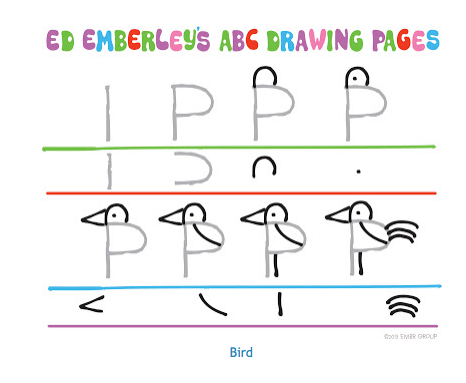
Put out the how to draw animal cards along with markers or crayons.  Show the children how to follow the directions step-by-step to make a variety of simple animal shapes.  Color and embellish. 

Approaches to Learning/Engagement & Persistence; demonstrates increasing ability to set goals and develop and follow through on plans.

Dramatic Play

Put the envelopes into the center today and tell the children that they can pretend to mail letters to their friends.  Use stickers for the stamps.  Show the children where to address the envelope so the postman will know who to deliver it to.  Encourage the children to write their name or a friend’s name.  Put out a box or cubby to be the mailbox and later in the day you can deliver the mail by putting the envelopes in the children’s cubbies according to whose name is in the address area.

Literacy/Early Writing; progresses from using scribbles, shapes, a or pictures to represent ideas, to using letter-like symbols, to copying or writing familiar words such as their own name. AND Mathematics/Number & Operations; begins to associate number concepts, vocabulary, quantities, and written numerals in meaningful ways.

Math and Manipulatives

Cut out the rectangle page and show the children how to make letters using the various sized rectangles.  Can they name any of the letters? 

Literacy/Alphabet Knowledge; shows progress in associating the names of letters with their shapes and sounds.

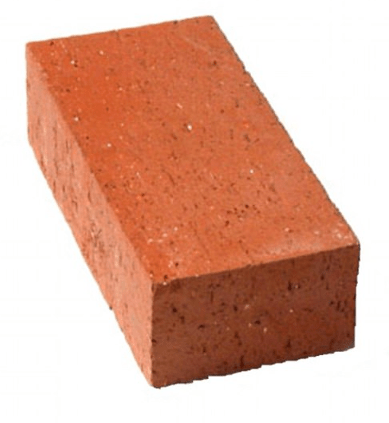
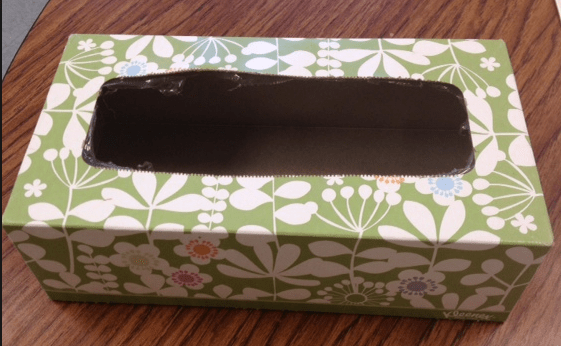
Give the children the pictures of shape sin everyday objects to sort by like kinds.

Mathematics/Geometry & Spatial Sense; begins to recognize, describe, compare, and name common shapes, their parts and attributes.

Outdoor Play

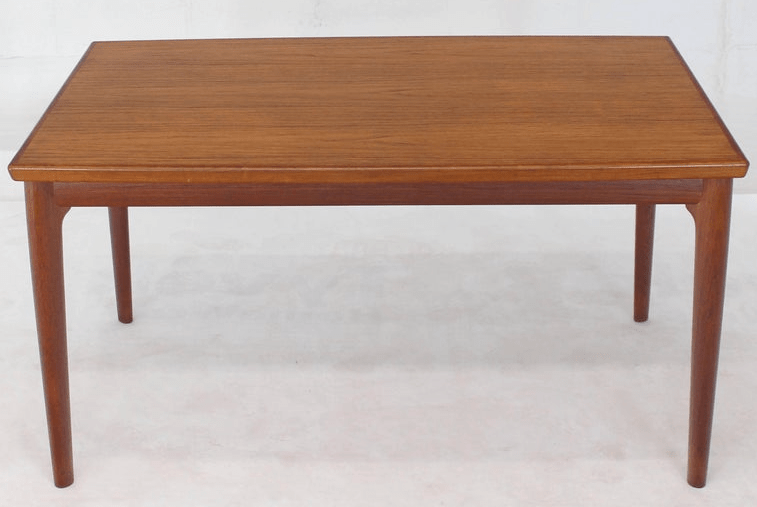
Does your center have a balance beam?  If so, show the children how it is a rectangle shape, two long sides and two short.  Let the children practice walking the balance beam.  Can they slide across; walk forward, and/or backward across the beam?  My children liked to pretend that there were alligators on the ground if they fell off.  We did not have a balance beam so used the sandbox border as our balance beam. 

Physical Health & Development/Gross Motor Skills; shows increasing levels of proficiency , control, and balance in walking, climbing, running, jumping, hopping, skipping, marching, and galloping.

Transitions

Send the children on a shape hunt.  Give each child a shape cut out from paper.  Have the child name their shape and then look around the room for something that is the same shape as their paper.

Mathematics/Geometry & Spatial Sense; begins to recognize, describe, compare, and name common shapes, their parts and attributes.

Resources
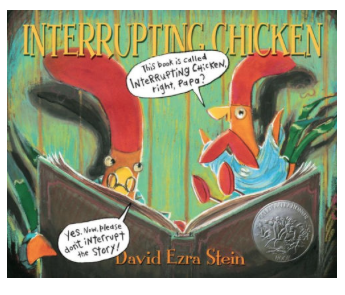
Interrupting Chicken, by David Ezra Stein

Little Red Hen cannot help but interrupt her bedtime stories. Find out how this changes the way the stories are told.

Materials

  • Collection of different kinds of bird feathers.
  • Cracked corn
  • Collection of feathers
  • Pictures to go with song I Had a Little Rooster

Vocabulary

  • Interrupt (to break into a conversation or to barge in)

Before Reading the Story

Talk about night time rituals.  When you get ready for bed what are some of the things that you do?  (brush teeth, take bath/shower,/wash my face/kiss good night/read stories.  Ask the children to raise their hand if a parent reads to them before bed.  Make a list of the children’s favorite stories.  Ask each child to name any favorite stories they may have.  “Our Favorite Books”  Brenda likes Chicka Chicka Boom Boom, Mark likes Mike Mulligan and the Steam Shovel

Literacy/Book Knowledge & Appreciation; progresses in learning how to handle and care for books; knowing to view one page at a time in sequence from front to back; and understanding that a book has a title, author, and illustrator.

Reading the Story

At each point where little red chicken interrupts and the story ends abruptly, ask the children if they liked that story, why or why not?

Social & Emotional Development/Self-Control; develops and understanding of how their actions affect others and begins to accept consequences for their actions.

After Reading the Story

Give examples of when to not interrupt.  The teacher is talking to everybody about what they are doing today.  You mom is on the telephone and you want to tell her something.  Talk about when it is ok to interrupt and when it is not.  Is it ok to interrupt when you are tired? If the house is on fire? You have to go to the bathroom? Someone made a face at you? Your friend is hurt and bleeding? Talk about how it makes you feel when you are interrupted. Talk about how to interrupt if you must (excuse, begging your pardon).

Approaches to Learning?Reasoning & Problem Solving; grows in recognizing and solving problems through active exploration, including trial and error, and in interactions and discussions with peers and adults. AND Social & Emotional Development/Self-Control; develops and understanding of how their actions affect others and begins to accept consequences for their actions.

Little Chicken just wanted to help the characters in the stories that her father was reading. Ask the children if they ever felt like they wanted to help someone out? Let them talk about their experiences.

Social & Emotional Development/Self-Control; develops growing understanding of how their actions affect others and begins to accept the consequences of their actions.

Discovery

Put out a variety of tools (scissors, pencil, phone, spoon, etc.  Ask the child which tool you would use to put food in your mouth, write your name etc.

Language Development/Listening & Understanding; understands an increasingly complex and varied vocabulary.

If you are lucky enough to have a collection of feathers, put it out with a magnifying glass for the children to examine today. Can they find two that match? Do any of the feathers have a pattern on them?

Science/Scientific Skills & Methods; develops increasing ability to observe and discuss common properties, differences, and comparisons among objects and materials.

Music and Movement

The Interrupting Song https://www.youtube.com/watch?v=AifKm6TsWJA

Sing This Is The Way We…. To the tune of Here We Go Round the Mulberry Bush. https://www.youtube.com/watch?v=FTgxW32ie5E

This is the way we scratch for worms, scratch for worms, scratch for worms. This is the way we scratch for worms so early in the morning. This is the way we peck for food, sit on our eggs, flap our wings, fly away.

Creative Arts/Music; Participates with increasing interest and enjoyment in a variety of music activities, including listening, singing, finger plays, games, and performances.

Relax with soft music.  Let whole body relax.  Pick up a child’s arm and let it fall, was it relaxed?  Like a rag doll.

I had a little rooster https://www.youtube.com/watch?v=fBUg0HvWYx0

Art

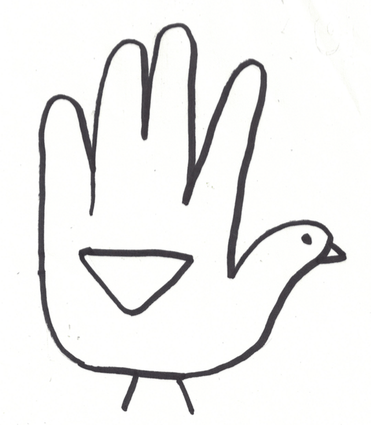
Trace around each child’s hands and show them how they can turn them into chickens.

Physical Health & Development/Fine Motor Skills; progresses in abilities to use writing, drawing, and art tools, including pencils, markers, chalk, paint brushes, and various technology.

Use feathers at the easel for paint brushes today.

Creative Arts/Art; gains ability in using different art media and materials in a variety of ways for creative expression and representation.

Sand and Water

Fill the table fill of a chickens favorite food, cracked corn. Use it to scoop and pour.

Library and Writing

Have child draw a picture.  Then ask them to tell you about their picture.  Write their dictation onto a piece of paper and staple it to their picture.

Literacy/Early Writing; begins to represent stories and experiences through pictures, dictation, and in play.

In the story, father rooster began reading three stories.  If you have these books in your school, add them to the center for the children to look at and ask you to read (Hansel and Gretel, Little red Riding Hood, Chicken Little)

Literacy/Book Knowledge & Appreciation; shows growing interest in reading-related activities, such as asking to have a favorite book read; choosing to look at books; drawing pictures based on books; asking to take books home; going to the library; and engaging in pretend reading with other children.

Dramatic Play

At nap time today make sure the children have access to books.  Let them use this prepping for naptime to read stories (to each other or to a stuffed animal.

Literacy/Book Knowledge & Appreciation; shows growing interest in reading-related activities, such as asking to have a favorite book read; choosing to look at books; drawing pictures based on books; asking to take books home; going to the library; and engaging in pretend reading with other children.

Bring in night time ritual materials for the children to play night time.  (blanket, box for bed, books, dressup pj’s, stuffed animals

Creative Arts/Dramatic Play; participates in a variety if dramatic play activities that become more extended and complex.

Math and Manipulatives

Play any board game or card game that you and your children are familiar with.  The idea is to practice taking turns.

Social & Emotional Development/Cooperation; develops increasing abilities to give and take in interactions; to take turns in games or using materials; and to interact without being overly submissive or directive.

Outdoor Play

Any game or activity where you stress the importance of taking turns.

Social & Emotional Development/Cooperation; develops increasing abilities to give and take in interactions; to take turns in games or using materials; and to interact without being overly submissive or directive.

Transitions

Tell the children that you are going to practice taking turns to go to the next activity. Ask the children to show you that they are ready. Call on those that you feel are ready and ignore those who are not following your rules. When all the children who did as they were asked have gone to the next activity, ask the remaining children why they are still sitting on the carpet? Remind them again to show you what they need to be doing. Call them as they follow the directions to go to the next activity. Keep reminding and calling children until everyone has moved. (I have the children sit with hands in their laps and mouths zipped closed).

Social & Emotional Development/Self-Control; develops growing understanding of how their actions affect others and begins to accept the consequences of their actions.

Resources
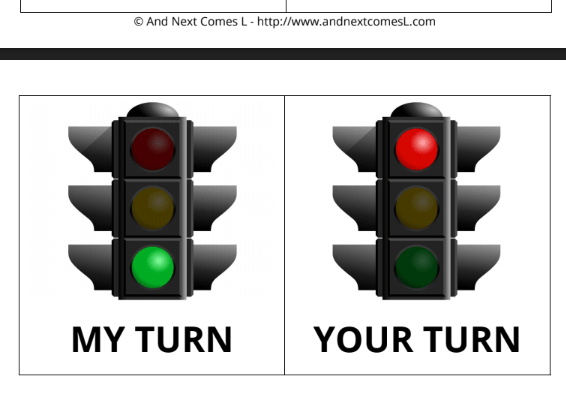
Use as a visual to help children learn to wait their turn.
handprint chicken

From Tadpole to Frog, by Kathleen Weidner Zoehfeld

This non-fiction book with simple explanations and pictures.

Materials

  • Crystal jelly beads that grow in water
  • Green puff balls and tweezers
  • Frog counters (store bought or home-made)
  • Small fishnet or scoopers
  • Yardstick or tape measurer
  • Hula hoops

Vocabulary

  • Metamorphosis (to change or transform from one thing to another)
  • Use the glossary in the back of the book to help explain the key words.

Before Reading the Story

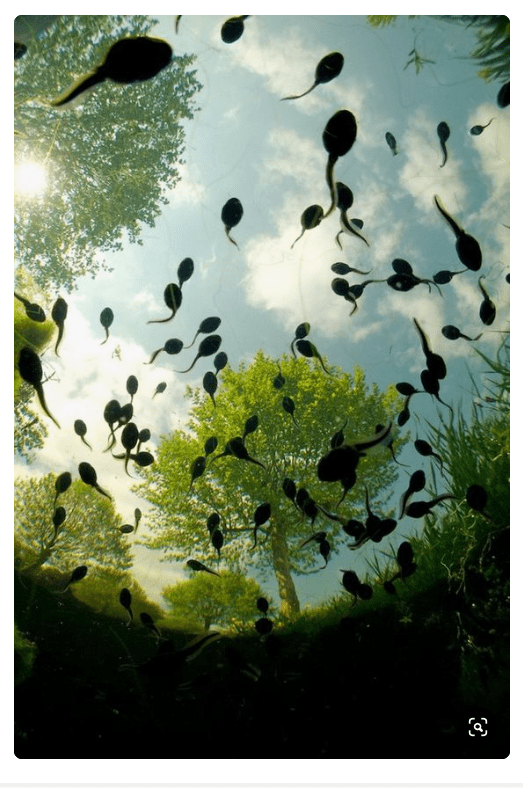
Make a copy of the following picture. https://thewildlifekingdom.tumblr.com/post/52929616919/handa-500px-tadpoles-by-bert-willaert  Ask the children if they know what these things are?  Where was this picture taken?  Have you ever seen real tadpoles?  Where did you see them?

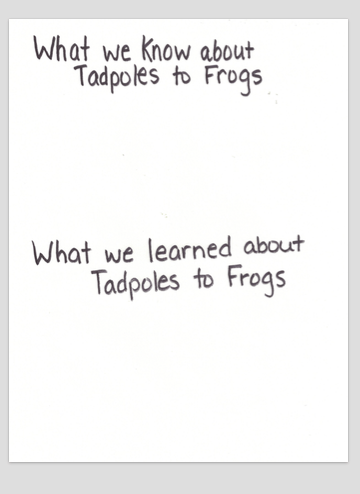
On a piece of paper write, What we Know about tadpoles and frogs.  Ask the children for any facts they may know and write them onto the paper.  Keep the paper handy and do the same thing after you have read the story.

Science/Scientific Knowledge; expands knowledge of and abilities to observe, describe, and discuss the natural world, materials, living things, and natural processes.

Reading the Story

On page 8, point out where the head and tail are forming.  On page 10 note that fish have gills also and that is why they can breath under water.  On page 16, point out the tiny legs and point to where the gills used to be.  On page 18 note that people have lungs to breath air.  Explain that with lungs the tadpole now has to come to the surface and breath air through its mouth.

Science/Scientific Knowledge; expands knowledge of and abilities to observe, describe, and discuss the natural world, materials, living things, and natural processes.

After Reading the Story

Ask the children to tell you all they things that they know about frogs, write their responses onto a piece of paper and hang it in your science center.  (Frogs lay lots of eggs.  Tadpoles can breath underwater but frogs have to breath through their mouth)

Science/Scientific Knowledge; expands knowledge of and abilities to observe, describe, and discuss the natural world, materials, living things, and natural processes.

Discovery

If you are lucky enough to have tadpoles in a nearby puddle or pond, bring them to school for the children to view.  Make sure to put them back where you found them within 48 hours so they do not die.

Science/Scientific Methods & Skills; develops growing abilities to collect, describe, and record information through a variety of means, including discussion, drawings, maps, and charts.

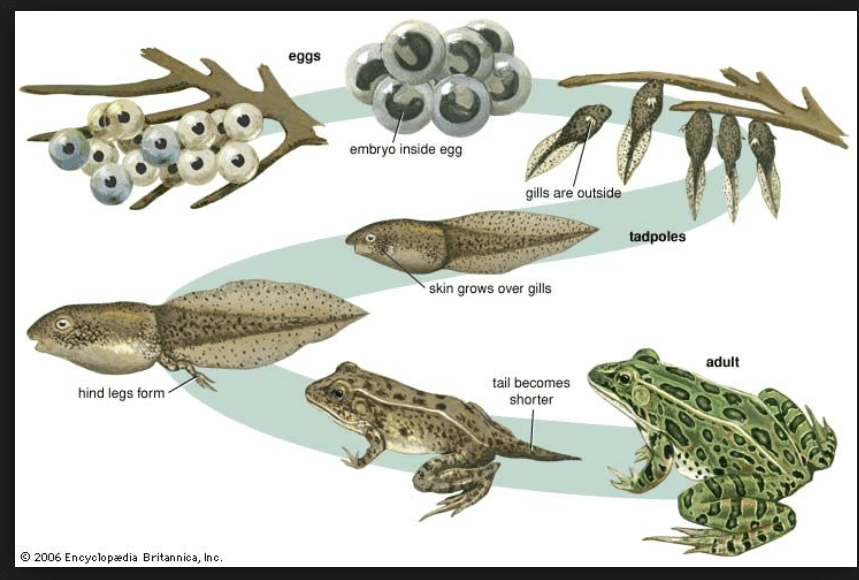
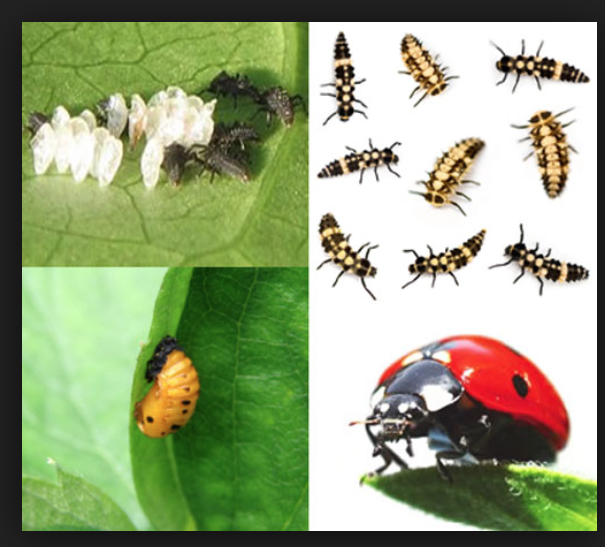
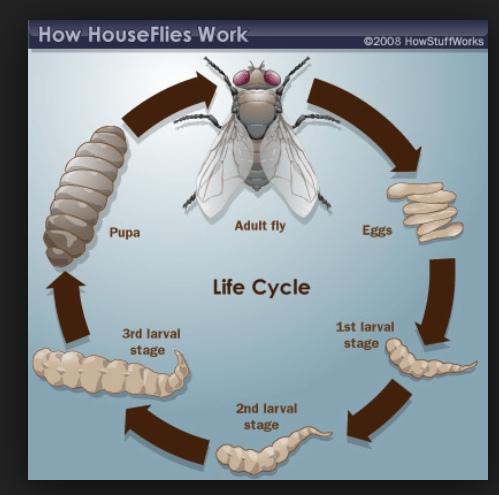
Hang several metamorphosis pictures on the wall for the children to look at and discuss.

Science/Scientific Knowledge; expands knowledge of and abilities to observe, describe, and discuss the natural world, materials, living things, and natural processes.

Music and Movement

Have five children come to the front and act out Five Little Speckled Frogs. https://www.youtube.com/watch?v=fF32P24lUCA

Play Leapfrog.  Each child gets a partner.  Child 1 squats down on her hands and knees while child 2 straddles and jumps over child 1.  Switch positions and continue the action of straddling and jumping.

Physical Health & Development/GRoss Motor SKills; shows increasing levels of proficiency, control, and balance walking, climbing, running, jumping, hopping, skipping, marching, and galloping.

LITTLE TADPOLE Sung to “Frere Jacques”https://www.youtube.com/watch?v=RXI7KEUbSxM

Little tadpole, Little tadpole
Lost his tail, lost his tail.
Now he has two feet
Now he has four feet
Look a frog! Look a frog!

Blocks

If you have frog counters, add them to the block center today.  The children can play with them using blocks as logs.  Ask the child to put 5 frogs on a log, 7 frogs, etc..

Mathematics/Number & Operations; begins to make use of one-to-one correspondence in counting objects and matching groups of objects.

Art

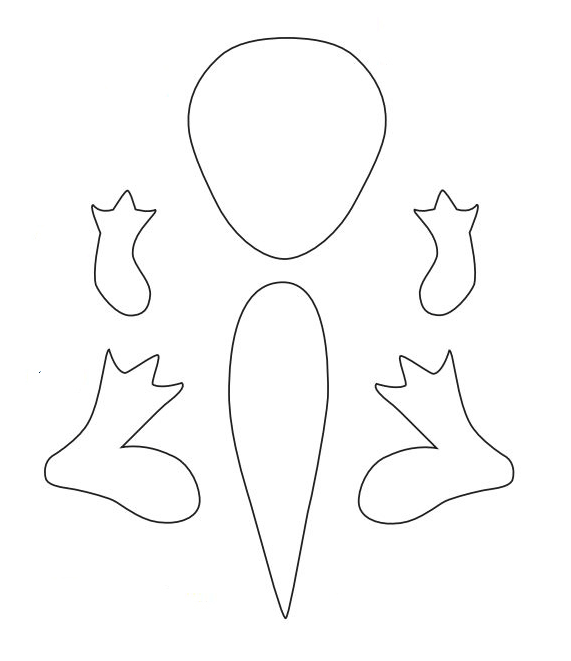
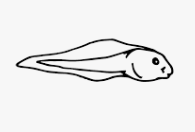
Cut out the tadpole pieces in many colors or using a variety of papers (I like to use old wrapping paper and magazine pages).  Put the pieces out on the table along with a picture of a tadpole and challenge the children to collage one onto their paper using a glue stick.
Mathematics/Geometry & Spatial Sense; progresses in ability to put together and take shapes apart.
Sand and Water

Add a package of crystal jelly balls to the water today. Put out small fishnets and scoops. Start with dry crystal jelly beads and allow the children to add water to the center table. Listen to the children’s conversations as the beads start to grow. How do they feel when they are wet? What made them grow?

Science/Scientific Knowledge; shows increased awareness and befining understanding of changes in materials and cause-effect relationships.

Library and Writing

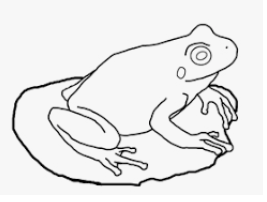
Use the frog and tadpole templates to make an alphabet matching game.  On the tadpole write the lowercase letter and on the frog write the uppercase letter. 

Literacy/Alphabet Knowledge; shows progress in associating the names of letters with their shapes and sounds.

Dramatic Play

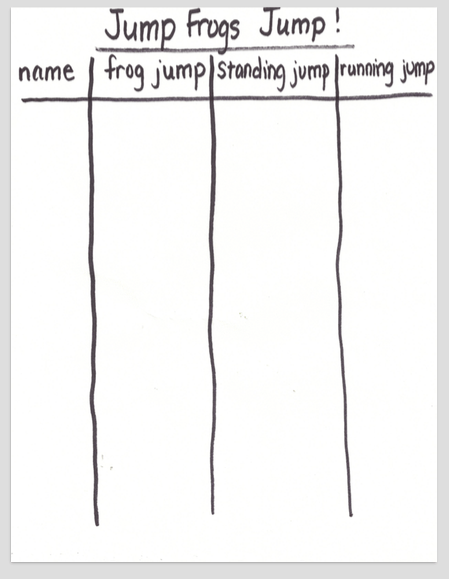
Tell the children that they are going to pretend to be jumping frogs.  Explain that you are going to measure the length of their jumps with a yardstick to see how far they can go. Have a child squat down in a frog position and then jump.   Try other jumps also.  Have the child stand up and jump, measure.  Have the child do a running jump and measure the length of their jump. Jump backwards.

Mathematics/Patterns & Measurement; shows progress in using standard and non-standard measures for length and area of objects.

Math and Manipulatives

Put out green puff balls and tweezers.  Cut out 1-5 circles from green construction paper.  Write a number 1-5 on each.  The child uses the tweezers to put the correct amount of puffballs onto each lily pad.

Mathematics/Number & Operations; begins to use one-to-one correspondence in counting objects and matching groups of objects.

Outdoor Play

Lay hula-hoops down on the ground at various short distances from one another.  Encourage the children to pretend to be frogs and jump from one hula-hoop to another.

Physical Health & Development/GRoss Motor SKills; shows increasing levels of proficiency, control, and balance walking, climbing, running, jumping, hopping, skipping, marching, and galloping.

Tadpoles begin life breathing through gills and as they grow they breath through their lungs.  Show children where their lungs are by having them put their hands onto their chest and feeling their lungs go in and out.  Now have the children do some physical exercise for a few minutes and then feel their lungs again.  What differences do they feel?  (Lungs work harder and faster with exertion).  Explain to the children that is good for their lungs and heart to work hard throughout the day, it is exercise for them.

Science/Scientific Skills & Methods; begins to use senses and a variety of tools and simple measuring devices to gather information, investigate materials, and observe processes and relationships.

Transitions

This can be played in a circle, a line, or as a “Froggie Says____” game. Give children a variety of “hopping” commands such as:

  • Hop in one place.
  • Hop and turn in a circle at the same time.
  • Hop on left/right foot.
  • Hop backwards, sideways; make a square or circle.
  • Hop over a line.
  • Hop with a partner.
  • Hop quietly to line up.

Language Development/Listening & Understanding; understands an increasingly complex and varied vocabulary.

Resources