Kitten’s First Moon, by Kevin Henkes

This is the story about a kitten who just wants a bowl of milk. This a sweet story told in a simple manner which makes it a favorite to many.

Materials

  • Toilet paper tubes, about 6-8 for a class
  • Cat stuffed animal/s and shoe box for each
  • Cut out circles in small, medium, and large sizes.

Vocabulary

  • Full moon (when the moon is like a circle in the night sky it is called a full moon)
  • Moon phases (full moon, half moon, quarter moon, cat’s claw)

Before Reading the Story

Draw a circle on your dry erase board and tell the children that you are thinking of something that is round like a circle and can sometimes be seen in the sky.  Let them try to guess what you are thinking of. Talk about how the moon comes out at night and the sun comes out during the day. Show the children the Phases of the Moon photo and ask them if they can guess which is called a full moon. Point and show them. Name the other moon types. Hold up the cover of the book and read the title. Show the children the picture of the full moon.

Science/Scientific Knowledge; expands knowledge of and abilities to observe, describe, and discuss the natural world, materials, living things, and natural processes.

Reading the Story

Have the children repeat, “Poor Kitten!” in the appropriate spots. 

Language Development/Listening & Understanding; demonstrates increasing ability to attend to and understand conversations, stories, songs, and poems.

When kitten thinks that thing in the sky is a bowl of milk, ask the children if they know what it really is?  Look at Kittens face when she opens her mouth and licks, bugs.  Ask the children what they think Kitten might be thinking?  Why do you think Kitten was scared when she climbed so high in the tree?

Literacy/Book Knowledge & Appreciation; shows growing involvement in listening to and discussing a variety of fiction and non-fiction books. AND Language Development/Speaking & Communicating; develops increasing abilities to understand and use language to communicate information, experiences, ideas, feelings, opinions, needs, questions; and for other various purposes.

After Reading the Story

Ask who, what, where ,when , why questions.

Who is the story about?  What was the kitten trying to get to?  Where did she see the bowl of milk?  When does the story take place?  Why was she scared?  Where does milk come from?  What shape is the full moon?  Kitten thought the moon looked like a bowl of milk, what does the moon look like to you?  What are some things that kitten sees in the night?  What are some ways that kitten tried to goet to the moon?

Language Development/Speaking & Communicating; develops increasing abilities to understand and use language to communicate information, experiences, ideas, feelings, opinions, needs, questions; and for other various purposes. AND Literacy/Book Knowledge & Appreciation; demonstrates progress in ability to retell and dictate stories from books and experiences; to act out stories in dramatic play; and to predict what will happen next in a story.

Discovery

Put out pictures of day and night for the children to sort.

Mathematics/Patterns & Measurement; shows increasing abilities to match, sort, put in a series, and regroup objects according to one or two attributes. AND Science/Scientific Knowledge; develops growing awareness of ideas and language related to attributes of time and temperature.

Put out the picture of the Cycles of the Moon and ask the children if they can recall the different names for each phase.

Science/Scientific Knowledge; expands knowledge of and abilities to observe, describe, and discuss the natural world, materials, living things, and natural processes.

Music and Movement

Pretend to be Kitten and follow some of her actions.   Close your eyes, stretch your neck, open your mouth, stick out your tongue, lick your finger, wiggle your bottom, spring forward, tumble onto the floor, run in place (to the tree), climb a tree, reach up high, leap, leap across the pond, go back to home, drink your bowl of milk.

Literacy/Book Knowledge & Appreciation; demonstrates progress in ability to retell and dictate stories from books and experiences; to act out stories in dramatic play; and to predict what will happen next in a story.

Teach the children the song, 10 Little Kittens. Make 10 kittens and use them to help sing the song. On your dry erase board draw a tree and a chair. https://www.youtube.com/watch?v=84hel7_NTSE Once the children are comfortable with the song, they can help move kittens from the tree to the chair.

Creative Arts/Music; participates with increasing interest and enjoyment in a variety of music activities, including listening, singing, finger plays, games, and performances.

Blocks

Encourage the children to build tall, to the moon but not past their shoulders if using wooden blocks.  How many high can they build before their tower falls over? 

Physical Health & Development/Fine Motor Skills; grows in hand-eye coordination in building with blocks, putting together puzzles, reproducing patterns and shapes, stringing beads, and using scissors. AND Mathematics/Number & Operations; begins to make use of one-to-one correspondence in counting objects and matching groups of objects.

Art

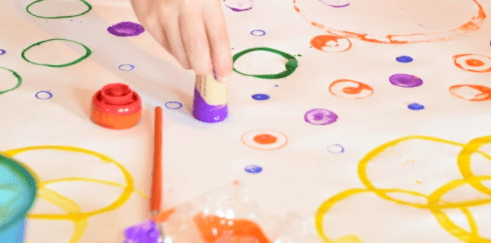
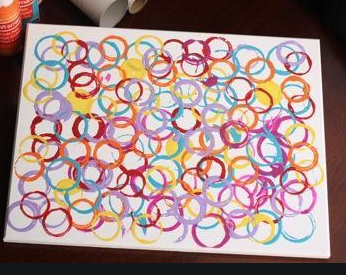
Ask the children if they can remember the shape of the moon in the story (circle). Tell them that today you are going to do circle art. Cut toilet paper tubes in half and put out small plates of paints. The children can dip the toilet tube in the paint and make circles on their paper by moving their hand up and down, up and down. Add anything else you may have in your class that will print circles.

Physical Health & Development/Fine Motor Skills; develops in strength, dexterity, and control needed to use tools such as scissors, paper punch, stapler, hammer.

Sand and Water

Bowls of various sizes and measuring cups.  How many 1 cups does it take to fill the bowl?  Which bowl holds more liquid? 

Mathematics/Geometry & Spatial Sense; begins to determine whether or not two shapes are the same size and shape. AND Science/Scientific Skills & Methods; begins to use senses and a variety of tools and simple measuring devices to gather information, investigate materials, and observe processes and relationships.

Library and Writing

Give the children white chalk and black construction paper to use to practice writing their name on.

Literacy/Early Writing; progresses from scribbles, shapes, or pictures to represent ideas, to using letter-like symbols, to copying or writing familiar words such as their own name.

Dramatic Play

Add any stuffed cats and shoe boxes that you might have. If you do not have stuffed cats, encourage the children to become cats. Put out some night time themed supplies such as blankets, small lamp, box beds, and encourage the children to carry out the theme.

Creative Arts/Dramatic Play; participates in a variety of dramatic play activities that become more extended and complex.

Math and Manipulatives

Go on a circle hunt about the room.

Mathematics/Geometry & Spatial Sense; begins to recognize, describe, compare, and name common shapes, their parts and attributes.

Put out all the circles that you cut out. Have the children sort them by small, medium, large. Have the children line them up by color and size.

Mathematics/Geometry & Spatial Sense; shows growth in matching, putting in a series, and regrouping objects according to one or two attributes such as color, shape, or size.

Outdoor Play

In the story the kitten climbed a tree to get closer to the moon.  If you have a climbing apparatus on playground, pretend that you are the kitten climbing high to reach the moon.

Literacy/Book Knowledge & Appreciation; demonstrates progress in ability to retell and dictate stories from books and experiences; to act out stories in dramatic play; and to predict what will happen next in a story.

Transitions

Give each child a picture of a cat or one of the circles that you cut out for Math & Manipulatives. Have each child near a chair. Ask them to put their kitten on the chair, under the chair, next to the chair, etc..

Mathematics/Geometry & Spatial Sense; builds an increasing understanding of directionality, order, and positions of objects, and words such as up, down, over, under, top, bottom, inside, outside, in front, behind.

Resources

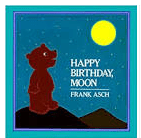
Happy Birthday Moon, by Frank Asch

            This is the story about a little bear who wants to share something special with the moon on its birthday.

Materials

  • Pictures of the moon in the sky at night to go with poem
  • Recipe card for Man in the Moon treats
  • Cream cheese and round crackers
  • Plastic knives to spread
  • Small box of raisins

Vocabulary

  • Echo (to repeat a sound)

Before reading the Story

            Talk to the children about what an echo is.  Sing an echo song (examples; There was a Man, Going on a Bear hunt).  Practice having the children echo back responses by naming letters while you hold up cards and say first, TEG, SFP, DBV

Literacy/Alphabet Knowledge; identifies at least 10 letters of the alphabet, especially those in their own name.

Tell the children that you are going to read a story and need their help to be the echo.

Reading the Story

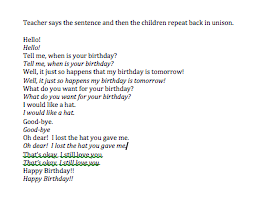
            As you read the story, stop when you get to the part where Bear shouts; “Hello!”  This time his own voice echoed off one of the mountains:” Hello!”  Tell the children that they are the echo now and repeat back all the things that Bear thinks the moon is saying.  Continue this way to the end of the story.  For older children you can write the echos on paper and hold up so the children can see the sentence as they echo back to you.

Language Development/Listening & Understanding; demonstrates increasing ability to attend to and understand conversations, stories, songs, and poems.

After Reading the Story

            Talk to the children about the moon.  When do you see the moon?  Does it always look the same?  The moon helps to light the sky at night.  What else helps to light the sky at night?  The moon looks like it is growing in the sky and then gets little again, this is called a moon cycle.  Read the poem, The Moon, anonymous.

Sometimes the moon is full           Hold up full moon picture

And shows a circle of light 

And sometimes the moon looks like          Hold up half moon picture

One half a ball at night.

Sometimes the moon is only                        Hold up new moon picture

A sliver and hardly more

But all the night the moon is out there

When you look out of your door

Science/Scientific Knowledge; develops growing awareness of ideas and language related to attributes of time and temperature. AND Language Development/Listening & Understanding; demonstrates increasing ability to attend to and understand conversations, stories, songs, and poems.

Discovery

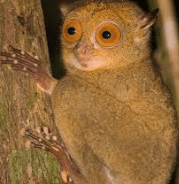
            Using books and magazines that depict nocturnal animal life. Help the children develop a list of animals that come out at night. Notice the eyes of many of the animals are large, better to see at night with.

Literacy/Book Knowledge & Appreciation; shows growing interest in reading-related activities, such as asking to have a favorite book read; choosing books to look at; drawing pictures based on stories; asking to take books home; asking to go to the library; and engaging in pretend reading with other children.

Music and Movement

Teach the children the chorus to I See The Moon. If you have time teach them the verses also. https://www.youtube.com/watch?v=d4ZOGGRGuTw

Teach songs with Echo like Frere Jacques https://www.youtube.com/watch?v=QblcSZcRDBA

Language Development/Listening & Understanding; demonstrates increasing ability to attend to and understand conversations, stories, songs, and poems.

Blocks

            In the story Bear climbed to the highest mountain.  Challenge the children to build a very tall structure. You might start this activity with the children using one inch cubes or small blocks instead of the unit blocks.

Approaches to Learning/Engagement & Persistence; grows in abilities to persist in and complete a variety of tasks, activities, projects, and experiences.

Art

            Cut out moon shapes from a manila folder.  Show children how to take 1 inch squares of tissue paper, crumple into small ball and glue it onto the moon shape.

Physical Health & Development/Fine Motor Skills; grows in hand-eye coordination in building with blocks, putting together puzzles, reproducing patterns and shapes, stringing beads and using scissors.

Sand and Water

            Put water in the table 2 inches deep.  Give the children lids, small plastic containers, and boats.  Show the children how to put counting bears on to the boats/containers, lids to make boats to float the bears.  How many bears can you put in a boat?

Mathematics/Number & Operations; begins to use one-to-one correspondence in counting objects and matching groups of objects. AND Physical Health & Development/Fine Motor Skills; grows in hand-eye coordination in building with blocks, putting together puzzles, reproducing patterns and shapes, stringing beads and using scissors.

Library and Writing

            Play the Man in the Moon only speaks in ‘m’ words.  With the children in a circle, go around taking turns thinking of words that start with the letter M.  Also try putting an ‘m’ sound as the first letter of each child’s name (Kerry=Merry, Roger=Moger)

Literacy/Phonological Awareness;showing growing awareness of beginning and ending sounds in words.

Dramatic Play

            Bedtime rituals.  Bring in blankets, pillows, books, night time pictures to hang on the wall.

Social & Emotional Development/Knowledge of Families & Communities; progresses in understanding similarities and respecting differences among people such as gender, race, special needs, culture, language, and family structures.

Math and Manipulatives

            Spread crème cheese on round crackers.  Add a man in the moon face using raisins.

Physical Health & Development/Fine Motor Skills; develops growing strength, dexterity, and control needed to use tools such as scissors, paper punch, stapler, and hammer.

Outdoor Play

            Let the children climb onto something tall (climber, box, log stump) and pretend that they are the moon.  Shout out a silly sentence and have them repeat it back to you

Language Development/Listening & Understanding; demonstrates increasing ability to attend to and understand conversations, stries, songs, and poems. AND Literacy/Book Knowledge & Appreciation; demonstrates ability to retell and dictate stories from books and experiences; to act out stories in dramatic play; and to predict what will happen next in a story.

Transitions

            Say a sentence and have the child repeat back to you.  This could be a long 12 syllable sentence of a silly sentence depending upon the child’s language skills.

Language Development/Listening & Understanding; demonstrates increasing ability to attend to and understand conversations, stries, songs, and poems

Resources
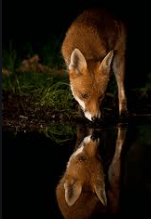
fox
owl
raccoon
lemur
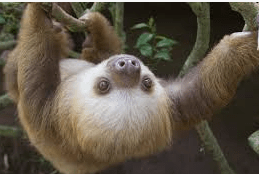
sloth
jaguar
hedgehog
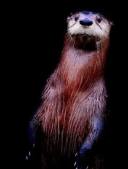
otter
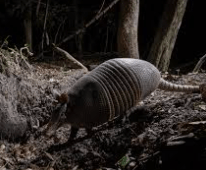
armadillo
bat
wombat
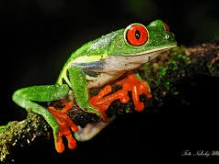
tree frog
snake
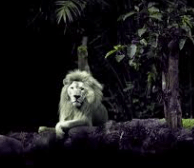
lion

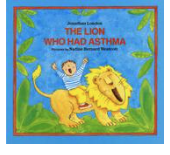
The Lion Who Had Asthma, by Jonathan London

This book helps children who have asthma, or know of someone with asthma, to know what symptoms and signs to look for to help lessen an asthma attack and how to stay calm. It introduces children to a nebulizer. Preschool aged children are twice as likely to have an emergency asthma attack as older children. Use this book to help alleviate some of the fear and questions that are part of asthma and asthma management.

Materials

  • Bubbles and bubble wands.  (Wands can be made by twisting pipe cleaners into a loop at one end)
  • Small paper lunch plates
  • Lion features
  • Paper straws, one per child
  • Cornstarch and green food dye.
  • 2 sets of the Water Cards
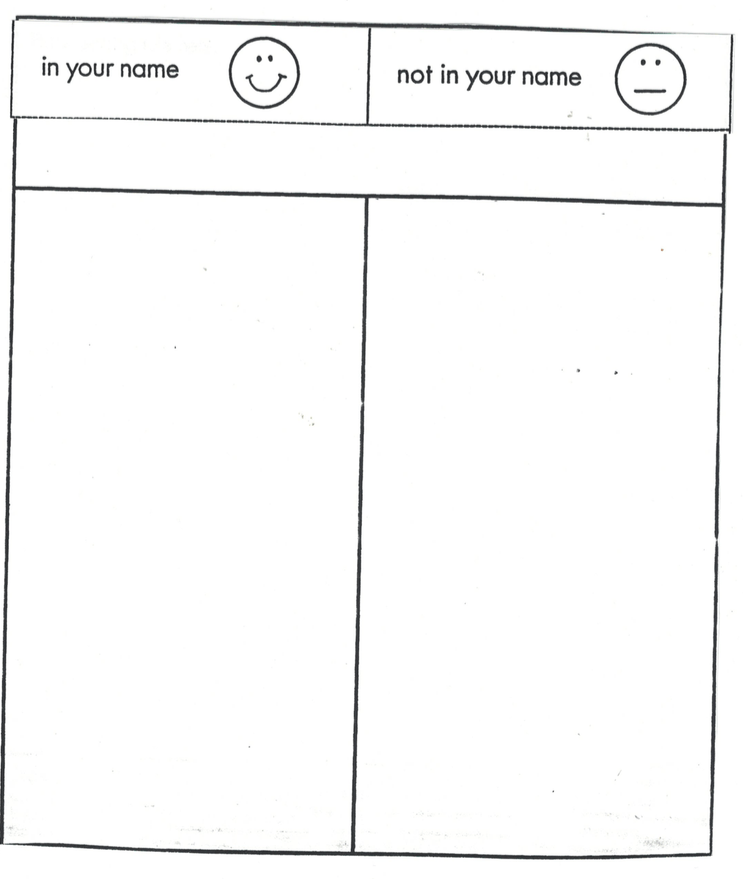
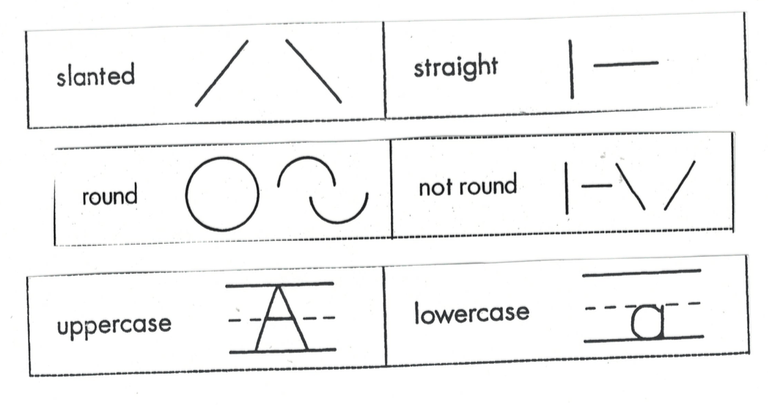
  • Is/Is Not boards and magnet letters

Vocabulary

  • Asthma (when air cannot get into your lungs and you have trouble breathing)
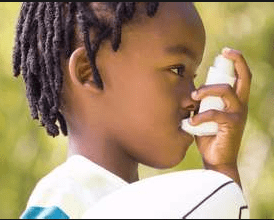
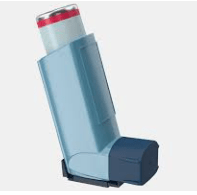
  • Inhaler (a machine that helps you breathe if you have asthma)
  • Imagination (to pretend something using your brain thoughts)
  • Imaginary (not real, pretend)

Before Reading the Story

Talk to the children about the importance of lungs.  Put your hands on your chest and tell the children that this is where your lungs are.  When your lungs are working properly, the air flows easily in and out.  Have the children hold the back of one of their hands near their mouth to feel how the air comes out.  Explain to the children that if you have asthma, that means your lungs make mucus which is thick and sticky making them feel tight and hard to breath.  It also makes you feel like coughing.  Explain that people with asthma can get help by using a special kind of machine called a nebulizer that has medicine inside and makes it easier for you to breath.  Tell the children that you cannot get asthma from another person.

Approaches to Learning/Initiative & Curiosity; grows in eagerness to learn about and discuss a growing range of topics, ideas, and tasks.

Reading the Story

On the first page where Sean is a lion, tell the children that Sean is using his imagination.    On the page where he is a giant, ask the children if they know what the trees really are that he is munching on?  (Broccoli).  On the page where Sean makes a wheezing sound, demonstrate what a wheeze sounds like to the children.  Ask them to look at his face; it looks like he might be a little bit afraid.  On the next page where his mother tells him it’s time for a treatment, explain that people with asthma can use a special inhaler machine that they breath into and it helps make their lungs feel better.  On the page where Sean is able to breathe again, ask the children to look at his face now, he looks so much better and happier.

Literacy/Book Knowledge & Appreciation; demonstrates progress to retell and dictate stories from books and experiences; to act out stories in dramatic play; and to predict what will happen next in a story.

After Reading the Story

In the story Sean was having trouble breathing, ask the children if they remember how that made him feel?  (He cried and coughed.  He was scared.  Sean used his imagination.  Ask the children to recall some of the things that Sean pretended to be.

Language Development/Speaking & Communicating; develops increasing abilities to understand and use language to communicate information, experiences, ideas, feelings, opinions, needs, questions; and for other varied purposes.

Talk to the children about watching out for their friends.  Ask the children How they can help when they see a friend who is having trouble breathing? (tell an adult right away).  If a child in your class has asthma, remind them to let you know right away if they feel like they cannot breathe very well.  Ask the children to help you make a list of things that should be done if someone is having an asthma attack. (Relax & stay calm.  stop, sit down, relax, take quick-relief medication (if prescribed by the child’s physician), tell a friend or adult). Post the list on the wall.

Literacy/Early Writing; develops an understanding that writing is a way of communicating for a variety of purposes.

Discovery

At lunch or snack today, give each child a straw. Tell them that you want to show them what breathing with asthma might feel like. Tell the children to sit and use the straw to breath in and out. Can they feel how they are not getting as full of lungs? The air is not going in well. Take the straw out and try a few breaths. Feel the difference. Let the children use the straws for their milk or juice today.

Science/Scientific Skills & Methods; bgins to participate in simple investigations to test observations, discuss and draw conclusions, and form generalizations.

Music and Movement

Teach the children the chorus of That’s What Breathings All About https://www.sesamestreet.org/toolkits/asthma

Science/Scientific Knowledge; expands knowledge of and respect for their bodies and the environment.

The Water Song. https://www.youtube.com/watch?v=gvuhAVH-BU8

Science/Scientific Knowledge; expands knowledge of and respect for their bodies and the environment.

Blocks

Show the children how to make a maze with the blocks. Give them a puf ball or ping pong ball to try to blow through the maze.

Approaches to Learning/Engagement & Persistence; demonstrates increasing ability to set goals and develop follow through on plans.

Art

Give each child a small paper lunch plate to paint in shades of orange (set out orange, red, yellow, and white paint).  After the paper plate has dried, have the children glue on the lion’s eyes, nose, mouth, and ears (The teacher will probably need to cut out the shapes for younger children).   Draw on whiskers with a marker.

Creative Arts/Art; progresses in abilities to create drawings, paintings, models, and other art creations that are more detailed , creative, or realistic.

Sand and Water

Make gooey mucus; Add one cup water, 2 cups cornstarch, and green food coloring.  Slowly mix this all together.  The mixture will appear solid but when you pick it up, it will ooze from your hand.  As the children play with the mucus, explain that this is like what happens in your lungs if you have asthma.  Have them pick up some of the goo.  Let it flow between your fingers, does it flow fast or slow?  If flows slow, that’s what happens in your lungs making it hard to breath.  Now add a few drops of water to the mucus.  Does it feel the same?  Does it flow through your fingers differently?  Explain to the children that it’s important to drink plenty of water as drinking lots of water thins the mucus and makes it easier to breathe.

Science/Scientific Skills & Methods; begins to participate in simple investigations to test observations, discuss and draw conclusions, and form generalizations.

Library and Writing

As children look a books today, ask them if the book they are looking at is fiction or not-fiction (Imaginary or not imaginary but real).

Literacy/Book Knowledge & Appreciation; shows growing interest and involvement in listening to and discussing a variety of fiction and non-fiction, and poetry.

Put out the magnet letters and is/is not boards for the children to use tofday.

Dramatic Play

Ask the children what they think they might like to imagine play today.  As their play progresses, check in and tell them you like how they are using their imagination to __________.

Language Development/Speaking & Communicating; uses an increasingly complex and varied vocabulary.

Math and Manipulatives

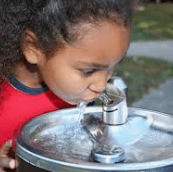
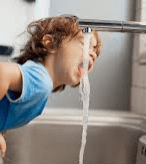
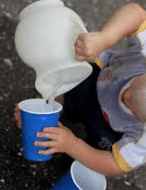
Make two sets of the water drinking cards. Make sure the children cannot see through the back. Use to play Memory. Turn all the cards face down on the table. The children take turns picking cards trying to find sets.

Social & Emotional Development/Cooperation; develop[s and increasing abilities to give and take in interactions; to take turns during games or using materials; and to interact without being overly submissive or directive. AND Approaches to Learning/Engagement & Persistence; grows in abilities to persist in and complete a variety of tasks and activities.

Outdoor Play

Bring bubbles and wands out onto the playground today.  Show the children how to take a long slow breath out to make the bubbles.

Approaches to Learning/Engagement & Persistence; grows in abilities to persist in and complete a variety of tasks and activities.

Remind the children when they are out running that it sometimes feels hard to breathe.  When this happens you need to slow down and catch your breath and grab a glass of water.

Physical Health & Development/Health Status & practices; builds awareness and ability to follow basic health and safety rules such as fire safety, traffic and pedestrian safety, amd responding appropriately to potentially harmful objects, substances, or activities.

Transitions

Play snake breath.  Have the children take a breath in and then very slowly let their breath out while making a hissing snake sound.  Who can make the longest hissing sound?

Resources

The CDC has put out information specifically for children.  https://www.cdc.gov/asthma/pdfs/kids_fast_facts.pdf