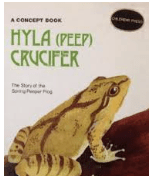
Hyla (Peep) Crucifer, the story of the spring peeper frog, by Carol Cornelius

            This is a fiction book that talks of the Hyla frog, one that you might see near your home in the spring.  It gives information about frogs that you can easily share with the children.

Materials

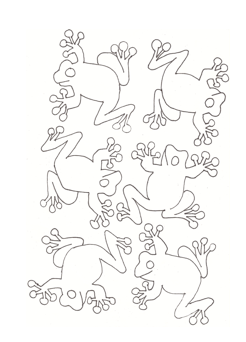
  •  frog outlines
  •  Pictures of several animals using camouflage to hide.
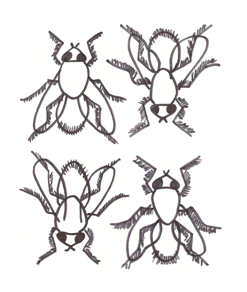
  • 10 flies
  • Paper plates
  • Frog head
  • Tiddlywinks or poker chips
  • Green playdough and two googly eyes per child

Vocabulary

  • Drifted (to float)
  • Gills (as lungs are to people, gills are to fish)
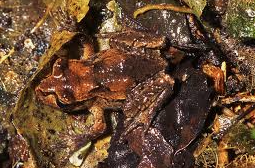
  • Camouflage (a way that animals can hide from other animals by blending into their environment/their surroundings).

Before Reading the Story

            Cut out 1 inch squares from different colors of paper.  Cut out 2 per child.  Hide these about the room placing the colored square upon an object that is the same color.  When the children gather for rug tell them that you just learned a really big word that you want to teach them.  Tell them the word is “camouflage” and ask if anyone thinks they might know what it means?  Bring in some pictures of animals that are camouflaged and show them to the children.  Show the children several of the one inch squares that you cut out.  Tell them that you have hidden the squares around the room and they are camouflaged.  Remember that camouflaged means that they are hiding on a color just like them.  Let the children know that they are each to go and find one camouflaged square and bring it back to the rug.  As they bring them back, ask them what color they found and where they found it.

Approaches to Learning/Engagement & Persistence; grows in abilities to persist in and complete a variety of tasks and activities.

Reading the Story

            As you read, remind the children that a Hyla Peeper frog is really only about an inch long. Show them how small an inch is.  Ask them why they think the illustrator drew the frog so big? (So we could see him good)

Approaches to Learning/Reasoning & problem-Solving; grows in recognizing and solving problems through active exploration, including trial and error, and interactions and discussions with peers and adults.

After Reading the Story

            Go back through the pages and ask the children to tell you what they remember about the Hyla frog and his life.  Use the book as a guide.  Write down the children’s responses and hang it on the wall with several of the children’s writing experiences.

Literacy/Book Knowledge & Appreciation; shows growing interest and involvement in listening to and discussing a variety of fiction, non-fiction, and poetry.

Discovery

            In the story, the tadpole used to breathe under the water like a fish but as he got older he started to breath through his lungs.  Have the children put their hands on their chest and breathe in and out, then feel their lungs fill up with air. 

Science/Scientific Knowledge; expands knowledge of and respect for their bodies and the environment.

Music and movement;

            Sing Peep Peep Went the Little Green Frog https://music.youtube.com/watch?v=EbM70ouxrc8&list=RDAMVMEbM70ouxrc8

Peep, peep went the little green frog one day

Peep, peep went the little green frog.

Peep. Peep went the little green frog one day

And his eyes went peep, peep too.

            Do 5 Little Speckled Frogs.  Have the children hold up 5 fingers and then do the actions with the poem. https://music.youtube.com/watch?v=HhVi4IQRMtY&list=RDAMVMHhVi4IQRMtY

5 Little speckled frogs, sitting on a speckled log

Eating the most delicious bugs, yum, yum

One jumped into the pool, where it was nice and cool

Then there were 4 more speckled frogs

Glub, glub.

Creative Arts/Music; participates with increasing interest and enjoyment in a variety of music activities, including listening, singing, finger plays, games, and performances.

            Put a bunch of paper plates all over the floor.  Turn on some lively music and let the children become frogs and jump from leaf/plate to leaf (or lily pads).

Physical Health & Development/Gross Motor Skills; shows increasing levels of proficiency, control, and balance in walking, slimbing, running, jumping, hopping, skipping, marching, and galloping.

Blocks

            Have the children make a small pond with the blocks.  Give them tidily winks or poker chips and show them how to pop them to make them jump (take one and scrape across the edge of another that is lying on a flat surface.  It will jump!  Can you get them to jump into the pond?  

Physical Health & Development/Fine Motor Skills; develops growing strength, dexterity, and control needed to use tools such as scissors, paper punch, stapler, and hammer.

Art

Give the children green play dough and googly eyes. Show them how to roll a ball of playdough to make the frog’s’ body. Give them googly eyes and encourage them to add legs and design to their bodies (I have given the children a straw to make ‘dots’ on the frog and a pencil to make ‘stripes’).

Creative Arts/Art; progresses in abilities to create drawings, paintings, models, and other art creations that are more detailed, creative, or realistic.

Library and Writing

            The hyla frog has an X on its back.  Give each child a copy of the page with the 6 frogs on it and ask them to draw an X on each frogs back.

Literacy/Alphabet Knowledge; shows progress in associating the names of letters with their shape and sound. AND Language Development/Listening & Understanding; shows progress in understanding and following simple and multiple-step directions.

Sand and Water

            Water play, pouring and scooping.

Physical Health & Development/Fine Motor Skills; grows in hand-eye coordination in building with blocks, putting together puzzles, reproducing shapes and patterns, stringing beads and using scissors.

Dramatic Play

            Have the children cut out the frog head and make a mask/hat out of it by attaching it to a sentence strip around their head.  The children can wear their frog heads as they hop and jump about the classroom to music.

Creative Arts/Dramatic Play; shows growing creativity and imagination in using materials and in assuming different roles in dramatic play situations. AND Physical Health & Development/Fine Motor Skills; grows in hand-eye coordination in building with blocks, putting together puzzles, reproducing shapes and patterns, stringing beads and using scissors.

Math and Manipulatives

            Play Flies for Lunch.  Cut out a set of flies per child and spread them out on the table.   Write the numbers 1-5 on the fly backs. Give each child a piece of contact paper 1 inch by 6 inches.  Show them how to flap their “sticky tongue” down on the table and pick up a fly.  Call out numbers and see if they can catch the correct fly.

Mathematics/Number & Operations; begins to associate number concepts, vocabulary, quantities, and written numerals in meaningful ways.

Outdoor Play

            Have the children take turns getting into a crouching position and doing a frog leap.  Make a starting line and then mark the ground where they jump.  See who is the jumpiest frog.  Try having the children do standing long jumps and running broad jumps also.

Physical Health & Development/Gross Motor Skills; shows increasing levels of proficiency, control, and balance in walking, climbing, running, jumping, hopping, skipping, marching, and galloping.

Transitions

As the children move to the next activity have them do different kinds of hops or jumps. Can you hop on one foot to line up? Find a partner and jump to line up. Hop in a circle and then line up. Jump backwards to line up.

Physical Health & Development/Gross Motor Skills; shows increasing levels of proficiency, control, and balance in walking, climbing, running, jumping, hopping, skipping, marching, and galloping.

Resources
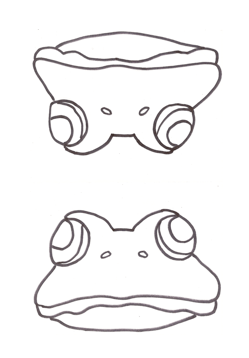
enlarge to use for dramatic play
write numbers on the backs of flies to use in manipulatives.
Give each child a page of 6 frogs to practice making the letter X on the backs
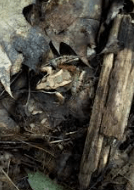
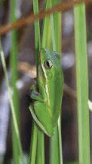
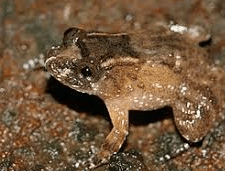
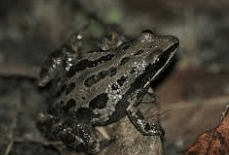
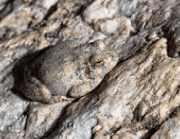
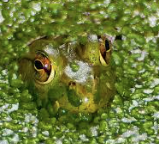
These frogs all camouflage into their pond environments

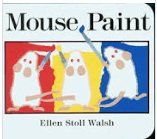
Mouse Paint, by Ellen Stoll Walsh

3 mice find primary paint and jump in the jars to see what will happen. Follow along on this colorful mouse adventure.

Materials

  • 11 paper plates. One colored red, one yellow, pink, green, purple, orange, blue, black, brown, white, and gray. You could have the children color the plates for you a day or so ahead of time.
  • Finger paints in red, yellow, and blue
  • White coffee filters or white paper towels
  • 4 eye droppers
  • Food coloring
  • 11 index cards or pieces of paper cut the size of index cards. On each one write the name of a different color using a crayon or marker of the color name (write red with a red crayon, yellow with a yellow crayon).
  • The night before, make ice in cube trays adding food coloring to the water.
  • Laundry basket
  • Many pairs of colorful socks

Vocabulary

  • mix (to stir together)

Introducing the Story

Put a large piece of paper on the wall and mark down 6 columns. At the bottom of each column make a colored mark. One red, yellow, blue, green, orange, and purple. Ask the children to name their favorite color and mark the column graph. Then show the children the cover of the book and ask them if they can guess what the story might be about (mice, painting, colors).

Social & Emotional Development/Self-Concept; begins to develop and express awareness of self in terms of specific abilities, characteristics, and preferences.

Reading the Story

Each time the story names a color, point to it. On the pages where the mice are mixing two colors, ask the children if they can guess what color the mouse is mixing. As you read, encourage the children to use their hands to help mix and stir the paint.

Science/Scientific Knowledge; shows increased awareness and beginning understanding of changes in materials and cause-effect.

After Reading the Story

Ask the children if they can remember what colors mix together to make purple, green, and orange. Ask them why think that the mice left part of the paper white? Can they make up a new ending for the story? (The cat couldn’t find the mouse, the mouse painted the cat when it was asleep, the cat ate the mouse).

Literacy/Book Knowledge & Appreciation; demonstrates progress in abilities to retell and dictate stories from books and experiences; to act out stories in dramatic play; and to predict what will happen next in a story.

Music and Movement

Get out the scarves today and put on fun music to dance to. Have the children stir and mix with their arms and swirl their scarves in the air.

 Creative Arts/Movement; expresses through movement and dancing what is felt and heard in various musical tempos and styles.

Sing What Are You Wearing by Hap Palmer. You can find different versions of the song on YouTube.  https://www.youtube.com/watch?v=6zMOmzaDc7U

Language Development/Listening & Understanding; demonstrates increasing ability to attend to and understand conversations, stories, songs, and poems.

Sing The Rainbow Song https://www.youtube.com/watch?v=xOmDYt2a9Gw. After the children have introduced to this song, I cut out circles of all the colors and pass them out. The children then hold them up as their color circle is called.

Creative Arts/Music; participates with increasing interest and enjoyment in a variety of music activities, including listening, singing, finger plays, games, and performances.

 Discovery

Mix food coloring and water into small cups. Put out the eyedroppers and the white coffee filters. Show the children how to drop the colored water onto the filter. As the water hits the paper, the colors will begin to bleed together and mix.  

Physical Health & Development/Fine Motor Skills; develops growing strength, dexterity, and control needed to use tools such as scissors, paper punch, stapler, and hammer.

Or; have the children color white coffee filters with red, yellow, and blue magic markers. When they have colored the entire filter, give them a squirt bottle filled with water. Have them squirt their coffee filter three times. This will cause the magic marker colors to bleed into each other and make new colors.

Science/Scientific Skills & Methods; begins to participate in simple investigations to test observations, discuss and draw conclusions, and form generalizations.

Blocks

If you have colored blocks, put these out for the children to play with or to embellish your wooden blocks. As the children build, ask them how many red blocks they have had to their structure or how many blue blocks. Help the children to count if necessary.

Mathematics/Number & Operations; develops increasing ability to count in sequence to 10 and beyond.

Art

Finger paint today using primary color paints. Let the children choose two to mix and stir. While they are finger painting, challenge them to draw shapes and/or letters on their paper. I used to like to let the children finger paint directly onto the table as it allowed much larger movements and drawings. These can be preserved by gently rubbing a piece of paper on top. If you use the table for your base, give yourself plenty of time to wash the table, it can be messy but it is fun.

Literacy/Early Writing; progresses from using scribbles, shapes, or pictures to represent ideas, to using letter-like symbols, to copying or writing familiar words such as their name.

Sand and Water

Let the children choose two colors of food coloring to add to the table today. If you have two separate containers, put one color into each and allow the children to mix as they play.

Science/Scientific Skills & Methods; begins to participate in simple investigations to test observations, discuss and draw conclusions, and form generalizations.

Add ice cubes that you have put food coloring into. As they melt, they will release their colors slowly into the water.

Science/Scientific Knowledge; shows increased awareness and beginning understanding of changes in materials and cause-effect.

Library and Writing

Put out the index cards with the colors written upon them. Encourage the children to copy the color words onto a piece of paper using pencils or markers.

Literacy/Early Writing; progresses from using scribbles, shapes, or pictures to represent ideas, to using letter-like symbols, to copying or writing familiar words such as their name.

Dramatic Play

Tell the children it is laundry day. Set out a laundry basket, or box, and many pairs of colorful socks. Show the children how to find a pair of socks and roll them together.

Mathematics/patterns & Measurement; shows increasing abilities to match, sort, put in series, and regroup objects according to one or two attributes such as color, shape, or size.

Math and Manipulatives

Any counter-sorters such as bears that the children can sort by color. Encourage the children to put all the reds together and all the yellows in a different bowl or pile.

Mathematics/patterns & Measurement; shows increasing abilities to match, sort, put in series, and regroup objects according to one or two attributes such as color, shape, or size.

Outdoor Play

Play Cat and Mice. The teacher is the cat and chases the mice. Have a tree or piece of equipment be the safe space, mouse hole, where the children can run to get away from the cat. If the cat catches a mouse, the mouse must sit off to the side until another mouse is caught. Then the 2nd mouse sits out and the first mouse reenters the play. As the children become familiar with the game, they can take turns being the cat.

Physical Health & Development/Gross Motor Skills; shows increasing levels of proficiency, control, and balance in walking, climbing, running, jumping, hopping, hopping, skipping, marching, and galloping.

Transitions

Play I Spy. Say; “I spy with my little eye…”. Think of something in the room and describe it by color first. Then add shape and function until the children can guess. (I spy with my little eye something that is yellow and round. It has numbers all around the edges and we use it to tell us the time. I spy with my little eye something that is blue and has silver legs. The blue part we sit on at the table and it has four silver legs.).

 Language Development/Listening & Understanding; understands an increasingly complex and varied vocabulary.

Resources

Dear Parent- today we read the book, Mouse Paint. This story is all about colors and color mixing. Do a color walk with your child. Pick a color that you think your child needs help with and have them walk with you through the house looking for that color.

Don’t Spill The Milk! By Stephen Davies

Materials

  • Paper plates , one for each child and 10 extra for transitions

Vocabulary

  • Grasslands (Park lands with tall grass)
  • Dunes (giant hills made of sand)
  • Desert jinn’s (genies)
  • Looming (approaching)
  • Absorb (to soak into something)
  • Chore (to do a task or job for someone)

Introducing the Book

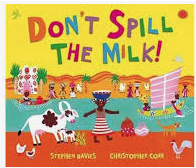
Ask the children if they ever help their parent/s at home. What kinds of things do you do to help? (I helped my Daddy wash his car, I make my bed, I play with my baby when Grandma is cooking supper) Hold up the cover of the book and tell the children that this is the story about a little girl who helps her Mother. Explain that in the bowl is milk that she is to carry to her Father. Ask the children if they have ever carried anything on their heads. Tell them in parts of the world people carry things on their heads and they get SO good at it that they do not even have to hold onto the item/bowl. Introduce the story.

Social & Emotional Development/Knowledge of Families & Communities; develops growing awareness of jobs and what is required to perform them.

Reading the Book

On the pages where Penda is talking to herself, read a little slower so the children can feel her determination to get the milk on top of her head to her father without spilling a drop.

Language Development/Listening & Understanding; understands an increasingly complex and varied vocabulary.  

When you get to the page where the milk spills and Penda says, “It’s all gone!” ask the children what they think will happen next. 

Approaches to Learning/Reasoning & Problem Solving; develops increasing ability to find more than one solution to a question, task, or problem AND LIteracy/Book Knowledge & Appreciation; demonstrates abilities to retell and dictate stories from book sna experiences; to act out stories in dramatic play; and to predict what will happen next in a story.

After Reading the Book

When you get to the page that says, “Tell her it comes with all my love”, see if the children can look at the picture and recall some of the places that Penda carried the milk.

Literacy/Book Knowledge & Appreciation; demonstrates progress in abilities to retell and dictate stories from books and experiences; to act out stories in dramatic play; and to predict what will happen next in a story.

Music and Movement

Get out the beanbags and tell the children to put a beanbag on top of their head. Can they walk forward without the beanbag falling? Backwards? Can they bend down slowly and touch the ground? What other ways can they think of to carry the beanbag (on their foot, on their bent over back, on their shoulder). Let them practice doing different walks and movements without dropping the beanbag.

Physical Health & Development/Gross Motor Skills; shows increasing levels of proficiency, control, and balance in walking, climbing, running, jumping, hopping, skipping, marching, and galloping.

Discovery

Put a tray or cookie sheet onto the science center table. On the tray put a variety of objects that will absorb water and some that will not. (Cotton ball, paper towel, part of a clean-unused diaper, a scarf, and a piece of construction paper. Also include items such as a crayon, a Lego, and a plastic animal). Give the children a small cup of water and an eyedropper. Let them experiment filling the dropper with water and squirting it onto the object. What happens to the water? Talk with them as they experiment asking, “Do you think that paper towel will absorb the water”? Have them sort the items by those that absorb water and those that do not.

Science/Scientific Skills & Methods; begins to use senses and a variety of tools and simple measuring devices to gather information, investigate materials, and observe processes and relationships.

Art

Open the book to the mask dance page and tell the children that they are going to make their own masks. Put out markers and collage materials. When the children have completed their masks they can be attached to a sentence strip to be worn, or to a popsicle stick to be held in front of their face.

Creative Arts/Art; develops growing abilities to plan, work independently, and demonstrates care and persistence in a variety of art project.

Sand and Water

Put water in the table today and add plastic lids of various sizes and small manipulatives such a counting bears. Challenge the children to put different amounts of bears onto the plastic lid that is floating in the water. Do certain lids hold more bears? Does the shape of the lid matter? Let the children explore floating and buoyancy (the ability to stay afloat).

Science/Scientific Knowledge; begins to describe and discuss predictions, explanations, and generalizations based on past experiences. AND       Mathematics/Number & Operation; begins to use language to compare numbers of objects with terms such as more, less, greater than, fewer, and equal to.

Library and Writing

Put the book into the center along with any other multicultural books you may have and a globe/world map. As the children pick up a book, show them on the globe/map, where the story takes place. Always show them where your school is located also.

Social & Emotional Development/Knowledge of Families & Communities; begins to express and understand concepts and language of geography in the contexts of the classroom, home, and community.

Dramatic Play

Encourage the children to work together and clean the center. Give them damp paper towels to wipe the shelves. Tell them thank you for your good cooperation.

Social & Emotional Development/Cooperation; increases abilities to sustain interactions with peers by helping, sharing, and discussing.

Math and Manipulatives

Give children a small manipulative such as a counting bear and have them follow your verbal directions. Ask them to make their manipulative climb up their body and then back down to their knee. Have the manipulative go around their knee and hide behind. Have their manipulative now come around to the front of their body and now go beside. Ask the children if they can make their manipulative go under a body part and then over another body part. Have them put the manipulative beside them and clap their hands as they did a good listening job.

Mathematics/Geometry & Spatial Sense; builds an increasing understanding of directionality, order, and positions of objects, and words such as up, down, over, under, top, bottom, inside, outside, in front, behind.

Outdoor play

Challenge the children to work together today using shovels to dig a long river in your sandbox. Can they add some dunes to the side of the river? If the weather is not too cold, let the children help fill the river up with water. What happens to the water? Remind those who were in the science center today that this is another form of absorption!

Science/Scientific Knowledge; shows increased awareness and beginning understanding of changes in materials and cause-effect relationships.  AND    Social & Emotional Development/Cooperation; develops increasing abilities to give and take in interactions; to take turns in games or using materials; and to interact without being overly submissive or directive.

Transitions

On 1-10 paper plates, write a letter on each. These should be letters that begin with the children’s names or letters that you have been working on with the children. Scatter the letters about on the floor about a step away from each other. Tell the children that they will have to walk the path to get to the next activity. Have one child at a time stand up beside the letters. Ask them if they can name the letter as they step onto the paper plate. Or you can name the letters and then they step onto the plate. Have them walk on 3-5 letters and then send them off to the next activity.

Literacy/Alphabet Knowledge; Knows that the letters of the alphabet are a special category of visual graphics that can be individually named.

Resources

Dear Parents-Today we read a book about a little girl who helps her Mother by carrying milk to her Father who is up in the grasslands shepherding sheep. See if you can find a way that your child can be a helper to you doing something for someone else or around the house. Make sure to thank them after they have completed the chore and to tell them how much you appreciate them being a helper to you.