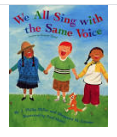
We All Sing in the Same Voice, by J. Philip Miller and Sheppard M. Greene

            Anyone who has watched Sesame Street will probably recognize this song story.  If you know the tune, please sing it to your children and definitely teach them the chorus!

(This would be a good book to use if you do have a student with a disability or disfigurement and you notice that other students are not playing or interacting with that student because they are different).

Materials

  • A globe or map of the world
  • A map of your state or county

Vocabulary

  • Alike (to be similar or to be the same)
  • Different (to not be similar or not be the same)
  • Unique (one of a kind)

Before Reading the Story

Ask the children if they know what it means to be unique? Help the children talk about some ways that they feel they are unique. (I am the only brother in my family, I have longer eyelashes than my friend Koko, I am the only one here with the name Michael).

Social & Emotional Development/Self-Concept; begins to develop and express awareness of self in terms of specific abilities, characteristics, and preferences.

            Ask two children; a boy and a girl (works best with more outgoing children) to come up to the front of the group.  Tell the children that today you want to talk about same and different.  Ask the children in the group to help name ways that the two children are different (he’s a boy and she’s a girl, she’s got a pony tail).  Now ask them to name ways that they are both alike (they got eyes, they are both wearing shorts, they both have a baby sister) Explain to the children that everyone is different but also alike.

Approaches to Learning/Reasoning & Problem-Solving; develops increasing ability to find more than one solution to a problem, question, or task.

Reading the Story

Learn the tune  or use  the youtube song as you turn the pages to the book.

After reading the Story

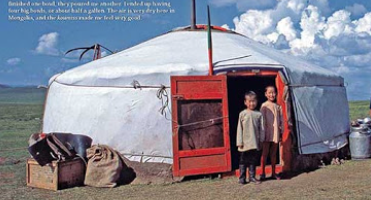
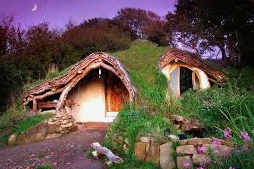
            Pull out your world map/globe and show the children where you live on it. Now see if you can find France, Texas, Mecca, and Peru. Point out the mountains and the ocean. Remind the children that people live all over the world. Their houses and clothes might look different but inside people all are the same; they need love, friendship, and food and water.  If you have a more localized map, show the children where the school is located on it.

Social & Emotional Development/Knowledge of Families & Communities; begins to express and understand concepts and language of geography in contexts of the classroom, home, and community.

Discovery

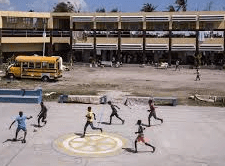
            Bring in real pictures of people from around the world and how they live.

Social & Emotional Development/Knowledge of Families & Communities; progresses in understanding similarities and respecting differences among people such as genders, race, special needs, culture, language, and family structures.

Music and Movement

            Teach the children the chorus of the song/book https://www.youtube.com/watch?v=ezAwndQ5FRs

We all sing in the same voice, the same song, the same voice.

We all sing with the same voice,

And we sing in harmony!

Language Development/Listening & Understanding; demonstrates increasing ability to attend to and understand conversations, stories, songs, and poems.

            Sing The More We Get Together. https://www.youtube.com/watch?v=VYJS_xckWY0

The more we get together, together, together, together

The more we get together the happier we’ll be

Cause your friends are my friends and my friends are your friends

The more we get together the happier we’ll be

Language Development/Speaking & Communicating; develops increasing abilities to understand and use language to communicate information, experiences, ideas, feelings, opinions, needs, questions; and for other varied purposes.

            Put on music from around the world and add the instruments for the children to join in..

Creative Arts/Music; experiments with a variety of musical instruments.

Blocks

            Add people to the block center today.  Talk to the children about the kinds of homes they live in. Is it an apartment or single family home? Does it have one bathroom or more? Do you share a room with your sibling/s or do you have a room all by yourself? Challenge the children to build a house like theirs.

Approaches to Learning/Engagement & Persistence; demonstrates increasing ability to set goals and develop follow through on plans.

Art

            Draw self portraits.

Social & Emotional Development/Self-Concept; begins to develop and express awareness of self in terms of specific abilities, characteristics, and preferences.

Library and Writing

            Ask the children to help you make a list of rules about being a friend.  Write all their ideas down.  You can make a book about this by having the children illustrate the pictures, or taking pictures of your children following their rules?  Entitle it, How to be a Friend.

Language Development/Speaking & Communicating; develops increasing abilities to understand and use language to communicate information, experiences, ideas, feelings, opinions, needs, questions; and for other varied purposes. AND Approaches to Learning/Reasoning & Problem-Solving; develops increasing ability to sind more that one solution to a question, task, or problem.

Sand and Water

Put water in the table today with boats that float and small bear counters. Tell the children that some people live in houseboats on the water. Ask them if they think they would like to live on a boat, why or why not?

Language Development/Speaking & Communicating; develops increasing abilities to understand and use language to communicate information, experiences, ideas, feelings, opinions, needs, questions; and for other varied purposes.

Dramatic play

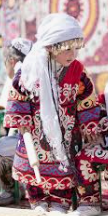
            Put out any multicultural and fancy dress-up clothing you may have.  Scarves work well for skirts, saris, turbans, and capes. Add any books or pictures of people from around the world. Use your globe or map to show the children where the individuals live.

Social & Emotional/Knowledge of Families & Communities; progresses in understanding similarities and respecting differences among people such as genders, race, special needs, culture, language, and family structures.

Math and Manipulatives

       Use pictures of children from different cultures to make a memory game. Make 2 sets of each picture. Turn the cards upside down and the children take turns trying to match sets.

Physical Health & Development/Cooperation; develops increasing abilities to give and take in interactions; to take turns in games and using materials; and to interact without being over directive or submissive.

Outdoor Play

            Play Categories with the children.  Think of a category such as breakfast foods, animals that live on farms, clothes that we wear.  The children must name something in the category and can not repeat something already named.  If they do, then start a new category.  This is fun if you have a slide or climber where the children must answer before they slide or go up the climber.

Approaches to Learning/Reasoning & Problem-Solving; develops increasing ability to sind more that one solution to a question, task, or problem.

Transitions

            As the children are going to the next activity, call on two of them with an opinion question.  (Kerry and Roger do you like spaghetti?  Then point out if they are alike or different.  “They are the same, they both like spaghetti!”  “They are different because Roger likes spaghetti but Kerry does not”).  Use the words either alike or different with each set of children.

Language Development/Listening & Understanding; understands an increasingly complex and varied vocabulary.

Resources

Dear Parent-

            We spent some time today looking at a map to see where our state and town are.  Get out a local map with your child and show them the street that you live on.  Or go to Google Map and see if you can find your house.  Talk to your child about your address.  Show them where the numbers are located on your house or mailbox.

China
Peru
Iran
France
Israel
Everywhere

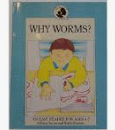
Why Worms? by Gillian Davies and Robin Kramer

            This is an easy reader book that really does not tell much about worms but it could be a good book to introduce a worm study unit.  Andrew likes to draw worms, lots of worms.

Materials

  •   A dozen worms and a plastic shoe box
  •   Several colors of yarn cut into 10 inch lengths, one per child
  •  Large pieces of paper
  • 5 Styrofoam coffee cups

Vocabulary

  • Wrigley (moving all around)Curling (to make lines that are not straight but like a rainbow or a C)
  • Squished-up (all bunched up into a little ball)

Before Reading the Story

            Show the children the cover of the book and read the title, Why Worms?  Ask the children if they know what worms are good for.  If not, talk to them about how fishermen use worms to catch fish and gardeners like worms because they make the soil soft and healthy for flowers and plants to grow.  Ask them if they can think of animals that might eat worms?  Tell them that worms are very important to the earth and that worms are good for the earth.

Language Development/Speaking & Communicating; develops increasing abilities to understand and use language to communicate information, experiences, ideas, feelings, opinions, needs, questions; and for other varied purposes.

Reading the Story

            When you get to the page where the only place left to draw is the wall, stop and ask the children what they think will happen? When you get to the page where Mom says they have to go shopping, ask the children if they can guess what Mom is going to buy?

Literacy/Book Knowledge & Appreciation; demonstrates progress in abilities to retell and dictate stories from books and experiences; to act out stories in dramatic play; and predict what will happen next in a story.

After Reading the Story

            Give each child a piece of yarn about 10 inches long.  Ask them to make a curved worm, a squished-up worm, a long worm, etc.  Can you make a letter /c/ with your worm?  Try a letter /s/.  Continue until the children lose interest.  You can have them make different kinds of lines, letters, and shapes.

Language Development/Listening & Understanding; understands an increasingly complex and varied vocabulary AND Literacy/Alphabet Knowledge; shows progress in associating the names of letters with their shapes and sounds.

Discovery

            Bring in real worms for the children to observe.  Put them in a plastic shoe box with a little bit of torn newspaper on the bottom, worms need moisture.  If the children are going to touch the worms have them dampen their hands first.  At the end of the day set the worms free.  Add a magnifying glass.  On a piece of paper write; Today we looked at worms.  Underneath it write the children’s observations (they tickle, they push and pull to move, they snuggle together are they scared?  They are sticky, they are shiny, they stretch out long!  They make letters like /e/ with their body, worm and squirm are rhyming words). Give the children pieces of paper and ask them to draw their worms as they observe them in different positions.

Science/Scientific Skills & Methods; develops growing abilities to collect, describe, and record information through a variety of means, including discussion, drawings, maps, and charts.

Music and Movement

            Pretend to be worms.  Have the children spread out and lay down on a carpet.  Can they wriggle their bodies like a worm?  Try to curl-up and squish up.  See if you can stretch and scrunch to move forward, no arms allowed. 

Physical Health & Development/Health Status & Practices; progresses in physical growth, strength, stamina, and flexibility.

            Play the Hap Palmer song Walter the Waltzing Worm.  Cut out 10 inch piece of yarn for the children to dance along with. https://www.youtube.com/watch?v=WI6cp8XOyCY

Language Development/Listening & Understanding; understands an increasingly complex and varied vocabulary AND shows progress in understanding and following simple and multiple-step directions.

Blocks

            Show the children how to lay a block on top of a piece of large paper and trace around it.  Have them trace around several different blocks.  Later lay all the pieces of paper on the floor and the children can match the correct blocks to their shapes.

Literacy/Early Writing; experiments with a growing variety of writing tools and materials, such as pencils, crayons, and computers. AND Mathematics/Geometry & Spatial Sense; begins to be able to determine whether or not two shapes are the same size and shape.

Art

            Cut several colors of yarn into six inch pieces.  Put out a bowl of watered down glue and brushes.  Give the children a piece of brown paper and have them brush the glue onto the paper.  They can then use the yarn worms to make a picture.  Encourage them to try to make letters and shapes with their worms.

Mathematics/Geometry & Spatial Sense; progresses in ability to put together and take apart shapes.

Library and Writing

            Make journals for the children and present them.  Encourage the children to draw something that they would like to learn more about in school.

Social & Emotional Development/Self-Concept; begins to develop sand express awareness of self in terms of specific abilities, characteristics, and preferences.

Sand and Water

            Put dirt or sand into the table.  Add rubber fishing worms and several spoons.  The children can dig for worms.  Make sure there are no hooks in the worms! Count how many worms you found.

Mathematics/Numbers & Operations; begins to make use of one -to-one correspondence in counting objects and matching groups of objects.

Dramatic Play

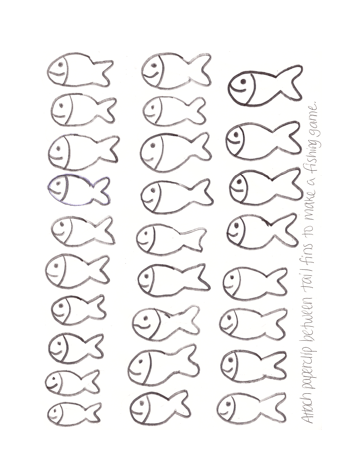
            Tie a piece of yarn onto a small stick, a pencil will work.  On the other end, tie a magnet.  Cut out fish shapes and put letters, numbers, shapes or colors on them.  Let the children go fishing.  Add a bucket to put the fish in.

Physical Health & Development/Fine Motor Skills; grows in hand-eye coordination in building with blocks, putting together puzzles, reproducing shapes and patterns, stringing beads, and using scissors. AND Approaches to Learning/Engagement & Persistence; grows in abilities to persist in and complete a variety of tasks, activites, projects, and experiences.

Math and Manipulatives

            Label the Styrofoam coffee cups with numbers 1-5.  Have a child hide their eyes and put a yarn/fishing worm under one of the cups.  The child has to guess what cup it is under by the number name. (It’s under number 3).

Mathematics/Number & Operations; begins to associate number concepts, vocabulary, quantities, and written numbers in meaningful ways.

Outdoor Play

            Give the children shovels and dig for worms.

Physical Health & Development/Health Status & Practices; participates actively in games, outdoor play, and other forms of exercise that enhance physical fitness.

Transitions

            Put a piece of paper on the wall and a container of crayons.  As the children prepare to go to the next activity, have them come up and draw a worm.  The teacher names the color and the child picks the proper crayon.  When they draw their worm, make sure to comment on its curl, length, zig-zag, size, etc. (Kerry what a curly blue worm, Roger that is a long yellow worm),

Mary Had a Little Lamb, by Sarah Josepha Hale

                  This nursery rhyme is put to beautiful pictures of a real Mary and a real lamb.  The children will enjoy reading the book with you.

Materials

  • Piece of fleece and any other fur or skin you might have.
  •  Several small brushes or combs.
  •  Any stuffed animals that you may have, especially those with longer fur.
  •  Cotton balls or pom-poms
  •  Tweezers or tongs
  • A variety of materials with different textures to collage

Vocabulary

  •    Fleece (lamb fur)
  •    Linger (to hang around waiting)
  •    Appear (showed up)

Before Reading the Story

                  Show the children the cover of the book.  Ask the children what Mary (the girl) has on her face.  Talk about glasses for a moment.  Do any of your children wear glasses, what do glasses do?  How do you take care of them? After the children have talked about glasses, point to the girl and say this is Mary.  Pause for a second and see if any child can make the connection between the cover illustration and the title of the story.  If not, read the title and ask the children if anyone has ever heard of this story?

Approaches to Learning/Initiative & Curiosity; grows in eagerness to learn about and discuss a growing range of topics, ideas, and tasks.

Reading the Story;

                  Read it through once and then sing it through encouraging the children to join in.

Creative Arts/Music; participates with increasing interest and enjoyment in a variety of music activities, including listening, singing, finger plays, games, and performances.

After Reading the Story

                  Ask the children the following questions; What kind of pet did Mary have?  Do any of you have a pet?  Where did the lamb follow Mary to?  What did the lamb do at school? 

Literacy/Book Knowledge & Appreciation; demonstrates progress in abilities to retell and dictate stories from books and experiences; to act out stories in dramatic play; and to predict what will happen next in a story.

Invite a child or staff member to bring a pet to school to visit.

Science/Science Knowledge; expands knowledge of and abilities to observe, describe, and discuss the natural world, materials, living things, and natural processes.

Discovery

                  Bring in fleece for the children to feel.  Also bring in any other fur or skins that you might have.  Talk about the textures.

Science/Scientific Skills & Methods; begins to use senses and a variety of tools and simple measuring devices to gather information, investigate materials, and observe processes and relationships.

Music and Movement

                  Sing Mary Had a Little Lamb. Act it out allowing children to take turns being Mary and the lamb.

Creative Arts/Music; participates with increasing interest and enjoyment in a variety of music activities, including listening, singing, finger plays, games, and performances.

Blocks

                  Encourage the children to build a school.  Add your farm animals. As the children build you can sing, “Dee she had a little cow, little cow, little cow. DSee she had a little cow it’s fur was spotted black. Make up verses to suit the farm animals that the children are using.

Creative Arts/Music; participates with increasing interest and enjoyment in a variety of music activities, including listening, singing, finger plays, games, and performances. AND Physical Health & Development/Fine Motor SKills; grows in hand-eye coordination in building with blocks, putting together puzzles, reproducing shapes and patterns, stringing beads, and using scissors.

Art

                  Put out a variety of textures to let the children collage with today.  As they glue them to their paper, talk about the different names of textures (soft, fluffy, smooth, rough, bumpy, slick)

Science/Scientific Skills & Methods; develops increasing ability to observe and discuss common properties, differences and comparisons among objects and materials.

Sand and water

Child choice

Library and Writing

                  Ask the children to draw a picture of a favorite animal. Ask the child to describe what they think it’s skin feels like. Under the picture write (Kerry) had a little (cat) it’s (fur was soft and furry).  (Elephant=skin was wrinkly and grey).

Literacy/Early Writing; begins to represent stories and experiences through pictures, dictation, and in play.

Dramatic Play

                  Add any stuffed animals that you have and several brushes or combs for the children to brush the animals fur.

Physical Health & Development/Health Status & Practices; shows growing independence in hygiene, nutrition, and personal care when eating, wasing, brushing, and toileting.

Math and Manipulatives

                  Put out a bowl of cotton balls/pom-poms and a pair of tweezers or tongs.  Show the children how to pick up a cotton ball using the tweezers and put it into a second bowl. If using pompoms, put out several bowls so the children can sort by color.

Mathematics/Geometry & Spatial Sense; shows growth in matching, sorting, putting in a series, and regrouping objects according to one or two attributes such as color, shape, or size.

Outdoor Play

                  Do animal walks with the children.

Creative Arts/Dramatic Play; shows growing creativity and imagination in using materials and in assuming different roles in dramatic play situations.

Transitions

                  In the story the children thought it was funny to see a lamb at school.  Take turns asking the children if they can think of something that they think would be funny to see or do at school.  Enjoy a good laugh with the children.

Approaches to Learning/Reasoning & problem Solving; develops increasing ability to find more than one solution to a question, task, or problem.