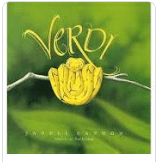
Verdi, by Janell Cannon

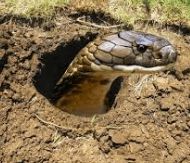
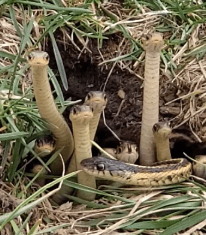
            Verdi is a young python snake who can not understand why the older snakes do not want to have fun and play with him.  He decides he will never get old even though his body grows and changes. 

Materials

  • Snakehead
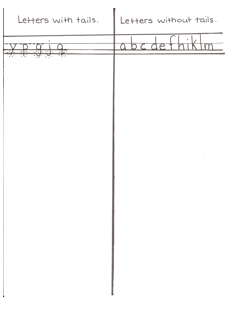
  • Alphabet sort board and letters/those with tails, those without tails
  • Pattern cards for any manipulative you have
  • Plastic Easter eggs
  • Plastic snakes, rubber fishing worms or strips of thick yarn

Vocabulary

  • Zigzag (\/\/\/\/\/\/\/\/\/\/)
  • Jungle ( Like a woods/forest but really hot and wet)
  • Fidgeting ( wiggling )
  • Molt (loosing of a snakes skin)
  • Plummeting ( falling fast from something high)

Before Reading the Story

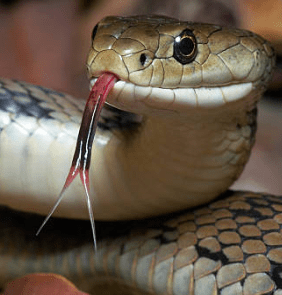
            Show the front cover and tell the children that the story to today is about a snake.  Ask the children what they know about snakes.  Begin a list that you can add on to as the children learn more about snakes.   Tell the children that many people are afraid of snakes but snakes also help people.  The eat mice and rats. 

Science/Scientific Knowledge; expands knowledge of and abilities to observe, describe, and discuss the natural world, materials, living things, and natural processes. AND Language Development/Speaking & Understanding; develops increasing abilities to understand and use language to communicate information, experiences, ideas, feelings, opinions, needs, questions; and for other varied purposes.

Reading the Story

            Read the title and introduce the book. Tell the children that the story is about a kind of snake called a python snake.  Pythons live in the jungle which is like a really hot and wet forest/woods.

Literacy/Book Knowledge & Appreciation; progresses in how to handle and care for book; knowing to view books one page at a time in sequence from front to back; and understanding that a book has a title, author, and illustrator.

After Reading the Story

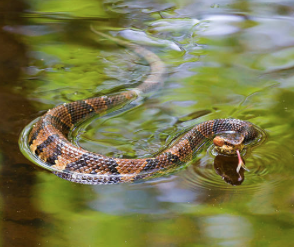
            Ask if the children learned anything new about snakes, add these to your list.  Find several pictures about snakes that live in your area.  Talk about snakes and snake safety (Snakes will bite if you get too close.  Some snakes are poisonous and can make you really, really sick. Never try to pick up a snake, move away slowly if you see a snake on the ground).  It is important to talk to the children about how to be safe around a snake but not frighten them. 

Physical Health & Development/Health Status & Practices; builds awareness and ability to follow basic health and safety rules such as fire safety, traffic and pedestrian safety, and responding appropriately to potentially harmful objects, substances, and activities.

Discovery

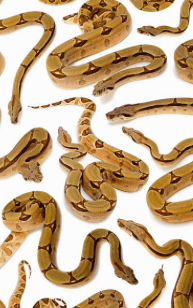
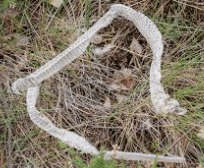
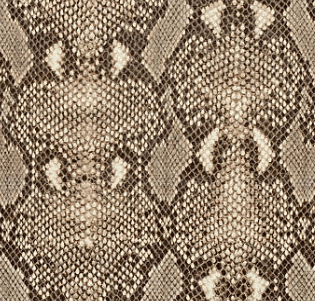
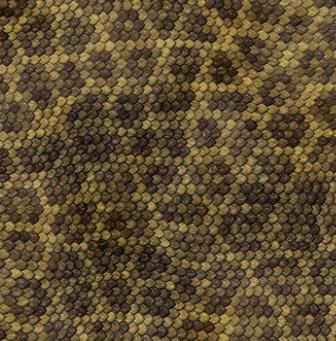
            If you’re lucky, a forest ranger, park, might have a snake skin that you can borrow.  Put out with a magnifying glass.  Bring books and pictures of real snakes for the children to examine. Help the children to notice all the patterns on snake skins.

Science/Scientific Skills & Methods; develops increased ability to observe and discuss common properties, differences and comparisons among objects and materials.

Music and Movement

Down in the Grass

Down in the grass, curled up in a heap,

Lies a big snake, fast asleep.

When he hears the grasses blow,

He moves his body to and fro,

Up and down, in and out,

See him slowly move about!

Now his jaws are open so-

Snap!  He bit my finger! Owh!

Use one arm resting on a table or leg to represent the snake.  Make his head by touching the thumb to the fingertip.  Act out.

Creative Arts/Music; participates with increasing interest and enjoyment in a variety of music activities, including listening, singing, finger plays, games, and performances.

Tell the children that moving like a snake takes strong muscles.  Have the children pull their arms inside their shirts and lay down on their stomach.  Tell them to pretend to be snakes and try to move forward, no feet allowed!  Have them try to lift their heads and shoulders up and forward to look around.  Being a snake takes strong muscles!

Physical Health & Development/Health Status & Practices; participates actively in games, outdoor play, and other forms of exercise that enhance physical fitness.

Blocks

            Show the children how to make a pattern using blocks (square, rectangle, square, rectangle or triangle, triangle, rectangle, triangle, triangle, rectangle).  Ask them to make it long like a snake.

Mathematics/Patterns & Measurement; enhances abilities to recognize, duplicate, and extend simple patterns using a variety of materials.

Art

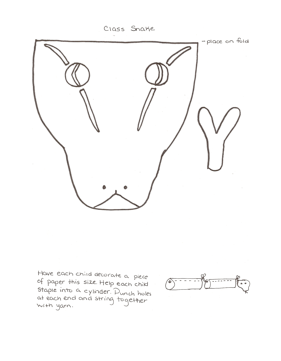
            Tell the children that you are going to make a class snake and need their help. Give each child a piece of yellow or green construction paper.  Let them decorate it.  Help each child staple their paper into a cylinder.  Punch a hole at each end of the cylinder.  String these all together to make a long snake.  Cut out the snake head and attach at one end.  Hang your snake from the ceiling.  (We used alphabet stamps to decorate and also pattern rollers with paint).

Creative Arts/Art; begins to understand and share opinions about artist products and experiences.

Sand and Water

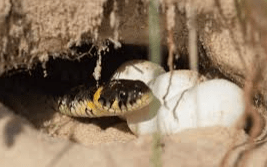
            Explain to the children that Snakes lay eggs and make nests in the dirt. Add sand or dirt into the table along with plastic Easter eggs and rubber snakes.  Rubber fishing worms could be used as snakes (take the hooks out).  Hang a picture of a snake nest on the wall for the children to see while they play.

Science/Scientific Skills & Methods; develops growing abilities to collect, describe, and record information through a variety of means, including discussion, drawing, maps, and chart.

Library and Writing

            Show the children the alphabet sorting board.  Let them use the copies of letters or magnet letters to sort letters with tails and those without.

Literacy/Alphabet Knowledge; shows progress in associating names of letters with their shapes and sounds.

Dramatic Play

Math and Manipulatives

            Put out pattern cards and manipulatives for the children to follow and make patterns. If you do not have patterns cards you can easily make these by representing a color pattern using circles or square the same color as your manipulative toy. (counting bears, rubber butterflies, unifix cubes, one-inch squares, etc.).

Mathematics/Patterns & Measurement; enhances abilities to recognize, duplicate, and extend simple patterns using a variety of materials.

Outdoor

            Play snake.  Have all the children hold hands.  The teacher should be the leader first to help the children get used to moving as a group.  While holding hands, begin to walk around the playground.  Weave in and out of equipment, trees, and each other. Explain to the children that they are going to have to walk slowly and stay in line for the snake to not be broken.

Social & Emotional Development/Self-Control; develops a growing understanding how their actions affect others and begins to accept the consequences of their actions.

Transitions

Remind the children that in the story, Verdi changed from a little boa constrictor into a big boa constrictor. Ask the children tho think of things that they can do now that they are bigger that they could not do when they were little. (I can ride my bike, I can get dressed all by myself, I can write my letters, I can jump from the climber).

Social & Emotional Development/Self-Concept; Begins to develop and express awareness of self in terms of specific abilities, characteristics, and preferences.

Resources


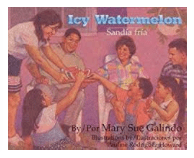
Icy Watermelon-Sandia Fria, by Mary Sue Galindo

This bilingual story is about a family that delights in sharing watermelon and happy memories. Just a reminder that generational stories are lovely to share.

Materials

  • Watermelon, whole
  • One sharp knife and small plastic ones for each of the children.
  • 2 pillow cases
  • Rebus How to make a watermelon slice****

Vocabulary

  • Abuelo/Abuela (Spanish for grandfather/grandmother)
  •  Harvest ( to pick the fruit/vegetable when it is ripe/ready)
  •  Barrios (neighborhoods)
  • Sandia Fria (icy watermelon)

Before Reading the Story

            Come to the rug today and act excited.  Tell the children that you have a surprise for them today. (Make sure the children can not see the watermelon or the book until after you have introduced the story).  Tell the children that you do not think they can guess it.  Let several children respond then say “It’s big and round, and it’s green on the outside.”  Let the children continue to guess.  Then tell the children that it is something that you eat and it has black seeds on the inside and is very juicy.  Continue to let the children guess.  If they still do not get the correct answer tell them watermelon.  Show the children the cover of the book and introduce.

Approaches to Learning/Initiative & Curiosity; grows in eagerness to learn about and discuss a growing range of topics, ideas, and tasks.

Reading the Story

You will want to practice reading this book ahead of time as there are words in Spanish. In order to keep the children interested you do not want to be tripping over words.

After Reading the Story

            Ask the children if their parents ever share any stories about when they were little?  If not, share one about yourself.

Language Development/Speaking & Communicating; develops increasing abilities to understand and use language to communicate information, experiences, ideas, feelings, opinions, needs, questions; and for other varied purposes. AND Social & Emotional Development/Knowledge of Families & Communities; develops ability to identify personal characteristics, including gender and family composition.

Discovery

            Bring in a watermelon.  Have the children describe the watermelons outside.  What color is it?  Does it smell?  Can you lift a watermelon?  After the children have described the outside of the watermelon (make sure you record their observations on a piece of paper), cut the watermelon open.  Cut the watermelon into slices and then let the children use the plastic knives to cut it into pieces.  Again have the children describe the watermelon using their senses.  Graph those who like watermelon and those who do not.

Science/Scientific Skills & Methods; develops growing abilities to collect, describe, and record information through a variety of means, including discussion, drawings, maps, and charts. AND Physical Health & Development/Fine Motor Skills; develops growing strength, dexterity, and control needed to use tools such as scissors, paper punch, stapler, and hammer.

Music and Movement

            Tell the children that you are going to pretend to grow watermelon seeds.  First you have to dig a little hole and cover it with dirt.  Ask the children if they know how watermelons grow.  Explain that they grow on a vine.  Have the children pretend to be the seed and sprout from the dirt.  Tell them that a vine grows long against the ground.  Now tell them that they are the watermelons out in the field.  You are going to come and pick them and put them in the truck.  The children must try to stay a nice tight watermelon ball while you move them around, lift them, and put them in a group/pile.  Encourage the children to keep their bodies curled up and tight.  Once you have collected all the watermelons, tell the children that now they are the farmers and let’s drive our watermelons to the market to sell.  Pretend to drive.

Physical Health & Development/Health Status & Practices; progresses in physical growth, strength, stamina, and flexibility. AND Creative Arts/Dramatic Play; participates in a variety of dramatic play activities that become more extended and complex.

Teach the children the song, Down by the Bay.https://www.youtube.com/watch?v=-CSxGHve60E           

Down by the bay, where the watermelon grow,

Back to my home, I dare not go.

For if I do, my Mother would say,

Have you ever seen a bear in his underwear?

Down by the bay.

(a snake baking a cake, a dog sitting on a log, a mouse in a purple house)

Literacy/Phonological Awareness; progresses in recognizing matching sounds and rhymes in familiar words, games, songs, stories, and poems.

Blocks

Put out your play people today and watch what the children have them say and/or do.

Creative Arts/Dramatic Play; participates in a variety of dramatic play activities that become more extended and complex.

Art

Ahead of time, cut out one large circle out of a manilla file/cardboard and one slightly smaller circle. Have the children trace the large circle onto green paper and the smaller circle onto red paper.Have the children cut out one large green circle.  Have them cut out one red circle slightly smaller. Glue the red circle onto the green. Use the seeds from the watermelon to glue onto the red circle.  How many seeds does your watermelon slice have?

Physical Health & Development/Fine Motor Skills; progresses in abilities to use writing, drawing, and art tools, including pencils, markers, chalk, paint brushes, and various types of technology. AND Mathematics/Number & Operations; begins to use one-to-one correspondence in counting objects and matching groups of objects.

Library and Writing

            Say the word watermelon to the children.  Ask them if they can hear the two words that make up watermelon (water+melon).  Work with the children to think of more words that are made from two words combined (butterfly, basketball, campground, flashlight, underwear, dishwasher).

Literacy/Phonological Awareness; shows increasing ability to discriminate and identify sounds in spoken language.

Sand and Water

            Add red food coloring to the water just for fun. Then give the children a choice of what the would like to use in the water today.

Social & Emotional Development/Self-Concept; begins to develop and express self in terms of specific abilities, characteristics, and preferences.

Dramatic play

            Encourage the children to pretend to be the grandparents who come to visit.  Have the children sort the play  fruits to make a pretend fruit salad.

Social & Emotional Development/Knowledge of Families and Communities; progresses in understanding familiarities and respecting differences among people, such as genders, race, special needs, culture, language, and family structures.

Math and Manipulatives

Draw a half of a watermelon onto a large sheet of paper. Bring a dice and black marker to the table. The children take turns rolling the dice and then adding that many dots (seeds) to the watermelon. Let each child have several turns before including new children.

Mathematics/Number & Operations; begins to use one-to-one correspondence in counting objects and matching groups of objects. AND Social & Emotional Development/ Cooperation; develops abilities to give and take in interactions; to take turns in games and using materials; and to interact without being overly submissive or directive.

Outdoor play

            A watermelon weighs about 20 pounds when it is fully grown.  Fill a pillowcase with about 15-20 pounds of sand and tie it off.  Let the children try to carry the pillow case around the playground.  Or bring in two and have a relay race.  Do you think it would be hard or easy to pick watermelons all day long?

Physical Health & Development/Health Status & Practices; progresses in physical growth, strength, stamina, and flexibility. AND Social & Emotional Development/Self-Concept; demonstrates growing confidence in a range of abilities and expresses pride in accomplishments.

Transitions

Make a graph= I like Watermelon/I Do Not like Watermelon. As the children go to the next activity, have them sign their name to the graph. Later you can look at it as a group and see which was more, like/do not like.

Mathematics/Number & Operations; begins to associate number concepts, vocabulary, quantities, and written numerals in meaningful ways. AND Literacy/Early Writing; progresses from scribbles, shapes, or pictures to represent ideas to using letter-like symbols, to copying or writing familiar words such as their own name.

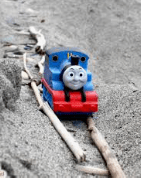
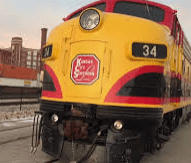
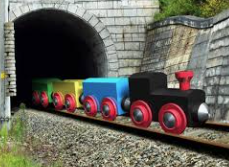
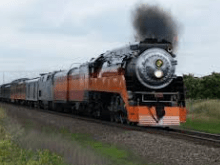
Two Little Trains, by Margaret Wise Brown

            This is the adventure of two trains headed west.  The left side of the page depicts a real train and the left a toy train. 

Materials

  • A toy train and track
  • Boxes  (from your food delivery)
  • A snack with many small piece (animal cookies, crackers, pretzels)
  • Pictures of real trains and not real trains
  • Train cars and engine

Vocabulary

  • Steel (a very strong metal)
  • West (the direction that the sun follows to turn into a sunset at night)
  • Pretend (not real)
  • Imagination (to pretend something is real or is happening)

Before Reading the Story

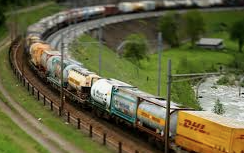
Ask if anyone has ever ridden on a train? Let the children share any train stories they might have. Look at some pictures of trains, both real and pretend. Do the children know where the track are? That the first car is called the engine? How is it like a car? (It has windows, doors, you get inside, it’s big). Can you remember where the two trains went?

Language Development/Speaking & Understanding; develops increasing abilities to understand and use language to communicate information, experiences, ideas, books, feelings, opinions, needs, questions; and for other varied purposes. AND Approaches to Learning/Reasoning & Problem Solving; develops increasing abilities to classify, compare, and contrast objects, events, and experiences.

Reading the Story

            As you introduce the cover, ask the children if they can see the two trains? Explain that your story is about two trains, one is real and one is pretend. Hold up several pictures and ask the children if the can tell which is a picture of a real train and which is a pretend train? Introduce the story.

Approaches to Learning/Reasoning & Problem Solving; develops increasing abilities to classify, compare, and contrast objects, events, and experiences.

After Reading the Story

            Bring out a map of the United States and show where you are on it to the children.  Show them how the train rode west until it got to the ocean.  Is it a long ride or a short ride from where you reside?  If you live on the west coast, show them how the train could not go west anymore so has to go east.  With your map, talk about things that the children might be familiar with; Here in NC we could go west to the Blue Ridge Mountains or east to the Atlantic.  In Illinois you could go east or north to get to Lake Michigan and a long ride west to get to the mountains.

Social & Emotional Development/Knowledge of Families & Communities; begins to express and understand concepts and language of geography in the context of the classroom, home, and community.

Discovery

Put out the pictures of real and not real items. Can the children tell the difference and sort the pictures accordingly into piles of real/ not real?

Mathematics/Patterns & Measurement; begins to make comparisons between several objects based on a single attribute.

Music and Movement

            Sing the Wheels on the Bus but change it to the Wheels on the Train.

The wheels on the train go round and round, Round and round, round and round.

The wheels on the train go round and round, on their way out west/east.

The conductor on the train says come on board.

The whistle on the train goes toot, toot, toot.

The crossing gates go up and down.

The cars on the train go clickety-clack.

Creative Arts/Muisc; partipates with increasing interest and enjoyment in a variety of musical activities, including listening, singing, finger plays, games, and performances.

            Do the Train Chant.

All aboard!

Choo-choo, choo-choo-choo

Chug-chug, chug-chug-chug

Puff-puff, puff-puff, puff

Toot-toot, toot, toot, toot

Ding-ding, ding-ding-ding

Sh-sh, sh-sh-sh

S-h-h-h-h-h-h-h-h!

(try to do this rhythmically)

Mathematics/Patterns & Measurement; enhances abilities to recognize, duplicate, and extend simple patterns using a variety of materials.

Blocks

            Add a train and train track to the center.  Encourage the children to make tunnels for the train.  If you do not have a train and track, encourage the children to make a train from the blocks or duplos.

Creative Arts/Dramatic Play; shows growing creativity and imagination in using materials and in assuming different roles in dramatic play situations.

Art

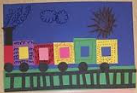
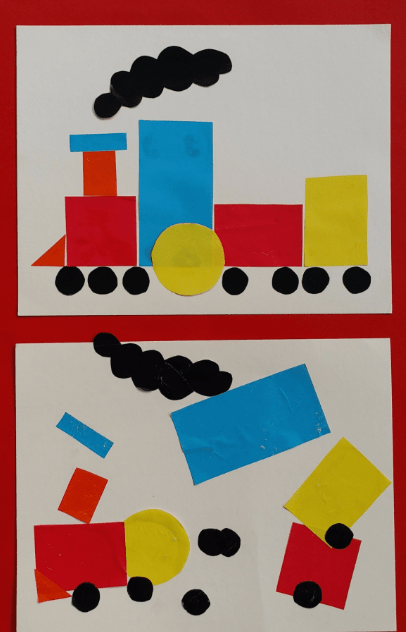
            Cut out many shapes in small, medium, and large.  Let the children collage the shapes to make train cars.

Creative Arts/Art; progresses in abilities to create drawings, paintings, models, and other art creations that are more detailed, creative, or realistic.

Library and Writing

            Use the train cars and engine page to teach a number order or alphabetical order.  Cut out the appropriate number of cars.  Color and laminate.  The children can then use to put into order.

Mathematics/Number & Operations; begins to associate number concepts, vocabulary, quantities, and written numerals in meaningful ways.

Sand and water

Dramatic Play

            Make two lines of chairs to represent a train car.  Tape a piece of paper with a letter written on it to each chair.  Make a second set of pieces of paper with the same letters.  The second set is the ticket.  The child can board the train and find his seat by matching the letter on the ticket to the letter on the chair.  Take turns being the ticket collector.  The collector must look to see if all the letters on the tickets match with the correct seat.

Literacy/Alphabet Knowledge; shows progress in associating the names of letters with their shapes and sounds.

Math and Manipulatives

            At snack time give each child a piece of paper with a line drawn across it.  Tell the children that this is the train track and to line their snack up like train cars on the track.  How many train cars do you have?

Mathematics/Number & Operations; develops the ability to count to 10 and beyond. AND Language Development/Listening & Understanding; shows progress in understanding and following simple and multiple-step directions.

Outdoor Play

            Ask your cook to save you the boxes in which your food was delivered. Bring the boxes out into the playground to line up and pretend that it’s a train.  (Some grocery stores will donate milk crates and these work well and are a permanent playground piece of equipment).

Creative Arts/Dramatic Play; shows growing creativity and imagination in using materials and in assuming different roles in dramatic play situations. AND Social & Emotional Development/Cooperation; develops increasing abilities to give and take in interactions; to take turns in games or using materials; and to interact without being overly submissive or directive.

Transitions

            Have the children line-up and put their hands on the person ahead of thems waist. Move slowly around the room as a train dropping children off in their centers of choice for free play.

Language Development/Listening & Understanding; shows progress in understanding and following simple and multiple-step directions.

Resources
train collages for art